
Sign up to save your podcasts
Or

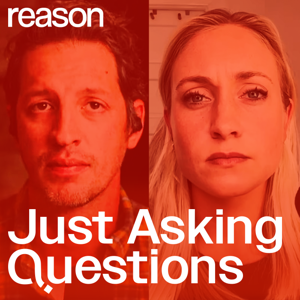


Is Zohran Mamdani's success in New York politics the mark of socialist resurgence or just a reflection of a deeply fractured party base? Zach Weissmueller is joined by two very concerned New Yorkers. Our own Liz Wolfe and Inez Stepman, who's a policy analyst at the Independent Women's Forum.
Stepman critiques the ideological cocktail attracting young New Yorkers to socialism. She argues that Mamdani's appeal is more cultural than it is economic, which leads to a discussion of whether libertarianism can actually be effective in combating Mamdani-esque movements.
"HSTPA Impacts Study," by the Real Estate Board of New York
"The Daily Dirt: 5 Questions With Socialist Mayoral Candidate Zohran Mamdani," by Kathryn Brenzel
"The Most Detailed Map of the N.Y.C. Mayoral Primary," by Martín González Gómez, Saurabh Datar, Matthew Bloch, Andrew Fischer, and Jon Huang
Mamdani's homeowner policy memo
Clip from Eric Adams' speech blasting socialism
Mamdani's talk at the 2021 Young Democratic Socialists of America Winter Conference
00:00—Podcast theme
00:24—Zohran Mamdani and the new face of the Democratic Socialists
05:12—Class resentment, college debt, and the upper-middle-class left
11:19—How socialism distorts incentives and degrades culture
17:32—The myth of New York's liberal monolith
22:53—Rent freezes, housing politics, and urban affordability myths
30:53—Are YIMBYs being misled by progressive rhetoric?
35:22—The cultural core of Mamdani's politics
41:45—Why Inez Stepman broke with libertarianism
48:54—Policing, public safety, and the stakes of a Mamdani mayoralty
57:58—Mental illness, civil liberties, and involuntary commitment
01:08:00—What Mamdani's rise means beyond New York
The post Inez Stepman: How Socialism Seduced New Yorkers appeared first on Reason Magazine.
Who's allowed to launch an attack on another country? Just asking questions.
Rep. Ro Khanna (D–Calif.) joined Reason's Just Asking Questions podcast to discuss the War Powers Resolution he's co-sponsored with Rep. Thomas Massie (R–Ky.), which would require President Donald Trump to seek congressional approval before continuing to drop bombs in Iran. He also discussed Trump's remarks that the governments of Israel and Iran "don't know what the fuck they are doing" after they ignored his call for a ceasefire, whether or not the administration likely destroyed Iran's nuclear program, and why he's eager to work with the antiestablishment right to rein in war powers and get corrupt money out of Congress.
00:00—Podcast theme
00:28—Introducing the War Powers Resolution and Iran airstrikes
05:19—Trump's war instincts and the MAGA anti-war base
10:10—The diplomatic alternative to military action on Iran
15:48—Israel-Iran ceasefire and Trump's response
19:30—Trump's influence over Netanyahu and Middle East peace prospects
23:05—The bipartisan push to rein in executive war powers
27:33—The Democratic Party's anti-war identity crisis
30:29—Building left-right anti-establishment alliances
34:11—Rebuilding trust in government and American purpose
39:49—Reform priorities: money in politics and war powers
This is an AI-generated transcript. Check against the original before quoting.
Liz Wolfe: Who's allowed to launch an attack on another country? Just Asking Questions. Representative Ro Khanna of California is here with us today to talk about his War Powers Resolution that he's co-sponsoring with Kentucky Republican Thomas Massie, who's also been a guest on the show many times before, which would require President Trump to seek congressional approval before continuing to drop bombs in Iran. Congressman Khanna, thank you so much for coming on the show.
Rep. Ro Khanna: Thank you for having me.
Zach Weissmueller: So, here's the text of your resolution. It says:
Directing the President pursuant to section 5(c) of the War Powers Resolution to remove United States Armed Forces from unauthorized hostilities in the Islamic Republic of Iran.
And you list a few facts such as that "Congress has the sole power to declare war," "Congress has not declared war." Therefore, "forces shall be removed by the president if Congress so directs." And the kind of summary statement here is:
Congress hereby directs the president to terminate the use of the United States armed forces from hostilities against the Islamic Republic of Iran unless explicitly authorized by a declaration of war or specific authorization for use of military force against Iran.
So given that Trump has already dropped bombs on Iranian nuclear sites without consulting Congress, what are you worried could still transpire at this point if Congress doesn't act to pass this or the similar bill in the Senate being offered by Tim Kaine?
Khanna: There's a fight for Donald Trump's decision-making here. And the fight is between the neocons—people like Lindsey Graham, who want regime change in Iran; people like Netanyahu, who want regime change in Iran; people like Brett McGurk, who have been itching for that kind of regime change, who cheer-led for the war in Iraq. And on the other side, there is the lot in the MAGA base who do not want another war in the Middle East, who do not want more of our money spent in missiles in Iran or troops in the Middle East.
And we saw that Donald Trump was listening to both, in every day. Now, I believe that it was our war powers resolution and the activism of the MAGA base and other voices that convinced him not to escalate after the strikes. But he could be persuaded again to go in or say, "Well, we didn't destroy enough of the nuclear facility" or "we didn't get all the nuclear fuel." And that's why it's important that he hear from the anti-war base of his own party and from the country.
Wolfe: It seems like this is kind of an opportunity to give Trump some amount of credit, if I may be so bold, because in the past, we've seen many Republican administrations that are much more firmly planted on the neocon side. Whereas it's almost like Trump has devils on his shoulders and angels on his shoulders—you know, depending on your bona fides, you can decide which side is which. But there's a real push and pull, a real tension within him as to whether the sort of neocon wing or the very anti-war wing should win out. Are you heartened to see this tension present in a Republican president right now?
Khanna: I appreciate that he didn't escalate and that we have a ceasefire. I agree with you that there is a tension within his base. I do think that many people in his base felt let down that he struck initially in Iran. That's not what they voted for. It's the first time I saw any real crack in his base. I mean, the tariffs upset some of the business leaders, but this really upset people who voted for him, who said, "You're not prioritizing us. You're not prioritizing jobs here. You're engaged in the same kind of war games that other presidents have."
But the place, though, that I would hope that he'd develop is that it's not enough to stay out of war. You also have to engage in top diplomacy. And the reality is I believe that we need to deny Iran a nuclear weapon. We shouldn't have gotten out, in my opinion, of the JCPOA. At the very least, we should have worked within it to strengthen it. We did get out; that led to enrichment. And now the question is, how are we going to prevent Iran from racing to the nuclear bomb? And there, I think that the president needs to engage in diplomacy that previous Republican presidents, actually, like Bush Sr. and even Ronald Reagan, had more of a commitment to. We haven't seen that from the president.
Weissmueller: I want to bring up a tweet from one of your colleagues here. This is Congressman Greg Steube from Florida, he's a Republican, because I think he lays out the case for why he thinks Trump should have taken this action and why he legally is allowed to take this action. He says that:
"President Trump has full constitutional authority to take military action against Iran's nuclear program without a formal declaration of war. Article II, Section 2 empowers the Commander in Chief to use the armed forces to defend national interests and respond to imminent threats. The War Powers Resolution of 1973 allows a 60-day window plus a 30-day withdrawal period as long as Congress is notified within 48 hours."
Presumably he's saying that Iran having a nuclear bomb itself posed an imminent threat to U.S. security, therefore justifying this unilateral action. What's your response to that?
Khanna: Well, it just didn't. I mean, even his own National Director of Intelligence, Tulsi Gabbard, said it was not imminent. I don't think that any ordinary American believes that Iran was on the cusp of launching missiles against American troops or against America. If anything, now Americans are more at threat than they were.
Now, he hadn't violated the War Powers Resolution. He did give notice to Congress, and now we get to vote. But his initial acts were a violation of Article I of the Constitution, in my view, but there was no reason for him to be engaged in an overseas war without first coming to Congress for a declaration of war or authorization of war.
The War Powers Resolution is sort of a remedy.
It's when the president engages in something that we think is unconstitutional. It says, "Ok, you now come to Congress and you have to get something resolved within 60 days." But that doesn't mean that he had the authority in the first place. And if you define the president's authority so broadly as anything in the national interest, you could go to war anywhere. That would basically deny Congress any approval. Now, what administrations have done is they basically said, "Ok, the only time they really have to get approval from Congress is if it's a dragged-out, prolonged war."
Frankly, Obama made that argument in Libya. That was wrong. Biden made that argument in striking Houthi ships in the Red Sea. That was wrong. Trump's making that argument in Iran.
But modern warfare is not these yearlong battles. And I don't think that the Constitution says, "Ok, give a quick military strike and no ground boots, and it's a quick war, then you don't need Congress. But if you have a long war, then you need Congress." But that's really how modern presidents have been operating. And Thomas Massie and I have called out presidents of both parties.
This is not a partisan issue. What Trump did is very similar to what Obama did in Libya. And I have great admiration for President Obama. So this is about reclaiming the Constitution.
Wolfe: It seems like one of the real significant strengths of this strike, using these bomb blasters in Fordow in Iran, is the fact that it was done seemingly with a lot of precision, but also very stealthily. Everybody was caught off guard by it to some degree. If Trump had sought congressional authorization, obviously that wouldn't have been the case. Do you still think that that is what he should have done?
Khanna: Yes. Donald Trump is a lot of things. He's not exactly stealth. He was on Truth Social saying he wants to assassinate Khamenei. He was saying that he's going to bomb them if they don't comply. So he could have gotten Congress's authorization at any time that he put the Truth Social post up. And he could have said, "Look, I have Congress who said I can do this at any time. Right now, I'm not choosing to do it. I'm doing it in two weeks." And then he could've attacked. And it would have had the same element of surprise. If anything, it would have strengthened his hand because he would have been seen as having congressional authorization.
And you know, the irony is I think he would've gotten congressional authorization. I would have opposed it, but he would've gotten it. So why didn't he come to Congress? Because he would've really heard from the anti-war MAGA base—the Tucker Carlsons, the Marjorie Taylor Greenes, the Thomas Massies.
And he didn't want to split the base. He didn't want that argument out there in front of the American people.
And frankly, Congress didn't want to assert itself because Congress doesn't want to vote on these things. Congress would rather the president take the blame. And this is why we've had a dysfunctional system since Iraq. Congress has basically punted on these issues.
Wolfe: That makes a lot of sense to me. I am curious, though. Something that you mentioned, I think a few times publicly, is that you do believe that it is a national security priority to stop Iran from having a nuclear bomb, but that the way we're going about it—possibly starting another war in the Middle East—is not the appropriate solution.
Tell me, what is the appropriate solution?
Diplomacy, I think it's easy to sort of hand-wave about, and I am sympathetic to that. But what's the actual, you know, Trump was trying to hammer out a deal with Iran before this. It's not as if he hadn't attempted to exhaust the diplomacy options on the table. What was his actual recourse that would have been truly effective in stopping Iran from getting a nuclear bomb? We can dispute the timeline and how imminent it was as much as we want, but I would love just a sense of what is the optimal approach that Trump should have taken?
Khanna: He was working on it. I supported him. And then Netanyahu bombed. I think Netanyahu wanted to force the hand not to let the diplomatic process play out. Look, Obama with the JCPOA showed what was possible at the time when the Iranian regime was stronger than it is now. They had agreed to not have any enriched uranium beyond 3.67 percent. They had limited it to Natanz. The IAEA did inspections up to 2018. They didn't find a single violation.
Now, the criticism of the JCPOA is that it didn't go after the ballistic missiles. And you could have come in and said, "We're going to try to get further concessions on the ballistic missiles." Obama got a UN resolution, but he didn't get verification. But we could get a system of verification because we did, the JCPOA when Iran was stronger.
And Iran has a lot of interests that they care about—the sanctions relief, being able to be seen as part of the international community of nations. So I do believe that Trump, with a yearlong diplomatic effort, could have achieved something. The irony is he's going to have to do the diplomacy now because Iran still has the nuclear fuel, and they still have the capability to make the bomb. So unless we're just going to allow Iran to become a nuclear power, or unless we're going to plan to strike them every six months, he's going to have to engage in diplomacy.
Weissmueller: So, yeah, you're referring to the fact that they did not wipe out all of their enriched uranium. There was even a report that was leaked earlier this week that their ability to continue enriching the uranium might still be intact. So you're viewing this as something that is less than the complete success and obliteration that the administration is characterizing it as.
Khanna: That's the evidence coming out from their own administration. JD Vance is saying they still have enough enriched uranium to possibly have 10 nuclear bombs. Their own Defense Intelligence Agency is saying that maybe they set the Iranians back three to four months. Plus, you can't bomb know-how. I mean, ultimately the Iranian people have the know-how. They have the scientists. So the question then is: How do you get them to not build a bomb? And the reality is you have to have independent verification—similar to the JCPOA—and you have to have a negotiation about what the characteristics and carrots are.
Wolfe: I'm no war advocate here—obviously, I work for Reason Magazine—but on the topic of the know-how, I would note that part of this operation was the taking out of, what was it, like the top seven most prominent nuclear scientists who had been working on these projects within Iran. What do you think of that? Do you think that ultimately set back diplomatic efforts to such a degree that it was a foolish thing to do? Or do you think those sort of targeted assassinations probably are helpful in dismantling the nuclear program?
Khanna: Well, I'm not for targeted assassinations, just in terms of what that means for a rules-based international order and the type of conflicts that it spurs. You know, the goal is that the graveyard is filled with people who thought themselves indispensable. I don't think that just getting rid of the top seven nuclear scientists in Iran is going to prevent the next generation from having the know-how. Maybe it slows them down, but it's not a decisive blow. And it's dangerous when you engage in this, because that gives license in Iran to say, "Ok, should they engage in assassination attempts against Americans or against Israelis? Should other countries be able to engage in those assassination attempts?"
This is why we have a rules-based order. Now, you could argue that there are exigent circumstances where that may be violated—if there was real intelligence and information seeing that American troops would have been struck or that our cities were at risk—then the Commander in Chief could make that determination, come to Congress, declare war. But I much rather that be through a formal process than through covert operations, as well.
We had the old Church Commission because we were so overextended in these covert operations with our intelligence agencies on assassination. America reformed that. And it's much better for us just to be upfront when we are attacking a country—that it is a war—because they violated certain norms. And that doesn't take away the element of surprise, but it's transparent to the American people.
Weissmueller: Trump called for a ceasefire earlier this week, which you have said you believe is in part because of this pressure that's been coming both from Congress and also from his own base. But he was very unhappy immediately after he called for that ceasefire, when Israel and Iran continued to lob missiles at each other. I want to just roll that clip for a moment.
(Trump News Clip)
Reporter: Do you believe that Iran violated the peace agreement and the ceasefire agreement? Do you believe that Iran is still committed to peace?
Donald Trump: Yeah, I do. They violated it, but Israel violated it too.
Reporter: Are you questioning if Israel was committed to it?
Donald Trump: Israel, as soon as we made the deal, they came out and they dropped a load of bombs, the likes of which I've never seen before. The biggest load that we've seen. I'm not happy with Israel. You know, when I say, "Ok, now you have 12 hours," you don't go out in the first hour and just drop everything you have on them. So I'm not happy with them. I'm not happy with Iran either. But I'm really unhappy if Israel is going out this morning because of one rocket. That didn't land. That was shot, perhaps by mistake, that didn't land. I'm not happy about that.
You know what? We basically have two countries that have been fighting so long and so hard that they don't know what the fuck they're doing. Do you understand that?
Weissmueller: Obviously, a lot of frustration being expressed there. What do you make of what's going on here?
Khanna: Putting aside his colorful language, I'm glad that he actually stood up and said, "Stop bombing," to both Netanyahu and to Iran, and I support the ceasefire. And I'm hoping that he will tell Netanyahu to stop bombing in Gaza too. I mean, there are huge humanitarian concerns there. The aid isn't getting in. Palestinians, as they go to aid sites—the Gaza Foundation, the humanitarian foundation—many are getting shot. And so Trump—good for him for saying to stop the bombing. And I hope he'll tell Netanyahu to stop bombing the in Gaza as well.
Weissmueller: How much influence do you think Trump actually has over that situation? Because now we're just seeing this… It was unclear how this even transpired from the get-go—like whether Trump explicitly approved the initial strike on Iran, or if Netanyahu kind of just went ahead and then Trump jumped on board afterward. Do you have a sense of who's driving the ship at this point?
Khanna: We are the superpower. The question is just whether we choose to exercise that power. When he did, with that angry clip, you saw Netanyahu back away right away and didn't engage in the escalation that was reported they were planning on. Literally an hour after he made that statement, there was a statement that came out saying Netanyahu and Israel agreed to the ceasefire, isn't going to retaliate.
He's authorized $14 billion of sales since he's been president to Israel. They are dependent on the United States. If he tells them to stop, they will stop—as we just saw. This was a clear example. And the question is not who calls the shots; it's whether Donald Trump wants to spend his political capital or make a decision to tell Netanyahu to stop. And I hope he will.
Wolfe: Yeah, you know, it seems like you're advocating for Trump to use a little bit more of his influence with Netanyahu and to possibly take a little bit of a tougher approach with him. What specifically does that look like to you?
Khanna: It means that he needs to tell Netanyahu to stop the bombing in Gaza. He needs to, at the same time, demand clearly the hostage release. I think he can get the hostages. And then he should convene a Middle East peace summit. I mean, he's so fixated on winning the Nobel Prize. Bring the Saudis, bring Egypt, bring Jordan, bring UAE, bring people from Palestinian civil society and Israel, and say, "Look, we're going to have a non-Hamas government in Palestine and Gaza."
It's going to need the protection and troops from some of the surrounding Arab countries so that Hamas doesn't infiltrate again. And then that government needs to recognize the right of Israel to exist as a Jewish democratic state, and Israel needs to recognize the new Palestinian state. I believe that is achievable, especially given that he does have decent relationships with some of the other Arab countries. But he has to be willing to first get the bombing to stop and the hostages released. I believe he can do that.
Weissmueller: Do you think that's what Trump—and I guess more importantly, not more importantly but maybe as importantly—his close advisors want? Do they want to work something out with the Palestinians in Gaza and the West Bank, or is there a different sort of vision for the Middle East?
Khanna: It's unclear. I mean, sometimes he talks about having Gaza developed into commercial property. Obviously, that's not recognizing Palestinian self-determination. But if he's serious about peace, he can get Netanyahu to stop. Now, it's a harder thing to get Netanyahu to stop in Gaza than to stop in Iran because Ben Gvir, and Smotrich, and part of Netanyahu's cabinet, don't want him to stop and would threaten to leave the government. And that's why it's going to really take strong pressure from Donald Trump. But Trump has the leverage. And I guess the question is just how committed is he to ending that suffering.
Wolfe: The journalist Dave Weigel posted on Monday that House Minority Leader Hakeem Jeffries didn't even read your bill. I think we have a clip of that—if you could roll that, John.
(Hakeem Jeffries Clip)
Reporter: Would you support the Ro Khanna War Powers Resolution?
Jeffries: I haven't taken a look at it.
Wolfe: Do you find this a little insulting?
Khanna: I have a good relationship with Leader Jeffries. I think that was a clip taken in a particular context. What he was talking about is there's another War Powers Resolution that Adam Smith and Jim Himes and others are introducing. The language is very, very similar. We just had a meeting where many of us are getting behind both of them. So my guess is that what he was saying is that he wants to see which language he ultimately gets behind. But he's been very supportive of the War Powers Resolution getting a vote and issued a statement to that effect.
Wolfe: But do you feel like there's urgency among Democrats to embrace this? I mean, you're trying to rein in executive power in a massive way, and you're partnering with Thomas Massie, a Republican, to do so. Do you feel your own party supports this?
Khanna: I believe the Democrats should be bolder in being the anti-war party. We lost that mantle to Donald Trump in 2016, and we lost it to Donald Trump in 2024. We should be the party that says this country has been in too much endless wars—in Iraq, Afghanistan, Libya, Iran—that we want to focus on bringing troops home to the extent that we can, that we want a less bloated defense budget, and that we want to invest in our communities. In jobs here, in child care here, in lower grocery prices here, and that we want to stop these bad trade deals that ship too much industry overseas and globalization. Trump took that message from us. Even though we have substantive policies, I think that really can make us the party of peace abroad and jobs at home. And that's the party that I'd like to build.
Weissmueller: It seems as if Congress has abdicated its responsibility to weigh in on matters of war and peace, and that there might be incentives for that because then you're not on the record voting for and against. How much of an appetite is there beyond you and Thomas Massie to actually reassert that power?
Khanna: We have 73 co-sponsors now on my resolution, even after the strikes have ended. And so obviously the urgency is a little less now than it was a few days ago, though there's a chance that Trump may take action again. So I believe that you can get over 100 members of Congress co-sponsoring this. That shows that there's a large group of people who believe Congress needs to reassert its role. And the reason they want Congress to reassert its role is not just procedural—it's that members of Congress are tied to their communities, and many people are hearing that Americans want money focused in their communities, not on these overseas wars.
Weissmueller: And can you talk a little bit more about your partnership with Massie in crafting this bill? Because he's now become kind of enemy number one—I say enemy number one, that would probably be Iran—but maybe enemy number two behind Iran for Trump, at least according to his social media feed— is Thomas Massie. He's constantly going after him. What has that partnership been like from your perspective?
Khanna: Well, as a principled person, we partnered together to stop Joe Biden from striking the Houthi ships without congressional authorization. We have spoken out against Yemen and the refueling of Saudi planes without any congressional authorization. We've spoken out again about Libya and the unconstitutional strikes there.
The reality is that Thomas Massie is a person of principle who cares about the Constitution, and he's a profile in courage. He's going to have a huge super PAC spent against him. And the reason Trump did that was because Massie not just got under his skin, Trump was afraid that other members of Congress were going to follow suit and that he was going to lose more of his base. So he had to really establish deterrence—that if you do this, you could be the next Thomas Massie. But I expect Massie will win. He's very popular in his district, and I think he was one of the people who helped make prevail, to make sure this wording can extend it.
Wolfe: I want to go back to something you were talking about just a minute ago. I've been thinking a lot about the sort of Tulsi Gabbard case study, I think you could call it, where somebody starts off as a Democrat and then they sort of shift into MAGA world. And I think with Gabbard, there were a lot of reasons for that. But when you think about one thing that's been so consistent over the course of her career is her commitment to the anti-war cause.
The vision of the Democratic Party that you just articulated a minute or two ago—I love. I think it's lovely. But it isn't something that I necessarily super recognize in today's Democratic Party. In fact, I feel like I can name more examples of the Tulsi Gabbard types—the people who are anti-war Democrats and then slowly sort of find strange bedfellows in the MAGA movement and ultimately sort of drift and feel as though the Democratic Party doesn't actually support the causes that they care about when it comes to foreign policy. Are you articulating a vision of the Democratic Party that currently exists or that you hope exists in the future?
Khanna: Well, it existed in the past with Gene McCarthy, Bobby Kennedy, and John F. Kennedy even, I would argue—and a vision of peace abroad. I think it exists with Bernie Sanders, who really inspired many, and it exists in the Progressive Caucus. And I'm confident that that is going to prevail going forward.
Now, there's a difference, I think, between the Democratic vision of peace abroad and some of the Republican vision, which is I do think the Democrats believe still in very robust engagement overseas, in diplomacy, and respecting the human rights of other countries, and a Kennedy-esque vision that we provide moral leadership for seeing other countries that become democratic without militarily intervening. In hoping that they have economic development while prioritizing their—
I think the MAGA movement veers more toward just staying out completely of these international affairs. Whereas Democratic engagement does prioritize human rights and diplomacy. But on the intersection of staying out of war, there is a common ground.
Wolfe: It's funny that you invoked the Kennedy name. I obviously know what you mean. You're referring to a sort of different era, but I do wonder how much people now associate the Kennedy name entirely with RFK Jr.
Khanna: Well, look, RFK's made a mark, but he's no John F. Kennedy—come on. I think even he'd acknowledge that in his honest moments.
Weissmueller: I mean, to Liz's point, you do strike me as a different kind of Democrat—like out of step in some ways, in a good way, with your party. I was listening in preparation for this—you were on Theo Von's podcast earlier this week, which itself is an unusual thing for a Democratic politician to do. And I thought it was great—and very smart—that you are engaging with that audience, because he is kind of a direct line to the Trump circle.
You were making the case from a Democratic perspective for restraining the executive and the rule of law. But you seem to have a willingness to engage with the "other side" more than some other Democrats. It's not just teaming up with Massie. You also teamed up with Matt Gaetz to try to push forward some legislation to stop Congress members from trading stocks and be a little more transparent about where their money is coming from and so forth. What kind of hope do you have for that kind of left-right, anti-establishment alliance going forward?
Khanna: I think the American people want that. They're sick of the establishment in both parties. They are sick of this status quo. They think the status quo has failed them—in terms of having too many of these foreign wars, in terms of seeing communities hollowed out, trade deals that didn't work out, or places abandoned.
You can't have a nation half prosperous, half with trillions of dollars like my district, and half abandoned and half in decline. And they're frustrated with the money in politics that they see. They sense that special interests and lobbyists are rampant. And so they want reformers. They want people who are going to try to bring this country together—not with anodyne bipartisanship as a defense of the status quo—but bring it together around with a new agenda with reform.
That's why I'm proud of myself, I'm trying to build different kinds of alliances. With Todd Young, we passed the CHIPS Act together. I introduced with Representative Luna a bill to actually codify Donald Trump's executive order on big pharma and lowering prescription drug costs. I work with Massie many times on issues of war powers. With Don Bacon on issues on how we integrate advanced technology into our military. And I guess I just view it as: You're here to do things for the American people, and neither party nor any citizen has a monopoly on the truth.
Weissmueller: What are the big obstacles to that? Because even in the Gaetz team-up that I mentioned before, there was an interesting exchange you guys had on Twitter about that, where he was asking you how many Democrats you could deliver for this agenda—which is term limits, bans on individual stock trading, things like that. And he says he caps out somewhere around eight, and you say no more than 10. What's going on here?
Why is it something that a lot of Americans resonate with and would like to see—these kinds of anti-corruption measures, term limits—that are popular among Americans, but not popular in Congress? What are the big obstacles here?
Khanna: Well, they hurt people who are currently in power. People don't want to give up power. People are used to raising money from PACs, from lobbyists. They're used to becoming lobbyists after they're members of Congress. And it's just led to a distrust in the system.
You know, we were talking about John F. Kennedy. When John F. Kennedy was president, the approval in government was 60 percent. 60 percent trust in government. That number is in the teens now. And it's sad.
The government is critical to not just our national security but in partnering to do big things with the private sector, to have new dreams. So if you care—as a progressive Democrat, as I do—about being able to provide great child care and health care, you need to have a government that people trust.
One of the questions I saw that Joe Rogan asked Bernie Sanders—he said, "You're for taxing the rich, but I believe government is corrupt. You've said government is corrupted with the big money in politics. So why should we be giving taxes to an institution that is corrupt?"
You have to fundamentally answer this skepticism of government. It hurts people who believe government should have a role. But it's hard with the current entrenched generation. That's why I call for a new generation of leadership.
That's why I'm not afraid to speak out and bash Chuck Schumer for a week on television—because he was wrong. And I don't think that's personal. I don't have anything against him personally. But I think we have to speak out for our principles and close balls and strikes, regardless of party.
Wolfe: I hear what you're saying with regard to the idea that you need a certain amount of mass trust in government in order to have a healthy civil discourse and a government that can administer social services well and all the other things, right? Legitimacy is good. Rule of law is good. I agree with you on all of that. But I do have to take issue with the notion that having an American public that's—60 percent approval rating, 60 percent trust in the government—is a good thing.
I mean, shouldn't they have been a little bit more skeptical of their government, especially as they were undergoing regime change all over Latin America and MKUltra and all these representatives were low-key endorsing, like, Jonestown? I'm sorry, when I think back through American history, I think of a lot of cases of the government betraying or hoodwinking the American people. Which is not to say that you should go full down a conspiratorial Joe Rogan-y rabbit hole. But it is to say that maybe that was too much trust in government. What do you make of that?
Khanna: That's actually an excellent point. I think that there's probably a balance. We shouldn't be as trusting that we get all our news from Walter Cronkite and take the president's word as a semi-religious figure. That did get us into Vietnam. That did cause a lot of foreign policy that didn't respect human rights. That did lead to situations in our own country where civil liberties were being violated or people weren't being treated fairly.
But the opposite of that is an inherent cynicism, an inherent skepticism, where I think the average American today probably believes—as dysfunctional as things are—that members of Congress are more corrupt than they actually even are. There's just a sense that they're all bad, they're all messed up, they're all bought.
When you lose that kind of faith in government, that doesn't work either. Because you need the government to set a common purpose, to set a common direction. And absent an external threat, like a war, that's become very hard. We haven't been able to have solutions to immigration, towards challenges with technology, towards challenges with social media, towards challenges with jobs in places that have been abandoned. So it's about balance.
Wolfe: You see a little bit of this reflected within the American Dynamism Movement, which has sort of a foothold among the tech crowd and among many people on the right. But there's a little of the sense of, like, we should be doing great things again. We should be building again. Our cities should be paragons of excellence, things we can take pride in.
And yet we seem unmoored. We seem like we can't partake in these common projects together, whether they're private sector–driven or public investment–driven. So it's interesting what you're saying. Even though you're a Democrat, I would say there's a huge contingent on the tech right that totally agrees with you and is very concerned about this issue. Like, we can't do big things collectively anymore because we've lost the sense of shared purpose. I don't know whether it should be directed by government per se, but we've had excellent private-public partnerships in the past that led to huge projects that delivered technological advancement—and now we just don't do that.
Khanna: Yeah, this is why I call for a new economic patriotism—a 21st-century Marshall Plan. I think our common purpose should be to bring 21st-century economic renewal, economic jobs across this country in communities that have been left out. The economic divide in this country—where you have $5 trillion companies in my district and other places really hollowed out, where kids aren't going to live up to their parents' standard of living—I don't think that country can flourish with that kind of division.
I mean, it's not quite what Lincoln's division was—half slave and half free—but half prosperous and half in decline is not a winning formula for the country. And in doing that, we can also make sure that everyone's on the playing field of Team America, so that we're leading in the industries of the future, that we're leading in new technology.
But I think it is a Herculean task for anyone in politics to try to articulate a common mission that does that. I got criticized yesterday, even though I've probably been the most visible voice in the Democratic Party against the war in Iran and said that Trump's strikes are unconstitutional. I voted yesterday to table the impeachment, and people said, "Why aren't you impeaching him? Isn't that hypocritical?"
I said, "if we were going to impeach presidents just based on doing any unconstitutional thing, there wouldn't be many presidents who wouldn't have been impeached." But I did vote to impeach him twice before—it didn't work in terms of his conviction. And I do think that we have to be pragmatic and thoughtful about the deeper purpose in this country, which is, yes, accountability, but also: How, post–Donald Trump—which is going to happen—do we start to figure out a new generation that can bring the country together? How are we going to achieve that with a common purpose? And it's a very, very difficult task.
Wolfe: I think it's a good idea to have the option of no presidents. I mean, it's Reason Magazine—we kind of like that.
Weissmueller: But given the extreme distrust—especially of Congress—Congress of all the three branches, I think is the worst of all in terms of public trust or confidence. Is there just a top one or two reforms that you think could start to turn that around and make this body more functional?
Khanna: Money in politics and members of Congress becoming lobbyists.
The PACs, the super PACs, the contributions that dictate what gets voted on—is just terrible. We've got to get rid of PACs and super PACs. We've got to limit the influence of lobbyists in this country.
There are two to three pharma lobbyists for every member of Congress. I was joking—I think with Theo Von—I said it's like having double coverage in a sporting event, or sometimes triple coverage. It's just insane. And then a lot of members of Congress go become lobbyists, or staff members become lobbyists. That revolving door and the stench of money in politics needs to change.
That is probably the single biggest reform that we need.
Wolfe: Presidents have been going to war without permission for kind of a long time in this country. And Trump in particular—even if your resolution passed—it's possible that Trump might not feel very constrained by it after all. Should we, in fact, just give up on the idea that Congress has any say in 21st-century war making? And should we just focus on electing better presidents?
Khanna: We certainly should elect better presidents, but we shouldn't give up on Congress. Because when my War Powers Resolution with Sanders and Massie passed on Yemen, Donald Trump didn't sign it and it never became law, but he voluntarily stopped the refueling of Saudi planes.
I think in this case, I don't give Congress the mass of the credit. I actually give a lot of commentators and the movement more credit than Congress. But the fact that Congress was also amplifying the base collectively—it had an impact on Donald Trump. Public opinion had an impact on Donald Trump.
So do I think that Congress winning back formal power with the War Powers Resolution is an easy climb? No, I don't. It's a very steep climb in this country. It is going to mean electing a president who actually respects the constitutional authority. Probably Congress won't win it in a straight-up fight if the president is not committed to the Constitution in that way.
But I do think that Congress can be a amplifier of public opinion that does have an impact on the president. I've seen it have an effect in this case in Iran. I've seen it have an impact in Yemen. I've seen it have an impact in Obama on Syria.
And that's why we need more people in Congress willing to speak up.
Weissmueller: The last question, which is one we pose to all of our guests, Congressman: What is a question that you think more people, more Americans, should be asking?
Khanna: What am I going to do, and what are my kids going to do, in an AI future? How am I going to build economic security? How's my community going to build wealth? What does the 21st-century economy mean for me and my family?
Weissmueller: Congressman Ro Khanna Thank you for coming on the show.
Khanna: Thank you.
The post Ro Khanna: Congress Must Take Back Its War Powers appeared first on Reason Magazine.
What's America's role in Israel's war with Iran? Just asking questions.
There are hugely important differences between then and now, but today's guest will offer the long view. He's someone who understands first-hand how military intelligence is used and abused to justify war.
Paul Pillar was a CIA analyst for 28 years, serving as the executive assistant to the CIA director from 1989 to 1991 amid the Gulf War and later rising to become the chief analyst and deputy director of the agency's Counterterrorist Center. Today he's a nonresident senior fellow at Georgetown's Center for Security Studies and a nonresident senior fellow at the Quincy Institute for Responsible Statecraft.
We discuss what the Trump administration knew and when about the Israeli strike on Iran, why Pillar urged President Donald Trump to "condemn" the strike, whether or not regime change is the primary goal of this war, what Trump's likely next steps are, and how the dissent of Trump supporters like Tucker Carlson and Steve Bannon is likely to affect the outcome.
"Trump says he doesn't want Israel to attack Iran, but strike 'could very well happen,'" by Lazar Berman
Statement from Secretary of State Marco Rubio
Trump on Truth Social: The U.S. had nothing to do with the attack on Iran, tonight. If we are attacked in any way, shape or form by Iran, the full strength and might of the U.S. Armed Forces will come down on you at levels never seen before. However, we can easily get a deal done between Iran and Israel, and end this bloody conflict!!!
"How Trump Shifted on Iran Under Pressure From Israel," by Jonathan Swan, Maggie Haberman, Mark Mazzetti, and Ronen Bergman
U.S. Foreign Aid to Israel: Overview and Developments since October 7, 2023
"Trump must condemn Israeli acts of illegal, naked aggression," by Paul Pillar
Trump on Truth Social: UNCONDITIONAL SURRENDER!
Trump on Truth Social: We now have complete and total control of the skies over Iran. Iran had good sky trackers and other defensive equipment, and plenty of it, but it doesn't compare to American made, conceived, and manufactured "stuff." Nobody does it better than the good ol' USA.
June 10 statement for the record by General Michael "Erik" Kurilla, commander for U.S. Central Command, concerning Iran's nuclear program
Mike Huckabee's text to Trump
Fordow Fuel Enrichment Plant
"Initial US intelligence suggests Iran was surprised by the Hamas attack on Israel," by Zachary Cohen, Katie Bo Lillis, Natasha Bertrand and Jeremy Herb
The post Paul Pillar: America Should Not Fight Israel's War appeared first on Reason Magazine.
Protests and unrest erupted in Los Angeles following federal immigration raids of a Home Depot parking lot and a clothing manufacturer. President Donald Trump ordered National Guard troops, and later U.S. Marines, into Los Angeles against the wishes of Democratic Gov. Gavin Newsom. Downtown Los Angeles and the communities of Paramount and Compton have been wracked by riots, looting, and the burning of autonomous Waymo vehicles.
Today's guest is a self-described "former leftist…politically homeless" Californian who says that California's political establishment has enabled the violence and destruction we're currently seeing in response to the immigration raids. Laura Powell is an attorney and founder of Californians for Good Governance, which was founded to fight government overreach during the COVID-19 era. We discuss Newsom's war of words with Trump, the claim that these riots are an "insurrection," why Powell thinks Democrats are "encouraging" the chaos, whether the use of the military is federal overreach, and the role government-funded nonprofits and unions may have played in escalating the the situation in L.A.
00:00—Introduction and ICE raid timeline
Newsom on X: "One of the the cornerstones of our Nation…is that our people are governed by civil, not military rule."
LAPD statement about the deployment of 700 Marines
Newsom on X: "Don't give Donald Trump what he wants."
Laura Powell on X: "I really do not want the feds to step in and restore order by declaring martial law."
Stephen Miller on X: "An insurrection against the laws and sovereignty of the United States."
"ICE arrested a California union leader. Does Trump understand what that means?" Los Angeles Times
Laura Powell on X: "EXCLUSIVE: Taxpayer-Funded Nonprofit Behind the Anti-ICE Riots in Los Angeles."
The post Laura Powell: Who's Most To Blame for the Latest L.A. Riots? appeared first on Reason Magazine.
How should the government treat in vitro fertilization (IVF)? Should they regulate it more? Should they subsidize it? Just asking questions.
The above are all questions that the Trump administration is actively considering in the wake of an executive order seeking to expand access to IVF. President Donald Trump previously declared himself "the fertilization president" while speaking at a women's conference.
Today's guests have thought about a lot about reproductive technology, birth rates, and family policy, each arriving at some very different conclusions at times. Ruxandra Teslo is a genomics Ph.D. student at the University of Cambridge and writes often about fertility and technology at Ruxandra's Substack. Emma Waters is a reproductive technology and bioethics policy analyst at The Heritage Foundation. In this discussion, they debate the ethics of in vitro fertilization, discuss recent scientific advancements such as the ability to create eggs from other types of cells and three-parent embryos, and the emerging market in "embryo selection" that allows parents to choose between embryos with different genetic traits.
Mentioned in this podcast:
The post Debating the Science and Ethics of IVF: Emma Waters vs. Ruxandra Teslo appeared first on Reason Magazine.
How will we ever get the national debt under control? Just asking questions.
The U.S. national debt stands at a staggering $36 trillion. And while President Donald Trump assures us he's a "fiscal hawk," the GOP's latest fiscal plan, dubbed the One Big Beautiful Bill Act, is a fiscal time bomb, says today's guest. David Stockman, the director of the Office of Management and Budget under President Ronald Reagan, joins the show to dissect the Trump administration's budget priorities and explain why tax cuts without spending reductions are a recipe for disaster. With a career spanning decades in Washington, including his role as a key architect of Reagan's economic policies, Stockman brings unmatched insight into the mechanics of federal budgeting and the political roadblocks to fiscal sanity.
The One Big, Beautiful Bill Act
Federal spending data, by the U.S. Treasury
"Preliminary Analysis of the Distributional Effects of the One Big Beautiful Bill Act," by the Congressional Budget Office
"CBO's First Score of House Reconciliation Bill," by the Committee for a Responsible Federal Budget
The Triumph of Politics: Why the Reagan Revolution Failed, by David Stockman
Deficit by gross domestic product for the past 50 years, by the Congressional Budget Office
CSPAN on X: President Trump on @RepThomasMassie: "I don't think Thomas Massie understands government. I think he's a grand-stander, frankly…I think he should be voted out of office."
This is an AI-generated transcript. Check against the original before quoting.
We're delighted to have him here with us today to dissect the Trump budget—known as the One Big Beautiful Bill Act—to lay out the potentially dire consequences of uncontrolled deficit spending and to offer lessons from the Reagan Revolution, which in his telling failed to deliver the smaller and more responsible government that it had promised. David Stockman, thanks for coming back on the show.
David Stockman: It's great to be with you, and there's certainly a lot to talk about here. Here we are 40-years later, and I think we're in a far deeper pickle—let's say, dilemma—even catastrophe, than we thought we were battling in 1980. So there are a lot of things to talk about. There are a lot of lessons to be learned. Hopefully there are ways out of this, but it's looking increasingly bleak to me when we have a Republican Party with a mandate—really, for the first time—all three branches: the White House, the Senate, and the House. Albeit by slim majorities, but still, they have a majority for the first time in a long time.
Are faced with $36 trillion of existing public debt, which is out of control. and a budget that has built in $22 trillion of additional debt over the coming 10-year horizon, which is kind of the budgeting time frame that we work with. So you would think that the conservative party—the Republican Party, which at least historically had some pretty firm commitment to fiscal rectitude—would look at that $22 trillion and say, "Our job is to shrink it, to cut it, to reduce it and minimize any further growth in the $36 trillion we already have."
But instead, they've done the opposite. They've basically said, like they're at the gambling table, "We'll see your $22 trillion that's built in, and we're going to add $3 - 5 trillion more," depending on how you count the numbers. The Republican Party was supposed to be the party that defended the taxpayers and the free market and the private economy and society, and yet they can't even muster a single dime of net spending cuts over the next decade.
They've set aside so many large parts of the budget that it is kind of ridiculous when you say—as Trump and the Republican leadership have said—Social Security is off limits, Medicare is off limits, veterans benefits, which are like $350 billion a year and growing rapidly, are off limits, the defense budget—which is now pegged at $1 trillion—is off limits. And of course, we have to pay the interest on the debt, which is now also $1 trillion a year.
So if you put all that stuff together, you're talking about 75 percent of the budget or more that they put off limits.
Zach Weissmueller: Just so people can see the visuals here of government spending by category, laid out here by the Treasury Department—you can see there Social Security, this is for fiscal year 2025—Social Security is at the top. Then interest—half a trillion dollars just in interest—and then health, Medicare, national defense, and income security. And so—
David Stockman: And while we're all looking at this here, go down one more and you've got veterans benefits and services. So by the time you get through all of those bars, you're down to the little tiny microscopic bars at the bottom to find any spending cuts. But then you get to transportation, for instance, and if you can strain your eyeballs, here at $77 billion—well, a good share of that is the highway trust, the interstate highway system, which at least gas taxes allegedly pay for, in spending. So they're not going to shut down highway construction and the interstate highway program.
What I'm trying to get at here is, if you just look at this chart, you realize they're painting themselves into a corner that's so tiny that it's not serious. They're basically faking it. The Republican Party has become a pretty sad sack of fakers when it comes to what their job is. Remember, the Democrat Party is the government party. The Republican Party is for the taxpayer and for private life and private enterprise. And if the taxpayer—pro-taxpayer—party, at least in theory, is throwing in the towel, we're in big trouble.
Zach Weissmueller: I want to look a little more into the details of the One Big Beautiful Bill and what it is that's driving this increasing deficit spending. I believe you said you think that it might add up to $30 trillion over the next decade.
David Stockman: How do I get that? Let's just start with the CBO baseline.
Zach Weissmueller: Yeah, let me add that here because we've got it, yeah.
David Stockman: Yeah. Well, that's the reconciliation package. But let me start with the bigger picture—the context of where we are. If you look at the CBO baseline for 10-years—which would be fiscal 2026 through 2035—we always budget on a 10-year basis. Anything more than that is in the distant future that you really can't see. Anything less than that, you can't get all the leverage you need to make the path of policy change.
Now, if we look at that CBO 10-year current forecast, here's what it shows you. It shows you that revenues—if we have a GDP that grows at 4.2 percent a year, this is nominal—and 4.2 percent nominal growth is the same as we've had for the 25-years since the turn of the century. So they're not skimping on growth. In other words, we'll be lucky to replicate over the next 10- years what we had over the last 25.
Well, if you do that, they end up with $67 trillion of revenue under current tax law, including assuming that all of the 2017 tax cuts expire. In other words, in that $67 trillion so-called current law or current policy baseline, they've already let the entire 2017 tax cut expire, which is about $4 trillion of added revenue that's in the numbers.
So if you said, "Well, let's look at it from the way the Republicans want to look at it," well, then the revenue over that 10-year period is only $63 trillion, okay? Because I'm taking the $4 trillion out from letting the 2017 tax cut expire, assuming it is extended for the next decade.
Now, what's on the spending side? Well, in round terms, it's $89 trillion. Okay? So that's what they're looking at if they say, "We're going to keep the 2017 tax cut and we look at the rest of the budget," including all of these sacred cows—Social Security, Medicare, defense, veterans, and so forth—that we've set aside. What we end up with is—if I can use round numbers here—$90 trillion of spending and $63 trillion over 10-years of revenue. That's $27 trillion in debt right there.
Now, they tried to cut a little bit in Medicare, but I think when push comes to shove, maybe it's $400 or $500 million over a decade. They've done a little bit of pairing of the entitlement for food stamps—a couple hundred million. And they've repealed—and they should have—some of the ridiculous Biden green energy scams, both tax credits and spending.
But if you take all of that, I really doubt whether there's $1.5 trillion of savings on the other side of the ledger in the so-called Big Beautiful Bill. Now, if you start with $27 trillion—
Zach Weissmueller: Hold on. Can I ask you one thing about that? This is the CBO estimate as visualized by the Committee for a Responsible Budget. What they're showing here is that the deficit spending is very front-loaded in these early years, and then in the years after Trump leaves office, that will be reduced—presumably because the administration that succeeds him will not keep the tax cuts in place. What do you make of these kinds of assumptions?
David Stockman: Well, this is what the Republicans always do. I mean, they created this problem for themselves back in 2017.
See, there is a rule in the reconciliation process that says you can't increase the long-run deficit. And by that, they define it as out beyond 10-years in the future. So that's why they had the 2017 tax cut expire in 2025—because otherwise there would have been a point of order, and they never would have even got the tax bill to the Senate floor.
So now they basically have the due bill coming up. In other words, who would write a tax law that creates a cliff where, at a certain date—December 2025—all of these cuts, which were over, you know, $2–3 trillion, expire? So that's what they're dealing with here.
And essentially, they've done the same thing again. They have extended for 3 or 4-years—that's why you see the larger deficit impact there, $500 - 600 million a year through 2029. But then a lot of these additional tax cuts that they've added—for tips and overtime and Social Security taxes and automotive loan deductions and a lot of other things—they all expire in 2028. So in the out years, there's no deficit impact.
Now, follow me on this. When we get to 2028—it's an election year—do you think all of these nice tax cuts, the guys are going to go out campaigning and tell all the workers at restaurants, "Hey, your tips are no longer tax-free. We're going to start taxing you next year." "You know, elect me, I'm going to tax you next year on your tips." Or telling industrial workers or manufacturing workers, "Next year we're going to nail you on your overtime." Ok, well, obviously it's not going to happen.
What's going to happen is, as we get toward the election in late 2028, and they're going to extend all of these cuts for another 3, 4, 5-years, and all of that decline that you see in terms of the deficit impact will disappear—just like it's happening right now. The '26, '27, '28 numbers in the act back in 2017 looked like they were disappearing too—as in, the deficit impact—but now here we are, and they're extended.
Now, the other thing that I think is really important to note here, it's really important—if we could just get your chart back up there. This is what we're adding to the deficit. This isn't the deficit, Ok? The result of the deficit from the $22 trillion that's built into the baseline over 10-years was about $2.5 trillion a year. Take the chart in front of you and add it on top of $2.5 trillion a year that's already there. And that's what the House Republicans are saying is a big, beautiful bill.
Are they out of their minds? They're pushing the total deficit to over $3 trillion a year by the end of this period. And they have the nerve—they have the gall—to call it a big, beautiful bill.
I call it a big, ugly bomb.
You know, a fiscal bomb that we're going to pay for badly in the years ahead.
Zach Weissmueller: So a lot of this, as you're laying out, comes down to—it seems like—cutting taxes without an equal cut in spending. Or even, there should be a more severe cut in spending if we're talking about actually reducing the deficits.
This is also from the CBO. They mention that there's an increase in the federal deficit in that 10-year period of $3.8 trillion attributable to tax changes. And then they point out that there are some cuts: $698 billion less in federal subsidies to Medicaid, $267 billion less in federal spending for SNAP, which is food stamps, $64 billion less in spending on net for all other purposes. But—
David Stockman: While you've got that up there, can we talk about it and put it back up? Because people need to understand—there's a lot of trickery in this.
OK? The first thing is that $3.8 trillion is a big, big number. You're adding that on top of the $22 trillion that's already there, so let's not forget that. But secondly, a lot of the tax cuts are expiring in the out years, so you're not getting a true measure of the 10-year cost.
Yet we know when we get to the expiration date for a tax cut—like we are right now—they're going to extend it, ok? So the real 10-year cost of what's in the bill on that first line there is down close to $5 trillion when you price it out on a 10-year basis, and not on this sort of 3 or 4-year basis that they're using as a trick.
Now, the second thing is, the $698 billion of savings for Medicaid is never going to happen in a month of Sundays. And the reason for that is most of that savings is attributable to work requirements. That's good, I'm all for work requirements. But the definition of work requirements is so loophole-ridden, and there's so much opportunity for the blue states that actually administer Medicaid—that's where most of the Medicaid dollars are spent: California, New York, New Jersey, Massachusetts, Illinois, Minnesota, all these big spending states—they're going to rip the work requirement to shreds. And I doubt whether even half of what they've projected will actually be saved.
Then we get to things like, there's an increase in spending in the bill for defense. Again, it's kind of a scam because the defense increase—which I think is $100 billion, if I remember right—is basically a down payment for a huge increase in defense spending that is going to come from Trump's golden dome air defense system and increasing the shipbuilding program in the Navy.
Why in the hell are we doing that? Ships in the Navy are sitting ducks out on the blue water right now. We don't even need half the size of the Navy that we have today. It's a complete waste. We don't need it to defend the homeland security at all—and yet that's in here.
Now, the point is, once you start building all these ships, what are you going to do? Leave them in dry dock? No. You're going to put sailors on them. You're going to put them into training and into their O&M—operations and maintenance—routines. And all of this is going to take more dollars in the out years that aren't shown in these numbers.
So I think when they say, "Well, we're only adding $3.8 trillion to the deficit," that is one of the biggest, jokes, fiscal jokes that I've heard in a lifetime of dealing with this stuff since the 1970s. I mean, this isn't even close to what's going to happen.
Zach Weissmueller: So, I mean, the theory that they seem to be operating on—and this is directly relevant to your experience serving for the Reagan White House—is it's kind of supply-side economics. Like the idea that tax cuts will pay for themselves because they stimulate economic growth.
Even Milton Friedman, for a time, said he was generally in favor of cutting taxes because he believed it would force the government to eventually cut spending. Now, if we look at the history, neither of these things really happened.
I'm just going to pull up a couple slides. Here's federal spending per capita. I've got the Reagan years in a purple box here. You can see it went up. It continued to go up under just about every president. We had surpluses famously during the Clinton era. And then Bush—War on Terror, economic crisis. And if we were to keep extending that out, it would just keep going up and up and out.
And then here—deficits as a percentage of GDP. Again, I've got the Reagan years in a little red box here. And you can see that tax cuts did not, quote unquote, "pay for themselves" during these years in terms of covering the spending.
My question for you is: We've got tax-and-spend Democrats—I think we can all agree that's bad. But are tax-less-but-still-spend Republicans, in a sense, even worse?
David Stockman: Yeah, now a couple of things about that. Milton Friedman was right in one way. He always said that, "what you want to look at is spending, not just taxes," because when the government spends money, it's channeling resources of society into less productive things than the private sector might do if it had the money to allocate on its own.
So they developed in the 1980s a "Starve the Beast" theory. And it's been attributed to me—I never believed that. But somehow I got saddled with it in the history books, and it won't go away. But the thing is, there was a belief that if you cut taxes, the deficit would be so bad that finally the politicians would wake up and they would do the tough stuff—make the hard choices—and reduce spending.
Well, it didn't work. And here, I can prove it.
The first thing I had to do in January 1981 with Ronald Reagan was tell him that the debt ceiling is now a tad under $1 trillion, and it's going to go over $1 trillion in the first month that you're in office, ok? That was $1 trillion. It's $36 trillion today. With what we're looking at in front of us in the big, beautiful bill, it's going to be well over $60 – 65 trillion by the mid-'30s.
So did we starve the beast as we went from $1 trillion of public debt to $36 trillion to possibly $60 or $70 trillion in a reasonable time period here? No. Starving the beast does not work.
You have to basically, I think, force the taxpayers of America to face the cost of all this government. And if they have to pay taxes to fund all these things—like a ridiculous $1 trillion defense budget, when we don't even need $500 billion—maybe you start to get some offsetting political pressure on the spending side, not the tax side.
But what made it all possible—that is, that "Starve the Beast" failed, and this spending just continued to soar upwards—is the Fed stepped in and monetized a huge share of the debt. Back when we were having these debates in the 1980s, no one really factored that in. Because if the Fed—what we mean by monetize—the Fed buys the bonds.
Now, how does the Fed buy the bonds when it has to pay the dealer who sells them the 10-year note, let's say? Well, it creates credits out of thin air, so it's very easy. But the effect of it is to make interest rates far lower than they would be if you had an honest supply-demand equation in the bond pits.
And so, over that 30 - 40-year period, the Fed took its balance sheet from $300 billion in the early '90s to a peak—before we started to roll it back a little bit—of $9 trillion. So it was the Fed and the other central banks of the world stepping into the financial markets—the bond markets—buying up all of this emission of new debt by governments that tricked the politicians into thinking that they could just keep on spending and borrowing.
The current secretary of the treasury, he seems to think, well, if we can get the deficit down from 6 percent of GDP to 3 percent, we'll be good because the economy can grow at 3 percent a year. Well, that is pretty deficient thinking, in my view, because it's never going to work out that way.
We are now, though, in a different environment because after all those years of excess money printing, the Fed finally lost control of the inflation rate. And as we all know, after 2020, 2021, the inflation suddenly hit a 40-year high. We were up in the 7, 8, 9 percent range. If you look at even some of the more efforts to take apart the CPI, you realize it was probably 10 percent or more at the peak.
The central bank—our central bank, the Fed—and the rest of the major central banks of the world are now struggling to get the inflation genie back in the bottle. And in that condition, they don't have the running room to turn on their printing press and go out and buy up all the bonds—the QE that we were doing, quantitative easing.
Now, when you have the central banks not buying up the debt, and you have the governments—the treasuries—flooding the market with additional debt like we were just looking at—$3 trillion a year when this big, beautiful bill is layered on top of what's already there—you are going to have one hell of a collision in terms of supply and demand.
Yields are going to go up.
And we have an economy now that people really need to understand is saturated in debt—not just the government debt. That's bad enough, the $36 trillion heading higher.
If we look at the numbers that come from the Federal Reserve itself, right today, there's $102 trillion of total debt on the U.S. economy: household sector, business sector, government sector, and financial institutions.
$100 trillion on a GDP of $30 trillion. So there's three times more debt than we have GDP.
What it means is that even if interest rates got driven up by 1 percent—which doesn't sound like a lot, ok?—but there's an awful lot of supply coming into the bond pits, and the central banks aren't buying the bonds anymore. So it's honest-to-goodness, honest-to-engine supply and demand.
If it pushes up the interest rate just 1 percent—that's $1 trillion per year of additional interest payments by households, businesses, and governments in the United States.
A trillion, just from 1 percent.
Now, if it goes up 2 or 3 or 4 percent—as it has in the past when government borrowing got too big—you're talking about a real calamity. But that's important to know because that's the jam that we've backed ourselves into. That's the corner.
It's not just the government now. It's the entire society, the entire economy, lugging around $102 trillion worth of debt. We can't afford interest rate increases—
Zach Weissmueller: Are you attributing a significant amount of that to what you would say is an artificially low interest rate environment? Because it encourages people to take out more and more debt that they can't afford?
David Stockman: Exactly. The Fed has all these crazy ideas about pegging interest rates and its 2 percent inflation target and so forth. But what it was doing during that period, as it was buying up all that government debt, was—remember, the 10-year U.S. Treasury note is like the fulcrum security for the entire financial system of not only the United States, but the planet, for that matter—the world.
So when it drove the 10-year rate down—where maybe it should have been 5 or 6 percent—they drove it to 2 or 3 percent, as people remember a few years ago. That was the signal to everybody out there, but particularly to the speculators and gamblers and LBO artists and financial engineering geniuses on Wall Street: Go out and borrow money.
Why do you think all the corporations were buying in trillions and trillions of their own stock every year? The answer was the Fed. The answer is the Fed was making the interest rates so low that it became economically rational to borrow money in order to retire their own stocks.
Now that is a recipe for some really serious trouble down the road. But that's one of the ways in which we got so much debt—
Zach Weissmueller: And now you're saying the party is kind of coming to an end because they can't keep doing it—or else the inflation will come back—and so they're just stuck with no real plan.
I do want us to have to confront one of the main arguments that you hear from Republicans who are defending this right now, which is that when Trump was in office before, the CBO got it wrong. His tax cuts did generate a much better economy. There was more economic growth, and the CBO underestimated government revenues by over a trillion dollars. So, therefore, they're getting it wrong again because they're not taking into account the stimulative effect of the Trump tax cuts.
What say you?
David Stockman: It's a total misunderstanding—if not, you know, I would call it a lie—because they should know better.
The growth rate that was estimated at the time of the 2017 tax cut by the CBO—the real growth rate—was 2.1 percent for the period from then until 2024. That's real time. And we can look at the actual growth rate for that period. It was 2.0 percent, ok? There's hardly a dime's worth of difference—2.1 versus 2.0 over that 7-year period.
Now, there was—and I've laid this out in some things that I've written and published—there was more than a trillion dollars of additional revenue compared to what CBO forecasted. But it wasn't because they underestimated growth, real growth. It was because they way underestimated inflation. Inflation over that 7-year period averaged about 3.5 percent versus the 2.1 percent or so that CBO had in its forecast.
Now, what happens when we get more inflation? Everybody's income goes up. It doesn't do you any good, because everything you buy goes up too, but your income goes up, you pay more taxes, and the government gets more revenue.
The government then also has to pay COLA increases to all the Social Security recipients—70 million. COLA increases to the food stamp people. Medicare and Medicaid costs go way up, because the inflation gets built into the charges that hospitals and doctors and so forth make.
So even though there's a trillion more of revenue solely due to inflation, there's more than a trillion of additional spending that none of these Republicans are talking about. I've looked at just the COLA numbers—that is, the cost-of-living adjustments for veterans benefits, Social Security, SSI, and so forth. That alone was underestimated by CBO by roughly $400 billion over that same period in which the revenues were a trillion higher.
Now, if we go to interest expense, they way underestimated that, because interest rates have unfortunately gotten a lot higher—because inflation got out of control and the Fed had to go out of QE and into QT. So there's a huge increase in interest expense.
And then Medicare, Medicaid—there are hundreds of billions of additional expenses there as well.
So the idea basically has been wrong since Laffer put it out in the 1980s. And I'm as big a supply-sider as the next guy. I want to take government down, shrink it, make it smaller, get the burden off the private sector, unleash entrepreneurial energy and so forth. But you have to understand that if we could get the growth rate up—in the current forecast, it's 1.9 percent per year over 10-years—if we could get it up to, let's say, 3 percent, which would be a 50 percent increase in the growth rate over time, it wouldn't actually do much for the budget.
Because the supply-side effect is that we get more labor hours offered in the market. We get more productivity-improving investment as people decide that the future is better and they invest more. The effect of that, basically, is to lower costs and reduce inflationary pressure between supply and demand. So what we do is we end up getting less inflation each year and more growth—but we get the same revenue.
Because revenue—remember, I would love it if we had a system where you're doing your taxes, we all just did our taxes recently, and it said, "Well, what was your income last year? Now let's adjust it for inflation." Ok? "So we're only going to make you pay taxes on the real income of last year." Well, that would be wonderful—and the government would get a hell of a lot less revenue—but that isn't how it works.
We tax inflated incomes, inflated corporate profits, inflated wages and salaries, and so on. And as a result of that, to understand the supply-side effects, it isn't just more income, ok? It's got to be more real income. And the effect of more real income and less inflated income would be the same revenue but slightly less spending.
Now, it used to be the government budget was heavily anchored to, you might call, full employment. And the idea back—the Keynesians had back in the '40s, '50s, '60s—was that if we get the economy permanently at full employment, then the cost of unemployment insurance will be much lower, and that'll help balance the budget.
Now, the problem today is we're a welfare state. We're a welfare economy, not a workfare economy. So if you look at the federal budget today, there's about $4.2 trillion of welfare programs. Social Security is a welfare program because nobody works to get it—they're already retired. But Social Security, Medicare, Medicaid, food stamps, and all the rest of it.
And the budget for 2026—the year ahead—for unemployment insurance is only $65 billion, ok? Now think about that: $4.2 trillion of welfare-type entitlement spending that is totally insensitive to whether employment's up or down, whether growth is strong or weak or in between. And only $65 billion that's sensitive to the unemployment rate and the growth rate.
So today, workfare-oriented government spending is only 1 percent of the welfare-based spending.
So what does that mean? Well, it means that if we get more real growth—more power to us—it's a good thing. But it's not going to cut spending relative to the CBO baseline at all, because CBO already assumes that we've got full employment. You know, they have 10-years' worth of 4 percent unemployment—full employment for 10-years.
So even if we get a little more growth, the change in unemployment insurance spending would be a rounding error. You couldn't even find it. But welfare spending will continue to soar, because more and more people are retiring. We've got 80 million people on Medicaid alone, and so forth.
So the supply-siders are about 35-years obsolete In terms of understanding the equation.
Zach Weissmueller: And that is only poised to get worse with the demographic changes that are happening—where we're getting more retirees, fewer workers, fewer new people being born. So it is a pretty bleak-looking picture.
But I'm wondering—why does it matter? Just to the average layperson out there? We can pull up charts to show what the debt looks like—it's a very dramatic rise when you look. And this is debt held by the public, by the way, which is $28 trillion—or closer to $29 trillion—and then the projections going forward, upwards of, you know, by 2055 getting close to 150 percent of GDP.
David Stockman: Can I address that while you're on it? I think people need to focus very intently on that little peak of the purple triangle there for 2055, because it says the debt-to-GDP—I think if I look at it right—is, well, it's more than 150 - 160 percent.
And you say, "Well, that's kind of cosmetic. What's 160 percent?" I'll tell you what that is.
The underlying GDP in that forecast—and I know these numbers—is about $85 trillion a year. But if you do the math, what it tells you is under current policy—the drift that we're in now, the pathway that we are in now—the public debt in 2055 will be $150 trillion. I mean, just let that sink in. That's what's in this chart.
And they're afraid to actually print the number. In other words, they could show you a chart that's in dollars and not in percent—and it would scare the living bejesus out of everybody, because you would see a chart going to $150 trillion in debt, so that's why they put the percentages in.
Zach Weissmueller: But that's the thing—it doesn't necessarily scare people because it seems abstract. And we've now got people on both sides of the aisle who are saying either—you know, the MMTers—where none of this really matters, "we hold the reserve currency, we can always keep printing money." You've got the kind of, I don't know what you would call them, the extreme supply-side or some Republican side who are just like, "We're going to grow our way—"
David Stockman: We'll grow our way out of it.
Zach Weissmueller: How does this play out? What would a debt apocalypse actually look like, and why should the average American be concerned about it and not think that you're just screaming that the sky is falling?
David Stockman: Well, we've never been there before. We've had a, let's say, sabbatical from the bad stuff for the last 30 or 40-years because the Federal Reserve and the other central banks of the world that follow it stepped into the breach, monetized huge amounts of debt like never before, artificially suppressed interest rates, and thereby bought time before the big conflagration unfolded.
Now we got to 2022, and the Fed cried uncle. In March 2022, the Fed said, "Oh, this inflation is not transitory after all. We thought it was going to go away—it didn't." So, we're shutting down the printing press. They haven't bought a single dime of government debt since then, and they're not likely to start it up again for a long period of time.
That's a new world.
Zach Weissmueller: Does that explain why this chart here—why the yields on the U.S. 20-year bonds have been spiking as of late? They're close to 5 percent.
David Stockman: The 5 percent is just the beginning of where I think it's going to go.
But what is totally unreal is, if you look there at 2020—during the whole shutdown—when you had long-term debt yielding 1 percent in an environment in which inflation was already toward 3 percent and heading to 7 or 8 percent, obviously you were upside down. There's no way that any investor with any modicum of rationality would keep buying the bond at a 1 percent yield when inflation was coming in at 6, 7, 8 percent.
So, what happened was it took an increase in the yield from 1 percent to 5 percent just to keep the market digesting all of this new paper that's flowing in.
A lot of Washington people got so used to a environment—from 1987, when Greenspan became Fed chair, until March 2022—in which the Fed constantly stepped into the breach and cleared the market of all the excess government debt. They got so used to that, that seemed like the normal world.
Because when you have that—there's a thing called recency bias. People kind of look at the world based on how they've experienced it in recent years. But when you go through 30-years of recency bias, which says, "yields are very low and debt is a big bad number but it doesn't cost very much to carry," that's why, for instance, the interest on the federal debt 2 or 3-years ago was $200 billion a year. It's $1 trillion a year now—because of just what you've shown in that chart: the yields going up from 1 percent to 5 percent.
So, people got so used to the low yield that they became basically inured to the public debt. And now, all of a sudden, we're in an environment where the Fed is not going to be coming to the rescue.
In other words, they're not going to be sending in the rescue crew to buy the bonds and keep interest rates from rising. And that's when the rubber's going to meet the road, unfortunately.
Zach Weissmueller: Well, I mean, what does that mean? I know Trump is trying to—well, they've talked about trying to strong-arm countries into buying what they're now calling century bonds, which is a 100-year bond.
But if this is where the rubber meets the road—the emergency crews aren't coming anymore—just make that concrete.
What are you afraid of, in terms of how that all plays out?
David Stockman: Well, if confidence is lost in the bond market—and it's a worldwide market, it's $150 trillion worth of paper, a lot of it ours, but the EU governments and Japan—I mean, it's way over the top in terms of public debt.
But in that market, if it becomes clear to all the people that are there with a lot on the line every 24 hours a day that the central banks are not coming to the rescue, what they're going to do is front-run where they think the future is going.
For 30-years, they thought rates were going down because the central banks were buying. So the smart money—all these smart guys down in the canyons of Wall Street—said, "We're going to buy what the central bank is buying because we know the price will stay the same or go up, and we can put it on 95 percent leverage, we can make a huge arbitrage profit, and laugh all the way to the bank."
So everybody was front-running the central banks by buying what they thought the central banks would be buying.
As we go forward, the central banks aren't going to be buying anything. And they may all have to sell a part of their portfolios in a desperate fight against inflation—that's happening in Japan, by the way, right now.
So, if it becomes clear to the smart money—the big traders in the financial markets: London, New York, Tokyo—that rates have nowhere to go except up, and there's no magic that the governments can put into place to stop that, you know what they're going to start doing? They're going to start shorting the bond.
Because you're going to make just as much money shorting the government debt as the yield goes up and the price goes down as they made going long on the government over the last 30-years, as the yields went down and the prices of the bonds went up.
And once the market starts shorting the debt—it's crazy—"Katie, bar the door." Because once the smart money starts shorting it, there's just going to be an avalanche of selling.
There won't be any bids.
The central banks will then probably step in and try to slow down the freight train, but they're not going to be able to go all out because they're going to fear inflation being rekindled. And we're going to have a real world-class crisis in the bond market sometime in the next 3, 4, or 5-years.
And all this nonsense coming from President Trump and his secretary of the treasury—he ought to know better, he's a Wall Street guy—that they're going to sell 100-year bonds? Nobody's going to buy a 100-year bond from the United States or anybody else unless the yield is 15 percent or something like that, in an environment where fiscal discipline has been totally destroyed or collapsed.
Now, we had this a few years ago when we were at the peak—people might remember, 5-years ago, I think it was about 2014 or 2015—there was something like 40 percent of all government bonds in the world were trading at negative yields. In other words, the prices got pushed so high by the central banks, and the yields got pushed so low, that the eurobond—for instance, German bonds—were trading at a negative yield.
So, in that environment, Austria—which isn't the strongest country in the world, in fact, it famously went bankrupt in 1931 the last time around—issued 100-year bonds with a yield of less than 1 percent. Because the market was so full of speculative momentum at the time, there was so much front-running that people were actually willing to buy a 100-year bond from a government that might not even be here 100-years from now, with a yield of 1 percent.
Well, today, those bonds are not even worth half of the face value they were issued at. They've been a total, complete disaster for anybody who bought them at par the day they were issued.
The only reason I'm mentioning this is, that's exactly the lesson that hasn't gone away—that will be in the market if the Treasury, if Washington, tries to issue 100-year bonds. It's the dumbest damn idea I've ever heard. And it's just more of Trump's economic ignorance.
The guy is a total economic imbecile.
And when you have a president in the Oval Office that is so full of himself that he doesn't even want to listen to any experts and only surrounds himself with yes-men—which is clearly what he's done on economics—you're in a, you know, dangerous state of—
Zach Weissmueller: State of play. Yeah, I wanted to end this conversation by talking a little bit about the politics behind all this. You know, the scenario you're laying out—unfortunately, the timelines you're suggesting here don't necessarily suggest that there's going to be a political fix. But it's at least worth trying to figure out what went wrong, in case there is time to course-correct.
I want to start by talking about some of the internal opposition to Trump within the GOP. There were two members of the House who voted against this bill. One of them was Thomas Massie, who Trump blasted—again. He's blasted him several times. We're going to roll that real quick.
Trump (clip): I'm a fiscal hawk. I'm a bigger fiscal hawk. There's nobody like me as a fiscal…
Journalist (clip):
Trump (clip):
Zach Weissmueller: So, I mean, you're someone who has worked for an extremely media-savvy president—the Great Communicator. What is your reaction to Trump using the bully pulpit to lash out at the dissenters?
David Stockman: You know, you almost can't use words on a public media broadcast like this to describe what I think about that. Donald Trump is the last thing from a fiscal hawk. That is just so much BS, ok?
And then the one guy who really does his homework—I tell you, I follow the House and Senate as closely as maybe a lot of people. I've been at this game for 50-years.
In my knowledge, there's been no one in the House who is more of a student, who is courageous, who knows the facts of life about the fiscal equation than Tom Massie. He's the best.
It kind of reminds me of what I was trying to do in 1979 and 1980 when I was a younger member of the House. And for Trump to say he ought to be driven out of office is like the ultimate testimony to the guy's delivering idiocy when it comes to economic governance, fiscal policy, and what needs to be done to keep us from sliding into the financial disaster that's somewhere down the road.
Zach Weissmueller: Yeah, and I mean, let's make sure that we are fair to Trump in that this seems to be the M.O. of many presidents preceding him. There are many contributors to this mess that we're in. You know, we can take it all the way back to 1979, when you got involved in government. And you wrote a book about this—it's a great book I recommend. It's not on the stage—there we go. The Triumph of Politics: Why the Reagan Revolution Failed.
And in that book, you wrote that the tendency within political circles, within the White House, was to gravitate to the easy solutions, like ferreting out, "obscure tidbits of spending that could be excised without arousing massive political resistance," which yielded savings that you called a "rounding error" in a trillion-dollar budget.
What do you think it would take to get over that and actually get serious—to make the kind of hard cuts needed to get government spending under control?
David Stockman: Well, I think it's going to take a thundering financial crisis—a breakdown in the global bond market, the U.S. Treasury market—so severe that they basically have to declare a national emergency and take sweeping action.
And it'll probably consist of huge reductions in defense spending, some major means testing of entitlements—Medicare, Social Security—that we don't do today, and even some significant revenue increase.
Now, the one thing I think Trump is ok on, if he would just stick to the script, is that we should have a big consumption tax in this country. We should tax income less and consumption more. If we're going to get to a crisis where we've got to close the structural deficit with revenue, then you've got to tax consumption and not investment and income and production.
So the best thing would be a national sales tax or VAT. But Republicans are never going to go for that, for a lot of different reasons.
Then the second-best thing is a uniform, across-the-board tariff on the $3.5 trillion of stuff we import from the rest of the world. Now, I'm totally against his big, beautiful tariffs—just like I'm against the big, beautiful bill. But if he would stop trying to negotiate with everybody and change the game every—last Friday he said it's 50 percent on Europe, then on Sunday said, "Well, we're going to give them till July 8th." You can't run an economy that way. You can't even think about it.
There are so many businesses trying to figure out what they're doing next month, next quarter, next year—and the rules keep changing every three days. It's just not going to work.
So, if he would throw all that stuff aside and forget about The Art of the Deal, which is just a lot of baloney to begin with, and say, "Ok, I'm going to put a 10 percent tax on everything coming in because we need the revenue for the next little period of time—10-years or longer"—that would be $300 or $400 billion a year. Now, it would come out of the hides of consumers, but it would be $300 - 400 billion a year.
You could add that to $500 billion in defense cuts, $500 billion of entitlement reforms, and several hundred billion more of shrinking government, as Elon Musk was trying to do with DOGE. Now that would start to make a difference—and that's one way you could go about it in terms of getting some revenue.
Zach Weissmueller: Yeah, picking up on the DOGE point—DOGE did make some recommendations, but it seems that's falling on deaf ears. There are things that Trump could begin to do, right? Even unilaterally, to make some cuts based on what DOGE is recommending.
David Stockman: Well, let me jump in there. That point tells you that he's a fake. He is not a fiscal hawk—he's a fiscal fake.
Because under the law, the Supreme Court settled this long ago—that's why we got the 1974 Budget Act, and we got a budget process and so forth—they basically said the president can no longer impound money unilaterally.
If Congress votes it, it has to be spent.
Now, Elon Musk and all of his team of eager-beaver DOGE boys did a lot of good work turning this stuff up—the incredible nonsense and insanity in USAID and a lot of others we don't need to go into now—but you won't save one dime of anything that Elon Musk came up with unless you send a rescission bill to the Hill, where they start a clock of 45 days for an up-or-down vote in both houses. And if both houses approve it, then the money that has been previously appropriated for all these ridiculous projects is canceled.
If you don't do that, some private interest group—and there are hundreds or thousands of them—will bring a lawsuit, and the district court will say you've got to spend the money.
Because frankly, that's what the law is.
The proof in the pudding that Trump has no interest in doing anything about this fiscal calamity that we're dealing with is that he's not sent one dime of rescissions up to Congress for an up-or-down vote. He should have sent $100 billion in rescissions—all of this excess waste that was done during the Biden period: the so-called Inflation Reduction Act, the Infrastructure Bill, and the energy bill. He should have sent $100 billion up to the Hill by now, and it should have been voted, by now.
And he hasn't sent a dime—because he doesn't care.
Zach Weissmueller: So yeah, that's a clear-cut example of a legal, straightforward action that Trump could have taken to at least get the ball rolling—and get at least a yes or no vote on, "Are we interested in cutting the government or not." But clearly, not a priority.
I have to ask you, as someone who's been in the inner circle of a president—I think it was Rothbard who said that economists are supposed to be like the skunk at the garden party. They're the ones who are supposed to be raining on everyone's parade and saying, "There are trade-offs here. You can't spend this money, or this is going to happen." And yet, proximity to power—the people in power don't want to hear that.
Based on your experience and your observations, it seems to be bearing out: whether it's right or left, as we've already discussed, the economists that get into that inner circle are the ones who are telling the presidents and the people in power that you don't really have to cut spending, there's a way around this.
Do you think that these economists actually believe this? Or is this self-delusion—or just pure power-seeking?
David Stockman: I think it's self-delusion. I think after 40-years of this idea that we can grow our way out of the deficit—and this is what the real hardcore supply-siders, Laffer and Jude Wanniski, who was one of the big thinkers in the game back then, they said, "Look you Republicans don't be the stupid party. If you go around trying to cut spending everywhere, you're just going to make enemies, and you're never going to win any elections. That's not the way to go. What you need to do is give people some treats. In other words, cut their taxes. They'll be grateful to you. And the tax cuts are going to create so much economic activity that it'll take care of the deficit."
Well, it might have taken care of that deficit when it was 1 or 2 percent of GDP. But we now have a deficit that's 7 percent of GDP on a structural basis. And we have so much debt that the carry cost of the debt alone—a trillion dollars a year, that's the interest payment—has now created a fiscal equation where you can't possibly even rationally think how you would grow your way out of it.
So, we're now 40-years later, and the Republican economists are still mouthing this line about "we need to have growth, we need to stimulate the supply side." Of course, that's pretty obvious, but it's not going to solve a $22 trillion built-in deficit. And by taking it to close to $30 trillion, which is what I think they're doing—the added deficits over the next decade—they're only misleading their principals very badly.
Zach Weissmueller: Last thing I want to ask you is, if we can imagine that we have time to fix this and think about how the government could start maybe running surpluses again. The last time that actually happened was in the late 1990s during the Clinton administration.
Are there any lessons to learn from that period—or elsewhere throughout history—about what the people in the federal government need to do to budget responsibly?
David Stockman: Yeah. Well, one—I have a lot of criticism of George Bush Sr.. But remember, he said in 1988, "Read my lips, I'm not going to raise taxes." In 1991, he raised taxes as part of a deal with Congress that did take a big chunk out of the structural deficit that we in the Reagan administration left behind.
And then Bill Clinton came in and did another go-round of that—I think it was in 1995. So, the two big fiscal maneuvers—and they were pretty balanced packages, half spending cuts, half revenue increases—set up a structural equation fiscally that, when added to the boom, the tech boom of the 1990s, and a lot of one-time revenue that came in from huge capital gains as the technology market took off—Microsoft and all the rest of them—you got on the chart that you just showed…
It's tiny. If you put that thing back up, it's well worth it when you talk about the surplus. The only surplus that you can see in this chart is these tiny little surpluses. And this is primary only, ok?
If you look at the total, it's barely visible—even for the 3-years of the late 1990s. So, there's not a snowball's chance in the hot place that we're ever going to have a balanced budget. I'll say that—at least in the world that I can imagine.
The issue is: Can we do enough repair? Can we do enough contraction of this big, nasty structural deficit to allow us to get by without too much collateral economic damage?
I would say right now, it's 50-50 that we can do that. And if the wrong 50 percent option prevails, it will be an economic disaster worse than the '30s.
Zach Weissmueller: Let me close out on that—just a lovely note— the question that we ask all of our guests, with the theme of the show:
What is a question that you, David Stockman, think more people should be asking?
David Stockman: We should be asking: Do you really think there's a free lunch?
Because that's what the politicians are telling you. That's what they're telling you when they run $7 trillion of spending and $5 trillion of revenue. They're saying, "There's a free lunch. We can just borrow it and address the problem somewhere down the road."
We've tried the free lunch route—going back to your chart again—since the 1980s. And obviously, it's only getting us deeper in the soup.
And the one thing that doesn't go away is the debt. Every year you run a deficit, it piles more bonds and notes and bills on top of the debt outstanding. And this thing is really now starting to become what you might call a doomsday cycle—growing so fast.
Now here—just think about this. A few years ago—as I said, not that long ago, I think it was like 2018—the interest on the federal debt was $300 billion a year. It's now $1 trillion.
Do you know how much pain it would take to cut $700 billion from defense or Social Security or education grants or farm subsidies or NIH grants? And I could go on down the line. Massive pain, just to break even on the $700 billion of annual interest expense that has been increased in the last 8-years.
That's the danger of the debt. It's like a snowball. It creates a financial avalanche.
Zach Weissmueller: Yeah, I think I'm going to have to take a walk and clear my head after this conversation. It's a lot.
But I do appreciate you joining us again, David Stockman. You can find more of his work at his Substack, which is Stockman's Contra Corner.
David Stockman:
I don't know who's worse—the Uniparty in Washington, in the Beltway—or the media that covers it. But it's worth just getting a clear, honest, historically grounded view of what all this adds up to.
And I do write about it every day in this newsletter called David Stockman's Contra Corner.
Zach Weissmueller: Agreed. David Stockman, thanks for coming on the show. Great.
Outro: Thanks for listening to Just Asking Questions. If you want to support the show and help it grow, please like and share this episode. Leave a comment letting us know what you think. And if you have questions you'd like us to answer or any suggestions, you can email us at [email protected].
See you next time.
The post David Stockman: Trump Is a 'Faker' on the Debt appeared first on Reason Magazine.
Why did the Rust Belt really lose its manufacturing base? Middlebury College political scientist Gary Winslett has a provocative answer: It wasn't China or robots. It was Georgia, Texas, South Carolina, and Florida. In a recent Washington Post op-ed, Winslett argued that the South's pro-growth policies—not foreign competition or automation—were the real drivers behind the industrial shift. That makes for an uncomfortable narrative in a political environment where both parties have a stake in telling more convenient stories about trade and globalization.
Winslett explains how factors like "right to work" laws, housing construction, regulatory efficiency, and immigration made the South more attractive to manufacturers. The conversation moves beyond nostalgia for lost factories and asks whether the American dream now lies in places like Nashville and Raleigh—and whether we're too busy looking backward to notice.
Men are depressed and addicted and broken because they have nothing to do. They get no stimulation or satisfaction from BS email jobs. I'm telling you, white Americans will love working in factories again. Making things, in the image and likeness of God the Maker.
— MILO (@Nero) April 4, 2025
Lutnick: It's time to train people not to do the jobs of the past, but to do the great jobs of the future. This is the new model where you work in these kinds of plants for the rest of your life, and your kids work here and your grandkids work here pic.twitter.com/dRq9aDfdgH
— unusual_whales (@unusual_whales) May 3, 2025
This is an AI-generated transcript. Check against the original before quoting.
Zach Weissmueller: Today's guest recently argued in the pages of The Washington Post that it wasn't China or the robots who took most of the Midwestern jobs—it was the South. Gary Winslett is an associate professor at Middlebury College. He's here today to discuss that provocative argument and its implications with us today. Thank you for joining us, Gary.
Gary Winslett: Happy to be here.
Liz Wolfe: So, the proportion of exports from Rust Belt states has plunged since the '90s while rising in the Southern states. But you never hear this story about manufacturing in our political discourse.
Gary, why?
Gary Winslett: Because it's inconvenient politically for both parties.
The Republicans love to be this party of romantic nostalgia—"take us back to the past." Under Donald Trump, they also really liked tariffs. So, they don't want to acknowledge that, in one part of the country, things are going great in terms of manufacturing. That undercuts their "everything is going to hell" kind of argument on their side.
On the Democratic side, they'd rather blame greedy corporations or China because that doesn't point to some of the policy choices that Southern states have made that challenge the log rolling coalitional politics of the Democratic Party.
If you're going to point out that, "Hey, Georgia has a great permitting reform where they help manufacturing firms set up shop quickly", that directly challenges the way we do things in California, where it's a nightmare to set up anything. The success of right-to-work in South Carolina directly challenges the power of organized labor that other parts of the party really like.
So, it's just not convenient for either party. And like politicians tend to do, they ignore the inconvenience to sell what they'd rather be the truth.
Liz Wolfe: But are we, as libertarians or libertarian-adjacent people, also doing the same thing where we're paying attention to the politically convenient narrative for us?
Because in a sense, you're basically vindicating what libertarians and small-government advocates have been saying all along, which is you create a more fertile environment in your state, you attract businesses there, you make it a little harder for unions to operate, and all of a sudden, growth happens. This is a very convenient thing for us to believe. Are we succumbing to the same thing?
Gary Winslett: I don't know.
There are other areas where I think libertarian-adjacent people could do better. I think some of the stuff on social safety net really can be strengthened. We probably don't spend enough in this country on poor children. Universal free school lunch is something I think would be great.
But on this particular topic, I think the libertarian or libertarian-adjacent approach—I consider myself a market-friendly Democrat—is right. So I don't think we need to go around apologizing on those topics where we're right.
Zach Weissmueller: Yeah, and we'll get into some of the empirical data here in a second that completely validates what we've been saying for all these years.
But first, I just want to ask a bigger kind of political question. When you look at the amount of people working in jobs that are directly competitive with import-heavy industries—in other words, jobs that would ideally be protected by something like tariffs—it's fairly low. I pulled this from the 2024 Trade Organization report. I've got the red arrow there pointing to: less than 2 percent of U.S. jobs are competing directly with an overseas manufacturing industry.
Given that reality, why do you think this draws such political heat? Why is so much attention focused on it?
Gary Winslett: The biggest thing people don't think about is how much imports are inputs into other manufactured goods.
I grew up in Alabama. My dad worked in one of the steel plants in Birmingham—the kind of hard-hat job that they make political ads about, the kind protectionism is supposed to be for. They hated the Bush steel tariffs. The reason is because they imported raw steel and did all the value-added part of the process there to make specialty steel items for all kinds of American companies.
Even in steel processing in Alabama, you're not actually competing with imports—you're using imports as inputs. And I think people forget that all the time.
They significantly overestimate how many jobs compete with imports, rather than use imports to create higher-value-added, higher-paying American jobs—even in manufacturing.
Liz Wolfe: There's also an interesting thing that I've noticed in our labor data of the last few decades which is the, sort of, the explosion of service-sector jobs.
What do you make of that—that a bigger chunk of the American economy is now in the service sector compared to manufacturing? Compared to what it used to be three decades ago.
Gary Winslett: That's fine. We want people to have good jobs, and we shouldn't be particularly picky about exactly which sectors those jobs are in.
Here's a service-sector job that's working-class and pays well: nursing. Physician assistants, right. That's hard work, work with dignity, and it pays well. If someone's working as a nurse, I don't see why we should be upset that they're not in a ball-bearing factory.
Liz Wolfe: Well, the thing I think—go ahead Zach
Zach Weissmueller: I was just going to say, that sort of work is only going to become more and more prominent, especially with the demographic shifts we're projected to see in the coming years. But go ahead, Liz.
Liz Wolfe: The thing that I think is interesting is that I think you're right—we should be values-neutral, sort of agnostic, about in which sectors people are choosing to seek employment.
The thing that's so puzzling to me though is that our political discourse hasn't really started to reflect the changes in how employment looks in America. And so it's odd to me— do you have any sense as to why, you know, manufacturing? And you know, our industrial capacity has gripped people's imaginations and gripped our political discourse to a far greater degree than like the service sector.
Gary Winslett: I don't even think it's the actual work in the factory.
I don't think people, when they stop and think about it for a minute, actually want to go back to dirty, mind-numbing, difficult, dangerous work.
I think what they miss is affordability.
It's not always accurate, but there is something to the fact that things used to feel more affordable. You could have—usually a man— you could have one person in your household working, and the other being part-time or staying home. And you could afford that.
That's what people are missing. So, if we want to actually help people out, instead of trying to make them go back into jobs that we have now robots do now anyway, which won't even work, we've got to work harder on making life more affordable.
Zach Weissmueller: Yeah. And I mean, that seems to be part of the story here with the rise of the Southern states—the population influx. A lot of that seems to have a lot to do with affordability, which we'll talk about in a second.
But I want to ask you one more question on this topic. Is classic political economy at play here? Where we've got these Rust Belt states—when you add them together, they are the swing states in any election. So, you've got really concentrated benefits for people yearning for their industries to be protected, even though it's kind of like the Iowa example, where every candidate goes out there and talks about how great ethanol is—even though none of us really need it as fuel in our cars.
Is that a component at play here, from your vantage point?
Gary Winslett: I don't think it's a component. I wouldn't chalk all of it up to that. I think that this is one of these things that has a bunch of factors going on, but I think it would be inaccurate to say that that's not playing some role here.
Liz Wolfe: J.D. Vance was born in a steel town in Middletown, Ohio. At the RNC, he spent a lot of time emphasizing his Rust Belt roots. John, can we roll that?
J.D. Vance (clip): "I grew up in Middletown, Ohio, a small town where people spoke their minds, built with their hands, and loved their God, their family, their community, and their country with their whole hearts.
But it was also a place that had been cast aside and forgotten by America's ruling class in Washington. To the people of Middletown, Ohio, and all the forgotten communities in Michigan, Wisconsin, Pennsylvania, and Ohio—in every corner of our nation—I promise you this: I will be a vice president who never forgets where he came from."
Liz Wolfe: Obviously, this plays well. But it's not just at the RNC. The Trump administration has also spent a lot of time defending their new tariff policy, specifically saying, "This is going to revitalize Rust Belt manufacturing."
Even Vance, the vice president, still lives in Ohio. Of course, it's hard to imagine that J.D. and Usha Vance would live in Ohio if it weren't for J.D. Vance''s political aspirations and him wanting to seek that Senate seat there and now ascending to the vice presidency.
Do you have a sense of why is it that Rust Belt nostalgia is so baked into our politics?
Gary Winslett: I think part of it is that story that was just mentioned—these are purple states.
Part of it is that, for a long time, the American South didn't have the same kind of cultural power that its numbers and size might suggest it should. There are all kinds of historical reasons for that: accents, snobbery, and racism that persisted through the '60s and '70s.
Liz Wolfe: The legacy of hookworm too—unironically.
Zach Weissmueller: I mean if we're talking about— if we're including Texas in the South here…
Gary Winslett: Sure.
Zach Weissmueller:…Florida and Texas are the No. 2 and 3 most populated states, to your point.
Gary Winslett: It's funny though because I remember listening to J.D. Vance say that at the RNC, and it drove me a little nuts.
Because I have blue-collar roots as deep as his. I lived in a mobile home until I was 11. My dad worked in a steel mill. My uncle helped build the first auto factory in Alabama.
It's very frustrating to me that the blue-collar story in Ohio has turned into "We've got to make all the toasters here—even if they cost $300."
Rather than, "actually there are blue-collar people across the South who work for Toyota, and Honda, and Mercedes, and Nissan—and that's just the car industry. I could name a dozen other industries where working-class people across the South do really well. The region used to be poor, and now it's not. And globalization is a big part of that.
Zach Weissmueller: You mentioned in your piece that unionization plays a big role here. Here's a map that shows union membership rates by state as of 2024. You can see this crosshatch pattern shows higher union membership in Michigan, Pennsylvania, Ohio, Illinois. And then less in Florida, Mississippi, Alabama—some of those states are below 5 percent of unionization.
So, right-to-work is a red-state policy. Trump, though, is now realigning the GOP and he's aligning himself with big labor.
What would happen, based on what we've seen unfold over the past decade, if Trump started pushing a federal law— a Bernie Sanders federal lie. Bernie Sanders has this law called the PRO Act where it would override state right-to-work laws? Being Trump, I could even see him issuing an executive order to that effect if he went full "boss union guy."
What kind of effects would that have going forward based on what's happened in the past?
Gary Winslett: It would be an economic declaration of war on the South.
South Carolina's political leadership is baffled at the economic leadership of the Trump administration. Right now, both senators from Georgia are Democrats. North Carolina has trended blue.
The Democratic Party —I would hope— going into 2028, knows it needs to compete hard across the Sun Belt and the South.
If the Trump administration's economic policies are really, really bad on the South and the Sun Belt, that opens up a big terrain for a Bill Clinton–type of Democrat to do really well there. I think a Bill Clinton figure could take major advantage of the Trump administration doing PRO Act kind of stuff.
Zach Weissmueller: On one level, it's kind of obvious that unions drive up the cost of labor—but what effect have right-to-work laws actually had? Why is that such an important component of the rise of these kinds of jobs in the South?
Gary Winslett: Part of it is that right-to-work laws in the Rust Belt really drove up a lot of legacy labor costs. Pensions were very, very high, and so were many health care costs.
But it's not just the cost—it's the threat of strikes and the threat of disruption to production that's really worrisome for capital. If you can locate in North Carolina, which has a 2.4 percent unionization rate—most of that is in the public sector— that's teachers, firefighters, and cops, not in private sector—or in South Carolina where it's 2.8 percent, or Georgia where it's under 4 percent, that just makes more sense.
Then what you can do is you can pay really well, you can offer good benefits packages, and most of your workers don't want to join a union anyway.
Famously, the Amazon factory in Bessemer, Alabama, has had a couple of votes as to whether or not to unionization—and the workers themselves voted it down both times.
There are all kinds of things you can do to help your workers out, maintaining some of that flexibility. Capital would much rather do that. If you've got the money to build a new factory, do you want to go somewhere where they're going to credibly threaten to shut down production? Or do you want to go somewhere where they're going to be a bit more collaborative?
Liz Wolfe: To steelman the argument—and to LARP as a leftist for one second—what do you make of people's objection that coal miners in 1960s West Virginia really do need their union protections to ensure safe working conditions? Is there legitimacy to that argument?
Gary Winslett: Sure. In 1960, in a coal mine? By all means. My God, the 1880s in U.S. factories were awful. Thank God we had unions then.
Context matters a ton.
In some contexts, the unions are absolutely essential. Are they essential in all cases, everywhere?
Certain workers have the ability to decide for themselves if they want to join a union or not. In 2025, we're not mostly working in 1960s coal mines. And in this context—
Zach Weissmueller: I mean I don't think you even need to take a leftist approach to grapple with this issue. Because even people who call themselves left-libertarians would say unionization is free association.
And right to work, the unions might make this argument that these kinds of laws are preventing our ability to collectively bargain. We have a right to— freely associate, create a union, and then have a close shop. And the rights of work laws are somehow undermining that.
Do you buy that?
Gary Winslett: Then have a closed shop. That's the issue. If you want to join a union—knock yourself out. Have a great time. Do whatever freedom of association you want.
But individuals know their own situations best. They should determine their own work situations best.
I'm sure there's a stereotype of Middlebury College professors out there, but I swear to you and your listeners, I do not know your situation better than you do. If you want to work under a given context between you and your employer, that's you guys. That's not for me—or a government official to tell you that you got to join a union to do that.
Liz Wolfe: Isn't the classic objection to this, that when you have 80 percent of the workers who are in a union and 20 percent who are not, when the union does secure greater protections for the workers, the non-unionized people who haven't paid their dues end up benefitting from that?
Like it make sense for it to be all or nothing?
Gary Winslett: I don't know about that. I just don't. To me, this is sort of a core issue of economic liberty, right? You should be able to live where you want to live. This is why I don't like NIMBYism—because it blocks housing where people would like to live. You should be able to work under conditions that are satisfactory to you and your employers, above a certain minimum level. We're going to have child labor laws, we're going to have worker safety—
Liz Wolfe: Oh, you're in favor of child labor laws?
Gary Winslett: Yeah, I haven't been hurt…
Liz Wolfe: On this podcast, we support putting kids to work.
No, I think—well, here's the thing I'm really curious about. Your argument is fascinating—this idea of China isn't really to blame for the decline of the Rust Belt. I'm curious about when exactly did this transition from the Rust Belt being the heart of American manufacturing to the South presenting this really viable, competitive force and pulling those jobs away? Could you map when this started and when it really caught on?
Gary Winslett: Okay, so it starts a little bit in the '80s, but it really catches on in the '90s. The '90s is really when you start to see the South take off, for all the reasons I laid out in the article.
We've talked about unions a bit, but it's not just right to work—it's cheaper electricity, it's in part about fossil fuels, part of it is permitting, part of it is cheaper housing. Since 1993, a whole bunch of red states have been building a lot more housing than pretty much all the blue states.
It's about immigration. This is something Republicans don't want to acknowledge—that immigration has helped the South grow much more quickly than the Rust Belt.
So, it starts in the '90s, but really takes off in the 2000s. Then you get to the 2008 recession, which kind of puts a break on it for a second, but then it really shoots back off starting in the mid 2010s up through today.
If you look at employment charts—I kind of wish I had some in front of me. If you look at them across different states, they look radically different. In a lot of the Southern states, if you look at an employment chart, you see this upward trend in the '90s, you see more upward in the 2000s, a big dip in around '08, and then from 2015 to today it just takes off.
It's not just Texas and Florida—but the Carolinas, Alabama, Georgia, Tennessee. That's the chronological story here. It looks very different from the Rust Belt states that have been much more slowly growing or been basically flat.
Liz Wolfe: But why didn't they respond to this by noticing that the jobs were being stolen from them?
Why didn't Ohio or why didn't Pennsylvania look around and say, "Holy cow, we have to emulate some of these approaches, we have to change policy in order to bring this back"?
Gary Winslett: I think part of it is—I don't want to say complacency— there's a way in which Southerners see new factories popping up and see it as validation, as part of modernization and growth.
It's like, "Wow, we were looked down on for so long, and now people want to invest in us. This is awesome."
Whereas in the Rust Belt there's sort of a confusion about what exactly to do. Because they don't really want to adopt right-to-work laws and some of the other things—-here was just a kind of paralysis around some of this.
Zach Weissmueller: I want to talk in a little more detail about the housing component of this. I recently moved back to Florida a few years ago, and over and over again, meeting other people who moved recently—that the price of buying a house or having a comfortable place comes up again and again.
Florida, now, the real estate market has gone up, but they also build quickly.
Here's a chart that shows annual new privately owned housing units authorized by state as of 2023, according to the Census. You see Texas, Florida with these big circles, North Carolina with a way outsized circle, too.
You notice that the speed of construction, especially coming from California—
We know a lot about the housing problems in the big coastal cities—California, New York—but what distinguishes housing and building more generally in the South versus the Rust Belt?
Gary Winslett: This is one of those areas where I'd say the Rust Belt's actually not too bad.
If you go into Michigan, they build housing pretty well. The problem there has been demand. So this is one of those areas where the story is about the South doing really well—not that the Rust Belt is doing terribly.
Zach Weissmueller: So you're saying the South had growth for these other reasons, and they accommodated that growth with more housing—in a way that Silicon Valley boom did not.
Gary Winslett: Correct. That is the right way to read that.
Liz Wolfe: These are really inconvenient facts for blue-state Democrats.
But then you gestured at this before—the really inconvenient truth for the entire MAGA crowd is that immigration is also a huge part of the equation. Immigration to the South, specifically, has been huge to their success.
Explain how this dynamic has played out and what those migration trends really look like.
Gary Winslett: Obviously, there's been a lot of Hispanic immigration to Texas and Florida. That's a big part of it.
And that's who's building the housing. I don't think it's news to anyone who's been around a construction site in the Sun Belt.
That's promoting new housing, but it also promotes growth because immigrants are also customers. They're also people who buy goods and services locally. That really helped the growth of the South.
Liz Wolfe: Also, in some cases, these are people who have higher birth rates than native-born Americans, depending on the demographic group.
There are a lot of childless millennials in Brooklyn. But let me tell you—Latino immigrants in Texas are popping out a few more kids than my New York City cohort, unfortunately…
It's not unfortunate that they're having a lot of kids. It's unfortunate that the Brooklynites are so cringe. That's all.
Gary Winslett: I knew what you meant.
I get really frustrated when people in the MAGA crowd do not want to recognize the wholesomeness of hardworking people wanting to come to America. And I also get really frustrated when they don't want to realize how much value is added by these people.
And it's also not like it's a huge cultural challenge. I get why, maybe, there are sort of cultural challenges in Europe.
But a Catholic family moving from Guadalajara to San Antonio? It's just not something to get super worked up about.
It promotes growth. It makes America stronger. It makes our economy go faster. It's fine.
Liz Wolfe: Why is it not something to be super worked up about?
Gary Winslett: I would say it's not something to be super worked up about economically or culturally.
On the economics, it's promoting growth, again. Immigrants are customers—they add goods and services. When a student comes from abroad to study at Middlebury College, that's someone paying tuition who helps fund my salary. That's not a threat to me. Right.
Immigrants are customers just as much as they are workers. And when they do work—like in housing—they provide goods and services that we all need. American meatpacking would shut down tomorrow if it weren't for immigrant labor.
Liz Wolfe: During Trump's first term, we had entire meatpacking industry little towns where when you had ICE raids, they basically shuttered overnight. And I think people—for whatever reason—this didn't make headlines to the degree that I had expected. But it really devastated a few small-town economies, especially in the South and Midwest.
Gary Winslett: And I don't think it's a challenge culturally either. We're this big, global country. We've got taco stands all over the place. We've got taco trucks. Not just food—we've got cultural influences from all over the world. There are amazing Netflix shows from abroad. I was just watching Money Heist from Spain about a bank robbery.
We're a global country. And I don't know how to tell people, but if you're not on board with that—that ship sailed 200 years ago. We're just going to be diverse, and that's what makes us awesome.
Liz Wolfe: A lot of our viewers, a lot of our commenters get pretty incensed about the issue of immigration. This is your opportunity to convince— to make a pitch to them.
There's something that I'm really noticing which is this undercurrent within libertarianism where there are a lot of people who seem otherwise totally libertarian, but there is this deeper frustration with what immigration policy has been under Joe Biden and certain antagonism— They'll use "open borders" as a slur, a derogatory term.
To take their objections really seriously, they seem to believe that the shared values, shared cultural touchstones we used to have will no longer be things that we have in common. That it will become harder to communicate with our neighbors and to establish commonality, that our communities will descend into total disarray. But also there really will be an economic impact from lots of people coming in and doing jobs that could be given…earned by native-born Americans—and I think there's also a little bit of a crime and public safety concern.
Zach Weissmueller: And housing—people are worried about them. We've got a housing shortage, and so the immigrants are going to fill up the houses.
Liz Wolfe: One objection that is sometimes persuasive to me is the specific type of immigrant you're talking about. And maybe this is an argument for more careful screening and vetting and having a national conversation about what kinds of immigrants we want to let in.
How would you swat away or convince somebody who really does have some of these fears within them?
Gary Winslett: Let me start with the objection that I think is the strongest and work down. What is just border security?
People don't like seeing chaos at the border—and that's perfectly legitimate. I think that is a totally reasonable objection—that a border needs to be orderly. I think we should have quite a bit of immigration, but you want it done in an orderly fashion—not just "whoever can sneak in."
So that's the first objection. Which I say, "I hear." We've got to fix that.
The second one down is talk about skills-based immigration. I think you can make a lot of headway talking people through having high skilled immigrants, particularly in certain sectors where there's a clear and identifiable need.
Earlier this year, Tennessee became the first state that is giving out, basically, special licenses for qualified foreign doctors to come and provide services, underneath the agent of a clinic or hospital.
So, if you're a doctor in the U.K. and you're tired of making £18 a day working for the NHS, and you want to come work in Nashville—come on. That's Tennessee's attitude.
I think you can get a lot of public support for higher skilled immigrants, particularly in sectors with clear needs.
So that's where I would start there, is on border security and on skills. And in terms of public safety I'm really sympathetic to that. But, to me, there's not this like division between immigrants and native born people on public safety. If somebody is a public safety problem, I don't particularly care if they were born in New Jersey. I want the police to make public areas safe.
The subway cannot be a de facto homeless shelter. Public use of hard drugs is bad. I don't want needles in the park.
That's just like a separate issue from immigration. Because I think that's a problem no matter who's doing it.
Zach Weissmueller: I want to pick up on that example of a doctor coming here to make more cash. That's generally a good magnet for individuals moving to the South and for businesses relocating to the South.
Famously, Tesla relocated from California to Texas.
We haven't really talked about the regulatory, permitting, and tax climate of the South versus the Rust Belt. What does that look like?
Gary Winslett: The South is typically just much more business-friendly. If you seem like you want to do something—you know, build a cool business—the South and the Sun Belt are much more likely to say, "Okay, how do we help you out?"
Whereas a lot of blue states, particularly California and some of the ones on the East Coast, are really skeptical that a business is up to no good. And that just creates a totally different environment for building in.
So like Arizona has great regulations around AVs—or autonomous vehicles—and so that's what has helped, like, Waymo and some of these other companies really open up in Arizona early.
I can point to you all different kinds of examples.
Wind energy—one of the examples I had in the article is wind energy in Texas. It's really, really easy to build. It's hard to build in Ohio.
And so, just like what you permit—and how quickly you permit it—matters too, for businesses.
Zach Weissmueller: Is it even possible — not to be a total pessimist about it — is it even possible for the Rust Belt to be competitive with the South at this point?
Given, the sort of entrenched—once you have put down roots and set up shop—this was a decades-long project for the South to build this robust economy. Is it kind of over for the Rust Belt?
Gary Winslett: No, I don't think so. That's much too bleak.
I don't think you're gonna rebuild Erie, Pennsylvania, in the exact same manner it looked like in 1977. But I don't think that these eight states around the Great Lakes are forever doomed to have a bad economy.
There's all kinds of service sector work that can be done. They've got all kinds of natural advantages. The Great Lakes don't just have plenty of fresh water—they're gorgeous.
Outdoor recreational tourism—if you go to, like, Charlevoix, Michigan, where's the money coming from? Well, it's not coming from a factory. It's coming from the fact that, like, being in Charlevoix, Michigan in the summer is awesome.
So I just—I think it's much too bleak to say, like, "Oh, well, the factories don't provide the employment they once did; therefore, the whole region is sunk."
I just wouldn't go there.
Liz Wolfe: What's the roadmap look like for them though?
Say you were the governor of one of these states. What would you start to do, that would be politically realistic and viable, to change the equation?
Gary Winslett: You've got to look at what your state naturally has an advantage in.
Why does Memphis have so much freight/airplane infrastructure? Because of where it's located. You can get to the East Coast, West Coast, the Midwest. You can get all over.
I just mentioned Charlevoix, Michigan. In Pennsylvania you've got a ton of resources there. You've got one of the biggest cities in America on the Eastern part.. On the West, you've got Pittsburgh, which has this steel past— I mean it's the Steelers for a reason, but it's also got some great colleges. It's one of those walkable, fun small cities. It's got the bones of a great place.
Illinois has Chicago, which—for my money— Liz, I know you're from New York. But for my money…
Liz Wolfe: I'm from Texas! I live in New York.
Gary Winslett: Chicago—at least to me—is this amazing global city that's pretty affordable, right?
Play to your strengths. And your strengths aren't always the factory.
So that's what I would do, whichever state you're looking at. They've got strengths. None of them are totally without strengths.
Even West Virginia—you can create more mountain biking, you can create more tourism. It's beautiful. It's rugged.
There's nowhere that has no strengths. So I would lean into those.
Liz Wolfe: I like your very obvious deep appreciation and respect for these places. That's actually very cool.
This is a frustrating part of, for whatever reason in American politics, it's like, I wonder whether people in these places get sick of politicians either pandering to them or using them as negative examples, as opposed to actually people paying attention to what are these actual communities that you hear about so often…
Gary Winslett: One hundred percent. That's something I used to practically scream all the time.
In the late teens, it seemed like the superstar cities were pulling away from everybody else, and I used to get so frustrated when everybody between, like, Berkeley and D.C. was just lumped into one. I'm like, "You guys, these are people with names who live in places with names. Just recognize that and try to deal with that as they are." Yeah—I couldn't agree more.
Zach Weissmueller: It seems, from my point of view, that it's sort of gotten heightened even more in the post-COVID world, in that COVID kind of reinvigorated federalism, which I think has a lot of good things about that, there's interstate competition.
But also, the rivalries maybe have turned into caricatures of these different states. And it's good to have competition and rivalries, but, you know, the kind of beauty of the federalist system is that you're in competition, but you're still kind of on the same team in a way.
And in that spirit, let me pull the lens out even a little further to talk more about global competition.
The Wall Street Journal had this really nice visualization of the U.S. trade balance. And you can kind of see in that story that it's not really a story of us not exporting things anymore. It's not like our exports have collapsed—they've gone up since the '80s and then sort of flatlined, went down in 2020.
It's the imports that have gone up and created the trade imbalance, as it were.
What do you think explains this general dynamic?
Gary Winslett: Oh God. I'm going to really have to contain myself since I don't have a captive student audience like I do with my students.
A couple of things going on.
One, we're less good at measuring services than we are at measuring goods. Somebody comes down from Quebec to ski for the weekend here in Vermont—we're not nearly as good at knowing that that amount of money crossed the border than we are with goods.
Zach Weissmueller: Okay so the services here are visualized as this darker gold at the top and you are saying that maybe that in reality that bar would be even higher.
Gary Winslett: Yes. International trade scholars—such as myself—think those service numbers are underestimated in important ways. That's the first part.
Zach Weissmueller: Are service imports also underestimated?
Gary Winslett: Yes, but if you notice our service exports are bigger than our service imports. And if you think both of those are underestimated, it's the exports that are going to get larger.
Zach Weissmueller: So what's just a really strong example of a big service export from the United States?
Gary Winslett: Higher education. If a student comes from abroad, you know, they pay good tuition. That's me doing a services export.
Tourism is a huge services export. I just mentioned the example of people coming down to Vermont. We get a lot of tourists in the United States.
So those are two of the ones that I think are really intuitive. They're not the only ones, but they're good examples.
Liz Wolfe: What are other more obscure ones? Like what's a services export that we're not thinking of?
Gary Winslett: You might not be thinking of the ways in which services get wrapped into manufactured goods now.
So it used to be the case that if you needed a hearing aid, you went to an audiologist, and it was this handmade thing. It was really expensive, and it took all these steps.
But now, you go to your audiologist for a hearing aid and they'll take a 3D scan of your ear and then send it to Poland. And the sending of that is basically a service.
In Poland, they'll make you a unique, 3D-printed hearing aid at these big production facilities they have there. Then it gets internationally shipped back to you. And it's a fraction of the cost that it used to be.
But that's counting as a goods import for us, in ways that are much easier to track than the service export that went over there.
Liz Wolfe: That's a really good example of a really niche product I wouldn't have thought about.
Gary Winslett: And hearing aids are way cheaper than they used to be. People don't realize it, but they're a fraction of the cost of what they used to be.
Liz Wolfe: You can buy them at Costco!
Zach Weissmueller: So the premise of the Trump administration's policies is that, just to bring this back up one more time, that black line going down, which represents the trade deficit, is inherently bad and that is what he is trying to fix with the tariff regime. The tariffs were not reciprocal in that you put a 50 percent tariff, we put a 50…
It was actually meant to rebalance that trade deficit in a way.
Gary Winslett: What I am saying is that this is both overstated and not a huge problem.
Zach Weissmueller: Why is it not a huge problem?
Gary Winslett: So it's not a huge problem because we're getting goods and services we like—like hearing aids. And part of it is, like I said, overstated. But another part of it has to do with the fact that the dollar is the world's central reserve currency.
So, let's say you want to have savings for your country because you need to exchange money with others internationally, right? Like, if right now in your wallet there were a whole bunch of Thai baht—you can't really do much with that candy because nobody around you wants Thai baht.
But everybody around the world always wants dollars. And so, wherever you are in the world, it's always useful to have a bunch of dollars on hand.
Okay, so how do you get dollars? Well, you exchange them for what you make. So if Madagascar sends us vanilla and we send them dollars—I fail to see how we lost on that.
Zach Weissmueller: Well, the argument that the Trump administration is making is that we do need industrial capacity. I mean the examples that you often hear are chips, for instance, we can't be so reliant on…
Gary Winslett: A couple of national security areas, defense procurement, semiconductors—I'm willing to accept these arguments.
It does not make sense to be reliant on China for anything we need for our aircraft carriers. I buy that.
What I disagree with is that that set of arguments applies to 99 percent of the stuff you want to buy at Walmart.
Zach Weissmueller: This wouldn't be the policy that you would pursue if your entire agenda was to secure things that your country needs for national security purposes. It would be much more targeted.
Gary Winslett: Exactly. You wouldn't go around alienating Canada and Europe and all of our other allies if you were actually trying to do a coherent China-containing strategy.
Liz Wolfe: Also, I mean, the CHIPS Act was already passed—we've already gotten semiconductor supply chain sturdiness into play.
And there's a certain amount— all of these industries need transition time if you actually want them to be successful. But attempting to sort of cripple them—you're essentially crippling them and thwarting their ability to actually build this type of capacity out.
A few weeks ago, Commerce Secretary Howard Lutnick said something very telling about Trump's own industrial policy goals.
Can we roll that clip, John?
Howard Lutnick (clip): "It's time to train people—not to do the jobs of the past, but to do the great jobs of the future. This is the new model. Where you work in these kinds of plants for the rest of your life, and your kids work here, and your grandkids work here. You know, we let the auto plants go overseas. Right now we…"
Liz Wolfe: This sounds—to speak candidly—very bad to me. This is not the future I want for my children or grandchildren.
But we see a lot of right-wing influencers playing up this nostalgia and talking about how great this would be.
What is wrong with this romanticism?
Gary Winslett: I think it's just totally focused on the wrong sector. Which is manufacturing instead of construction.
If you want to focus on how we have good blue-collar jobs, they exist—and they're in construction, not manufacturing. I think there's a lot to be said for—particularly if your kid is not, you know, the most academically oriented, which is totally fine—that they might want to be an electrician or a plumber.
You know, I've got a six-year-old daughter. If she becomes an electrician, I'm proud of that. That's really cool.
Liz Wolfe: It's a great-paying job. It's very dignified, solid, and stable.
Gary Winslett: It's great, right? And so, like, part of me deeply sympathizes with this instinct of where are we going to create good jobs for people who maybe aren't A students but are smart people—solid people, hardworking, nice people?
There's plenty of good people who aren't straight-A students. So how do we make sure they have good jobs? I'm extremely sympathetic to that.
I just think they're totally looking in the wrong sector for how to do that.
Whether you're talking about the Rust Belt, the South—wherever—automation has come for a lot of those manufacturing jobs. Not all of them, but a lot. But, like, you're not going to automate doing the plumbing.
And so I would just—if I were sitting down with some of these right-wing influencers I would say, "Stop focusing on manufacturing. Start focusing on construction."
Liz Wolfe: Yeah, there's something really frustrating about the state of our political parties right now—which I'm sure is an observation both Zach and I have made on this show before.
Specifically, the fact that it feels like, if you pay attention to the GOP, you get this narrative about the importance of dignified work—but it's not even really about that. It's about a very specific type of work, and their attempt to achieve it via a very central plenary means. I don't think they'll actually work. And it will end up having all these unintended consequences on these middle-class and poor Americans who they're allegedly trying to help.
I think their financial situations are actually going to be worse off.
But then you look on the left and there appears to be this really frustrating elitism everywhere you look. Where the answer that we've fed America's youth is: you have to go to a four-year university, you have to get an education, you might have to take out obscene amounts of student debt to get it.
And there's really not as much emphasis on trying to make sure that we sort of maintain this idea of the American dream is within reach.
Upward mobility is really important. You need to be realistic, and look at your budget, and look at your skills, and look at which industries actually need workers, and figure out a path. And it's very reasonable to start thinking about that from a younger age— fifteen, sixteen not twenty-two, twenty-three. And like, for whatever reason, both the right and the left have lost their ability to actually be able to say, "look, dignified employment, hard work, your ability to raise your own socioeconomic level, this matters so much. This is something that everybody deeply cares about. We need to make sure that we give people, you know, appropriate realistic paths to do this.
Do you, like, how did this…?
Gary Winslett: Amen. First of all—amen. I agree with all of that.
Liz Wolfe: But this used to be something our politics emphasized. I feel like I'm very '90s-coded when talking about this—but where did we go astray?
Gary Winslett: That's a good question, because I agree with everything you just said. And also feels very '90s-coded—but fine. The '90s were right. If that's '90s-coded, so be it.
Where did we go astray?
I think that for weird reasons, each party lost some of its commitment to upward social mobility as one of the core values….
Liz Wolfe: That's so sad.
Gary Winslett: Oh, it's depressing as all hell.
So let me start with the left and then we'll move to the right.
On the left, I think you got a lot of populism that was more about tearing down the 1% than about trying to really focus on that upward mobility, and they treated everything as very zero-sum.
There's also—you got kind of bad versions of equity thinking where you needed, like, a central planner to be, like, giving the short kid boxes and, like, the taller kid gets fewer boxes. Like, I don't know if you've ever seen that meme, but, like, that kind of thinking—it was very Harrison Bergeron, like tall poppy syndrome kind of thing going on.
And on the right, you got this, like, weird way in which upward mobility itself came to be seen as kind of like a selling out, or as a moving away from your small town. It was really odd to see. But it—I think part of it also came from a kind of place of cultural populism.
And I think it was just really odd, but also sad and destructive as a dynamic. And I'm really hoping that we're moving away from that.
Every now and then I'll see something that gives me hope, right? Like when doing a job on the side started to be called a side hustle—that was, like, all right, I could see some of that, like, you know, grindset mindset kind of thing coming out.
And even in our darkest days we didn't totally abandon it. We always had, like, Shark Tank. Like, I loved that show, right? That was just, to me, like the ethos of, like, you're gonna create something cool and go be an entrepreneur.
I think it's that instinct in American politics—it's dormant. I don't think it's dead.
Zach Weissmueller: Yeah, and I see that in that Lutnick clip. It's so rich having this multimillionaire, maybe billionaire, sitting there saying, "You and your grandkids will work these kinds of jobs forever."
I don't know if Lutnick has ever set foot on an assembly line or anything before.
And Liz was mentioning, these right-wing influencers romanticizing certain kinds of jobs and degrading other types of jobs.
We pulled this one from Milo:
"Men are depressed and addicted and broken because they have nothing to do. They get no stimulation or satisfaction from BS email jobs. I'm telling you, white Americans will love working in factories again—making things in the image and likeness of God the maker."
This is from a guy who spends 99 percent of his time on Twitter talking about how you're going to go toil in the factory.
You said you have some hope—where is the hope for some sort of revival on either the right or left in aiming for something other than this completely fabricated nostalgia?
Gary Winslett: I think political parties have a better ability to reflect on the ways in which they are going wrong after they lose.
So I don't see a whole lot of pullback from Republicans until they lose.
On the Democratic side, I think it's wide open. There's all kinds of experimentation, arguments going on right now about what the party needs to be moving forward. I think a really helpful intervention in that has been a lot of the abundance discourse. Really good.
I think it would be to the good for Democrats to try to really think hard about: how do we win in Georgia and Texas and Florida and Arizona and North Carolina?
I think that that's gonna move the party in an economically moderate direction that can be really helpful.
So we'll see.
I think Donald Trump being all about tariffs has maybe reawakened—albeit via negative polarization—some interest in free trade on the Democratic side.
There's been a whole lot of Democrats who have been opposed to Trump's tariffs.
The Center for New Liberalism just came out with a whole big infographic yesterday showing who's been great on it—and who's being less good.
Liz Wolfe: But do we have any sort of, I'm thinking of like, John Fetterman, who's sort of not doing so great these days. I mean health wise, but do we have any actual sort of market embracing, market loving Democrats who are good at making speeches and to have a political future ahead of them?
Like who, who is there?
Gary Winslett: I would put Jared Polis there as my first one. He's good on tons of this stuff.
Liz Wolfe: But nobody thinks— I should tread lightly—Jared Polis doesn't have extreme, you know, once in a generation politician sex appeal. Like he's not—
Gary Winslett: He's not the next Obama.
Liz Wolfe: Yeah, right?
Gary Winslett: Okay. We don't get Obamas very often.
Liz Wolfe: We were talking about Bill Clinton earlier. And to be clear—because I'm sure commenters are talking about this—I'm not talking about literal "sex appeal." I mean someone who has real promise.
Sometimes people point to Pete Buttigieg, and he's all right at talking, but he's not profoundly talented. Or people will point to Cory Booker, and it's like, yeah, but again, these aren't Bill Clinton, these aren't Barack Obama type figures.
Do we really have anyone?
Gary Winslett: I don't know. It's a long way, away.
Zach Weissmueller: Yeah, and the political mold is— it doesn't even— it can be a total outsider. I saw someone saying Ezra Klein should run. Maybe that's the next…
Liz Wolfe: I guess…
Zach Weissmueller: What a great ray of hope for the Democratic Party.
Liz Wolfe: He's notorious for connecting with that classic Rust Belt, middle-American voter.
Zach Weissmueller:Yeah.
Liz Wolfe: Ezra Klein, man of the people.
Zach Weissmueller: Well, they're ceding that to the MAGA coalition, they're going to win the South and West.
Liz Wolfe: Let them do it—as your client John Fetterman did.
Zach Weissmueller: I do want to ask you about—it's a related topic—but something that I know you're working on: remote work. Because that kind of gets to this divide between the much-maligned email jobs and the factory jobs.
You're working on something about policies that would actually enable remote work even more so. What are some of those, and why are you interested in getting more people to do the email jobs?
Gary Winslett: So first of all, remote work is great because it gives individuals more options in how to do their work and organize their family life.
My wife works in medicine, so she's often got a pretty, like, set schedule. So if somebody needs to take my daughter to the dentist, it's usually me. So it's great that my job is more flexible.
When you've got somebody in the household with that more flexible job, that makes family life a lot easier. And so I think remote work is fantastic on those grounds.
It lets people live—gives people more options of where to live. You only have to go in one or two days a week. Maybe a longer commute is less of a hassle. If you're totally remote, you can live wherever you want.
You know, if you can live in Ohio on a New York City salary—you're rich.
So, I think it's great for helping people live wherever they want to live and lead the kind of lives they want to….
Zach Weissmueller: When you say that, it also makes you think, that could be one component of reinvigorating Ohio—if people can go back there and work a decent-paying job.
Liz Wolfe: They've doled out some digital nomad incentives for people to move to West Virginia. That was like a sort of 2021 policy, maybe, that the city rolled out.
Gary Winslett: So, I think remote work is awesome.
I am not particularly sympathetic to telling people who are providing for their families that they're uncool because they're working from home rather than in the depths of a coal mine or something.
That seems weird to me.
Zach Weissmueller: Is that the new, impassable divide—between the virtual and physical jobs?
Is that the real class divide?
You hear people talk about the "laptop class"and so forth. Is there something off about that where you've got the people working in the cloud and the people doing things and there's some divide that can't be bridged.
Gary Winslett: I tend to think that framing politics in terms of social class is usually more unhelpful than it is helpful.
I think it pits things in these really zero-sum ways that don't need to be.
Right. So, like, let's say you have the person who is more educated and gets the remote job, and they work in—I don't know—like, you know, we picked Ohio earlier. Let's just stick with that.
Let's say that they moved to JD Vance's old Middletown in Ohio. Well, okay. They still go to the restaurant and buy dinner, right?
They still go into the grocery store. They still get haircuts. They still need all of these other services.
And so, when that remote worker moves to somewhere like that, they're a net economic benefit to all the other people around them—not a drain.
I don't particularly like framing it in terms of, like, social class.
Liz Wolfe: There's also an interesting component to this, which is that those of us who work in the "email lines" would have a very hard time legitimately transferring those skills to being plumbers or electricians.
But there's also an interesting component to this, which is—email jobs, quote-unquote—there's a lot of different things that are encapsulated in that term. And there's really nothing stopping people from poor backgrounds from attempting to get those jobs.
In fact, it's not like they're all the most high-skilled jobs in the entire world. There really aren't—
Especially when you remove college degree requirements from considering the application of people who are applying to these jobs. And the more we do that, it's almost like so odd that we don't focus on the– just remove the barriers on the front end and allow people to sort of improve whether or not they can succeed or fail and allow employers to just take a risk on people if they want to.
Gary Winslett: I think that would be great.
I don't love the government requiring it, but I would love to see a cultural move toward companies having fewer degree requirements. I think that would be nice.
Liz Wolfe: Yeah, who's to say an 18 year old with no college degree couldn't be an excellent marketer? And in fact have a little bit more of this like digital need of fluency in some of these realms?
Like, I don't understand TikTok, but somebody who's a decade younger than me sure as hell does.
Zach Weissmueller: So what are some of the other barriers, besides that one that would accelerate this?
Gary Winslett:Yeah, some of the other barriers are occupational licensing.
A lot of occupational licenses are state by state, and there's not nearly enough reciprocity on this. So you get a license for a job in one state, and it doesn't carry over to the next state—even though it's the same job.
So I think a lot more reciprocity around occupational licensing, and cutting down on some occupational licensing that isn't necessary, would also be helpful.
So that would be one that would help.
Liz Wolfe: Zach, I can't help but theorize that some of the anti–email job discourse surely just has to do with the sort of memetic nature of Twitter and the sort of right-wing internet, where some of this has become this weird meme, almost. To talk about the slop bowls,like Sweetgreen and Cava and Chipotle—and almost constructing this odd stereotype of these sort of soulless, almost American Psycho–evoking, basic gals in Manhattan who just do their little Sweetgreen salads on rotation.
And they just, like, you know, live in this very synthetic digital reality and are super detached from working with your hands and knowing your neighbors and speaking to people.
Zach Weissmueller: And the irony is—the more extremely online you are, the more likely you are to be engaging in that critique.
I don't hear just normal people working at the grocery store talking about writing the email jobs and…
Liz Wolfe: Yeah, it's also just such a classic function of our discourse. Like, of course we end up— the things that are most familiar to us breed contempt.
But then there's also such a natural human impulse—and a wealthy nation impulse—to take for granted the good things we have.
And so it's like, people having the ability to work flexible hours in an air-conditioned environment where they are never in physical harm… I'm sorry, but if you told my ancestors this 100 years ago, their minds would have been blown.
If you tell my granddad this, his mind is a little blown.
And to me that's just evidence that we live in abundant, prosperous times—and I want my son to have that same opportunity that I do.
Gary Winslett: One hundred percent. This wouldn't just blow my ancestors' minds—sometimes it blows my mind.
Like, I remember the card—like, I'm 38, I'm not that old—I remember the card catalog at the library. I remember the giant phone book.
Like, we didn't have the internet, you know? We had, like… you know, we just didn't have the modern conveniences we have now.
And, like, sometimes I'll think about this—like, when I go to Costco. A couple weeks ago, I got this giant water slide splash deck for my kid—the 17-foot-wide, 11-feet-tall one.
And it was like $300, which is not nothing—but that would not have existed for regular folks back in the day.
And so we just live in this, to me, era of opulence. I just wish we would reflect a little more on how nice it is.
Is everything perfect? No. But it beats the hell out of the past.
Zach Weissmueller: Yeah, it's a big problem the idea of kind of taking the "W" and, you know, not always looking to tear everything down because there are some imperfections, which there always will be.
We're going to bring this to a close. I want to ask you the final question of the show, though, which we ask all of our guests:
What is a question that you think more people should be asking?
Gary Winslett: Oh, a question I think more people should be asking?
In politics, I would say the question people should be asking is: What is the immediate problem in front of me, and how do we solve it?
I think there's far too much of—gotta make everything this grand narrative, gotta have a big theory, who gets status and who doesn't, right?
Then there's, like—what is the problem staring in front of me? Right?
Is it too little housing? Is it expensive energy? Just—what is that? And then work on that problem pragmatically, rather than try to do a big ideological crusade.
Zach Weissmueller: It's so much more fun to spin the grand narratives, though because then you don't actually have to solve anything.
Anyway, thank you so much for joining us.
Gary Winslett: Thanks for having me on.
Zach Weissmueller:
Outro:
See you next time.
The post Gary Winslett: The American Dream Has Migrated South appeared first on Reason Magazine.
Noah Smith, an economic commentator and Substack writer, once dismissed libertarianism as a relic of the past. But in a political climate increasingly defined by populist protectionism and authoritarian rhetoric, he's reconsidering. "There are worse monsters than the market," Smith recently wrote.
With Reason's Zach Weissmueller and Liz Wolfe, Smith explores the evolution of his thinking—from criticizing "thin libertarianism" focused solely on state coercion, to advocating for a more expansive, "thick" conception of liberty that accounts for institutional and corporate constraints as well. He also discusses how libertarians might shape political discourse despite being exiled from both major parties.
This is an AI-generated transcript. Check against the original before quoting.
Noah Smith: I didn't understand what libertarianism had arisen in response to, and now that some of those things are coming back in the form of Trump, I see that libertarianism had more of a purpose than I realized.
Liz Wolfe: Were libertarians right all along? Just Asking Questions. Have you apologized to a libertarian lately? Today's guest has. "I owe the libertarians an apology," wrote pundit Noah Smith on his Substack. "It turns out there are worse monsters on the market."
"I've spent years making fun of Ayn Rand novels," Smith continues. "And yet, doesn't Trump's cronyism, disdain for private businesses, and relentless instinct for government control make him the perfect Ayn Rand villain?"
We're here to interrogate this mea culpa. Noah Smith, welcome to the show.
Noah Smith: Thanks for having me on.
Zach Weissmueller: So, Noah, you do have a deep archive of blog posts criticizing libertarianism. Now you're kind of sorry. Tell us why.
Noah Smith: When I was an economics grad student in the early 2010s, I really encountered a lot of people who were deeply libertarian. People would unironically just quote Robert Nozick and talk about how much they liked Ayn Rand. So it felt very near. Everyone fights the near enemy when they're intellectuals. If you live in a liberal city and you're inclined to argue with things, you'll argue with liberalism. I lived in a libertarian city/culture, so I argued with libertarianism.
At the same time, that was the Great Recession when it felt like our failure-you know, financial deregulation, and then our failure to intercede against a lot of the economic problems we were having, seemed to be causing a lot of issues in America and had really crashed the economy a lot. So it felt like a good time to beat up on libertarianism. I think those things combined were the reasons I criticized libertarianism so much.
But what I didn't know— I wasn't alive during the 1960s and '70s— I didn't see the ideas that libertarianism had been a reaction to. When you come up after the fact and you don't know the history of the thought there, I mean even the history of libertarian thought, if you study it, won't teach you this. It won't teach you the cultural milieu that people were responding to. Only studying history will teach you that—and even that only teach you part of it because history is very potted and sanitized.
You have to go to primary sources, see what people were talking about, what people were saying, and you have to read between the lines, and infer from what policies were being done. I mean, you look at Richard Nixon, you look at price controls and the Nixon shock and all these kinds of things. And you see libertarianism wasn't just responding to some lefty college kid challenging Milton Friedman clumsily at some town hall—which is from the famous video you can watch. It was also challenging a lot of the things Richard Nixon was doing.
I think that I didn't understand what libertarianism had arisen in response to. Now that some of those things are coming back in the form of Trump, I see that libertarianism had more of a purpose to be there than I realized, in terms of balancing out other ideas that were also bad, that had mostly been conquered and submerged by the time I started criticizing libertarians.
Liz Wolfe: What do you mean when you talk about the cultural milieu that libertarianism was reacting to? Which elements are you referring to?
Noah Smith: The New Deal arose in response to the Great Depression and response to the general underdevelopment of America. The New Deal started as an anti-depression measure but it took on all these long-term sort of projects like building the interstate highway system, making environmental regulations, and social insurance, and all the edifice of big government that we've built. I think a lot of that edifice was great and should be kept, but if reformed and tweaked, and whatnot. But I think that what that meant is that we'd—we spent so many decades coming up with big government solutions to every problem that we had—that there was an impulse to come up with big government solutions to every problem we encountered.
And so, when you saw things like inflation, the oil shocks, there was this, you know, impulse to use fiscal stimulus, which had helped us in the Depression, helped us in some small recessions after World War II. So, like, let's do that again.
No—well, I guess we didn't really do much fiscal stimulus, but monetary stimulus—you know, that had been useful. And so then, that stopped being useful in the '70s. And I think that's the classic example everyone uses, but there's other examples too.
So, for example, the Bretton Woods system said that the dollar is the reserve currency—the dollar equivalent to gold. It was a fake gold standard, where it really was the dollar standard.
And yeah—so, when that started causing trade imbalances, you know, we responded with trying to control trade. And that was a bad idea. Instead, you know, free trade—relative to where we were—probably was a good thing for us.
And it maybe wasn't a good thing with regard to China in the 2000s. Maybe it hurt us on the margin. But then, in terms of, you know, helping us in, like, the '70s, '80s, '90s—like those—I think that free trade helped us a lot compared to where we'd–
Zach Weissmueller: When you're describing yourself as reacting to the city around you, in this case I assume it's kind of like the community of economics bloggers in the 2010s who's like the one sort of microculture that might skew libertarian?
Noah Smith: I wouldn't say bloggers. I'd say economists and econ grad students. Economists themselves. The discipline of economics has a lot of libertarians.
Zach Weissmueller: You're describing these bigger fundamental debates that have now resurfaced. What were some of the major debates of that time that now you feel have been sidelined to focus on "is trade good?"
Noah Smith: Right. So, financial regulation. After the recession, we were like, "Oh my God, we deregulated finance, and then the economy crashed. Let's regulate finance. How do we do that?" And then we did Dodd-Frank, and then we stopped thinking about it—forever.
Then we had a tiny little mini banking crisis. In 2023, we had the failure of Silicon Valley Bank. And then the system worked. Everything held. That was taken care of quickly, and there were no real problems.
So, I think that debate over financial regulation has largely disappeared.
Debate over, like, fiscal stimulus—at this point, we're thinking, "How do we prevent all this debt? How do we prevent inflation?" We're not thinking about, "How do we get everybody a job?"
You know, people have a job now. And the question is, like, what do we do about this inflation?
Liz Wolfe: I am curious about what you're saying about financial regulation, and you mentioned that a few times as something that's very formative on how you came to look at the world.
But I'm curious—this is a very niche issue, a theory that's believed by some libertarians. I know some folks at Cato very much believe it, but I wanted to see what you think.
To what degree do you attribute the current sort of housing crisis to an overregulation in the wake of the Great Recession—specifically in the form of over-tightening lending standards, basically?
Noah Smith: I believe lending standards were over-tightened. How much the housing crisis is due to that is dubious because we haven't built enough housing to accommodate our growing population since the 1970s.
Liz Wolfe: Well, yeah, it's definitely a multi-causal type thing, but I am curious, because I feel like the "what's the right amount to regulate in the wake of a crisis" thing is something that people, in some circles, sort of skate past.
When it's like—I don't know—if that's part of why we're in such a bind with housing right now, that seems very relevant in terms of figuring out how to respond to future crises.
Noah Smith: So, I do agree that Cato is right in the sense that overregulation of lending standards—which was not really new laws passed—it was really just regulators being tougher. I think that was a big… that was the deal. That's a thing and needs to be pared back— and eventually was—pared back, actually. I think some of that was pared back.
Liz Wolfe: Go ahead.
Noah Smith: But I'm saying also, I think a lot of the tightening of lending standards was behavioral. It wasn't regulation entirely, because I think that simply people saying, "Oh my God, subprime," after the financial crisis and the housing crisis, I think that led a lot of institutions to be extremely conservative in who they lent to.
And that's just proximity bias. That's this recency bias. That's just like—if you cut your hand, you're wary around knives for a while. And that was what that was.
So, I think yes, regulation had something to do with it in terms of the attitudes of regulators, but really, ultimately, the changing attitudes of regulators and the changing attitude of bankers—and lenders—both came from the same reaction to the crisis. There's this very natural reaction of, "Don't stop doing the thing that just caused this pain."
And I think that there was an overreaction that needed to be overcorrected. And that it is now getting pared back. You know, sort of like… yeah, we're finding the appropriate level here.
Liz Wolfe: Why do you think intellectuals—especially on the left— feel the need to be so reflexively sneering toward libertarians? Why scapegoat the libertarians?
Noah Smith: Well, there's a number of reasons. One is that, you know, we have education polarization in this country, right?
You don't have a lot of conservatives among the intellectual set—among college-educated people, professors, whatever, right? So you don't have a lot of people saying, like, "Christ is King" among the university professors and educated people.
Who do you have on the right in intellectual circles? Well, you have some libertarians who say, "Let's leave things to the market."
So, if you have progressives—and, you know, people who think that our country is too conservative—maybe they were, like, bullied for being a minority religion or being gay or something when they were a kid. I don't know. Like, they have real sort of gripes with conservative culture in America.
But then they get into universities and the academic setting—or the professional setting—and they don't see a lot of traditional conservatives. And so, who do you fight? Who do you target as a conservative that you want to argue with?
You know, libertarians are the sort of Trumpist, you know, like, rightist intellectuals. And we have a few of those, right? We have the tech right.
But then—but I think that, you know, for a long time, libertarians were sort of the only conservatives that your average educated progressive ever met.
Liz Wolfe: Yeah, that sort of makes sense to me. But the thing that I'm curious about in your piece—I was trying to really understand: What type of libertarian are you critiquing?
One thing that kept jumping out to me is that it felt like you're objecting to a very specific type of libertarian—what we would call a thin libertarian. Someone who doesn't really conceive of how power and coercion can be used by institutions other than the state. They're primarily concerned with the relationship between the state and the individual.
But there are also a ton of libertarians—I would count myself one of these, I think Zach does as well—who are concerned by all the different entities and institutions who can create impositions on people's freedoms. Who can make it so that people don't feel free and they're not actually truly able to exercise free choice.
And so, I don't tend to conceive of it as just a thing between the state and the individual. I'm also interested—I mean, that's the most fundamental level that I am most concerned with.
But then, there is another level too, that I think about frequently. You know, do you feel like you're sort of straw-manning the thick libertarians?
Noah Smith: Well, one of the pieces that I wrote—one of the first sort of critiques of libertarianism that I wrote—was something called The Liberty of Local Bullies. At which point I wrote that there are mezzanine institutions in society—I just made that term up—such as companies, universities, churches, all these other things that can cause people to not feel free, even if it doesn't meet the sort of…
They don't have power in terms of—they don't have a monopoly on the use of force like the government. But then, you know—so, I was critiquing what you call the thin libertarianism of Robert Nozick, and of people like that, and of many economists.
You know, you look at George Stigler and Milton Friedman and their sort of libertarianism—which is the kind I encountered in the econ world—and you see that it is the thin libertarianism. It really is.
Nobody's looking at the economics of how people feel constrained by companies and churches—you know, universities. Nobody's looking at that in econ. They're all looking at government policy.
So that is—thin libertarianism is absolutely dominant in the econ world, when econ people think about these things.
Liz Wolfe: Was Friedman really just a thin libertarian? I saw him as somebody who was very concerned with—or interested in—how is it that when we change the relationship between the state and the individual and free up markets, what other sort of, like, you know, cultural flourishing that allows people to live more freely follows from that?
Noah Smith: I don't think he thought a lot about corporate power.
Liz Wolfe: Well, I mean-yeah…
Noah Smith: The way corporations make people feel unfree.
Liz Wolfe: You're talking about a variety of cultural institutions—you're not just talking about corporate power, right? You're talking about the way a church could be oppressive, or a HOA, or whatever.
Noah Smith: That's right. I mean, Milton Friedman also didn't think much about HOAs much.
Liz Wolfe: Well, I mean, yeah, they weren't as—
Noah Smith: What I'm saying is that thin libertarianism absolutely dominated in econ. And if you read that post, The Liberty of Local Bullies, I was advocating for more of a thick libertarian idea, although I didn't know that term at the time.
But I value freedom very strongly—it's a very strong value of mine. So in that sense, if you want to call anyone who thinks of freedom as a good in of itself as a libertarian, then I am one.
Thin libertarianism dominated so much among the libertarianism that I encountered for most of my life. And even now, honestly I appreciate the fact that there are thick libertarians out there.
And I like this—I'm going to spell it with two C's when I write that: thicc libertarianism. And I love that that's out there, and there are people who think of themselves that way. And that's a great way to be.
And I think that is where libertarianism needs to go. I think, you know, talking about directions where libertarianism needs to go—that's part of it.
I really only saw the thin kind until—well, even now—I see mostly the thin kind. Although, libertarianism is kind of breaking up and dying, in a way, as an intellectual movement. Which is a shame.
I want it back. And I would like it to come back along the lines that you're talking about, rather than along, like, you know, Robert Nozick.
Zach Weissmueller: I mean, I think where I've seen some of this play out in the real world is on the question of tech censorship—specifically throughout the COVID pandemic.
And I think a lot of libertarians were grappling with: how do you critique this? What is going on here in terms of the speech suppression? Should these private platforms be allowed to do it?
I think that the sort of proper libertarian analysis is usually to first look for any—if the state is, in fact, leaning on a private entity to create a coercive situation. And I think, in that specific case, it turned out that there was a lot of that going on behind the scenes.
We saw this jawboning happening between the CDC and the Biden and Trump administrations, and the social media platforms. So I think it's kind of like—the analysis has to start there.
But, I mean, you are right that there is through all of libertarian philosophy—Nozick, Hayek—the emphasis is on coercion. And the way Hayek looks at coercion is, it doesn't have to be perpetrated by the state. It can be perpetrated by private actors.
Coercion is basically subverting someone's will for your own—sort of exerting your will over somebody else's will by depriving them of some fundamental right.
And then the question is, what do you do about that? And the kind of classic libertarian would say, "That's why we have—we're OK with—courts, and police, and national defense, and stuff like that," because there are these other liberties.
We're going to bring this conversation back to, you know, the current political moment. But I am curious what your thoughts are on, like, just coercion—and being against coercion—being sort of at the base of libertarian politics.
Noah Smith: Yeah. So, I think what you're saying about—about internet, policing of speech—internet, you know, platform censorship, let's say—is exactly right.
And I think that that was a moment that made a lot of people who— a lot of libertarians—to the extent that a lot of libertarians even exist…
Liz Wolfe: There are dozens of us. Dozens!
Noah Smith: That moment made a lot of libertarians think about what freedom actually meant.
You had Randall Munroe writing that very preachy comic saying that, "if it's not against the First Amendment, it's not a restriction on free speech. It's just people who don't like you showing you the door." You've seen that one, right?
Liz Wolfe: Oh, yeah.
Noah Smith: It's a famous comic, and I think people see that, and you're like, "Actually, that's not right." But if you—if you believe in a thin libertarian, you know, Robert Nozick–kind of world—then it is right. But that—so, that can't be right. Something's wrong about that.
Our intuition about what freedom means—what feels free—contradicts that. And I think that that led a lot of people to really see the reality of what I called mezzanine institutions, which, in this case, would be an internet platform that is able to control your speech and your thought, despite not having a monopoly on the use of force or, you know, of any sort of coercion—, any violent coercion, you know, they can't break your kneecaps.
Facebook or Twitter will never break your kneecaps. But they still had some—there was some sort of power. And in this case, their power came from a network effect—a first-mover advantage combined with a strong network effect.
The fact is, it's really easy to duplicate Twitter, but the network that grew up around Twitter is incredibly hard to move. And so, I think that made people understand that that's a kind of power that has nothing to do with the monopoly on the use of force.
There are monopolies that are not based on the use of force that are also powerful—and that it's monopoly, not force, that really conveys power.
And I think that that is—that's a mezzanine—that's basically mezzanine institutions are institutions that have, you know, some sort of monopoly that's not force,
Zach Weissmueller: This was sort of driving me crazy as this debate was playing out—it's that the word monopoly was thrown around fast and loose, and none of these companies have a monopoly on network communication.
And then, when we think about how it all panned out in the end—the proposals at the time were, "We need the federal government to get involved," and, "We need to, you know, threaten them, strip away their Section 230 protections, and force this sort of government-mandated neutrality on them"—it turned out really not to be necessary in the end.
I think it was good that their relationship with the government was exposed by the Twitter Files and other things like this. But, in the end, Elon Musk bought X, Bluesky popped up, and it's like a totally different landscape now. And there was no need for some sort of intervention.
So, it seemed like this particular example—while it's worth criticizing bad moderation policies—is kind of an example of the market correcting that issue, right?
Noah Smith: Maybe. But if you're talking about monopoly versus oligopoly, I think it's a bit of a weak point because if you have three platforms and they all—and those three platforms are the only game in town…
If you're talking about consumer prices, it's fine. If Walmart and Target compete with each other's prices to zero with a sort of Bertrand competition—if you know what that is—that just basically means two big players compete their prices to zero, and you don't need, like, 20,000 players.
So if you have that, it's fine.
But then, I think in terms of speech, if you have three big platforms, and they all have people who control speech quite tightly, you still have restrictions. Even though you have three, you have competition among those three, but it doesn't really help, because they all do censorship.
Maybe not even in the same way, right? But maybe they each do censorship. So, no matter what platform you're on, some of your ideas are being censored by the people at the top.
And so, I think this is—that's not a full solve, and not even a very important solve, what you're talking about. So, I don't think the existence of Bluesky has made social media platform censorship less of an issue for our society.
Liz Wolfe: You mentioned the monopoly side and talking about how the monopoly side is possibly more important than the force side. I totally, vehemently disagree. One of the things that I think libertarians are very correct to focus on, is the fact that coercion from the state—the threat of, "if you don't do this, we will lock you up in a jail cell, and deprive you of your rights and make it very, very hard for you to exist in a society as a free man" That's just a totally different level of threat than being banned for a while from Twitter or from some other social media platform.
Although I think it is very appropriate as a thick libertarian to be concerned by jawboning of companies- I think libertarians do a very good job of trying to prioritize and paying attention to, "What are the stakes here?" What type of liberty deprivation might you in fact encounter?
Being fired from your job can be awful, I think it's important that libertarians not discount some of that pain, and not overstate how easy it would be for somebody to legitimately hop between jobs, or localities, or neighborhoods, or whatever.
Like, if you feel legitimately closed out of the options, and it's a situation where transaction costs are very high, it's frustrating when the libertarians are sort of a little flippant about how easy it is to switch back and forth between jobs and neighborhoods.
But I do think that it is important—and libertarians do hone in on something really essential—which is: being fired from your job is profoundly… Maybe because a company engages in some sort of coercive behavior, and punishes you for your viewpoint, or something that you did that really is sort of outside of the bounds of reason—it's a totally different level of threat than the state threatening to lock you up in jail.
And I think that that is something that thin libertarians actually do a good job of communicating on.
Do you disagree?
Noah Smith: No, you're right. That's absolutely true. If you have a government that will come and put you in a death camp, break your kneecaps, or throw you in prison and beat your head in—that's more important than anything else.
I think the reason that thin libertarianism was so strong in the mid-century is because we were coming off a time period when many governments were really doing a lot of that. Look at the totalitarian states of the mid-20th century. They did a lot of it. And even we - America, whether we admit it or not, weakly imitates our enemies. We didn't do nearly as much as the Nazis or the Commies, or whatever. But then if you looked at what those people were doing, there was a lot of that.
[George] Orwell even talks about this in 1984 when, basically, the main character is really—he's worried about this and that they could do to him, but then, when they beat him up with truncheons—which is, I think, a British word for stick—when they beat him up with truncheons, then he's like, "There's nothing in the world worse than physical force"—physical pain.
That's right, you know, in a sense.
The monopoly on these physical things is so important to us. We are meatspace beings. Physical stuff is so important that it—it dominates the first-order effect.
But then you have all these important second-order effects. Such as losing your job or whatever, or just being socially sanctioned. I mean, like, there are cases where people will often die for social acceptance, and people who are denied social acceptance will sometimes just kill themselves for no reason. They'll just kill themselves. And, you know, because they feel like—
Which is not to say that physical violence isn't the most important thing—because I think it is—but then you… "most" and "only" are two extremely different concepts.
And so I think that thick libertarianism is a whole bunch of second-order effects that matter a lot.
I'm not using "first-order" and "second-order" literally correct here, but colloquially, I'm saying that that other stuff matters too.
First, get the violence thing pretty right. Have a government that doesn't throw you in a camp, right?
But then after that your job ain't done. You've got lots more to do. And I think that's where thick libertarianism should really come in.
And I think that's where the debate over internet censorship platforms really opened a lot of eyes.
Liz Wolfe: This is something that has always really bothered me about people's callous dismissals of the impact of cancel culture or even some #MeToo-type stuff. There's a little bit of the sense of, "Oh, you lost your job? Oh, your reputation got a hit to it? You'll be fine."
I just find the "you'll be fine" response one of the most insulting things ever. You don't actually know if they'll be fine. I don't know whether you from the outside can judge what "fine" is.
Some of these people in some cases lost their entire livelihoods or committed suicide. To me that doesn't look like "fine". It's always been a very frustrating thing to listen to people dismiss this absolutely wild harm done by the collective. Sometimes done in a very un-judicious way and and act as if well because it's not done by an actual big institution like the state well it doesn't matter. It doesn't affect people's lives. I think it has affected a lot of people's lives. And I just wish people had the ability to slightly expand their minds to be able to understand that you can't just tell someone, "You'll be fine". You don't necessarily know if that's the case.
Noah Smith: That's exactly right. I agree.
Zach Weissmueller: I think libertarians tend to feel cautious about stepping outside of the thin zone, because there's maybe a sense that that implies, well you need a regulation for it.
And that's not always the case. I think that if we're living in a free society, in a free libertarian society, there're gonna be problems. There's going to be maybe cultural movements that are censorious, or other voluntary arrangements that are constricting people's freedom.
At the very least, I think it's something that libertarians should think about voicing concern about, even if it's outside of the framework of, "is it the state doing it?"
But I do want to bring us back to the present day, Noah, and ask you about some examples you gave as to why you started rethinking your relationship to libertarians and libertarianism.
You highlighted some of the attitudes of prominent Democrats as a prime example of why libertarians are useful in the political discourse. One of them was Gretchen Whitmer, who gave a speech about tariffs—and we have a clip of that that I wanted to play.
Could you roll that, please, John?
Gretchen Whitmer Clip: "I'm not going to sugarcoat it. These last few days have been really tough for Michigan. Twenty percent of our economy is tied to the auto industry, which depends on a steady flow of goods from our largest and closest trading partners.
We're already seeing the impacts of tariffs. Auto companies are stockpiling parts and laying off workers. Suppliers are facing higher costs and delaying expansions.
I understand the motivation behind the tariffs. And I can tell you, here's where President Trump and I do agree: We do need to make more stuff in America. More cars and chips. More steel and ships. We do need fair trade.
No state has lived through the consequences of offshoring and outsourcing more than Michigan. So, as I've said before, I'm not against tariffs outright. But it is a blunt tool. You can't just pull out the tariff hammer to swing at every problem without a clear defined end goal."
Zach Weissmueller: We also had this statement from Bernie Sanders, who's been out on a major political tour:
"As someone who helped lead the effort against disastrous, unfettered free trade deals with China, Mexico, and other low-wage countries, I understand that we need trade policies that benefit American workers, not just the CEOs of large corporations. And that includes targeted tariffs, which can be a powerful tool in stopping corporations from outsourcing American jobs and factories abroad. Bottom line: We need a rational, well-thought-out, and fair trade policy. Trump's across-the-board tariffs are not the way to do it."
How does that make you feel about the state of the party and progressivism? These "I kind of like tariffs, but not the way Trump's doing it" takes?
Noah Smith: That's a very weak message and destined to fail. Trump's tariffs are either going to be rolled back—he's unilaterally rolled back some tariffs or paused some of them, I guess. Or they're going to hurt people. Either way, they're going to be bad.
So saying, "Oh, tariffs are sometimes good, but the implementation is wrong," is a weak-ass message. Bernie Sanders has been absolutely fiery and powerful when going after Elon Musk and going against DOGE, and saying [running] his "Stop the Oligarchy" tour.
But then as soon as its tariffs, the message falls apart and the attacks fall apart. That's because Trump has triangulated the anti-neoliberal left.
I have a lot of criticism for the anti-neoliberal left. I don't know if you want me to go into those. We could spend a lot of time talking about that or not.
Liz Wolfe: Well, describe briefly what you mean, just for those who aren't as steeped in this.
Noah Smith: In the years since the Great Recession, a progressive intellectual faction has coalesced around people like Elizabeth Warren and the Roosevelt Institute, the Washington Center for Equitable Growth, and the Hewlett Foundation.
These are intellectuals, right? I'm not talking about people marching in the street—activists. I'm talking about intellectuals.
This idea has coalesced that neoliberalism is the root of our problems, and we gotta stop neoliberalism. A lot of this is anti-corporatism. It's like, corporations are too powerful. And when they say "powerful," they don't always necessarily mean, like, power to set monopoly prices or whatever—or monopsony prices. They mean, like, politically powerful. The corporations' political power is oppressing us.
And this is why we don't have things, so that's what we need to go after. We need to be anti-corporate. That's the new thing. And this is how we'll be anti-neoliberal.
So instead of, you know, anti-market—just saying, "Markets suck"—we'll say corporations as entities suck, and their political power is bad. And so, it's not just a purely regulatory agenda, like "free markets suck, let's regulate them." It's the idea that corporations are bad actors—let's go after them.
And you see the neo-Brandeisian antitrust movement come out of this, right? It's the idea that we should go after companies not just because they raise prices on consumers or suppress wages for workers, but also because we think they have too much political influence and power. We want to knock down their ability to influence the political process. So we're gonna use antitrust to break them up.
That hasn't really worked in the courts very much because our antitrust law just doesn't support that. But that is the idea of Lina Khan and the neo-Brandeisians—the idea that political power is the key kind of power that needs to be fought.
And so, a lot of the anti-neoliberalism has coalesced around anti-corporatism. And it's not the only thing they've done. The anti-neoliberals are also in favor of industrial policy, which I like. I'm a big supporter of industrial policies, actually.
But then, they're also supporters of protectionism—which I'm not so much a supporter of. And then they're, you know, big supporters of unions—which I have nuanced views on. I think they could be good or bad, depending.
And so, I think that this anti-neoliberal faction has quickly made a lot of mistakes. Very quickly made a lot of mistakes that blew up in their face—really fast, you know, in just a decade.
Whereas, when you looked at Reaganomics—like, the Reagan conservative-libertarian-ish stuff—it took decades for that to really blow up in our face in the financial crisis, right? People complained about increasing inequality and stuff—but people didn't really get mad until the Great Recession. So, it took almost 30 years for this to blow up in our faces. And the New Deal? It took until the '70s for it to blow up in our face—like four decades. So even longer.
And so, I think, when you create a system of ideas designed to solve a set of problems—and it addresses those problems to the greatest extent it can—and then it overruns its original purpose and starts addressing things that it shouldn't be addressing and doing things it shouldn't be doing and then it blows up in your face.
This always happens. This happens with every single system of ideas we have, no matter how good it is. It's created to address the problems of the day, then it blows up in your face, and it needs to be retooled. Someone else needs to get their turn at bat. And that's how society progresses, I think.
But the thing is, the anti-neoliberal ideas were so anti—they were so reactive, so defined by what they weren't instead of what they were—that they fell victim to what we call the politician's syllogism, if you've ever heard of that.
The politician's syllogism is a statement that says:
And it's wrong. That's wrong.
But essentially, the anti-neoliberals reached for any convenient or available tool with which to strike at the things they saw as neoliberalism. And a lot of those tools were not fit for purpose. Some were. Some were not.
And I think that tariffs and protectionism were something they started reaching for. And then Trump came in, stole their thunder, and did a hundred times more than they were gonna do. And it blew up in his face.
Trump is actually existing anti-neoliberalism.
Zach Weissmueller: Yeah, and so, when I think about the state of the two political parties right now—that sort of anti-neo, the Trump-flavored anti-neoliberalism—is clearly in the driver's seat of the Republican Party.
And as you're noting here, any sort of libertarianism or free market vestiges of the Republican Party have taken a major backseat, if they exist at all.
And then, when you analyze the Democratic Party, where do you see the balance of power right now? Like, are the anti-neoliberals in the driver's seat there too, or is it more of an even power struggle?
Noah Smith: I don't know. You know, you can see these things in retrospect. I'm not close enough on the ground that I don't live in D.C. I don't hang out that much with the D.C. people. I talk to the abundance people, I talk to the industrial policy people a lot. I don't talk to—like, sometimes I encounter—the anti-corporate progressive types, but they don't invite me to their stuff.
And it's hard to see who's really winning in terms of where the left goes next. But I do believe that whoever attacks Trump most effectively will be the one who wins, because American politics is defined by backlashes and by negative polarization.
And Trump is undeniably making a bunch of mistakes and being stupid. And so, I think that whoever most effectively presents a clear alternative to Trump—and attacks Trump in a way that resonates with voters, that resonates with random thinkers who just comment on this stuff and aren't in the middle of it—I think that that faction will be the one that wins.
And I think the disadvantage of the anti-corporate faction is that Trump is screwing corporations too. His tariffs screw American companies, and his price controls will hurt American companies. And companies are one of the biggest, most important allies that Democrats could have.
In addition, companies employ lots of Americans. And when your company gets hurt and you lose your job, it's hard to blame the company, you know, because the whole economy is suffering. Everyone knows that the whole company is suffering. If it's economy-wide, it's easy to blame your company—when they're the only ones laying people off.
But anyway, I think that the anti-neoliberal, anti-corporate types—and the anti-neoliberals who have mostly gone in for anti-corporatism—are going to have a lot of trouble being the effective responders to Trump.
Zach Weissmueller: When I try to think about where libertarians are going to land in all this—because we've been joking about how marginal—"There's dozens of us."
But I do think that in close elections, it's significant. The libertarian vote can be significant. I think it was significant in this election, where Trump just overtly courted libertarian voters.
He went to the Libertarian Party Convention and made his pitch to them. I'm not going to say that's what tipped the balance, but I think it certainly helped.
I want there to be a place that libertarians can go—where there's a party that is friendly to markets, even if there are disagreements around the perimeters.
What I worry about, when I think about the Democratic Party as that potential home, are—first—the attachment of all these different, very anti-libertarian interest groups, whether they are some of the unions…
There's kind of the lingering—though not as prominent—attachment to wokeness, and then just kind of the general, I think, distrust between progressives and libertarians that has been bubbling over the years.
Do you have any thoughts on that sort of coalition ever coming together? Is it a pipe dream, or do you think it's something that would be possible?
Noah Smith: I don't honestly know. I don't understand politics well enough to say.
I exist in the realm of ideas.
That's a goofy line, but I mean I do. I just sit here and write my blog and I read what other people write. Occasionally, go to some events. But I'm not building anything. I'm not a movement builder. I'm not good at it. And I don't try. I don't live in D.C., I don't have a lot of money, I don't have any of the things required to be a movement.
Liz Wolfe: An incredible sales pitch for Noah Smith.
Well, I kind of want to get at the same concept, but a little bit differently—something that perhaps speaks to stuff that you can comment on.
You criticize, in your writing, how progressives seem to consistently really misunderstand supply and demand issues.
Would we need a strong sort of libertarian faction of the Republican Party if Democrats could bother to learn basic economics?
I'm not trying to be an asshole, but that kind of is the gists, right–
Noah Smith:As someone who's spent his life trying to teach people basic economics—including the flaws with basic economics and the cases where it doesn't apply, or where we don't know whether it applies—you know, I laugh at that. Because it's… it's hard for people.
I wish people in both parties would understand it—but they…
Liz Wolfe: Sure. And the current sort of MAGA odd fixation on trade deficits and fondness for tariffs—there are major Econ 101 issues within the MAGA movement right now.
But I'm saying, like, historically, libertarians have sort of glommed on to the conservative movement—the Republican Party—and there's been a little bit of a handshake meme of, you know, agreeing on certain fundamentals.
At least when I look at some of the, you know, pro–minimum wage arguments or confusion about how to fix housing supply issues on the left today—or even some of the things that they'll say about unions, teachers' unions specifically—I sort of find myself wondering: do you understand how the world works?
It seems like there's really this basic, fundamental—you don't understand the possible negative consequences that upping the minimum wage could have.
And, like, I don't know how libertarians could possibly find a home in the Democratic Party if that continues to be just, like, a very basic, low-level issue.
What do you make of this, as somebody who understands progressives far better than I do—and economics far better than I do?
Noah Smith: Maybe not. Libertarians don't have a home right now. They don't. Neither party is libertarian. Republicans will do some deregulation, but they'll also do stuff like tariffs and price controls. The Republican Party is Trumpist. It's not libertarian.
The Democratic Party isn't libertarian either. Both parties have moved strongly away from libertarianism.
So, if the question is, "Which party should libertarians throw in with?" or "Which party could become libertarian?"—I don't know. I have no idea.
Here's my thought: I think that for intellectual movements, it's sometimes fine to be… if you find yourself politically homeless, that is liberating and empowering in an important way, because it means you don't have to make compromises anymore.
Good. OK. You can just write what you think.
And so, this happened to libertarianism once before.
So, the New Deal—I believe—was a much better program, especially for today, than the Trumpist anti-neoliberal, you know, whatever we've got now. Right? It was more effective. But at the same time, it disempowered libertarians, who had been empowered during the late 1800s and early 1900s, but then got disempowered by the New Deal.
And neither party— Eisenhower and Nixon—were very not libertarian at all. And then—but also—Johnson and Kennedy were not very libertarian.
And so, um, the libertarians were on the outs with everybody. You had the Mont Pelerin Society, and you had all these people who were very liberated to do blue-sky thinking and to exist in the realm of ideas instead of the realm of politics and power.
It was a time of great intellectual ferment, great generativity, great creativity, and projects for building organizations and things like that.
You had the Chicago School. You had Mont Pelerin Society. You had a bunch of stuff that was built. And that stuff became the foundation.
And ultimately, the Republican Party was the one who went libertarian first. But the Democrats went libertarian too. You saw deregulation started with Carter, right? And Carter did more legal deregulations than Reagan did—by far.
Liz Wolfe: We even look, sort of, later on at some of the—Clinton—you know, there have been a lot of comparisons between the current iteration of "DOGE" and government slashing and government efficiency.
And a lot of people have said, "Well, but this also kind of was a priority under the Clinton administration." It was just done in a way that was legitimately sort of laser-focused on efficiency—not necessarily cutting government for the sake of it, but sort of like, "How do we update these systems that really aren't serving us very well?"
And, you know, that's a libertarian impulse. Like, I'm not over here being like, "I would have voted for Bill Clinton," but, like, that is—
"DOGE," as it has been done, I don't think has made many libertarians very excited. There have been better ways of doing this, and we have a relatively recent example from the Clinton administration.
Noah Smith: Yep. Absolutely right. Clinton—he also deregulated finance. He shrank the welfare state. I mean, he didn't shrink the welfare state—he replaced it with EITC (Earned Income Tax Credit). He replaced AFDC with EITC, you know, and CTC (Child Tax Credit).
And so that was a much more libertarian-aligned sort of welfare—advocated by Milton Friedman. Or, not exactly the same as a negative income tax—but close enough. You had that little cliff to make people work. But anyway…
So, many of the libertarian victories came from Democrats, not Republicans. Some did come from Republicans, you know, but all of it came out of that intellectual moment in the '50s and '60s, when libertarians were completely on the outs in terms of power and spent their time thinking instead of fighting.
So that is my advice to libertarians now: think, don't fight.
Yes, it will take decades to return America to a sort of general libertarian organization. Trump will help that along—him being an idiot will help accelerate that, right? But you've got to think now. It's time to go back into the wilderness. It's time we go back into exile and build intellectual ideas.
You need whoever the next Robert Nozick, Milton Friedman, and Ayn Rand are—of whatever kind of libertarianism comes next and eventually comes back around. They've got to be working now. In exile. That's where they've got to be.
Things did not look good for libertarians in 1955 or 1965. Things looked really, really good in 1985 and 1995.
So these things take a couple of decades. Libertarians are in the wilderness now, and it's time to think and come back.
Liz Wolfe: A lot of people have been talking about a sort of populist shift that's long been happening on the left, and now we're seeing the great populist shifts on the right. You know, we're seeing—in their own very different ways—this convergence on populism as sort of the direction that both parties seem to want to go in.
But the other thing that I keep thinking about is, like, are we in a great era of, like, anti-economics? You know, we've seen a little bit of, like, death of expertise—but, like, are we also in sort of a death of econ or, like, counterintuitive econ?
Because you look at the sort of economically illiterate thinking on the progressive left that we've already mentioned here—but then you also look at, you know, the trade war that's being started by the Trump administration—and I don't know.
Are we in a great era of nobody giving a shit about economics?
And if we are, what is the way to reverse this? What is the way to change this?
Because this surely doesn't lead us to good places—whether done on the left or done on the right.
Noah Smith: A couple answers there. Number one: yes. Number two: economics itself has shifted—a lot. Economics has shifted against libertarianism toward government interventionism of various kinds.What economists teach, what they think, what they say in their research, and what they say in public statements, and online, what they believe, has shifted significantly.
Liz Wolfe: But I'm not even talking about Keynesians versus non. I'm talking about something even more out there which is like MMT (Modern Monetary Theory) on the left, and then, like, we're pissed off by trade deficits because of what they innately are—for kind of no reason—on the right.
Like, this isn't just, like, "Oh, will the Keynesian win this time?" This is, like—like—much more bananas. Right?
Noah Smith: Correct.
Liz Wolfe: It seems like it's kind of like all of the econ lecture hall debates that the intellectual class could have—we just kind of, like, I don't know, started, like, you know, dropping acid instead of that.
We're so far outside of the Overton window of what had been historically sort of debated.
Like, am I crazy here? I don't know. Am I crazy?
How do we stuff the toothpaste back in the tube and get it back on track?
Noah Smith: You don't. You just make a new tube of toothpaste.
Like I said, Trump is going to screw things up. Democrats are not yet at the point where they will make things… they'll make things better by simply not doing a bunch of terror—like big tariffs—like Trump does. They'll be less active and more incremental.
They're not going to screw stuff up as badly as Trump is, but they're not yet—they're confused and divided.
I don't think that all the things we need are libertarian things.
I think we need industrial policy. I'm a big, big fan of that. And I think we need big government to build certain things. I think that in some cases, you don't want it. In some cases, you do want it.
And I think the abundance liberals are absolutely right that progressive disempowerment of big government has been more—even more—damaging than progressive regulation of private industry. Because progressives have had all their biggest victories in disempowering the government—instead of, relatively fewer victories in disempowering the industry.
And so, I think that… So, I'm not a libertarian myself, and I'm not going to be. But I'm happy to see libertarianism moving in some of the directions it's moving.
For example, thick libertarianism, which we talked about. And also state capacity libertarianism—something Tyler Cowen has written about, I think, very persuasively.
So, I'm excited about that. But it's gonna take decades before those ideas become dominant.
Zach Weissmueller: Let me ask about the industrial policy, build big-projects aspect of all of this. We had Derek Thompson on this show before to talk about abundance, and we'll link to that in the show notes.
That is certainly a big stumbling block for libertarians. If that's the future of the Democratic Party. Maybe we can bridge some gaps here—because when I think about these big infrastructure projects and whether or not—and to what degree—it should be state-driven…
The question I have for you is: has your view of that changed, given the level of inroads that private companies have made in areas that were previously dominated by the state—whether it's space freight or other, um, transportation?
Now AI is, like, the bleeding edge of technological advancement—that's all been privately funded and pushed forward.
Is there space to think about: yes, we all want to have big, nice, shiny things in America, but it doesn't necessarily need to be these big federal government projects executing them?
Noah Smith: No. The answer is no.
I've gained confidence in industrial policy in recent years, which is why I push it more than I used to.
The most spectacular example of industrial policy was mRNA vaccines—which were one of the most miraculous and timely technological innovations that we have had in living memory. They're already fighting cancer. You're gonna have mRNA vaccines for brain cancer.
So, when you wake up with a brain tumor and they tell you—you know—they're like, "OK, you have a glioblastoma, a couple of months to live." Well, then they're gonna give you some mRNA that will kill the glioblastoma, and you'll be fine.
That's a miracle. But how did that miracle happen?
So, when we look at how the miracle happened, we see that these drugs were developed—first, there was government-sponsored research at universities. Then there was private-sector research that was funded by venture capital, with the help of the government—but mostly by the private sector.
And then there were government pre-purchase agreements through Operation Warp Speed.
And those were the three stages of the development of mRNA vaccines.
So, you had a lot of government involvement at the beginning, relatively minor government involvement in the middle—with VC funding of, like, Moderna and BioNTech—and then you had a lot of government involvement in the rapid development of the vaccine and the rollout.
And this was incredibly successful. It taught us something about how industrial policy should work—that industrial policy isn't about government replacing the private sector. Industrial policy is about government fulfilling its role to empower the private sector.
Successful industrial policy is like that.
I think that success informed the CHIPS Act and the IRA, which I believe are both pretty successful policies—policies that Trump is rolling back.
He just rolled back most of the IRA—or proposed doing that—which they probably will.
Liz Wolfe: Use its Christian name—the Inflation Reduction Act.
Noah Smith: Yeah, it's more syllables.
Liz Wolfe: Exactly. I just think it's so funny—
Noah Smith: Everyone knows the IRA is Catholic anyway.
Liz Wolfe: No, the thing is, I still just have an ax to grind with the IRA and the fact that it's called the Inflation Reduction Act. It was just an excuse to push through all kinds of things that are not actually related to reducing inflation and are in fact related to more government spending.
Noah Smith: Yes.
Liz Wolfe: That's the kicker–
Noah Smith: Yes, but that doesn't make it bad, it's still good.
Liz Wolfe: It's the same as how New York City has named when you enter the tolled area below 60th Street, it's the Congestion Relief Zone. And it's just like, OK, you're naming it something that's the opposite of what it actually is.
Like, I don't feel relieved—I feel, you know, scammed. I feel nine dollars poorer.
But Inflation—I just think it's important that we always call it the Inflation Reduction Act, because it's a bullshit name and it's part of the federal government.
Noah Smith: The Inflation Reduction Act was a bullshit name. But "Congestion Reduction Zone" is not.
Liz Wolfe: "Congestion Relief Zone" The relief you're supposed to feel upon entering it?
Noah Smith: It relieves congestion for people once they get inside the city.
Liz Wolfe: Yeah, once you pay the money, then it's—
Noah Smith: Once you pay the money, then you get the relief.
Liz Wolfe: I don't feel a sigh of relief when I enter. I just feel the sense that my EZ Pass has been charged an extra $9.
Noah Smith: It's like saying DoorDash is a "hunger relief zone."
Here is your transcript excerpt with punctuation and grammar corrected only, preserving every original word and phrasing:
Zach Weissmueller: I don't want to let this mRNA vaccine example go, because I think it's a good one to focus on—it maybe illuminates some of the areas of agreement and disagreement that are important here.
I think the agreement is that the government, in an emergency situation—or in other cases facing a national security threat, à la the Manhattan Project—can marshal resources to, you know, marshal resources from the public and private sectors to fulfill a very specific mission. So, putting up kind of a bounty for something like that—that is something that, especially in cases where there's a national emergency—even as a libertarian, I can get behind.
The process of getting there, I would maybe quibble with a little bit. Going back to Derek's book, I think he even pointed out that the NIH kind of overlooked mRNA technology early on. And I think that is indicative of a problem with the way that government funding of basic research works.
And maybe that is something that—you know—we've got all these cuts going on at the NIH right now, and people are freaking out. I'm a little bit more optimistic about it, just because I'm working on a piece about this right now.
There's a professor I spoke with—Terence Kealey—who makes the case that, basically, during the times when government was not funding science in the 19th and early 20th century—sorry, the 19th century in England, and then later in America—these kind of laissez-faire periods are when you saw the First and Second Industrial Revolutions. And that is maybe telling of something: that when it's the rich people and the industry kind of focusing the scientific research, you might get more useful products in the end, instead of replication crises.
But that's where I would disagree.
Where I will agree with you, though, is to say that these big projects that are very mission-driven and based on responding to legitimate emergencies certainly can be successful—and then have great knock-on effects.
Noah Smith: If that effort didn't cause libertarians to reevaluate their priors about how stuff works in society then there's an issue there.
Zach Weissmueller: On the other hand, do you think progressives have reevaluated their priors based on high-speed rail in California?
Noah Smith: They have not. And that's a big problem.
Here's the other thing about libertarianism that I think people are quickly understanding: China exists. It is big. It is ruled by people who don't like liberty.
There are lots of Chinese people who do like liberty. Chinese people—I could go on and on about the ways that Chinese culture is not an anti-liberty culture. In fact, I believe that Chinese culture is pretty similar to American culture in general.
We both just wear Crocs and drive to the mall. I don't know…
Liz Wolfe: Not I. I am neither Chinese nor American if wearing Crocs to the mall is the criterion.
Noah Smith: OK, fair. You're an intellectual-rich nerd. Just like me.
Liz Wolfe: Anyway—
Noah Smith: Go meet the working class.
Anyway, my point about China is: the people who run China are far more anti-liberty than anyone in America. Maybe Trump would be that repressive if he could—but he can't.
This is a big danger. It's a big if the world is ruled by that, okay? And if that comes and takes away your liberty, you're in trouble.
What can resist that? Only the collective action and the government action of countries that value liberty more than China currently does. That is the only thing that can resist them.
This is what I wrote in my old post, The Tamerlane Principle. The idea is: if you love freedom—if you love being free—you can't just optimize for freedom today. You have to sacrifice a little bit of freedom today to make sure you have freedom tomorrow.
What I mean concretely is that it takes, for example, taxes to fund national defense—which I think very few libertarians would disagree with. And I think everyone agrees you should pay taxes to fund national defense, because that's a public good—you get defense from people who want to take away your liberty.
Good. Great. We kind of agree on that. Even Robert Nozick talks about this and agrees on this.
Zach Weissmueller: That's the public good we can all agree on.
Noah Smith: Yes—but I think what we're realizing, after looking at China, is that an effective defense takes more than tax. You can't just do it with fiscal. You can't do it by just throwing money at the problem.
We throw about as much money at national defense as China does, but—yet—they could beat us in a war. And I know people are like, "No, they couldn't."
Yes. They could.
Liz Wolfe: Yeah, we just discussed this with Michael Beckley, actually.
Noah Smith: Right. Yeah, no—they can beat us in a war. I just thought—it's not…
And the reason is because when after the first two weeks, when all our weapons run out, they can make more, and we can't.
Anyway, that is why. And so, these are blunt facts. And you can sit there and deny blunt facts because you grew up with a certain ideology that makes you want to deny blunt facts—and then you get rolled over by history and a collar on your neck.
Or you can deal with reality, which is that having an industrial base is necessary to resist domination by a country like China.
You need an industrial base. We need more of a civilian industrial base in order to be able to convert it to defense manufacturing when we need it. And that's what makes manufacturing important.
And that is why you have to grow manufacturing more than the free market will do—or else you won't have a free market tomorrow.
You will be in chains tomorrow.
Zach Weissmueller: Liz, did you get the impression from that conversation with Michael Beckley that China is on firm economic ground right now? That things are going swimmingly?
Liz Wolfe: Yeah, I mean, Beckley was not exactly endorsing the hypothesis put forth by you, Noah.
But it is—like what you're saying—about ensuring that we do some amount of reshoring to ensure the sort of, like, industrial capacity and supply chain sturdiness in the event of actual hot conflict with China. This is not something that I'm particularly opposed to. I think it's something that more libertarians could take seriously.
The thing that I am sensing on a psychological level—just to play your therapist for a moment—is that Milton Friedman's 1997 visit to Hong Kong may be something that you're still bothered by.
Because Milton Friedman—I think, very publicly—there's an entire Free to Choose episode about this—he made a lot of predictions that didn't really end up being accurate about the trajectory that Hong Kong would take: the degree to which their political culture—and a culture that welcomes the development of civil liberties and the economic freedom that they're granted—would then lead to a culture full of civil liberties and a legitimately functioning political process.
He obviously visited right before the 1997 handover. But then we saw Hong Kong brought under China's rule prematurely.
In the last few years—I actually did a lot of reporting on the ground there as this was happening, as the national security law was imposed.
But for libertarians, at least, it's upsetting on two fronts.
Number one: because we want Hong Kong to be free, and to be a thriving metropolis and a bit of a foil to China—an example of how you can actually have a political culture that emphasizes and values freedom while still having some cultural components that remain fairly Chinese.
But two: it's also really frustrating because this didn't vindicate Milton Friedman. It kind of looked embarrassing. Like, he said it—and now his prediction in 1997 was totally wrong.
And that's uncomfortable. He's a little bit of, like, our—you know—Saint Milton. It's a bit embarrassing. It's a little bit unsettling for us that he got this so wrong.
You know, are you just really pissed off at Milton Friedman for being wrong about this thing?
Noah Smith: I'm not because I think it was almost right. It came close.
If you looked at what Chinese society was like in 2010, it was so much more free than it had been before. If you looked at Chinese statecraft —you know— Hu Jintao de-emphasized conflict with Taiwan. He said, "We can wait. Our official policy says we will retake Taiwan, but we can wait."
If you look at China's economic policy—until the 2010s—China didn't really do much industrial policy, except at the local level. At the national level, all it did was deregulate. All it did was privatize things. And that worked incredibly well. That was their era of greatest growth.
And so, when you look at that, I think Milton Friedman was not—ultimately, we say he was wrong because Xi Jinping came in, and because —you know— China started focusing so much on building its manufacturing base, and because they were helped by natural clustering effects.
But also because their system is optimized to mobilize resources, rather than to create efficiency. And they happen to be so big.
Ultimately, if China were a quarter of its current size, no one would be complaining about anything. China wouldn't beat us. If China were our size as a country, they wouldn't beat us.
Liz Wolfe: Well, the great news is that in two generations, they will be—right? Maybe not actually. But that was a substantial component of Beckley's argument, which is not, you know, that "demographics is destiny."
But there is a certain sense of, like, OK—like, American pro-natalists, you're worried about the birth rate of the West? Well, boy, do I have news for you: in China, it's even worse.
And we're not even aware of the half of it—and the degree to which they're really relying on a lot of military manpower potential.
But what happens when that disappears over the next few generations?
Noah Smith: Absolutely. I wrote a post about this called China's Demographics Will Be Fine Through Mid-Century.
So, the answer is that after about 2050, China's demographics will become a significant drag on them. And of course, if you want to project out to 2100—I don't even know—we'll all be, like, uploaded into the AI cloud or whatever the hell by then.
But, like, you know—I don't know—but I'm saying, like, nobody knows. Like, 80-year predictions? Nobody knows. Or 75-year predictions—nobody really knows.
But then, if you look at the 2050s—they're gonna have big trouble.
But until then, what's about to start happening in the next, like, three years or so—from now, actually right now, over the next three years—what's happening is that a large cohort of young people is entering the Chinese workforce.
That cohort does not exist because there was a bump in fertility in the recent past. It exists because—well, it does—but a bump in fertility several generations in the past was so large that it has echoed through the generations.
And you're getting a generational echo with this large Gen Alpha, let's call it—similar to our Gen Alpha.
And so, China is about to get a brief reprieve in terms of its young population that will last it a decade and a half, at least. And so, that means that China's demographics don't get really dire until the latter half of the century.
The latter half of the century is a ways away, all right? And a lot can happen in those 25 years.
Our demographics are bad too, and those of our allies. They're not "China bad," but they're bad.
And if we stop immigration, then where does our population growth come from? All of our fertility is below replacement. We're like 1.6 fertility now. We were at 2.1 a while ago.
Liz Wolfe: The TRT (total fertility rate) of this podcast is a lot better, though. Zach and I are birthrate influencers over here.
Zach Weissmueller: Only time will tell who's right about China. But I think there are reasons for skepticism that they are going to continue to be a super power. I do recommend people watch that conversation with Beckley. I think the way he puts it is there–
Noah Smith: You can sit there and hope it goes away, but the track record of sitting around and hoping conquerors go away…is poor.
Zach Weissmueller: My point is that, you know, the very industrial policy that you're kind of lauding—I think that's what has partly put China in the possibly precarious situation.
They get all this praise for their high-speed rail. Their high-speed rail—none of them make money. It's a sunk cost.
They famously build these ghost cities that are, like, completely empty. There's a lot of just, like, fake-feeling infrastructure in China.
And I worry that if we kind of import that—you know, earlier you were saying, like, we kind of imitate our enemies—if we, like, weakly imitate authoritarian China, we're gonna end up with these same boondoggles dragging us down at a time when we're already carrying a lot of debt.
So, that is the danger that I see in… that's really leading into an industrial policy.
Noah Smith: It depends on what we imitate.
So, by the way, the ghost cities are an exaggerated problem because people live there now.
The ghost cities—I think there were a couple of ghost cities, they eventually demolished them. But most of them? Like, people live there. They built—like, there's relatively few unoccupied apartments in China now.
There is more unoccupied commercial development—like malls that nobody goes to. That was a bigger problem. And bridges that people don't drive over.
But anyway, I guess what I'm saying is that I don't think imitating China is necessarily the thing we want to do. But I also don't see industrial policy itself as being defined by imitation of China either.
I don't think China's industrial policy is always a smart kind of industrial policy. I think sometimes they do stuff that works.
Like, for example, Made in China 2025 failed to catapult China's flagship industries to industrial leadership. But it succeeded in onshoring a whole lot of component manufacturing and hardening their supply chains for a potential war.
If we don't do that, you wake up on day one and you can't make shit—and then you lose the war. Then where do your liberties go?
Liz Wolfe: Then libertarians will really be in exile.
Noah Smith: You'll really be in exile. You'll be in exile. You'll go to Singapore or Argentina. Where would you go in a China-ruled world? You'll go nowhere.
Liz Wolfe: We'll go to Argentina.
Noah Smith: China would call up the government of Argentina. They'd say, "Don't help those guys." And Argentina's not even very libertarian anyway.
Liz Wolfe: Now that Trump is such a Peronist, it's great—we'll have so much more in common with our new Argentine brothers and sisters.
Noah Smith: Yeah. Milei.
Liz Wolfe: Yeah.
Noah Smith: The champion of libertarianism in L.A.
Zach Weissmueller: That was actually the last thing I wanted to ask you about, because we're running long andI appreciate you giving us your time.
You mention [Javier] Milei in your piece — a proud libertarian who was portrayed as a madman going in. However he seems to have successfully tamed inflation and put Argentina on a somewhat of a course correction. I was just looking at the latest local elections, and his party is continuing to win seats—so that's an early indicator that, politically, he seems to be doing alright.
Observing an actual libertarian governance in action, how has that changed or affected your perception of libertarianism, since it's something you've been reflecting on lately?
Noah Smith: It's made me more enthusiastic about it. Milei's success is encouraging.
That should be looking at what Milei has done. And the cases where Milei had to backtrack a little bit—but then also the cases where he succeeded, which I think are substantial—this should inform libertarian intellectuals in exile in America.
Be inspired by that and say, "What of that could we get here?"
And so, I think that…holding him up as an example of "here's what you get when you go libertarian" is probably smart for libertarians to do.
Milei's success, relative to Trumpism's failure… the failure of Trumpist Peronism—is an object lesson that, if promoted correctly, could help libertarians a lot.
Liz Wolfe: I would love to see a Milei-type figure come to New York City and scrap rent control the way Milei has in Argentina. That would really change the game for me and my family.
Noah Smith, I want to ask you the question we ask all guests at the end of the show: What is one question you think more people ought to be asking?
Noah Smith: One question that I think more people really ought to be asking is: what, in America—alright—what is really the problem with this country?
Instead of thinking about what someone told you, or what you read people yelling about in the media, think about what this country is like—what life in this country is like—and think: How could this be better? What could be better about this?
I have answers to that. I'm gonna write a post about that soon—with answers to that. But I think that the answers you'll come up with, if you just start from zero and you just think, What could we be better at?, will be different than the answers you assume is bad about the country if you watch all the food fights and all the yelling online and all of the political bullshit.
Our actual problems and the problems we yell at each other about are two different things. And I think more people need to think for themselves about what our problems really are.
Liz Wolfe: That's really insightful. Thank you so much for coming on our show.
Noah Smith: Thanks for having me on.
Speaker: Thanks for listening to Just Asking Questions. If you want to support the show and help it grow, please like and share this episode. Leave a comment letting us know what you think. And if you have questions you'd like us to answer or suggestions for future episodes, you can email us at [email protected].
See you next time.
The post Noah Smith: I Owe Libertarians an Apology appeared first on Reason Magazine.
During the 2024 presidential election, a contingent of libertarians cast strategic, often reluctant votes for Donald Trump, arguing he was the lesser of two evils. Among them: Reason's own Liz Wolfe and J.D. Tuccille, alongside comedian and Part of the Problem host Dave Smith. Each thinks a Kamala Harris administration would have been more troubling, citing concerns about censorship, economic illiteracy, and cultural authoritarianism. More than 100 days into Trump's second presidency it's time to start asking: do you regret your vote?
Reason's Zach Weissmueller, a non-voter, moderates a conversation on Trump's second term thus far. From the erosion of due process in immigration enforcement and the failure of the much-hyped Department of Government Efficiency initiative, to aggressive tariffs and erratic foreign policy gambits, Smith, Wolfe, and Tuccille dissect the trade-offs they anticipated versus what's actually happened.
This episode was recorded on May 8, 2025.
This is an AI-generated transcript. Check against the original before quoting.
Zach Weissmueller: Do you regret your Trump vote? Just asking questions. We're a little over 100 days into the second Trump administration. Though it kind of feels like more as the president came in hot with an arsenal of executive orders reshaping the immigration system, the federal bureaucracy and the global economy. You might recall that Trump made an explicit appeal to libertarians to vote for him showing up at the Libertarian Party Convention tomake his pitch. Many libertarians feeling queasy about a Kamala Harris presidency and underwhelmed by the state of the Libertarian Party decided to give Trump 2.0 a try. We've got three of them here today, including my co-host Liz Wolf and another of my Reason colleagues J.D. Tuccille. Dave Smith, host of Part of the Problem podcast, also joins us. I think it's fair to describe them all as reluctant Trump voters who had some serious reservations about various aspects of his agenda and maybe his character, but felt that the other options were worse. And so this seems like a good time to just reflect on how things are going so far from a libertarian perspective. Good to see all of you.
Liz Wolfe: I see you too much.
Zach Weissmueller: Yeah, yeah, you can just keep it to yourself. You each voted for Trump for slightly different reasons. So let's start there. First, Dave, we had you on before the election to talk about this a little bit, which we will link to that episode. And you told us at the time that "I might be casting the most unenthusiastic vote in the history of voting." But your reasoning was that it was purely a vote against Kamala Harris. Let's roll the tape to see exactly why you thought she deserved to lose at the time.
Dave Smith:(CLIP) I've never seen anything like the Kamala Harris campaign. There's not even anything else you could compare it to where on every level it doesn't exist. Like there's nothing. She didn't win a primary. She ran for president four years ago and didn't make it to Iowa. She's walked away from every single position that she was running on four years ago without explaining why. "That was five years ago. Ha ha ha ha". That's it. But oh, by the way, she's the sitting vice president. Is she running on the current administration? No. And why not? Because I'm not Joe Biden. Hey, like, it's just nothing there. And to watch her, you know, what really did it for me was this rehabilitate the Cheney's that I just was like, what are we what are we doing here? And to me, for you know for everything the Democrats have done over the last really eight years. Um, starting with framing the sitting president for, uh, treason for these claims that he was a Russian spy, which were totally all, they produce nothing. Then they were the, um, the party of lockdowns and, uh mandates, which, okay, the Republicans were bad on too, but no question. They kind of branded themselves that then they were all in on this disastrous war in Ukraine, which has done nothing except get hundreds of thousands of people killed. And then they're gonna essentially coup the president of the United States of America who they had spent four years pretending was not in severe mental decline and and now to run somebody who's just nothing who's going around campaigning with Liz Cheney is just enough for me that you deserve to lose forever.
Zach Weissmueller: Okay, so about 100 or so days in, and kind of imagine, I guess, the counterfactual Kamala Harris presidency. How are you feeling about things, Dave?
Dave Smith: I'm, uh, I enjoy talking to you guys much more from home than a hotel room. That's my reflection on that. Man, I hate being in hotels all the time. Uh, yeah, I mean, you know, running the counterfactual Kamala Harris, I think is a little bit difficult, um, because I don't know, you know what, it's hard to say exactly what her presidency would have been. Like my, uh my default assumption is that it would have I don't think it would have just been a continuation of the Biden administration. I think it wouldn't have been a ramp up. And I think we also talked about on that show that one of my major motivations for supporting Trump was that I thought it would really be a death blow to the corporate media and it would be kind of like the coronation. Like this had kind of already happened, but it made it official that the alternative internet world is the mainstream and that the corporate media is dead. And, and I, I got into arguments with this, but like with some people who I think are very smart, who I respect very much. Um, I remember arguing with Robby Soave.
Zach Weissmueller: Believe it or not, that's his real name, folks.
Dave Smith: Robby was basically saying, which he had a fair argument for, he was like, well, look, like the first time Donald Trump won, it actually drove the ratings up for the corporate media. And my thought was that it's not going to work this time. And I thought so much of that was driven by the Russiagate stuff. And post Russiogate being exposed, and post the entire COVID narrative falling apart, I just think they had no more bullets left in the chamber. Like there was nothing they could say. That's going to actually get people to want to tune in and listen. So for now, if I'm running the counterfactual, if Kamala Harris had won. In many ways, I think that would have signaled that no, actually, the corporate media still does matter more. And that even though Donald Trump, even though Joe Rogan and Theo Von and all these guys had Trump on, that didn't move the needle as much. And so almost completely aside from the politics of it, just like on a cultural level, I think this is a lot of why so much of the woke insanity has totally receded. It's just kind of like, oh, they lost this epic battle therefore we recognize the side that's won. Almost every Democrat, I shouldn't say almost, there's a sliver of them who still want to cling to it, but almost every Democrat now recognizes that's like, oh we can't push this radical cultural agenda anymore, it's gonna cost us elections. And so for that you know, and for the reasons I laid out there, I do, I, I still feel that way. Um, I think that, you know, the Donald Trump first hundred days have been, you know like a clown show in a lot of ways, there's been some really terrible policies, um, and there's been some good ones too. But at this point, I'm not feeling like, Oh, I regret my vote. I'd, I'd still at this point, you would say, Oh thank God we dodged the bullet of Kamala Harris.
Zach Weissmueller: Any reactions to that, JD or Liz, this idea that Trump was, it had to be done because there had to be a repudiation of the kind of gatekeepers that ushered us through COVID. And that is a major upside of Trump 2.0.
J.D. Tuccille: Yeah, I mean, there's an element of David's thinking of what I did. I think I described at the time my first ambiguous exploration and reason for voting for Trump, but then I openly wrote for National Post that I was voting for him, but I said I was engaged in damage control and.
Zach Weissmueller: I've got your reasoning right here, you said Trump, scumbag though he is, could be less bad than the empty vessel for the control freaks around her that is Kamala Harris.
J.D. Tuccille: Yeah and uh… That was my attitude then. Now is the Trump 2.0 presidency perhaps a little shittier than even I anticipated yes it is uh… I can't say I regret it i knew it was a gamble at the time. I thought the choices we face were actually awful uh… I liked Chase Oliver as a candidate for the Libertarian Party was uh… Shambolic is still shambolic and rebuilding so I uh… By cut through the dice and said you know what at least if we disrupt what what is a and by administration Kamala Harris administration that is heavily integrated with the permanent government the civil service with the political class with the elite, if we disrupt that a little bit maybe we can at least get a different variety a less organized variety of all hold us for a little while and and break up what has been a bad experience with the Biden/Harris uh you know presidency uh nothing either of them were in control i don't think i think the aids around works just as much the decision-making power. So, do I regret it? I don't really regret it. I'm also not happy about my vote. It just was what it was in an effort to exercise damage, to engage in damage control in a bad situation.
Zach Weissmueller: Can I ask you about one other aspect of your reasoning for voting for him? You said you were kind of standing in solidarity with your wife who felt that the left's anti-Semitism was just getting out of control. How do you feel on that front? Because there's definitely been a pivot towards combating anti-semitism, but from a libertarian perspective, it's kind of manifested in these. Crackdowns on speech on campus and even, you know, pulling visas and green cards from people for engaging in protest activities, what are your reflections on that particular point?
J.D. Tuccille: Yeah, I mean, I was and am concerned about the antisemitic turn of the Democratic Party. I'm not pleased with how the Trump administration enacts even its good ideas, but the way I look at it is that we were given a choice between a nativist, economically illiterate authoritarian political party, the Republicans, and an antisemitic, economically, you know, illiterate totalitarian political party which is the Democrats. And I'm deeply concerned about antisemitism. They're really, my wife is an observant Jew. I mean, you know, that's a matter of concern for me. And there are two places in the world now that are probably safe for Jews to live. And that's the United States and Israel. You know, Jews are kind of running out of places where they can live and openly, you know, observe their faith and be visibly Jewish. Uh… Even Canada uh… Is going through a major turmoil and an open and accidentally some business tax on jewish schools and synagogues so uh… That is a major concern now is the Trump administration going about this the right way. Well I'm not gonna lose too much sleep about pulling money away from Harvard University, Columbia University depriving any of the uh… Universities of government money uh… Do I think that people ought to be busted just for writing an op-ed? No, I absolutely don't think that's the case, even if it's horrendous out there. Expressing hateful ideas. But a lot of this stuff crosses that line, like what we saw at Columbia University yesterday in the library, when two security guards were driven away in ambulances after there was a quasi-riot in the library on a pro-Hamas protest. So yeah, this is definitely part of my reasoning, is that I'm troubled by the anti-Semitic turn of the progressive wing of the Democratic Party. Which is I think still dominant now, even though the Democratic Party is going through what Republicans won through say five or eight years ago, which is kind of a re-examination of what it stands for and it's something of a breakup that may result in a coalescing new form.
Zach Weissmueller: Liz let me invite you both to react to anything that they said and also read you your own words back to you Remember you asked for this It's I think you
Liz Wolfe: I think doing this panel just to correct the record 100% was not my idea. It was my idea while stoned. I was literally like smoking a joint on my patio and I was like, wait a second. I'm so annoyed by people on Twitter always asking me if I regret my Trump vote. What if we just got a whole bunch of Trump voters together and explored that question. So I messaged it to Zach and naturally Zach was like okay sure whatever.
Zach Weissmueller: Yeah, this is your chance to clear the air of weed smoke and also all the smoke on Twitter. This is, I mean, so what you said at the time was that the democracy subverting activities of January 6th disturbed me as did tariffs, but I'm more optimistic about the economic conditions that will arise as a result of a Trump administration. And I was pleased with his Supreme Court fix during his first term. Price controls, court packing, and massive amounts of government spending, which I expect to accompany a Harris presidency, will simply not work for me. So what do you, how, what's your reflection, how do you feel about things now?
Liz Wolfe: I mean, I don't really regret my vote because I don't really spend a lot of time thinking about who I voted for. I think libertarians have historically been completely correct in basically saying your vote doesn't matter to the degree that you think. You are probably best served sitting at home. It's just really not going to turn the outcome of an election. And the fact that people spend so much time sort of shaming people over this type of thing is really, it's just such a waste of breath and energy. That said… I always saw Trump, and I think I could have articulated this better at the time, I always saw Trump as a very high upside, very high downside candidate. And I think the thing that's been really frustrating for me is that so far we've seen pretty much all downside. In the early days, I was feeling really optimistic about what DOGE could do. And I recall reading the news about the CFPB being dismantled and like sending that link to a few of my friends and just feeling like, wow, I've been so vindicated. This is awesome. And DOGE seems like the only sort of hope of actually meaningfully reducing the size of government, at least in my lifetime that we've seen, like, this is incredible. And it's just absolutely wild how that really has not come to fruition. I think as it was initially conceived of by Vivek Ramaswamy and Elon Musk, I think it could have been successful in that form when Vivek was sort of kicked off of the project and it became an Elon Musk initiative entirely. Um, it somehow just became, you know, profoundly unsuccessful. And I think a lot of their sloppiness and accounting has really kind of discredited some of the limited government cause, which makes me concerned from like a 4D chess political perspective, like does this sabotage government slashing efforts for like a decade to come, I hope not, but it's possible and then in a bunch of other areas too, it's just been. Absolutely horrible, you know, trying to make sense of what his tariff policy actually is and why. And what he wants those final amounts to be. I mean, the announcing of reciprocal tariffs has been such a problem. I'm concerned about that as well as the sort of constant 90 day pauses. And then immigration policy, you look at the degree to which he's just really aggressive with deportations. And look, there's some amount of like, deportation was never going to be, soft and cuddly and fuzzy, right? Like it was never gonna be sealing the border again and rolling back some of the Biden era chaos. Was never going to be something that looked good. But the way that the Trump administration has done it has been just shockingly, appallingly bad. And I really do think that there's like such an erosion of due process, which leaves me feeling like, how do we possibly get people to care about this again? The number of fellow Americans who I've seen justifying that type of behavior by the Trump administration is really, really frustrating to me, especially because using that alien enemies act to attempt to deport these people. Keeps getting swatted down by various judges. We saw the Fourth Circuit especially issue a really scathing rebuke. And I'm just a little bit like, you know, like even Trump appointed judges don't agree that the Alien Enemies Act can be used in this way. And I think that's a really big problem. I think the mechanism by which we do this really does matter.
Dave Smith: On that topic, yeah, go ahead, please do. No, there was something, what Liz said up top there, I feel like I just wanted to like stress because there is something that I've, it's very interesting the way a lot of libertarians do react to voting at all. And it's almost as if in some weird way. They buy into the same principle that statists do. And like, I remember there was this one, one time, many years ago, I was on a Fox news show. I was on Kennedy, uh, and Julie Roginsky, who's like a Democratic strategist. She, at one point, like I forget what it was, but it was like, I criticized Hillary Clinton, and then she was like oh, so you must love Donald Trump, you know, the typical thing libertarians are used to getting, and I was like no, I actually don't like him either. And she was, like, wait, so who did you vote for? And I was, I didn't vote. And she goes, this is all on air, and she goes well, if you don't vote, then you can't complain. And I'm like, really? Because I'm about to. So like that's, it's like, that's like an, it is an empirical claim, and I'm about to demonstrate that that's not true. And every libertarian recognizes immediately like how ridiculous that is but then they almost apply the inverse when they find out like you're voting for one of the major party candidates like oh well now you're responsible for all of the bad and it's like all of this is so ridiculous it's like look from libertarian first principles you can deduce that like we're under duress. We are forced into we're forced into a false binary where that shouldn't exist. But one of these two people is gonna be president and it's completely reasonable for libertarians to say I find one of them to be slightly preferable to the other one. So I'm gonna throw a vote their way and see what ends up coming of all of that. So that was kind of just my I just I found it very interesting watching like how people how libertarians implicitly like conceptualize what voting is as if this means it's like a full endorsement of everything that this person has ever done or said or whatever they will do in the future rather than what it really is which is essentially a strategic guess you're kind of going like
Liz Wolfe: This is the thing that's like wrinkled me so much in the aftermath of my scandalous Trump vote, which has been the number of people who respond to me constantly on Twitter or YouTube or whatever and say, you voted for this whenever I'm criticizing a Trump policy. And it's like, yes, I voted for this candidate extremely reluctantly, but I didn't endorse every single thing that you would end up doing. And wouldn't you, in fact, rather have people who will vote for a candidate and still retain their independence and their ability to you know, critically assess each specific policy that this president puts forth and then is able to call balls and strikes and say, this policy is good, this policy's not aligned with my values. Like, it's confusing to me, and especially for a journalist to do that, like it's confusing to me what they want. Do they want me to vote for Trump and then become like a MAGA-tard Trump sycophant and just, you know be super, super excited about every single thing his administration does? Like, would they feel better served by me doing that? I wouldn't feel good. By me doing that. I feel much better about saying, look, I made an educated guess. So far, I don't really like how the guess is working out. It's not really aligned with my values and beliefs. As a libertarian, I consistently feel like there's no good option available to me. And you know what? The only thing I can do as a journalist for the next four years is try to be honest about what is good, what is bad, and what I know and what I don t know about what Trump's doing.
J.D. Tuccille: Yeah, I'm gonna get down on that. Yeah, go ahead. I was just gonna say, I mean, I am just amazed. I've known people for decades who will come at me with, and it's clear that they kind of live at the intersection of tribalism and retardation, because it's a matter of being, they insist that you be all in. You're either entirely on Team Red or entirely on Team Blue, and they can't, and they're angry with me. They're furious because I write some columns that say, yeah, I think DOGE is a good idea. I'm going to scare the Department of Education. And then I write a piece saying, no, Trump's way over the top with executive actions and his trade policy is insane. So yeah, tribalism, the insistence that political identity is all, is a be all and end all. And actually, this is a good way to riff and say this. I've recently seen two studies, one from 2017 from Stanford, another from Political Psychology published recently. Both said that now political identity overshadows race and ethnicity as a matter of personal identification. And a source of interpersonal animus in this country. So yeah, people live in this kind of intersection of, and I'll say it again, of retardation and tribalism. And they insist that you go all in on this identity instead of saying, you know, the vote worked out or the vote didn't work out, and I think I'll just be critical of the policy, the action, the politician rather than the candidate.
Zach Weissmueller: Yeah. Let me, uh, triple down on that and say that it's, I think that the less, the more people can avoid letting a vote warp their brain, um, the better off we will all be. Um, I've increasingly come to view it as a harm reduction type of thing where it's like whoever wins, this is not going to be good for America, but is there a choice that is going to be less harmful for America? And if the answer to that is no, then. You can not vote, that was my decision, but this year, last time I made a different decision. We kind of bring this on ourselves at Reason by publishing our votes publicly and just for the record, so people get an understanding. We had 12 Chase Oliver voters, six non-voters, including myself, three Kamala Harris voters, and two write-ins and two Trump voters, to both who are on this show with us. Right now I want to keep going into some of the specific issues one that Liz raised was deportations and I'm really curious to get Dave's thoughts on this because I think Dave, you're the most kind of friendly to immigration restrictions of the libertarians on this podcast. However, there are some rule of law issues. The Supreme Court did order the government to facilitate the return of Abrego Garcia from this El Salvadoran prison. So far that seems not to be happening at all. What are your feelings about this? Do you have any sort of rule of law type concerns around this particular issue?
Dave Smith: Um, yes. And I think, yeah. And you know, uh, um, I think it's already sold out, but I think they stream it, but of course Reason magazine, uh or Reason I always call you guys Reason magazine even though the magazine is the least of it these days, but it's just, that's what's in my brain for eternity.
Liz Wolfe: At least you don't call us ReaCNN.
Dave Smith: That's, I've never, I'd never been known for that. I may have called you "Treason Magazine" once, but I was particularly mad at you. I think Brian Doherty had written an anti-Ron Paul piece and he got me pissed off or something like that. But, I love you guys. I've always been on record. You two are, this is my favorite show, that Reason does. But, you know, there's like, okay, so I'm doing a debate at the Soho Forum, which is a Reason, you know, event on immigration. I'm sorry about that. In a couple weeks so check that out there is put it out online so yes i am an immigration restrictionist and in fact i even think that i i'd personally believe and i think this is consistent with libertarian principles we've done shows on this before that i think people who uh… I don't think it's a natural right comma uninvited to it uh… Piece of property that you don't own even if it is absurdly claimed by the U.S. government. But regardless of any of that even if you're going to support mass deportations like let's say just like for the sake of argument come at it from the side where you want to see mass deportation and you've kind of won the day in many respects the public opinion of the American people has been pushed far to the right on immigration from the Joe Biden administration. Mass deportations have at least in several polls had super majorities of the American people supporting them. And so what does Donald Trump do at this moment? You know, you've got the American people on your side, you got the president, this is his signature issue. And so again, he does it in a way that would almost you'd think be designed to undermine public support for mass deportations. I mean, it's one thing to say, you came here illegally, you don't have a right to be here, we're gonna ask you to leave. It's another thing to send people to like a torture camp In El Salvador. In a couple instances people who are not from that country it's like this is madness and I would say I think um me and JD may may see things a little bit differently on this but as the I believe the only jewish person on this uh on this show you know I gotta say and somebody who also doesn't like to see like a rise in hatred of Jewish people you know. Wading into the Israel-Palestine conflict, which is one of the most controversial ongoing events in the world, and is a very divisive and polarizing issue. To weigh into that and then deporting legal residents for the crime of having the wrong opinion is just about the worst thing you could do if you don't want to see a rise in Jew hatred. And I would also, obviously in terms of the policy, I support defunding all of the universities. College is essentially one giant government program that should be abolished just like basically every other government program. But again, to defund them based on the accusations of antisemitism is the worst thing in the world you could do if you want to see a decrease in hatred of Jewish people. Particularly after for at least fifteen years all of these universities have been hotbeds for the most vicious anti white bigotry imaginable I mean it's just like it's it's been totally institutionalized and taught into the entire curriculum that it's just okay to be viciously horrible toward straight white men and there's entire entire departments dedicated to it and so then to defund it i mean just plays right into the stereotype of like oh yes see the one group you're not allowed to accuse. It does nothing but give red meat to the Jew haters whose arguments are pretty stupid and like we don't need to give them any more red meat. So I think all of that has been terrible. I think that Donald Trump essentially had about as big of a like you know I don't like the term mandate. I know politicians always like to use it. I think it's kind of an anti libertarian idea that you ever have a mandate but Donald Trump coming back in and this time winning all the swing states and the popular vote and the corporate media being defeated. He had a real shot in the arm to get some amazing things done in the beginning of his presidency. I think he did a few good things, but at this point, a hundred days in, it is kind of like, I think he's blown that already now. And unfortunately, we're just back to kind of where we were. His approval ratings are, he had his highest approval ratings at the beginning and they're already right back down to where they were because just all of this stuff is so It's obviously clown show stuff. I mean, and the deportations and the tariff stuff, I think are right at the top of the list of that.
Zach Weissmueller: Stuff there. JD, I'm curious to hear your reaction to this notion that paradoxically Trump may have laid the ground for increasing antisemitism, but also just the general sense that, you know, it was articulated by Ezra Klein in this video essay he did where he said the emergency is here, like the threat to rule of law has escalated so bad that we're facing, like it's It's finally here. We're facing that constitutional crisis. Do you buy that it's like things are that bad? Like it is an emergency.
J.D. Tuccille: Well, I mean, two part question, two-part answer. He is definitely, in the way he's gone about, responding to some of the students, the other people here on student visas who expressed hateful ideas, but only expressed hateful ideas, and didn't engage in violence or criminal actions. The way he has gone about that has given them the excuse to act as martyrs. And so it creates a sense of martyrdom when he's visibly suppressing, punishing people for their speech. Rather than for their conduct. Others are being punished for conduct. So is that a problem? Yeah, it is. Because if you give people who are hateful, who are potentially dangerous in some ways, if you give them an excuse to wrap themselves in the flag of martyrdom, you can reinvigorate the movement and definitely give them a certain energy, you can have a lift under their wings. Beyond that, the rule of law, the due process, yeah, there seems to be, even when… Trump is on to something that is important and valid. He seems dedicated to doing it in the cruelest and most self-aggrandizing way he possibly can. And I think that is largely because the man has a walking personality disorder. He's heavy on narcissism. And everything, there has to be an expression of his will. It can't be, well, let's implement these policies and wanna go through the system that might be established by law and by the Constitution. No, it's got to be the CEO handing the orders down and getting it done right now, even if it's in violation of established rights, of protections for rights, and of legal process for getting things done, if you actually find somebody against whom action might legitimately be taken. And so at the end of the day, yes, he does create martyrs. He's a threat to due process. And yeah, he has no regard, so far as I can tell, for abiding by the Constitution, for abiding court orders, and for abiding by the dictates of a system that is a political system and not a corporate structure that he personally owns.
Zach Weissmueller: What about you, Liz? Do you have any thoughts on the rule of law question?
Liz Wolfe: Oh, yes. I think, you know, when people talk about Trump's deportation policy, they so frequently bring up the case of Kilmar Abrego-Garcia, which makes sense. You know, he was basically tarred as a member of MS-13 by multiple members of the Trump administration. He was deported to El Salvador originally. He came to the U.S. illegally in, I believe, 2012. It took him like seven years to actually sort of attempt to seek legal status. And he had, you know, one arrest on his record and the cops basically said he looks gang affiliated. But, you know, then he was able to successfully convince a judge that he had credible fear of persecution from gangs because of his family's successful pupusa business in his own country. And so he was to get a sort of withholding of removal that basically shielded him from being deported back to El Salvador. He married a US citizen He was not, you know, a legal permanent U.S. resident, but he had a child who was an American citizen and a wife. And he was sent to CECOT, to El Salvador's, you know terrible maximum security prison without really getting sufficient trial, without getting the ability to sort of contest the charges against him that he was MS-13 affiliated. And to be able to make the case for why he ought to be to stay, or at least not to be deported back to that place that he had withholding removal from. Most people know of that case, right? Everyone's heard of that. They don't necessarily know the case of Ricardo Prado Vazquez, the Venezuelan migrant who was I think doing like a door dash job or something near the Canada-U.S. Border, took a wrong turn, went over the bridge, attempted to reenter the United States, was detained, was then sent to ICE custody. And then his family hasn't heard from him since then. He was confirmed to be deported from the United States. And the US government appears to have lost track of him. They don't know what happened to him or where he went. There's also, by the way, no indication that he's gang affiliated and his child hasn't heard from him for I think over a month now. You know, you look at the flights of Venezuelans who were deported, not to Venezuela because the Venezuelan government won't accept them, but to El Salvador. And you have these flights of, you know, 238 Venezuelans or like the New York Times did a long investigative feature, basically saying. Are these people the worst of the worst, as the Trump administration claims? Well, if you actually cross-check their records and look through a whole bunch of crime databases in Colombia, in Peru, in El Salvador, in Venezuela, in places where these people might have lived or passed through, you don't actually turn up a lot of evidence that indicates that all 238 of these people are brutal rapists and murderers. There is some number, I think it was roughly two dozen, that do have wrap sheets like that. And then some other fraction have more minor offenses, like much more minor, like stealing something, like petty theft. And then a whole bunch of those people actually don't have a criminal record. Actually, there's no information that links them to Tren de Aragua or any other sort of violent gang. At least to me, the fact that the Trump administration feels so comfortable saying, these people are all rapists and murderers. They're all MS-13, they're all Tren De Aragwa, and they feel comfortable deporting these people. Cutting off contact with their family, cutting off with lawyers, and in some cases, sending them to a maximum security prison where it's totally unclear what their fate will be. I mean, I don't feel good about this. And many people basically say, what did you expect? Did you expect a court date? Did you accept a habeas trial for every single person deported? With the scale of the migrant crisis under Biden, that was always impossible. And I think my response is, well, we're America. And we have certain constitutional guarantees. And it is important to me that our executive follows the orders of different court rulings, including the Supreme Court's ruling, which has said that Trump needs to facilitate the return to the United States of Kilmar Abrego-Garcia. We consistently see Trump appointed judges basically slapping down the logic, the justifications that he's using. And look, I'm not saying that it should be a situation where every single migrant who has a sob story or who married a US citizen or who is a father gets total and complete amnesty forever. That's not what I'm saying. But what I am saying is that we do have the procedural mechanisms to ensure that people get their day in court and they at least get to contest the allegations against them, or maybe bare minimum, we could just not have members of the Trump administration lying about how violent and how heinous and how gang-affiliated these people actually are. Some of them very much are, and the most violent people absolutely do need to leave our country and be locked up for a long time. But it's important to me to be careful about this. I think anybody who actually cares about justice, who cares about crime, who cares about public safety, owes it to themselves and to other people to be honest and to be very careful with how they sort of sift through evidence. And I just think it's frankly very offensive that the Trump administration hasn't done that. And I worry about what type of precedent that sets. When we ignore due process and when we ignore lower court rulings, what exactly do we become?
Zach Weissmueller: Well, yeah, that's what I want to ask about, just to elaborate on one thing Liz was saying, and this will be open to anybody, maybe you'll have thoughts on it, JD, is I think that when it comes to thinking about the rights of immigrants, whether it's citizens or permanent residents or just people who are here on a visa, it seems like the kind of thing that is hard to get. Americans, a lot of Americans care about it. I think libertarians are particularly attuned to individual rights, whether it's the rights of an immigrant or, you know, stretching back to 9-11. You know, we were the people saying, like, maybe don't send these quote-unquote suspected terrorists to Guantanamo, or they are going to be hauled away with no rights. And that was not a popular position at the time. I wonder if… Like, do you think that there's any way that is there any way to get people to care about this and think about it in terms and like, should they care about it? Should they think about going beyond affecting this, you know, unpopular group of people known as illegal immigrants?
Liz Wolfe: Well, my question to them is like, what exactly happens once Trump starts ignoring Supreme Court rulings? Like what actually happens, like truly, I don't think we want to know. I don' t think we wanna find out. And it's just wild to me that so few people have this sense of, you don't have to and you in fact shouldn't have allegiance to the Imperial executive, to any one branch of government, but you should have a respect for the way that checks and balances get to sort of curb the power. Of the executive when it's overreaching in the way that it has. And I am very concerned about what happens when you repeatedly undermine the judiciary. Like, where do we go from there if the Supreme Court can just be completely ignored by an executive that's very power hungry? Sorry, Jared.
J.D. Tuccille: No, no problem at all. I was going to say, I mean, one of the things, one way to get people perhaps a little more open to the idea, because I know people are not necessarily sympathetic to the courts. When we say due process, they imagine a long, drawn out process and, you know, but fundamental due process. The basis of it is proving an allegation. And a lot of people jump to the ideas, okay, the government's rounding up illegal immigrants who don't have a right to be here. Well, how about asking the government to demonstrate they've got the right people? Because that's the fundamental element of due process, that you actually have the person you claim that you have, that this person actually is an illegal immigrant and not a citizen that you've misidentified or maybe somebody who an ICE agent happens to have his eye on the guy's wife. I mean, we don't know. That's the fundamentals of due processes, proving you have the right person. It's the very first step. And if we can at least get to that point, I think we could work from there. It doesn't necessarily have to be a year-long trial for each and every single person who's accused of being an illegal immigrant. It might just be, how about making the government prove that this person is the person you say it is? You got the right name, and it's actually an illegal emigrant and not a citizen you misidentified.
Liz Wolfe: Well, this is the really frustrating thing about the degree to which so much of the sort of collective media imagination has been occupied by Kilmar Abrego-Garcia's case. It's like we're all interested in reading the tea leaves to try to ascertain whether or not he is an MS-13 member and like his finger tattoos. What exactly does the marijuana leaf mean? What does President Trump think about that? And it's like, well, in a sense, this was a huge waste of time because when Trump came into office, he had to use Dave's hated phrase, a mandate to crack down on open board, open borders, I put in quotes, but like Biden era rampant immigration, he had mass popular approval for that. And it's a waste of our time to be focused on whether or not the marijuana leaf signifies MS-13, whether or not the skull tattoo signifies that, because the thing that should really matter is, is this person in the country legally? Is there a withholding of removal or not that prevents them from deportation? Are they legally eligible for deportation?" And there's lots of people who absolutely fall under that criteria. So we really don't need to adjudicate whether or not they're Trendy or Agua or MS-13. And I think that our sort of, you know, popular health would actually be very well served by coming up with a system of doing that. And I think the Trump administration is being a lot more careful about making sure they're not tarring and feathering people who don't really deserve that. Like it should be. Enough just to say this person is in the country illegally, you know, we have a mandate to crack down on that type of thing, therefore we are deporting them and we're deporting in sort of like the most reasonable, low cost way possible where they're legitimately released into their home country and that's that. But they're not doing that, right? They're making a show of it and they're being, you know, as cruel as can be. And it strikes me as just like, it's like all this like a pageant, it's the show, it's this entertainment for them.
Zach Weissmueller: Let me ask about one of the other huge Trump policies of these first hundred days, which Dave brought up earlier, the topic of tariffs. And not only tariffs, but these unilaterally imposed tariffs, which is what has really riled up people like Rand Paul, who's taken a stand against that. We had him on the show to talk about why. We'll link to that. Essentially he thinks it's a wild abuse of executive power, regardless of how you feel about the tariffs themselves. And I think that a lot of libertarians, including me, were very concerned about the Kamala Harris economic agenda. I mean, one of the things I raised as to why I could not vote for her was that one of first and only concrete policy proposals she made was to set price controls on grocery stores. And so, you know, I could never vote for somebody that is economically illiterate, like that's a road to ruin. I would feel horrible about supporting that in any way, in any form whatsoever. But I do think that the markets have been in turmoil because of the kind of unpredictability of this. They're now recovering because Trump has, you know, made this deal with the U.K. and maybe there's more deals to come. Um, but. To me, it's been kind of unilateral, like the president can actually change the entire global economy this way. That's been kind of disturbing. And I think you could make a case that the kind of economic nationalism we're seeing might even be worse than what we would have seen under the Harris administration. Let's start with Dave. What do you think about the tariffs really being the central. And defining features of these first 100 days or so of the Trump administration.
Dave Smith: I mean, just the economic illiteracy of it all is just infuriating. And it's like, you know, being as charitable as I can be here, because there is like, I think, a little bit of nuance to this, where, like, the current dynamic with many countries, is that there are countries that the U.S. subsidizes. Like both subsidize their military. We put them under our nuclear umbrella. We give them article five NATO guarantees of like, you know, helping defend them. And then those countries turn around and put tariffs on our products. And that is an outrage. I mean, that is truly appalling. Like that makes me white hot mad. Like someone should be shot over this. Okay, maybe not that, but it's like, it really is like an outrage Now, obviously, the correct answer, I think, from a libertarian perspective is that, well, then we shouldn't be subsidizing these countries and we should not be guaranteeing their protection, particularly like wealthy countries that are in less debt than we are. But okay, look, you could make an argument that, okay, in order to stop doing that, we would have to get this corrupt Congress, you know what I mean, to act and that's impossible to do. And so… Perhaps in theory, you could say that Trump could threaten tariffs against somebody. And if that resulted in them saying, okay, we'll lower our tariffs on you. If you don't come through with this, there could be a way in which you would threaten tariffs that resulted in lower tariffs for everyone. That would be a positive result. Not the problem is that that's not at all what donald trump's doing and that's not but that's also not the way he himself talks about it i mean he talks about tariffs and as if they are a good in and of themselves and that they make people rich and they may and and this is just totally backward you know i saw there was a a great uh… There's so but uh… If you guys are from a bob murphy is a senior fellow at the mises institute you are a really brilliant economist and he's really really great at the like. At things like this. But I remember, so he was reviewing, there was like a tariff versus free trade debate. And the guy who was arguing on behalf of tariffs, he brought up this Lincoln quote, which I'd never heard before. But the Lincoln quote, evidently is Abraham Ringgit said something like, he goes, you know, when we trade with the world, we get the goods, and they get the money. And when we train with ourselves, we keep the goods and the money. And like, it's one of those quotes that's got like a little bit of a ring to it. And you could see where that would maybe like convince someone to go, Oh yeah, you know, we get the goods out of the body and Bob Murphy's response to it, he just goes, uh, he goes, yeah, the first thing Abraham Lincoln did when the civil war broke out was put a blockade around the South. It's like, oh, I guess he was just trying to make sure they kept the goods and the money, right? Like he was trying to help the South. I'm sure that's why Israel has a blockade around Gaza right now. I'm sure why Churchill put a blockage around Nazi Germany, just because we wanted to help him so much. Bill Clinton just wanted to help Saddam Hussein in the 90s, right, because if you think about this, it's like talking about the minimum wage with leftists. What's the limiting principle here? If tariffs are good and they make us rich, well then why are we messing around with these 30-40% tariffs. Let's put 1,000% tariffs on that. Let's just cut off trade with the rest of the world. In fact, let's cut off the trade between the states. I mean, it's good, right? It's gonna, in fact, let's go off trade between you and your neighbor and everyone just has to produce everything on their own. That way, you keep all of the goods and all of the money and we'll all just be trillionaires, I guess. It's like, it's such economic illiteracy and it's infuriating. And then, and you know, the other thing to it, which I find truly remarkable, is such a huge part of the reason why Donald Trump is president again, right up there at the top, it might be the number one reason, is the price inflation during Joe Biden's presidency. And you know, truth be told, Donald Trump himself was very responsible for a lot of that price inflation, maybe not all of it, but it was on Donald Trump's watch that we locked down the country and printed $6 trillion, and that had a little something to do with prices going up in the following years. And, but for Donald Trump to be able to say, like, oh, you know, you have 30 dolls, maybe your kid will have two, as if, like the obvious follow up questions to that aren't like, okay, and what about the kid who's only got two dolls? Oh, they just get none, I guess. But the idea that first of all there's things that are a lot more important than dolls for your kids that the prices of which are going up. But the idea that anyone would, after the last few years, downplay the damage that rising prices does is just, it's disgusting. I mean, and this is a point of the picture where like, social conservatives really need to learn economics. Like social conservatives really need to learn their libertarian lesson because the truth is that it's not just like oh rising prices over here but that's just economic stuff over here like then we have these social issues over here they're all interrelated i mean rising prices destroys families it's the number one reason for divorce is financial stress this is this is what breaks up families this is What leads to little kids growing up without their dad around this is leads to men swallowing pistols this like it is It is a devastating force for working class and poor people when your prices go up. And there's something so elitist about it. Like, you know, like, look, I'm doing pretty well these days. If groceries go up by 30 percent, like I do, I'm annoyed, but it's not like the end of the world for me. But this is something like when you're a family, if you have the median household income in the United States is, I think, like high 70s, like 79 grand a year or something like that.
Speaker 5 Or something like that.
Dave Smith: Right around $80,000 a year. Like if you're making the median household income and you have three or four kids and groceries go up by 20% or 30%, it is devastating. It ruins people's lives. And yeah, so it's bad economics and I can't believe that after the last few years, MAGA supporters can talk about rising prices as if it's not a big deal when it is maybe immigration was number one, it depends on which poll you look at, but it was either number one or number two, the reason why Donald Trump is president again.
Zach Weissmueller: And, you know, there was this hope, I think, that libertarians were going to exert some influence on MAGA. We had people like Vivek Ramaswamy in there, who was calling for this Libertarian Nationalist Alliance, and he was just kind of kicked to the curb. And now, history kind of repeats itself in this way, too. We were talking, when we talked with Vivek on this show, we talked a little bit about. How during the Pat Buchannon run, there was this alliance as well. And then basically Pat Buchannon ended up by the end, he was talking about trade wars, like every single time on the campaign trail. And there was a good retrospective written about this, about why it all fell apart that we can link to. But I'm curious to get Liz's thoughts on the tariffs, because you—you mentioned specifically in your reason to vote for Trump that the economic agenda, like me, you had major concerns. And I'm specifically interested to hear you talk a little bit about what Dave raised at the beginning there, this idea that maybe tariffs as a pure negotiating tool to eliminate. Trade barriers, to force other countries to drop their tariffs, maybe that is defensible.
Liz Wolfe: Yeah, my sort of Trump theory of mind is that he's, I think, a little smarter than many people give him credit for. And so I am always interested in entertaining the possibility that this is in fact a grand negotiating tactic to attempt to impose really tough trade barriers that can induce other countries to come to the negotiating table and then decide to lower their trade barriers. If that is his goal, he's doing it in kind of an insane way, because for example, it was just announced this morning that the US and the UK have reached a trade deal. Okay, well, it's not like the U.K. was slapping massive tariffs on the United States. And so getting those tariffs removed, if that is in fact what will result, is not some huge win. I'm sorry, that's just pretty negligible. That's pretty minor. And so what he appears to be doing is not getting to an entirely zero tariff, complete free trade future. But something entirely different. And so I always want to like entertain, I don't want TDS to destroy my brain and I want there to always be this ability to say, hmm, is there this like 4D chess move that he is attempting to play and he's looking, you know, seven moves ahead and I'm not understanding that. Like, right, like I'm always interested in that. I'm gonna go full Scott Adams with it, but I think that it is good for people to think in those terms with Donald Trump. That said, it's so clear, you know, what Dave was saying is 100% correct. Trump appears to have this complete and total affinity for tariffs. He seems to be deeply worried about trade deficits just innately by nature of what they are without seeming to understand what they are. And when you look at the approach of his administration, it's very concerning to me, the number of Trump sink offenses, Trump boosters who seem to be. So down with excusing how much havoc this will wreak on the normal American family. And you look at, okay, well, people aren't having enough kids and his administration seems somewhat sympathetic to ideas about how to raise the birth rate. Well, it's not just that there's a bunch of only-tiled American kids out there with 30 dolls, which is intense materialism run amok. It's also big families that are the ones with 30 dollars. When you have eight kids, you have a lot of kid stuff, right? And so the thing that's so frustrating to me is like, he's willing to be so dismissive without understanding that people make lots of very rational choices, given the size of their families and the things that they value. And to act like it's just totally fine for him to basically force them into poverty or into worse living standards than what they've been accustomed to is something that just makes me, it makes me so angry. I was looking at Bari Weiss's tweet. She was excerpting Joe Nocera's work from the Free Press, I don't really know that writer, but she pulled a quote from it, which was, no one anymore on the left or the right denies that globalization has fractured the US, both economically and socially. It has hollowed out once prosperous regions, blah, blah blah, furniture making, car making areas. Okay, I deny that, right? I completely deny that and there's a ton of people who support free trade who can say yes. Globalization and outsourcing and, you know, the decline of manufacturing in the United States has certainly hurt some populations. And there is sort of cultural pain, cultural suffering that happens in those regions. But let's not act like the immense gains from globalization, the immense gain from outsourcing in free trade. Like we can't get into this mindset where we take these things for granted. Because if we do that, we will be in a situation where future generations are poor. Then what we've experienced in our lifetimes. And at least when I think about it, what type of life will my kid have? I don't want poverty for him. I want, you know, the abundance that we've grown accustomed to continue.
Dave Smith: Yeah, there's also this weird conflation that goes on that I feel like Bari Weiss is guilty of there, where it's like, what exactly are you talking about when you say globalization? Like, are you're talking about global governance? Are you talking about the World Economic Forum? Are you talking about the IMF and the World Bank? Are you talking about America being an empire? Are you telling about America fighting seven disastrous wars over the last 25 years? Or are you talking about the fact that we trade with the world? And to just put it all on, Like as if that last one is the culprit in all of this. Like look, the truth is that the deindustrialization of America and the outsourcing of manufacturing jobs It's like old, like basic, like Frederick Bastiak stuff. Unless you want to argue that we should block out the sun so that the candle makers can do more business, like unless you're arguing that we should like, like it hurts us if people are making stuff for a more affordable price. The reality is that. And this has been kind of the story of the united states of america rate is that like the size and scope of government just gets bigger and bigger and bigger and you go through woodrow wilson instituting the income tax in the central bank uh… FDR instituting a new deal to linden johnston in instituting that the great society to whatever keep going forward to the George W Bush expansions to the Barack Obama expansions the Donald Trump expansions we've now gotten to a point where we're, I think it's $1.3 trillion in interest on the national debt. Like if we balanced our budget, we still run trillion plus deficits every single year. And we can't tax the people enough and we can borrow enough. So we print the money. Essentially the American worker has to carry the American empire on his back. And then as these new industries aren't coming in to replace the old industries, and now when you don't have a system where like a young guy could get out of high school and get a job where he can support a family we're supposed to sit here and blame the Chinese for producing stuff for us and not look at Washington DC and how much they've robbed from the American people and so like when you talk about globalization yeah I'm an anti-globalist in a lot of senses but not in the sense that we shouldn't trade with the rest of the world It's just the most ridiculous
Liz Wolfe: Oh, go ahead, Jerry.
J.D. Tuccille: I was just going to say, globalism has just become a bogeyman, for it represents whatever imagined wrongs are in people's heads about engaging with the world or about elites or about whatever it is that's bugging them and how they think the world has gone wrong. But the economic policy, the bad economic policy that has been the response of this has made that much worse, where it's the result not of, say, legislators arguing at coming to bad conclusions, but to the whims of one president. And this is what we're seeing now, I think, is the latest culmination. And unfortunately, it's not the end state, but the latest combination of turning the presidency into an elective monarchy, which we saw, I mean, four years ago, we were talking about Biden having set a new record for the issuance of executive orders, executive actions. Now Trump is invoking these tariffs, to impose these tariffs a 1977 emergency law. It was a bad idea then. People warned it would be misused by presidents. And it can be invoked simply by using the word emergency in an executive order. That's exactly what Trump did. So this is whim driven and it's so bad because it's one person's idea of what a tariff should look like when he wants to engage the entire world, bend the entire word to his will. And what we're seeing in this is kind of like the latest culmination of all the warnings about turning the presidency into a monarchy. And it's gotten as bad as it's been with Trump. And yet wondering how much worse it can get from here, but I'll bet it can actually get worse.
Liz Wolfe: Yeah, and whether it's mourning the sort of decline of manufacturing in the Rust Belt or the decline of agriculture in the Midwest, the thing that's really frustrating to me about the Trump view of the world, and I guess some of the views proffered over by the free press, is that there's just this sense That the US economy is or ought to be static, not this dynamic ever-changing force. And it's like, as we gain the ability to industrialize further and to outsource more things, it is important and necessary and just a normal natural part of growth for industries to shift and for some industries to become defunct. And that's not, you know, like I go to Noleda, Manhattan today, and guess what? It's not all, you know, shirt-waist factors, right? Like, they're not- producing, it's not textile factories, they're not producing garments, right? The garment district no longer does that. That's not something that I lose a bunch of sleep over. And I understand part of the reason we're able to feel good about that is because so much time has passed, whereas with hollowed out, you know, areas with the decline of the Rust Belt, less time has passed. And we're seeing legitimately awful situations where there's lots of deaths of despair and people who are struggling to figure out how to transform their economy and help But it's really frustrating to me that people, I guess like Bari Weiss or folks at the Free Press seem to believe that it's the central planners that ought to sort of like deliver salvation to these people versus the fact that economies naturally go through these transitions. That doesn't mean that it is not very, very hard for the people who incur the cost, but the only thing to do is to continue to embrace a dynamic sense of what is to come. Central planners just can't save you from some of these hardships. I think it's important for libertarians and free marketers to not dismiss these hardships, right? If men are drinking themselves to death and killing themselves because they no longer have dignified work, that's something that as a fellow American, I'm very disturbed by. I'm very worried about that. I just really don't take that lightly. But at the same time, that can't be a reason to reject globalization and to force all Americans everywhere to cut their ability to buy things from other parts of the world. Like that's a crazy logical leap.
Dave Smith: It's a very, a really, really important point, particularly for libertarians to really understand that it's like, it's not, it, it it's like in the same sense as like when Bernie Sanders is pointing out the insanely high healthcare costs and then advocating for universal healthcare. It's like don't, don't downplay the fact that there is a real problem with what he's talking about, just the fact that he's advocating for the worst solution, you know, doesn't mean that there isn't. And I'll tell you, I mean, I know people who like, I know this one like younger couple or like on my wife's side of our family. And they probably, they both work incredibly hard. Um, they're probably make a hundred grand a year between the two of them. I think he makes around 70 and she makes around 30 grand a year or something like that. And, you know, I was talking to him recently and it's like, dude, he's like, how am I ever going to buy a house? The houses around here in the good neighborhoods are going for 900 grand. How does anyone who makes 100 grand a year buy a $900,000 house? I mean, it's just like, and the thing about it is, is that again, what people are missing is they're going, okay, look, there was a time, and this is true, like in my grandfather's day, you literally could go wait online and then get a job at a factory and you could support a family off of that. My grandfather owned his own house, he worked at a factory his whole life. He owned his house, his wife didn't work, they had two cars, they sent two kids to college. Now, you can't do that anymore, but the thing is that it's all about the money. I mean, it's like even sometimes you'll see, Zach, I think me and you might've talked about this once, but you'll like even those leftists will have the charts of like when the working class stopped being able to afford all this stuff. And it always starts in the early 70s. Yeah, it was always in 1971. And then they're always like, well, what happened? What happened? It's like, yeah, we went off the gold standard and like there's other government policies too, specifically that have kept the pricing of housing and the pricing of college and the price of healthcare, like, you know, ridiculously high. But the real essence of the problem is that we've destroyed the currency. And that, and so it's just, it's a shame that, which is very typical, I think, for statist solutions. That 's like, you just blame the wrong culprit and then the recommendation is more big government directed at that.
Zach Weissmueller: I think that and the sort of devaluing the currency in this way, the effect often has been to force people to find other avenues to put their savings in so they don't lose all the value over time. And that has created a very distorted real estate market, for instance. We showed this chart that we can put up later. Of, we showed this when we were talking with Batya Ungar-Sargon and it's like there's these goods like housing and college and other extremely regulated goods that have gone up since that era and all the goods that are just produced in the marketplace, electronics, computers, entertainment, clothing, all this stuff has gone down over that time. So I think that tells you something too. And even…
Dave Smith: And even, even the best example of it is that even things like in the industries that are going up, so like there are the ones that aren't regulated and are left to the market. So you can get the equivalent of a college education for free online. We've made it literally free, but that doesn't work, and then the best examples of this are always up because in medicine it's laser eye surgery and cosmetic surgery. Are the ones that are not covered by insurance. There's no government regulation. And when it comes to things like LASIK surgery and boob jobs, they do them better and cheaper than ever before. You know, I'm not a big fan of the second, but the first one's great.
Zach Weissmueller: Well, you've got to get LASIK to be able to see the boob job properly. That's, uh, it works. Yeah. Well, there you go.
Liz Wolfe: It's not the way they're doing them these days, Zach. But it is. No, I do think that that's such a wild thing about America. It's like, you can't find housing stock that you actually want to live in, nor can you find housing supply that you can actually afford. But the thing that you can get for a lower price now than ever is the boobs of your dreams, right? It's a very frustrating thing, but I think it's more evidence for the sort of a thesis, which of course we believe the libertarians were always right, which is like- you get some of these absolutely awful middlemen, AKA insurers, out of the healthcare industry and you introduce pricing transparency, and suddenly you have much better results. And in the housing market, it's like you have all of these awful regulations that signify the ability to build new housing, and then we shouldn't be shocked when we end up having these cities that people want to live in but can't actually afford to make work. Like it's, it really, the compound interest of our choices for the last few decades have led us to a place that we don't want.
Zach Weissmueller: To Dave's larger point, yes, it's important to really zoom in on what the actual problems are and not conflate it all as either globalism or the entire middle class is blown out. Even that is not exactly true. It's just that these certain really important goods, like housing and education and health care, have gone up. And that has made just being a middle class person harder even if wages per se have not gone down over time. So we need to fix those problems and not kind of you know throw back to Like FDR style unionism or something like that, but I want to bring a time frame. Yeah Sorry, go ahead. Jerry.
J.D. Tuccille: As I was saying, the time frame Dave was talking about, 1971 going, finally going fully off the gold standard. It's about the same time the EPA was created too. And since the 50s, coming through this time, we've seen we've gone from 5% of jobs requiring a license to 25% to 30% requiring a license. So the 70s particularly saw a huge escalation in regulation of a lot of things. And the last time I looked, about 25% of the cost of building a house was regulatory. And it also extends the time period. Plus, if you can't cross the state line, because that means you gotta sit for another test in order to practice your trade again, it makes it harder. You're stuck in the same housing market. So a lot of what we're looking at in terms of why it's easier to get a boom job or less expensive now than it is to buy an affordable house has to do with the fact that we've regulated everything in the name of safety into being out of reach financially for the average American.
Liz Wolfe: But if we didn't have an old vaccine, how would we have a vaccine mandate? This question is very important, thanks.
Dave Smith: And also just the fact which which kind of ties back to this, you know Donald Trump's comment about you know buying 30 dolls or whatever but and and it ties into what you were saying Zach to just that. Like look, the consumption-based economy is a total creation of the central government, and they explicitly say that this is what the goal is, is to drive consumption, to drive demand. That's always their concern with every giant spending bell. They always say that we have to increase demand, and then you get into this game where you but like which is always the nature of government is the worst part in some ways of government is that you think always incentivize the bad behavior and deep dick disincentivize the good behavior and so you you you know you incentivize consumption when you have a currency that's losing values and union you punish people who save who actually looks around at the united states of america and goes you know the real problem here is we have too much savings and not enough Consumption. And so again, this is, it's a government created problem through and through.
Zach Weissmueller: And I think it's important to note that this is not unique to Trump, but this is the continuing attitude and ideology of Trumpism is that all he's doing when he talks about the Federal Reserve, for instance, is like, we need to kick Jerome Powell out so that we can get someone who's going to slash rates at my behest. So, Trump wants to keep using these tricks to juice consumption. Yeah, until we get someone who kind of wakes people up to that, none of those problems are going to be fixed. I want to bring us to two final topics, one for JD and one for Dave, because they're areas that I think were important motivators for libertarians to get behind Trump, or at least have some enthusiasm for him. And one was his alliance with Elon Musk and the whole DOGE project, that's something that I was shared Liz's excitement about early on, even though I didn't vote for him, I was optimistic about it because it was the first time that I can remember that anyone in the federal government was actually talking about cutting spending and seemed at least like rhetorically serious about it. And like Elon Musk is the kind of person who can make crazy things happen. So if anyone's going to do it. It would have been him. He's now stepping down from Doge, which will wind down in July. The estimate is, you know, he came in saying he was aiming to cut two trillion. It's gonna be about 85% lower than that at best. And even those estimates are. Not much has been released. So we don't really know how much they've cut. Nonetheless, I am curious, JD, what are your reflections on the DOGE moment?
J.D. Tuccille: DOGE was the most promising part of Trump's later campaign and the incoming Trump administration. If it doesn't get better from here, if it does not fulfill expectations in a more wholesome way from here, it's also going to be one of the greater failures of this administration. The fact is, the government is metastasized. I mean, I talked about the effects of government regulation on, um… Science, technology, and housing costs we were discussing earlier, but also the bloating of the administrative state and creating these jobs creates built-in clientele for government, for a larger government. I mean, you have large bureaucracies that know they don't only get in the way of what we want to do with our daily lives, they interfere with our education, our ability to buy homes, our abilities to create businesses, but they also hire hundreds upon thousands and then millions. We were up to, let's count them, 3 million federal employees. 3 million people who are invested in seeing a large, expensive, and powerful federal government because it gives them something to do and it gives a paycheck at the end of the day. It creates clients of that large state. So DOGE is important, or at least it was promising, and its mission is important. And its disappointments so far are huge because of that. Because I don't know that we're going to get another chance before we kind of go off of that fiscal cliff that's approaching faster. Where the national deficit, the national debt gets so unmanageable that the world realizes it can no longer loan the U.S. Government money, the dollar starts losing value and the economy tanks as a result. So the doge is gonna be huge, it's as promising as it was, it's a huge disappointment so far, and especially so because its mission was necessary and it's so important.
Zach Weissmueller: I'm going to take this moment just to kind of selfishly promote a video essay that I did about DOGE just because it sort of draws on a book that Milton Friedman wrote amidst the Reagan administration because he was disappointed at the kind of shortcomings of the Reagan Revolution. And I think that if the right person looks at what fell short with DOGE and looks at what happened back then. You know that I have some hope that there is a blueprint that has not yet been tried. But I'll just leave that there and ask dave about a little bit about foreign policy because um That's one of your that's your one of you're top issues and it's something that I think everyone should put at the top of the list when they're considering a presidential uh candidate Um where we stand now is obviously trump and vance had their dramatic confrontation with zelensky Now it looks like there's a minerals deal in the works, where America gets to mine rare earths and I guess have some skin in the game for Ukraine going forward. They don't get a security guarantee. A ceasefire with Russia has not happened. Meanwhile, Israel has a pretty free hand in the Middle East, though Trump recently said he's gonna stop bombing the Houthis, who've agreed not to attack our ships. And that was to the apparent surprise of Israel. So what is your take or reaction to Trump's foreign policy so far?
Dave Smith: Well, you know, like a lot of things about Donald Trump, it's all over the place. And so there's not exactly one answer. I mean, I think that, you know, so just doing Ukraine first, I mean I do think his… His posture has been an improvement over the Joe Biden posture of like, we're going to arm them till the end. I mean, if you can remember back a couple years ago, there was just this ridiculous, as is always the case in D.C., these ridiculous, completely unattainable. End goals of the conflict. Nancy Pelosi said we have to fund them until Ukraine takes back Crimea and like nobody thinks that that is even plausibly going to happen. No one who knows anything thinks there's any chance that that's going to happen. And so, you know, it's kind of like setting the goal of life as soon as possible. Jeffersonian Republicanism sweeps the Middle East, then we can bring our troops out. It's just, it's a recipe for a forever war. I think the mineral deals thing is just terrible. I was hoping after that confrontation in the White House that maybe that would've snapped Donald Trump out of wanting to do this. I mean, the way he's selling it is, hey, it's kind of good for America. Except it's really not. There's really not that much rare earth minerals in Ukraine. It's not going to move the needle at all for America economically. And then he's kind of selling it like it kind of is a security guarantee for the Ukrainians, like maybe the Russians won't want to mess with you if you're in business with us. But again, the problem is this is the whole reason why the war started in the first place. And the one thing that Donald Trump got right was saying that we shouldn't be a part of it. If we are a part of it, we should be trying to negotiate an end to it. And that's it. I do think, you know, like Donald Trump does seem to want to negotiate an end to the war. And I think right now the obstacle to that is Vladimir Putin. And unfortunately, it's kind of like, we emptied all of our bullets and now we really have no leverage over him to not just take what he wants on his way out here. Um, so. I don't know, there's been some good and some bad on that. As far as the Middle East stuff, again, I mean, Donald Trump came in and right away through his envoy, Witkoff, he was able to negotiate a ceasefire. I don't think anyone else except Donald Trump was going to do that. Joe Biden expressed interest in wanting this exact result. It was the same proposal that had been on the table since May of 2024, and Joe Biden couldn't get it done and Donald Trump did. Now the ceasefire didn't make it out of phase one, but there were, I think, 20 hostages returned in that first phase of the ceasefire, and so those are 20 human beings' lives who were saved as a result of the thing, and that's nothing to downplay. Um, again… Like Liz said, I don't want to have TDS, you know? And so you don't wanna overreact to the things he says but doesn't do, but even just floating out plans of the U.S. Taking over the Gaza Strip and ethnically cleansing the Palestinians out and never letting them return, this is just absolute madness. And look, I will say right now, I think things are substantially better than they were. Three or four weeks ago, where it really did look like we were about to go to war with Iran. And in fact, Netanyahu even drew up the plans and presented them that involved Israeli and American strikes on Iran's non-existent nuclear weapons program. And I do think that would draw us into a war. Donald Trump pulled the plug on that and is now in negotiations with Iran. He, as you mentioned there, said they've come to a deal with the Houthis where we'll stop bombing them if they stop attacking our ships, even though they only attacked our ships after we bombed. Regardless of that, I think that, um, I think Donald Trump is, you know, it's like he walks us up to the cliff and then walks away from the cliff. And then his fans go, oh, look at the 4D chest to get us away from that cliff. And it's like, yeah, but you could have just not walked there, man. Like there was no, we're right back where we started. The truth is Donald Trump never should have torn up the Iran deal that Obama was able to negotiate. And now he's back at the table with them, essentially trying to get a new inspections regime that we already had, but he tore it up because the Adelsons told them to, and it had Obama's name on it. I mean, not even technically, but in the public mind it did. So, you know, I will say the one thing which I've said on my show a few times, but war with Iran really is the one that I see as a likely possibility, where I will say I made a mistake in voting for Donald Trump and apologize for that for the rest of my life.
Zach Weissmueller: Let's hope it doesn't come to that.
Dave Smith: Yes, it would be truly horrible for humanity if I had to apologize.
Zach Weissmueller: Also, the worst thing about going to war with the right. Um, well, we look, we've covered a lot in this hour and 15 minutes. Um, I appreciate it. Uh, I want to wrap it all up with kind of just a big picture lightning round from each of you, what are the best and worst aspects of these first hundred or so days of the Trump administration, and we'll start with Liz and then JD and Dave.
Liz Wolfe: Best or worst first.
Zach Weissmueller: Whichever.
Liz Wolfe: Okay, I think the worst is that when the Supreme Court ruled on April 10th that the Trump administration legally needed to facilitate the return of Kilmar Abrego-Garcia to stand for a hearing, the Trump administration has so far just ignored the Supreme court's order. That was a unanimous ruling. It was on pretty procedural grounds. It was pretty narrow, but it was clear. The fact that they ignored that really bothers me. Um. And the thing that makes it all the more frustrating is that four days later, El Salvador's President Nayib Bukele was in the Oval Office sitting down with President Trump, and they were having a chummy good time, you know, boring out. And to me, that shows that the Trump administration very much could facilitate the return of Kilmar-Abrigo-Garcia if they wanted to, but they won't. And I'm really concerned about flouting the Supreme Court's rule like that, ruling like that. I think the best thing is, and this isn't exactly a first 100 days thing, I think the very best thing is the West Alabama Women's Center, which used to be the sole abortion provider in that portion of the state. And now it gives out gear for expecting moms, and it gives out ultrasounds at it, or conducts ultrasounds. It dispenses all kinds of medical advice to women who are expecting, who are very, very poor. And, you know, obviously that's a relic of Trump appointing more conservative justices during his first term, who then, in 2022, in the Dobbs ruling overturned Roe v. Wade, which had been the law of the land for so many years in this country, effectively returning abortion to be a state by state issue. But at least for me, I mean, I look at these things take a long time to sort of percolate and to have an actual impact on the culture. I'm not really interested in, you know, incarcerating a bunch of women for aborting children. But the thing that I am really, really interested in is creating a culture of life and ensuring that more and more poor women have the ability to actually give their children a dignified existence. The fact that this abortion clinic has completely transformed its mission to be one that is legitimately pro-life is to me a sign that some of the fruits that the seeds that Trump planted in his first term are years and years later actually really coming to bear something very good. And I'm curious about all the other ways the sort of pro-family ethos of the Trump administration might plant seeds now that bear fruit later
J.D. Tuccille: Interesting JD At the best of this administration, I think is Trump's disrespect for the political class his um his disdain for the established, uh, you know established bureaucrats and politicians and the way things are done His willingness to consider eliminating whole agencies and even departments, uh you know not treating them as if they're uh relics handed handed down from ancient times. They must be maintained at all costs. I like him basically treating the government as something that can change, and its denizens as people who are just not necessarily deserving of great respect or being treated as an elevated class. The worst aspect of Trump is how everything he does is so damn hard to win. Whatever is under his skin that day, whatever grievance he has been nursing for the last 20 years, whatever notion has been in the back of his mind. Becomes the most important thing that he has to achieve. And unfortunately, he inhabits a presidency that has the power to actually enact a lot of what he wants to see done. He's a living embodiment of all the warnings of the imperial presidency. Kind of, not necessarily the worst person, I mean, we could have a true psychopath in there, but kind of a warning of the worst person who could inhabit that office at a time when it has way, way too much power. So that's what I would say about that.
Zach Weissmueller: Great, thank you. Dave?
Dave Smith: Yeah. Well, I mean, just to, I, I agree with what, uh, with what JD said. And it's not, it's not just that Donald Trump has such contempt for the political establishment and the corporate media, but it's also that the American people sent him back to them cause we hate them so much. And that really is the best thing about Donald Trump. And look, man, like, um, you know, Zach, as you know well, like I'm the Rothbardian, the whole litmus test is do you hate the state? And there's a reason for that. I mean, the way I look at it like this, like over the, you know, you know there's, a lot made of like conspiracy theorists online and stuff. And sometimes there are some goofy conspiracies, but like real conspiracies that actually happened, just say over the last 25 years, the American people have been lied into, knowingly lied into multiple disastrous wars. The government made a virus that ended up killing millions of people, and then they used it as an excuse to lock down the institute totalitarian lockdowns while covering up the fact that they were funding the lab that made the thing, and they knew it and covered it up anyway. They also framed the current sitting president last time he was in for treason. Intentionally the CIA and FBI knew he was not a Russian spy and still intentionally framed him for being one. Oh, and also there's a giant pedophile ring that the highest levels of government covered up. Like all of that is real. And then Donald Trump. He brings in this team of people like tulsi gabbard and down bungee now and bobby kennedy and uh… Kash Patel and Donald Trump himself all these guys have essentially made names for themselves calling out these crimes committed by the government and now they're in and there is no movement happening to hold anybody accountable. You know, for all of the talk from the corporate media of the big threat of Donald Trump is that he could weaponize the justice system as they're weaponizing the justice system. He's not doing any of it. And all of those guys in there are not doing it too. So I think that in a weird way sums up what I think the best and worst things about the Trump administration are.
Zach Weissmueller: Thank you, Dave, and thank you all three of you are great models of how you can vote for somebody and not become a mindless partisan. So I really appreciate the kind of, you know, detached analytical take on all of this. It's been really interesting hearing all your perspectives and reflections on it. I'm not gonna ask Liz and Dave the final question of the show because they've been asked before. But I do wanna ask JD the final question that we ask all of our Just Asking Questions guests. What is the question JD that you think more people should be asking?
J.D. Tuccille: Is this government necessary? Do we need this? I mean, whether it's in its current form or at all, I mean I really think we ought to be rethinking fundamentals right down to the base.
Zach Weissmueller: That's one of the all-time great just asking questions, final question. Thank you, JD. Thank you Liz, and thank you Dave Smith.
Liz Wolfe: Thank all of you for helping my stone thought become reality.
J.D. Tuccille: Thanks for doing this.
The post Do These Libertarians Regret Voting for Donald Trump? appeared first on Reason Magazine.
In this episode of Just Asking Questions, we're joined by New York Times columnist Ross Douthat to discuss the cultural, political, and demographic pressures reshaping the modern world. His recent essay, "An Age of Extinction Is Coming. Here's How to Survive," explores how digital life—from AI companions to algorithmic distraction—is accelerating trends toward social atomization, institutional collapse, and even plummeting birth rates. We talk with Douthat about how libertarians should respond to these changes, whether neo-traditionalism offers a credible path forward, and what it means to maintain meaning and community in the 21st century.
This interview was recorded on April 29, 2025.
This is an AI-generated transcript. Check against the original before quoting.
Liz Wolfe: What will survive the digital apocalypse? Just asking questions. Our guest today is Ross Douthat, one of the few people living openly as a conservative at The New York Times, and one of my personal favorite writers on Catholicism, faith, and forging meaning and community in an increasingly atomized age. He wrote a piece for the Times called "An Age of Extinction Is Coming. Here's How to Survive." Welcome, Ross.
Ross Douthat: It's great to be here. Thank you so much for having me.
Liz Wolfe: Thank you for coming on the show.
Zach Weissmueller: Yeah, it's great to have you because, I mean, every once in a while, you read one of these pieces that seems to capture something about what is in the air, what is in the ether. And this is just a really remarkable piece that we will definitely link to, and I recommend reading it to go along with the podcast.
It argues that the digital age is forcing the human race into what evolutionary biologists call a bottleneck. So we can imagine this extreme, rapidly acting new evolutionary pressure, and only a tiny fraction is going to make it through that little opening in the bottleneck. So, just to set this up, what are some of the biggest telltale signs that you observe that lead you to believe we're facing an age of extinction?
Ross Douthat: Sure. Well, first of all, I should say, hopefully it's more than a tiny fraction, right? You can imagine a bottle with a thinner neck or a thicker neck. One of the points of alerting people to these realities is to try to instill and encourage habits and intentions that get more people, more ways of life, more cultures through the bottleneck.
But basically, the argument that I make is that digital life and digital existence are really, really hard on what we think of as normal, basic modes of cultural transmission from one generation to another—and then also the literal reproduction of the species. And these two things are actually connected. The way we live digitally tends to distract us from the forms of creation and educational transmission of literature, art, religion—all the stuff of human culture that people take for granted.
It also tends to distract us and separate us from the normal, in-real-life ways of hanging around with other people—making friendships, going on dates, finding romance, having sex, and having kids—that allow for the very literal continuation of the human species.
So there's a lot of things that people did sort of casually without thinking too much about it in much of human history, that people now need to do with a lot more intentionality in the landscape we're in—a landscape of constant virtual distraction.
If you don't have a certain kind of intentionality about those things—whether it's the religion you're trying to pass on to your kids, or the novel reading you take for granted as what a literate person does, or again, just the literal continuation of Spain or South Korea or Italy or Taiwan as nations—that's the most urgent part of this: the connection to demographics.
But all of that is not going to happen as automatically as it did in the past. You're going to have lots and lots of opportunities to live a virtual existence that doesn't have normal, real-world correlates. And this is only going to increase, presumably, in the age of AI. You don't have to assume that AI will make all work obsolete or anything like that to see this happening.
You just have to assume that AI is going to be especially good at generating addictive slop on YouTube, or generating artificial companions and friendships that substitute for real ones. And that's already happening. The more it happens, the tighter the bottleneck gets.
Liz Wolfe: Well, I mean, I am very sympathetic to this thesis, especially because I send Zach a replica-related rant approximately every two weeks, where I'm very worried about the chatbot girlfriends proliferating. I find it to be one of the creepiest, most dystopian things in the world. Zach is very sick of me blowing up his DMs with my worries about this.
Zach Weissmueller: I agree with you that Her by Spike Jonze is our future. That's our trajectory, for sure.
Liz Wolfe: Absolutely.
Ross Douthat: Well, and in fact, you've probably actually created your own chatbot that now sends Zach those messages, so you don't even have to do it yourself. He's communicating with Liz Wolfe Avatar. I mean, that's the alarmism bot. All of my own dystopian tech columns are themselves written by Ross Douthat AI at this point. I should just confess that up front.
Liz Wolfe: But I—OK, I want to sort of get, you know, right off the bat to the heart of what I think the libertarian objection would be to your essay, which is: Are you erroneously blaming a lot of these problems on technological shifts when, in reality, the thing that you're bemoaning is the fact that our cultural defaults have sort of gone away?
Ross Douthat: I mean, yes, I am suggesting that certain cultural defaults have gone away under technological pressure—
Liz Wolfe: Are they necessarily linked, though? Is your argument that the two are just intrinsically linked?
Ross Douthat: I mean, I guess my general view is that you should regard technological change as causing—well, put it this way, to use a biological metaphor: Any culture contains within it multiple tendencies at any given time. Technological revolutions act on cultures. They interact with preexisting tendencies and heighten or accentuate or cause—again, "cause" is like causing a gene to be expressed. It's like saying, "OK, under certain environmental conditions, some gene in your body gets expressed."
So under the conditions created by the internet and the iPhone and now AI, you get a kind of accentuation of an already existing tendency toward hyper-individualism, atomization, separation from institutions, churches, families, and so on.
And again, yes, all of these trends preexist and predate the internet. I would certainly not argue that there's a monocausal story here where it's just the internet driving, say, distrust of institutions. Distrust of institutions has been rising steadily in America—with a brief shift around September 11—since the 1960s. That's a long-term trend. It's not driven by the internet alone.
Is the internet an accelerant for people's alienation from institutions? Yes, I think it obviously is.
But the other thing I would say is that the essay and the argument I'm making is not a kind of Luddite case for saying these technologies are bad and we need to get rid of them. The argument is more—and I probably could have put in a few more paragraphs to make this explicit—that this technological change is happening. We're not likely to have a Butlerian Jihad, Dune-style rebellion against sentient machines or something. To be clear, I can imagine futures where that happens.
But where we are right now, in 2025, people are going to keep using iPhones, keep living in virtual reality, and adopt whatever the new AI technologies are to some degree. Given that we're not going to go around smashing the machines tomorrow, it's like: You need to be aware of what these new technologies are doing, and you need to focus on how human beings can master the technology rather than the other way around.
How do you make the use of the iPhone, social media, digital media—all these things—fit into a world where human beings keep making great art and having families? That is the challenge. It's a case that assumes technological change. It's not trying to resist it. It's assuming the change and saying, "OK, how do we deal with this? How do we ensure that when society has fully absorbed whatever the technology is doing to us, we still have human things on the other side?"
Zach Weissmueller: Yeah, it strikes me as a very McLuhanite argument. Marshall McLuhan—who I find persuasive in this day and age to a large degree, more than I would have expected—argues that technology, specifically communications technology, reorders the human senses in certain ways. Then you need to have an awareness of what those effects are in order to adapt to it.
He goes as far as to say that this is really the prime mover in terms of creating new historical and cultural phenomena. I don't know if you go that far or not, but one example that you give of the way it sort of reorders the political landscape is what you call the rise of these weird, bespoke radicalisms. We've got Luigi Mangione fandom on the left, World War II revisionism on the right, and you describe it as an extinction of a certain kind of political discourse.
Why are those two particular examples outgrowths of the digital age of extinction?
Ross Douthat: I mean, it's partially just that the digital experience discourages norminess in all its forms, you might say. Liberal democracy historically has thrived on people being loosely engaged with politics in ways that are not bespoke. You're part of a broad coalition that is trying to get particular things done in politics and has a defined set of interests, but you're not sculpting and crafting this hyperpersonalized political identity.
Now, again, this is a case where you don't want to just say this is bad, full stop. In fact, some bespoke political identities get at real truths about the world that are lost in a world of boring normie liberalism. And as someone who is not myself a normie liberal, I have a real appreciation for the ways in which the internet can enliven political argument, increase the range of available ideas, and expand political debates.
So it's not as simple as saying this new world is 100 percent worse because we're all going to be living in weird fusions of Hindu nationalism, Fabian socialism, and the Black Panthers—or something. But again, you want to be aware, as a citizen engaging in politics, of the way your own political engagement is being rewired.
I didn't talk about this at length in the essay, but the other thing it does is create these weird "politics as fandoms," where you're engaging with politics not by knocking on doors or canvassing or forming an institution organized around a particular issue, but more in the way people might engage with football or hockey. Clearly, the internet encourages some version of this. Social media especially encourages a version of this where it's like, what is the thing your "main character" is doing today?
So many influencers, right and left, are clearly offering this kind of politics-as-fandom. And again, democratic government is not really well served by this kind of mentality. It's not how republican government is supposed to work. So it's not going away, but you want to be aware of it. You want to figure out: How do you, in your own life, avoid thinking of politics in this way? And also, how do you, as a senator or congressman or someone who takes political institutions seriously, avoid existing in that kind of landscape?
Because it's a landscape where it's really hard to actually get anything done politically. I don't think it's a coincidence that the internet has accelerated the impotence of the U.S. Congress. Again, to your previous question, it's not the only reason Congress has become increasingly impotent, but internet-age politics are especially ill-suited to real-world legislative deal making.
Liz Wolfe: Wait, why is that? Is it just because localism doesn't matter, and you can't sort of gin up enough support for a person who's representing a relatively small contingent?
Ross Douthat: I think it's partially that local interests seem to diminish in salience dramatically. Politicians become less dependent on local interests—even when they're getting elected locally—and more dependent on national constituencies.
Yuval Levin at the American Enterprise Institute has written a fair amount about this: the way in which institutions, in the digital environment, become platforms rather than common enterprises. So you see members of Congress for whom being a congressperson or senator is less about participating in this institution that exists in the real world—where you go into a building, follow particular protocols, attend meetings and committees—and more about building up your digital reality.
Liz Wolfe: This is sort of exemplified by Nancy Mace's big hubbub over sharing the women's restroom in one of the congressional buildings with trans people. It felt like something that wasn't really narrowly tailored to what actually serves her constituents, but rather a means of making the name "Nancy Mace" itself more prominent and higher profile.
Ross Douthat: Yes, right. But it's also that her own constituents—I think it's clear—would not reelect her if they weren't participating in this as well. So it's not just that as a congressperson you're trying to gain some national or even international audience. I think it also has to be the case that ordinary voters in a South Carolina district somehow find it more real that Nancy Mace is out there not just doing cable news hits anymore, but creating viral videos and showing up in your TikTok feed or whatever.
That's somehow more real than Nancy Mace coming back to the district and saying, "Good news, guys. I added this bit of spending that benefits our district through this larger legislative compromise."
I mean, it's an interesting question. There are politicians who have endured and thrived successfully in this landscape using the old model. I think it's easier for senators than for congressmen and congresswomen for some reason. I don't want to say the older model has completely disappeared, but there clearly is a transition to a world where what people are looking for from their representatives is this kind of participation in the virtual drama—not concrete legislative achievement.
Liz Wolfe: OK. The literal extinction that I think we should probably surface is that we're facing a falling birth rate. We're already below replacement rate in the United States, and this is even worse abroad—in places like South Korea and Japan. We're seeing this trend across so much of Western Europe.
I mean, in the U.S., we're at, like, what—1.66 births per woman? What are your biggest—
Ross Douthat: That's a good—that's a good rate by…I mean, it's below replacement.
Liz Wolfe: Relatively. It's better than other countries are doing. What are your biggest anxieties about this?
Ross Douthat: I mean, you want to start by being very basic, right? I like Italy. I like South Korea. I enjoy South Korean popular culture, like a lot of people around the world. I enjoy the existence of distinctive human cultures and countries. So I would prefer that these cultures and countries not disappear.
I think that's a reasonable impulse before we get into other questions about how a world of falling birth rates affects me economically or politically. Right now, South Korea has a birth rate that's bounced up a tiny bit—so now, let's say, it's at 0.7 or 0.72 births per woman. If you extend that into the future by 50 years or so, there may still be a South Korea—although North Korea might have just walked in and taken it. But if you have 50 or 60 million South Koreans today, you will, at that pace, soon enough have 20 million South Koreans.
You will also have a society in which the age skew is like nothing we've seen before in human history. These societies will be emptied out—though probably intensely concentrated, as people move to big cities—but there will be depopulated hinterlands, depopulated areas.
Yes, there will still be people speaking Italian in 50 years and people speaking Korean, but there will be a kind of actual collapse of real-world nations and cultures, if this trend continues to a certain degree.
Liz Wolfe: So you're telling me there's hope for eradicating the French?
Ross Douthat: Well—I mean, no. The French actually have one of the higher birth rates in Europe. I'm sorry if you're anti-Gallic. The French are more likely to be around than the Greeks or the Spanish.
Liz Wolfe: Terrible.
Ross Douthat: No, but I think this is actually part of one of my weirder theories. The same point we were just talking about with politics applies, in a weird way, to nations. The nations that still have a certain kind of arrogance about their own importance—I do think they're more likely to continue to reproduce themselves in this environment.
The more the environment you are in feels peripheral and provincial to the drama playing out on your phone, the less likely you are to feel urgency to build things, create culture, get married, and have kids. And the people in those societies who do have that agency are just going to want to leave. That's the other fascinating thing about this dynamic.
People say, well, as population growth slows down, you'll have less migration, and the immigration crises of our own day will abate to some degree. Maybe that's true. But if you're a talented young person in, let's say, Argentina or Chile—two cultures where the birth rate is headed down to around one, half of replacement—would you stay in Argentina or Chile if you had opportunities to go to places that still had a birth rate of 1.65 and stronger prospects for economic growth and opportunity?
I think you would probably leave. So I think you'll see a continuing emptying of areas that feel peripheral—of their most talented inhabitants and citizens. This will create certain concentrations of population. If you're in the places where population is concentrated, you won't feel the demographic decline to the same degree. But you will have these vast areas of stagnation and depopulation covering large swaths of the planet.
At the very least, it will be strange. It'll be a very strange future. Think about all the new cities China has built in the last 20 or 25 years. A number of those cities are just going to stand empty—with wolves and…feral pandas. Maybe not the feral pandas—I'm trying to come up with a China-specific image. But there's just going to be a lot of weirdness.
The broad trend will be toward slower economic growth, more economic stagnation. The big risk is that this compounds—it already has in these places. If you're a young person, your social landscape looks bleak. You're in a society filled with old people, spending all its money on old people.
And I think libertarians should care about this, because libertarians have generally been humanists. They've liked the idea that human beings are good—Julian Simon, yes; Paul Ehrlich, no. But all of the things libertarians have tended to focus on—economic growth is good, spending endless amounts of money on an old-age safety net is maybe not the best use of human resources—well, guess what? The depopulated future is the libertarian nightmare in that sense.
It's steadily slowing economic growth, and a society that's top-heavy with old people who just keep voting to spend more and more money on retirement programs. It is, in fact, the libertarian dystopia. It's just been freely chosen—which is the challenge, I think.
Liz Wolfe: I want to push back on this. I mean, in a sense, I think I've already sort of shown my hand because I write about this all the time on the internet. I'm pretty obviously a pro-natalist. I'm a Catholic. I am a mother. I live in New York City, and I actually chose to have my first child well below the average age for New York City mothers with my education status.
But to try to steelman the argument that I vehemently disagree with—one that's nevertheless put forth by many of my colleagues, who have good reasons for believing the things they believe—is that this happens in every developed, educated society. As women amass more status, more ability to be choosy about their mates, more passion for their careers, higher educational attainment, they feel a sense of: "When I exit the workforce" or "When I have more constraints on my time," there are massive tradeoffs that come with that.
And this is sort of an unavoidable phenomenon that we see play out over and over again. As women get more opportunities, they make different choices than being barefoot and pregnant in the kitchen. And it's really hard to get people to freely choose a different alternative than the one available to them now.
What do you say to this sort of libertarian argument of, like, "Well, duh, of course this happens—they're freely choosing it, they're making rational choices, and it's not the end of the world for women to want to be freed of their shackles and be allowed to do more than they did before"? How would you convince a libertarian who's like, "Look, this was freely chosen, and it's a sign of living in a wealthy, sophisticated society"?
Ross Douthat: So, first of all, I would say that's true to some degree, right? And that's why it happens to some degree everywhere. It's a universal phenomenon of wealthy—and not even incredibly wealthy, just middle-income—modernity. There are certain aspects of it that are just a built-in feature of living in a wealthy society.
A couple of things, though. Well, more than a couple, but let's try.
So, the first point is that something—this relates to the essay that I wrote, the one we were talking about at the beginning—something has actually changed specifically in the last five or ten years that is distinct. It appeared for a while that a lot of developed countries were just going to have their birth rates settle in a range below replacement but not so far below that you started talking about things like empty cities and wolves roaming the streets.
You had models in places like Scandinavia where it seemed like certain forms of gender egalitarianism were compatible with birth rates around 1.7 or 1.8. Add in a little immigration, and you're OK. There seemed to be a kind of gender-egalitarian model, and the United States was sort of an outlier with a birth rate relatively close to replacement. So you could tell a story that said, "Look, this issue—it's a real issue, but it reflects people's choices. They're understandable choices. It reflects wealth and female emancipation, and we shouldn't worry about it too much."
But in the last five or 10 years, a lot of places that seemed to have a relatively low but stable birth rate have kind of fallen off a cliff. We already talked about South Korea as the lowest low. You've had a bunch of places go from low fertility to lowest low. And you've had places—including Scandinavia—go from just below replacement to much lower fertility.
And that doesn't seem to be driven by some general trend toward female emancipation. It seems to be driven by a more immediate shift that clearly has something to do with virtual life, smartphones, digital existence—something that's just making it harder for the sexes to pair off in the most basic way.
A lot of this is just: fewer people are in couples. It's not just that people used to have three kids and now they have two. It's that people are having zero kids because they don't have a boyfriend or a girlfriend. They don't have a spouse. And that doesn't seem like it's just an issue of feminism or women's equality—unless you think there's been some complete sea change in the status of women in, say, Norway in the last five or 10 years. That seems wrong.
It seems more like something about this mode of existence we're in is making it harder for people to get married. A lot of people want to get married. A lot of people want to have kids.
That's the second thing: there's plenty of survey data on what people want, and people do still want kids—especially in the United States, but also in other places. So people are in this environment with unfulfilled desires. That should be somewhat concerning from a libertarian perspective. It's not just a matter of people "choosing their choices." People have unfulfilled desires that something about this particular moment is making it harder to fulfill.
And then finally—and this is the most important point in a way—at a certain point, this trend, created by wealth and emancipation and equality, hits a place where it undermines all of those things in a profound way. That is where I think everyone, but certainly libertarians, have to be concerned.
If you're going from fertility of 2.4 to 1.6, I think the libertarian shrug is mistaken but totally understandable. When you get to the point of half-replacement fertility—whether people are choosing it or not, whether it's an outgrowth of wealth and progress or not—it's a big problem. It's just a big problem. And the libertarian world is not going to be sustainable under those circumstances, I think.
Zach Weissmueller: I wonder if—and I wondered this as I read your piece—if some aspects of the picture you're painting are a little too bleak. I mean, won't there be some obvious natural solutions that play out in this scenario?
For one, as we get technological progress, we do gain material wealth that makes it easier to take care of the elderly in our society. Secondly, it's just straight-up Darwinism: the people who reproduce will reproduce. There may be more and less fertile areas of the country and the world, but the people who are alive and living in that world really aren't going to care as much about these changes as we do now. It's almost like there's a nostalgia that's slipping away for us, but future generations aren't going to care about that loss the same way.
One section of your essay that really struck me in this regard was the part about the suburbs, because it's related to this dissipation of "normie-dom." You write about how chain restaurants are closing down because of millennials—here's an article from Business Insider that's representative: Millennials Are Killing Chains Like Buffalo Wild Wings and Applebee's. Obviously, shopping malls are shutting down. You mentioned college enrollment rates flatlining, maybe even sliding a little bit.
Yet the reality is that suburbs are the one area that's kind of survived all this. They take a lot of flack in pop culture, but suburbs—as we were talking about with Derek Thompson on a previous episode—actually show consistent growth. Pull up this graph: that blue line at the top shows that large, high-density suburbs are the one area with sustained growth, while it's the cities that people are leaving.
So I guess my question, after all that setup, is: Is it possible that the suburban middle class and this "normie-dom" are not really facing extinction? That it's just morphing into something less recognizable to us as we project out decades into the future?
Ross Douthat: Yes, I think that's absolutely true—that part of what will happen is adaptation. There will be cultural evolution, and there will be new modes of existence. Many of them, I agree, will probably be suburban and not urban, because the suburbs are themselves a good technology for child-rearing.
Notwithstanding Liz Wolfe's admirable bravery in raising children in New York City, it is a lot easier to raise kids in the suburbs. And one of the advantages the United States has over parts of Europe and East Asia in terms of fertility is that we have a highly suburbanized society.
So yes, I agree. I would expect new models of suburban existence—particularly suburban family existence—to emerge.
Zach Weissmueller: If I could interject one thing there, I also think these technologies are, I don't know, blurring the lines or making life in a big urban center not as differentiated as it used to be. All the conveniences are there—you can get Amazon deliveries, Uber Eats, access to all the same virtual entertainment, at least.
Liz Wolfe: Zach Weissmueller and I eat the same types of food and watch the same movies. He lives in, like, sort of Jacksonville, Florida. I live in New York City. It's the same experience, roughly.
Zach Weissmueller: Yeah. So, yeah, the technology is in a sense homogenizing things in that way, and millennials, of course, are snobby about Applebee's and Dillard's, so of course that stuff is shutting down as they come of age and gain more wealth.
Ross Douthat: Well, so—but let's make a distinction between two ways in which the family restaurant might disappear. The family restaurant disappearing because of changing tastes is normal cultural churn. The family restaurant disappearing because people don't go to restaurants anymore—because they can just order various forms of better-than-Applebee's food in their homes—that's a little more ambiguous.
Maybe it ends up being a support for successful family life in the suburbs. You get to have your Thai food and work from home, and this makes it easier to raise kids. That's the kind of adaptation story, and there is going to be a lot of that.
Again, I'm not arguing that the bottleneck makes everything disappear. People who go through the bottleneck will do as you guys have suggested and use aspects of the new technology—from DoorDash to Zoom calls and so on—to enable forms of human flourishing.
However, there will also be people—and you can see this right now in our culture—for whom the absence of the family restaurant, or the local bar, or whatever, just means they don't see people anymore. They exist in a kind of virtual bubble in which they don't have enough friendships, they don't meet their future spouse, they don't do things in reality that are necessary. And those people are not going to make it.
Again, I agree, this is not the end of the world. Some people are going to make it; some people aren't. I have five kids, right? So I like to tell my kids, "You guys are going to make it"—maybe. Or at least, barring the AI apocalypse or whatever. Their choices will be their own.
But at the very least, at this moment, I don't imagine the things that I personally care about most—from my own family to my local Catholic parish—just disappearing. But I think it's good to say to people on a wider scale: Hey, the things you care about might disappear if you aren't intentional about this.
You need to sit there and say, "OK, I have DoorDash, and I have streaming, and I have all these things." Those things could enable a healthy, flourishing life outside a big city in a way that wasn't possible before—yes, absolutely. Or they could enable a kind of shut-in, sealed-off, email-job–dying-alone kind of scenario. And you have to choose.
But you have to be thinking about this as you make life choices, because the pull of the technology, I think, is clearly away from getting together with the guys for poker night, away from going on a blind date, away from marriage and real-world sex—right? It's clearly away from that, and from having kids, ultimately, as well.
The other thing, too, is: It is OK to contemplate tech as offering solutions that are somewhat dystopian. Again, I'm not making a Luddite case. We're going to invent the tech—we don't want to live in a stagnant world where nothing ever changes.
But if you say to me, "Good news: All the old people in Japan who don't have networks of kin to care for them are going to be cared for by really kindly AI caretakers," I'm going to tell you that's a little bit dystopian.
My grandmother is 94 right now. She's in rough shape. She's lived in various circumstances for a long time. But she had a lot of kids, and so she has a couple of family members who live near her. She has my aunt, who lived in Turkey for a long time and doesn't have kids of her own, who's now taking care of her.
It's not the most pleasant situation. But I'm really glad that my grandmother has my aunt taking care of her. And if you said, "Good news, Ross. When you're 94, you won't have a child taking care of you, you'll have a robot," I'm going to have some questions about the desirability of that future—even if the robot might be lovely in all kinds of ways.
Liz Wolfe: A huge part of your thesis has to do with people's heightened risk aversion. This is an argument that tends to be really compelling to me—this idea that, for a lot of people, porn is easier than dating. Swiping on Tinder is easier than going up to somebody in person at a bar, asking for their number, and allowing for that vulnerability component.
We see a lot of examples of this in parenting culture today, where it's as if people's risk aversion is really inhibiting their ability to build a community in the blocks where they live—and to build in more bandwidth so mothers feel a little bit less burdened.
Like, whatever happened to the neighborhood child-care swap? That type of thing, in a lot of urban parenting environments, just doesn't exist today. So parents talk about needing to pay for cumbersome child care and what a difficult expense that is to fit in their budget. And it's like, well, in the past, we had community technology to solve this—meaning parents swapping out for one another.
What do you think we should do to increase our tolerance as a risk culture—or our risk tolerance as a culture—again?
Ross Douthat: Yeah, that's a really good question. I think with children in particular, there's this feedback loop where people have fewer children than in the past—for sound reasons. Modern educational culture creates incentives to hyper-invest in one or two offspring, instead of having four who each get less of your attention. People will cite surveys saying, "Guess what? Kids from small families outperform kids from larger families in these ways," and so on.
But then that helps create the environment you're describing around risk aversion. If you only have one or two kids, you're going to be more anxious about what's happening with them when you're not around. And the whole culture takes on this heightened risk aversion.
I was in the supermarket just the other day with my 11-month-old son, who is our fifth child. And at this point, with child No.5, he's sitting in the shopping cart and I step, like, 7 yards away to find the right pack of roasted chicken breast to feed to one of my other sons. I was not endangering my child. But I did step a little bit away from him.
A woman came up and started talking to him—he's a cute baby. But then I came up behind her, and she hadn't seen me. She said, "Oh, is this your child?" Then added, "You've got to watch out, I'm a designated reporter," or something like that. I don't even know what that means, but it was basically a veiled, "I could call Child Protective Services on you."
What was striking wasn't just her saying this—but that, as I pushed my shopping cart away, I could hear a couple other people nearby saying things like, "Oh, I wouldn't turn my back on my kid for a minute." And it's like, well, if you have five kids, you have to turn your back on your kid—especially in a public space like a suburban supermarket, where presumably if someone came along and tried to kidnap him, someone else would notice a random person grabbing my child.
But I'm not even answering your question directly, because I don't know exactly how you break that cultural loop. It's a loop: You're hyperinvesting in a small number of children, and then you become hypervigilant, and the whole culture takes on this hypervigilance.
It may be that this is a problem only solved through cultural evolution in response to the bottleneck. As children become rarer, the people who have children are going to develop their own norms. Having large families is already a weird subculture in a way that it wasn't 50 years ago. And in that sense, the people who are creating the future are going to develop subcultural norms that are just going to be different from the wider culture's norms.
I have another friend who also has a large family. I ran into her outside a store the other day—we know each other, but not that well. And she said, "Hey, could you just—I've got my two kids in the car and this one needs to go to the bathroom—could you just go stand by my minivan and watch my kids?" And I don't think that's something one of my friends with a small number of children would've done.
It's very much a large-family norm. And yeah, the people who create those norms are the people who are going to push through the bottleneck.
Liz Wolfe: It also feels like another type of problem where it's just going to be self-perpetuating. Like, I want to have a large family, and that's in part because I came from a big family. But if you come from a small family, you're probably just going to be a little more conditioned to perceive one or two kids as the default. Kids raised in large families will just have a little more of a familial script for how that's done and will be less put off by the concept.
Whereas the more you have children from only-child or two-child families, the more likely they are to do the same—if they have kids at all.
Of course, that approach can backfire. My husband is an only child, and he saw that upbringing as kind of lonely. So now he's totally on board with the big-family thing—in part because I've hectored and pestered him about it for a long time. But you do see a little bit of backlash to the small-family model.
Still, I wonder: Does this just get worse? Do big families just become more of this weirdo subculture?
Ross Douthat: I think it's actually going to vary a lot by place. If you're a real demographic obsessive, you can look at low–birth rate cultures and see that in some places, you have clear pockets of large-family, high-fertility populations—usually religious. And in some low-fertility cultures, there's no pocket. Everyone's fertility is just a bit lower, and there's this persistent 1.5–child-per-family norm.
A lot of that is connected to particular religious traditions. In many Catholic countries, for instance, fertility is now very low. Whatever Catholicism is doing in those cultures, it's not stopping them from sinking demographically. But you'll often get a subculture of conservative or traditional Catholics who have big families. My sense is that in East Asia, that's less common. There, you're more likely to see a universalization of low numbers.
I do think—just speaking from personal experience a little—that large-family culture can become a kind of aspirational good. If you can be intentional about it and model the idea that it's fun and cool to have a large number of tiny human beings who look like you and your wife and hang out with you and go on trips, then, yeah, I think that can be appealing.
If I'm being optimistic, I'd say there are going to be places and ways in which, as that kind of life becomes weirder, it also becomes more desirable. More people growing up in one- or two-child families will have your husband's experience and think, "Oh, this might actually be a good thing to try—something to sign up for and embrace."
I try to be conscious of that. It's hard when you have a lot of kids not to fall into a mode where you're always telling your friends with fewer kids, "Man, I'm so tired. Look at the wrinkles under my eyes in this podcast video." But it's important to say—and I do believe this—that cultures that give up on having kids are leaving something incredible on the table. They're letting go of something amazing about human life.
And I think it's good to be—as you are in your writing, Liz—an evangelist for the idea that, yeah, why wouldn't you want to have a kid a little younger? It's an amazing thing to have a kid. It's probably more amazing than some of the things you could do with your late 20s or early 30s.
Liz Wolfe: Zach's the IRL evangelist because he is constantly regaling me with fun tales of stuff he's doing with his kids—like getting to coach his son's basketball team. Zach is low-key pro-natalist just in his own personal actions.
Zach Weissmueller: Well, that's the good news about this: Having kids is fun and cool. They're great to hang out with. And so I think, you know, we talked with Tim Carney after his book came out on this show, and he talks about this notion of fertility being contagious. You see areas like Israel as a counterexample to this whole falling fertility trend.
You actually mention Israel in the piece—well, actually the early Zionists and also the Irish nationalists—as these models of: "If we do want to preserve, or perpetuate and continue, these cultures, then we need to look at what these kinds of nation-builders did." And they're interesting examples to think about.
I wonder, though—they were facing real, immediate, eliminationist threats: armies and movements that wanted to squash them. We are facing what you call this slow… you know, killing us softly. It's not the meteor—it's the slow burn.
How optimistic or pessimistic are you that it's possible to marshal the kind of will to construct a new nation when the threat is of that slower variety?
Ross Douthat: Yeah, I mean, I'm not super optimistic. I think the evidence we have suggests that. The example of Israel is really telling. Israel has the highest birth rate of any wealthy society in the world by far. And Israel is surrounded by enemies and has this sense that it's repopulating—restoring—the Jewish people after the Shoah. That's a very unique set of circumstances, where there is a clear and immediate threat that's directly linked to higher fertility and a broader sense of national intentionality.
And that's hard. It's hard to achieve that when the "enemy" is wealth, comfort, distraction, and technology.
I do think, though, one reason for writing a piece like this is that people haven't thought enough about these things as threats—as existential threats to the continuity of things they care about. That's why I started out by asking: Is it good that South Korea exists? If it's good that South Korea exists, then people in South Korea should want to think a little bit more like Israelis.
And this is true everywhere. If you're one of the small nations of Europe, and you have a particular language or culture you want to preserve—do you think it's good that there is a Romania? Do you want there to continue to be a Romania?
OK, then you need to recognize that Romania—as a culture, a language, a set of traditions—is threatened by forces that want to unmake it and dissolve it. If I were a young Romanian who didn't want to move to London or Paris or Berlin, that is how I would be trying to think.
And I think the more people who can come around to thinking about the future that way, the more likely it is that local customs, local cultures, and local languages can all make it into 2075, or 2125, or beyond.
Liz Wolfe: You advocate neotraditionalism as one sort of remedy. And I must say, I recently bought an apron. The trouble is that when I'm wearing my apron, my sleeves of tattoos—I have a ton of tattoos all over my arms—they stick out. And it's a little bit of this terrifying juxtaposition of aesthetics.
Zach Weissmueller: So perfect neotrad aesthetic.
Ross Douthat: That's the neo. Tattoos are the neo.
Liz Wolfe: But how does this function without ultimately feeling and looking a lot like LARPing?
Ross Douthat: Again, a really good question. And I don't 100 percent know the answer. The problem with all traditionalism in the modern world is that everyone is always aware of how chosen it is—how contingent it is, how personalized and bespoke it is. And it's very hard. This is why I specifically use the term neotraditionalism and not just traditionalism.
True traditionalism doesn't make it. You see this in cultures that are still traditional and have tried to put up bulwarks against the modern world. Islam in the Islamic Republic of Iran—it's not doing that well. Catholicism in Poland—it's not doing that well.
So you have to have some kind of reinvention of the traditional that fully belongs—and accepts that it belongs—to the 21st century. That includes, again, if you think about this in terms of male–female relationships: The people online who think we're going to bring back the patriarchy, whatever that was—where you have trad wives in the kitchen taking care of the kids, and men occupying whatever role they imagine men had in 1870 or 1370, chopping wood—that's not going to scale.
There will be some people and communities that have versions of that, but on a mass scale, no. Any kind of traditional Catholic or Jewish manhood is going to have to be adaptive to the trends that created the world we now live in.
That doesn't mean liberal feminism is going to make it in its current form either. But you have to be inventive. You have to accept that, yeah, you're putting an apron over tattoos—and that's OK.
But the real challenge is: How do you build something your children can pick up on and imitate? Maybe that's the best way to put the challenge. In one cohort, neotraditionalism is going to feel like a larp to some extent, no matter what you do.
So the question becomes: Are you creating something your children can look at and say, "I'm Liz Wolfe's daughter. This is a model of how a marriage works, how churchgoing works, how having kids works"—something they can carry forward as an inheritance?
Maybe that's impossible. Maybe modernity just dissolves and dissolves and dissolves. But that has to be the goal.
Liz Wolfe: That's a really good way of framing it. And I think what you just said is such a useful corrective to the many people who think that those of us who advocate pro-natalism or more religious, traditional religion—
[Baby crying]
Ross Douthat: I hear a baby!
Zach Weissmueller: This is neotraditionalism in action.
Ross Douthat: You don't have to be sorry! This is a safe space.
Liz Wolfe: I might need to attend to that. No, but my point just being—let me see if I can get it to return. You know, those of us who advocate pro-natalism or more people attending church regularly, there's this idea that our critics often have, as if we're advising people to go back to this golden age that never really existed in the 1950s.
To me, that's one of my biggest pet peeves. Because I'm not saying you need to live the way people used to. And I don't really believe that a golden age like that ever existed. It's more just a matter of: examine [G.K.] Chesterton's fences. Examine the fences and why they might exist—why they might have been put there—before you attempt to dismantle absolutely everything.
And for whatever reason, people don't really grasp that nuance and that distinction.
Ross Douthat: Well, one thing, too, that's distinctive about our moment—so I've just written this book about religion that's sort of called Believe, that's sort of an argument for people going to church, among other things—but one of the distinctive things about our moment is, I don't think we're in a "don't take Chesterton's fence down" kind of landscape anymore.
It's more like: Chesterton's fence is gone. Guess what? There's no fence there anymore. And it kind of seems like we could use some fencing. We don't want to rebuild the fence exactly as it was. But we're going to take some wood that was used in the prior fence. We're going to look back at how that fence worked, and how it didn't, and so on. And we're going to build a new one.
And again, this is the important thing about any kind of traditionalism in the American context. Whatever the traditional world is—the one you imagine from AI-generated images of husbands and wives going to church in 1952—it's gone. It's just gone.
And anything we build now that is pro-family or religious or anything else is going to be new. And that's a big challenge. But it's also a reason not to worry that you're just being pulled back into some past. It's going to be new, no matter what. The aprons and the tattoos are both going to be there, I think.
Zach Weissmueller: Ross, last question of the show, which goes to all of our guests: What is a question that you think more people should be asking?
Ross Douthat: A question that more people should be asking….
I guess, since we've been talking about things like family and religion a lot—and talking less about culture—I think a question people should be asking is: How do you train your children to do things that people our age and older didn't have to be really concretely trained to do?
And that means, essentially, doing a bunch of things on your own without digital assistance before you start adding in the digital assistance. I think this is clearest with books. How do you teach young people to read books—texts that are longer than a few paragraphs, or even a chapter?
But I think it's also going to be increasingly true of math as well. People are just going to sort of not learn how to do certain kinds of math because it's easy to outsource it from a young age. So thinking about education as a kind of pre-outsourcing thing—where, before you're 18, you should be able to do X and Y and Z before you start asking the computer or the AI to help you—I think that's going to be one of the core questions facing parents and educators over the next generation.
Zach Weissmueller: Ross, thank you so much for coming on the show. It was a fascinating essay and just a fascinating topic for us to ponder as libertarians who are trying to cope with what is unfolding. And I really appreciate that there's this call to individual action.
You can read Ross's work at The New York Times, and his new book, Believe, is available everywhere. Thanks for coming on the show.
Ross Douthat: You're very welcome. And Liz—go check on the baby, as I will go check on mine. There's crying, and then there's the suspicious quiet—which is equally dangerous.
Liz Wolfe: The silence is the problem.
Ross Douthat: All right. Thank you, guys. It was a pleasure.
Liz Wolfe: Thank you.
Zach Weissmueller: Thanks, Ross.
The post Ross Douthat: Why Digital Life Threatens Freedom and Family appeared first on Reason Magazine.
From the publisher's feed

971 Listeners

4,273 Listeners

2,279 Listeners

1,514 Listeners

2,889 Listeners

976 Listeners
795 Listeners
374 Listeners

737 Listeners

194 Listeners

612 Listeners

3,838 Listeners

8,432 Listeners
59 Listeners
132 Listeners
17 Listeners

1,065 Listeners
212 Listeners