
Sign up to save your podcasts
Or



What's the difference between a founder who pivots and one who just quits with extra steps?
In this episode of KP Unpacked, KP Reddy sits down with Andrew Ackerman, Zero RFI's Head of Special Projects ringing a fresh perspective on what it actually looks like to go from AI-adjacent to AI-native, why corporate AI rollouts fail before they start, and why the best onboarding experience isn't a training deck, it's a video game tutorial.
The conversation gets real about the state of construction tech startups: corporates are running pilots, paying five grand, and building the same tool in the background. Vibe coding is pickleball. It's approachable, it's fun, and it's not software engineering. But it's changing how CEOs think about procurement, stretching sales cycles by months, and quietly killing companies that haven't figured out whether their customers actually love them or just tolerate them. Then KP and Andrew break down the missionary versus mercenary test, when VCs should tell founders to walk away, and why the next three years define the next thirty.
Key questions answered:
If you're a founder wondering whether to pivot or shut down, a VC trying to figure out when to give a founder permission to walk away, or a corporate innovation team quietly building behind a startup pilot, this episode will force you to ask whether you're a missionary or just waiting for a better offer.
Listen now.
Join our AEC Summit for a full-day event featuring developers, innovators, operators & business leaders and the massive new tech transforming the built environment
What happens when every silo optimizes itself but nobody optimizes the whole system?
In this episode of KP Unpacked, KP Reddy and Nick unpack the central paradox of construction AI: if 500 AI estimating tools, AI scheduling tools, and AI design tools are all saving contractors 20-30% in their respective silos, why aren't buildings getting cheaper? The answer: all the waste lives in the interoperability, not the individual workflows. Walmart didn't get cheap by optimizing their suppliers in isolation. They engineered the entire supply chain to comply with their rules. Until someone does that in construction, everyone just gets more profitable in their own lane.
The conversation covers DroneDeploy's $800M acquisition by Procore (good outcome for the industry, bad news for customers who loved the product), why reality capture might actually kill BIM by creating a historical archive of actual buildings that AI can train on to design new ones, and why the SaaS pricing model is quietly breaking apart at the feature level. KP is currently negotiating enterprise software, named the AI-native competitor, and the incumbent offered practically free. The switching costs that kept SaaS sticky for a decade are gone. AI agents migrate your data now. No Deloitte implementation required.
Key questions answered:
If you're a construction company wondering whether AI savings will ever show up in project costs, a founder trying to understand the exit landscape after DroneDeploy, or negotiating a software renewal and wondering whether to name drop an AI competitor, this episode will show you exactly where the leverage is and why the pricing power that built SaaS is gone.
Listen now.
What happens when non-technical people at a hackathon build in one day what software startups have been pitching for years?
In this episode of KP Unpacked, KP Reddy and Nick unpack why sitting in a hackathon full of non-technical AEC people building working prototypes in eight hours is making software feel uninvestable. Incumbents are building features they've wanted for five years. Nobody needed corporate approval. Nobody needed a startup. They just needed a day and a keyboard. If that's the new baseline, what exactly is a software company selling?
The conversation covers why PE firms are overpaying for AEC companies at 14x EBITDA and losing their best people 18 months after close (almost clockwork), why Procore's AI agents announcement landed with a thud, why vibe coding is a rabbit hole that creates individual value but rarely scales to the company, and why token pricing is heading toward the same bundled unlimited model as internet bandwidth in the 90s. KP also reveals his new LinkedIn rule: send a 10-page resume, not a one-page highlight reel. If you control what I see, I can't assess what matters. And a hospital system owner asked Zero RFI to build a real-time team qualification tool because they're tired of getting the B team swapped in mid-project without notice.
Key questions answered:
If you're building software for AEC and wondering why incumbents are building your features in-house, a PE firm trying to understand why cultural fit isn't transferring post-acquisition, or a founder debating whether to raise venture or bootstrap, this episode will force you to ask whether the software playbook still applies when anyone can build anything in a day.
Listen now.
When every pitch deck looks the same, sameness becomes the fastest path to the rejection pile.
In this episode of KP Unpacked, KP Reddy and Nick unpack why AI-generated pitch decks have become the new resume red flag, why Zero RFI scrapped ROI calculators entirely in favor of just doing the work, and why a GTM leader took a salary cut to join a startup without ever doing the math on what a successful exit would actually pay them. KP walked them through the numbers. Their face went white.
The conversation spans the Bay Area network effect (Nick is two weeks into testing a potential move and already has data), why construction innovation teams are now spinning up working prototypes two days before board meetings to justify replacing vendor software, and why Autodesk's $250M bet on World Labs might be the smartest move they've made since buying Revit. The deeper thread? AI is creating a sameness problem. Pitch decks look identical. Buildings are starting to look identical. And if your pitch for a construction AI startup looks like everyone else's, you've already lost. KP's new sales process: send an NDA, send your files, let us show you the value. If we created it, pay us what you think it's worth. If we didn't, pay us nothing. Four meetings replaced by one.
Key questions answered:
If you're a founder sending Claude pitch decks and wondering why you're not getting meetings, a GTM leader considering a startup salary cut, or an innovation team trying to justify your budget to a CFO with a working demo, this episode will make you rethink what standing out actually requires when everyone has access to the same tools.
Listen now.
The Facebook moment just hit enterprise AI. Did you miss the terms of service update?
In this episode of KP Unpacked, KP Reddy and Nick break down why the Alex Karp CNBC interview landed like a bomb in enterprise boardrooms but barely surprised anyone actually building with AI. Construction company CEOs were getting texts from board members within hours: "Did you see this? What are we doing?" The answer for most of them? Running Microsoft Copilot, banning Claude, and quietly dealing with ransomware attacks that have already put subcontractors out of business.
KP walks through the apple pie analogy: buying a pre-made pie (frontier models) is cheaper, faster, consistent. Making your own (open source) costs more, takes longer, outcome uncertain. But here's the real insight: the question isn't open source versus frontier models. It's what data should you never feed any model, period. Then a Bay Area contractor says something that cuts through all the noise: these YC kids have no construction experience, no relationships, no reputation. If they take our data and screw it up, they move on to their next startup. What do they have to lose? That's not a technology question. That's a trust question. And construction figured out the answer decades ago when they started vetting subcontractors.
Key questions answered:
If you're a construction company trying to figure out what to tell your board after the Karp interview, a startup wondering how to build trust with enterprise clients around data, or an executive who just realized you never actually read those terms of service, this episode will help you figure out what you actually agreed to and what to do next.
Listen now.
What if teaching kids to complete the Millennium Falcon set is exactly what's making them unprepared for the real world?
In this episode of KP Unpacked, KP Reddy and Nick unpack why AI reading drawings is a feature, not a company, why reindustrialization in Detroit changed how KP thinks about hard tech, and why the Lego analogy explains everything wrong with how we raise kids today. Original Legos were a mixed box of bricks with no instructions. You built whatever your imagination created. Modern Lego sets are Millennium Falcons with step-by-step instructions. Kids complete the set, lose their mind when a piece is missing, and never learn creativity. Sound familiar? College degree, job market, no pieces, losing their mind.
KP takes that analogy into AI: reading drawings is spell check, not a bestseller. Everyone's building tools to "read plans and specs" and the head of pre-con 10 minutes from YC is telling his team these founders have no idea what they're doing every time they leave. The hard part isn't reading the door on a drawing. It's knowing whether you need three hinges, the right finishes, or the shim dimensions based on decades of inference. Then KP shares takeaways from Detroit's Reindustrialized conference: own your building, run your own machine shop, stop outsourcing prototypes to vendors who put you at the back of the line. Antonio Gracias (early Tesla, SpaceX investor) said it best: stop making three SKUs for mass production. Make 15 form factors, release faster, do more interesting things.
Key questions answered:
If you're building an AI drawing reading tool and calling it a company, wondering why hard tech funding requires a completely different playbook, or trying to figure out what creativity and imagination actually mean in an AI world, this episode will challenge every assumption about tools, skills, and what we're really solving for.
Listen now.
Can you build a robot the same way you vibe code software? Not even close.
In this episode of KP Unpacked, KP Reddy and Nick sit down with Guy German, CEO of Okibo, to unpack why programming motion control got 10x easier but building robots still requires years of field testing. Guy breaks down the three requirements for general-purpose construction robots: physical capability (reach, payload, battery life), tool flexibility (spray guns, rollers, power tools, dust collectors), and intelligence (real-time perception, work plan generation). Humanoids fail all three for construction. Chinese robots require pre-fitted BIM data that doesn't exist in reality. Okibo deploys on messy job sites with no prep, no perfect drawings, just LiDAR and situational awareness.
The conversation moves from why construction has the highest suicide rate (cognitive overload plus physical toll) to why workers retire with permanent damage after 30 years (carpal syndrome, can't bend arms from overhead work). Guy shares a story: a veteran worked with Okibo robots for one week during a pilot. When it ended, he begged to keep the robot. His health improved that much. The insight? This isn't about productivity. It's about safety and empathy to the worker. Then they tackle why VCs forgot the venture part of venture capital. If you're showing a hardware prototype and the VC asks about traction, leave the meeting. They've disqualified themselves.
Key questions answered:
If you're building hardware and getting asked about traction, wondering whether robots can work without perfect BIM models, or trying to understand why safety and worker empathy matter more than productivity metrics, this episode will show you why the physical world is messier than code, and why that's exactly where the opportunity lives.
Listen now.
What if the thing limiting AI growth isn't chips or power, but wastewater treatment capacity?
In this episode of KP Unpacked, KP Reddy and Nick unpack why water infrastructure is the next bottleneck. Jacobs has a $22.7B backlog weighted toward water. AECOM intends to double its water business in three years. Stantec's water practice is its single largest vertical. Meta just built a $70M wastewater plant in Idaho. TSMC broke ground on a 15-acre water reclamation facility in Phoenix targeting 90% recycling. The CHIPS Act, EV gigafactories, and hyperscaler water-positive commitments are pulling wastewater treatment capacity onto private campuses at a scale AEC hasn't seen since the petrochemical buildout of the 70s.
KP and Nick reveal Shadow's bet in the space: Western Chemicals, which uses duckweed (a plant that doubles in size every 24 hours) grown on wastewater to filter nitrogen and phosphorus while producing ethanol fuel. The insight? Wastewater treatment consumes 2% of global electricity using heavy machinery to do what biology does for free. Then they pivot to why big ideas need big capital (raising $1M for pre-con AI versus $100M for modular wastewater plants), why college grads complaining about no job offers have recency bias ($250K signing bonuses for 22-year-olds was never normal), and why skepticism from engineering firm LPs is actually an anti-signal Shadow should lean into.
Key questions answered:
If you're wondering where infrastructure investment flows after data centers, trying to understand why wastewater suddenly matters, or deciding whether to raise incrementally or swing for $100M on a big idea, this episode will show you why the next constraint is already visible, and capital is moving faster than you think.
Listen now.
What if the detail that seems trivial to you is the constraint keeping the entire project from moving forward?
In this episode of KP Unpacked, KP Reddy sits down with Dr. Barry Clark, CTO of Zero RFI, to unpack why construction projects fail on details nobody thought mattered. A structural beam seems simple: read the line on the drawing, spec the size, done. But the client needs the longest span possible without custom manufacturing (adds cost). The superintendent needs to know when the truck leaves to avoid traffic (adds delays). The permitting team worries about wide-load requirements (adds 90 days). The building supplier tracks lead times and availability. Same beam. Five different perspectives. All mission-critical. The edge case you dismiss is someone else's everyday constraint.
Barry explains why AI's real unlock isn't automating standardized workflows (McDonald's already perfected that). It's mass customization at scale. Every persona on a project looks at the same drawings and sees different risks. AI can now hold all those perspectives simultaneously and optimize for all of them. The conversation also reveals why companies are having a "Facebook moment" with AI (deployed it everywhere, now realizing they don't understand privacy), the three-tier consulting model emerging (billable hours get worst talent, equity gets best), why programming got easy and that's actually good, and why Zero's training spends two-thirds of its time on mental models instead of AI mechanics.
Key questions answered:
If you're an engineer dismissing client requests as edge cases, a project manager wondering why small details derail schedules, or trying to understand why AI matters more for customization than standardization, this episode will show you that everyone's edge case is equally critical to project success.
Listen now.
What if the next five years of your career isn't defined by which AI you use, but by who you're working with?
In this episode of KP Unpacked, KP Reddy and Nick unpack the quiet revolution happening in management consulting. OpenAI just launched a deployment company and acquired a consulting firm. Anthropic is backing enterprise AI consultancies. PE firms are partnering with AI-enabled consultants and offering equity instead of hourly fees. The result? Three tiers of value capture emerging: billable hours (worst talent), risk-based fees (middle tier), and equity models (where the best people go). If you're still getting paid by the hour to do AI transformation work, you're in the bottom tier.
But the deeper insight is about career trajectory. KP argues the next five years aren't defined by how good your Claude skills are. They're defined by who you're sitting next to. Are you in a firm where Opus 4.8 launching makes everyone's Slack light up with memes and excitement? Or are you somewhere people still think AI is a threat? The gap between those two environments is the gap between relevance and obsolescence. The conversation also unpacks skills files as potentially employee-owned IP (not company-owned), why structural engineers still double-check software calculations in Excel despite working for billion-dollar firms, and why Zero's training program spends two-thirds of its time on mental models and thinking frameworks, not AI mechanics.
Key questions answered:
If you're deciding between firms based on AI adoption, wondering whether your skills files are actually your IP, or trying to figure out whether billable hours still work in an AI-enabled consulting world, this episode will make you realize the technology matters less than the ambition and optimism of the people around you.
Listen now.
From the publisher's feed
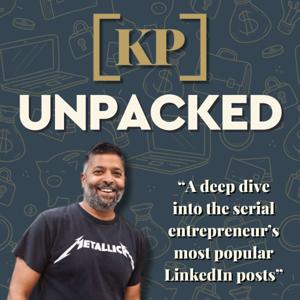
KP Unpacked explores the biggest ideas in AEC, AI, and innovation, unpacking the trends, technology, discussions, and strategies shaping the built environment and…
388 Listeners

1,980 Listeners

1,089 Listeners

111,865 Listeners

56,449 Listeners

8,527 Listeners

9,532 Listeners
65,461 Listeners
46,104 Listeners

10,190 Listeners

29,207 Listeners

15,904 Listeners
10 Listeners
15,960 Listeners