
Sign up to save your podcasts
Or

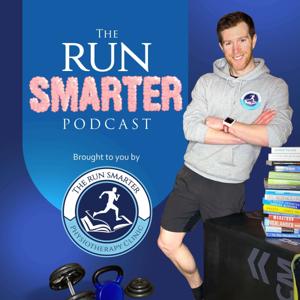

Learn more about Brodie's Research Database & AI Assistant 📄🔍
For MORE Run Smarter Resources 🏃♂️📚
- Including Free Injury Prevention Courses 🩹🎓
- The Run Smarter Book 📖
- Access to Research Papers 📄🔍
- & Ways to Work with Brodie 🤝👟
👉 CLICK HERE! 🎉✨
In this month’s Latest Running Research episode, Brodie breaks down four newly published papers that challenge common assumptions about bone health, injury risk, shoe prescription, and recovery tools in runners.
Across all four studies, a consistent theme emerges: what feels logical—or is heavily marketed—doesn’t always align with how the body actually adapts. From bone mineral density and stress injuries to shoe “matching” and foam rolling, this episode helps runners separate useful tools from over-inflated claims.
🦴 Paper 1: Bone Mineral Density & Ground Reaction Forces
This study explored whether the forces experienced during running are associated with bone mineral density (BMD)—and whether this relationship differs between male and female runners.
Key Findings
Why This Matters
Practical Takeaways
🦴 Paper 2: Biomechanics & Bone Stress Injuries
This scoping review examined biomechanical factors associated with bone stress injuries (BSIs) across multiple running populations.
Key Findings:
Why This Matters
Practical Takeaways
👟 Paper 3: Shoe Recommendations & Gait Analysis
This single-blinded randomised trial tested whether shoes recommended based on gait analysis actually change how runners move—or simply change how they feel.
Key Findings
Why This Matters
Practical Takeaways
🧠 Paper 4: Foam Rolling & the Knowledge-to-Action Gap
To close the episode, Brodie discusses a paper examining whether practitioner beliefs about foam rolling align with scientific evidence.
Key Findings
Why This Matters
Practical Takeaways
🔑 Episode Take-Home Message
Across bone health, injury risk, footwear, and recovery tools, the evidence consistently shows that adaptation is driven by load, context, and recovery—not quick fixes or marketing claims.
Understanding what actually matters allows runners to train smarter, reduce injury risk, and focus on interventions that truly move the needle.
 View all episodes
 By Brodie Sharpe

4.8
134134 ratings
Learn more about Brodie's Research Database & AI Assistant 📄🔍
For MORE Run Smarter Resources 🏃♂️📚
- Including Free Injury Prevention Courses 🩹🎓
- The Run Smarter Book 📖
- Access to Research Papers 📄🔍
- & Ways to Work with Brodie 🤝👟
👉 CLICK HERE! 🎉✨
In this month’s Latest Running Research episode, Brodie breaks down four newly published papers that challenge common assumptions about bone health, injury risk, shoe prescription, and recovery tools in runners.
Across all four studies, a consistent theme emerges: what feels logical—or is heavily marketed—doesn’t always align with how the body actually adapts. From bone mineral density and stress injuries to shoe “matching” and foam rolling, this episode helps runners separate useful tools from over-inflated claims.
🦴 Paper 1: Bone Mineral Density & Ground Reaction Forces
This study explored whether the forces experienced during running are associated with bone mineral density (BMD)—and whether this relationship differs between male and female runners.
Key Findings
Why This Matters
Practical Takeaways
🦴 Paper 2: Biomechanics & Bone Stress Injuries
This scoping review examined biomechanical factors associated with bone stress injuries (BSIs) across multiple running populations.
Key Findings:
Why This Matters
Practical Takeaways
👟 Paper 3: Shoe Recommendations & Gait Analysis
This single-blinded randomised trial tested whether shoes recommended based on gait analysis actually change how runners move—or simply change how they feel.
Key Findings
Why This Matters
Practical Takeaways
🧠 Paper 4: Foam Rolling & the Knowledge-to-Action Gap
To close the episode, Brodie discusses a paper examining whether practitioner beliefs about foam rolling align with scientific evidence.
Key Findings
Why This Matters
Practical Takeaways
🔑 Episode Take-Home Message
Across bone health, injury risk, footwear, and recovery tools, the evidence consistently shows that adaptation is driven by load, context, and recovery—not quick fixes or marketing claims.
Understanding what actually matters allows runners to train smarter, reduce injury risk, and focus on interventions that truly move the needle.
1,171 Listeners

1,507 Listeners
1,343 Listeners

4,150 Listeners
426 Listeners

50 Listeners
196 Listeners

781 Listeners
1,884 Listeners

380 Listeners
17 Listeners

964 Listeners

168 Listeners
369 Listeners

46 Listeners