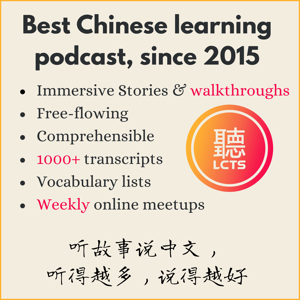
Learning Chinese through Stories

Learning Chinese through Stories

Download on the App Store
  • Favorites

    314

    Followers

  • Typical duration

    10 min

    per episode

Based on Podcast App listening data

Learning Chinese through Stories episodes

  • 1.3.14A 故事《小白兔和小灰兔》
    "Give a Man a Fish, and You Feed Him for a Day. Teach a Man To Fish, and You Feed Him for a Lifetime". Have you heard about this quote before? Well, this is a similar one, but it is rabbit and napa cabbage instead. Going through the new word list before you listen to this episode will help you have a better understanding. The word list can be found on www.learningchinesethroughstories.com 老山羊在地里收 白菜,小白兔和小灰兔来帮忙。 收完白菜,老山羊把一车白菜送给小灰兔。小灰兔收下了,说:"谢谢您!" 老山羊又把一车白菜送给小白兔。小白兔说:"我不要白菜,请您给我一些 菜子吧。"老山羊送给小白兔一包菜子。 小白兔回到家里,把地翻 松了,种上菜子。 过了几天,白菜长出来了。小白兔常常给白菜浇水,施肥,拔草,捉虫。白菜很快就长大了。 小灰兔把一车白菜拉回家里。他不干活了,饿了就吃老山羊送的白菜。 过了些日子,小灰兔把白菜吃完了,又到老山羊家里去要白菜。 这时候,他看见小白兔挑着一担白菜,给老山羊送来了。小灰兔很奇怪,问道:"小白兔,你的菜是哪儿来的?" 小白兔说:"是我自己种的。只有自己种,才有吃不完的菜。" ——摘自人教版小学语文课本一年级下册
    4 min
  • 1.3.13B 故事解读《司马光》
    古时候 gǔ shíhòu Noun phrase, ancient times 回 huí noun, time(s) 一回,one time/once 两回,twice 几回,a few times 跟 gēn Prep, (do something) with (someone); and, (noun) and (noun) 我跟朋友去看电影。I went to the movie with a friend. 苹果跟香蕉,apple and banana 花园 huāyuán Noun, garden 颐和园(yíhéyuán),the summer palace 假 jiǎ Adj, fake 假山,fake mountain; rockery 口 kǒu Measure word for vat, water well and family members 一口水缸,一口井(jǐng),五口人 水缸 shuǐ gāng Noun, a big container for water, usually it is made of porcelain 鱼缸,fish tank 浴缸,bath tub 米缸, a porcelain container for rice 烟灰缸,an ashtray for cigarette 装 zhuāng Verb, to contain 把米装到缸里, put the rice into the rice container 满 mǎn Adj, full 爬 pá Verb, to crawl 掉 diào Verb, to fall 掉下来,to fall down 进 jìn Verb, to get in 别的 bié de Adj, other 慌 huāng Adj, to be in panic 别慌!Don't panic! 吓 xià Verb, to scare (someone) 哭 kū Verb, to cry 叫 jiào Verb, to yell 喊 hǎn Verb, to shout 大人 dàrén Noun, guardians 举起 jǔ qǐ Verb, to lift up… 块(儿) kuài (er) Measure word for stone, rock, candy, chocolate, etc. 石头 shítou Noun, rock; stone 使劲儿 shǐjìn er Verb, to exert all one's strength 砸 zá Verb, to smash (something) with something heavy and hard (such as rock, brick, etc) 几下子 jǐ xiàzi (conduct an action for )a few times 破 pò Adj, to be torn 得救 déjiù Verb phrase, to get rescued; to be saved 司马光救了小朋友。Simaguang saved the little guy's life. 小朋友被司马光救了。The little guy was saved by Simaguang. 小朋友得救了。The little guy was saved. New words and grammatical structures in the story are being taught in this episode. A lot of repetitions are used so that our learners can get master this story in no time! Enjoy the lesson and please find the new word list on our website: www.learningchinesethroughstories.com
    18 min
  • 1.3.13A 故事 《司马光》
    Simaguang is the writer of the greatest Chinese history masterpiece "Zizhi Tongjian". He was a famous historian, writer and politician in Song Dynasty. This story records his heroic act of saving a drowned buddy in his childhood. It has another well-known Chinese name called "Simaguang smashed the vat" (Simaguang Za Gang) and it is one of the best-known stories in China. Going through the new word list before you listen to this episode will help you have a better understanding. The word list can be found on www.learningchinesethroughstories.com 古时候有个孩子,叫司马光。 有一回,他跟几个小朋友在花园里玩。花园里有假山,假山下面有一口大水缸,缸里装 满了水。有个小朋友爬到假山上去玩,一不小心,掉 进了大水缸。 别的小朋友都慌了,有的吓 哭了,有的叫着喊着,跑去找大人。 司马光没有慌,他举 起一块儿 石头,使劲儿 砸那口缸,几下子就把缸砸破了。 缸里的水流出来了,掉进缸里的小朋友得救了。 ——摘自人教版小学语文课本一年级下册
    3 min
  • 2.1.11B 故事解读《小壁虎借尾巴》
    壁虎 bìhǔ Noun, gecko 尾巴 wěibā Noun, tail 角 jiǎo Noun, corner 墙角,corner of the wall 街角,corner of the street 蚊子 wénzi Noun, mosquito 咬住 yǎo zhù Verb phrase, to bite into; to grip 挣 zhèng Verb, to break; to snap 断 duàn Adj, to be broken into half 逃走 táozǒu Verb, to escape 难看 nánkàn Adj, ugly 爬 pá Verb, to crawl 河边 hé biān Noun, riverside 摇 yáo Verb, to wave (head or tail) ……来……去 ……lái……qù Back and forth 走来走去,walk back and forth 游来游去,swim back and forth 飞来飞去,fly back and forth 行吗? xíng ma? Does (that) work? Will (it )work? Are you Ok with that? 拨水 bō shuǐ Verb phrase, to push aside the water 拨号,to dial a phone number 拨台,to change a radio channel 甩 shuǎi Verb, to swat 伯伯 bóbo Noun, uncle (dad's elder brother) 赶 gǎn Verb, to drive away; to expel 蝇子 yíngzi Noun, flies 屋檐 wūyán Noun, eaves 空中 kōngzhōng In the air Or天空中 摆 bǎi Verb, to sway 阿姨 āyí Noun, aunt (mom's sister or friends) 掌握 zhǎngwò Verb, to acquire the information of…; to acquire/master the skill of… 方向 fāngxiàng Noun, direction(s) 难过 nánguò Adj, upset; sad 傻 shǎ Adj, silly; stupid; retarded; 转 zhuǎn Verb, to turn around 过(去) guò (qù) Verb, to move from one place to another 长 zhǎng Verb, to grow New words and grammatical structures in the story are being taught in this episode. A lot of repetitions are used so that our learners can get master this story in no time! Enjoy the lesson and please find the new word list on our website: www.learningchinesethroughstories.com
    22 min
  • 2.1.11A 故事《小壁虎借尾巴》
    This is a scientific story about a little gecko trying to find out a solution after its tail was bitten by a snake. After an adventure of going to different animals and asking for a loan of a new tail, the little gecko learned that its tail would grow back. Going through the new word list before you listen to this episode will help you have a better understanding. The word list can be found on www.learningchinesethroughstories.com 小壁虎在墙角捉蚊子,一条蛇咬住了它的尾巴。小壁虎一挣,挣断尾巴逃走了。 没有尾巴多难看啊!小壁虎想去借一条尾巴。 小壁虎爬呀爬,爬到小河边。他看见小鱼在河里摇着尾巴游来游去。小壁虎说:"小鱼姐姐,您的尾巴借给我行吗?"小鱼说:"不行啊!我要用尾巴拨水呢。" 小壁虎爬呀爬,爬到大树上。他看见老黄牛在树下甩着尾巴吃草。小壁虎说:"黄牛伯伯,您的尾巴借给我行吗?"老黄牛说:"不行啊!我要用尾巴赶 蝇子呢。" 小壁虎爬呀爬,爬到屋檐下。他看见燕子在空中 摆着尾巴飞来飞去。小壁虎说:"燕子阿姨,您的尾巴借给我行吗?"燕子说:"不行啊!我飞的时候,要用尾巴掌握 方向呢。" 小壁虎借不到尾巴,心里很难过。他爬呀爬,爬回家里找妈妈。小壁虎把借尾巴的事告诉了妈妈。妈妈笑着说:"傻孩子,你转过身子看看。"小壁虎转身一看,高兴地叫起来:"我长出一条新尾巴啦!" ——摘自人教版小学语文课本一年级下册
    4 min
  • 1.3.12B 故事解读《胖乎乎的小手》
    胖乎乎 pànghūhū Adj, chubby 全家 quánjiā Noun phrase, whole family 兰兰 lánlan Chinese nickname for girls. 兰 is a kind of a flower 下班 xiàbān Verb phrase, to get off work 拿 ná Verb, to take/pick something with hands 又 yòu Adv, again; one more time 贴 tiē Verb, to post 墙 qiáng Noun, wall 明白 míngbai Verb, to understand 只是 zhǐshì Adv, only 自己 zìjǐ Pronoun, oneself 那么 nàme Adv, very (+adjective) 替 tì Verb, to do something for someone 过 guò Particle, verb+过,means someone has had the experience of doing something 拖鞋 tuōxié Noun, slippers 洗 xǐ Verb, to wash 手绢 shǒujuàn Noun, handkerchief 姥姥 lǎolao Noun, grandma on mom's side 厨房 chúfáng Noun, kitchen 一眼就…… yīyǎn jiù…… did something at the first sight 红润润 hóngrùn rùn Adv phrase, rosy and healthy 帮 bāng Verb, to help 挠 náo Verb, to scratch 痒痒 yǎngyang Noun, itch 长大 zhǎng dà Verb, (kid, small animal) to grow up 变成 biàn chéng Verb, to become 事情 shìqíng Noun, thing(s) New words and grammatical structures in the story are being taught in this episode. A lot of repetitions are used so that our learners can get master this story in no time! Enjoy the lesson and please find the new word list on our website: www.learningchinesethroughstories.com
    22 min
  • 1.3.12A 故事《胖乎乎的小手》
    This is a modern story that happens in a Chinese family. Chinese girl Lanlan's painting of her own chubby hands got praised by all of her family members. Lanlan's father picked this picture from many of her paintings and hang it on the wall. At first, Lanlan was very confused, but later she learned why from each of her family member. Going through the new word list before you listen to this episode will help you have a better understanding. The word list can be found on www.learningchinesethroughstories.com 全家人都喜欢兰兰画的这张画。 爸爸刚下班回来,拿起画,看了又看,把画贴在了墙上。兰兰不明白,问:"我只是画了自己的小手啊!我有那么多画,您为什么只贴这一张呢?" 爸爸说:"这胖乎乎的小手替我拿过 拖鞋呀!" 妈妈下班回来,看见画,笑着说:"这胖乎乎的小手给我洗过手绢啊!" 姥姥从厨房出来,一眼就看见了画上红润润的小手,说:"这胖乎乎的小手帮我挠过痒痒啊!" 兰兰明白了全家人为什么都喜欢这张画。她高兴地说:"等我长大了。小手变成了大手。它会帮你们做更多的事情!" ——摘自人教版小学语文课本一年级下册
    3 min
  • 2.1.10B 故事解读《要下雨了》
    要 yào Auxiliary verb, means "soon will"; "is going to" 弯 wān Verb, to bend 腰 yāo Noun, waist 山坡 shānpō Noun, the slope of a hill 山顶(ding),the top of a hill 山脚,the foot of a hill 山腰,the mid of a hill 闷 mēn Adj, stifling 直(起) zhí (qǐ) Verb, to straight up… 直起腰 直起身子 身子 shēnzi Noun, body 伸 shēn Verb, to stretch 腰 yāo Noun, waist 燕子 yànzi Noun, swallow 大声 dàshēng Adv, loudly 喊 hǎn Verb, yell; shout 低 dī Adj, low (一)边……(一)边…… (yī) biān……(yī) biān…… (one) is doing two things at the same time. 他一边吃饭一边看电视。He is eating his meal and at the same time watching TV. 空气 kōngqì Noun, air 潮湿 cháoshī Adj, humid 虫子 chóngzi Noun, bug 翅膀 chìbǎng Noun, wing 沾 zhān Verb, to wet; to soak 水珠 shuǐ zhū Noun, drop of water 正 zhèng Adv, 正(在)+verb…, (someone) is doing something. 我正(在)吃饭。I am eating my meal. 忙 máng Adj, busy. 忙着+verb…, (someone) is busy doing something. 我正忙着做作业。I am busy doing my homework. 捉 zhuō Verb, to catch 往前 wǎng qián Towards the direction of the front 往后,往左,往右 池子 chízi Noun, pool Or 水池 游 yóu Verb, to swim 水面 shuǐmiàn Noun phrase, the surface of the water 有空 yǒu kòng Verb, to be available; to be free 你明天有空吗?Will you be free tomorrow? 透气 tòuqì Verb, to get some fresh air 透不过气,to suffocate 快 kuài Adv, hurry 小心 xiǎoxīn Verb, to watch out; to be careful 淋雨 lín yǔ Verb phrase, to get wet in the rain 连忙 liánmáng to hasten to do… 挎 kuà Verb, to carry on the arm 篮子 lánzi Noun, basket 路边 lù biān Noun phrase, the side of the road 群 qún flock, measure word for animals 蚂蚁 mǎyǐ Noun, aunt 消息 xiāoxi Noun, news 高处 gāo chù Noun phrase, high place 低处,low place 搬家 bānjiā Verb, to move (to a new place to live) 加快 jiākuài Verb, to accelerate 步子 bùzi Noun, step 哗 huā The sound of the rain falling 下起来 xià qǐlái Verb phrase, to start to rain/snow New words and grammatical structures in the story are being taught in this episode. A lot of repetitions are used so that our learners can get master this story in no time! Enjoy the lesson and please find the new word list on our website: www.learningchinesethroughstories.com
    23 min
  • 2.1.10A 故事《要下雨了》
    This is a scientific story that teaches people to predict rain from observing animals' change in their behaviors. It is told through a rabbit's lens. 小白兔弯着腰在山坡上割草。天气很闷,小白兔直起 身子,伸伸腰。 小燕子从他头上飞过。小白兔大声 喊:"燕子,燕子,你为什么飞得这么低啊?" 燕子边飞边说:"要下雨了。空气很潮湿,虫子的翅膀沾了小水珠,我飞不高。我正 忙着 捉虫子呢!" 是要下雨了吗? 小白兔往前一看,那边池子里的小鱼都游到水面上来了。 小白兔跑过去,问:"小鱼,小鱼,今天怎么有空出来啊?" 小鱼说:"要下雨了。水里闷得很,我们游到水面上透透气。小白兔, 你快回家吧,小心 淋着雨。" 小白兔连忙 挎起 篮子往家跑。他看见路边有一大群 蚂蚁, 小白兔把要下雨的消息告诉蚂蚁。一只大蚂蚁说:"是要下雨了,我们正忙着往高处 搬家呢!" 小白兔加快 步子往家跑。他一边跑一边喊:"妈妈,妈妈,要下雨了!" 哗,哗,哗,大雨下起来了! ——摘自人教版小学语文课本一年级下册
    4 min
  • 2.2.10B 新闻故事解读《重庆"月饼王"》
    装 zhuāng Verb, to stuff; to fill 满 mǎn Adj, full 海鲜 hǎixiān Noun, seafood 馅 xiàn Noun, filling(s) In northern China, people say 馅儿 重庆 Chóngqìng City name, Chongqing 直径 zhíjìng Noun, diameter 米 mǐ Noun, meter 月饼 yuèbǐng Noun, mooncake, traditional Chinese food for the Mid-Autumn's Day 王 wáng Noun, king 标价 biāojià Verb, the price is marked at… 千 qiān Noun, thousand 百 bǎi Noun, hundred 元 yuán Noun, yuan;RMB 陈家坪 Chénjiāpíng An area in Chongqing city 届 jiè Noun, measure word for festival, conference, competition and etc. 第26届奥运会, the 26th Olympic Games 节 jié Noun, festival 春节, spring festival 展览 zhǎnlǎn Noun, exhibition 中心 zhōngxīn Noun, center 开幕 kāimù Verb, to open (ceremony, festival, exhibition) 开幕式, opening ceremony 等 děng Pronoun, etc. 我喜欢吃西瓜、苹果等水果。 余 yú A little bit more than… 十余个,11-15 二十余个,21-25 三十余个, 31-35 省 shěng Noun, province 市 shì Noun, city 品牌 pǐnpái Noun, brand Or 牌子 参加 cānjiā Verb, participate 公斤 gōngjīn Noun, kilogram Or 千克 市民 shìmín Noun, residents of a city 据……介绍 jù……jièshào According to … (speaking) 据王先生介绍,according to Mr.Wang, 负责人 fùzé rén Noun, the person who is in charge (of the event) 包 bāo Verb, to wrap 包饺子,to make dumplings 包月饼,to make mooncakes 重 zhòng Adj, heavy; verb, to be weighed as… 厚 hòu Adj, thick (the distance from one edge to the opposite side is thick); verb, the thickness is measured as… 厘米 límǐ Noun, centimeter 耗用 hào yòng Verb, to use 面粉 miànfěn Noun, flour 由 yóu Prep, (something is done) by (someone) 师傅 shīfù Noun, master (of a skill) 日夜赶工 rìyè gǎngōng Chengyu, to work diligently day and night 完成 wánchéng Verb, to complete New words and grammatical structures in the story are being taught in this episode. A lot of repetitions are used so that our learners can get master this story in no time! Enjoy the lesson and please find the new word list on our website: www.learningchinesethroughstories.com ta2wpmmr

    24 min

About Learning Chinese through Stories

From the publisher's feed

Using more than 99% target language, LCTS听故事说中文 creates authentic and immersive Chinese language podcast. It covers a wide range of topics and proficiency levels(Novice, Intermediate, Advanced). Every…

Best of Learning Chinese through Stories

Ranked by our users in the last 21 days

More shows like Learning Chinese through Stories

Learn Mandarin Chinese  - Chinese Audio Lessons by Melnyks Chinese

Learn Mandarin Chinese - Chinese Audio Lessons

624 Listeners

All Ears English Podcast by Lindsay McMahon and Michelle Kaplan

All Ears English Podcast

2,274 Listeners

Coffee Break Chinese by Coffee Break Languages

Coffee Break Chinese

167 Listeners

Speak Chinese Naturally -Learn Chinese (Mandarin) by Speak Chinese Naturally

Speak Chinese Naturally -Learn Chinese (Mandarin)

98 Listeners

Chillchat (Learn Chinese and Chill) by Chilling Chinese

Chillchat (Learn Chinese and Chill)

219 Listeners

ChinesePod - Beginner by ChinesePod LLC

ChinesePod - Beginner

95 Listeners

大鹏说中文 - Speak Chinese with Da Peng by Da Peng

大鹏说中文 - Speak Chinese with Da Peng

41 Listeners

ChinesePod - Intermediate by ChinesePod LLC

ChinesePod - Intermediate

75 Listeners

聊聊东西 - Talk to Me in Chinese by Candice X

聊聊东西 - Talk to Me in Chinese

76 Listeners

Listening Time: English Practice by Sonoro |  Conner Pe

Listening Time: English Practice

554 Listeners

MaoMi Chinese by MaoMi Chinese

MaoMi Chinese

56 Listeners

TeaTime Chinese 茶歇中文 by Nathan Rao

TeaTime Chinese 茶歇中文

86 Listeners

Sunhuyn Podcast by Sunhuyn

Sunhuyn Podcast

62 Listeners

五分钟中文 5 Minute Chinese by The Lone Mandarin Teacher

五分钟中文 5 Minute Chinese

13 Listeners

TED中文 by TED

TED中文

17 Listeners