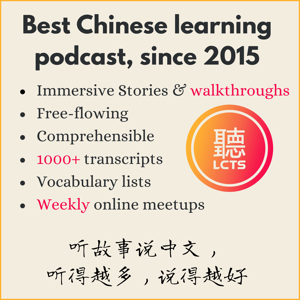
Learning Chinese through Stories

Learning Chinese through Stories

Download on the App Store
  • Favorites

    314

    Followers

  • Typical duration

    10 min

    per episode

Based on Podcast App listening data

Learning Chinese through Stories episodes

  • 2.3.7A 故事《掌声》
    As a handicapped girl who suffered polio when she was little, Yingzi always came to school very early and left at last because she felt embarrassed to walk in front of others. One day, Yingzi was called up by a new teacher to present a story in front of the whole class. Yingzi did not know that her life was going to changed... 上小学的时候,我们班有位叫英子的同学。她很文静,总是默默地坐在教室的一角。上课前,她早早地就来到教室,下课后,她又总是最后一个离开。因为她得过小儿麻痹症,腿脚落下了残疾,不愿意让别人看见她走路的姿势。 一天,老师让同学们轮流上讲台讲故事。轮到英子的时候,全班同学的目光一齐投向了那个角落,英子立刻把头低了下去。老师是刚调来的,还不知道英子的情况。 英子犹豫了一会儿,慢吞吞地站了起来,眼圈红红的。在全班同学的注视下,她终于一摇一晃地走上了讲台。就在英子刚刚站定的那一刻,教室里骤然间响起了掌声,那掌声热烈而持久。 在掌声里,我们看到,英子的泪水流了下来。掌声渐渐平息,英子也镇定了情绪,开始讲述自己的一个小故事。她的普通话说得很好,声音也十分动听。故事讲完了,教室里又响起了热烈的掌声。英子向大家深深地鞠了一躬,然后,在掌声里一摇一晃地走下了讲台。 从那以后,英子就像变了一个人似的,不再像以前那么忧郁。她和同学们一起游戏说笑,甚至在一次联欢会上,还让同学们教她跳舞。 几年以后,我们上了不同的中学。英子来信说:"我永远不会忘记那掌声,因为它使我明白,同学们并没有歧视我。大家的掌声给了我极大的鼓励,使我鼓起勇气微笑着面对生活。" ——摘自人教版小学语文课本三年级上册
    6 min
  • 2.l.17 笑话《王子和公主》
    The prince was under a curse and he could only say one word every one year. Hence, he did not speak for 5 years so that he could tell a princess something very important. Five years passed and when he finally could say five words, something shocking happened... Worksheet questions for this story can be found under the tab "练习题Worksheet" on http://www.learningchinesethroughstories.com 王子被施了魔法,一年只能说一个字。他五年没说话,攒够能讲五个字时,来到公主面前说:"公主我爱你"。公主只回答了一个字,王子就晕倒了。公主说"啥?" ——摘自http://www.jj59.com/gaoxiaowenzhang/030757.html 王子 wángzǐ Noun, prince 施 shī Verb, to cast (a spell over someone or something) 魔法 mófǎ Noun, wizardry 攒 zǎn Verb, to accumulate 够 gòu Adj, enough; sufficient 讲 jiǎng Verb, to speak; to talk 公主 gōngzhǔ Noun, princess 晕 yūn Verb, to faint 倒 dǎo Verb, to fall down 啥 shá Pronoun, what? Usually used by itself as"啥?"to ask another interlocutor for repeat 干啥呢? A colloquial way to ask "What are you up to?" in Northeastern China.
    9 min
  • 2.1.16 笑话《老人丢车》
    Find the transcript of glossary under "Stories", "Joke stories" on http://www.learningchinesethroughstories.com An old man decided to put three locks on his newly-bought bicycle after losing his previous one. And he also left a note to any potential thief. On the following day, his bicycle was kept well; however, he also saw something unbelievable... 一老人丢车,当他将新买的自行车放在楼下时,他上了三把锁并夹了张纸:"让你丫偷!"第二天,车没有丢,并多了两把锁和一张纸:"让你丫骑!" 丢 diū Verb, to lose 将 jiāng Pretransitive, same with "把" 自行车 zìxíngchē Noun, bicycle 楼下 lóu xià Noun phrase, downstairs 上锁 shàng suǒ Verb phrase, to lock the lock 把 bǎ Measure word for "lock" 并 bìng Conjunction word, (not only…,) but also… 夹 jiá Verb, to place in between (我)让你…… (wǒ) ràng nǐ…… (I) won't let you do… as you want. 丫 yā Curse word in Beijing dialect, usually follows "你",to express one's anger about "you", the other interlocutor. Exchangeable with "他妈的"in mandarin. 偷 tōu Verb, to steal 骑 qí Verb, to ride (horse, bicycle)
    13 min
  • 2.1.15 笑话《家里闹鬼》
    A drunken man found his house was haunted. But when he told his wife the terrifying story, his wife slapped him. Listen to this episode and find out why. Find the transcript of glossary under "Stories", "Joke stories" on http://www.learningchinesethroughstories.com 醉汉回到家,对妻子说:"家里闹鬼了!"妻子满脸惊恐,问:"何以见得?"醉汉说:"我一拉卫生间的门,灯就亮了,而且阴风阵阵,寒气逼人!"妻字一巴掌打去:"你他妈的又尿冰箱里了。" 醉汉 zuì hàn Noun, drunken man 妻子 qīzǐ Noun, wife 闹鬼 nàoguǐ Verb phrase, to be haunted (by ghost) 这间房子闹鬼! This room is haunted! 满脸 mǎn liǎn Noun phrase, the whole face 惊恐 jīngkǒng Adj, alarmed and panicky 何以见得 héyǐ jiàndé Chengyu, "How do you know?" 阴风阵阵 yīnfēng zhèn zhèn Chengyu, chilly wind blows 阵, measure word for 风 寒气逼人 hánqì bī rén Chengyu, there is a nip in the air 巴掌 bāzhang Noun, palm; hand 打/给……一巴掌,Slap someone on the face 他妈的 tā mā de Curse word, express ones' anger Subject+ 他妈的+ verb+object. "他妈的!"means "Damn it!"by itself. 尿 niào Verb, to pee; noun, urine 冰箱 bīngxiāng Noun, refrigerator
    10 min
  • 2.1.14B 故事解读《小蝌蚪找妈妈》
    New words and grammatical structures in the story are being taught in this episode. A lot of repetitions are used so that our learners can get master this story in no time! Enjoy the lesson and please find the new word list on our website: www.learningchinesethroughstories.com 蝌蚪 kēdǒu Noun, tadpole 池塘 chítáng Noun, pond 游泳池,swimming pool 脑袋 nǎodai Noun, brain 甩 shuǎi Verb, to whip 歌曲《一个人的精彩》 快活 kuàihuó Adj, happy 啊(哇) a (wa) Verb+啊+verb, doing something without a stop 吃啊吃,eat and eat 走哇走,walk and walk 鲤鱼 lǐyú Noun, carp 捕食 bǔshí Verb phrase, (predators) hunt for food 迎 yíng Verb, to go to meet; to welcome 宽 kuān Adj, wide 乌龟 wūguī Noun, turtle 摆动 bǎidòng Verb, to sway; to swing 连忙 liánmáng Adv, promptly; immediately; instantly Or 赶忙,赶紧 追 zhuī Verb, to chase 顶上 dǐng shàng Pronoun, the top (side) 披 pī Verb, to drape over (ones' shoulder) 衣裳 yīshang Noun, clothes 荷花 héhuā Noun, lotus flower 荷叶 hé yè Noun, lotus leaf 蹲 dūn Verb, to squat 青蛙 qīngwā Noun, frog 碧绿 bì lì Adj, green as a jade 露 lòu Verb, to expose 雪白 xuěbái Adj, white as snow 肚皮 dùpí Noun, belly 鼓 gǔ Verb, to bulge 对 duì Measure word for a pair of eyes, ears, earrings, bracelets, twins. Cannot use for shoes, socks, chopsticks 蹬 dēng Verb, to thrust against 跳 tiào Verb, to jump 蹦 bèng Verb, to hop 捉 zhuō Verb, to catch; to capture 害虫 hàichóng Noun, pest

    27 min
  • 2.1.14A 故事《小蝌蚪找妈妈》
    This is the story that all Chinese people grew up with. It aimed to teach kids the scientific knowledge about tadpoles' life cycles into frogs. The story was also adapted into a watercolor animation and it gained a great success. Find the transcript of glossary under "Stories", "Scientific stories" on http://www.learningchinesethroughstories.com 池塘里有一群小蝌蚪,大大的脑袋,黑灰色的身子,甩着长长的尾巴,快活地游来游去。 小蝌蚪游哇游,过了几天,长出两条后腿。他们看见鲤鱼妈妈在教小鲤鱼捕食,就迎上去,问:"鲤鱼阿姨,我们的妈妈在哪里?"鲤鱼妈妈说:"你们的妈妈四条腿,宽嘴巴。你们到那边去找吧!" 小蝌蚪游哇游,过了几天,长出两条前腿。他们看见一只乌龟摆动着四条腿在水里游,连忙追上去,叫着:"妈妈,妈妈!"乌龟笑着说:"我不是你们的妈妈。你们的妈妈头顶上有两只大眼睛,披着绿衣裳。你们到那边去找吧!" 小蝌蚪游哇游,过了几天,尾巴变短了。他们游到荷花旁边,看见荷叶上蹲着一只大青蛙,披着碧绿的衣裳,露着雪白的肚皮,鼓着一对大眼睛。 小蝌蚪游过去,叫着:"妈妈,妈妈!"青蛙妈妈低头一看,笑着说:"好孩子,你们已经长成青蛙了,快跳上来吧!"他们后腿一蹬,向前一跳,蹦到了荷叶上。 不知什么时候,小青蛙的尾巴已经不见了。他们跟着妈妈,天天去捉害虫。 ——摘自人教版小学语文课本一年级下册
    4 min
  • 2.2.13 笑话《农民和警察》
    A farmer was driving his bullock cart to the city, while a cop stopped him for driving a cart without a car plate. The farmer got really angry. He did one thing that made the cop so mad that he fainted and fell... Find the transcript of glossary under "Stories", "Joke stories" on http://www.learningchinesethroughstories.com 一农民赶牛车进城被警察拦下,理由是没有车牌。农民愤怒,找来一木板写了一牌挂上,警察当场晕倒,只见牌上写着:牛B—74110。 农民 nóngmín Noun, farmer 赶 gǎn Verb, to drive (a bullock cart, a coach) 牛车 niú chē Noun, bullock cart 警察 jǐngchá Noun, policeman 拦下 lán xià Verb, to stop (someone from going somewhere/doing something) 理由 lǐyóu Noun, reason 车牌 chēpái Noun, car plate or牌照(zhào) 愤怒 fènnù Adj, angry 木板 mùbǎn Noun, a board made of wood 白板, whiteboard 挂上 guà shàng Verb, to hang 当场 dāngchǎng on the spot; immediately 晕倒 yūn dǎo Verb phrase, to faint and fall 牛B niú bī, Adj, (colloquial, improper for kids) cool; stunning Or 牛掰(bāi), a more appropriate way of say 牛B
    10 min
  • 3.3.1B 解读《乡村孩子与奥运会》
    We went through this commentary article with you with a focus on new words, sayings and cultural references. Transcript of this article can be found with the searching bar on the top left corner of our website www.learningchinesethroughstories.com
    46 min
  • 3.3.1A《乡村孩子与奥运会》
    This is a commentary article that targets on advanced-high learners. While China gets on the top-3 gold medal list of the Olympic Games, many kids from countryside barely get any physical education in school. Check out this article by Mr. Changjun Wang from a famous Chinese periodical "Sanlian Shenghuo Zhoukan". 乡村孩⼦与奥运会 马长军 奥运会开幕后,我在微信群里做了⼀个小调查,问家长们,孩⼦喜欢看哪项比赛,⼤多数家长都说孩⼦根本就不看体育节目,只有四五个家长提到孩⼦看了奥运会节目,但兴致不是很⾼,"看不懂"。有些家长还提到自⼰也不看体育节目。 要说这样的结果我不该感到意外。多年来⼀直教小学语⽂课,我曾经让学⽣写过"我最喜欢的体育活动"之类的作⽂,可孩⼦们写得真是"惨不忍睹",不少学⽣从头到尾都没说清自⼰"最喜欢"的体育项目的具体名称,竟然就以"体育活动"之类词语表示,有的学⽣显然是⽆从下笔,想起什么写什么,写"赛跑"的最多,就是因为他们的体育课除了"赛跑"也就没别的了,更有说喜欢体育课是因为最自由,可以随便玩⼀节课的。有个别学⽣虽然也写了具体的体育项目,但不懂得相关项目活动规则,天马⾏空,简直要写成"少林⾜球"。 别说奥运会,体育其实离这些乡村孩⼦也很遥远。我去过⼀些乡村学校,也经常跟乡村同⾏聊天,了解到的情况实在令⼈失望。各班的课程表上每周顶多只有两三节体育课,有些学校的⾼年级每周有⼀节体育课就不错了,临到考试前,体育课全都变成练习课、作业课、模拟考试课。平时可怜的⼏节体育课如果没有被哪个老师随便"借用",也常常因为没有专业的体育老师⽽"放⽺"。有的学校有个操场却没有什么体育设施也没有活动器材,就是⼀块平地⽽已,有的学校倒是有篮球架,但是很"幸运",它从来没被篮球砸过。近些年财政拨款给很多乡村小学发放了⼀些体育器材,比如有乒乓球台,有的进了学校就直接被塞到器材室再也不见天日了。⾄于单杠、双杠、鞍马什么的,⼤概有的孩⼦听都没听说过呢。 体育、奥运会、⾜球等等这⼀切,对乡村孩⼦⽽⾔陌⽣到可能就不知道它们的存在。即使有老师能给孩⼦们上⼏节体育课,要么缺乏专业知识,要么对体育的认识模糊,基本不会讲多少体育常识和规则。现在很多乡村孩⼦以及他们的家长提到体育,就想到"玩",随便玩就是体育课。学校没组织过运动会,很多乡镇也从来没组织过运动会,校际体育竞赛之类,想都没⼈想过。其实县城里运动会也是稀罕物,体育馆建成七⼋年了,好像只在里面举办过⼀次体育比赛,20 多万⼈的城市如此冷清! 在乡村,因体育活动的缺乏也就⽆从培养体育精神、奥运精神,那些⾦牌、体育明星对乡村孩⼦⼏乎不会产⽣什么影响,⾦牌拿得再多,比赛⽆论如何精彩,看得眼花缭乱,都⽆法引起众多乡村孩⼦的共鸣。有时我忍不住感慨,⼴⼤乡村地区包括在"体育⼤国"之内吗? 前些天看到⼀则报道,说乡村小胖墩越来越多,这固然与饮食有很⼤关系,乡村孩⼦的健康令⼈担忧。如果乡村学校以及⼴⼤乡村地区的体育活动能比较好地展开,小胖墩问题也许不会爆炸性地出现。 ——摘自 《三联⽣活周刊》
    8 min
  • 1.3.16 笑话《乌龟和蜗牛》
    Turtle got injured and his friend snail went to get him some medications. After a long wait for 2 hours, the turtle started to lose his patience and make complaint. And surprisingly, he found... 乌龟 受伤了,让蜗牛去买药。过了两个小时,蜗牛还没有回来。乌龟急了就骂它:"哼,这蜗牛,再不回来我可就死了!" 这时候 门外 传来了蜗牛的声音:"你再说我,我就不去帮你买药了!" 乌龟 wūguī Noun, turtle 受伤 shòushāng Verb, to get injured 药 yào Noun, medication 蜗牛 wōniú Noun, snail 急 jí Verb, to feel anxious 骂 mà Verb, to call names; to curse 时候 shíhou Noun, moment 这时候,at this moment 那时候,at that moment 什么时候?When? 门外 mén wài Noun phrase, the outside (of the room, house) 传 chuán Verb, (voice/sound/noise/news) comes/goes to somewhere; verb, to pass (a ball) 外面传来火车的声音。The noise of the train came from the outside. 把球传过来!Pass the ball here! 声音 shēngyīn Noun, voice;sound 声音大, loud 声音小,the sound is small
    9 min

About Learning Chinese through Stories

From the publisher's feed

Using more than 99% target language, LCTS听故事说中文 creates authentic and immersive Chinese language podcast. It covers a wide range of topics and proficiency levels(Novice, Intermediate, Advanced). Every…

Best of Learning Chinese through Stories

Ranked by our users in the last 21 days

More shows like Learning Chinese through Stories

Learn Mandarin Chinese  - Chinese Audio Lessons by Melnyks Chinese

Learn Mandarin Chinese - Chinese Audio Lessons

624 Listeners

All Ears English Podcast by Lindsay McMahon and Michelle Kaplan

All Ears English Podcast

2,274 Listeners

Coffee Break Chinese by Coffee Break Languages

Coffee Break Chinese

167 Listeners

Speak Chinese Naturally -Learn Chinese (Mandarin) by Speak Chinese Naturally

Speak Chinese Naturally -Learn Chinese (Mandarin)

98 Listeners

Chillchat (Learn Chinese and Chill) by Chilling Chinese

Chillchat (Learn Chinese and Chill)

219 Listeners

ChinesePod - Beginner by ChinesePod LLC

ChinesePod - Beginner

95 Listeners

大鹏说中文 - Speak Chinese with Da Peng by Da Peng

大鹏说中文 - Speak Chinese with Da Peng

41 Listeners

ChinesePod - Intermediate by ChinesePod LLC

ChinesePod - Intermediate

75 Listeners

聊聊东西 - Talk to Me in Chinese by Candice X

聊聊东西 - Talk to Me in Chinese

76 Listeners

Listening Time: English Practice by Sonoro |  Conner Pe

Listening Time: English Practice

554 Listeners

MaoMi Chinese by MaoMi Chinese

MaoMi Chinese

56 Listeners

TeaTime Chinese 茶歇中文 by Nathan Rao

TeaTime Chinese 茶歇中文

86 Listeners

Sunhuyn Podcast by Sunhuyn

Sunhuyn Podcast

62 Listeners

五分钟中文 5 Minute Chinese by The Lone Mandarin Teacher

五分钟中文 5 Minute Chinese

13 Listeners

TED中文 by TED

TED中文

17 Listeners