
Sign up to save your podcasts
Or

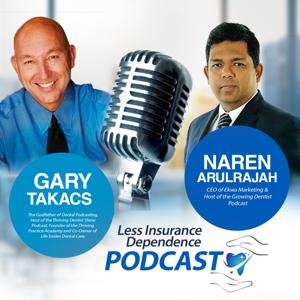


In this episode of The Less Insurance Dependence Podcast, hosts Gary Takacs and Naren Arulrajah dive into the essential strategies for attracting high-value patients to a dental practice. They open the discussion by emphasizing the importance of reducing insurance dependence, aiming to transform practices.
The episode's primary focus is on high-value services. Gary defines procedures requiring more investment from patients and offering higher productivity per unit of time for the practice. These services include dental implants, adult orthodontics, cosmetic dentistry, complex restorative dentistry, oral conscious sedation, and more. By incorporating these services, dentists can significantly enhance their practice's profitability and independence on insurance.
Gary and Naren discuss Google's pivotal role in attracting high-value patients, emphasizing the need to dominate Google search results to reach the top 5% of practices that capture 95% of organic traffic. They explain the importance of search engine optimization (SEO) and the difference between organic and paid search results. They note that organic search leads to more engaged and trusting practices among patients.
Naren outlines six critical factors that influence Google's ranking algorithm and stresses the need for consistent efforts both on the practice's website and across the internet to maintain a top position. He underscores the cost-effectiveness of SEO compared to paid search and P P O marketing, illustrating how a strong SEO strategy can lead to long-term success and reduced marketing expenses.
The episode concludes with Gary reflecting on the deeper rewards of dentistry, noting that hiGoogle's services not only enhance a practice's financial health but also enable practice life-changing impacts on their patients.
In this milestone 300th episode of the Less Insurance Dependence Podcast, listeners are treated to the success stories of three guests at different stages of their journey toward reducing insurance dependence. Dale, Gina, and Peter share their unique experiences, lessons learned, and invaluable insights for fellow dentists. They discuss what has worked effectively and potential adjustments they would consider and emphasize critical strategies they wish they had implemented sooner. Their candid reflections offer listeners practical guidance and inspiration for navigating the complexities of transitioning to a fee-for-service model. They share insights on the impact of COVID-19, which unexpectedly helped retain patients who truly value their practices. Dale explains how his practice successfully resigned from Delta Dental, highlighting the importance of a thorough six-step plan and coaching support. Gina emphasizes the crucial role of patient relationships and new patient experiences in making the transition smoother. Peter discusses the role of their business administrator and the significance of strong leadership in navigating this change.
For dentists considering this transition, Dale advises getting the practice in order and ensuring an exceptional patient experience. Gina suggests thorough preparation, while Peter emphasizes having a strong business administrator and leveraging coaching support. They also discuss having a backup plan to rejoin insurance networks if necessary, although they have yet to have to do so.
Economic benefits are evident, as Dale shares, with fee-for-service patients bringing in better financial outcomes compared to insurance patients. Practical steps include starting with the smallest insurance plan to build confidence and preparing scripted responses for patient conversations. Gary addresses questions about specialty practices, confirming that pediatric practices can also successfully transition with the right approach.
In this episode of The Less Insurance Dependence Podcast, host Gary Takacs and Naren Arulrajah discuss crucial payment details when resigning from PPO plans. They aim to alleviate the common anxieties dentists face when transitioning away from insurance dependence. The core topic of this episode delves into the logistics of payment collection post-PPO resignation. Gary explains that most insurance companies, except Delta, allow for the assignment of benefits, meaning the insurance company will continue sending checks directly to the practice. For Delta, however, checks are sent to the patients, necessitating full payment collection at the time of service. Gary offers practical advice on communicating this change to patients, suggesting a script that emphasizes the speedy reimbursement process from Delta and the option to use credit cards to manage the initial payment. Naren then poses three pertinent questions to listeners. The first question addresses whether practices collect full payment at the time of service. Gary clarifies that this depends on the insurance company's policies, but full payment is required upfront for Delta patients, with an emphasis on the swift reimbursement they will receive. The second question explores what types of payment plans or financing options should be offered to make dental care more affordable. Gary recommends third-party financing options such as CareCredit and Proceed Finance, which offer flexible payment plans, including interest-free options and extended payment terms.
This episode provides valuable insights and practical strategies for dental practices aiming to reduce insurance dependence while maintaining financial stability and strong patient relationships.
In this episode of the Less Insurance Dependence Podcast, hosts Naren Arulrajah and Gary Takacs discuss effective strategies for communicating with patients about the value of being out of network. The primary focus is on framing the conversation to highlight the benefits for the patients, encapsulated by the principle of WII-FM (What's In It For Me?).
Gary emphasizes the importance of maintaining high-quality care and a positive patient experience, explaining that staying out of network ensures the practice's ability to provide these consistently. By not being constrained by insurance companies, the practice can invest in the latest technologies, such as single-visit restorations, lasers, and three-dimensional cone beams, which significantly enhance patient care. Additionally, being out of network allows the practice to hire and retain quality team members, further ensuring excellent patient service.
The hosts discuss tailoring the communication to the patient's perspective. For instance, when talking to a business owner, mentioning how some insurance companies haven't raised fees since 2009 can resonate well, as business owners understand the need to keep up with operational costs to maintain quality. For the general patient population, it's important to reassure them that they can still use their benefits and that the practice will help them maximize those benefits.
In this episode of The Less Insurance Dependence Podcast, hosts Gary Takacs and Naren Arulrajah tackle the question of why PPO plans have not raised fees or yearly maximums in 25 years. They attribute this stagnation to insurance companies' greed, emphasizing the industry's profit-driven nature. Despite this, they offer insights and strategies for dental practices looking to reduce their dependence on insurance plans and transition to a fee-for-service model.
Gary and Naren address common concerns of dentists, such as drawing enough fee-for-service patients and surviving in states like California, where insurance economics may need to align with practice viability. They highlight the importance of mastering organic search engine optimization to attract new patients from sources like Google rather than relying solely on PPO plans for patient referrals.
Moreover, they discuss the mindset shift necessary to navigate patient expectations, particularly those accustomed to minimal out-of-pocket expenses due to insurance coverage. By emphasizing the value of quality care and creating positive patient experiences, practices can effectively transition away from insurance dependence.
In this episode of The Less Insurance Dependence Podcast, hosts Gary Takas and Naren Arulrajah discuss the feasibility and implications of dropping PPO plans within 12 months. Gary highlights that while it is possible to resign from PPO plans quickly, success depends heavily on a practice's preparation. He emphasizes the importance of transitioning to a relationship-driven practice to retain patients and reduce overhead costs. Gary shares insights from his experience helping over 400 practices across the U.S. and notes that rushing the process without proper preparation, such as training the team in communication and ramping up marketing efforts, can lead to significant patient loss and operational difficulties. Narain underscores the need for practices to develop the right mindset and skills, especially in communicating the value of care to patients who are accustomed to free dentistry through PPO plans. The hosts invite listeners considering this transition to book a coaching strategy meeting with Gary to ensure they approach the process correctly, balancing speed with achieving the best outcomes. They stress that achieving a successful resignation from PPO plans involves comprehensive readiness and the implementation of strategic steps to ensure the practice thrives without insurance dependence.
In this episode of the Less Insurance Dependence Podcast, hosts Naren Arulrajah and Gary Takacs focus on the ten key performance indicators (KPIs) that define a thriving and profitable dental practice. They highlight the importance of these KPIs in measuring and improving various aspects of a dental practice.
First, they discuss the importance of new Google reviews, recommending a goal of at least ten new reviews per month to enhance online reputation and attract new patients. Next, they emphasize the need to measure new patients per month, specifically adult patients undergoing comprehensive exams, to ensure a steady influx of new patients.
Gary emphasizes the importance of monitoring these KPIs monthly to keep a finger on the pulse of the practice and shares insights on how focusing on these metrics can lead to significant improvements. The episode provides practical advice for dental practices aiming to enhance their performance and profitability through strategic measurement and management of these essential KPIs.
In this episode of The Less Insurance Dependence Podcast, Gary Takacs and Naren Arulrajah explore strategies for maintaining profitability after dropping PPO plans. They emphasize the dual approach of increasing revenues and decreasing expenses, noting that eliminating the high overhead of PPO adjustments is crucial.
Gary advises focusing on building a strong hygiene department, incorporating high-value services like adult orthodontics, cosmetic dentistry, and dental implants, and using oral conscious sedation to boost treatment acceptance. He also highlights the importance of effective marketing, maximizing the use of auxiliary team members, and improving case presentation skills to increase daily production.
The episode concludes with a discussion of the most profitable elective procedures, such as dental implants, adult orthodontics, and smile design. These services not only generate high revenue but also meet patient demands for comprehensive care. The hosts underline that with the right strategies, practices can successfully transition away from PPO plans and achieve greater profitability.
In this episode of the "Less Insurance Dependence" podcast, hosts Gary Takacs and Naren Arulrajah tackle the pressing question: Can Your Practice Truly Survive Without Insurance? The episode elaborates on four questions sent in by listeners, addressing various aspects of dealing with insurance companies, particularly focusing on Delta Dental. Gary shares his expertise and experience, shedding light on the evolving landscape of insurance, the challenges posed by Delta Dental, and strategies for managing insurance transitions effectively.
Listeners learn about the expected changes from Delta Dental, including potential fee reductions and increased administrative burdens for providers. They also gain insights into why Delta Dental sends payments to subscribers for out-of-network patients, understanding the company's tactics to pressure providers to stay in-network.
Furthermore, the hosts discuss the importance of effective communication with patients when considering dropping insurance plans, emphasizing the significance of face-to-face discussions and strategic planning to minimize patient loss during transitions. They highlight the need for a comprehensive approach, including coaching and backup plans, to comprehend the complexities of insurance transitions successfully. Tune in to gain valuable insights and strategies for success in an evolving dental landscape.
In this episode of "The Less Insurance Dependence Podcast," Gary Takacs and Naren Arulrajah engage in a detailed discussion on whether insurance companies possess the authority to establish fees for services not covered under insurance plans. They travel into the historical challenges dentists face when insurance companies dictate fees for services beyond their coverage, pondering the philosophical implications of such practices. Notably, they shed light on recent legislative advancements in select states that aim to address this issue. The conversation underscores the importance of dentists staying abreast of state regulations and refraining from violating contract terms. Furthermore, they advocate for a strategic transition away from reliance on PPO plans, emphasizing alternative marketing avenues like Google SEO to attract patients and regain control over fee setting.
From the publisher's feed
298 Listeners
230 Listeners
557 Listeners

111,865 Listeners
78 Listeners
267 Listeners

265 Listeners