
Sign up to save your podcasts
Or

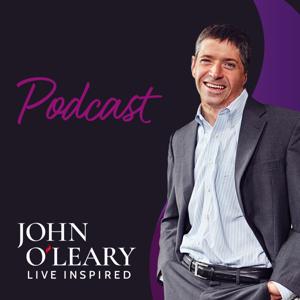
By John O'Leary


4.8
685685 ratings


The podcast currently has 958 episodes available.
The most played episodes among Podcast App listeners.
Danny Bader is a near-death survivor and bestselling author who inspires others to live with greater joy and purpose. In 1992, a workplace accident sent 8,000 volts through his body, leaving him clinically dead for six minutes. Danny survived, but his friend Bruce did not. Grief and survivor's guilt followed before Danny began to see his second chance as a gift. Today, Danny shares how he moved from darkness to gratitude, the unexpected encounter that changed his path, and why he believes our next breath may feel automatic but is never guaranteed. We also discuss slowing down, being present and appreciating the ordinary moments we often overlook. My friends, if you've been going through the motions, this conversation is for you. You'll be inspired to live more fully, love more intentionally and ask: What will I create with the time I have left?

With summer winding down and our two oldest boys preparing to leave for college, I could feel the familiar pull of time. The family dinners, random conversations and beautiful chaos of having four teenagers under one roof won't last forever. So, with three boys still home, still available and, somewhat remarkably, still willing to take an adventure with Dad, we did something impractical: We cashed in airline miles, called a friend for help with tickets and booked a last-minute trip to New York City to watch our Cardinals play the Yankees. Total time in New York: less than 14 hours. Flights were delayed. Traffic was brutal. The hotel wasn't ready. The weather was stifling. Lines into the stadium were long. The Cardinals won two of three games that series. Naturally, we attended the one they lost. And as if that weren't painful enough, one of my own children walked out of Yankee Stadium wearing a brand-new Yankees jersey over his Cardinals shirt, sporting a fake New York accent and an enormous smile. By almost every measure, the trip was imperfect. And yet, later that night, after gyros in Midtown, ice cream and a long walk back to the hotel, I realized something: It had been perfect. Let me explain.
Eleven years ago, I stood in a swimming pool with my arms stretched toward my three-year-old daughter. Grace was learning to swim. She stood on the edge of the pool, blonde hair draped across her face, staring nervously down at the water. "Come on, Grace. Jump in. I've got you." She looked away from the water, glanced anxiously at me and said, "Dad, I don't think I can. What if it doesn't work? What if I fail?" Reasonable questions from a three-year-old standing at the edge of something new. With a little coaxing and a lot of assurance, Grace finally stopped focusing on what might go wrong. She bent her knees, brushed the bangs away from her face, shut her eyes, pushed off the side…and jumped. Earlier this month, that little girl began high school. And as our family enters yet another new season- two kids leaving for college and the younger ones racing toward milestones of their own- I've been thinking again about that pool. About the ledge. About the hesitation. And especially about the jump. Because some of the hardest transitions in life aren't about stretching forward; they're about letting go. Let me explain.
Ben Kjar was born with Crouzon syndrome, a rare craniofacial condition, and has endured painful surgeries, relentless bullying and the weight of being underestimated. And yet Ben refused to let others define what was possible for his life. He became Utah Valley University's first NCAA Division I Wrestling All-American, a world champion wrestler and an international motivational speaker whose extraordinary journey is featured in the award-winning documentary STANDOUT: The Ben Kjar Story. Today, Ben shares how his mother's reminder that he was "born different to make a difference" changed the course of his life, how wrestling helped him turn pain into purpose, and why the challenges we face can become our greatest source of strength. He also reminds us that we may not control what happens to us, but we can always choose whether we live as victims or victors. My friends, if you have ever felt different, underestimated or discouraged by the obstacles in front of you, this conversation is for you. You'll leave inspired to embrace what makes you unique, meet adversity with courage and recognize that the very thing you once wished you could change may be what allows you to make your greatest difference.
Elizabeth Svoboda is an award-winning science journalist whose work has appeared in The New York Times, The Washington Post and Scientific American. In her latest book, The Art of Pacing, she explores how we can meet the demands of today without sacrificing our ability to thrive tomorrow. Today, Elizabeth shares why so many of us bounce between pushing too hard and pulling away completely, how athletes inspired her to rethink our relationship with effort and rest, and what it means to move through life at a more sustainable pace. We discuss how to recognize the warning signs of burnout, adjust our pace before we crash and make daily choices that support what matters most in the long run. My friends, if you're tired of feeling like your only options are to keep grinding or give up entirely, this conversation is for you. You'll leave with a healthier way to think about productivity, practical permission to change your pace and a reminder that slowing down at the right moment may be what allows you to keep moving forward.
The podcast currently has 958 episodes available.
1,409 Listeners
1,342 Listeners
84 Listeners

7,252 Listeners
2,507 Listeners
13,972 Listeners

7,680 Listeners
2,029 Listeners
1,861 Listeners
907 Listeners
108 Listeners
61,832 Listeners
1,433 Listeners

10,564 Listeners
2,088 Listeners