
Sign up to save your podcasts
Or

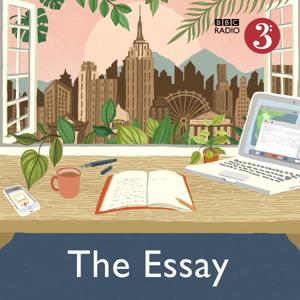

Stepping back in time, BBC News correspondents present a personal perspective on principal cities of the major European powers that fought the First World War. In this Essay, Emma Jane Kirby considers the capital of the largest contemporary modern maritime empire: London.
To today's listeners some of Londoners' concerns a century ago will seem extraordinarily familiar. Complaints about the Tube were as frequent and heartfelt then as they are today. To try and divert travellers from their misery, Macdonald Gill - the brother of sculptor and designer Eric Gill - was commissioned to produce a "Wonderground" map. It was intended to amuse them as they waited for their trains which were infrequent, often dirty and overcrowded.
The map's whimsical illustrations - together with Cockney asides put in the mouths of some of the invented characters - captured the city's above-ground, pre-war character. It evoked the zeitgeist which George Bernard Shaw simultaneously reflected on stage in "Pygmalion" - and led to a subsequent commission to design a theatreland map during the First World War.
Emma Jane Kirby considers the idea of Britain which London was presenting to both the wider world and Britons themselves, and she assesses how far these attitudes still resonate today.
Producer Simon Coates.
 View all episodes
 By BBC Radio 3

4.2
8282 ratings
Stepping back in time, BBC News correspondents present a personal perspective on principal cities of the major European powers that fought the First World War. In this Essay, Emma Jane Kirby considers the capital of the largest contemporary modern maritime empire: London.
To today's listeners some of Londoners' concerns a century ago will seem extraordinarily familiar. Complaints about the Tube were as frequent and heartfelt then as they are today. To try and divert travellers from their misery, Macdonald Gill - the brother of sculptor and designer Eric Gill - was commissioned to produce a "Wonderground" map. It was intended to amuse them as they waited for their trains which were infrequent, often dirty and overcrowded.
The map's whimsical illustrations - together with Cockney asides put in the mouths of some of the invented characters - captured the city's above-ground, pre-war character. It evoked the zeitgeist which George Bernard Shaw simultaneously reflected on stage in "Pygmalion" - and led to a subsequent commission to design a theatreland map during the First World War.
Emma Jane Kirby considers the idea of Britain which London was presenting to both the wider world and Britons themselves, and she assesses how far these attitudes still resonate today.
Producer Simon Coates.

7,913 Listeners
143 Listeners

1,067 Listeners

5,576 Listeners

1,808 Listeners
303 Listeners

1,729 Listeners

1,018 Listeners

1,952 Listeners

488 Listeners

585 Listeners
70 Listeners

410 Listeners
306 Listeners

756 Listeners
841 Listeners

129 Listeners
62 Listeners

241 Listeners
55 Listeners

52 Listeners

181 Listeners
4,186 Listeners

3,245 Listeners