
Sign up to save your podcasts
Or

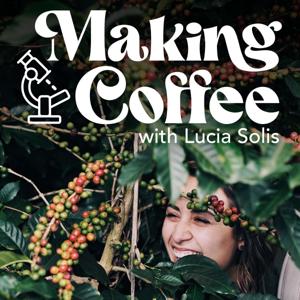


Today you get to be a fly on the wall of a consulting session between myself and a coffee producer in Uganda. The Coffee Gardens is a newer project of coffee producers who have partnered with select coffee farmers in Eastern Uganda. They currently work directly with 300 small holder farmers. They have a micro-processing station in the foothills of Mount Elgon.
This episode might be most relevant to a coffee producer, so if you know any, please pass this episode along to them. Especially if they are curious about using yeast to control their fermentations.
Today we cover how to process undesirable cherries, we talk about the challenges in scaling up from a small trial to full scale lots. We also discuss yeast usage in very rural settings, is it even appropriate? At what volume should a producer consider using yeast?
Even if you’re not a coffee producer I hope you will listen to the questions and concerns of a coffee producer and better understand their reality.
Support the show on Patreon and get access to research papers.
Sign up for the newsletter to stay informed.
Cover Art by: Nick Hafner
Into song: Elijah Bisbee
Mentioned in the Episode:
The Coffee Gardens
Support the show
If you started the season with me in October you’ll remember that I started exploring the topic of what we lose when we take a plant from its native environment. Episode #25: A California Coffee Farm & Native vs. Local Yeasts looked at the relationship between coffee trees and the fermentation.
Dr. Aimee Dudley’s research showed that the native microbes do not travel with the plant material and therefore all coffee fermentations outside of Ethiopia are non-native fermentations.
Episode #26: Do Coffee Trees Talk? How Underground Fungi Affect Coffee Quality showed that when we take a plant from it’s native environment the microbes it needs to have strong immune response are also left behind.
So we’ve touched on the above and below ground microbes that we leave behind.
But is it only about microbes?
Are microbes the most important thing we leave behind?
I argue that it is not. As important as I think they are, I think there is something more valuable that is lost.
Today, in part 3 I want to talk about another aspect we miss out on when we take something from its native environment.
Support the show on Patreon and get access to research papers.
Sign up for the newsletter for new podcast releases.
Cover Art by: Nick Hafner
Into song: Elijah Bisbee
Mentioned in the Episode:
Podcast: How Not To Travel Like A Basic Bitch
Dr. Aimee Dudley's Research Lab
Maca Pirate Video
The Nagoya Protocol
Support the show
We usually hear about coffee from roasters or even people like me, who work with coffee producers but we are not producers ourselves. One of my podcast goals is to bring you directly to the source. Whether it's scientific research or hearing directly from coffee producers.
Often we leave it to coffee professionals and educators to speak about coffee producers but it’s rare to hear directly from coffee producers about their motivations and challenges. And even when we do hear from them on their social media channels, there is a hidden pressure to present a rosy version of reality.
Today’s conversation is with Mark from Finca Rosenheim in the Villa Rica region in Peru.
This conversation is an honest look at some of the challenges producers rarely get to talk about. I asked Mark about organic certifications, climate challenges, coffee competitions, crop diversification, and what happens when markets can’t rebalance themselves.
To get samples or buy coffee from Mark:
Website: www.fincarosenheim.com
Email: [email protected]
Instagram: @fincarosenheim
Support the show on Patreon and get access to research papers, transcripts and videos.
Sign up for the newsletter for new podcast releases.
Cover Art by: Nick Hafner
Into song: Elijah Bisbee
Mentioned in the Episode:
Vox Video: Coffee Crisis in Colombia
Support the show
What is left behind when coffee moves to new locations. What is the trade off for innovation? This episode looks at what else we potentially leave behind when we introduce new plant material to non-native locations.
The inspiration for this episode was a beautiful book by Peter Wohlleben called The Hidden Life of Trees. In it, Peter talks about native forests vs planted forests and the differences we (humans) are able to perceive.
One of the example trees in Peter's book are oak trees. This was an interesting cross over for me because oak is very important for winemaking. Most of red wine is aged in oak barrels and many Chardonnay's too.
This episode is filled with wine information on barrels, tastings and stories of my time in the wine industry.
I enjoyed putting this episode together and I hope you enjoy listening to it. If you would like to support the show and help me make more episodes, join the Patreon community.
Support the show on Patreon and get access to research papers.
Sign up for the newsletter for new podcast releases.
Cover Art by: Nick Hafner
Into song: Elijah Bisbee
Mentioned in the Episode:
Video: How A Barrel Is Made
Video: Dr. Susan Simard Ted Talk
Support the show
This week I want to talk to you about where native coffee yeast come from. If you are concerned about coffee flavor manipulation by yeast, I hope by the end of the episode you have a broader understanding of where "native" yeast originally came from.
To help illustrate the point, we start with non traditional coffee growing regions like Southern California.
In the episode I will also be sharing research from Dr. Amiee Dudley.
I met Dr. Aimee Dudley in 2017 during SCA EXPO in Seattle when we were on a Re:CO Panel together talking about yeast. I was offering the perspective of practical application of yeast, how coffee producers in situ could use it and Dr. Dudley was presenting her research on yeast genetics. She runs a lab at Pacific North West Research Institute and she is an expert on yeast genetics.
Support the show on Patreon and get access to research papers.
Sign up for the newsletter for new podcast releases.
Cover Art by: Nick Hafner
Into song: Elijah Bisbee
Mentioned in the Episode:
The Coffee Podcast: Jay Ruskey
Frinj Coffee
Dr. Aimee Dudley's Research Lab
Support the show
Aurora is back for another tea chat.
Unfortunately I think coffee and tea are often lumped together in similar categories but they have very different histories and I think it’s worth trying to de-couple these beverages.
Join us as we discuss how:
-tea is largely consumed in it's botanical origins and coffee is not.
-the different flavors of stress (positive and negative)
-over extraction and the role of color
-my thoughts on Cascara tea
Mentioned in the Podcast:
Support the show on Patreon and get Aurora's curated tea flights and download the research paper on Leafhoppers and Oriental Beauty oolong tea.
Aurora's Website
Tea Reading List 2020 located at worldcat.org, curated by Aurora Prehn
How to Taste by Becky Selengut
Support the show
What happens when the best in the world can't tell if a wine comes from the Willamette Valley in Oregon or Burgundy, France? What happens when the experts can't tell if the bubbles are from Champagne or California.
Does a place really have a taste? Can we find it in the glass?
That is the premise of terroir, tasting the land, localizing the product. But often, when put "terroir" to the test it cannot be found.
Today's episode starts with the story of the 1976 Judgement of Paris tasting, a famous part of wine history that pitted French terroir-driven wines against terroir-less California wines. The competition had a blind tasting for red wine and for white wines. The red wines were predominantly Cabernet Sauvignon and the white wines were the Chardonnay variety.
We are also going to see what happens when Terroir is used as a basis for certifications. I'll share with you some of the limitations of the "geographic protectionism" and the Appellation d'Origine Contrôlée (AOC) system.
Certifications are usually protective tools but sometimes they can work against the producers they are meant to protect.
How can such a romantic and noble concept, tasting the land, respecting nature - work against producers?
To pick future podcast topics, get access to the scientific papers, ask questions that I answer on the podcast, and help me continue making episodes: consider supporting the show by Joining Patreon Here
Mentioned on the podcast:
The historical origins are from the book Terroir and Other Myths of Winegrowing by Mark A Matthews.
Bottle Shock Movie
A Cougar
Racist Champagne
Support the show
Welcome to the next installment of terroir in coffee.
This one little word contains a whole world of history and has an important role in the economic viability of certain agricultural products.
After the last episode I heard from some of you who wished I had talked about soil minerals and plant nutrition from soil. Others also asked about the wine making regions like Bordeaux where Terroir is regulated by french law. I cover both of these concerns in todays episode before we get to discuss what I really wanted the episode to be about: microbes and morality.
There is an unspoken understanding that products that express terroir are more moral than others.
I wanted to give you an episode that focused on microbiology, that talked about the yeast and bacteria that contribute to a "taste of place" but I couldn't do it without including the human perception that products that express terroir, products that are "transparent" are superior.
I think we need to be really careful because science doesn't support this view. Any moral component of terroir is a choice to see it through a religious and political lens.
I want to challenge your views on "transparency" and "intrinsic quality".
To pick future podcast topics, get access to the scientific papers, ask questions that I answer on the podcast, and help me continue making episodes: consider supporting the show by Joining Patreon Here
Mentioned on the podcast:
The historical origins are from the book Terroir and Other Myths of Winegrowing by Mark A Matthews.
How to Use a Pressure Chamber
Demeter Fragrance Library
Support the show
I'm so excited for you to join me in this discussion about terroir. Terroir comes from latin, for terra - soil. Also translated as land, or “taste of the land”.
Terroir is predominantly a wine concept, so why are we even talking about it in reference to coffee?
If you’ve listened to other episodes, you’ll know that there are certain concepts that the coffee industry likes to borrow from the wine industry. We’ve talked about some of the really bad ones, like using wine or beer tanks to ferment coffee or how a Q grader is not like a sommelier.
From the outside we see the concept used in wine to justify the high prices of a French wine, perhaps we associate it with valuing the land, a sense of place. We know it’s connected to soil, so maybe we assume that terroir also has to do with soil health.
This makes terroir seem like it would be a positive concept to adopt.
I see how tempting it is to think that coffee could benefit from adopting this way of speaking about coffee farms and how it can help sell the coffee beverages at higher prices. Also, it sounds so romantic, and the specialty coffee industry loves romance.
But similar to my argument about “anaerobic fermentation”, terroir faces a similar problem- the word is vaguely understood at best, and then repeated and made familiar by sheer repetition, not by true understanding.
Many of us have a hard time defining this word if we are asked.
I have made this episode to give you a background into the origins of the word so that before we dive head first into regular use in the coffee industry, we have a better understanding of what it means.
While most student of winemaking take terroir for granted, as a given, I was lucky that one of my UC Davis professors challenged the idea. The historical origins are from the book Terroir and Other Myths of Winegrowing by Mark A Matthews. I highly recommend this book for those wanting to go deeper after today's episode.
To pick future podcast topics, get access to the scientific papers, ask questions that I answer on the podcast and help me continue making episodes: consider supporting the show by Joining Patreon Here
Thanks to Patron Brodie for casting the deciding vote!
Support the show
Have you ever wondered what would happen if you introduced foreign yeast and bacteria into a coffee farm? Or maybe you're curious if we can speed up a long fermentation by warming it up. How does post harvest processing affect the density of the seed?
In today's podcast episode I’m answering listener questions like these and also sharing how I approach designing a fermentation.
When I was planning this podcast I knew that I wanted it to be a community supported project and that I did not want to rely on advertisements or sponsors that can be annoying or distracting to the information I want to share.
The Patreon supporters are a group of individuals who care about coffee education and support me and this project. They made a monthly pledge to help keep this information free and available to everyone. With their help I can pay for equipment upgrades like a better microphone, I can pay the subscriptions for the editing software I use and cover the monthly hosting fees. Their contribution also allows me to take some time away from consulting so I can document and record these episodes. As part of their membership, Patrons submit questions—often I answer them privately in the message chats but today I wanted to share and record some of them here on the podcast so we can all learn from each other.
Other resources:
Christopher's Blog
My UCDavis Sensory Science Professor
Dr. Hildegard Heymann
Producers I work with:
Luiz—Fazenda California, Brazil
Ana—Finca Esperanza, Guatemala
Sophia—Mapache, El Salvador
Andres—Cayro, El Salvador
Tommy—Greenwell, Hawaii
Sam—Buff, Rwanda
Importers mentioned:
Balzac Brothers
Crop to Cup
To Support this Podcast and become a Patron CLICK HERE
Support the show
From the publisher's feed
A behind the scenes look at what goes into making one of the world's favorite beverages. Lucia is a former winemaker turned coffee processing specialist. She consults with coffee growers and…

30,802 Listeners

2,124 Listeners

26,213 Listeners

5,406 Listeners

702 Listeners

1,074 Listeners

112,262 Listeners
94 Listeners

5,721 Listeners

38 Listeners
15 Listeners

5,575 Listeners

17,418 Listeners

29 Listeners

1,287 Listeners