
Sign up to save your podcasts
Or

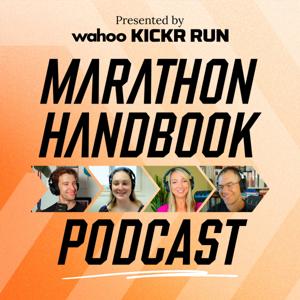


It was a big race weekend for the Marathon Handbook crew, and one of them won their race outright, beating every single finisher.
SUPPORT OUR SPONSOR:
Lagoon pillows help us sleep better, so we run better. Want to try? You can save 15% with code MARATHON. Go to https://LagoonSleep.com/marathonhandbook and take the 2-minute sleep quiz to find your match.
Alex ran the Canadian 10K Road Championships in Ottawa, finishing 7th in 29:21. Then — on three hours of sleep after staying out for a friend's birthday party — he jumped in to pace Canadian women's marathon record holder Natasha Akhtar at the Ottawa Marathon, running 32 kilometres before a blister from his Fascia R3s forced him to drop. He came away with a renewed appreciation for the marathon start line vibe and a serious bug to go the full 42.
Katelyn ran a 50K ultra in blazing 40°C heat in Costa Rica, running a patient, controlled race to take the overall win — first across the line ahead of every man in the field, a PR of 5:06. Her husband Victor came in third.
Michael tackled the Cabot Trail Relay in Cape Breton, Nova Scotia, one of Canada's most beloved and cult-like race weekends, running Leg 7 into a 50km/h headwind and returning, as always, inspired and windburned.
Then it's into the listener mailbag, covering:
Bridge Training — Patrick asks how to stay fit and motivated between race seasons without losing fitness or burning out before the fall block begins. Alex, Katelyn, and Michael share their personal approaches, including why doing 5K or 10K work in the "off-season" pays enormous dividends for your marathon.
Speed Workouts for Sub-2:30 — Andrew from Saskatoon left a voice note. He ran 2:37 at Boston, follows a nine-day training rotation, and wants to know what speed sessions could help him crack the 2:30 barrier. The hosts recommend hill work, lactate threshold training, and exploring the Norwegian Method — specifically the work of Marius Bäcken.
Marathon Recovery in Your Late 40s — Raul from Sydney is running his first marathon and targeting a triathlon three months later. He asks how recovery approaches change with age. Michael reflects on the value of mentorship from older runners, the non-negotiable importance of sleep, and why getting the "little things" right matters more than ever.
Becoming a Student of Running — Daniel from Reno (one of Katelyn's athletes, currently training for Chicago) asks about books, habits, and resources for runners who want to go deep on the sport. The team recommend Advanced Marathoning, Lore of Running, Endure by Alex Hutchinson, Running with the Kenyans, The Inner Game of Tennis, and more.
Choosing a Prep Race — Tyler in Australia is running Sydney Marathon and asks whether to race the half marathon or 30K option at a local tune-up race five weeks out. The debate gets lively — Katelyn and Michael lean half, Alex says race the race.
Training for a Downhill Marathon — Sky from Boston is running a point-to-point race with 2,100 feet of descent and wants to know how to prepare for the pounding without access to serious hills. The team recommend running the Boston course in reverse (Heartbreak Hill backwards), eccentric quad work in the gym, and step-down exercises.
Got a question for the team? Email [email protected] or send a voice message via SpeakPipe, link at marathonhandbook.com. We love hearing from you, and your message might be featured on a future episode.
Subscribe to the Marathon Handbook newsletter for weekly training tips, race news, and more at marathonhandbook.com.
Thomas Watson fills in for Michael Doyle this week as he and Jessy Carveth run through five stories dominating the running world right now — from a doping controversy that broke the internet to a heartwarming marathon moment featuring the sport's greatest athlete.
Cape Town Marathon emerged as one of the most significant races of the year, not just for the performances on the day but because it represents Cape Town's final year as a World Marathon Majors candidate. Muhammad Esa took the men's title in 2:04:55 — a new course record by nearly three and a half minutes — while Dara Deida won the women's race in 2:23:18. Eliud Kipchoge, competing in Africa for the first time, finished 16th in 2:13:29 as part of what's being called his world tour. The real highlight for Thomas and Jessy? Kipchoge's wife completing her first marathon, with Kipchoge waiting at the finish line.
The Cam Hanes vs. Sage Canaday controversy is the most talked-about story in running right now, and for good reason. Elite ultra runner Sage Canaday filed a tip with USADA against 58-year-old podcaster, bow hunter, and social media figure Cam Hanes, after Haynes ran a 2:39 at the Oregon USATF Marathon Championship — a PR by 13 minutes at age 58 — while having publicly acknowledged using BPC-157, a peptide banned under the WADA code. Thomas and Jessy explore the nuance: should the rules apply equally at age group level? Is enforcement even realistic? And what does a 2:39 at 58 tell us about the future of peptides in recreational sport?
The Enhanced Games took place in Las Vegas on the night of May 24th. Billed as the "Doping Olympics," the multi-sport competition promised record-breaking performances from athletes using banned substances under medical supervision — and backed by million-dollar prize money. The reality was less dramatic: self-proclaimed clean athletes won most events, just one world record was broken (in swimming), and 250,000 live stream viewers were left with more questions than answers about the event's future. Thomas and Jessy also note the organization's business model — an online supplement store selling the same substances the athletes use — and ask what that means for the enterprise.
A Charlotte high school sprinter was disqualified from the anchor leg of the 4x400 relay at the North Carolina State Track and Field Championships after raising his hand and holding up five fingers — ruled as unsportsmanlike conduct. The call wiped out 10 team points and cost his school the overall state title. The video spread to nearly 8 million views on X. Thomas and Jessy unpack the two separate conversations the internet is collapsing into one: was the rule fairly applied, and should the rule exist at all?
Emma Bates has signed with NeverSecond as a nutrition partner. This comes months after Bates very publicly fell out with her previous sponsor, alleging she was dropped because she was pregnant — a claim the sponsor disputed. With Bates currently around six to seven months pregnant and not racing this year, Never Second's decision to sign her is being read as both a statement of values and a smart strategic play as the brand looks to expand from trail/ultra/cycling into road running.
Chapters:0:00 – Intro & Jessy's Impromptu 10K (Third Place in Belgium!)3:36 – Story 1: Cape Town Marathon – Kipchoge, Course Records & World Marathon Majors9:02 – Story 2: Cam Hanes vs. Sage Canaday – Running's Biggest Doping Controversy18:06 – Story 3: Enhanced Games Las Vegas – Did the "Doping Olympics" Deliver?23:56 – Story 4: High School Sprinter Disqualified for Raising Hand at NC State Championships29:18 – Story 5: Emma Bates Signs with NeverSecond After Sponsor Controversy32:29 – Wrap-Up
We're cracking open the voicemail bag this week and taking on your best marathon training questions.
SUPPORT OUR SPONSORS:
This episode is presented by Momentous. Use promo code MARATHON for up to 35% off your first order: https://livemomentous.com
We use RYTHM for easy, convenient blood tests. 15% OFF : https://rythmhealth.com/marathon
Timothy from St. Louis wonders why his cadence barely changes as he speeds up and whether his long loping stride is what gave him rectus femoris tendonitis. Paul from Minnesota asks the question every Adidas fan is thinking: will the carbon ring and proprietary foam from the world-record-setting Pro Evo 3 ever trickle down to the consumer-friendly Adios Pro 5? Kyron from Trinidad and Tobago floats a spicy idea — should marathons have weight categories like boxing? And Elena asks the question that quietly haunts every training plan: rest day after the long run, or easy run?
Before we get to your questions, Alex explains the four stitches on his face (it involves sushi, fainting, and a cautionary tale about being too fit for your own good), Katelyn previews her new YouTube guide for first-time marathoners, and all three of us are racing this weekend — Alex at the Canadian 10K Championships, Katelyn at a 50K in Costa Rica, and Michael at the Cabot Trail Relay in Nova Scotia.
Plus: a teaser for Alex's 2026 super trainer rankings video, a plug for the Jakob Ingebrigtsen interview, and a hot-take debate where Michael argues you don't really need rest days and Katelyn says give her a rest day or give her death.
Chapters:(00:00) Intro(02:18) Katelyn's new first marathon video(04:17) Alex's sushi restaurant fainting story(10:23) Triple race weekend(17:42) Super trainer roundup teaser(22:31) Followup on the relationships episode(25:53) Q: Cadence vs stride length — Timothy(38:44) Sponsor: Rhythm Health(41:19) Q: Will Adidas Pro Evo 3 tech trickle down? — Paul(52:24) Q: Should marathons have weight categories? — Kyron(1:07:56) Q: Rest day after the long run? — Elena(1:22:51) When do YOU take a rest day?
Got a question? Record a voice note at marathonhandbook.com/podcast and we'll answer it on a future episode.
The fall marathon season is already taking shape and Michael Doyle and Jessy Carveth are here to break it all down. On this episode of The Running Story, the team runs through the five biggest stories from the past week in running.
In this episode:
The Soweto Marathon prize-money scandal — six months after the November 2025 race, the winners are still owed roughly $15,000, runners-up about $7,000, and the South African government is now threatening to step in. We unpack the broken sanctioning process, why the doping-results excuse fell apart, and the criminal charges that could be coming for the organizers.
Mason Wright runs 1,000 miles on a Utah high school track — 18 days, 13 hours, 11 minutes, roughly 4,000 laps, and only the third person in history to finish the distance on a track. We talk about the mental load, the nerve damage by halfway, and where this fits next to Yiannis Kouros and Ned Brockman.
The fall marathon field is set up early: Sabastian Sawe is officially racing the Berlin Marathon on September 27, Yomif Kejelcha is heading to Valencia on December 2 (with a $1 million-euro world-record bonus on the line), and Jacob Kiplimo is reportedly bound for Chicago. Who are we more excited to watch? Can either of them run sub-2 again without the other one in the race?
A 15-year-old girl dies at the Leiden Half Marathon — and the conversation about minimum age limits in distance running comes roaring back. We get into how she was able to enter a 16+ race, the differences between European and North American bib pickup and ID checks, and why this debate shouldn't need a tragedy to happen.
Sports scientists name the GOATs — a team of 16 researchers, published in Sports Medicine, used Olympic medals, world championship titles, world records, and record longevity to rank running's greatest. Usain Bolt and Faith Kipyegon take the top spots. We debate the men's and women's top five (Bekele, Johnson, Gebrselassie, Nurmi; Dibaba, Fraser-Pryce, Hassan, Ottey), the apples-to-oranges problem of comparing sprinters to marathoners, and the glaring omissions of Eliud Kipchoge and Kelvin Kiptum.
Plus: Jessy's impromptu 5K podium ("Running Revenge Vol. 2"), and a preview of the new Alex Cyr / Alexis podcast dropping into this feed soon.
Jakob Ingebrigtsen is one of the most dominant runners on the planet: two Olympic golds, multiple world championship medals, and five world records by age 25. He's also coming back from February Achilles surgery and rebuilding toward a season that could include three more world record attempts.
Jessy Carveth sits down with Jakob for a candid, gear-nerd-friendly conversation about how he's actually training right now, what he really thinks of the "Norwegian Method" label, and how he uses lactate testing and elliptical work to keep VO2 high when he can't run. Jakob also breaks down one of the biggest shoe rotations in the sport, his hands-on role developing the Nike Victory spike that helped him break world records, and the new Coros watch he co-designed as part of the Fearless campaign.
And yes, we get into the Josh Kerr question. How real is the rivalry? Are they friends? Would they ever line up at a marathon together? Jakob answers all of it, plus opens up about why he sees himself debuting at 26.2 in his late 30s and what fearless actually means to him.
In this episode:
It's the May Mailbag — and Michael, Alex and Katelyn are getting personal. With their spouses conveniently out of the house, the three of them dig into what it's actually like to be in a relationship with a runner: pace mismatches, "morning person" catfishes, who gets the long-run slot on Sunday, and what happens when your non-running partner slowly, accidentally becomes a runner.
SUPPORT OUR SPONSOR:Lagoon pillows help us sleep better, so we run better. Want to try? You can save 15% with code MARATHON. Go to https://LagoonSleep.com/marathonhandbook and take the 2-minute sleep quiz to find your match.
Alex also previews his new podcast with his fiancée Alexis — tentatively called "For Better or For Worse" — which follows the two of them training for very different goals (Alex chasing a fast Valencia half; Alexis chasing her first-ever 10K) on the way to their wedding day. Katelyn shares her first non-running vacation in years (Hawaii — and yes, she still snuck in a three-hour long run), and Michael confesses to running shifts with Kelly.
Then into the mailbag:
— Tibo (36, started running in 2023) asks if there's any science on how much room a late-starter has to keep improving. Spoiler: a lot.— Adam is taking on Endure 24, a 24-hour trail race in the UK, and wants to know what to eat for an entire day of running. Katelyn breaks down her ultra fueling playbook (grilled cheese, quesadillas, Coke and broth all make appearances).— A listener pushes back on a previous comment about London Marathon qualifying times — the team clarifies what they actually meant and pitches a two-day London Marathon format.— Gavin wants a sub-2:50 marathon plan. The crew talks volume, threshold work, periodization and how to graduate from the sub-3 plan.
Plus: a teaser of Jessy Carveth's new interview with Jakob Ingebrigtsen, dropping later this week.
Got a question or comment? Email [email protected] — or send a voice memo for the upcoming summer voicemail mailbag.
Timestamps
(02:06) Katelyn's first non-running vacation in years(06:25) Buying super shoes from a Hawaiian beach(09:55) Alex's new podcast with Alexis: "For Better or For Worse"(13:15) Dating a runner vs. dating a non-runner(25:30) Life in a two-runner household(31:30) Whose running takes priority?(35:00) Type A vs Type B runners(40:00) The wedding 5K and the sub-15 curse(46:50) Mailbag: Late-start marathon progression(1:01:00) Mailbag: Fueling for a 24-hour race(1:14:30) Listener feedback on the London Marathon lottery debate(1:24:30) Mailbag: Building a sub-2:50 marathon plan(1:29:00) Jakob Ingebrigtsen interview teaser
Michael and Jessy run through the five most intriguing stories in running this week.
Rachel Entrekin became the first woman to win Cocodona 250 outright, demolishing the overall course record and finishing nearly 10 miles ahead of the next runner. We dig into the body-composition science behind why women keep closing — and surpassing — men at extreme ultra distances, and acknowledge the tragic death reported on course.
Then to Cincinnati: 22-year-old Sophia Dick says she missed a turnoff at the Flying Pig half marathon and accidentally ran her first full in 3:30 alongside Harvey Lewis on his 100th marathon. Locals say the course is impossible to miss. We weigh the heartwarming version against the conspiracy version.
The 2027 London Marathon ballot closed with over 1.3 million entries, nearly 2% of the entire UK population, making a two-day London Marathon feel increasingly inevitable.
French star Jimmy Gressier is going after Mo Farah's One Hour Track World Record on September 4th at the Brussels Diamond League final. We talk pace (67-second laps for an hour), venue, and the strange charm of attrition racing.
And finally: the IOC has reportedly declined to add cross country running to the 2030 Winter Olympics in the French Alps.
Chapters:00:00 Intro: this week's top 5 stories01:26 Rachel Entrekin makes history at Cocodona 25005:40 Sophia Dick "accidentally" runs her first marathon11:18 London Marathon 2027: 1.3 million ballot entries15:10 Jimmy Gressier targets Mo Farah's One Hour Track World Record19:56 Cross country DENIED at the 2030 Winter Olympics23:00 Preview of Next Week
SUPPORT OUR SPONSOR:
This episode is presented by Momentous. Use promo code MARATHON for up to 35% off your first order: https://livemomentous.com
Michael Doyle and Alex Cyr (Katelyn is on a well-earned vacation) reset the Marathon Handbook Super Shoe Power Rankings for Spring 2026. We cover the full overall Top 10, including prototypes, then run a second Top 10 of the most accessible super shoes — the ones you can actually buy.
Previous Power Rankings — Winter 2025 (December)1. Adidas Adios Pro Evo 22. Puma Fast-R Nitro Elite 33. ASICS Metaspeed Tokyo Sky / Edge4. Nike Alphafly 35. Saucony Endorphin Elite 26. Adidas Adios Pro 47. ASICS Metaspeed Ray8. On Cloudboom Strike LS9. Adidas Adios Pro Evo 110. New Balance FuelCell SuperComp Elite 52. Current Power Rankings — Spring 20261. Adidas Adios Pro Evo 32. Puma Fast-R Nitro Elite 33. ASICS Development Shoe (ME5 Type One / Type P)4. Adidas Adios Pro Evo 25. ASICS Metaspeed Tokyo Sky / Edge6. Nike Alphafly 47. Adidas Adios Pro Evo 18. ASICS Metaspeed Ray9. On Cloudboom Dev 5 (LS)10. Brooks Hyperion Elite 63. Accessible Top 10 — Spring 2026 (shoes you can actually buy)1. Puma Fast-R Nitro Elite 32. ASICS Metaspeed Sky / Edge3. Nike Alphafly 34. Adidas Adios Pro 45. Saucony Endorphin Elite 26. Puma Deviate Nitro Elite 47. Hoka Cielo X1 v3.08. New Balance FuelCell SuperComp Elite 59. Brooks Hyperion Elite 510. On Cloudboom Strike
Michael and Jessy are back after covering Boston and London, and this week's five stories cover everything from a polarizing youth running debate to one of the most shocking marathon debuts in American history.
In this episode:
An 11-year-old from Indiana, Ben Dick, ran 1:20:14 at the IU Health 500 Festival mini marathon — reportedly the fastest half ever run by a boy his age. He dropped his dad at mile seven. The internet is split. We dig into what happens to these kid phenoms long-term, and why pediatricians (and Jessy's kinesiology background) say the half marathon distance is too much for a developing 11-year-old body.
Sprinter Abby Steiner is suing Puma and Mercedes-Benz Grand Prix, claiming the carbon-plated shoes and spikes she wore caused the foot and Achilles injuries that have kept her off the track since the 2024 Olympic Trials. We unpack the questions this raises about athlete responsibility, sponsor accountability, and how you even quantify a derailed sprinting career.
While the running world was glued to Sebastian Sawe's near-sub-two London Marathon, 25-year-old Vinny Mauri quietly ran 2:05:54 at the Glass City Marathon in Toledo, Ohio — the fastest U.S. marathon debut on record. Before the race he joked that if he didn't break 2:16 he wasn't a real marathoner. He broke the course record by more than 13 minutes. Nobody had heard of him. His Twitter feed is mostly Bitcoin memes. Expect a major brand to scoop him up fast.
Cocodona 250 has kicked off in Arizona — 253 miles from Black Canyon to Flagstaff with 40,000 feet of climbing and a 125-hour cutoff. Courtney Dauwalter is the clear women's favorite (and looking for redemption after dropping out last year), but the field is deep with Rachel Entrekin, Heather Jackson, and surprise headliner Randy Zuckerberg. The men's race is wide open with Jeff Browning, Joe McConaughy, Ryan Clifford, and Adam Kimble all in the mix.
And finally — the running brand quietly dominating the industry isn't Nike, Adidas, or Asics. It's Brooks. Their best quarter ever: 23% global growth, North America up 20%, EMEA up 30%, China up 136%. Eleven straight quarters as the #1 specialty performance running brand in the U.S. Michael shares early thoughts on the unreleased Hyperion Elite 6 (out August), which Jess McClain and Clayton Young raced in Boston.
Subscribe to the Marathon Handbook newsletter at marathonhandbook.com/newsletter for new episode alerts and a heads up when The Running Story moves to its own dedicated feed.
Follow along on Instagram: @marathon.handbook
New episodes every Monday.
SUPPORT OUR SPONSOR:Lagoon pillows help us sleep better, so we run better. Want to try? You can save 15% with code MARATHON. Go to https://LagoonSleep.com/marathonhandbook and take the 2-minute sleep quiz to find your match.
The two-hour marathon barrier is gone. At the 2026 London Marathon, Sebastian Sawe became the first person ever to run under two hours on a record-eligible course — and Yomif Kejelcha did it too, in his marathon debut.
Outside columnist and Endure author Alex Hutchinson joins Michael Doyle, Alex Cyr and Katelyn Tocci to make sense of it.
We get into:
A wide-ranging, occasionally contrarian conversation about an inflection point that may reshape the sport for the next decade.
📚 Books by Alex Hutchinson:Endure: Mind, Body, and the Curiously Elastic Limits of Human PerformanceThe Explorer's Gene
📰 Sweat Science Substack: alexhutchinson.net
From the publisher's feed
Ranked by our users in the last 21 days
1,505 Listeners
1,347 Listeners

4,120 Listeners
1,838 Listeners

53 Listeners

1,874 Listeners

380 Listeners
15 Listeners

368 Listeners

1,773 Listeners

165 Listeners
365 Listeners
190 Listeners
44 Listeners
12 Listeners