
Sign up to save your podcasts
Or



Based on Podcast App listening data
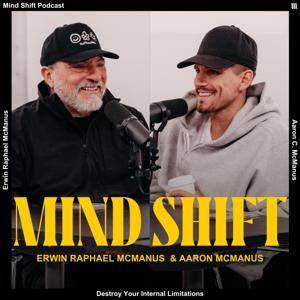
Aaron McManus opens this episode of the Mind Shift Podcast by introducing its theme, “Under Construction,” referencing both their house renovation due to mold and the idea of lives under construction through scripture. He and his father, Erwin Raphael McManus, record amidst the noise of ongoing repairs, using it as a metaphor for spiritual growth. Erwin humorously admits his tendency to get granular with the Bible, spending weeks on a single chapter, while Aaron explains that this episode marks a shift into deeper conversations around scripture – a new focus for the podcast.
They dive into the often snarky comments on social media. Erwin encourages listeners to engage with kindness rather than negativity, aiming to create a positive and inclusive space. Aaron shares how people frequently attempt to educate Erwin on theology despite his background, prompting a discussion about humility in spiritual conversations and the importance of listening over lecturing when it comes to scripture.
The conversation turns deeply personal as Erwin shares his journey with the Bible, starting with the Gospel of John, which emotionally transformed his understanding of Jesus, and moving into Acts, which gave him a sense of being part of an ongoing movement. Aaron recalls a dinner conversation about the visible changes Jesus brought to his life, reflecting on how scripture reshapes identity and purpose. They emphasize that engaging with the Bible is not just academic but transformative when approached relationally and reflectively.
Erwin recounts his surprising experience accidentally enrolling in a PhD Hebrew course at UNC Chapel Hill and how his classmates supported him through it. He explains the literary and cultural distinctions between the Old and New Testaments, highlighting how the Old Testament’s stories build a worldview and the New Testament calls for interpretation and application. Aaron and Erwin suggest reading different Gospels based on personality type to cultivate a personal connection to Jesus' life and teachings.
They conclude by discussing the need for action and community in Bible study. Erwin shares his preparation method for talks: finding truth, experiencing it, and acting on it, while Aaron describes his use of the SOAP method (Scripture, Observation, Application, Prayer) for daily integration. They reflect on theological debates that miss the heart of scripture and stress that understanding the Bible is incomplete without practical obedience and community engagement. The episode ends with an encouragement to listeners: build your life on the living truths of scripture, stay rooted in community, and let action transform knowledge into a life aligned with God’s heart.
ARCHIVAL episode originally released Apr 19, 2024
In this archival episode of the Mind Shift Podcast, Aaron McManus and his father, Erwin McManus, dive into a conversation about staying centered in a chaotic world. They reflect on the difference between internal character and external appearances, highlighting how what's within shapes the world around us. Erwin shares insights on the challenges of remaining focused amidst cultural, political, and economic distractions, especially on the West Coast. They explore how the identity of a place is shaped by factors like roads, taxes, and weather, and how these external realities often mirror deeper societal struggles.
The discussion turns to global influences as Erwin shares a story from his wife, Kim, who works with refugees and recently met three people financed by George Soros and the Catholic Church to migrate illegally to the U.S. Aaron and Erwin unpack the implications of these stories, questioning global power structures and the surprising consistency of these refugee accounts. Aaron points out that Soros is linked to funding various political actors, a fact some consider evidence of his negative influence. The conversation highlights the fine line between conspiracies and hidden truths in the modern political landscape.
Aaron reflects on growing up as a pastor’s kid and developing a heightened sensitivity to spiritual darkness, sharing how certain dark music and art still unsettle him. Erwin adds his own childhood story of avoiding a KISS concert due to fears of satanic influence, leading to a broader discussion on how dark media shapes minds and souls. They emphasize the importance of guarding what we consume visually and aurally, suggesting that internal peace and spiritual health are deeply connected to the media and art we allow into our lives.
The conversation deepens as they discuss cultural shifts in defining good and evil. Erwin explains that evil is when we make destructive choices against others, while sin is making destructive choices against ourselves. They explore societal trends, including controversial topics like gender transitions in children, reflecting on the long-term spiritual and psychological consequences. Erwin argues that the greatest evil is when innocence is intentionally destroyed, while Aaron reflects on humanity's natural tendency to simplify life into binaries of darkness and light, urging listeners to actively choose goodness in their daily lives.
Finally, Aaron shares a story of a Swedish speaker quoting Jesus to frame her talk on AI, illustrating how empathy rooted in Jesus' teachings can guide us toward goodness, regardless of religious belief. Erwin explains that redemption through Jesus realigns us with our original intention to reflect God's goodness in the world. They close by discussing the power of choice in creating beauty and purpose, emphasizing personal responsibility in shaping society for the better. This episode is a powerful call to live intentionally, engage deeply, and create good in a world full of distractions and moral complexities.
In this episode of the Mind Shift Podcast, Aaron and Erwin McManus reflect on a major transition as Mosaic moves out of its long-time Hollywood home. They recount the final worship night where nearly 900 people gathered and 70–80 baptisms took place, marking the end of an era. The conversation touches on the new campuses now emerging in Calabasas, South Pasadena, Culver City, and Studio City. Erwin shares emotional reflections on the legacy of the building and the many lives transformed there, while Aaron underscores how movement and growth have always been part of Mosaic’s DNA.
The episode also dives into the ongoing exploration of Genesis and the growing interest from new audiences, with a notable 60–80% of listeners being first-time participants. Erwin explains why staying in Genesis offers endless opportunities for reflection and theological curiosity. They emphasize the importance of disagreement and diversity of thought within their community, encouraging listeners to engage, question, and wrestle with scripture. This ethos of open dialogue and mutual respect shapes their approach to both the Bible and the people engaging with it.
As the discussion unfolds, Aaron shares a moment where he called out performative criticism in church culture, and Erwin unpacks how terms like “heretic” are often weaponized to enforce conformity. Drawing from history, they discuss how ideas once deemed heretical—like heliocentrism—eventually reshaped how we understand truth. Erwin stresses the necessity of intellectual honesty and the courage to question long-held traditions. The conversation becomes a call to spiritual integrity, where truth is not inherited but discovered through inquiry and faith.
Throughout the episode, Erwin shares his own theological journey and how he starts with Jesus—not a system—when interpreting scripture. Using analogies like Oppenheimer’s role as a theorist, he explains his focus on deep questions over surface answers. This leads into a thoughtful reflection on the Old Testament, which he compares to stories like *Braveheart* and *Gladiator*, noting how its themes of freedom, honor, and struggle mirror real human experience. He reminds listeners that the Bible was written by the oppressed, not the powerful, and that its messiness is part of its authenticity.
Finally, the conversation turns toward the future of theology and the church. Erwin critiques the stagnating effect of the phrase “there’s nothing new under the sun,” arguing that it limits innovation and imagination in faith communities. He shares his own experience being blacklisted for advocating creativity and change, and stresses the urgent need for early adopters and innovators to influence theology today. The episode closes with talk of future long-form episodes, community events in different cities, and a shared excitement to keep exploring faith, scripture, and transformation—starting with Jesus and moving outward from there.
In this episode, Aaron McManus and his father, Erwin McManus, dive into a deeply engaging Q&A, taking on listener-submitted questions around theology, scripture, and spiritual formation. They begin by opening up the format, inviting the community into the conversation, and encouraging engagement beyond the podcast through live discussions and the Mind Shift community platform. Aaron shares the structure for the episode, giving Erwin space to unpack major theological ideas while also fielding more personal and philosophical inquiries about belief, interpretation, and spiritual leadership. Their dynamic sets the tone for an open, curious, and deeply reflective exchange of ideas.
A core question raised early in the episode is whether the Bible is infallible. Erwin answers by distinguishing between the perfection of truth and the imperfection of its human messengers. He explains that though written by fallible individuals, the Bible’s intent is not deception but revelation—it is true in what it reveals about God and humanity. Drawing parallels to scientific principles, he likens scripture to the discovery of infallible truths by imperfect people. This launches a broader conversation about the purpose of the Bible—not just to know scripture, but to know God through it.
As the episode deepens, Aaron and Erwin explore resources and tools for better understanding scripture. Erwin emphasizes learning in community, where questions are not only allowed but necessary for growth. He reflects on his own early study practices, which included studying Greek and Hebrew and relying on commentaries and physical books. Their discussion touches on how historical and cultural context shapes interpretation and how staying connected to the original languages can preserve nuance often lost in translation. They also reflect on the influence of decisions made at the Council of Nicaea and how certain texts were excluded from the canon.
The episode also tackles big theological concepts, including the Trinity, the nature of heaven and hell, and the role of Satan in Genesis. Erwin breaks down the idea of the Trinity with metaphors and references to scripture, highlighting the relational and dynamic nature of God. When asked why Satan was allowed in the garden, Erwin suggests that love demands freedom and trust. Regarding the afterlife, he stresses that the Kingdom of God is a present reality, more pressing than abstract speculation about heaven or hell. He offers a bold view on Jesus’ descent into hell and the possibility of it being “emptied,” emphasizing grace over fear.
Finally, they touch on more speculative areas like the Nephilim and the Book of Enoch, while anchoring their theological foundation in the canonical scriptures. Erwin encourages curiosity but warns against letting non-canonical texts distract from what’s central to faith. They also explore differing views on salvation and the dangers of weaponizing theology for control. Throughout, Erwin underscores the radical freedom of grace and love as the most transformative forces. The episode closes with a glimpse into Erwin’s sermon prep routine, shaped by decades of immersion in scripture, and an encouragement to approach theology not as a fixed system, but as a living conversation with God, guided by humility and wonder.
In this episode of the Mind Shift Podcast, Aaron McManus and his father, Erwin Raphael McManus, dive into the turbulence in Los Angeles, reflecting on the city’s long history of unrest and social disorder. From the 1992 riots to recent immigration protests and political tensions, they describe LA as a city in constant flux. Erwin contrasts this with his recent travel experiences across the country, while Aaron reflects on the emotional impact of ongoing chaos and the deep gratitude he feels for the people anchoring his life. The episode opens by framing these reflections as a backdrop for a deeper exploration of meaning, purpose, and faith.
Aaron introduces a new chapter in the podcast: a scriptural series beginning with the book of Genesis. Drawing from Erwin’s decades of theological teaching, they set the tone for a thoughtful and disruptive exploration of the Bible. They discuss the relevance of Genesis in both literal and metaphorical terms, highlighting the importance of mythology in shaping belief systems. Erwin pushes back against rigid interpretations, inviting listeners into a conversation that values mystery, imagination, and the power of narrative in uncovering spiritual truths.
Focusing on Genesis 1:1–3, Erwin breaks down the creation story by emphasizing the symbolic roles of the four elements—earth, wind, fire, and water—and their resonance with modern scientific ideas. He draws parallels between Genesis and concepts in quantum physics, like energy and light, suggesting that the ancient text contains insights consistent with contemporary science. The discussion highlights the phrase “formless and empty,” with Erwin urging listeners to view it through a symbolic lens rather than a strictly physical one. This segment reveals how scripture and science can coexist as complementary frameworks for understanding our origins.
The episode then turns to the sequence of creation, specifically the importance of water and the emergence of light. Erwin explains that water’s presence before light speaks to its foundational role in life, while the delayed creation of the sun reshapes how we interpret biblical time. He critiques the literal seven-day creation view, arguing that “days” in Genesis don’t equate to modern 24-hour periods. This opens a discussion on energy, light, and the gradual unfolding of creation, presenting a more layered and expansive view of Genesis that bridges faith and physics.
Toward the end, Aaron and Erwin explore the creation of stars and the concept of time, leading into a conversation about astrology and sacred signs. They emphasize that the stars are not meant to predict fate but to signal the rhythm of sacred time. The episode closes with reflections on humanity being made in God’s image—imbued with purpose and interconnected with all creation—setting the stage for future episodes that will continue unpacking Genesis as both a spiritual and cosmic roadmap.
In episode 89 of the Mind Shift Podcast, Aaron McManus joins his father, Erwin Raphael McManus, to discuss the release of two powerful podcast episodes, including a now-viral clip with Tim Ross. The episode, originally recorded at the Mosaic Conference in Los Angeles, sparked massive engagement online, drawing millions of views and hundreds of thousands of interactions. Aaron reflects on the confusion surrounding its release timing, while Erwin offers a behind-the-scenes look at the discussion’s origins. The episode sets the tone for a thought-provoking exploration of theology, mythology, and the radical act of questioning long-held assumptions.
The viral clip, centered on the provocative question “Did Eve Sin?”, ignited waves of online dialogue. Erwin dives into the story’s complexity, challenging how traditional interpretations may have oversimplified it. Aaron highlights how the clip’s traction signals a cultural appetite for deeper, less dogmatic conversations around faith. They tease another clip in which they question whether humans may have once possessed capabilities like flight or aquatic life, referencing the biblical mandate to rule over land, sea, and sky. These conversations push the boundaries of conventional theological thinking, inviting listeners to engage their imaginations.
Building on these themes, Erwin and Aaron speculate on the human condition before the biblical fall. Erwin suggests that stories like Aquaman or Superman might be more than fiction—they could be remnants of ancient memory. The act of Adam naming every animal becomes a focal point for exploring humanity’s pre-fall brilliance and creative authority. Erwin stresses that exploring such possibilities is not heretical but deeply biblical when approached with humility and curiosity. Rather than seeking to prove mythologies, he emphasizes the need to rediscover wonder in the scriptural narrative.
A core tension in the conversation is between systematic theology and biblical theology. Erwin critiques systematic theology as a structure of invented truths that can exclude or delegitimize those who don’t fit its mold. In contrast, biblical theology is framed as a pursuit of discovered truth—a lived relationship with God that transcends doctrinal rigidity. They share stories of theological gatekeeping and reflect on how some religious systems elevate intellectual frameworks over genuine spiritual transformation. Erwin advocates for a theology that starts with love and leads to relationship, not just belief.
The episode culminates in a passionate defense of free will as essential to love and God’s character. Erwin challenges deterministic frameworks like Calvinism, arguing that a God who orchestrates everything for His own glory alone is not consistent with the radical love of Jesus. He expresses a deep trust in the truth of scripture but resists the layers of orthodoxy that have ossified around it. As Aaron reads a quote about the difference between belief and truth, Erwin affirms that Jesus is the truth he builds his life on—not a theory, but a living foundation that invites constant growth, humility, and the freedom to ask better questions.
In this episode of the Mind Shift Podcast, Erwin McManus sits down with longtime friend and podcaster Tim Ross to explore the deeply personal and often overlooked qualities of vulnerability and integrity in leadership. Drawing from Tim’s extensive experience across various church communities and media platforms, they reflect on how these foundational values are frequently missing in modern leadership—even in spiritual spaces where they should be most essential. From the outset, Tim defines integrity as being the same person in private as in public, and the two lament how rare that consistency has become. Their conversation quickly turns candid, setting the tone for an honest exploration of what it truly means to lead with character.Together, Erwin and Tim examine the roots of duplicity in leadership, citing the biblical story of Adam and Eve as the origin of humanity’s tendency to hide the truth. Tim calls out the church culture that often prioritizes talent over character, fostering environments where young pastors feel compelled to fake perfection. This discussion reveals a painful tension: the systems designed to promote spiritual growth can sometimes create pressure for leaders to project false images. They agree that the very structures that should protect integrity often enable its erosion, making the practice of vulnerability both risky and revolutionary.As the dialogue deepens, the conversation shifts to the challenges of maintaining authenticity in the digital age. Tim and Erwin explore how social media amplifies both mistakes and expectations, often punishing honest leaders while rewarding those who hide behind curated personas. They highlight how the fear of public judgment has led many to conceal struggles instead of seeking healing, and how sincerity itself has become a liability. The issue isn't only moral—it's systemic. The pair critiques how church institutions have historically managed scandal: focusing more on image management than heart restoration.As the episode winds down, Tim shares how personal challenges and failures—including struggles with burnout and his past addiction—shaped his path toward becoming a more honest leader. He encourages leaders to surround themselves with communities capable of handling vulnerability and emphasizes the value of therapy, self-awareness, and rest. The conversation expands to balancing humility with confidence, navigating exhaustion, and being open to unexpected vocational turns. Tim’s final reflections—and an impromptu farewell rap—offer humor and heart, reinforcing the episode’s core message: leadership doesn’t require perfection, but it does demand honesty, resilience, and the courage to be seen.
In this episode of the Mind Shift Podcast, Aaron McManus and Erwin Raphael McManus, dive into the theme of alignment—the idea that intimacy, generosity, and humanity must work in harmony to create a meaningful life. Building on a talk Erwin gave at the recent Mosaic gathering, the two reflect on how alignment is more than a spiritual ideal; it’s a practical framework for understanding values, relationships, and purpose. They begin the episode with updates about the Mosaic community, Erwin’s extensive writing journey, and their excitement for the conference.
The conversation quickly returns to a concept from Dr. Henry Cloud. The triangle of persecutor, rescuer, and victim. Erwin revisits this cultural lens and introduces his own alternative triangle, with humanity at the top, supported by intimacy and generosity. This shift reframes the narrative, encouraging people to move beyond reactive postures and into proactive alignment. Drawing on demographic data from Mosaic, Erwin shares why the shift in mindset matters, especially in an urban context where financial, emotional, and spiritual challenges collide.
As the dialogue deepens, Erwin opens up about the unique challenges facing Mosaic Church, particularly after the loss of their Hollywood Boulevard location. He shares the importance of recognizing who makes up the core community and how generosity often follows alignment. A powerful example is offered through a story of a couple who, after finding financial success, gave a significant gift to Mosaic—not out of obligation, but out of a deeply personal sense of alignment with their values and faith. Erwin and Aaron contrast the giving cultures of suburban megachurches and urban churches, pointing out the complexities and opportunities that come with each.
The father-son duo continues exploring how alignment informs every part of life, especially the way we give. Erwin suggests that when intimacy with God is present, questions about generosity answer themselves. They unpack how our values and priorities naturally fall into place when our inner world is in sync with divine love. Aaron shares moments from his own journey, and together they challenge listeners to examine the stories they tell themselves about scarcity, abundance, and what it means to live generously in a self-centered culture. It’s a call to shed limiting beliefs and embrace a mindset rooted in trust and purpose.
Rounding out the episode, Erwin and Aaron shift into a series of thought-provoking discussions—on the dangers of unchecked technology, the future of AI, generational trauma, and the need for personal agency. They ponder whether AI will reflect the best or worst of humanity, and Erwin shares chilling examples like the embedded kill switches in Chinese solar panels. Despite the heavy topics, the message remains clear: while external threats exist, the greatest obstacle—and opportunity—lies within ourselves. The episode ends with a call to courage, responsibility, and forward momentum.
In this episode of the Mind Shift Podcast, Aaron and Erwin McManus reflect on Erwin’s recent trip to Birmingham, Alabama, where he attended the Leadership Factor Conference. Despite a whirlwind of travel from Los Angeles to Houston to Birmingham and back, Erwin shares his excitement about connecting with influential leaders like Chris Hodges, Dave Ramsey, Henry Cloud, and Patrick Lencioni. He emphasizes the power of systems in leadership and entrepreneurship, pointing to Chris Hodges’ approach as a model of clarity and effectiveness. Drawing from the principles of "The E-Myth," Erwin highlights how structure and systems are key to scaling vision with excellence.
Their conversation turns personal as Erwin recounts his interactions with leaders like Dave Ramsey and reflects on the impact of his own writing and work. He shares moments of recognition from fans at the airport and talks about the global reach of his books, such as The Seven Frequencies of Communication and Mind Shift. Aaron recalls seeing John Maxwell promote books during his youth, sparking memories of the long journey they’ve both taken through leadership spaces. These reflections underscore the influence of consistent work over time and the power of meaningful connections.
Erwin and Aaron also touch on current religious and cultural events, including the appointment of the new Pope with American roots and a love for the Chicago White Sox. This leads to Erwin’s own story and his early draw to the story of Jesus. He recounts his hunger for spiritual truth and his fond experiences within the Catholic Church, recognizing how those early moments helped shape his open-hearted search for faith. The segment paints a fuller picture of Erwin’s spiritual journey and openness to diverse expressions of belief.
The episode deepens with Erwin’s retelling of Henry Cloud’s insights about the pervasive cultural narrative of victim, persecutor, and rescuer. They explore how this psychological triangle plays out in movements like Me Too or immigration debates and discuss the danger of being trapped in any of those roles. Erwin stresses the importance of refusing to see oneself as a victim or aggressor, instead championing a mindset rooted in ownership, personal responsibility, and mutual empowerment. This philosophy extends to his broader leadership approach, particularly in coaching and ministry.
The episode wraps with several forward-looking discussions, including Mosaic Church’s evolving future, Erwin’s leadership during high-pressure transitions, and the launch of Ghost Artifacts. Aaron and Erwin describe the uniqueness of the hoodie’s Japanese fabric and what makes a product costly versus expensive, tying in themes of quality and intention. Aaron shares excitement for upcoming releases and the ethos behind their creative projects. They close the episode with gratitude for their community, a call to engage with the new Ghost Artifacts collection, and a reminder about the upcoming Mosaic Conference—a celebration of vision, creativity, and the next chapter ahead.
In this episode of the Mind Shift Podcast, Aaron and Erwin McManus share in their weekly Arena Call about a myriad of topics. They discuss their recent experience at their BE event with Brendon Burchard, where themes of alignment and personal transformation took center stage. They reflect on Brendon’s powerful presentation style, his use of visual models, and his therapeutic approach to teaching—blending everyday struggles with leadership and business goals.They also delve into Brendon’s unique ability to speak without notes, moving fluidly through his ideas while keeping his audience fully engaged.
Erwin contrasts Brendon’s micro-to-macro storytelling approach with his own more philosophical and wide-lens perspective. Aaron admires how Brendon intuitively knows the questions needed to guide people toward alignment, and the two reflect on how this kind of unscripted, yet intentional communication can create real breakthroughs for those seeking personal or spiritual growth.
A major point of discussion is Brendon’s bold integration of spirituality into his coaching—something new for his audiences. For the first time, he openly used scripture and spiritual metaphors to support his message. Erwin shares a text from Brendon about how LA’s therapeutic culture is ready for spiritual language, even if it's unconventional. They explore the tension between remaining inclusive and staying grounded in one’s beliefs, and how Brendon navigates questions about faith with a thoughtful, humble tone.
From there, the conversation takes a deeper turn into topics like grief, loss, and personal transformation. Erwin challenges the traditional view of loss as an objective reality, suggesting instead that it may be a misperception based on what we value. He shares personal stories of trauma and psychological healing, drawing out the distinction between grief and regret.
This leads to a larger discussion about the eternal significance of seemingly temporary moments, and the role emotional honesty plays in spiritual resilience.The episode wraps with a practical Q&A on coaching, creativity, and content. Erwin gives personalized advice to listeners on integrating faith into coaching practices, navigating transitions, and staying authentic while struggling. He stresses the importance of only teaching from within your own journey and using personal pain as material for growth. From handling spiritual strongholds to filming solo content, the session is packed with encouragement for anyone trying to lead, create, or coach with integrity and depth.
From the publisher's feed
Ranked by our users in the last 21 days
2,256 Listeners
3,435 Listeners
10,733 Listeners
2,272 Listeners
2,173 Listeners

1,365 Listeners

506 Listeners

671 Listeners
266 Listeners
322 Listeners
513 Listeners

22 Listeners
508 Listeners
123 Listeners
768 Listeners