
Sign up to save your podcasts
Or



Based on Podcast App listening data
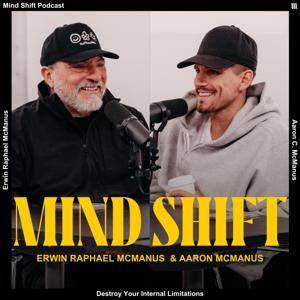
In this episode of the Mind Shift Podcast, Aaron McManus and Erwin McManus is joined by Carlos Pimentel to unpack the surprising events following Mosaic’s Easter gatherings. With nearly 8,000 people attending across their campuses, the team had just celebrated one of their most impactful weekends. But within days, they received a 60-day notice to vacate their Hollywood location—a decision that shocked the entire community. The team acted quickly, informing leaders, volunteers, and supporters within 48 hours and beginning the process of charting a new course forward.
The conversation dives into the emotional weight of the news, especially given its timing—14 years to the day after Mosaic’s first Hollywood gathering. While the initial reaction was disbelief, the team quickly shifted toward vision and resolve. They emphasize the importance of perspective in leadership, choosing to see this disruption as a moment of divine transition rather than defeat. Erwin reflects on the need for resilience in ministry and the strength that comes from staying rooted in purpose amid uncertainty.
The episode also revisits Mosaic’s long journey with the Hollywood location. Erwin recounts the massive fundraising effort under the “Here to Stay” campaign and the tension of raising millions while still falling short of the full purchase price. Despite the loss of a culturally iconic and spiritually significant space, the team underscores the importance of embracing change, learning from every season, and letting go when necessary to move forward with clarity.
Looking ahead, the team discusses their shift from trying to preserve a single location to building new epicenters across Los Angeles and beyond. They talk about exploring alternative venues, rethinking what community looks like, and leaning into Mosaic’s identity as a movement, not just a place. The lessons learned from the pandemic, especially the need to stay agile and creative, continue to shape how they envision the church's next chapter.
Amid all the transition, excitement builds around the upcoming Mosaic Conference, themed “Dreams.” The event now serves as a marker of change and vision, offering the community a moment to rally together and imagine what comes next. Aaron and Erwin emphasize that this moment isn’t just about losing a space—it’s about gaining momentum. With open hearts and bold plans, they invite listeners to walk with them through uncertainty and into a future filled with possibility
In this episode, Aaron and Erwin McManus share their vision for a new chapter of the Mind Shift podcast—one centered on answering the deep, complex questions people have about God, the Bible, and faith. They express a desire to tackle not just the well-known scriptures, but also the obscure, confusing, and even bizarre passages that often go ignored. Their goal is to help listeners remove the intellectual and emotional roadblocks that prevent deeper spiritual connection.
They reflect on the evolution of the podcast itself, acknowledging how far it has come over 80+ episodes. With renewed clarity, they want the show to become a space for theological exploration that still feels personal and accessible. They also talk about the emotional weight of leading a church through major spiritual moments like Easter, and how those experiences often lead to deeper introspection for both the community and themselves.
As they recount the most recent Easter services at Mosaic, Aaron highlights the massive effort from the creative team and volunteers who made it all possible. Erwin praises the passion and dedication of a church community driven not by staff but by people giving their time and heart. They speak candidly about the lingering challenges of rebuilding after COVID, and how the Mosaic culture continues to grow stronger through shared purpose and innovation.
The episode also explores Mosaic’s global footprint, now impacting cities like Mexico City, Quito, and London. Aaron shares stories of creative church spaces and growing international communities, while Erwin reflects on the legal and cultural complexities of expanding globally. They see Mosaic not just as a local church, but a worldwide movement built on the uniqueness of each individual and culture, rather than conformity or religious tradition.
Aaron and Erwin close the episode with a discussion about their recent political and social commentary, particularly the reactions to their thoughts on billionaires in government. Erwin defends the importance of leadership experience at scale, while Aaron notes the polarized response online. They both reaffirm the value of thoughtful, nuanced conversations in a world where faith, politics, and culture are deeply intertwined—and encourage listeners to join them in the journey ahead by submitting questions and staying engaged with the podcast.
In this episode of Mind Shift, Aaron McManus and Erwin Raphael McManus begin by reflecting on the meaning of Good Friday and the power of Jesus’ sacrifice. They invite listeners to join Mosaic’s live gatherings, whether in person or online, emphasizing the significance of community during spiritual moments. The conversation encourages people to stay connected to faith, especially during seasons that call for deeper reflection.
They introduce the Mind Shift membership, a growing online community centered around leadership, entrepreneurship, and personal development. Aaron and Erwin share how members gain access to exclusive episodes, live Q&A sessions, and behind-the-scenes content. They also offer an annual membership perk—a free Battle Ready hat—while highlighting the importance of engaging with like-minded individuals who are committed to growth.
Shifting gears, they explore the public response to Blue Origin’s space mission, which included celebrity passengers and bold marketing. Erwin defends the innovation behind it, pointing out the economic and technological benefits of space exploration. They question why public perception often turns negative when billionaires invest in forward-thinking ventures, and consider how these breakthroughs may reshape everyday life in the future.
The conversation deepens as Aaron and Erwin discuss spiritual warfare, sharing recent personal experiences that hint at unseen forces at work. From strange technical malfunctions to unsettling events near their home, they talk about the importance of staying spiritually aware. Erwin breaks down different types of spiritual sensitivity and emphasizes how leadership often requires discernment that goes beyond the physical world.
They close with thoughts on leadership, family, and community in times of crisis. Erwin reflects on the weight of spiritual leadership, especially when making decisions that impact others. Aaron opens up about the pressures of leading while managing personal challenges, underscoring the need for family support and self-care. Together, they emphasize that resilience, faith, and honest conversation are crucial for navigating the complexities of both life and leadership.
In this episode of Mind Shift, Aaron and Erwin McManus dive into an honest and wide-ranging conversation that blends personal experience with reflections on politics, economics, faith, and the challenges of leadership in today’s complex world.
Aaron and Erwin discuss the challenges of running a church in a city like Los Angeles, where cultural and political dynamics often clash with traditional religious frameworks. These struggles raise a broader question about the role of the church in modern society and how to maintain authenticity and impact without compromising values.
One of the most compelling segments explores the intersection of politics and economics, particularly through the lens of Donald Trump’s tariff policies. Erwin presents a provocative take: that some of Trump’s policies, often labeled as pro-billionaire, have in fact harmed the wealthiest individuals while potentially benefiting the working class. This sparks a discussion about political misconceptions, the true beneficiaries of policy decisions, and how economic strategy is often more nuanced than party lines suggest.
In a bold critique of the current educational system, Aaron and Erwin address the failings of the Department of Education and argue that its creation has led to increased bureaucracy and decreased innovation. They explore how private-sector solutions and visionary leadership—especially from billionaires with resources and influence—could spark real change. Rather than merely criticizing systemic failures, they call for bold, creative initiatives from tech leaders and entrepreneurs who have the capacity to transform public services and education in meaningful ways.
The episode also turns inward, examining the spiritual and intellectual journey that has shaped Erwin’s unique voice. He recounts his academic background in philosophy, psychology, and theology, and a surprising detour into Hebrew studies that would ultimately deepen his understanding of the Bible. He shares the story of how a misstep in course enrollment led to unexpected mentorship and community, reinforcing the idea that mistakes often lead to life-altering breakthroughs.
Throughout the discussion, Aaron and Erwin wrestle with big questions: What is the role of billionaires in a society grappling with inequality? How can faith thrive in hyper-liberal environments? Is it possible to build resilient institutions without losing personal integrity? Their answers are layered, sometimes challenging, but always grounded in a desire for hope, growth, and forward movement.
This episode isn’t just a snapshot of personal and societal challenges—it’s a call to embrace complexity with courage. Whether you’re navigating leadership, faith, politics, or simply trying to make sense of today’s world, Aaron and Erwin offer an honest and inspiring conversation that encourages listeners to keep showing up, stay engaged, and reimagine what’s possible.
In this archival episode, Aaron and Erwin McManus dive into the power of mindset, creativity, and overcoming overthinking. They reflect on their recent experiences, including conversations with influential voices in business and entrepreneurship, emphasizing the value of mutual growth and meaningful dialogue. They also explore themes of Erwin’s book, Mind Shift, breaking down the importance of shifting mental frameworks, taking decisive action, and avoiding the paralysis of overthinking.
Erwin shares insights from his work as a mindset performance expert, explaining how overthinking affects not only athletes but also entrepreneurs, artists, and anyone striving for success. He defines overthinking as the habit of constantly running negative scenarios rather than positive ones, which creates hesitation and self-doubt. Aaron admits to struggling with this, especially in relationships, leading to a discussion on trust, control, and the illusion of certainty. Erwin explains that trying to control every outcome fuels anxiety and that the best way to break free is to act boldly rather than remain stuck in endless deliberation.
They explore practical strategies for overcoming overthinking, highlighting the importance of action and repetition. Erwin uses the example of designing a jacket, emphasizing that creativity thrives on momentum rather than perfectionism. Aaron reflects on his difficulty in committing to decisions and how fear of outside judgment can stifle progress. Erwin stresses that consistency in action creates confidence, allowing people to move forward with clarity rather than hesitation.
The conversation shifts to the balance between structure and spontaneity. Erwin thrives in chaos and unpredictability, seeing them as essential to innovation, while Aaron values stability and routine. They agree that while creativity demands a degree of unpredictability, having foundational systems in place can provide the freedom to take risks and explore new ideas.
Repetition and confidence emerge as major themes, with Erwin explaining how consistent action builds resilience and decisiveness. He shares a humorous yet revealing story about a nightmare involving Kawhi Leonard, using it to illustrate how negative thoughts can dominate our minds if left unchecked. The key, he explains, is learning to replace negative mental loops with positive scenarios, setting the foundation for a mindset geared toward success.
As the episode winds down, Erwin shifts the focus to purpose and personal essence, arguing that true fulfillment comes not from achievements but from who we become in the process. He challenges listeners to prioritize growth, take decisive action, and embrace change as a constant force in life. Aaron and Erwin agree that every small decision compounds over time, creating the trajectory for long-term success.
They close by inviting listeners to engage deeper with the Mind Shift community, encouraging them to step into a mindset of action, creativity, and resilience. Whether in business, relationships, or personal growth, the key to success lies in taking bold steps forward.
In this episode of the Mind Shift Podcast, Aaron McManus and Erwin Raphael McManus host a Q&A session with their Mind Shift online community, diving into a range of thought-provoking topics. They discuss how to prioritize creative projects, especially when energy is limited, with Erwin advising that tackling the least enjoyable tasks first can help free up motivation for more inspiring work. He emphasizes the importance of pursuing opportunities rather than obligations and warns against falling into the perfectionism trap, where endless tweaking is driven by fear rather than genuine improvement. Deadlines, he explains, are crucial for knowing when a project is complete, and releasing something before it feels perfect is often a necessary part of growth.
A discussion on compatibility in teams leads Erwin to challenge the common understanding of the term, arguing that likability is often the true key to compatibility. When people genuinely enjoy working together, they naturally become more adaptable. In volunteer-based or inherited teams, fostering an authentic connection can help create a stronger, more cohesive dynamic. When asked about maintaining calm in crisis situations, Erwin highlights humility and gratitude as stabilizing forces that prevent emotional spirals.
Communication becomes a focal point as the conversation shifts to relationships, with Erwin explaining how the seven frequencies can be used to create deeper intimacy. He emphasizes that understanding the meaning behind words and interpreting different communication styles can significantly enhance relational depth. When a listener asks about sharing grand visions with family members, Erwin advises breaking down ambitious ideas into specific, tangible steps. Using his own experience of launching a fashion brand during the pandemic, he illustrates how clear, digestible goals help make bold ideas more believable and achievable.
The conversation takes a compelling turn when a listener asks about masculinity and the role of rites of passage in shaping strong, confident men. Erwin expresses his belief in the necessity of these cultural milestones, arguing against the modern concept of toxic masculinity. Instead, he highlights virtues like honor, nobility, and enlightenment as essential traits for men to embrace. He shares his vision of mentoring young men and helping them develop confidence and strength in a way that is constructive and empowering.
Another listener asks about handling aggressive political opinions in public spaces, prompting Erwin to reflect on the psychology behind aggression. He explains that hostility often stems from fear or ignorance and advises against taking it personally. He suggests focusing on principles rather than personalities, staying composed, and engaging in dialogue only when it is truly productive.
As the episode nears its conclusion, a listener asks what led Erwin to start his own church rather than joining an existing model. He shares that the decision came from a deep commitment to his non-negotiables—faith, community, and creative freedom. Rather than conforming to a structure that didn’t align with his values, he sought to pioneer something unique. He encourages others to define their own core values and use them as guiding principles when making significant life and career decisions.
Aaron and Erwin close the conversation by inviting listeners to engage more deeply with the Mind Shift community. They emphasize that growth comes from learning, dialogue, and collaboration, urging members to invite others into the space. This ongoing conversation is not just about personal development but about building a collective that fosters deeper thought, creativity, and transformation.
In this episode of Mind Shift, Aaron and Erwin McManus dive deep into the rapid growth of the Mind Shift Podcast, reflecting on its impact and the evolution of their community. They introduce the $25/month Mind Shift membership, which offers private episodes, community calls, and exclusive content on the app "Skool" explaining why they chose it over Patreon.
The conversation shifts to the Academy Awards, where they discuss the growing gap between Hollywood’s elite and general audiences. Films like Emilia Perez and Anora become focal points, sparking a debate on whether the Academy prioritizes ideological messaging over compelling storytelling. Erwin points out how many of these films fail to resonate with everyday viewers, raising questions about Hollywood’s direction and the broader cultural narratives shaping entertainment.
Aaron and Erwin also examine how certain films normalize controversial themes, such as sex work. They discuss Anora and its portrayal of prostitution, reflecting on past films like Pretty Woman that romanticized the industry. Drawing from Erwin’s personal experience working with individuals involved in prostitution, they highlight the harsh realities behind the glamorized depictions. This leads to a broader discussion on the influence of pornography, sex work, and the media’s role in shaping perceptions about these industries.
As the discussion turns to media influence, Aaron and Erwin explore how public narratives are often manipulated. They dissect government policies, media distortion, and how news outlets selectively frame stories to serve political agendas. Erwin shares an example involving the deportation of Venezuelan gang members, pointing out how the media spins narratives to fit ideological viewpoints. They stress the difficulty of discerning truth in an era where misinformation and bias dominate the conversation.
The political landscape is another major theme, with Aaron and Erwin analyzing the shifting ideologies within the Democratic and Republican parties. They discuss how political identities evolve, touching on nationalism, global ideologies like communism, and the broader impact of cultural identity on national policies. They reflect on both major parties and the growing polarization in society.
The episode concludes with personal reflections on the importance of open dialogue and deeper conversations. Aaron and Erwin emphasize the role of podcasts like Mind Shift in fostering nuanced discussions that challenge mainstream narratives. They invite listeners to join the Mind Shift community for exclusive content and deeper engagement, encouraging thoughtful conversations that go beyond surface-level discourse.
Join the discussion, share your thoughts in the comments, and become part of the Mind Shift community for more in-depth conversations!
In this episode of Mind Shift, Aaron and Erwin McManus dive into deep and thought-provoking conversations about faith, leadership, identity, and personal transformation. They explore how shame and guilt can hold people back, emphasizing that true faith leads to grace, forgiveness, and freedom. Erwin shares personal experiences about hearing God’s voice and how scripture can reshape negative thinking.
The discussion begins with Aaron introducing the podcast and mentioning how their conversations often touch on culture, leadership, relationships, and even politics. Erwin recalls moments when he’s received criticism from both liberals and conservatives, highlighting how communication has become more polarized. He stresses the importance of conversations like Mind Shift in helping people think more critically and communicate better.
Aaron then shifts the discussion to deeper spiritual questions, starting with how to break free from shame. Erwin explains that while guilt comes from doing something wrong, shame makes people feel fundamentally unworthy. He argues that many religious systems use shame to control people, but faith in Jesus offers grace, acceptance, and freedom from that cycle. Instead of being weighed down by past mistakes, people should define themselves by what God says about them—not the opinions of others.
The conversation then moves into the nature of good and evil. Aaron asks Erwin if he believes in evil, and Erwin responds with a strong “yes.” He explains that evil is real, both in human actions and in a broader spiritual sense. He shares a chilling story about a man with multiple voices inside his head who once wanted to visit their home. This moment reinforced for him that evil isn’t just theoretical—it manifests in people’s lives.
A key theme throughout the episode is the idea that suffering and hardship are inevitable, but faith allows people to navigate them with resilience. Aaron asks how to posture oneself for miracles, and Erwin responds by emphasizing that faith itself is a space where miracles happen. He shares personal stories of miraculous moments he’s witnessed throughout his life, reinforcing the idea that God is always at work, even when people don’t recognize it.
The conversation turns to the topic of hearing God’s voice. Aaron asks how people can know when God is speaking to them. Erwin explains that God often speaks in an internal, deeply personal way, and the more someone walks in faith, the more they’ll recognize His voice. He encourages listeners to trust their inner promptings and align their actions with God’s character.
Aaron then asks why Erwin chose to follow Jesus instead of another belief system. Erwin shares his personal journey of faith, reflecting on moments that shaped his spiritual path. He recalls a pivotal experience when he felt called to stay in a prison to share the gospel, a moment that transformed his understanding of ministry and solidified his commitment to helping others find freedom in Christ.
As the episode wraps up, Erwin and Aaron reflect on their journeys and encourage listeners to take their own steps in faith. Erwin extends an invitation for people to trust in Jesus, emphasizing that faith isn’t about rules or religion—it’s about transformation, freedom, and stepping into a new life. The episode concludes with a prayer and a reminder that faith is a journey, one that invites people to experience the deep and powerful love of God.
In this episode of Mind Shift, Aaron and Erwin McManus reflect on their time in Mexico City, where the Mosaic community has grown from 60 to 225 attendees in a small art gallery space. They celebrate the resilience and teamwork of the community, highlighting how adversity has strengthened their bond. This theme of overcoming conflict and fostering unity extends into a broader discussion on leadership, negotiation, and personal growth.
Erwin shares key insights into conflict resolution, emphasizing the importance of diffusing crises without escalating them. He explains how power should not be fought with power, advocating instead for humility and adaptability in leadership. Drawing from his experiences in South Dallas working with drug cartels, he illustrates the value of seeing the world from another person’s perspective and finding solutions that benefit all parties involved.
The conversation delves into different approaches to leadership, with Aaron and Erwin comparing their psychological assessments and how their personalities shape the way they navigate conflicts. Erwin underscores the necessity of self-awareness and emotional control, warning against letting ego drive decision-making. He shares his rules for conflict resolution—never be the bomb, avoid responding to conflict with aggression, and step away if you cannot present the best version of yourself.
The discussion expands to leadership on a global scale, using the Trump-Zelensky interaction as an example of how conflicts could be better managed through strategic humility and gratitude. Erwin explains how simple acts of appreciation can de-escalate tension and shift the dynamic of a conversation. He stresses the importance of intention in leadership, urging leaders to focus on their motivations rather than striving for perfection.
As the episode concludes, Aaron and Erwin hint at a multi-part series on conflict resolution, diving deeper into identifying destructive behaviors, navigating difficult situations, and fostering peace. They invite listeners to join the Mind Shiftcommunity for exclusive content and discussions, encouraging engagement with these vital leadership and personal growth lessons.
In this episode of Mind Shift, Aaron and Erwin McManus explore the evolving role of community, the importance of diverse perspectives, and the shifting cultural landscape. Broadcasting from New York City, they invite listeners to join the Mind Shift community, which offers exclusive content and monthly calls for $25 a month. Erwin highlights the deep value of community-driven discussions, where members bring thought-provoking questions that shape meaningful conversations.
The discussion shifts to the necessity of diverse perspectives in personal growth. They emphasize the importance of engaging with ideas that challenge one's beliefs rather than staying within the comfort of agreement. Using a recent protest in Washington Square Park as an example, they discuss the unique freedom of speech in America and how differing viewpoints enrich democratic discourse. Erwin expands on this by reflecting on global conflicts, including varying perspectives on the Ukraine war, encouraging listeners to stay open-minded in their understanding of history and politics.
They touch on the cultural shifts since 2020, including challenges to the nuclear family, changes in societal values, and the increasing openness of younger generations to spirituality. A key focus of this episode is the growing trend of sobriety among young people. Erwin shares his personal experience of finding peace without relying on substances, emphasizing the importance of developing inner resilience and spiritual grounding. They also explore the rise of stoicism and its relationship with faith, noting that while stoicism provides discipline and control, it lacks the deeper empathy and love found in Jesus' teachings.
Expanding on the theme of personal growth, Erwin discusses how addictions—whether to alcohol, cannabis, or other substances—often need to be replaced with healthier habits. He stresses the importance of intentional choices, treating the body as a temple, and pursuing fulfillment through positive behaviors rather than destructive cycles.
The conversation rounds out with an exploration of identity and tribalism. Aaron and Erwin challenge the limitations of identity politics, arguing that true identity should be rooted in values, character, and essence rather than surface-level traits. They reflect on their own experiences with cultural diversity and the balance between individualism and belonging, encouraging listeners to build identities that transcend societal labels.
This episode of Mind Shift serves as a call to action for deeper thinking, conscious living, and meaningful community. By embracing diverse perspectives, challenging personal biases, and cultivating positive habits, listeners can shift their mindsets and step into a more intentional, purpose-driven life.
From the publisher's feed
Ranked by our users in the last 21 days
2,256 Listeners
3,435 Listeners
10,733 Listeners
2,272 Listeners

2,173 Listeners

1,365 Listeners

506 Listeners

671 Listeners
266 Listeners

322 Listeners
513 Listeners

22 Listeners
508 Listeners

123 Listeners
768 Listeners