
Sign up to save your podcasts
Or

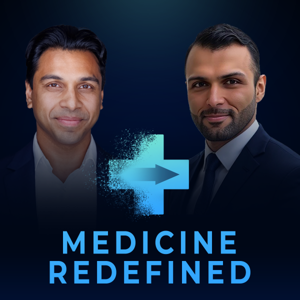


Darsh and Altamash dive into Netflix’s Fit for TV and the wild story behind The Biggest Loser. From shocking weight loss tactics to the billion-dollar business of reality TV, tune in as they break down the science of obesity, GLP-1s, and the dark side of weight-loss entertainment.
Sources:
00:01 | Fit for TV (Netflix doc)
01:30 | The Biggest Loser (NBC show)
02:50 | Jillian Michaels (trainer)
03:45 | Bob Harper (trainer)
04:15 | GLP-1 drugs (Ozempic/Wegovy)
05:20 | Calories In/Out model
14:20 | Dr. Robert Huizenga
15:20 | Motivational interviewing
15:30 | Metabolic ward studies
25:20 | NYT: After The Biggest Loser
25:25 | Kevin Hall (NIH)
26:00 | Hall et al. 2016 (Obesity)
27:10 | Yo-yo dieting
27:30 | Leptin hormone
30:50 | Alan Aragon (nutritionist)
32:00 | Set point theory
32:45 | Stephan Guyenet (author)
33:20 | Sarcopenia
35:00 | Temptation challenges
35:10 | Big Brother (reality show)
35:15 | Survivor (reality show)
38:50 | Dr. Mike Varshavski
39:05 | Dr. Mike Israetel
39:10 | Aesthetic Revolution (concept/book)
Thanks for listening!
Dr. Darsh Shah and Dr. Altamash Raja continue their conversation with Dr. Shawn Arent on hormone physiology and performance. They dive into female physiology and menstrual cycle myths, the overlooked role of thyroid and reverse T3, catecholamines and autonomic balance, and the future of performance enhancement with GLP-1s and muscle-preserving drugs. A practical, evidence-based look at optimizing health and performance!
TIMESTAMPS
00:00 Introduction to Medicine Redefined
00:37 Deep Dive into Hormone Physiology
00:54 Female Physiology and Menstrual Cycle
01:03 Thyroid Hormone Optimization
01:12 Catecholamines and Autonomic Balance
01:23 GLP-1 Agonists and Muscle Preservation
01:58 Guest Introduction: Dr. Shawn Arent
02:21 Discussion on Female Physiology
02:29 Menstrual Cycle and Training
07:28 Hormonal Influence on Injury
07:50 Autoregulation in Training
19:03 Thyroid Hormone and Metabolism
33:55 Catecholamines and Training Response
40:55 Sympathetic vs. Parasympathetic Dominance
45:30 Tracking Trends for Better Interventions
45:53 Wearables and Recovery in Rugby
46:55 Debunking Post-Workout Downregulation
50:52 Contextualizing Fitness Advice
57:06 Balancing Training Methods
01:04:30 The Role of IGF-1 in Recovery
01:07:02 GLP-1 Agonists and Muscle Preservation
01:15:22 Myostatin Inhibitors: The Future of Muscle Growth?
01:21:25 Final Thoughts on Health and Performance
The Impact of Menstrual Cycle Phase on Athletes’ Performance: A Narrative Review MDPI
Current evidence shows no influence of women’s menstrual cycle phase on acute strength performance or adaptations to resistance exercise training Frontiers
The Effects of Menstrual Cycle Phase on Exercise Performance in Eumenorrheic Women: A Systematic Review and Meta-Analysis Springer
Influence of Menstrual Cycle Phases on Maximal Strength, Power and High-Intensity Interval Performance – A Systematic Review with Meta-Analysis MDPI
Evidence-Based Training Guidelines for Elite Women Football and Team Sports Human Kinetics
Hormones, Hypertrophy, and Hype: An Evidence-Guided Primer on Endogenous Endocrine Influences on Exercise-Induced Muscle Hypertrophy ESSR
Menstrual Cycle Effects on Sports Performance and Adaptations to Training: A Historical Perspective PubMed
Effect of Estrogen on Musculoskeletal Performance and Injury Risk Frontiers
Anterior Cruciate Ligament Injuries in Female Athletes: A Narrative Review of Prevention, Risk Factors, and Management Bone Jt Open
The Influence of Age on the Effectiveness of Neuromuscular Training to Reduce ACL Injury in Female Athletes: A Meta-Analysis PMC
Catecholamine and Cardiovascular Responses to Exercise: An Update Springer
Effects of Different Training Interventions on Heart Rate Variability in People with Overweight and Obesity: A Systematic Review Frontiers
Blood-Based Biomarkers for Monitoring Workload and Recovery in Athletes Sports Med Open
Changes in Lean Body Mass with the Use of Glucagon-Like Peptide-1 Receptor Agonists for Weight Loss and Strategies to Mitigate LBM Loss Wiley
ADA Newsroom: GLP-1 Agonists and Lean Body Mass ADA News
Effects of Subjective and Objective Autoregulation Methods in Resistance Training: A Systematic Review PeerJ
Biomarkers in Sports and Exercise: Tracking Health, Performance, and Recovery in Athletes Springer
Exercise, Training, and the HPT/HPA/HPG Axes in Athletes CSMR
Circulating Testosterone as the Hormonal Basis of Sex Differences in Athletic Performance PMC
Optimizing Health and Athletic Performance for Women Springer
Thank you for listening!
We are back with a powerhouse guest, Dr. Shawn Arent, for part 1 of a series on hormone optimization. From cortisol misconceptions to insulin fearmongering, they cut through the noise with science-backed insight into performance, recovery, and stress physiology. You’ll rethink everything you’ve seen on social media about hormones.
TIMESTAMPS
00:00 Introduction to Medicine Redefined
00:36 Welcoming Dr. Sean Arent
02:11 The Importance of Cortisol
02:49 Understanding Cortisol's Role in Performance
04:59 Chronic Cortisol and Overtraining
13:51 Monitoring Stress and Performance
22:30 The Role of Nutrition in Cortisol Management
33:31 Insulin: The Anabolic Hormone
39:27 Exercise and Insulin Sensitivity
40:43 Impact of Stress and Sleep on Glucose Levels
43:02 Continuous Glucose Monitors: Pros and Cons
47:42 Athlete Nutrition and Performance
55:52 Hormonal Responses to Training
01:07:18 Sex Hormones and Athletic Performance
01:17:37 Conclusion and Future Topics
SOURCES
00:00:22 | Cortisol deficiency (Addison’s disease) is life-threatening
00:04:42 | Cortisol peaks in early morning (chronobiology)
00:05:25 | Acute sleep deprivation significantly increases cortisol
00:05:42 | One week of 5h/night sleep restriction lowers testosterone by \~10–15%
00:22:11 | Cortisol stimulates gluconeogenesis (maintains blood glucose upon waking)
00:27:38 | No single reliable biomarker for overtraining syndrome
00:27:38 | Overtrained athletes show blunted HR, blood lactate and cortisol responses
00:29:00 | Prolactin rises in response to stress/exercise
00:30:00 | Dietary fat guidelines: 20–35% of calories from fat
00:33:30 | Insulin is an anabolic hormone promoting nutrient storage
00:33:30 | Low-fat (∼20% fat) diets reduce testosterone 10–15% vs high-fat diets
00:39:26 | Regular exercise improves insulin sensitivity
00:39:26 | ~38% (~98M) of U.S. adults have prediabetes
00:40:29 | Shorter sleep duration impairs insulin sensitivity
00:01:02:57 | Exercise above the lactate threshold elicits maximal GH release
01:04:42 | Resting lactate \~1–2 mmol/L; intense exercise >20 mmol/L
01:08:53 | Higher testosterone levels correlate with greater lean mass in men
01:11:51 | Winners in competition show post-event testosterone spikes
01:12:29 | Female athlete amenorrhea leads to low bone density and stress fractures
01:12:29 | Amenorrheic female athletes have lower IGF-1 (growth factor)
01:08:53 | Testosterone even within normal range affects strength/mass
In this episode of Medicine Redefined, Darsh and Altamash dive deep into the question on every future and current physician’s mind: is medicine still worth it? What starts as a reflection on the financial and emotional toll of the profession quickly evolves into a powerful conversation about agency, reinvention, and longevity in medicine. With honesty and humor, they unpack their own journeys from burnout to building lives and careers on their own terms, sharing hard-earned insights and tactical frameworks for thriving in a changing healthcare landscape.
If you’ve ever felt disillusioned about your path in medicine or wondered how to break free from the constraints of the job, this episode will challenge and inspire you to rethink what’s possible.
TIMESTAMPS
00:00 Introduction to Medicine Redefined
00:54 Is Medicine Still Worth It?
02:24 Challenges in Modern Medicine
05:20 Financial Realities of Medical Education
10:46 Diversifying Medical Careers
17:40 The Importance of Diverse Experiences
22:20 Generational Shifts in Medical Practice
22:55 The Importance of Professional Diversification
23:21 Shared Decision Making with Patients
23:48 Challenging the Culture of Self-Destruction
24:15 Advice for Aspiring Neurosurgeons
24:32 Balancing Interests and Professional Growth
25:54 The Business of Medicine
27:59 Frameworks for Medical Students
29:33 Reframing Medical Careers
33:49 Setting Prices in Direct Pay Practice
41:18 Final Thoughts and Parting Words
SOURCES
| [00:06:45] | One Big Beautiful Bill Act (H.R.1, 119th Congress) – A 2025 budget reconciliation bill passed by the House and signed into law, containing sweeping tax and spending changes (health, taxes, etc.)
| [00:06:51] | Medicaid coverage cuts – CBO estimated the reconciliation bill would reduce Medicaid enrollment by on the order of 10–12 million people
| [00:06:53] | Fiscal impact of the bill – Analyses (e.g. by the CRFB) show the bill adds roughly $3.4 trillion to the deficit (≈$4.1 trillion including interest)
| [00:07:30] | Student loan policy changes – H.R.1 eliminates Grad PLUS loans (effective July 1, 2026) and caps borrowing for medical/law students at $50,000/year ($200,000 total)
| [00:07:45] | AAMC medical school cost data – The AAMC reports median 4‑year cost of attendance for public med schools ~$286K (2025 cohort, i.e. ~$71–73K/year including living)
| [00:08:04] | AAMC medical school debt – AAMC data show the median debt at graduation for MD grads is about $205,000
| [00:09:39] | Primary care physician trend – Reports indicate many U.S. med students are “turning away from primary care in favor of more lucrative specialties”, leading to projected shortages.
| [00:09:39] | Primary care shortage (projected)
| [00:09:39] | Overall physician shortage – AAMC projects an all‑specialty physician shortage up to ~86,000 doctors by 2036
| [00:09:49] | Healthcare spending share (physicians) – U.S. health expenditure data: hospitals ~31% and physicians/clinics ~20% of total spending in 2023 (so physician pay is a fraction of total cost)
| [00:10:00] | Private equity in healthcare – Deal activity surged in 2024
| [00:10:05] | PE healthcare deals (2024) – A recent analysis counted ~1,069 private‑equity healthcare deals in the U.S. in 2024.
| [00:17:15] | Peter Attia – Physician who left surgical residency
[00:21:09] | Emphasizing diversity of thought and experience in healthcare teams can broaden insight and drive innovation
[00:21:34] | The notion of a physician “martyr complex”
[00:32:20] | Nearly 39% of U.S. doctors now have side “gigs”
[00:33:23] | A 2023 randomized trial (knee bursitis) found local corticosteroid injections relieved pain significantly more than extracorporeal shockwave therapy (ESWT)
[00:34:16] | Concierge medicine and Direct Primary Care (DPC) are growing trends
[00:39:58] | Patients paying concierge/DPC fees gain perks (shorter wait times, direct doctor access)
In this episode of Medicine Redefined, Dr. Darsh and Dr. Altamash sit down with Dr. Vince Marchese, sports medicine physician and founder of Apex Medicine, to explore how transparency and direct pay models are transforming healthcare.
We break down why traditional insurance creates confusion and barriers, how clear pricing empowers patients, and what happens when physicians reclaim time to focus on care - not paperwork.
TIMESTAMPS
00:00 Introduction to Medicine Redefined00:35 Meet Dr. Vince Marchese01:13 Journey to Sports Medicine01:37 Breaking Away from Insurance02:06 Life as a Direct Pay Practitioner09:33 Understanding Insurance Complexities10:27 The History of Insurance11:56 Navigating the Insurance Maze15:37 The Case for Direct Pay17:31 Empowering Patients with Knowledge41:39 The Insurance Dilemma42:00 State Mandates and Penalties42:58 Self-Insurance and Cost-Saving Strategies44:40 Catastrophic Insurance and HSAs52:04 The Benefits of Direct Pay Models55:02 Building a Patient-Centric Practice01:04:31 Scaling and Future of Direct Pay Medicine01:11:44 Support Systems and Taking the Leap01:16:03 Closing Thoughts and Resources
SOURCES
Healthcare Spending & Insurance Costs
[00:16:01] “51 cents of every healthcare dollar goes to insurance” – In fact, CMS and KFF data show [1, 2] private insurers cover ~30% of U.S. health spending, and federal/state programs ~51%. Administrative overhead is only about 7.4% of spending [1].
[00:10:00] Average premium costs – Kaiser Family Foundation reports that in 2024 the average annual employer health insurance premium is ~$8,951 for single coverage and ~$25,572 for family coverage [4], illustrating why monthly premiums can seem “crazy high.”
Policy & Regulations
[00:31:54] Balance billing protections (No Surprises Act) – Effective Jan 1, 2022, federal law bans surprise/“balance” bills for most emergency and certain other out-of-network services [5, 6]. For example, CFPB explains that patients generally will no longer face balance bills for emergency care [5, 6] under the No Surprises Act.
Health Savings Accounts (HSAs)
[00:43:30] Triple tax advantage of HSAs – HSAs are truly tax-advantaged. According to IRS rules and financial guides, HSA contributions are tax-deductible, earnings grow tax-free, and qualified withdrawals are tax-free [7, 8]. Bank of America and IRS publications both highlight this “triple-tax” benefit.
[00:44:17] HSA contribution limits – For 2024, IRS rules allow $4,150 annual HSA contributions for self-only HDHP coverage and $8,300 for family coverage [7] (The podcast guest’s “~$4,000” estimate for solo coverage aligns with the $4,150 limit for 2024 [7]).
Price Transparency & Cash Payments
[00:21:30] MRI cash prices – Pricing guides show that uninsured (cash) MRI costs vary widely. For example, a 2025 SingleCare review finds a national average MRI cost of ~$1,325 (range ~$400–$12,000) without insurance [9]. A cash-pay platform (MDsave) reports a $1,335 average for an MRI, with their cash price as low as ~$805 [10]. These sources confirm that self-pay MRI prices can be far below billed/insurance prices.
[00:21:30] Cash vs. negotiated prices – Studies show many hospitals set their cash (self-pay) rates lower than insurer-negotiated rates. For example, one analysis found 60% of insurer-negotiated hospital rates exceed the hospital’s cash price for the same service [11], and a JAMA-published study reports that cash prices are often below the commercial prices insurers pay [12]. In short, paying cash (or high-deductible plans) can sometimes cost less than the “discounted” insurance rate.
Referenced Book
[00:21:24] The Price We Pay – Dr. Marty Makary
In this episode of Medicine Redefined, Darsh and Altamash sit down with Dr. Patrick “Rocky” Sullivan, an emergency physician turned ketamine therapy pioneer, to explore how this powerful molecule is quietly transforming mental health care. Drawing from years of ER experience and clinical innovation, Dr. Sullivan breaks down the science, stigma, and promise behind ketamine treatment for depression, PTSD, addiction, and chronic pain.
We unpack the nuances of off-label prescribing, why most depression treatments miss the mark, and how ketamine-assisted psychotherapy (KAP) is helping patients rewire trauma in real time.
If you’ve ever wondered how ketamine really works, who it's for (and who it’s not), or what a responsible treatment plan should look like, this conversation will change your perspective. It's an eye-opening look into the future of mental health care.
TIMESTAMPS
00:00 Introduction to Medicine Redefined
00:36 Meet Dr. Patrick Sullivan
01:46 The Evolution of Ketamine Therapy
03:18 Rocky's Journey into Psychiatry
07:57 Understanding Ketamine's Mechanism
08:49 Off-Label Uses and Research
11:12 Ketamine in Emergency and Pain Management
14:14 The Importance of Set and Setting
15:29 From Anesthetic to Antidepressant
17:15 Mainstream Depression Treatments
23:02 Navigating Treatment Options
26:45 Screening and Safety Protocols
37:29 Ketamine Assisted Psychotherapy
41:42 Telehealth and Ketamine Delivery
42:16 The Importance of Provider Interaction
43:11 Case Studies: Depression and OCD
43:55 Case Studies: Pain and Trauma
44:24 Case Studies: Alcohol Use Disorder
46:12 The Role of Therapy in Ketamine Treatment
47:54 Ketamine's Mechanism and Benefits
52:09 Maintenance and Dosage Variability
01:05:13 Challenges in Ketamine Research and Regulation
01:16:14 Conclusion and Contact Information
SOURCES
04:13: Ketamine suicidal ideation meta-analysis; Ketamine depression meta-analysis
05:09: What is ketamine?
06:01: History of ketamine
07:36: Off-label prescriptions
07:44: Research referenced on alcoholism and ketamine:
1997 study
1998 study
2001 study
2018 study
07:44: 2000 study done on depression and ketamine
07:44: 2006 study repeated
09:30: Ketamine dose-dependent responses
10:13: Ketamine on respiratory drive
10:58: Ketamine for asthma
13:47: Psychedelic therapy
15:21: Treatment-resistant depression
16:18: SSRIs and other antidepressant drugs
17:36: ECT and Ketamine therapy studies:
Study 1
Study 2
Study 3 (70% statistic)
18:48: TMS
18:48: Spravato study
18:48: IV Infusion ketamine study
22:19: Treatment resistance depression prevalance
25:20: Mathew Perry story
28:05: Studies on how Ketamine works in the brain:
Study 1
Study 2
29:30: Adjustment disorders
32:21: Studies on BDNF and ketamine:
Study 1
Study 2
Study 3
Study 4
32:37: Exercise and BDNF
32:39: HIIT and BDNF
35:08: Ketamine assisted psychotherapy research
38:08: Ketamine for PTSD
44:27: EMDR
44:46: How to change your mind:
Documentary
Book
01:04:25: Ketamine is top-studied drug in depression
01:05:40: Low-dose naltrexone
01:06:00: FDA approval for naltrexone
01:07:23: American Society of Ketamine Physicians, Psychotherapists & Practitioners
01:14:02: Rocky’s website!
In this episode of Medicine Redefined, Darsh and Altamash take a deep dive into the complex world of medications with Dr. Vinay Patel, pharmacist and founder of MakoRx. Dr. Patel exposes the hidden realities behind Big Pharma, explaining why generic drugs can be so confusing and revealing the true factors driving skyrocketing pharmacy prices. We also explore how cutting-edge AI technology is revolutionizing drug discovery and development.
This conversation will fundamentally change how you understand the medications you rely on every day. Whether you’re a healthcare professional or simply curious, this episode delivers powerful knowledge and a fresh perspective. Tune in!
TIMESTAMPS
00:00 Introduction to Medicine Redefined00:36 Meet Vinay Patel: Healthcare Innovator01:04 Understanding PBMs: The Hidden Middlemen02:47 The Evolution of PBMs05:29 Vertical Integration and Its Impact15:52 The Complexities of Drug Pricing26:30 Compounding Pharmacies and GLP-1 Medications34:15 Mark Cuban's Cost Plus Solution37:39 The Dominance of Employer-Based Health Insurance39:46 The Generic vs. Brand Medication Debate40:52 Challenges in Generic Drug Manufacturing45:05 The Role of Pharmacists in Medication Management50:50 Solutions for a Broken Healthcare System53:54 Introduction to Make O Rx58:29 Overcoming Barriers in the Healthcare Market01:01:31 The Future of Pharmaceuticals and AI01:05:54 Key Takeaways for Healthcare Providers01:08:04 Final Thoughts and Contact Information
SOURCES
00:19: Price We Pay Book
01:35: Pharmacy Benefit Management History
03:24: Medical Modernization Act
03:53: Affordable Care Act
04:13: Vertical Integration
04:33: Big Three Control 80% of Prescriptions
04:56: 20% of Smaller Companies
05:40: Tyson Foods RightWay
06:01: Smaller PBMs Gaining Traction
07:42: Antitrust enforcement in healthcare
08:22: Affordable Care Act and High Deductible Plans
09:24: Gag clauses
09:58: Trump’s Law to Eliminate Gag Clauses
10:39: Elizabeth Warren and Josh Hawley's Bill on PBMs
13:25: Clawbacks
14:32: Clawback disclosure law
14:52: Losing money on drugs
15:00: GLP-1 drugs
16:27: Info on drug pricing
17:05: Insurance companies set drug prices
22:01: Article on rebates
22:30: Net prices have gone down
22:39: List prices have gone up
24:21: Deep dive into drug prices in US
24:45: US VS Europe drug pricing
26:49: US subsidizes the world’s drug prices
27:32: History of Ozempic
28:31: Current status of Ozempic shortage
29:11: Compounding drugs law
32:21: Compounding pharmacy creditation
34:42: Alliance for pharmacy compounding
35:35: Cost plus
36:16: NADAC
39:27: Number of people on employer health insurance
41:35: Bottle of lies
56:55: Mako RX
Dr. Vinay Patel’s contacts:
Email: [email protected].
LinkedIn: https://www.linkedin.com/in/vinaypharmd/
In this episode, Darsh and Altamash talk about why so many people feel let down by the healthcare system. They break down where trust has gone wrong, how rising costs and confusing policies leave both patients and doctors frustrated, and why it feels like "no one is coming to save you". They also get into AI’s growing role in medicine, the recent Surgeon General pick, and what it means to get on board with AI.
00:00 Introduction (Dr. Darsh hates on LeBron)
00:49 Setting the Stage: Healthcare System Frustrations
01:58 Theme 1: Erosion of Trust in Healthcare
15:12 Theme 2: Financial Burden and Affordability Crisis
23:32 Theme 3: Systemic Pressures and Burnout
31:28 The Future of Medical Education
31:48 AI in Medical Decision Making
33:15 The Rapid Advancement of AI
33:46 AI's Impact on Jobs and Society
37:24 Healthcare System Challenges and Layoffs
39:43 Controversial Surgeon General Nomination
47:22 Functional Health and Longevity Market
55:49 Accountability in Health and Society
Resources mentioned in the show:
03:30 Public Trust fell after COVID
04:09 UHC Medicare Fraud case
04:38 21st Century Cures Act
14:24 The Price We Pay book
29:30 Simon Sinek ranting about soft skills
30:14 People referenced:
Vanessa Van Edwards
Vin Giang
Jefferson Fisher
33:03 Chat GPT study
34:41 Sergey Brin interview
35:02 AI Singularity
36:16 Morgan Housel podcast
39:30 Nobel Prize study
47:32 Healthcare huddle
47:41 Function health acquiring Ezra
47: 57 Function health
50:53 Dr. Mike Episode with Prenuvo
50:50 Dr. Mike Episode with Eric Topol
56:28 David Wiss Episode
57:27: Young people can’t pass military test
57:47: I, Robot movie
59:38: Indistractable book
DEEP DIVE:
04:17 Distrust in pharmaceutical companies
15:45 Medical debt bankruptcies
15:57 Exponential growth of healthcare costs
16:12 35% of Americans cannot afford quality healthcare
17:10 Law that stops emergency rooms from refusing care:
18:04: Healthcare premiums have been increasing over time
18:27 Laws and regulations for price transparency:
Link 1
Link 2
Link 3
Issues with compliance
18:49 Drug pricing transparency
23:46 Healthcare burnout at all time high
COVID and the impact on burnout
24:12 Average medical school debt accrued
24: 17 Average doctor salary
26:10 Generational divide between new and old doctors
37:23 Tech Layoffs
37: 43 Stand up for science
37:52 Schools losing funding
41:49 Red 3 ban
Thank you for listening, let us know your thoughts!
We welcome back Dr. Jeremy Boyd for a deep dive into one of the most debated injuries in sports medicine: the ACL tear. Building on our previous conversation around philosophy and mindset in rehab, this one gets tactical—real tactics, real strategies, and real challenges.
Topics Covered in the Episode:
• The 4 main pathways for ACL injury management: reconstruction, repair, non-operative rehab, and cross-bracing for regeneration/recovery
• What makes someone a coper—and how to identify them safely
• ACL rehab with a unique blend of manual therapy, neurocognitive testing, and performance training
• Why rehab isn’t just physical—it’s psychological and personal
• Risks and benefits of surgery vs. non-op management (and shared decision-making)
• ACL self-healing and of course, the use of orthobiologics in ACL healing
• What every patient recovering from an ACL tear should know.
Resources Mentioned in the show:
Cross Bracing Protocol
ACL Self-healing study
KANON trial for non-op ACL healing
PRP for ACL injuries
Dr. Jeremy Boyd, founder of Trifecta Therapeutics, a sports rehabilitation and performance practice with three locations in Southern NJ/Greater Philadelphia, is residency and fellowship trained and board-certified in Orthopaedic and Sports Physical Therapy. As a Fellow of the American Academy of Orthopaedic Manual Physical Therapists (FAAOMPT), he demonstrates advanced skills in diagnosing and treating complex neuromusculoskeletal conditions, utilizing a comprehensive approach that integrates advanced manual therapy and psychological considerations. Dr. Boyd's expertise is trusted by elite athletes from the NFL, NBA, MLB, and the Olympics, and he has a particular interest and focus on ACL injuries and rehabilitation within his practice.
Topics covered in this episode:
Resources mentioned in the show:
Adam Meakins — The Sports Physio
Adriaan Louw — Pain Neuroscience Education
Change Maker by John Berardi
Range by David Epstein
Connect with Jeremy Boyd
Trifecta Therapeutics
Jeremy Boyd — @thedecentdoctor
From the publisher's feed

227,492 Listeners
26,151 Listeners

496 Listeners

4,982 Listeners

290 Listeners
3,343 Listeners

111,799 Listeners
8,527 Listeners

8,001 Listeners