
Sign up to save your podcasts
Or



If you feel a little pang of guilt almost every time you spend money, that guilt was never really about your choices. It's about a hundred small purchases with no clear place to put them, so every one turns into a question.
This chapter is about SpendFreely, the everyday spending that moves with your life. The groceries, the gas, the coffee, the Target run that somehow covers four “categories” but was really just a Tuesday. Traditional budgeting tries to slice this part of your life into smaller and smaller pieces, and all that does is turn every purchase into a tiny negotiation with yourself. There's a simpler, kinder way, and this chapter is where it starts. This is how to stop overspending without tracking every category. You give everyday spending one number and budget by paycheck instead of by the month.
I also share something that surprises people: I genuinely don't know how much my husband and I spend on groceries versus eating out, and as someone who does this for a living, that tends to raise eyebrows. I'll explain why I don't need to know, and why letting go of that made our money, and our marriage, easier.
At the end, I've included a short check-in, a chance to notice how much you can already see with just the first couple of pieces in place. Come feel what it's like when spending feels like living again.
Get the Book: You just listened to a chapter of it. The whole book is out November 11, and SpendFirst.com/book will tell you the day it lands.
Want to set up your own everyday-spending number? The free Quick Start Guide is at https://spendfirst.com/start.
Subscribe so you don't miss next Thursday.
If you’ve ever felt fine at the start of the month and strangely broke by the middle of it, this is for you. There is a clear reason for that mid-month squeeze, and it comes down to timing you’ve never been shown how to see.
If you have ever wondered what a fixed expense actually is, this is the chapter. Today we're defining SpendFixed, the fixed expenses like rent, utilities, and subscriptions that arrive every month. Most of us carry a loose, stressful map of these in our heads. This chapter is about setting that map down so you can breathe.
When you see your bills by due date, something opens up. You get clarity, relief, and an understanding of which paychecks carry the most weight. That is what it means to budget by paycheck instead of by the month.
Take the next step with Money Made Human:
Some months your money feels calm, and some months it feels like chaos, even when your paycheck stays exactly the same.
This week on the podcast I'm reading Chapter 3 of my book, SpendFirst®. It's the chapter where a lot of people finally set down the self-blame and see that their system was the thing missing all along.
Most budgeting sorts your spending by category: housing, food, fun. And the piece it leaves out is the one that actually gets to you, which is timing. When you start looking at how your money behaves instead of only what it's for, the whole picture settles. There are three ways your money moves, and once you can name them you can budget by paycheck, matching each one to the checks that actually cover it.
A few things this chapter opens up:
Get the Book: You just listened to a chapter of it. The whole book is out November 11, and SpendFirst.com/book will tell you the day it lands.
You can start sorting your own waves before the book is even out. Grab your free Quick Start Guide at https://SpendFirst.com/start
Does your budget feel like it’s fighting your calendar? Most financial advice tells us to plan in 30-day blocks, but your life happens paycheck to paycheck. This episode is how to budget by paycheck instead of by the month.
In this episode, we dive into Chapter 2 of SpendFirst to explore the Paycheck Rhythm, the simple but transformative shift that turns your budget from a chore into the heartbeat of your financial system.
You’ll learn:
Get the Book: You just listened to a chapter of it. The whole book is out November 11, and SpendFirst.com/book will tell you the day it lands.
Start the SpendFirst Journey: If you’re new here, start at the beginning to see 3 months into your money future.
Resources Mentioned:
Join the Conversation: New episodes drop every Thursday. If this helped you find your rhythm, subscribe to Money Made Human and leave us a review!
If you’ve tried budgeting apps, spreadsheets, and rules and still ended up unsure, this is the episode that explains why, and why it was never a flaw in you. Kelsa Dickey reads Chapter 1 of SpendFirst, including the story of Jessie and Joe, a capable couple doing everything “right” and still drowning.
The problem was never discipline. It was that traditional budgeting never helped them see how their money actually moves. The fix is not more discipline. It is to budget by paycheck instead of by the month.
Press play, then subscribe so you don’t miss Chapter 2 next Thursday.
Get the Book: You just listened to a chapter of it. The whole book is out November 11, and SpendFirst.com/book will tell you the day it lands.
Or start here with our Quick Start Guide
This is where it begins. In the Introduction to SpendFirst, I'm reading the opening of my new book and laying out the premise the whole season is built on: You can manage almost anything in your life, so why does money still feel like a guessing game?
The answer isn’t more discipline. It’s finally being able to see how your money moves, today, next paycheck, and three months from now.
If you’ve tried the apps, the spreadsheets, and the rules and still felt unsure, this episode reframes why. Press play, then subscribe so you don’t miss Chapter 1 next Thursday.
Get the Book: You just listened to a chapter of it. The whole book is out November 11, and SpendFirst.com/book will tell you the day it lands.
Or start here with our Quick Start Guide
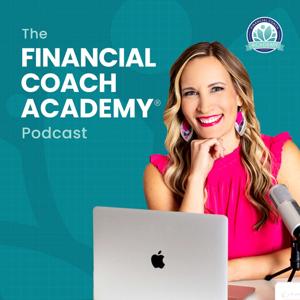
The Financial Coach Academy Podcast is now Money Made Human, and Season 2 starts here.
In this short welcome episode, Kelsa Dickey shares what the new show is about and what makes this season different from anything she’s done before: an entire season spent reading her book, SpendFirst, one chapter a week, in her own voice.
If money has ever felt like a guessing game even though you’re capable everywhere else in your life, this is the season to be here. Press play, then subscribe so the book’s Introduction is waiting for you next Thursday.
Get the Book: You just listened to a chapter of it. The whole book is out November 11, and SpendFirst.com/book will tell you the day it lands.
Learn more at spendfirst.com/start.
This is the final episode of the Financial Coach Academy Podcast and the final episode of Season 1. Starting June 25, this show becomes Money Made Human.
In this episode, we’re talking about what 157 episodes built, sharing the story of a listener who changed how I see this show, explaining why the name is changing, and laying out what’s coming in Season 2: The full SpendFirst® book, read chapter by chapter, one per week, in my voice, before it launches November 11.
Same feed, same Thursdays, same voice. The conversation just got bigger.
https://spendfirst.com/podcast
Every year the same hesitations come up when I talk to coaches about conferences:
This week I'm replaying my conversation with Philip Taylor, CPA, entrepreneur, and founder of FinCon, with a fresh intro and outro for FinCon 2026. Philip has watched thousands of financial professionals walk through those exact hesitations, and we work through all five of them together.
What we land on is something I come back to every year: the fears that keep you home are usually pointing straight at the growth you're looking for. Philip walks through how he got past each one, from joining the online community before he arrived, to going in with a clear mission so the cost made sense, to finding the other people in the room who felt just as new as he did.
I also share why I still attend conferences after nearly two decades of building a financial coaching practice, and why FinCon is the one I keep coming back to.
FinCon 2026 is September 16 through 18 in Palm Springs, CA. Registration is open at finconexpo.com. Use code KELSA50 for $50 off. If you caught last week's episode on how to prepare for a conference, this one pairs with it.
Someone on Reddit spent more than $4,000 on a conference and came home with six business cards on their desk and nothing else. No meetings booked, no follow-up calls scheduled, no real conversations. They did all the things people tell you to do: They worked the expo floor, sat through the sessions, showed up to the networking cocktail hour. And they still felt like they had lit that money on fire.
Their question was simple, and it is one I hear from coaches all the time: What do you actually do before a conference to make it worth going?
In this episode, I walk through exactly how I prepare so a conference earns its cost. I talk about who to reach out to before you go and how to do it so people actually respond, what to focus on once you are there, and the part most people skip entirely, which is the follow-up that turns a hallway conversation into a real relationship.
I also share the one number I use to know whether a conference was worth it, why three to five people is the right size for your list, and the permission slip most people need to hear about skipping sessions. Whether you are going to FinCon, AFCPE, or any professional event this year, this one is practical enough to put to work right away.
FinCon 2026 is September 16-18 in Palm Springs. Registration is open at https://finconexpo.com, and code KELSA50 gets you $50 off.
Links & Resources
From the publisher's feed
Personal finance with a human touch.
Money Made Human is a show about what it actually looks like to handle money well. Not the rules. Not the hacks. The real, human…
Hosted by Kelsa Dickey, founder of Financial Coach Academy® and creator of the SpendFirst® methodology, this show is for two kinds of listeners. People who want a better picture of their own money. And the financial coaches and practitioners who do this work with them.
For almost two decades, Kelsa has built her practice around one belief: most financial stress isn't a discipline problem. It's a visibility problem. When you can see where your money is actually going, what's already spoken for, and what's coming, the decisions get easier. The system doesn't have to be tight. It has to be clear.
Season 2 is the chapter-by-chapter reading of Kelsa's book, SpendFirst: The Surprisingly Simple System to Stop Stressing About Money. One chapter per episode, in her voice, from the introduction all the way through. The book launches November 11, 2026. You'll hear it here first.
If you're a coach or practitioner, this is the methodology your clients will be learning. Hearing the whole thing will make you better at teaching it.
If you're trying to figure out your own money, this is a season-long invitation into a way of thinking that doesn't ask you to be more disciplined. It asks you to see your money clearly.
New episodes every Thursday. Subscribe wherever you listen.

3,562 Listeners

1,581 Listeners

1,487 Listeners

3,673 Listeners

5,133 Listeners

3,061 Listeners

448 Listeners

3,664 Listeners
411 Listeners

200 Listeners

3,453 Listeners

354 Listeners

925 Listeners
33 Listeners