
Sign up to save your podcasts
Or

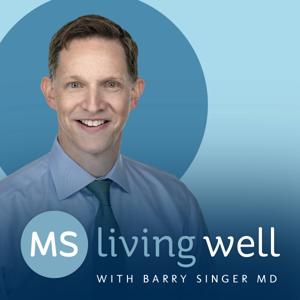
By Barry Singer, MD


4.9
123123 ratings


The podcast currently has 58 episodes available.
The most played episodes among Podcast App listeners.
Maintaining a healthy weight may be particularly important in multiple sclerosis, as excess fat tissue can promote inflammation and contribute to other health conditions that may complicate MS. GLP-1 medications such as Ozempic and Mounjaro have transformed weight management, but could their benefits extend beyond weight loss? We explore emerging evidence that these medications may reduce inflammation, protect nerve cells, and possibly promote myelin repair, as well as clinical trials investigating their potential impact on MS progression. Exercise can also do much more than build muscle. We explore how targeted movement may harness neuroplasticity—the brain's ability to adapt and find new pathways around areas damaged by MS. Practical strategies are shared for improving fatigue, spasticity, core strength, balance, and mobility, even for people with significant disability. Barry Singer MD, Director of The MS Center for Innovations in Care, interviews: Olaf Stuve MD PhD, Professor of Neurology and Head of the Multiple Sclerosis and Neuroimmunology Section. UT Southwestern Medical Center, Dallas, Texas Trevor Wicken, Founder of The MS Gym, a global online platform for exercise and mindset training for people living with multiple sclerosis

MRI scans can reveal far more than just "white spots." New imaging techniques are uncovering hidden inflammation, silent disease activity, and smoldering lesions that may continue damaging the brain even when someone feels stable and routine MRI scans appear unchanged. This episode explores how MRI is evolving from a diagnostic tool into a window into the underlying biology of multiple sclerosis. We discuss why spinal cord imaging can sometimes reveal disease missed in the brain, how the "central vein sign" may help prevent MS misdiagnosis, and why brain shrinkage remains difficult to measure reliably in individuals living with multiple sclerosis. The conversation also dives into some of the most exciting frontiers in MS imaging including myelin repair, functional MRI, and how artificial intelligence could dramatically improve the speed and precision of MRI scans in the future. Barry Singer, MD, Director of The MS Center for Innovations in Care, interviews: Anthony Traboulsee, MD, Professor of Neurology, University of British Columbia and Director of the UBC MS/MRI Research Group in Vancouver Frederik Barkhof, MD, PhD, Professor of Neuroradiology, Amsterdam UMC and University College London
CAR-T therapy, short for chimeric antigen receptor T-cell therapy, is already transforming treatment for blood cancers like lymphoma and leukemia and is now being tested in early trials for multiple sclerosis. In this approach, a person's own T cells (or sometimes donor T cells) are collected and reengineered in the lab with a special "chimeric" receptor on their surface. Once infused back into the body, these "designer" T cells can specifically hunt down B cells, including those hiding in the brain and spinal cord that may drive progressive MS. This is a key difference since current B-cell depleting antibody treatments don't reach effectively into the central nervous system. Like any powerful therapy, CAR-T is not without risks. Side effects can include serious infections, cytokine release syndrome (fever, chills, body aches), and even neurological symptoms like confusion or seizures. Still, the early results in MS patients are remarkable, bringing fresh hope for those with progressive disease. Beyond MS, CAR-T is being explored across autoimmune neurological diseases from myasthenia gravis to stiff person syndrome, opening a promising new frontier in care. Barry Singer MD, Director of the MS Center for Innovations in Care, interviews: Jeffrey Dunn MD, Clinical Professor and Chief of Neuroimmunology in the Department of Neurology & Neurological Sciences at Stanford University Amanda Piquet MD, Professor of Neurology and Céline Dion Foundation Endowed Chair at the University of Colorado Anschutz School of Medicine
The quest to repair the damage caused by multiple sclerosis is gaining momentum, with scientists working to restore lost function and slow progression by rebuilding myelin—the protective coating of nerve cells. Within the brain and spinal cord, immature myelin-making cells called OPCs hold promise, but need the right signals to mature into oligodendrocytes and repair MS lesions. Researchers are also studying the role of microglia, the immune cells that clear debris but can turn destructive, with drugs like BTK inhibitors potentially tilting them toward repair. Early attempts at remyelination drugs such as opicinumab and elezanumab showed promise in animals but ultimately failed in human trials, underscoring the challenge. Still, reasons for optimism are emerging: clemastine, a common antihistamine, showed signs of remyelination in optic neuritis, while PIPE-307—a compound inspired by green mamba snake venom—is in Phase 2 trials. Even novel approaches like gold nanoparticles are being studied to boost oligodendrocyte energy and repair capacity. The path is complex, but progress is accelerating—bringing remyelination therapies closer to becoming a real option for people living with MS. Barry Singer MD, Director of The MS Center for Innovations in Care, interviews: Veronique Miron PhD, MS Research Chair at St. Michael's Hospital and Professor of Immunology at The University of Toronto Robert Glanzman MD, Board-certified neurologist and Chief Medical Officer of Find Therapeutics
Parenting can be both a beautiful adventure and a demanding test. For those living with multiple sclerosis, the joys of raising children often come with added challenges—fatigue, changes in routine, and questions about how MS may affect family life. Despite these obstacles, many parents with MS find that their journey brings deeper meaning, resilience, and joy. In this podcast episode, we'll explore the unique challenges and strengths of parenting with MS. From managing invisible symptoms to navigating conversations with children, our guests share their expertise and experience to provide guidance and encouragement for families. Dr. Jamie Holloman, neurologist at the MS Center for Innovations in Care at Missouri Baptist Medical Center, interviews: Amy Sullivan PsyD, Clinical Health Psychologist, Director of Behavioral Medicine at the Cleveland Clinic Mellen Center for Multiple Sclerosis. Julie Stamm, MS advocate and author of Some Days: A Tale of Love, Ice Cream, and My Mom's Chronic Illness.
The podcast currently has 58 episodes available.

111,908 Listeners
149 Listeners

369,976 Listeners
15 Listeners
9,182 Listeners

50 Listeners

2,545 Listeners
58,036 Listeners

29,081 Listeners
116 Listeners

2,074 Listeners

10,594 Listeners

17,665 Listeners

19,066 Listeners

3,617 Listeners