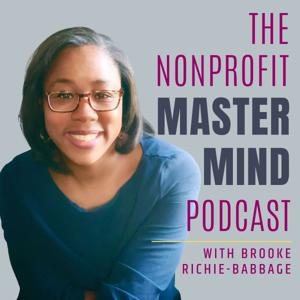
Nonprofit Mastermind Podcast

Nonprofit Mastermind Podcast

By Brooke Richie-BabbageBusinessNon-Profit
Download on the App Store

Nonprofit Mastermind Podcast episodes

  • How To Overcome The Failures of Traditional Leadership

     In this episode, I reflect on insightful conversations with leaders from my Next Level Nonprofit program, exploring the essence of effective whole-self leadership. We dive into how leaders can bring their entire selves into their roles, maintain their passion, and build impactful organizations post-COVID. Through discussions with Tene Howard, Zareta Ricks, Jill Eisenhard, and Katy Rubin, we unpack the challenges of traditional leadership models and the importance of aligning leadership with personal values. Join me as we navigate the evolving landscape of nonprofit leadership and discover strategies to foster sustainable and meaningful change.

    What You'll Learn:

    • How to align leadership with your personal values and passions.
    • The pitfalls of traditional leadership models and how to overcome them.
    • Strategies for fostering a supportive and inclusive leadership environment.


    Key Takeaways:

    1. Align Leadership with Values: Leadership should be an expression of what moves and fuels you.
    2. Avoid the Myth of the Singular Leader: Successful leadership is collaborative, not solitary.
    3. Sustain Passion and Engagement: Stay connected to what inspired you to lead in the first place.
    4. Acknowledge Systemic Barriers: Recognize and address the impact of race, gender, and systemic inequities.
    5. Build Supportive Partnerships: Form strong, value-aligned relationships with funders and donors.


    Steps to Effective Whole-Self Leadership:

    1. Reflect on Your Values:
      • Identify what moves you and fuels your passion.
      • Ensure your leadership reflects these values.
    2. Foster Collaboration:
      • Build a leadership team that shares your vision.
      • Encourage open communication and collective decision-making.
    3. Maintain Engagement:
      • Regularly revisit your mission and what inspired you.
      • Create a work environment that keeps you and your team connected to the cause.
    4. Address Systemic Barriers:
      • Be aware of how systemic inequities affect leadership and access to resources.
      • Work towards creating a more equitable organizational culture.
    5. Form Strong Partnerships:
      • Build transparent, honest relationships with funders and donors.
      • Focus on long-term, mutually beneficial collaborations.


    Resources Mentioned:

    • Next Level Nonprofit Program: Leadership development and coaching for nonprofit leaders.
    • Interviews with Tene Howard and Zareta Ricks: Discussing the importance of leadership reflecting personal values.
    • Interview with Jill Eisenhard: Exploring the disconnect between leadership ideals and lived experiences.
    • Interview with Katy Rubin: Debunking the myth of the solitary leader and addressing systemic barriers.

    Want to work together?

    Apply for the Next Level Nonprofit Mastermind, a high-touch coaching and training accelerator for established organizations with $1M+ budgets that are ready to design for impact sustained at scale.  

    Budget under $1M? Join Elevate and get proven step-by-step playbooks + coaching support to build each of the core elements of your nonprofit's operating system - strategic clarity, a fundraising engine, a high-performance team, and an active and engaged board!   

    Connect with me!

    • LinkedIn
    • Instagram
    • YouTube
    39 min
  • How To Hire The Right Person Every Time

    In this episode, I share the ultimate tool that can revolutionize your hiring process: the hiring rubric. By standardizing your hiring approach, you can reduce bias, make better hiring decisions, and streamline the entire process. I break down the structure of an effective hiring rubric and show you how to implement it to build your own high-impact team.

    What You'll Learn

    • How to define and prioritize core competencies and skills for your organization.
    • The importance of clear indicators for evaluating candidate proficiency.
    • Crafting questions that reveal candidates' true capabilities.

    Key Takeaways

    1. Reduce Bias: A hiring rubric ensures decisions are based on clear standards rather than personal preferences.
    2. Better Hiring Decisions: Clearly defined competencies help identify the best candidates for the role.
    3. Efficient Process: A rubric streamlines evaluations, saving time and reducing confusion.
    4. Consistency: Standardized questions and criteria mean the process doesn’t change based on who is conducting the interview.
    5. Collective Decision Making: The rubric allows for easier collaboration among hiring team members.

    Step-by-Step Process to Create a Hiring Rubric

    1. Identify Core Competencies and Skills: Start with a list of essential competencies and skills that reflect your organization's values and the specific role.
    2. Define Competency Indicators: Specify observable evidence for each competency. What behaviors or actions demonstrate the competency?
    3. Craft Aligned Questions: Develop interview questions that will help you uncover whether a candidate has the required competencies and skills.

    Resources Mentioned

    • High Impact HR Podcast Playlist: A collection of episodes on hiring the right way.
    • Nonprofit Template Vault: Access to the model rubric with competencies, indicators, questions, and anti-bias tools.

    Connect With Brooke 

    LinkedIn

    Instagram

    YouTube

    Want to work together?

    Apply for the Next Level Nonprofit Mastermind, a high-touch coaching and training accelerator for established organizations with $1M+ budgets that are ready to design for impact sustained at scale.  

    Budget under $1M? Join Elevate and get proven step-by-step playbooks + coaching support to build each of the core elements of your nonprofit's operating system - strategic clarity, a fundraising engine, a high-performance team, and an active and engaged board!   

    Connect with me!

    • LinkedIn
    • Instagram
    • YouTube
    32 min
  • How to Use Advisory Councils to Grow Capacity & Impact

    Have you ever had people in your network who are excited about your mission and work, but who don’t totally fit on your board? Enter: the Advisory Council. A well designed and executed advisory board can provide a unique blend of expertise, experience, and expanded networks — without the formalities of governance. In this episode, I delve into how to design, structure and implement an effective advisory council to bolster your credibility, offer invaluable advice, and act as ambassadors for your cause.

    Here’s what you’ll learn by tuning in:

    • The Role and Value of Advisory Boards: Understand how an advisory board differs from your board of directors and its unique value in driving your nonprofit forward.
    • Crafting Your Advisory Board: Learn how to identify the purpose of your advisory board, select members, and set clear expectations to ensure alignment and impact.
    • Maximizing the Impact: Strategies for effectively managing your advisory board to foster engagement, leverage their expertise, and achieve your strategic goals.


    Key Takeaways:

    1. Advisory boards are not governance bodies; they're strategic allies.
    2. Select members for their expertise, networks, and passion for your mission.
    3. Establish clear goals and expectations to guide your advisory board’s focus and activities.
    4. Regular communication and engagement are crucial for maintaining an effective advisory council.
    5. Consider multiple, focused advisory boards for different strategic areas rather than one with a broad, undefined purpose.


    Step-by-Step Guide to Forming and Managing an Advisory Council:

    1. Identify the Purpose: Define the specific strategic reasons for forming the council.
    2. Select Members: Choose individuals whose expertise and networks align with your council’s purpose.
    3. Communicate Expectations: Clearly articulate the council’s goals, member responsibilities, and meeting cadence.
    4. Engage Regularly: Maintain ongoing communication and involve council members in meaningful activities.


    Resources Mentioned:

    • Related Podcast Episodes: Leveraged Networks 

    Want to work together?

    Apply for the Next Level Nonprofit Mastermind, a high-touch coaching and training accelerator for established organizations with $1M+ budgets that are ready to design for impact sustained at scale.  

    Budget under $1M? Join Elevate and get proven step-by-step playbooks + coaching support to build each of the core elements of your nonprofit's operating system - strategic clarity, a fundraising engine, a high-performance team, and an active and engaged board!   

    Connect with me!

    • LinkedIn
    • Instagram
    • YouTube
    17 min
  • Throwback: How To Transform Your Organization With ChatGPT

    This week I’m bringing back one part of my 3-part series on how to unlock the power of ChatGPT. I’m bringing it back into the rotation because I just launched a new ChatGPT resource for nonprofits that I’m so excited about — the Nonprofit ChatGPT Headquarters.

    ChatGPT isn’t some fancy, super-techie tool that needs to be built out and figured out. It should be as integrated and simple as Google Docs. It’s a capacity builder and a time saver and my goal is to make it easy for organizations to tap into its power. If you aren’t you’re leaving capacity on the table.

    So I took the questions and conversations I’ve been having with nonprofits and I turned it into a concrete tool, which is one of my favorite things to do.

    The ChatGPT HQ is an all-in-one workspace that supports you at every phase of using ChatGPT from giving you ideas, to giving your prompts, to giving you an already built out place to save and organize your prompts.

    So if you’re still on the fence about ChatGPT, listen to this episode to get inspired, and if you’re ready to take the next step and start saving you and your team hours of time and brain energy every week, head over to brookerichiebabbage.com/chatgpt-hq and grab your workspace!

    Want to work together?

    Apply for the Next Level Nonprofit Mastermind, a high-touch coaching and training accelerator for established organizations with $1M+ budgets that are ready to design for impact sustained at scale.  

    Budget under $1M? Join Elevate and get proven step-by-step playbooks + coaching support to build each of the core elements of your nonprofit's operating system - strategic clarity, a fundraising engine, a high-performance team, and an active and engaged board!   

    Connect with me!

    • LinkedIn
    • Instagram
    • YouTube
    32 min
  • What Does Good Measurement Look Like in Practice? 4 Core Metrics for Your Dashboard

    In this episode, I walk through the 4 core metrics vital for your nonprofit's success. I can't overstate the importance of tracking and understanding your organization's health, effectiveness, and alignment with its mission. Yet, for many nonprofit leaders, navigating this terrain can feel overwhelming and perplexing, leaving them unsure of where to begin.

    I'm sharing a four-part, structured approach to tracking and measuring your organization's health on a month-to-month basis.

    While the concept of metrics may seem daunting, they are simply a targeted set of data that you and your team choose to track and analyze. Much like numbers on a dashboard, these metrics serve as quick and efficient indicators of your organization's overall health and performance. By paying attention to these metrics, you can identify areas that require further attention and ensure that your organization remains on the path to success. Remember, you don’t need to track every metric; instead, focus on selecting 1-3 key metrics in each of the four crucial areas of your organization’s health and operations.

    What Listeners Will Learn:

    • How to select and apply 1-3 crucial metrics in four pivotal areas to monitor your nonprofit's health and operations effectively.
    • The significance of aligning your resources and activities with your strategic goals through Strategic Alignment Metrics.
    • Strategies for maintaining your nonprofit's financial health and ensuring long-term sustainability with Financial Performance Metrics.


    Key Takeaways:

    1. Program Impact Metrics: Understand the direct effects of your work by tracking the right program outcomes.
    2. Strategic Alignment Metrics: Ensure your activities and resources are laser-focused on your strategic objectives.
    3. Financial Performance Metrics: Keep your organization financially healthy with key indicators like liquidity and fundraising efficiency.
    4. Stakeholder Engagement Metrics: Gauge the strength of your relationships with donors, volunteers, and the community.
    5. Simplicity is Key: Focus on a few significant metrics rather than getting overwhelmed by data.


    Step-by-Step Guide:

    1. Identify Key Areas: Program Impact, Strategic Alignment, Financial Performance, and Stakeholder Engagement.
    2. Select Metrics: Choose 1-3 metrics in each area that best reflect your nonprofit's goals and challenges.
    3. Implement Tracking: Set up systems to regularly collect and analyze data on these metrics.
    4. Review and Adjust: Regularly review metrics to ensure they remain aligned with your strategic goals and adjust as necessary.


    Resources Mentioned:

    • Nonprofit Template Vault: A comprehensive resource with a detailed overview of recommended metrics, calculations, and a model dashboard for your team.
    • 4 Parts of a Strong Financial Dashboard Episode: An in-depth discussion on key financial metrics for nonprofits.

    Want to work together?

    Apply for the Next Level Nonprofit Mastermind, a high-touch coaching and training accelerator for established organizations with $1M+ budgets that are ready to design for impact sustained at scale.  

    Budget under $1M? Join Elevate and get proven step-by-step playbooks + coaching support to build each of the core elements of your nonprofit's operating system - strategic clarity, a fundraising engine, a high-performance team, and an active and engaged board!   

    Connect with me!

    • LinkedIn
    • Instagram
    • YouTube
    16 min
  • How to Use Brain Trusts To Grow & Deepen Your Community of Supporters

    In this episode, I dive into the concept of a Brain Trust—a facilitated gathering that leverages the expertise of advisors and thinkers to tackle specific organizational challenges. Imagine convening your “dream team” of advisors and strategic thought partners, all focused on solving a real, tangible problem your nonprofit faces. It's not just about sharing ideas; it's about action-oriented problem-solving that's grounded in real-world issues.

    I'll guide you through why Brain Trusts are a simple yet powerful tool for your leadership toolkit, covering their benefits across cultivation, stewardship, and network expansion. You'll learn how these gatherings can deepen engagement with your board members, foster intimate connections with potential donors, and broaden your network with invaluable insights.

    Here's what you'll learn:

    • The Essence of a Brain Trust: Understanding its structure and how it fosters action-oriented problem-solving.
    • Why It's a Game-Changer: The impact of Brain Trusts on donor cultivation, stakeholder engagement, and network building.
    • Setting Up for Success: A step-by-step guide to hosting your own Brain Trust, from identifying your challenge to engaging the right mix of participants.

    Five Key Takeaways:

    1. Brain Trusts center on solving specific, real-world challenges through collaborative expertise.
    2. They are a potent tool for engaging potential and existing supporters, creating a sense of insider intimacy.
    3. Diverse perspectives enrich the problem-solving process, bringing creative and strategic insights to the forefront.
    4. Strategic planning and participant selection are crucial for the success of a Brain Trust.
    5. Follow-up is key to maintain engagement and momentum post-event.

    Steps to Hosting a Brain Trust:

    1. Identify the Challenge: Focus on specific, actionable topics.
    2. Curate Your Participants: Aim for a diverse group of 6-8 advisors.
    3. Plan the Agenda: Structure the session for productive discussion.
    4. Facilitate Engagement: Encourage active participation and idea sharing.
    5. Follow Up: Keep participants updated and engaged with progress.

    Resources Mentioned:

    • Nonprofit Template Vault: Access a comprehensive toolkit for setting up a Brain Trust, complete with model agendas. Visit brookerichiebabbage.com/templatevault for more information.

    Connect With Brooke

    Enhance your leadership journey by connecting with me. Let's explore the paths to impactful leadership together:

    • LinkedIn
    • Instagram
    • YouTube

    Want to work together?

    Apply for the Next Level Nonprofit Mastermind, a high-touch coaching and training accelerator for established organizations with $1M+ budgets that are ready to design for impact sustained at scale.  

    Budget under $1M? Join Elevate and get proven step-by-step playbooks + coaching support to build each of the core elements of your nonprofit's operating system - strategic clarity, a fundraising engine, a high-performance team, and an active and engaged board!   

    Connect with me!

    • LinkedIn
    • Instagram
    • YouTube
    29 min
  • How to Communicate Your Work To Connect With Any Type of Potential Supporter

    In today's podcast, I share a concrete method for communicating your work to potential supporters — no matter who they are: The Stakeholder Communication Bridge. Drawing from my own experience with fundraising and network building, the Stakeholder Communication Bridge is a straightforward and powerful framework for clarifying and connecting your mission to the activities and outcomes that make your organization stand out. If you've ever struggled to articulate the impact of your work in a way that resonates broadly, this episode is your roadmap to cultivating deeper connections and fostering a diverse community of supporters.

    What Listeners Will Learn:

    • Strategies to articulate your mission's problem, approaches, and outcomes clearly.
    • How to reduce mental friction in communication, ensuring your message is compelling and understood by a diverse audience.
    • The importance of connecting with stakeholders on a level that transcends professional and sectoral boundaries.


    Key Takeaways:

    1. Clarifying the Problem: A deep dive into expressing the urgency and importance of the issue your organization addresses.
    2. Distinguishing Strategies from Activities: The significance of outlining your strategic approach rather than listing activities to convey the bigger picture.
    3. Articulating Intended Impact: How to communicate the concrete changes your work aims to achieve, making the case for investment and support.
    4. Building Shared Affinity: Techniques for finding common ground with stakeholders, fostering a sense of shared mission and purpose.
    5. Reducing Mental Friction: Tips for preemptively addressing potential questions and concerns, making your organization's mission and work accessible to all.


    Step-by-Step Process:

    1. Articulate the Problem: Clearly define what you are solving, emphasizing the problem's priority and the urgency of solving it now.
    2. Outline Your Strategies: Differentiate your overall strategic approaches from the specific activities you undertake, highlighting the rationale behind these choices.
    3. Communicate the Outcomes: Clearly state the anticipated impact of your strategies, offering a concise vision of the expected change.

    Want to work together?

    Apply for the Next Level Nonprofit Mastermind, a high-touch coaching and training accelerator for established organizations with $1M+ budgets that are ready to design for impact sustained at scale.  

    Budget under $1M? Join Elevate and get proven step-by-step playbooks + coaching support to build each of the core elements of your nonprofit's operating system - strategic clarity, a fundraising engine, a high-performance team, and an active and engaged board!   

    Connect with me!

    • LinkedIn
    • Instagram
    • YouTube
    28 min
  • How To Assess Your Quarter: 5 Questions For You & Your Team

    The end of a quarter is a powerful opportunity for growth and strategic planning. In this episode, I share five critical questions that can guide you and your team through a meaningful exercise of introspection and evaluation, helping you stay on track toward, and aligned with your goals. Whether you're utilizing these insights during a quiet week or a CEO day, this episode is your guide to refining your approach, optimizing resources, and making strategic, impactful decisions.

    What You Will Learn:

    • How to effectively reflect on and assess your nonprofit's progress towards its goals.
    • Strategies for ensuring your organization's actions align with its core values.
    • Tips for engaging your community and stakeholders to maximize impact.


    Key Takeaways:

    1. The power of structured reflection and assessment in strategic planning.
    2. The importance of aligning actions with organizational values.
    3. How to evaluate the effectiveness of team dynamics and strategies.
    4. The role of community engagement and stakeholder impact in nonprofit success.
    5. Leveraging learnings for strategic future planning.


    Resources Mentioned:

    • Past Episode Links: CEO Day
    • Post-It Planning System 

    Want to work together?

    Apply for the Next Level Nonprofit Mastermind, a high-touch coaching and training accelerator for established organizations with $1M+ budgets that are ready to design for impact sustained at scale.  

    Budget under $1M? Join Elevate and get proven step-by-step playbooks + coaching support to build each of the core elements of your nonprofit's operating system - strategic clarity, a fundraising engine, a high-performance team, and an active and engaged board!   

    Connect with me!

    • LinkedIn
    • Instagram
    • YouTube
    13 min
  • Episode RoundUp: How to find more time, money & capacity in your organization

    In today’s episode, I offer a catalog of the episodes in which I’ve done a deeper dive into how to think about and operationalize leverage.

    You can find all of the episodes in this curated playlist: brookerichiebabbage.com/leverage-playlist

    Want to work together?

    Apply for the Next Level Nonprofit Mastermind, a high-touch coaching and training accelerator for established organizations with $1M+ budgets that are ready to design for impact sustained at scale.  

    Budget under $1M? Join Elevate and get proven step-by-step playbooks + coaching support to build each of the core elements of your nonprofit's operating system - strategic clarity, a fundraising engine, a high-performance team, and an active and engaged board!   

    Connect with me!

    • LinkedIn
    • Instagram
    • YouTube
    7 min

About Nonprofit Mastermind Podcast

From the publisher's feed

This podcast offers nonprofit founders and leaders a deep-dive into the mindset and key strategies behind launching, scaling, and leading a high-impact nonprofit organization. 

More shows like Nonprofit Mastermind Podcast

TED Radio Hour by NPR

TED Radio Hour

21,787 Listeners

Fresh Air by NPR

Fresh Air

37,956 Listeners

Hidden Brain by Hidden Brain, Shankar Vedantam

Hidden Brain

43,335 Listeners

Anderson Cooper 360 by CNN Podcasts

Anderson Cooper 360

3,770 Listeners

Tara Brach by Tara Brach

Tara Brach

10,509 Listeners

10% Happier with Dan Harris by 10% Happier

10% Happier with Dan Harris

12,700 Listeners

The Daily by The New York Times

The Daily

111,814 Listeners

Worklife with Molly Graham by TED

Worklife with Molly Graham

9,063 Listeners

Something Was Wrong by Broken Cycle Media

Something Was Wrong

25,736 Listeners

Life Kit by NPR

Life Kit

4,750 Listeners

Meditative Story by WaitWhat

Meditative Story

3,063 Listeners

Huberman Lab by Scicomm Media

Huberman Lab

29,171 Listeners

The Ezra Klein Show by New York Times Opinion

The Ezra Klein Show

15,886 Listeners

The Nonprofit Show by American Nonprofit Academy

The Nonprofit Show

6 Listeners

Good Hang with Amy Poehler by The Ringer

Good Hang with Amy Poehler

12,481 Listeners