Occupied
Download on the App Store

Occupied episodes

  • 083 – OT’s Role in Harm Minimisation
    Exploring the Dark Side of Occupation in more detail this episode, Rina and I delve into the world of harm minimisation. A question that I’ve been asked by many students is how can you work with someone who is “using illicit substances” when its “illegal”. When is “getting off” or “staying off” drugs not the goal? By not addressing these things are you encouraging it? These are the ethical grey areas that many students and clinicians have toyed with when moving into mental health or duel diagnosis settings. 
    Rina works in exactly this field and runs a super informative (and aesthetically pleasing) Instagram, educating clinicians all about harm minimisation. This made her the obvious choice to come and chat with me about the importance of harm minimisation. Check her out here:
    Keep Occupied
    1 hr 27 min
  • 082 – Danielle Delorenzo Talks Infant Mental Health

    Danielle Delorenzo is well known to much of the online OT community and may be better known as @MorningswithanOTmom on Instagram. Danielle has a phenomenal personal story about becoming a mom and learning and growing with her neurodivergent son, Luke. She is also qualified in infant mental health which is what we wanted to talk about in this episode. We delve into infant mental health, postpartum care, self-love, and discuss how the world is impacting our wellbeing at the moment.

    If you’re interested in hearing her heart moving birth story definitely have a listen to her episode with Sarah over at OT4Lyfe:

    Check out all of her socials and projects here:

    https://linktr.ee/morningswithanotmom

    Keep Occupied

    Brock
    @brockcookOT
    [email protected]

    1 hr 19 min
  • 081 – Promoting Strength through Adaptive Training

    DURING THIS PODCAST SOME STRONG LANGUAGE IS USED. IF THIS IS A TRIGGER OR MAKES YOU UNCOMFORTABLE, LOOK AFTER YOURSELF AND DON’T FEEL LIKE YOU HAVE TO LISTEN. 

    Dr. Amanda Iannotti is an occupational therapist with Fairfax County Public Schools in Fairfax, VA, where she supports students at the primary and secondary level, including young adults who attend a career training centre. Dr. Iannotti leads the Mental Health Collaborative Learning Team, and is passionate about facilitating increased independence and participation, especially regarding mental health & wellness promotion and post-secondary transition. Outside of school-based practice, Dr. Iannotti contracts with Northern Virginia Therapeutic Riding Program, utilising hippotherapy as a treatment strategy and is a Level 1 CrossFit® Coach. She recently received her Adapted Training Certificate.

    Those in the industry may be aware of some severely racists actions by the, then head of the Crossfit® organisation. This was recorded prior to that happening and this episode in no way condones the actions of former CEO Greg Glassman or anyone else at Crossfit®. Also let it be known that Adaptive Training is a completely separate entity to the Crossfit® organisation and this is where our focus lay in this recording.

    This episode we discussed the progression of adaptive training focusing mostly on the functional fitness world. Exploring the training of those with a disability from a coaching to a competing perspective.

    View this post on Instagram

    A post shared by Amanda, OTD, OTR/L (she/her) (@promoting_strength) on May 2, 2020 at 10:43am PDT

    Check out Adaptive Training Academy below!

    View this post on Instagram

    A post shared by Adaptive Training Academy (@adaptivetraining) on Sep 26, 2019 at 11:37am PDT

    Keep Occupied

    Brock
    @brockcookOT
    [email protected]

    1 hr 13 min
  • 080 – From Depression to Advocacy for an Unbreakable Woman

    DURING THIS PODCAST TOPICS SUCH AS SUICIDE AND MENTAL ILLNESS ARE DISCUSSED. IF THIS IS A TRIGGER OR MAKES YOU UNCOMFORTABLE, LOOK AFTER YOURSELF AND DON’T FEEL LIKE YOU HAVE TO LISTEN. 

    Ciara (Kee-Rah) Corrigan is a powerlifter, Olympic lifter, strongwoman, gym owner, trainer, new mum, and mental health advocate. She came on Occupied to share her story. We discuss topics such as depression and other mental illnesses, training, resilience, emotional flexibility and recovery. I had a fantastic time talking with Ciara and I know you will all love this conversation as well!

    You can find Ciara here:

    View this post on Instagram

    A post shared by Ciara Corrigan (@ciaraisunbreakable) on Jun 4, 2020 at 4:53pm PDT

    and her Gym, Unbreakable Training Centre can be found here:

    View this post on Instagram

    A post shared by Unbreakable Training (@unbreakabletraining) on Jan 27, 2019 at 3:00pm PST

    Keep Occupied

    Brock
    @brockcookOT
    [email protected]

    0 min
  • 079 – Conversations with an OT Student Through her Final Placement

    Something a little different for Occupied this episode. Adele Musco was kind enough to allow us to tag along through her final placement. This episode is broken into four periods of time through the placement process. We discuss what she learned, hows she grows, how she overcomes some of the challenges associated with placement and at the end have a discussion on what she feels would be the biggest learning points for other students going through or coming up to their placement.

    A huge thankyou to Adele for allowing us access to her during a fairly hectic time in ever OT students life compounded by a variety of events impacting the whole world.

    Keep Occupied

    Brock
    @brockcookOT
    [email protected]

    1 hr 32 min
  • 078 – Detrimental Language and Documentation

    Language is important. Documentation is important. The people we work with are important. But with all these “important” factors splitting our focus, have we lost the point?

    Zara Mills is an RN with extensive experience in mental health and a passion for improving nursing and healthcare in general. We talk often about the language used in health care and the throw-away terms and conversations had by health professionals that have a profound impact on those we work with….without us even realising it.

    I’m super glad we got to have one of those conversations on the podcast to share with you all.

    Keep Occupied

    Brock
    @brockcookOT
    [email protected]

    1 hr 40 min
  • 077 – The Importance of Language in Disability

    I’ve wanted to talk with these two people for a very long time so when the stars aligned and I was able to get them both on the same podcast episode it felt like Christmas!

    Having this discussion about language and how we as therapist use it to frame and situate our therapeutic relationship, power and recovery for the people that we work with.

    If you haven’t heard of the TV show we talked about, “See”, before then check this out:
    Meet the blindness consultant ensuring Apple TV Plus show See respects accessibility

    We also mentioned an episode of Killer Mike’s TV show Trigger Warning no Netflix. In particular episode 1 “Living Black”:

    https://www.youtube.com/watch?v=JW79j81iLDI

    Love our guests as much as I do? Find them here:

    View this post on Instagram

    A post shared by D R . K H A L I L A H (@theacademicdiva) on Jun 14, 2020 at 3:08pm PDT

    https://twitter.com/OccScienceBae

    View this post on Instagram

    A post shared by Jacklyn? OT Student (@jacklyngerda_ot) on Dec 26, 2019 at 8:55am PST

    https://www.facebook.com/b3coffee/

    Keep Occupied

    Brock
    @brockcookOT
    [email protected]

    0 min
  • 076 – Surfing the Spectrum

    It’s no surprise that I’m a huge advocate of Occupation Based Practice. One thing I love more than anything is coming across private practice and projects who are utilising OBP in new and exciting ways! This episodes guest is doing exactly that. Aimee Blacker runs a not for profit called Surfing the Spectrum that provides surfing as an intervention to support kids with autism as well as their families.

    Surfing the Spectrum aims to provide therapeutic surfing to the east coast of Australia. We discuss exactly what that is and what the benefits are for the kids. One thing I always find with occupation based practice is how incredibly holistic it is naturally. What makes it even better is seeing a therapist incorporate something they’re really passionate about into their business. What a beautiful world.

    View this post on Instagram

    A post shared by Surfing The Spectrum (@surfingthespectrum) on May 20, 2020 at 2:47pm PDT

    https://youtu.be/7uI17QH9Ubo

    Keep Occupied

    Brock
    @brockcookOT
    [email protected]

    0 min
  • 069 – Meaning, Purpose and Tattoos
    Tattoo’s and tattooing has become somewhat mainstream in western culture today and we, as therapists, will work with tattooed individuals every day. But how many of us have actually considered them through an occupational lens? 
    The notes collated for this episode were kindly researched by the amazing Emily Cheesman. I can’t thank her enough for the time and effort she has put into this!
    During the episode, I also discuss Dr Sarah Grey, an Australian Surgical registrar who actively pushes against the negative stereotypes often associated with heavily tattooed individuals. 
    Check out a news story about “The World’s Most Tattooed Doctor” here:https://7news.com.au/sunrise/on-the-show/meet-the-heavily-inked-aussie-doctor-smashing-stereotypes-c-429841View this post on Instagram
    A post shared by Dr Sarah Jane (@rosesarered_23) on 
    Context:
    We, the tattooed nation: Australian tatt stats: 2018 statistics released by McCrindle state that 1 in 5 Australians admit they have a tattoo.  Women with tattoos outnumber men with tattoos (21% to 19%); people of all ages have tattoos (and not just in their youth – 36% were 26+ when they got their first tattoo). 31% of people with tattoos say they regret ‘to some extent’ getting a tattoo  (McCrindle, 2018).
    There’s a global resurgence of ink: Tattoos are increasingly visible with a global stage of celebrity/social/media/TV (Rees, 2016).  The current tattoo in a resurgence in Australia is sometimes dismissively referred to as a fashion or fad. 
    However, tattooing traditions have rich histories and meanings: these can be traced back to the Stone Ages, and across continents and cultures, with tattooing traditions developing independent of each other (Buss & Hodges, 2017, p.5; Dinter, 2005, pp. 9-21; Farley, Hoover, & Rademeyer, 2019, p.155).  
    Buss & Hodges (2017, p.5) explain a trajectory of tattooing: ‘(1) from ancient traditions in which tattoo practices were fully integrated into social settings; to (2) a period of tattoo stigmatization, even taboo, which paralleled the rise of organized religion and nation-states with ambitions to conquer and colonize the world; and then  (3) to the resurgence of tattoo [from the 1970s] that we are seeing today.’
    Multicultural & contemporary Australia may represent many tattoo traditions and systems of meaning: Nearly half (49 per cent) of Australians have either been born overseas (first generation Australian) or one or both parents had been born overseas (second generation Australian) (Australian Bureau of Statistics, 2017). See also Rees  (2016, pp. 165-167) on cultural fluidity, appropriation & tattoos generally. 
    Key concepts/literature informing tattoo as anoccupation:
    There’s no tidy formula to explain the reason for, or the impact of being tattooed, either in historical or contemporary settings (Buss & Hodges, 2017).
    But an occupational lens can be applied: Kay & Brewis consider ‘mainstream’ tattooing in UK through an occupational lens of doing, being, belonging, becoming and suggest that ‘the process of tattooing is complex and involves multiple facets of art, sensation, exploration of issues and creation of connections’ (2017, p.361).
     Wilcock’s framework of occupation looks at doing, being, and becoming with occupation as a dynamic interaction between each component (see, eg, Wilcock, 1998). ‘Belonging’: Hammell discusses how occupation can encompass more than the individual (2014).
    Literature has considered motivations, processes and implications of tattooing, but considering tattoos as occupation ‘challenges understandings of what occupation is’  (Kay & Brewis, 2017, p.361); this may be because of our understanding of ‘occupation’ should be broader (see, eg Twinley, 2012). 
    Potential explanations for why tattoos and tattooing may be outside a narrow conception of occupation:
    Occupation is generally conceived as activities, tasks and ways of being that are health-promoting, pro-social (see, eg Twinley, 2012).  Occupational literature and models are also based primarily in Western practice and experience (see, eg Iwama generally). 
    The Western understanding of the body is often informed by the ideals of the pure, young and unmarked body, established and reinforced through colonisation (distinguishing colonisers from tattooed indigenous inhabitants), dating back to Roman and Greek expansion (Buss & Hodges, 2017, p.5; Dinter, 2005, pp. 23-53)
    The body is increasingly seen as a site for constructing (and commodification of) identity: (Rees, 2016, p. 160). However, tattoos are seen differently to other forms of ‘cosmetic’ body modification: [teeth whitening & straightening, tummy tucks and breast implants] because they challenge dominant ideas of beauty.   
    Tattoos are a marker of pathology in health and social research:
     Heywood et al. (2012): A health study on demographic & behavioural characteristics of 8656 Aussies about tattoos.  Found that ‘tattoos appear to be a marker for risk-taking behaviour in adults.’  Includes references to previous (old) Aussie studies that included a consideration of tattoos (see pp51-52, but the main survey cited was focused on sex and relationships; tattooing was incidental).
    A German study of personality characteristics of 540 tattooed individuals found that tattoos were primarily an act of self-expression (as well as risk-taking and other factors) (Swami et al., 2012).
    A 2008 review of medical and health literature on the meaning of tattoos and the people who were tattooed found descriptions from the 1980s onwards of the tattooed person as “simple-minded.” “immature.” “hostile.” “aggressive.” “self-destructive.” “untrustworthy” and “infantile” (Sanders & Vail, 2008, p.37)
    Attitudes towards tattoos can impact on the quality of health care: consumers have a negative reaction to body art, viewing surgeons less favourably (less competent/trustworthy) if they have ink (Baumann, Timming, & Gollan, 2016, p.37).
    Tattoos are considered to be related to the taboo:
    Some literature focuses on the sexualised nature of tattooing: “The very process of tattooing is essentially sexual. There are long, sharp needles. There is the liquid poured into the pricked skin. There are two participants of the act, one active, the other passive. There is the curious marriage of pleasure and pain..” (citing Parry, 1971 in Sanders & Vail, 2008, p.38).
    Pain and painful experiences; willingness & desire to undergo pain and reflect pain in permanence. 
    See, also Vice’s series on tattoos, pain as means and ends, ritual, passion, performance art & BDSM (Kaviani, 2019, 2016).
    Tattoos within Wilcock’s framework foroccupation
    Doing
    Kay and Brewis (2017) suggest that the ‘doing’ of an occupation lens involves consideration of how tattoos and the tattooing process ‘can be adapted to meet individual needs and [how they are] constrained by external factors’.
    What is a tattoo?  Dinter (2005) names 3 elements:
    Indelible, fixed mark on the body by inserting pigment under the skin
    Deliberate (rather than accidental or incidental) darkening of the skin or scar
    Creative (but see brands – below)
    The choice/act of getting a tattoo can involve an individual’s control/adaptation of:
    Meaning
    Design and style (often now drawing on many traditions and styles; ‘tribal’ or ‘blackwork’  is shorthand for styles that aren’t easily traced to a contemporary Western tattoo style: Dinter, 2005, p.23).
    Many tattoo design styles, traditions and motifs are now visible everywhere: trad (generally refers to Western traditional), blackwork, tribal, art nouveau, Japanese, watercolour, pointillism….etc)
    Unique tattoo designed for you or flash tattoos (generally quicker, picked off the wall of a studio) or replication (thanks, internet). 
    Timing and paying the cost (artist fee or exchange; waiting & planning time; time for tattooing; acknowledging potential future cost to self and reputation; achievements required to be able to bear ink; life experience; anaesthetic vs experience of pain)
    Choice (of an artist(s), studio location, tools, ink source, negotiating design and redesign with the artist. Could be done in professional, traditional, amateur, or cosmetic settings (Farley, Hoover, & Rademeyer, 2019, p.154).
    Trust & power underpins the relationship between
    29 min
  • 075 – Life, Death and Mental Illness

    DURING THIS PODCAST TOPICS SUCH AS SUICIDE AND MENTAL ILLNESS ARE DISCUSSED. IF THIS IS A TRIGGER OR MAKES YOU UNCOMFORTABLE, LOOK AFTER YOURSELF AND DON’T FEEL LIKE YOU HAVE TO LISTEN. 

    DURING THIS PODCAST PERSONAL OPINIONS AND EXPERIENCES WITH MENTAL HEALTH CARE AND MEDICATIONS ARE DISCUSSED. THESE ARE OUR PERSONAL OPINIONS AND EXPERIENCES ONLY AND YOU SHOULD DISCUSS YOURS WITH YOUR DOCTOR. 

    Gabe Howard is an award-winning speaker, author, and podcast host who lives with bipolar disorder. He hosts the weekly Psych Central Podcast and is the co-host of the Not Crazy podcast. He’s the author of Mental Illness is an Asshole – and Other Observations and has appeared on numerous websites, podcasts, and in many traditional media outlets.  You can find him online at gabehoward.com. 

    In this episode, we explore Gabe’s lived experience of BPAD, his experiences with health services, the impact mental illness has had on his life and EVERYTHING in between. We also have a very blunt and in-depth discussion about his experience of suicidal thoughts and making suicide plans.

    Author of Mental Illness is an Asshole and Other Observations — get your signed copy here!

    Listen to him host The Psych Central Podcast— Tune in Now! Need a speaker? Email him now or find him at gabehoward.com.

    Have a listen to my guest appearance on Inside Schizophrenia:

    View this post on Instagram

    A post shared by Gabe Howard (@gabehoward29) on Mar 30, 2020 at 6:41am PDT

    Keep Occupied

    Brock
    @brockcookOT
    [email protected]

    1 hr 54 min

About Occupied

From the publisher's feed

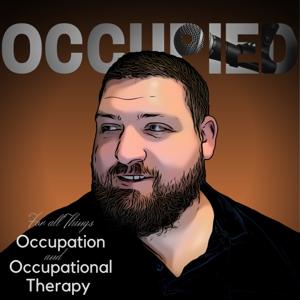
A podcast about Occupational Therapy for Occupational Therapists.

More shows like Occupied

Hamish & Andy by LiSTNR

Hamish & Andy

1,056 Listeners

No Filter by Mamamia Podcasts

No Filter

591 Listeners

Conversations by ABC Australia

Conversations

808 Listeners

Mamamia Out Loud by Mamamia Podcasts

Mamamia Out Loud

562 Listeners

Chat 10 Looks 3 by Chat 10 Looks 3

Chat 10 Looks 3

228 Listeners

Off Menu with Ed Gamble and James Acaster by Plosive

Off Menu with Ed Gamble and James Acaster

2,681 Listeners

Life Uncut by LiSTNR

Life Uncut

328 Listeners

Outspoken the Podcast by Outspoken the Podcast

Outspoken the Podcast

44 Listeners

The Imperfects by The Imperfects

The Imperfects

392 Listeners

Full Story by The Guardian

Full Story

162 Listeners

OT & Chill by OT Chill

OT & Chill

11 Listeners

The Case Of by ABC Australia

The Case Of

260 Listeners

Just The Gist by Just The Network

Just The Gist

67 Listeners

Alva Beach: Death At The Door by Tapt Media

Alva Beach: Death At The Door

21 Listeners