
Sign up to save your podcasts
Or

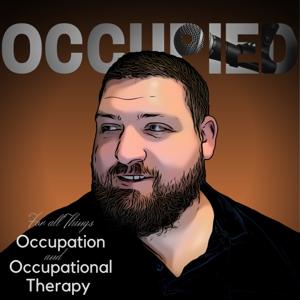


Do you ever wish communication in healthcare was more efficient? Clarissa does – all the time. In this episode, Clarissa shares how her frustrations with clinical communication led her to seek out a job in the health technology industry, and what she learnt about transferability of Occupational Therapy skills in the process.
Clarissa (@geekyOT on Twitter) works in forensic mental health, and also for the secure messaging app Pando.
Pando is free to download in the UK. To get your name on the international waiting list, please email [email protected]
Show Links:
https://hellopando.com/
https://hellopando.com/privacy-centre/
https://geekyot.com/
Keep occupied
Brock
[email protected]
@brockcookOT
DURING THIS PODCAST TOPICS SUCH AS BORDERLINE PERSONALITY DISORDER, SELF HARM AND EXPERIENCES OF TREATMENT ARE DISCUSSED. IF THIS IS A TRIGGER OR MAKES YOU UNCOMFORTABLE, LOOK AFTER YOURSELF AND DON’T FEEL LIKE YOU HAVE TO LISTEN.
OTforBPD was an account on Instagram and Facebook that I came across through MH4OT. They were putting out some practical and detailed resources for practitioners about the often misunderstood diagnostic category of Borderline Personality Disorder. BPD is a diagnosis that even though I encountered people who have it through my career, I do not feel like I had a good grasp on the user experience of it.
I messaged the page and managed to track down the owner, Laura, who explained that she had a diagnosis of Borderline Personality Disorder, was a qualified OT and her mission was to help not only support others with BPD but to help educate OT’s and other health practitioners about BPD.
Borderline personality disorder (BPD), is a mental illness characterized by a long-term pattern of unstable relationships, a distorted sense of self, and strong emotional reactions. There is often self-harm and other dangerous behavior. People may also struggle with a feeling of emptiness, fear of abandonment, and detachment from reality.[4] Symptoms may be triggered by seemingly normal events. The behavior typically begins by early adulthood and occurs across a variety of situations. Substance abuse, depression, and eating disorders are commonly associated with BPD. Up to 10% of people affected die by suicide.
https://en.wikipedia.org/wiki/Borderline_personality_disorder
I’m super grateful that she agreed to come onto Occupied and share her invaluable experience of navigating the health care system as a person with BPD. Laura was so kind and genuine. There is a sense of vulnerability in her words but a feeling of strength in her words.
Check out OTforBPD here:
https://www.facebook.com/OTforBPD/
A post shared by Laura, Anya & Ozias (@otforbpd) on Nov 28, 2019 at 12:27pm PST
Reasources Laura recommends:
https://themighty.com
https://www.spectrumbpd.com.au
https://bpdfoundation.org.au
Keep occupied
Brock
[email protected]
@brockcookOT
PLEASE NOTE: This episode discusses topics such as colonisation and racism in multiple forms. The guests would like to make it clear that this episode does not sit as a ‘standalone’ teaching tool. If you are planning to share it with your cohorts of students we encourage you to use it alongside other aspects of the curriculum with cultural responsiveness with Aboriginal and Torres Strait Islander people.
Have you ever considered the impact colonisation might have had on the indigenous peoples of your country? Have you ever considered the ongoing impact these historical events have had in terms of systemic racism and institutional marginalisation of our clients?
Australia has a checkered and often hidden history when it comes to its colonisation by western entities. The impact that this event has had on Australia’s indigenous peoples is something that continues to impact them today. Today’s episode delves into the institutional racism and cultural isolation that continues today due to Australia’s colonisation in 1788.
This conversation with Tirritpa Richie and Jodie Booth was deep, confronting and mindblowing all at the same time. I can’t express enough how important it is to listen to this one with an open mind and a critically self-reflective lens.
Racism in Australia traces both historical and contemporary racist community attitudes, as well as political non-compliance and governmental negligence on United Nations human rights standard and incidents in Australia.[1] Contemporary Australia is the product of Indigenous peoples of Australia combined with multiple waves of immigration, predominantly from the United Kingdom and Ireland.
https://en.wikipedia.org/wiki/Racism_in_Australia
1As I reflected on in episode 044 This session had a HUGE impact on me, alerting me to many considerations in my own schema that I was completely naive to. At the Australian National Conference where Tirritpa Ritchie challenged the room to critically challenge their “whiteness” in the context of the service they deliver/teach.
A huge thank you to Jodie Booth who brought this conversation together as its something we all wanted to do justice to as it is something that so important to Australian health care but also relevant to many many other western cultures around the world including the USA and Canada.
Keep occupied
Brock
[email protected]
@brockcookOT
Breeanna Janson (@breetheOT) is an Australian OT who I discovered through Instagram and her amazing content. Bree often has “theme weeks” on Instagram where she would education on topics around Occupational Therapy and personal growth including meditation. Bree has a number of amazing projects on the go at once, most of which we touch on during this podcast.
I really wanted to discuss meditation with her and its clinical application for OT’s. Bree has a side gig voicing guided meditations for an app called Bloom. She also utilises the benefits of meditation with a prison population in which she works with.
On that topic, during the conversation, Bree introduced me to an amazing model called the Good Lives Model which we went through and she utilises to highlight where in a persons life meditation can have a huge impact.
Here’s a pic of me from last Friday, doing more meditation recordings for @bloomapp ✨ @chloeszep @mollyjane
A post shared by Breeanna Janson | Bree The OT (@breetheot) on Dec 7, 2019 at 11:10pm PST
Bloom App
https://apps.apple.com/au/app/bloom-better-you/id1469479066
The Good Lives Model
https://www.goodlivesmodel.com/
Since we recorded Bree has also set up a mental-health related podcast which will launch in February 2020. Give The Strong Minds Club a follow to stay up to date with their launch and new episodes.
A post shared by The Strong Minds Club Podcast (@strongmindsclub) on Dec 22, 2019 at 12:41am PST
Keep occupied
Brock
[email protected]
@brockcookOT
Charles Christiansen is a name that a large portion of Occupational Therapists from around the world would recognise. From his papers to his textbooks to his positions on AOTA and AOTF boards, Charles’ impact on the profession has been nothing short of paradigm-shifting.
I first met Charles in 2012 when he was flown out to a conference here in Australia as the keynote. Through a serendipitous turn of events, I was given the privilege of picking him up from the airport. From that first minute, his bubbly personality and amazingly measured and thoughtful conversations had me enthralled.
Since that time we have kept in contact and it was an absolute pleasure being able to host him on Occupied. An amazing man, an amazing story and such a great conversation.
Keep occupied
Brock
[email protected]
@brockcookOT
WELCOME TO THE OCCUPIED BEST OF!
Voted by you guys as one of the four best episodes thus far, Dr Anita Hamilton has arguably had the biggest influence of any individual on my OT career. If you’ve heard this episode before I can guarantee you’ll get something new out of it. If you haven’t heard this amazing episode before, strap in, you’re in for a ride!
~~~~~~~~~~~~~~~~~~~~~~~~~~~~~~~~~~~~~~~~~~~~~~~~~~~~~~~~~~~~~~~~
The one and only Dr Anita Hamilton has had a MASSIVE influence on my career and volunteered me for a number of amazing opportunities I would not otherwise have had the fortitude to tackle. Anita is an expert and leader in the space of OT’s utilising online technology and has been a massive proponent of the OT4OT group who founded and help facilitate the whole range of 4OT facebook communities.
Stay tuned to the end for a WORLD EXCLUSIVE ANNOUNCEMENT regarding the ongoing future of the OT24VX virtual conference!!!
Also find the “first follower” video discussed in the episode:
Anita’s video highlighting the use of her model of knowledge dissemination “the IM-KT Framework”:
Keep occupied
Brock
[email protected]
@brockcookOT
WELCOME TO THE OCCUPIED BEST OF!
Voted by you guys as one of the four best episodes thus far, this episode rustled more jimmies than just about any other! If you’ve heard this episode before I can guarantee you’ll get something new out of it. If you haven’t heard this amazing episode before, strap in, you’re in for a ride!
~~~~~~~~~~~~~~~~~~~~~~~~~~~~~~~~~~~~~~~~~~~~~~~~~~~~~~~~~~~~~~~~
Goals…..we’ve all heard of them and all been advised that we should be using them both personally and clinically….but why and how are we using them? Do we have a good understanding of how they work? Hear me out and I’ll see if I can make you think ?
When I say how do you write a goal I bet this is what you think of:
Specific
Measurable
Attainable
Realistic
Time-bound
………….but why?
I’m sure we’re all very familiar with this format for “goal setting”, it’s been drilled into us for year! But how many of you could list a different goal format right now off the top of your head? To me, that in itself is an issue. I encourage you to hear me out and listen to this one with an open mind. I’m a believer that SMART goals are not only not a good method of goal progression for OT’s but even that they can be detrimental….and I’m about to explain to you my thoughts around this!
Keep occupied
Brock
[email protected]
@brockcookOT
WELCOME TO THE OCCUPIED BEST OF!
Voted by you guys as one of the four best episodes thus far, Professor Gail Whiteford has had an almost immeasurable impact on the profession of Occupational Therapy. If you’ve heard this episode before I can guarantee you’ll get something new out of it. If you haven’t heard this amazing episode before, strap in, you’re in for a ride!
~~~~~~~~~~~~~~~~~~~~~~~~~~~~~~~~~~~~~~~~~~~~~~~~~~~~~~~~~~~~~~~~
I am honestly so excited about this episode. When Gail first sent me a message asking to be on the podcast I almost fell off my chair. All my Occupational dreams come true!
Professor Gail Whiteford has been an OT hero of mine for the longest time and even though we have met multiple times, getting to have a chat with her was a surreal experience. To say I was fan-boying was an understatement. Coming to the conclusion that she is not only one of the most intelligent and well rounded Occupational Therapists i know but also one of the most easy to talk to and engage with. I can’t thank Gail enough for allowing me to pick her brain.
Professor Whiteford’s work has had a significant and lasting impact on the direction of the profession and Occupational Science. In particular her work with Dr Elizabeth Townsend in the development and promotion of the Participatory Occupational Justice Framework was something that resonated with me from the core of my OT beliefs. Being involved with OT organisations such as OOFRAS and working with some marginalised populations the framework instantly resonated with the work and professional experiences I had up until that point.
Our conversation started with her journey through the profession and the evolutions of OT she experienced throughout that time. Gail, on the spot, came up with ideas I would never have ever considered about the profession. Blew my mind wide open. Feel like im still processing it.
We discussed the POJF and how it came into development. The current state of Occupational Therapy as well as what the future may hold for the profession. Definitely one of the deepest, most reflective conversations I’ve had and I really hope it blows your mind as much as mine.
Keep occupied
Brock
[email protected]
@brockcookOT
WELCOME TO THE OCCUPIED BEST OF!
Voted by you guys as one of the four best episodes thus far, Rebecca Twinley’s Dark Side of Occupation has been growing exponentially over the last few years. If you’ve heard this episode before I can guarantee you’ll get something new out of it. If you haven’t heard this amazing episode before, strap in, you’re in for a ride!
~~~~~~~~~~~~~~~~~~~~~~~~~~~~~~~~~~~~~~~~~~~~~~~~~~~~~~~~~~~~~~~~
Dr Twinley came into my life, as many have, via online connections and shared thoughts on Occupation and Occupational Therapy. When we first connected was just before she publicly released the concept of The Dark Side of Occupation. This concept very easily resonated with me. It integrated into my clinical practice and conceptualization very easily. It just made sense.
The understanding that occupations having purpose and meaning, being contextually situated and having an impact on health are nothing new to OTs. Reflecting on “the dark side” of occupations and seeing that there are many people in society, you included, who engage in maladaptive, harmful or health decreasing occupations was profound. It’s something, that for many, doesn’t seem to have been given the focus it deserved until it was given a name.
Since this time I’ve seen the concept spread and evolve and become more widespread. One thing I’ve seen is the evolution of how people used the term. It was good to get Bex’s opinion on this and how it differs from her understanding and presentation of the concept.
It’s incredibly important that Occupational Therapists not only look at occupations that are health-promoting but also those that may not have such a positive impact. Only then are we able to fully gain an adequate understanding of the people we work with and deliver effective health services. If you are wanting to get a better understanding of the concept then definitely start with the website linked below.
The Dark Side of Occupation: a concept created and being developed by Dr Rebecca Twinley
Also check out some of these:
Twinley, R. (2017) Woman-to-woman rape and sexual assault, and its impact upon the occupation of work: A Learn at Work Webinar. Available at: https://www.youtube.com/watch?v=TXGxvh96pnA
Twinley, R. (2017) ‘The Dark Side of Occupation’. In: Jacobs, K. and MacRae, N. (eds) Occupational Therapy Essentials for Clinical Competence. 3rd edn. Thorofare, NJ: SLACK.
Twinley, R. (2014) ‘Everyone is a moon’: The dark side of occupation. OT24Vx2014: A World of Health and Well Being. 3-4 November 2014. 24 hour Virtual exchange available at: http://www.ot4ot.com/ot24vx.html
Twinley, R. and Morris, K. (2014) Editorial: Are we achieving occupation-focussed practice? British Journal of Occupational Therapy, 77(6): 275
Twinley, R. (2013) The dark side of occupation: A concept for consideration. Australian Occupational Therapy Journal, 60(4): 301-303.
Twinley, R. (2013) Response to Re: The dark side of occupation: A concept for consideration. Australian Occupational Therapy Journal, 60(6): 459.
Twinley, R. (2013) ‘The dark side of occupation’ Occupational Science Seminar Series. 24 April 2013. Plymouth University: Plymouth
Twinley, R. and Addidle, G. (2012) Considering Violence: The Dark Side of Occupation. British Journal of Occupational Therapy, 75 (4): 202-204. DOI: 10.4276/030802212X13336366278257
Keep occupied
Brock
[email protected]
@brockcookOT
From the publisher's feed
1,056 Listeners
591 Listeners

808 Listeners
562 Listeners
228 Listeners
2,681 Listeners
328 Listeners
44 Listeners
392 Listeners

162 Listeners

11 Listeners
260 Listeners
67 Listeners

21 Listeners