Occupied
Download on the App Store

Occupied episodes

  • 131 – Political Competency in OT ft Dr Nick Pollard
    Dr Nick Pollard is a senior lecturer in occupational therapy at Sheffield Hallam University, teaching occupational therapy students at undergraduate and post graduate level, and course leader of the MSc pre-registration programme. He was previously professional lead in occupational therapy, vocational rehabilitation and dietetics on an interim basis for 23 months, and before that team leader and research co-ordinator for occupational therapy also at senior lecturer grade. 
    His MA explored internal migration and mental health; His MSc explored occupations in creative writing groups, and his PhD the political implied in occupational therapy. Dr Pollard has written and presented extensively on community based rehabilitation and on critical explorations of occupational therapy.
    You may know Dr Pollard for having coedited several landmark occupational therapy texts, notably the Occupational Therapy without Borders books, with a new edition published in 2016.
    This episode we explore the need for OT’s to understand and take a more active role in being political within the spaces that we work. 
    Look after yourself, look after others, and always keep Occupied
    1 hr 39 min
  • 130 – ALL ABOUT OCCUPATION ft Moses N Ikiugu
    Understanding Meaningful Occupation and its Healing Qualities 
    Moses N Ikiugu, PhD, OTR/L, Professor and Director of Research, Occupational Therapy Department, University of South Dakota 
    Session Details In this seminar, we will discuss the following: – The nature of meaningful occupations – The difference between meaningful and psychologically rewarding occupations – The postulated healing properties of meaningful and psychologically rewarding occupations – Future research to clarify the nature of meaningful and psychologically rewarding occupations 
    Suggested readings: Ikiugu, M. N. (2019). Meaningful and psychologically rewarding occupations: Characteristics and implications for occupational therapy practice. Occupational Therapy in Mental Health, 35(1), 40-58. DOI: 10.1080/0164212X.2018.1486768 Ikiugu, M. N., Lucas-Molitor, W., Feldhacker, D., Gebhart, C., Spier, M., Kapels, L…Gaikowski, R. (2019). Guidelines for occupational therapy interventions based on meaningful and psychologically rewarding occupations. Journal of Happiness Studies, 20, 2027-2053. https://doi.org/10.1007/s10902-018-00…Ikiugu, M. N., & Pollard, N. (2015). Meaningful living across the lifespan: Occupation-based intervention strategies for occupational therapists and scientists. Forest Hill, London: Whiting & Birch. 
    For more and how to register for future seminars, see: https://blogs.brighton.ac.uk/occupation/
    48 min
  • 129 – The Occupational Narratives Project ft Dr. Gail Whiteford
    You know her. You love her. I’m honored to have the phenomenal Professor Gail Whiteford back on the podcast. This time we got to talk about a project thats very close to her heart and we lay out a challenge to you all to get involved!
    When you’ve uploaded your “Occupational Narrative” I want you to tag Occupied Podcast on social media so we can share it with the OT community! 
    https://occupational-narratives.wfot.org/
    Look after yourself, look after others, and always keep Occupied
    If you want even more valuable content join <> for bonus podcast episodes, resources, mentorship and much much more!
    54 min
  • 129 – The Occupational Narratives Project ft Dr. Gail Whiteford

    You know her. You love her. I’m honored to have the phenomenal Professor Gail Whiteford back on the podcast. This time we got to talk about a project thats very close to her heart and we lay out a challenge to you all to get involved!

    When you’ve uploaded your “Occupational Narrative” I want you to tag Occupied Podcast on social media so we can share it with the OT community!

    https://occupational-narratives.wfot.org/

    https://occupational-narratives.wfot.org/

    Look after yourself, look after others, and always keep Occupied

    Brock
    @brockcookOT
    [email protected]

    If you want even more valuable content join <<Occupied Plus+ on Patreon>> for bonus podcast episodes, resources, mentorship and much much more!

    54 min
  • 128 – THE OT ROUNDTABLE – What are the Occupational Implications of COVID-19?
    Our Roundtable Guest:Dr. Jesse Wilson is an Assistant Professor at Western University in Ontario, Canada. She has extensive experience in supporting youth with autism and The Cognitive Orientation to daily Occupational Performance (CO-OP) approach to therapeutic intervention. Jessie also brings a Canadian perspective on the current COVID-19 situation.
    As occupational therapists, we are innately adaptable, but these are especially unpredictable times, there is no question.
    Our occupations, both on a personal and professional level, are being impacted on a global scale.
    We have invited Dr. Jessie Wilson, an Assistant Professor at Western University in Ontario Canada to discuss this complex issue with us. Listen as we dive into how the COVID-19 pandemic has impacted each of us from a professional standpoint, the lives of our patients, as well as students, and OT practitioners in all areas of practice.
    As occupational therapy practitioners, we know the importance of community; so please reach out and let us know how you are navigating this challenging time. We here at the OT RoundTable want to support you and band together as an OT community. Regardless of where you are in the world, we are in this together! Be well, friends!
    Discussion Points
    Update from our current locations and practice areas
    Confusion and perception of information 
    Disruption of routines and roles
    Judging and shaming 
    Individual versus social health 
    Building community 
    Exploring new occupations
    Implications for OT practice areas 
    OTs role in access and education of technology 
    Challenges and barriers of telehealth
    Blended learning opportunities
    Considerations for students, professors, and universities
    Implementing mindfulness
    Kids perspectives during this time
    Changing landscape of screentime
    Resources
    The Kindness Pandemic FB: https://www.facebook.com/groups/515507852491119
    Russ Harris eBook- FACE COVID: https://www.baps.org.uk/content/uploads/2020/03/FACE-COVID-by-Russ-Harris-pdf-pdf.pdf
    OTA eBook- Normal Life Has Been Disrupted: https://otaus.com.au/publicassets/af469002-6f6a-ea11-9404-005056be13b5/OT%20Guide%20COVID-19%20March%202020.pdf
    2 hr 10 min
  • 127 – Occupied Update
    Just a short update about where I’ve been, what I’ve been up to, and what the plan is for 2022!
    Look after yourself, look after others, and always keep Occupied
    If you want even more valuable content join <> for bonus podcast episodes, resources, mentorship, and much much more!
    13 min
  • 126 – The Neurodivergent Experience in a Neurotypical World ft Jacklyn Googins & Greg Boheler
    Jacklyn and Greg are OT’s, cofounders of social enterprise B3 coffee, and both identify as neurodivergent. This discussion was fascinating being able to discuss this very common and often misunderstood experience. 
    We discuss the wider societal acceptance of neurodivergence, their personal experiences, and how B3 is pushing the way forward for an all-inclusive future. 
    Look after yourself, look after others, and always keep Occupied
    If you want even more valuable content join <> for bonus podcast episodes, resources, mentorship, and much much more!
    1 hr 21 min
  • 125 – ALL ABOUT OCCUPATION ft Dr Paula Kramer
    Occupational Disruption in the Pandemic: A Window into the Better Understanding of our Clients 
    Dr. Paula Kramer PhD, OTR/L, FAOTA, Professor Emeritus, University of the Sciences, Philadelphia, PA, USA 
    COVID has drastically changed the critically important occupations of many and has enhanced our understanding of occupational disruption experienced by clients with disabilities. Occupational therapists profess to understand disruption, but now have a personal experience of disruption. The pandemic provides a unique perspective on our clients’ experience. 
    Objectives: – Understanding clients’ occupational disruption through a personal experience lens – Acknowledge parallels between occupational disruption due to pandemic and the occupational disruption of illness/disability. 
    For more and how to register for future seminars, see: https://blogs.brighton.ac.uk/occupation/
    27 min
  • OCCUPIED Plus+ clip – What do I Need in a Contract

    An exclusive sample clip of one of the Occupied Plus+ Patreon episodes. If you like it and want to get access to the rest of this episode and many more go to patreon.com/occupiedplus and sign up today!

    Been asked a few times recently for tips on the kinds of things new graduates should think about when going in to negotiate their first contract. This is NOT LEGAL ADVICE but rather some points to keep in mind. Should you need legal advice for your contract most definitely see a professional.

    Keep Occupied

    Brock

    6 min
  • 124 – Lessons from a Career in Occupational Therapy
    On October 15th 2021 I was honoured to be asked to give a short guest talk to the graduating class from Central Queensland University. The topic was left up to me and so I thought about what I would want to know if I was back in their shoes, about to step into the world as an OT for the very first time. So here it is, my lessons from a career in OT. 
    Look after yourself, look after others, and always keep Occupied
    If you want even more valuable content join <> for bonus podcast episodes, resources, mentorship and much much more!
    Transcript
    Brock Cook 0:02G’day all and welcome to another episode of occupied this episode I absolutely love I was honored to be asked to give a short presentation for the graduating class of Central Queensland University. Today, actually, and they left the topic up to me and after a bit of thought bit of what should I talk about a bit of freaking out, I developed this presentation of lessons from a career in occupational therapy. G’day, my name is Brock Cook, and welcome to occupied. In this podcast we’re aiming to put the occupation in occupational therapy, we explore the people, topics, theories and underpinnings that make this profession so incredible. If you’re new here, you can find all of our previous episodes and resources at occupied podcast.com. But for now, let’s roll the episode. Alright, so yeah. Hi, thank you, I was absolutely flattered to be asked to come and talk to you guys. This morning. When I was first asked, the topic was left really broad, which is fine with me. But I started thinking about what I would have liked to hear when I was graduating many, many moons ago. And I started thinking about well, what if I was able to sort of, I guess, restart my career, but keep all of the the knowledge and stuff that I’ve gathered over these many years? What if I could do it again, but with my current learnings intact, and I think that’s where I’m going to try and distill some of that down for you guys today. And hopefully, there’s something that that you guys can can take out of it. So I’m going to try and present at least some of the major lessons that I’ve taken from a career in occupational therapy, which is still the best career option, in my opinion. So that’s excellent. So one of the first lessons commonly referred to as outcomes razor, for those of you into a bit of philosophy is generally that the simplest explanation is usually the best one. And there’s a little bit more to it than that. One thing not to get confused is that the easiest solution is the best one. But what I would like to really highlight is that the the main component of outcomes razor is to try and make sure that more you’re making choices and decisions that using as fewer assumptions as you possibly can. And when I’m referring to this, I’m thinking about with the clients that you guys are going to work with. This key concept to me, was really important with regards to interviewing and analyzing interviews. So it taught me that I need to be continually working on my own self awareness that I’m not consciously or subconsciously filling in gaps of the person’s story of their experience, that I’m not passing any judgment on their situations that I’m being able to come to a conclusion with as minimal assumptions as I possibly can. And I’ll give you an example of this from earlier in my career. I was working with a lady on an acute inpatient Ward, mental health ward. And she just come in we were sitting in ward round. And she was telling us her story. And she told us that she back in the day used to date, Peter Andre. Now I understand that many of you are quite young, and may not get that reference that Peter Andre, and I can guarantee you that in the 90s. He was viewed as cheesy as that photo is now the default reaction from the whole team, including myself at the time was she must be psychotic. She must be delusional because you wouldn’t make a story up like that. You wouldn’t want a story up like that. Well, it turns out it was true and her she was also the father of her child, which again, no one had believed until she had brought in newspaper articles and photos and
    enough proof that the whole trading team was rather embarrassed. So that was an example of our bias, filling in the gaps to her story. to come out with what turned out to be the wrong outcome in the end. And I’ve never forgotten that story, mainly because it’s Peter Andre. And it’s super awkward still, either way. Another lesson that I’ve learned throughout my career is around this concept of the dark side of occupation. And this some semantic controversy around this one. But the understanding of the concept is that it’s looking at those occupations that we are commonly ignoring, or not really viewing as occupations, because they’re illegal, they’re not really health promoting, they’re awkward for us to talk about. So things like drug use, things like general delinquent behavior, graffiti, all of those things that we commonly don’t view as occupations, per se, we might view them as something else. But we don’t often consider them as persons occupations. I’ve worked with people, for many, many years who have used substance misuse, as a form of meeting a social need. It’s not necessarily a chemical dependence that keeps them going, but more a method for them to connect with peers. Try and make friends, try and keep friends, that kind of thing. So if you’re working with someone in that instance, and you’re trying to or even if they want to, and you’re encouraging them to either reduce their use or stop using using in the ideal situation, then just taking that away, because it’s bad, isn’t going to work, because there’s still this need that needs to be filled. So I’d encourage you to Don’t forget about those occupations that aren’t commonly viewed aren’t commonly discussed or might be somewhat awkward, including sex and sexuality, which is a big hot topic at the moment, within the profession about it being discussed more openly, without the people that we work with. One of the biggest lessons I learned was seemingly the most obvious and that was don’t forget the people. Don’t forget that. We are working with people. We live or we were part of a profession that prides itself on being science base prides itself on being unique, and being able to assist people in a very structured way at times. And I know that throughout most university courses, if not all university courses, those various structures, things like assessments, interventions, frameworks, models, all of those kinds of things are really heavily leaned on to get across to you, how Oaties operate, and how we think and that sort of thing. And that’s 100% valid. I think that myself, in my career, when you first graduate, there’s this inkling to try and impress and be the best ot that you can be when you first get your first job. And a lot of that seems to revolve in all I did in my head revolve around, trying to get my head around the assessments used and all of that sort of stuff as quickly as possible and be the most efficient or the best at administering them and that kind of thing. And I think, although that is a very, very important aspect to the profession. For me. It was a while later, maybe a couple of years after I graduated, when I realized that in focusing on that I was focusing not as much as I should have been on the fact that I’m working with a human being and their experience. I’m trying to make them fit into the interventions and the assessments that I had, rather than the other way around. So just a reminder that don’t forget that we are humans working with human beings and that’s sometimes more complex than just administering assessments and looking for the outcomes that we’re hoping to find anyway.
    One of the biggest, this is probably one of the biggest revelations I had. So hopefully at this side at this stage, we’re all aware of the P O we all know that the internet action between that person, the environment and the occupation where they intersect is representative of occupational performance. And we all know that on a basic level, what OTS do is we can modify, adjust, support each of those individual components. So we can help change the person, the environment or the occupation, in order to improve or increase that person’s occupational performance. One of the biggest revelations I had, however, was that when you’re engaging with the person that you’re working with, you then become part of their environment. So for the longest time, in my head, conceptually, I would look at the person’s environment, the person’s occupation, and the person themselves. And me as this kind of outsider that was enacting an influence over these three things for the individual, without realizing that I’m part of that person’s environment, the other health professionals working with that person, they’re also part of their environment during that period that you’re working with them. So anything that you bring to that table, whether subconsciously or consciously is going to have an impact on that person. Now, some of you may have heard of phenomenon like transparence. This is exactly what this is talking about. If I go into a room, and I’ve just had a really crappy day, it’s nothing’s going right, I’m feeling really down, I can’t even bring myself to throw on a smile, that’s going to have an impact on the people that we work with, because I’m part of their environment. And me walking into t

    21 min

About Occupied

From the publisher's feed

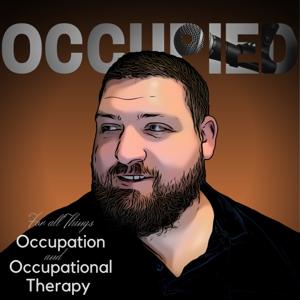
A podcast about Occupational Therapy for Occupational Therapists.

More shows like Occupied

Hamish & Andy by LiSTNR

Hamish & Andy

1,056 Listeners

No Filter by Mamamia Podcasts

No Filter

593 Listeners

Conversations by ABC Australia

Conversations

814 Listeners

Mamamia Out Loud by Mamamia Podcasts

Mamamia Out Loud

565 Listeners

Chat 10 Looks 3 by Chat 10 Looks 3

Chat 10 Looks 3

230 Listeners

Off Menu with Ed Gamble and James Acaster by Plosive

Off Menu with Ed Gamble and James Acaster

2,681 Listeners

Life Uncut by LiSTNR

Life Uncut

325 Listeners

Outspoken the Podcast by Outspoken the Podcast

Outspoken the Podcast

44 Listeners

The Imperfects by The Imperfects

The Imperfects

395 Listeners

Full Story by The Guardian

Full Story

162 Listeners

OT & Chill by OT Chill

OT & Chill

11 Listeners

The Case Of by ABC Australia

The Case Of

259 Listeners

Just The Gist by Just The Network

Just The Gist

64 Listeners

Alva Beach: Death At The Door by Tapt Media

Alva Beach: Death At The Door

21 Listeners