Occupied
Download on the App Store

Occupied episodes

  • 123 – The Real Life Impact of Eating Disorders ft Carissa Dyer
    Through her teenage years Carissa experienced the pressure of managing her eating disorder on top of all of life’s stressors. How does this hyper focus on food, eating, comparison, judgement and hiding all of the above from your closest people impact your life? Carissa was amazing enough to come in and share her first hand experience.
    This experience has shaped her journey into OT and where she is wanting to take her career. 
    Look after yourself, look after others, and always keep Occupied
    If you want even more valuable content join <> for bonus podcast episodes, resources, mentorship and much much more!
    Transcript
    Brock Cook 0:00Hi, and welcome to another episode of occupied. Today I had the absolute pleasure to speak with the lovely Clarissa Daya around her experience of an evening having an eating disorder going right through and into a recovery program for that right through to now studying occupational therapies impact, or potential impact for people with eating disorders through her doctoral Capstone, so just a trigger warning, but gonna be talking about eating disorders and the impact that it has on people’s lives. If there’s a trigger for you feel free to skip ahead or not listen to this one. It’s definitely an amazing episode was just so open and honest, and I can’t thank her enough. So strap in, get ready and roll the episode. Get a My name is Brock Cook and welcome to occupied. In this podcast we’re aiming to put the occupation in occupational therapy. We explore the people, topics, theories and underpinnings that make this profession so incredible. If you’re new here, you can find all of our previous episodes and resources that occupied podcast.com. But for now, let’s roll the episode.
    Carissa Dyer 1:30Oh, yeah, yeah, um, well, originally when I went to undergrad, I was going in as a physical therapy major. And in the States, we don’t have like, this is my physical therapy like bachelor degree, or at least at my university, we did it. So I was exercise science with a concentration in physical therapy. But my family and I went on vacation in Florida, like down a little further south in Florida. And we were on the beach and I heard this baby just like wailing crying, I think I was about I was a spouse be a sophomore in college. And I was like, Mom, that dad back there who looked so stressed out. He added like a little kind of toddler on the sand. And then somewhere was a baby wailing. And he just looked really stressed. His wife had just walked away with their other child to go into the ocean. And I’m like, I’m gonna go ask him if he needs help. And she goes, Okay. Um, so yeah, I went out and like, sir, you look really stressed. Like, are you okay? Like, I hear crying? What’s going What’s wrong? And he’s like, Oh, my gosh, you’re a lifesaver. So I started talking to this family, who, such a small world lives, 30 minutes away from where I grew up in Kentucky, and the mom comes back and her little boy has Down syndrome. And I love kids. I’ve always, you know, worked with kids growing up babysitting kids. And he has Down syndrome, and I’m just, you know, talking to her about her kid and, you know, services that he gets, because I tell her I’m a physical therapy, Exercise Science, pre PT. And she goes, Oh, well, we really got a lot out of occupational therapy. I’m like, Oh, what’s that? And that kind of just started this spiral of me, really researching OT and I just really like how it’s more holistic, and really client centered, where we make our goals based off of what the client wants, not just moving your body, which physical therapy is important. Um, I just feel like they have a different important aspect into someone’s plan of care than what we do.
    Brock Cook 4:02Yeah, definitely. On the there’s a spot for the professions that we have. It’s just yeah, it just yeah, we we’ve, we’re unique, and we just need to do that as well. So yeah, so random. action from the beach.
    Carissa Dyer 4:19Yeah, yeah. And, I mean, I still keep in contact with that family. I’m still friends. Yeah, yeah. And I’m 25 now and I met them when I was, I think I was about to turn 19. So I’ve kept in contact with them for a really long time. I was gonna do, they do the buddy walk. Every year. It’s a walk for people with Down syndrome in the States. And there are different locations all throughout the US and pretty major cities. And I was going to go to that one, that they have a team every year for their son, but circumstances just didn’t line up for me to go But I’ve still always like wanted to go. Yeah, yeah.
    Brock Cook 5:06So did you like change immediately like after that experience like Yep, now I’m doing it.
    Carissa Dyer 5:14I’m pretty much yeah. Yeah, once I cuz I was still on summer break at that point but once I got back on campus for the start of my sophomore year, which that’s our second year in undergrad in the States. That’s so weird to say that because talking to someone that’s not us.
    Brock Cook 5:35I’ve watched enough movies I know thing.
    Carissa Dyer 5:37Yeah, yeah. Um, but yeah, pretty much as soon as I got back, I changed my major to, which is not that much different. It’s really like once you get more into like, your senior year where the classes start to really vary. Yeah. On the prereqs for grad school, so but then I decided to pick up a health administration minor, and a psychology minor.
    Brock Cook 6:04Interesting. Yeah, yeah. So yeah. They were Where are you finished now? Are you still got
    Carissa Dyer 6:17my undergrad? Yeah. Yeah, I graduated my undergrad in 2018. And then I started graduate school for to get my doctorate degree and ot last January and 2020. So we were about a month and a half into school, and we went on spring break, and our professors are like, we’re not sure if you’re gonna come back and then we never came back. Oh, so that was great. I had to do cadaver and anatomy and physiology online. Which was terrible.
    Brock Cook 6:52That probably was in my personal preference. I hated doing those. Yeah, yeah. I was the smell. I couldn’t do it. So online. Oh, suited me?
    Carissa Dyer 7:02Yeah. Yeah. I, I didn’t really care about the smell. I just wanted like the hands on learning because I’m paying so much money, even though it’s loans right now. But I was like, wow, this really sucks. Yeah, their pictures. were like, what are we looking at? Yeah, that doesn’t even look like a femur.
    Brock Cook 7:19Yeah, yeah, that aspect of it. I can understand. Yeah. So how long have you got to go for your doctorate?
    Carissa Dyer 7:27Um, I graduated in August actually graduate on my birthday. Winning August. Yeah, yeah. August 13. So I have until the end of that month to get on my own insurance. That’s great. That’s how I’m looking at that. But uh, no, I’ll be married by that time. So that’ll be hopefully good. I can just hop on my future husband’s insurance so yeah, in the states you get kicked off of your parent’s insurance when you turn 26
    Brock Cook 7:59I don’t even though Yeah, we don’t have that system so I don’t have to worry about
    Carissa Dyer 8:03Yeah, yeah.
    Brock Cook 8:06Very American type of problem I think.
    Carissa Dyer 8:09Oh yes, it is.
    Brock Cook 8:11So what’s at the moment obviously going through you Will you do like projects? And that’s what like thesis projects and stuff for your doctoral program. what’s what’s your sort of current interest area? What area of practice you’re leaning towards?
    Carissa Dyer 8:27Yeah, so mental health? Um, I have had my proof Yes. Considering your podcasts very concentrated around that. Um, yeah, mental health I didn’t even know that ot you could do mental health I kind of had a very basic understanding of what ot can do going into grad school. And now I love it even more than when I told you that I met that family on the beach and decided to change my major. I’m just yeah, I look at like everything now through an OT lens. And I’m like, wow, this is pretty cool. Um, yeah, I, when was it? fall of last year was when we came back in the classes. And I started with a girl in the class ahead of me, the mental health specialty pathway. So at my school, we have we’re allowed to do small difference, kind of like specialty clubs. We have a hand club, an older adult club, nikkyo pedes Club, an ergonomics and technology club, and now mental health club that myself and a girl in the cohort above me founded and it’s still going strong. I’m proud of the people that took it over it. I check in on him every now and then just Make sure that they’re doing okay. But it? I mean, yeah, cuz it’s in its second semester of running. So I had no idea what I was doing, but I was just like, I hope this works. And people like it’s
    Brock Cook 10:13usually the best idea stop. Yeah, yeah. So pretty much everything I’ve ever done started. I have no
    Carissa Dyer 10:21idea correct? Yeah, yeah.
    Brock Cook 10:24So it was so you said earlier that you did a site subject was that sort of where the passion for mental health came from or does that why you enrolled in that subject you already had an interest in it?
    Carissa Dyer 10:37Yeah. So I already had an interest in that subject because of my own personal experiences with mental health. And I

    1 hr 33 min
  • 122 – You Are Not Client Centred
    Are you client-centered? Are you sure? Does your initial reaction to a situation indicate that you are too? After coming across a little video of a man learning to use his new prosthesis with no supports outside on the grass. He falls multiples times but gets back up and keeps trying. Unfortunately, the original video has been removed so I can’t show you all but I still wanted to share with you my reflections on the reaction to this video. 
    Look after yourself, look after others, and always keep Occupied
    If you want even more valuable content join <> for bonus podcast episodes, resources, mentorship and much much more!
    Transcript
    Brock Cook 0:00Good day and welcome to another episode. Before we get started, I just want to say a massive thanks to all of the the patrons that are supporting occupied on occupied plus [email protected], forward slash occupied. Plus, you guys are amazing. I’ve had a couple of supervision slash mentorship sessions that I’ve jumped into in the last couple of days. And I’m just overwhelmed by the quality of clinician that is out there at the moment, this profession I can safely say is in very safe hands, going forward so warms my heart and makes me so happy to get to know you guys, and even happier that you are open and willing to support this podcast this projects, get the extra resources not always stoked when I get your reflections on those extra resources be that episodes or assessments or reflections that I put out. Yeah, it’s overwhelming. If you are interested in joining those amazing people pop on over to patreon.com forward slash occupied plus there is a tier for your budget for your wants for your needs. There is something there for you. pop on over and have a look and just see what you might be able to get out of it. That always amazes me when you come across things that make you reflect on your own practice, no matter how small the things usually are. This episode is about one of those things so I’m very keen to hear your opinions, whether or not you have reflected and can relate, etc. So hit me up in the comments send me a DM send me an email, let me know. Get a My name is Brock Cook and welcome to occupied. In this podcast we’re aiming to put the occupation in occupational therapy. We explore the people topics, theories and underpinnings that make this profession so incredible. If you’re new here, you can find all of our previous episodes and resources at occupied podcast.com. But for now, let’s roll the episode. So, picture this if you will. You rock up to Starbucks and order your favorite pumpkin spice macchiato. Chai whatever drink and the person behind the counter guys. Oh, that’s a lot of sugar. I’m gonna give you an Americano instead. Because it’s better for you. Would you be super stoked about that? Either they right? Does that matter? Let’s level look at it. So technically, is an Americano, better than one of your super sugary pumpkin spice whatever’s they’re not wrong? Does that make it better for you? Well, objectively on paper with nothing else taking into account. It is a healthier drink than the other one. Taking into account the context of your diet being eaten around that how you exercise your current physical status. Yeah, it gets a little bit more complex. But for the most part, on average, most people would probably agree much lower in galleries like 10 calories versus 2000. Probably a relatively easy decision as to which drink was healthy physically. Now, mentally, on that day, you are just really fighting to get your teeth around some pumpkin spice. Because apparently at this time of year, that’s the thing to do. That person has made the decision for you that no, this is going to be better for you. You’re not having that you’re having this instead. How does that make you feel? You’re thinking about this drink all day, hanging for it. You’ve planned out a time where you can go and get it you’re going to sit down you’re going to enjoy it. How does it make you feel having someone else tell you not gonna do it this way. I want you to
    have a reflect on that. Positive if you need I’ll get to the point behind in a second, but I really want you to work out how you would feel in that situation. For me, I am quite consciously aware that I am not the best one being told what to do. I’ve always been that way. I don’t know whether it was growing up listening to punk rock, or captaining sports teams or, you know, just always wanting to be in some kind of leadership position as a kid. I don’t know what it is. But I’ve never been particularly fond of just being told flat what to do. Now if I’m told what to do and I get a good explanation and then I kind of agree with it. Or for it, no worries at all too easy let’s go ahead let’s do that plan. But just being told not I know what’s better that for you than you know what’s better for you. The that doesn’t fly. I suspect that there’s probably quite a few of you listening to this that may lean towards that maybe not to that extreme. But being able to make your own decisions and not have the made by someone else for you, is probably something that a lot of you find quite important. I would imagine I would love to hear from you if you disagree, or if you agree with this. But here’s the point that I want to get to. I was scrolling through Facebook as you do one of my not so favorite pastimes but something I definitely still do. And I came across this video this video was posted in a Facebook group. It was a video of a sort of, from what look like a middle aged man who had lost part of his leg and seem to be learning again, there was no context to this video. It was just the video seems to be learning how to walk again with a prosthesis. He was walking on like a grassy area there seemed to be some kind of therapist or doctor or someone with him someone in scrubs in the sort of background, but he was trying to independently mobilize using this prosthesis. He was for the first few clips anyway like making it one or two steps and then falling over on the grass. And the video was in continually like it was short clips of him continually trying to walk independently without any aids other than the prosthesis obviously without any support from other people without any walking rails treadmills, any of that stuff. To me initially the video was kind of nonchalant it wasn’t anything that I was like oh wow, look at that. That’s amazing. I’m like okay, that’s cool. I’ve seen similar videos in the past. I’ve seen videos of pulled together people may or may not know of him if you haven’t definitely look him up. He is an ex Navy Diver clearance diver from Australia who was attacked by a shark in Sydney Harbour lost one leg and one arm and yeah, and I’ve read his books and followed his story for a long time but I’ve seen him do a very similar video about himself when he got a new prosthesis I think it was a running processes as opposed to just his everyday walking what he calls his walking leg and him trying to get used to that and doing a very similar thing trying failing trying failing trying failing trying failing trying failing until eventually he got it the thing so like I said that video to me when I first watched it I’m like cool. Yep, that’s pretty cool. But it wasn’t anything dramatic. And then I found the comments. Again, this is in an OT group so I am presuming majority of these comments are coming from either OTS or ot students the comments for the vast majority of them were trashing the the health service whatever service that may have been that that person was involved in for not implementing all of these supports walking rails Why was there no one hanging on to him? You know, why are we letting him fall over what if he gets hurts all of these
    kinds of things which on face value, again, objectively without any other context. Potentially valid arguments. But there was one thing missing from all of these replies. So I being me, couldn’t help myself but point out this one thing that was missing. And that was the fact that what if that was that person’s preferred way of learning? What if that was how they wanted to do it? What if they didn’t want to be that person who relied on grading things right down to walking hanging onto two rails which don’t know about you, but I’ve never done that in my life. in everyday life, I’ve never gone all of two rails and grabbed onto them and walked hanging onto two rails. Understand completely, I’m not saying that they don’t have their place. But I need people to be a little bit more open minded when they’re looking at these things. Here’s the reply that I put into the group. So I write honestly, if you’re thinking of the operational issues before thinking of the client, you’re doing it wrong. If I was in the situation, and the therapist wanted to put all of those restrictions on how I learned how to use my prosthetics, I’d probably tell them to get effort as well. I don’t think therapists recognize how disenfranchising it is having your choices and wishes ignored, because a process of processing quotes. Now, this is assuming that it is his choice, and he wants to learn on the grass with minimal supports. I’m not saying it’s the safest or most efficient method, but it’s his method. Don’t shut down every idea just because your initial reaction is in quotes. That’s not how I do it. Because you’re not right, there is no absolute truth. Now, I want to unpack that a little bit. And I did a little Episode A while ago,
    29 min
  • 121 – All About Occupation ft Michael Sy & Pauline Gail Martinez
    About Michael
    Michael Sy, University of the Philippines Manila
    I am a Filipino occupational therapist and currently designated as Associate Professor at the National Teacher Training Centre for the Health Professions, University of the Philippines Manila. I did my Ph.D. in occupational therapy where I studied about bridging the concept and practice of occupational justice among occupational therapists and justice workers in the field of substance addiction. My exposure to drugs and addiction scholarship led me to further explore what else is (un)known about the dark side of occupations. This allowed me to work on a recent study, with Pauline and Bex, that examined a group of people whose aim is to engage in hidden doings to become “beautiful”.
    About Pauline
    Pauline Gail Martinez, Angeles University Foundation
    I am a Filipino occupational therapist and a lecturer in the Department of Occupational Therapy at Angeles University Foundation. Currently, I am a Diploma/Master of International Health graduate student in the University of the Philippines Open University. My research interests include occupational therapy education, occupational science, interprofessional collaboration, and global health.
    Session Title
    The doings and occupations of those who desire to be “beautiful”
    Session Details
    Learning aims:
    Describe the group culture of people who desire to be “beautiful” through the world of beauty pageants
    Discuss the different perspective on pageantry work
    Discuss essential and hidden occupations performed within the context of beauty pageants
    The presentation will be largely drawn from the following work:
    Sy, M. P., Martinez, P., & Twinley, R. (2021). The dark side of occupation within the context of modern-day beauty pageants. Work (Reading, Mass.), 10.3233/WOR-205055. Advance online publication. https://doi.org/10.3233/WOR-205055
    31 min
  • OCCUPIED Plus+ clip – Why do we need to talk about Occupational Therapy

    An exclusive sample clip of one of the Occupied Plus+ Patreon episodes. If you like it and want to get access to the rest of this episode and many more go to patreon.com/occupiedplus and sign up today!

    A hot topic every April during OT month. Why does no-one know what we do? I want to look deeper into how this became a problem and what can we do to fix it.

    Occupational Therapy Practice Framework: Domain and Process (3rd Edition)”. American Journal of Occupational Therapy. 68 (Suppl. 1): S1–S48. March–April 2014. doi:10.5014/ajot.2014.682006

    Keep Occupied

    Brock

    8 min
  • 120 – Body Image and its impact on Occupation ft Emily Roberts
    Emily Roberts has really begun to champion the niche of body image within the OT community. She has @thebodyimageOT on Instagram where she posts excellent information and resources all about healthy body image. I wanted to have a conversation with her and find out more about OT’s role in this space and what drew her to this area of practice and passion. 
    After you’ve listened definitely give her a follow if you’re not already 🙂
    Look after yourself, look after others and always keep Occupied
    If you want even more valuable content join <> for bonus podcast episodes, resources, mentorship and much much more!
    Transcript
    Brock Cook 0:01Hi, and welcome to yet another episode of occupied. Just a quick note, if you are enjoying these, please do share them with friends, colleagues, people you know who might be interested in whichever topics they are. Also, if you’re looking to get even more value out of your podcasting experience, pop on over to patreon.com for slash occupied plus, where you can get exclusive episodes as well as a ton of other resources to enhance your practice and your knowledge. Without further ado, let’s get on with this episode. Today we are speaking with the one the only Emily Roberts you may know her as the body image ot on Instagram, we talk about everything with regards to body image identity and how that impacts on a person’s occupations. And what OTS might be able to actually do for people who are experiencing this. So please do grab a drink, sit down, relax, and enjoy. Get a My name is Brock Cook and welcome to occupied. In this podcast we’re aiming to put the occupation in occupational therapy. We explore the people topics, theories and underpinnings that make this profession so incredible. If you’re new here, you can find all of our previous episodes and resources at occupied podcast calm. But for now, let’s roll the episode.
    Emily Roberts 1:34So I actually would want it to be a dietician. And my whole family was turning me away from dietetics for whatever reason. And so then my sister in law’s a nurse and I never heard of occupational therapy, but she knew an occupational therapist was like, I think you would really like occupational therapy, I think it like really fits your personality well. And so, I went and I shadowed one. And, um, and honestly, it’s not even, it’s not that like, pretty have a story, I just kind of just went along with it. Um, I mean, I enjoyed the shadowing experience, but I just kind of chose it. And then I really fell in love with it when I was in ot school was when like the whole, I really, truly felt like I understood what occupational therapy was. And I was like, Yes, this is exactly what I want to do.
    Brock Cook 2:34So you guys have to do like it’s a post grad. Course over that. What was your undergrad in
    Emily Roberts 2:40kinesiology? and Spanish
    Brock Cook 2:43seems to be a fairly popular option over there. I remember talking not long ago about the fact that you know, a lot of Americans seem to use kinesiology as access to the profession, and it’s not really a thing here. Really? Not well, not a university course anyway. Yeah, I don’t know. It’s interesting. I don’t know any universities you can study kinesiology specifically. It’s mainly if you’re going to do that kind of thing. It’d be like exercise science or sports science. But yeah, nothing. I’m actually pretty sure I even had a look one day and I couldn’t find a kinesiology uni degree. You could do like, little like TAFE certificates, which I don’t know what the equivalent of TAFE would be over there. I’ve never even heard of that. What’s that? tapes, kind of like if you’re gonna do a trade? Like the theory aspect of your trade would be run through the tape. I don’t know what it stands for. But it’s kind of like it’s not a bachelor’s degree, but it’s like a certificate level qualifications under that.
    Emily Roberts 4:02equivalent of what we call an associate’s degree. Do you guys have one of those? Where are you? Right, but
    Brock Cook 4:07it’s probably sounds like it’ll be similar to that. So yeah, I think I found a couple places where you could study Kinesiology and get some sort of cert for that, but not there was no like University Level qualification. Which is interesting, because yeah, it’s like a whole field that doesn’t exist in another country.
    Emily Roberts 4:32Yeah, well, honestly, there’s nothing you can really do directly with kinesiology like you have to go on to do something else or get other certifications. So that makes sense.
    Brock Cook 4:43Yeah. I don’t know what I mean. We don’t have masters entry. Oh, we do. You can do masters entry, but it’s not a requirement here. So most of the courses in Australia are bachelors. Yeah. Oh, man. It’s Direct like mine is a Bachelor of occupational therapy. So it’s, it’s seems like less stuffing around. It’s a lot easier to process over here.
    Emily Roberts 5:12It’s just that the US is education education system is just a whole mess. It’s just
    Brock Cook 5:18It’s very, it’s very unique. Very unique and very expensive. But yeah, very. Yes, very expensive. So, you I mean, I followed you for a while now on Instagram, and we’ve chatted a few times. Just wait for that. That’s my dog. Okay, I have to it’ll happen. I don’t know what he’s barking yet. But hopefully he shuts up. He’s barking dogs walking past.
    All right.
    Yeah, so I followed you for quite a while now. And we’ve connected over Instagram. And the thing that really grabs me about your your content is it’s I don’t I don’t know any other ot that’s posting at the information you’re posting, but your Instagram handle is the body image ot how did how did that come about?
    Emily Roberts 6:23Yes. So I used to be empower something empower ot or something like that, when I first started my ot kind of Instagram, and then I changed it to my name. And then eventually I changed it to the body image it because that I just that’s where most of my content was going. Like, that’s what I enjoyed posting about. And what I got a lot of engagement out of, and kind of where I wanted to go further in my career, passion, whatever you want to call it with it. So I just nobody else had it. And I was like, I better grab this Well, last. But that’s why I chose to be the body image ot on Instagram. But, um, but really, it is something that I don’t feel like a lot of OTS talk about, but it’s something that is super relevant to OT and to what we do, because our body image and the way we feel about ourselves directly impacts how we show up in the world, and how we participate in our occupations or don’t participate. So.
    Brock Cook 7:35So what was it? Was it a personal experience? Or what Where did your interest in looking at body image through an occupational lens come from?
    Emily Roberts 7:47Yes, definitely my personal experience, and then after that more, so just seeing the world in a totally different way, and seeing how much it impacts everybody else. But, um, definitely a personal experience. Do you want me to get into my show? So I’ll try to keep it somewhat concise, because I can go off on a million tangents here.
    Brock Cook 8:12I like tangent. It’s okay.
    Emily Roberts 8:15Okay, so growing up, I have two older brothers, and we are great friends. And we’ve always been decently great friends, but they’re brothers. And so they teased me all the time growing up. And I guess first I should probably say, I’ve never been in a non marginalized body, like I am average size. I’m like, I’m heterosexual. And I have never actually gotten a lot of stigma on my body from the outside world. But I think that it doesn’t really matter. I mean, it matters, but it doesn’t matter for people individually, when they’re getting things. I mean, you get it from all different directions. So my family was probably the first that really started focusing on my body more so than just me. And my brothers would make fun of me and they would call me chubby and always like asked me like, what is Emily gonna lose her baby fat. And I’m like, this sounds horrible. I hope my brother doesn’t listen to this because he’s gonna feel horrible. But he would like show up my fat rolls to his friends and be like, look at all of her roles. And at the time, I would just laugh about it because like, he’s my older brother I want to fit in I want to hang out with his friends. But looking back I think that just that over and over and over again. kind of shaped how I felt about my body and made me think okay, well, whatever fat I do have on my body is not okay to have to
    Brock Cook 9:54be around like when that was happening.
    Emily Roberts 9:57Um, I remember it probably like seven or eight years old, okay. So I don’t know if it happened before then. But if I do if it did, I don’t really have much memory of it. Um, and then my best friend growing up who is still my best friend to this day, she is just like, as a totally different build than I do just like very thin, tall with long legs. And all of the boys had crushes on her. And all of the girls wanted to be friends with her, not me. And there was really like we grew up together. So there was really no difference in my mind, at least of how how I was seeing versus how s
    1 hr 21 min
  • 119 – Trauma and Healthcare Practice ft Dr Allie Watkins
    Connecting with Allie has been an absolute blessing. You may know her better as @patchesofot and the host of the Patches of OT podcast. Her content is super unique and deeply personally engrained. This engrained passion is what initially drew me to her. We discuss all things trauma and her experience she had through researching it through her doctorate. 
    If you don’t already, jump on and follow Allie on insta and also give her podcast a listen!
    Look after yourself, look after others and always keep Occupied
    If you want even more valuable content join <> for bonus podcast episodes, resources, mentorship and much much more!
    Transcript
    Brock Cook 0:01Hi, and welcome to a brand new episode. This episode, I sat down with the wonderful Allie Watkins, you may know her on Instagram as patches of OT, her Capstone for her doctorate program was around looking at essentially the the vicarious trauma caused in a forensic nursing setting in an emergency department. And so we delve into that, and what lessons may be learned for Occupational Therapists from that as well. I will preface this by saying that we do talk broadly about a variety of different traumas that we’re seeing through that emergency department. If that is something that triggers you, then please feel free to skip this one and hang out for the next episode. But it is a very valuable learning experience. And I thank Ollie a ton for coming on and having the conversation with me. So let’s roll the intro. Get a My name is Brock Cook, and welcome to occupied. In this podcast, we’re aiming to put the occupation in occupational therapy. We explore the people topics, theories and underpinnings that make this profession so incredible. If you’re new here, you can find all of our previous episodes and resources at occupied podcast.com. But for now, let’s roll the episode.
    Allie Watkins 1:33That’s a great question. I started out at my bachelor’s degree studying Science Technology and Society, which is a degree pretty much for the unknown. And I was going to be a it is very, very broad. And so my goal and undergrad was to become a pediatric oncologist, a doctor. But I went through a lot of life events that made me reconsider. One was in high school. I helped a victim drown, and it was a friend of mine. And I thought it was a sign of that I need to get into the health field. And I developed PTSD. from that situation, I didn’t know that I developed PTSD. And so I went years having these symptoms and thinking that there was something wrong with me. And I was like, How can I be a medical doctor if I am triggered by saving someone’s life. And so I started reconsidering, you know, what I’m going to do for my career. And my aunt currently at the time was working at an OT program, and she’s like, you should do occupational therapy. And he said, I have no idea what that is. I am not interested.
    Brock Cook 2:56No, not like PT,
    Allie Watkins 2:57like I was the no one knows. And she said, You know, they work with kids, they work with adults. They even can work with cancer patients. And I was so interested in that. And I was like, Huh, so I started researching it my senior year of college. And, you know, I was like, wow, this is sounds exactly what I wanted to do. You can, you know, then I was considering at the time PT versus OT, and I really liked how ot looked at the mind. And, you know, mental health part of it. And so, you know, having PTSD and depression and anxiety, and going through all that I was like, oh T is more my route. And I can probably help people more with those mental health issues than their physical bodies in general. And so I applied for ot school, I had to take one year break to take like anatomy courses that I never took at my undergrad school because it was pa and pharmacy driven where I went to school and so I had never had the opportunity to take the anatomy courses. And so that’s where my ot journey kind of begins.
    Brock Cook 4:09So what was the Why would you find it? I’ve not heard of someone so young having such an interesting cancer was their experience that sort of drove you to that?
    Allie Watkins 4:27Yes, when I was really young, I have a younger brother and we went to daycare. And our friend My brother’s best friend developed leukemia. And that was the first time we’ve heard what they call the C word which is cancer. And, you know, we would go to his house and play with him and he would get sick and then we would go to the Children’s Hospital here in Indianapolis called Riley’s and we would make treats for all the families who were in the oncology department. And so, the weekend before he passed, we went and visited him. And I went to the room next to him what was a cancer patient and his sister, the, the child’s sister asked me if you want to play a board game, and I said, Okay, why not. And she looked really sad when I entered the room. And then once we started playing, I think it was Candyland. a board game. She was so happy, it changed her whole outlook of the day, just to have three little girls all in one room in her hospital bed playing a board game. And from there, I said, I want to make kids happy when they’re going through such a toll of cancer. And so that moment on I knew that that’s kind of what I wanted to do.
    Brock Cook 5:56That’s beautiful.
    Allie Watkins 5:59Thank you.
    Brock Cook 6:02This Yeah, thinking about it. I’m sorry. Yeah.
    Allie Watkins 6:07I said, Just thinking about it right now. I’m like, wow, I forgot about that, like story. You know, I don’t get to talk about it that often. But it’s like, oh, you know, it does, like, bring, it’s emotional. But definitely wasn’t one of the one of the most rewarding things in my life at a young age, especially to learn and develop empathy as a child.
    Brock Cook 6:31Yeah. And that’s, that’s a, that’s a pretty heavy experience for for any kid to sort of go through. That’s why I was, it’s, I’ve not heard of anyone straight out of the gate going, like, I want to work in oncology. I’m like, that spot didn’t even know what oncology meant when I was a kid. So I would assume there was some history there. But it sounds like it was a fairly pivotal moment in your development, if even if it wasn’t to do with your career, but
    Allie Watkins 7:03Oh, definitely, I would, you know, everybody asked when you’re growing up, what do you want be when you would be an IV, like pediatric oncologist and be like, what?
    Brock Cook 7:13fireman or Superman and you want a pediatric? Yeah.
    Allie Watkins 7:21And, you know, I’m, I’m very lucky that with OT, you can work with patients, it’s, it’s hard to get into, I will say, and, but you can work with people that have an oncology department, and I hope one day that I could do that.
    Brock Cook 7:37So that’s still the goal is to work in that field.
    Allie Watkins 7:44I think so, um, you know, now that I’ve been on rotations there, like I worked a lot in outpatient pedes. And so you see, I’ve worked with a couple kids that have survived cancer. And, you know, I still am very rewarded with that I feel when you are so compassionate or passionate about population, and then you get to work with them. And then your kind of cup is filled, and you’re not as burnt out. And so, I’m working with them. I’m like, okay, like this, I also had a placement in Hippotherapy, and I loved it, there was so magical to see the kids get on the horses, and with all different diagnosis, and they felt like they were included for the first time that they could do something that other people could do. That was hard and challenging. And so I think that is also something I could see myself doing.
    Brock Cook 8:40I’m sure there’s probably even areas we can bind to. I’d be surprised there wasn’t given the just how those caper theory how hypnotherapy works, etc.
    Allie Watkins 8:57Oh, sure, I was going to do my capstone on service animals and cancer. There’s a big research on how kids with cancer develop a high a score due to medical trauma that they are going through in all the mental health issues that they will continue to have if they survived cancer, because if you develop cancer at a young age, you’re always going to have that fear once they’re going to come back. Yep. And so being, you know, an OT, to help kind of work through that trauma. And usually when people are impacted at such a young age with trauma, they are they like lack social skills, they lack the ability to just have those developmental milestones meet. And so I think it would be super, super interesting to have an OT who specializes in animal assisted therapy and then oncology to help with that gap.
    Brock Cook 9:58So with the Just thinking about all what you just said then about how kids who develop cancer, when they, when they, when they’re kids, obviously, when they’re younger, tend to have this sort of constant fear about when it’s coming back. Was there any sort of, I guess, similar fear but vicariously for you going through the experience you had with your brother’s friend? Did you sort of develop this, like all it could happen to me kind of, I guess fear at a young age. Oh,
    Allie Watkins 10:31oh, totally. I like I constantly I actually have found cancer on my body. And so I’m a freckly girl. And so I have to get like my moles and freckles checked. And so I actua
    1 hr 14 min
  • 118 – All About Occupation Series ft Dr Nedra Peter
    OCCUPIED is proud to continue our partnership with the All About Occupation series of seminars being hosted by Rebecca Twinley from the University of Brighton. In the 2nd seminar we present to you the amazing Dr Nedra Peter!
    About Nedra
    Dr. Nedra Peter, PhD, Adjunct Professor and Research Associate at Schulich School of Medicine & Dentistry, Toronto, Canada
    I completed my doctorate in the field of Occupational Science at the University of Western Ontario in Canada. My PhD thesis explored the occupational possibilities of people receiving social assistance in Ontario. I also have experience in Disability Studies, Child and Youth Health and research methods.
    My research interests include: understanding how health systems, policies and programs do or do not address the diverse needs of marginalised youth, Fostering partnerships through integrated knowledge translation between academic institutions and third sector organisations to directly support marginalised populations, advancing the interdisciplinary field of Occupational Science by conducting empirical research focusing on conceptualizing and studying occupation in racial and ethnic minorities living in Western contexts and addressing equity, diversity and inclusion in access to social support, employment and education.
    Session Title
    Considering the impact of social assistance on Occupation
    Session Details
    The aim of this session is to show how social assistance recipients experience lack of opportunity and resources to make everyday choices and to have decision-making power as they participate in occupations. This presentation will also consider my research from a lens that moves away from individualised Western epistemologies and discuss how race/culture has a significant influence on occupation.
    Look after yourself, look after others and always keep Occupied
    [email protected]@me.comwww.occupiedpodcast.com
    If you want even more valuable content join <> for bonus podcast episodes, resources, mentorship and much much more!
    53 min
  • 117 – Creativity Vs Science- The Juxtaposition of Occupational Therapy
    So recently I was given the opportunity to present to the Royal College of Occupational Therapists Specialist Section for Children, Young People and Families. At the time I was toying around with the concept of the “Art & Science of OT” so as part of my looking into that I built this presentation that looks at where that came from and what it means for modern occupational therapists.
    If you would like to hear the discussion/questions, as well as the full webinar and the slides, are available over on Occupied Plus+  I will say this was an exploratory topic for me based on an idea that has bugged me for a long time. I’m not asking anyone to agree with me, but I do hope it stimulates you to question things.
    Look after yourself, look after others and always keep Occupied
    Brock [email protected] @brockcookOT 
    If you want even more valuable content join Occupied Plus+ on Patreon at patreon.com/occupiedplus for bonus podcast episodes, resources, mentorship and much much more!
    43 min
  • 116 – The ever expanding world of OT with Professor Liz Townsend
    Professor Liz Townsend is a name that almost every OT around the world would know and have learned about some of her work. I wanted to learn how a person could get to the point that they could even conceptualise ideas as MASSIVE as the ones she has had through her career. Her story is amazing and really does show someone who has not only made opportunities but made the most of those opportunities. 
    Look after yourself, look after others and always keep Occupied
    Brock [email protected] @brockcookOT 
    If you want even more valuable content join Occupied Plus+ on Patreon at patreon.com/occupiedplus for bonus podcast episodes, resources, mentorship and much much more!
    1 hr 17 min
  • 116 – The ever expanding world of OT with Professor Liz Townsend

    Professor Liz Townsend is a name that almost every OT around the world would know and have learned about some of her work. I wanted to learn how a person could get to the point that they could even conceptualise ideas as MASSIVE as the ones she has had through her career. Her story is amazing and really does show someone who has not only made opportunities but made the most of those opportunities.

    Look after yourself, look after others and always keep Occupied

    Brock 
    [email protected] 
    @brockcookOT 

    If you want even more valuable content join Occupied Plus+ on Patreon at patreon.com/occupiedplus for bonus podcast episodes, resources, mentorship and much much more!

    1 hr 17 min

About Occupied

From the publisher's feed

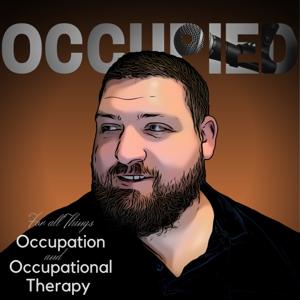
A podcast about Occupational Therapy for Occupational Therapists.

More shows like Occupied

Hamish & Andy by LiSTNR

Hamish & Andy

1,056 Listeners

No Filter by Mamamia Podcasts

No Filter

593 Listeners

Conversations by ABC Australia

Conversations

814 Listeners

Mamamia Out Loud by Mamamia Podcasts

Mamamia Out Loud

565 Listeners

Chat 10 Looks 3 by Chat 10 Looks 3

Chat 10 Looks 3

230 Listeners

Off Menu with Ed Gamble and James Acaster by Plosive

Off Menu with Ed Gamble and James Acaster

2,681 Listeners

Life Uncut by LiSTNR

Life Uncut

325 Listeners

Outspoken the Podcast by Outspoken the Podcast

Outspoken the Podcast

44 Listeners

The Imperfects by The Imperfects

The Imperfects

395 Listeners

Full Story by The Guardian

Full Story

162 Listeners

OT & Chill by OT Chill

OT & Chill

11 Listeners

The Case Of by ABC Australia

The Case Of

259 Listeners

Just The Gist by Just The Network

Just The Gist

64 Listeners

Alva Beach: Death At The Door by Tapt Media

Alva Beach: Death At The Door

21 Listeners