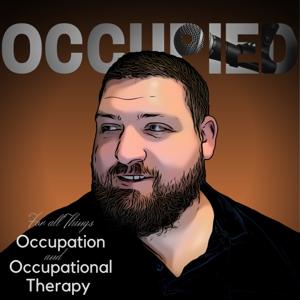
Occupied
Download on the App Store

Occupied episodes

  • 108 – Creativity V Depression ft Erik Johnson
    DURING THIS PODCAST TOPICS SUCH AS SUICIDE, SELF HARM AND MENTAL ILLNESS ARE DISCUSSED. IF THIS IS A TRIGGER OR MAKES YOU UNCOMFORTABLE, LOOK AFTER YOURSELF AND DON’T FEEL LIKE YOU HAVE TO LISTEN. 
    In episode 098 I put out an episode about my personal experience with depression. Not long after that Erik (you will remember him from episode 039) messaged me expressing how much he related to the episode. Erik explained that he was currently going through something similar and wanted to come on and have a conversation with me about it. Erik is by far one of my favourite OT’s on the planet and his honestly and vulnerability in this conversation simply confirmed that for me. 
    This conversation was one of those ones that I can genuinely say wasn’t an interview, it was just two mates catching up and having a deep and meaningful conversation. Thankyou Erik.
    If you don’t already follow him then definitely check him out here:
    Look after yourself, look after others and always keep Occupied
    [email protected]@me.comwww.occupiedpodcast.com
    1 hr 47 min
  • 107 – Life and OT in the Arctic ft Rachel Schooley
    On Occupied we get to speak to a lot OT’s from all over this amazing world but when I heard that there were OT’s in the Arctic I was blown away! This is why I had to bring in Rachel Schooley on to explore this very unique part of the world to practice in. Exploring how Rachel navigates living on traditional peoples land and working with their populations. This convo was absolutely eye opening and I thoroughly enjoyed it. 
    Look after yourself, look after others and always keep Occupied
    [email protected]@me.comwww.occupiedpodcast.comwww.patreon.com/occupiedplus
    Transctiption
    Brock Cook 0:00Have you ever been to the Arctic? Have you ever worked in the Arctic? Have you ever even considered what an OT might do in the Arctic? Well, this episode is gonna hopefully shed some light on that, as I had the amazing Rachel skoolie come in and talk about her job doing exactly that. The Arctic OT, we discuss a lot of the challenges benefits of this very unique environment. Get a My name is Brock Cook, and welcome to occupied. In this podcast, we’re aiming to put the occupation in occupational therapy, we explore the people, topics, theories and underpinnings that make this profession so incredible. If you’re new here, you can find all of our previous episodes and resources that occupied podcast.com. But for now, let’s roll the episode. Yeah, so
    Rachel Schooley 1:04I was working in group homes for many years, kind of, you know, between my teens into my 20s, and have done a degree in sociology and women’s studies, that was my undergraduate degree. And my partner had just finished a degree in biology and was applying to become an OT, and I had no idea what ot was at that time. After a bit of investigation, yeah, it just seemed like all the parts of the job I already had, that I loved the most really like finding things that were meaningful for folks that are improved quality of life and bring joy to activity. And so I thought I would apply as well. And we actually ended up doing the OT program at the same time with a with a baby and it was great. You know, I learned a lot and definitely opened my eyes to a lot of different parts of ot some some that really fit well with what I wanted to do with my life and others not so much. But I think that’s the beauty of the profession, too, is that you can kind of make it fit with with what you’re looking for, in some circumstances, others maybe not so much.
    Brock Cook 2:24Yeah, definitely. And that’s something I try and tell people a lot is that it isn’t, I don’t view it as sort of this unique, while it is unique, but this sort of very individualized profession. It’s kind of something that you combine with skills that you already have, or experiences you’ve already had, and then you turn it into whatever you want.
    Rachel Schooley 2:46Absolutely. Yeah. And it’s interesting, because, you know, my first year of our ot program, and it’s a master’s level program in Canada, I guess, probably all over the place it is. But I thought like what have I done? Just doing, you know, anatomy courses, and like I said, Bachelor of sociology and women’s studies, like never touched anatomy with a 10 foot pole. That’s no, not nominated. Yeah, exactly. And it’s pretty intense. Like we had three months to learn the entirety of it. And I felt a little bit like my first placement was on stroke rehab, and I really did enjoy it I loved. And because I had the experience with the group homes, I was trusted to do the transfers and different parts of the placement that maybe if I were a fresh grad with no work experience I would have been able to do and so that was really great. But my second placement, student placement that I had was at the AIDS committee of Kitchener Waterloo. And so working with folks that, you know, were living with HIV, and it was more of a systems level placement. So less clinical work, but more looking at like, how are we informing the programming that’s available to these folks and speaking to policymakers and so that was like my first dose of, of systems level OT and I loved it, and I love the social justice components that that I could dive into with ot. And it kind of just snowballed from there. My next placement was with the hepatitis C clinic who I actually ended up working for after graduation. They have an amazing mobile health unit. And so yeah, yeah.
    Brock Cook 4:46What I’ve never heard of it working on a health clinic, what’s what’s the OTS role on
    Rachel Schooley 4:55the clinic itself, you know, it has the medical side of things. But because, you know, the people that are most at risk for hepatitis C, or those who, you know, are using intravenous drug because and maybe unstably housed or or houseless. And so a big part of my role there was exploring, I mean, a big part of it was really exploring what it does, because there was no team working there when I did my student placement. And so it was doing a lot of outreach with this incredible team, like Dream Team, and they had a mobile health unit that would go out when I was there, I think it was only once or twice a week in the evenings. And they would literally meet people where they were at. So we’d go to various parks or whatever, and provide, you know, harm reduction supplies, but also just necessities of daily living. And my role was like a slow, it was a slow roll out. So initially, like gaining trust of folks, but then really, like, there was one fellow who was just kind of like always tapping on things and, and got to know him a little bit and found out that he used to play the drums and really enjoy playing the drums and found that was really soothing. And so like, I didn’t need to talk about what occupational therapy was right? Like, that wasn’t important, but how do I help facilitate access to this occupation that’s meaningful for him?
    Yeah, and so that was kind of it, I did a bit of support coordination for them after graduation. So not all, specifically, OT but there was a lot of cognitive component to and, you know, working with folks on this harm reduction idea of, Okay, if you want to, you know, use less substance in your life, what, what can you do during that time that will be enjoyable for you and will make, you know, the reduction of substance use more attainable? It was awesome. I love that job is great.
    Brock Cook 7:03So that that harm reduction thing, as I assume were you and Rina connected
    Rachel Schooley 7:08yes, yes. Yeah, it’s funny, you know, I didn’t I until I listened to her episode with you, I didn’t realize that she was, you know, the moderator for harm reduction ot or whatever the Facebook group is. I remember that being kind of an early connection for me with my old Facebook profile that I’d left behind a couple years ago, but because I really at that time, couldn’t I didn’t have any connections of other OTS doing the work. And I remember even asking my call, like, how do I document my interactions with people when they don’t trust enough to even give me their name? Well, their health? You know, like, I don’t need to know how, and they were like, well, if they’re not giving you their name, like are they really in a place where they should be getting occupational therapy services not struck me a lot is like, maybe there needs to be a change in our profession a little bit, because I think anybody could use occupational therapy services, and everyone is deserving of them. But especially folks who are super marginalized, like we have this ability to kind of assess the situation in a holistic way and and figure out the best means of support moving forward, and it could be delegation, you know, like, connecting the person to a social worker connecting them to support coordination and connecting them to health care. But I think
    Brock Cook 8:36Yeah, yeah,
    Rachel Schooley 8:37I think ot I’m glad to see it moving in that direction a little bit or not, you know, I’ve chatted with Rina, a bit about it as well. Because it was a huge area of passion of mine before moving up here. And it remains a huge area passionate, it fits whatever geographical area you’re in. So yeah.
    Brock Cook 8:57So you made mention of it just then when you said moving up here, and that was one of the reasons why we are why your account on Instagram originally caught my, my eye and what we originally connected over and what I wanted to have a chat with you about. So your Instagram account is Arctic ot. And I was like, that sounds interesting. Because I feel like the majority of the world probably outside of your area of the world when they think of the Arctic they’re either gonna think of Polo Santa. So are you able to explain I guess why you are called the Arctic OT?
    Rachel Schooley 9:39Yeah, why am I Well, I mean, I guess I was looking for like a simple way to connect with other OTS and hoping really to connect with other OTS working in the circumpolar region because we’re You know, in, in this entire region where I’m in right now, there’s three of us, and one is my partner, and myself and then another fellow. And I think we’re pretty limited in terms of ot support or the type of work that we’re able to do. And so I was really looking to connect with other people living and working in the solar

    1 hr 56 min
  • 106 – Semantics and Platitudes in OT106 – Semantics and Platitudes in OT
    So many times over my career I’ve heard cliche’s and platitudes used by therapists and often wondered….do they know what that actually means? Recently I’ve had a number of discussions on this podcast about terms used that are used incorrectly OR used as lip service and I thought it was about time I did an episode and explored some of these. 
    Terms explored in this episode include:
    HolisticWoo WooFunctionServingand more….
    Tune in to hear my reflections from my brain and a dictionary.
    I’d love to hear from you. Drop me an email or a DM on socials and talk to me about how I can give you even more value. If you know other OTs who would also get value from Occupied or Occupied plus then let them know and send them to occupiedpodcast.com. I can’t wait to see you next episode.
    Look after yourself, look after others and always keep Occupied
    [email protected]@me.comwww.occupiedpodcast.com
    Transcription
    Brock Cook 0:00A quick message to let you know that occupied plus has launched over on Patreon. If you are looking for some extra value from occupied extra podcast episodes, downloadable resources, access to me supervision, mentorship, and many, many, many, many more things that I will be continually trying to add more and more to than jump over to patreon.com forward slash occupied plus, and check us out tiers starting from $4 us a month, it is bargain basement for extra value that can add to your clinical practice. Now let’s check out this episode. I’ve been meaning to record an episode like this for some time. And I finally got around to putting it together and bringing this to you. There are quite a few things that ot say on the daily that I see very regularly on social media, in ot related groups, etc. that I don’t feel like OTS fully understand what they’re actually implying when they use certain terms and certain words. So I was actually have a look at the definition of some of the things that we say and see whether or not it actually matches up with what we are intending it to say. Get a My name is Brock Cook and welcome to occupied. In this podcast. We’re aiming to put the occupation in occupational therapy, we explore the people, topics, theories and underpinnings that make this profession so incredible. If you’re new here, you can find all of our previous episodes and resources that occupied podcast.com. But for now, let’s roll the episode. All right, so firstly, I want to lay out there that this is absolutely in no way intended as an attack on anyone or anything like that. This is simply me looking at patents that I see within promotional material things that people put out there with regards to the profession, how we work, what we do with people, etc. That has never fully sat right with me because I just had this sort of gut feeling that some of it didn’t make a lot of sense based on my understanding of the definitions of these words. I know often the the the term semantics is often thrown around for Potato Potato. Why does it matter? But semantics matters, semantics is the use of linguistics, the study of language and what words actually mean. So it’s kind of important, especially from a profession that is continually complaining that the one word that we use to define our our profession is used or known for a different definition by the general public. I don’t think we can have our cake and eat it too in this instance. So I just wanted to have a look at some of these words. If you’ve got other ones, let me know. And I can do a follow up and we can explore other words, but these are a few that. Some of them I’ve spoken about before some of them I have never mentioned. But let’s have a roll, let’s have a look and see what we can find. So the first one is one that I’ve explored many times on the podcast, but I would be remiss if I left it out, and that is function. So actually having a look at definitions of functions, it’s looking at effect is related to or dependent on other factors. Now when I explained my aversion to using the term within our profession, I use the example of mathematics as does this Deaf dictionary definition as well, where it explains that this factor dependent on other factors is for example, the price is a function of supply and demand. That’s some basic mathematical formula that you can use to work that kind of stuff out. But when you input some set of numbers at the end, you’re going to get exactly the same
    format the exact same function out the other end of it because it’s consistent, and people are not consistent. People do not conform to if I input the same data into one situation in a person, I’m not always going to get exactly the same outcome. So that’s my aversion to function. There are certain professions that use that term quite successfully. For me Apple, if you’re looking at sort of manual muscle testing and that sort of stuff, if you put a certain charge through a muscle, you’re going to get a certain reaction, there are parts of the body that do behave in a functional manner. But the person as a whole, yes, there is some predictability but not completely to the point where you could say, Yeah, they’re they work functionally. In that instance, and we have other words, we have occupation, as a lot of therapists have an aversion to using the term, I’ve explained quite a few times how you can explain it, that just makes sense to people. But we have terms that we can use that one better explain what we actually do. But to also better encapsulate the breadth of service that we actually can provide. The next one that I want to have a look at. And I know that some of these words are going to get some people’s backs up. But what I would encourage you to do is if you do have an aversion when I bring up a word or a term, have a think have a reflect, because why you’re reacting to something is also a very important thing to reflect on. So the next one I want to bring up is holistic. For a long time, I’ve often been of the ilk that we’re not holistic, OTS are not holistic, there are very few professions, if any profession that actually are holistic. When we look at the definition of the term, from a philosophical point of view, it’s the theory that whole entities as fundamental components of reality have an existence other than as the mere sum of their parts. So you know, that you will have heard that in textbooks that people are more than the sum of their parts, that kind of thing. There is more to a person, then just the different systems within the body, you know, we have our limbic system and our gastritis, and all those sorts of things. And we put those all together, and that is a person. No, there’s a lot more to it. And yes, if you’re looking purely at that, you could probably maybe justify ot as holistic. When we look at medicine, like a medical definition. It’s looking at the care of the entire patient in all aspects of wellbeing, including physical, psychological, and social. And I believe that if you take those last three areas out of context of the whole definition, then yeah, OTS, right, we look at those things, as a profession, as an individual therapist, you should be at least see during those things. But we don’t care for the entire patient, based on all three of those things at the same time. Ideal? Well, yeah, it would be amazing if we can. But in reality, as a profession, there are probably enough people working in enough different areas that we could call IoT, as a profession, holistic
    as a health service, I would hope that a really well designed Health Service has enough different professions, looking at all of the different aspects that make up a person’s health and well being that the health service could be deemed as holistic. Now, I know there’s a lot of issues with different health services. So I’m not going to say that health services are but in the ideal world, you would hope that a well designed well resourced health service could follow fall into that classification. And individual therapists, I think you would really struggle. I know for one, me as a, an OT work who worked in mental health, yeah, psychological social, all over that. All over that the physical stuff, I can make recommendations, there are a lot of physical aspects of ot I have absolutely no idea about and I would not look at, I might get someone else to do it. But again, that’s because the health service I was working within was holistic, not me as a as an occupational therapist. And I believe that the I guess morphing of this term, is where we’re getting slightly stuck with our use of it. So yes, we do look at the person as a whole but we don’t provide care for that person as a whole. We can’t, we can’t we just don’t have have the resources, I don’t know if one any one person has even the brain capacity for the amount of knowledge that would be required to do that. But the term in more recent years has almost been hijacked and sort of modified in this term holistic health. And what Holistic Health tends to look at is those professions that aren’t generally you identified during general health discussions. So you’re gonna have things like counseling, art therapy, being a youth worker, kinesiologist hypnotherapist, a lot of Eastern style, alternative and air quotes, alternative medicine type professions, tend to come under the moniker of holistic health. Now, that’s n
    42 min
  • ANNOUNCEMENT: Launching Occupied Plus+ on Patreon

    I’m super excited to be announcing……. Occupied Plus+

    Occupied Plus+ will have Patreon exclusive resources for those supporters looking to inject some extra value into their practice.  

    For a long time I’ve wanted to expand the resources and value I can add to you, the listener. From this OccupiedPlus+ was born. From as little as $4 a month you become a member of the Occupied Plus+ Patreon. In there you will get access to resources from monthly Occupied Plus+ podcast episodes, Monthly AMA, a range of digitally downloadable resources, Short essays on important topics and so much more! In this higher tiers there is also available supervision/mentorship with myself, supporter shoutouts on the Occupied podcast and ongoing direct chat access to me for continued regular support. 

    Occupied Plus+ comes with 4 tiers to suit your needs, level of support and budget.

    I do want to assure you that if you simply enjoy the Occupied podcast, nothing will be changing there and you will still get the regular episodes on all things occupation and occupational therapy that you are accustomed to. 

    Before anything else monies will be put towards making the podcast sustainable and even more accessible, e.g trying to get accurate transcriptions of each episode. 

    This is just the beginning! I will be continually looking for more amazing things I can provide to patrons to help add value to your practice! I’m excited to interact with you all and hear what resources you might be interested in me creating for you!

    Join the Occupied Plus+ Patreon

    www.patreon.com/occupiedplus

    If you have any questions feel free to get in contact and let me answer them for you!

    Keep Occupied

    Brock
    @brockcookOT
    [email protected]
    occupiedpodcast.com
    patreon.com/occupiedplus

    9 min
  • 105 – OT Needs to be Doing Being and Becoming MORE ft Khalilah Johnson
    Crowd favourite Dr Khalilah Johnson is BACK! and this time we are delving deep into the realities of inclusive practice. We started out discussing her research around including within a disability context but soon exploded to inclusion in many other contexts. 
    There are many parts of OT that need improvement and we explore the lip service that is often payed to topics around inclusion with different populations. This is an important topic, especially in todays overly connected society where information and access to news is faster than ever before. Where social capital is now derived from what one says and not what one does. How does this impact the work that so many therapists have lived and/or dedicated their lives to? Tune in to hear our thoughts on all of this. 
    [email protected]@me.comwww.occupiedpodcast.com
    Automatic Transcription
    105 OT Needs to be Doing Being and Becoming MORE ft Khalilah Johnson
    00:00:00 – 00:05:03
    We want to look at your your journey Into how you got where you are now and into the causes and the the research that you’re you’re currently looking into and how far back does that does that. Does that janney start before you started. Iot over. Half are baxter. We delve to start with. I don’t know that we want to start all the way back. Ot sixteen years now and we did. We did have a little bit of like hey going to the profession and stuff in the lawsuit that you’re on that’s right. Well i guess i could start is sort of the clinical experiences that I think really changed the trajectory of my work. After i moved to north carolina to pursue my hd at university of north carolina I was Subcontracting through a company that was providing services to the state in developmental centers or intermediate care facilities for adults with intellectual and developmental disabilities and was just really finding it very difficult to do my job Basically being told not only by the facility but really dictated by the state sort of what the range of an occupational therapy evaluation like And the expectation for me not Write a treatment plan or do any additional consultation with staff pertaining to addressing any sort of Occupational needs of the residents there. And so i’m sort of looking at this will want what. What’s the point of occupational therapy. Then if it is not for me to draw on it by professional expertise to say here here are some things. That are problematic weather. It’s just about being able to participate Or if they’re real real safety considerations in these facilities and here’s how we can address them or develop a treatment plant. Always you know in collaboration with staff. They wanted no parts bet. And so the more i pushed more. They pushed and Just went to buy adviser. Nancy bagatelle and said i don’t i don’t care what my dissertation is about but it has the center these sorts of issues So it’s like. What are the really the the policy that mediate not only what i was able to do as a therapist. That really how the people were the issue in these facilities are just able to live regular. Is you know Even what’s wrong with that kind of stuff because we have similar kinds of issues in australia as well. Do you think that the issue is like outdated policies or policies that have just been made in uninformed way a little bit of both right. you know. There’s definitely some historical towards people with disabilities that informed the policies when they were ready some time ago but they earn supposedly revives with you know thinking well ardal supporters in person centeredness and all of these things.
    00:05:04 – 00:10:13
    But you still have all these antiquated ideas of what that supposed to look like. He can’t be person centered without actually considering the person you know. How do you have a conference about what somebody can do. They’re there for you know. The even their caregivers are included in the decision. Making it makes sense. Yeah yeah it’s like you know. The the literature ari tells us that with appropriate support. People can participate you. But because they’re in this congregate situation there. It’s the thought or up the various a culture of the entire enterprise right that The folks who live in these facilities can’t make decisions can’t do themselves don’t know what’s best for themselves all of these ridiculous things that we hear all the time even each facilities. I mean happens in group homes to. Oh they’re out in the community. It’s like now. These have institutional qualities is experiencing the same thing in various mental health settings impassioned community same thing and one of the real simple things that we push full before i moved in academia was getting the person involved in their own case. Conference like sean. We’re can have a group of people sitting around talking about them but then people were worried about bringing them in because of all they’re going to hear what we say. I’m like yeah. They can hear what you say. You’re talking about them. What are you saying about them. They can’t hear oh that they shouldn’t here in. Does that one does that thing. Need to be said if there is something or a you just making out of a molehill and a lot of the the pushback that we had was more seemed anyway more just because all. We’ve never done that way. It’s always been done this way. I’m going well. It doesn’t mean you can’t change it but this kinda stuck in their ways. There’s no there wasn’t a policy saying that it couldn’t happen it was more just This is how we’ve always done it all. Is that all quicker if we just went through it among is thanks. Here it’s for the state specifically They’re op. There are policies in place to include people would As well as people with mental health as they fall under the same set of standards and guidelines But in practice. It doesn’t happen which is bizarre to me and just like you’re not even income. I at when you worry about compliance. All right i’m going to be in compliance when the state servier shows up. Yeah so where did you. Where did you so that was for your what did you. What did you find that. Basically we legislate ourselves into these holes right and it’s in. It’s all said by attitudes that you know again. People with intellectual and developmental disabilities Are not a musician to Contribute to their own care In ways that people believe are are safe or that make makes sense And that ease facilitation centers or developmental centers On paper say that they’re there to sort of support Bit availability skills and all these things to help. People return to the community. When in fact they. All they do is perpetuates custodial care. They’re really sort of built like skilled nursing facilities. You know with the exception of some adolescent programs respite programs and that sort of thing And that be happy. Let the state and national level. Who i think truly understand that the things we’re talking about about human rights. This isn’t about you know just simple healthcare sorts of things this is you know people have a right to choose what they want to eat and when they eat it you know people have a right to be out in the community like people have the right to the very basic things that we take for granted. And they’re not there. These ask are not exceptional. They’re not exceptional. No it’s not. Stop treating it as such The the people who were charged with their care twenty four hours a day. You know these frontline workers Their their work is grossly undervalued. They’re not treated as experts in the care people with id because they don’t have a particularly isis right so even how The the programming happens is very lowest in a way.
    00:10:13 – 00:15:09
    it’s like. Oh well if. They’re not the psychologists that are not this. They’re not that than one you have to take. You know their opinions of what you know mr. Tom can do with a grain of salt. Because you know what. They really understand about x. Y. and z. I can’t tell you how much that showed up in my in my data you know so. We have so much more work to do. Not just with how these facilities operate. Although i am in favour in abolishing all of them But in doing so we have to make sure. There’s a cultural shift Just about people with disabilities in general. But really you know understanding that we’re talking about basic human rights you know meeting the threshold people to be able to live the lives. They want to lead and then saw interesting. Because i’ve always found a number of conversations with clinicians about essentially the people with the highest paychecks usually know the least about the people that treating and like and another thing. I used to have her into whatever had students get to know the cleaners because i can guarantee on zone. It was on the key in it. They know everything about everyone. And everything that happens on that ward and if you need help doesn’t even matter what it is if you need help they know who can give it to bob la la. They were more helpful resource than any other clinical highly educated multiple degrees high paycheck stuff that could ever walked through that front door. Because that just around the people hold on bassa they get to them absolutely absolutely. I was a clinical instructor early. before going. back to school. I would do the same. The interdisciplinary team is not just the licensed folk talk about has during the entire environment. Is everybody in it. You know like you said like you said in. Its in its wild. We preach that an ot right but it’s really not practice. I used to get so like The rehab managers and thing
    1 hr 2 min
  • 104 – My Hospital Stay Reflection
    So it took 35 years but in early December 2020 I had my first experience being admitted to hospital. It was eye opening to say the least and my experience highlighted for me certain things that I NEVER considered when working for the same hospital system. These are my reflections on my hospital experience. 
    Look after yourself, look after others and always keep Occupied
    [email protected]@me.comwww.occupiedpodcast.com
    Automatic Transcription
    104 My Hospital Stay Reflection
    00:00:01 – 00:05:02
    So early december. I had my first ever stay in hospital and during that time. And since all of the follow-up excetera i have really been trying to focus on using it as a learning opportunity to see what it’s like on the other side of the health service. I would like to have a conversation today about my experience. And hopefully there’s some tidbits in there that you can learn from and reflect on your own service delivery or your own experience on the other side of the fence So here’s my reflections on my hospital. Stay get a named brock. Cook and welcome to occupied in this podcast. Where aiming to put the occupation in occupational therapy we explore the people topics theories and underpinnings the make this profession sewing credible. If you knew here you can find all that. Previous episodes and resources at occupied podcasts dot com. But for now let’s roll the episode in early october. Twenty twenty is started getting a sore throat. I had assumed that shoe to the weather becoming extremely hot and the fact that we started using air conditioning. More i was coming down with a cold. I tend to get sick very often. But when i do tends to be around those times where during my day i change from hot to call hot to cold environments sort of more regularly. That sort of shift in temperature is really often during the day. Tend to mess me up a bit. So i just assumed i was getting a cold. It started out. Felt like a bit of a nice strip thrive. That kind of thing took some throat. Lozenges etc fell my glands role a little bit swollen etc. Didn’t think too much of it. The next day that would have been like a wednesday the next day so thursday it was slightly was nothing to be concerned about. I’ve definitely had worse. Flus and sort of gradually very very slowly got worse throughout that thursday so went to bed about ten o’clock on thursday. Not not thinking anything open. I think had a throat lozenges or something just before oh into bed just to try and ease it enough that i could get to sleep. I woke up at three o’clock in the morning. Friday morning and my throat was so swollen. I could feel it impeding on my airway. I could still breathe fine. I was struggling to talk. It fell on. My tongue was swollen. And i thought this isn’t really good. This no longer feels like it might be a cold. I should probably go and get checked out now for a bit of context. I had the day before. Already made an appointment with my gp for that friday afternoon to go and get my throat checked anyway. Just in case at three in the morning it was at a stage. Where i was like. I can’t really white another just over twelve hours for my gp appointment. I’m gonna go into a med and see and get checked out. So i took myself into emergency department at the local hospital here. Which is where my story begins side. I’m rocking up. And i will preface this that i am not out to slag off any particular service any staf any department anything like that. I am simply conveying my experience with going through this system i system that have never been on this side of before of never had a hospital. Stay that our member. Apparently i had a short one went ahead. Add noise that. When i was a kid. I have no recollection of that But this is my first time that i’ve ever had access emergency services. First time i’ve ever stayed any extended time in a hospital or dealt with a lot of the professions that i dealt with during this i. I’ll preface it with that just in case it comes across because as positives and there’s definitely negatives To my experience the very first i would say probably negative was trying to actually sort of check in emergency. I rocked up the Obviously my iron ambulatory wanted myself in and trying to speak when i could. I was having some trouble breathing to a lady on the other side of a perspex screen. Who is asking me all kinds of details.
    00:05:03 – 00:10:00
    And i can’t speak. She’s struggling to understand me but rather than come up with some other way for me to be able to get her the information that she needed. We just continued this for a rather long on what felt like often al until she got enough details that she could actually admit me to or me on the computer. Anyway to the emergency department. I then waited at the front or in the waiting area at the front of the emergency department for not too long before nurse came out and took me and another lady who had been waiting there monitoring are how long she was there when i arrive. Says she’d been that long than me through the serve stores out into the actual emergency ward where she essentially showed us to a bed bed in an emergency. If you’re not sure is pretty much. Just a little curtained-off area. They’re very taught very small. They’re not very comfortable and it wasn’t too long. I i came pretty much all the same questions. The lady beforehand had asked me through the perspex gave her all of that information. It was stuff about what i’d been doing. You know what. I’d noticed how long the simpsons have been there all the usual questions you would think of a background as to the presenting issue. That was all fun straight. After that i had a junior doctor come and see me again all the same questions that the nurse had literally asked me probably ten minutes beforehand. This junior doctors However did a physical examination of my throat and my tongue and surrounding areas etc tribeca. What was going on which is fine. There was a slight bit a pain. She was quite gentle so it wasn’t too bad when that was sort of parking around my mouth in my my tongue etc. She had no idea what was going was a very unique presentation. I’ve found out since that even the when she went and got sort of her boss which i believe was the registrar on that shift. He came to the very similar examination. He wasn’t quite as gentle. Buddy was still. He was still really good. Those doctors in the emergency department. Wh- excellent keeping me in the loop about what they were thinking. What thou doing. What was going on. What was the next step. Excellent the emergency department at that hospital. It was as good an experience. As i could have hoped on the circumstances i guess they originally thought that it was some rare condition. Based on the fact that one side of my tongue was swollen and raised and my tongue. Wiscon- to slow ping and apparently that was some super rare condition that this Doctor had only ever seen before in his studies years ago. But that kind of made me somewhat of an anomaly for a short period. And i got more attention than i think i needed during that time. He did ask if students could come and have a look and examine because it was at the time he thought was going to be the super rare condition. Truck honey remember what. It was called some big medical name. The educator in me went. Yeah sure that’s fine mcafee lifelock. I got nowhere to be him sitting here waiting for you guys to work out what it is and how to fix it so i was more than happy for them to come and have a look. I eventually hurricane. I probably saw twenty doctors In that first couple hours Would come poss and purely ask if they could have a look do a little examination. Some of them were there for a minute I was poked and prodded more than i was expecting to. When i said that i was happy for that to happen. But in the end again the the educator in me or the want to assist in people’s landing Didn’t blink an eye when i that’s one. I got to a point where people were coming up to me and going. Oh your that such and such or you’re the person it wasn’t even my name. It was your the person with such and such condition by that stage. I was starting to think. Wow this is gonna make an interesting reflection at the end of it because that being labeled as a condition was definitely a new experience for me. It wasn’t some something that i was super pleasant or soup Comfortable with Up i never said anything at the time that we’re doing their job and again i was there for assistance. I had no idea what was going on.
    00:10:00 – 00:15:00
    I wouldn’t say. I was stress too worried because i like. I said i was still able to breathe. I started getting a lot of pain paint swallowing pain drinking pain anytime. I can talk anytime. I move my tongue. It would hurt so even though i could breathe. It hurt to do pretty much anything else i. I was trying to limit that which sending thirty five million doctors around to talk to me. Probably wasn’t assisting in it. I was sent for a c t where they discovered that it wasn’t actually this super a condition that they originally thought it might be all in reflection. I think they were kind of hoping that it would just to liven up their day or something. But in fact it was a massive soap starring in my saliva gland on the left hand side onto my tongue that had then become so infected and saw a swollen that it was actually pushing up on my tongue and then when it had nowhere else to go there was pushing in towards my airway side. The odd thing was often. I had that answer. I don’t think are sore now. The doctor until i got moved to award It was very it was an interestin
    49 min
  • 103 – Lived Experience Inside Graffiti Culture ft Mr Toy Division
    Waaaaay back in episode 090, the lovely Clarissa Sorlie came on the show and discussed her exploration of graffiti culture. After this episode aired I was contacted by an anonymous therapist, Mr Toy Division. Mr TD was an occupational therapist who has been a part of this relatively unexplored culture for many many years. We arranged for him to come on the show and give a “lived experience” of being a part of graffiti writing culture. 
    Now Mr TD has done an episode previously on OT & Chill which I do encourage you to check out as well. 
    So Sit back, relax and see how deep exploring a subculture can get! 
    Check out his podcast which “includes stories about being a clueless graffiti writer and other related subjects”. If you are an OT in the Sydney area, Mr TD is now offering graffiti workshops for clients. If you’re interested contact him through the Toy Division Podcast instagram account. 
    Look after yourself, look after others and always keep Occupied
    [email protected]@me.comwww.occupiedpodcast.com
    1 hr 51 min
  • 103 – Lived Experience Inside Graffiti Culture ft Mr Toy Division

    Waaaaay back in episode 090, the lovely Clarissa Sorlie came on the show and discussed her exploration of graffiti culture. After this episode aired I was contacted by an anonymous therapist, Mr Toy Division. Mr TD was an occupational therapist who has been a part of this relatively unexplored culture for many many years. We arranged for him to come on the show and give a “lived experience” of being a part of graffiti writing culture.

    Now Mr TD has done an episode previously on OT & Chill which I do encourage you to check out as well.

    https://open.spotify.com/episode/05tP992ph7NTgwIA1PxbSo?si=nWXRRCRxQ5WWGMHjNRMPeg

    So Sit back, relax and see how deep exploring a subculture can get!

    Check out his podcast which “includes stories about being a clueless graffiti writer and other related subjects”. If you are an OT in the Sydney area, Mr TD is now offering graffiti workshops for clients. If you’re interested contact him through the Toy Division Podcast instagram account.

    https://open.spotify.com/show/5HiztPTWAS72nsBYeszkVw?si=0ebvudpjSgKzLbUWbgisIA

    Look after yourself, look after others and always keep Occupied

    Brock
    @brockcookOT
    [email protected]
    www.occupiedpodcast.com

    0 min
  • 102 – Difficult Conversations & BPD ft Keir Harding
    DURING THIS PODCAST TOPICS SUCH AS SUICIDE, SELF HARM AND MENTAL ILLNESS ARE DISCUSSED. IF THIS IS A TRIGGER OR MAKES YOU UNCOMFORTABLE, LOOK AFTER YOURSELF AND DON’T FEEL LIKE YOU HAVE TO LISTEN. 
    A while ago I asked the audience what topics they would like episodes on and there was a big swell of support for an episode on how to have conversations with people about difficult topics. On top of that, there was a lot of people recommending that I get this gentleman in to have that conversation with. 
    Keir is a bloke that has been on my radar for a VERY long time. I’ve followed his work and his projects for years through Twitter so meeting and connecting was well overdue for us. We discussed the complexities of the healthcare system and how that often fall short when working with people who are diagnosed with Borderline Personality Disorder. We also have an important discussion about suicidal ideation and self harm and where Occupational Therapy might actually fit when working with people experiencing these. 
    It’s super important that OT’s learn to become comfortable with these kind of conversations no matter what field they are working in. 
    Keirs links:https://twitter.com/Keirwaleshttps://www.instagram.com/keirhardingot/https://www.beamconsultancy.co.uk
    Look after yourself, look after others and always keep Occupied
    [email protected]@me.comwww.occupiedpodcast.com
    Automatic Transcription
    102 Difficult Conversations & BPD ft Keir Harding
    00:00:01 – 00:05:02
    So very accidentally so I my parents got divorced when I was doing my a-levels which is what you do before you go to UNI. Okay, so I didn’t have a brilliant time doing those exams before you leave. So I finished my levels without any offers for University. So I had to go through our clearing system of trying to find a place to do something so awful and I had it in my head but I was going to be a physiotherapist and I had this idea about traveling the world with Rugby teams and doing lots of massage and that kind of thing and you know started going through clearing couldn’t get these courses. And so someone said, well, what do you think about doing occupational therapy? And I went yeah, let’s do that and they’re right. Well think about you for this course, then we’ll think about you for the occupational therapy course will give you a call back and then because this was like a million years ago. I had to walk down the library to look up what occupational therapy was dead. Click through a couple of Brooks for yeah. Yeah, that’ll that’ll do about that might be okay might be able to switch to physiotherapy while I’m doing it and I am in London on an occupational therapy course, I think I was a terrible student for a big long time. And then I did my mental health placement on the second year. And yeah, I think the song is about being part of a touring rugby team went out the window then and I just thought I want to work in Psychiatry. This is where I want to be. What was what was the the placement was impatient or Yes, it was an inpatient. Psychiatric hospital I tell you one of the things that really struck me but and and it just kind of like really showed me that this place was very different to buy it experienced Soldier. So I was walking through the reception and there was this really bad smell and we looked around and if there was that and we looked over and there was this woman squatting on the floor defecating off. I was like look look what that woman’s doing and they said yeah, she’s visiting a guy on ward nine so the visitors coming in and doing this and I’m not going to get these expect other places in my life. I see that on a regular time. You never see anything like that interesting me write a couple of years ago. I was at this celebration of old T’s patients on Princess. Anne said to me. Oh, what was what was some of your memorable experiences and working in mental health and I felt oh do I tell that story or not and I did Serenading the royalty. So that’s that that’s clearly about the royal family want to hear stories about public expression. That’s what they want. I’m sure it’ll stand out as a highlight from a trip post. You’ll remember it hopefully cuz I can see she loves till I hit the punch line which might have been politeness a lot but they were a couple of people from the Royal College of Occupational Therapy looking at me as violence.
    00:05:05 – 00:10:11
    Yeah, if I just dropped my trousers in the room it was what is this man doing? He got a good story out of it. Yes. Yes, but it’s like I’m surprised impatient didn’t scare you away from mental health month, but I quite like the idea of getting people off the boards and it was my first experience of kind of doing things with people who were I kind of thought I probably couldn’t articulate it very well at the time but they were just kind of like outside of my reality and I felt that was quite fascinating that something had happened that they they were not connecting to the emails in the same way that I was so yeah talking to people who would repeat back everything you said talking to people who had ways of understanding things that sounded like some kind of spy novel and just I don’t know cuz she got to ask them about their lives in so much detail. You became a part of town. Narrative which seemed so much better than the see somebody and fix them up that kind of fell in the physical settings, but that really touched on the wage and the the stories was something I always cuz I work in a couple of different inpatient units over my career and the the stories you were here always fascinated me and home for me. The interest was more around sort of how that story developed cuz for a lot of them I could sort of work out like where the store or you had like, there’s some basis in reality to some of it and it was sometimes like a misinterpretation of an event or something that someone had said to them and then it’s sort of that got skewed and she could kind of almost tracked back to what actually happened to how they got from that to you know, whatever the the big tail that you were being told was and Thursday. Out of an OS just fascinated me and I think it really kind of cemented. I felt like a lot of people and it’s well-documented in history mental health treatment history that for a long time people in mental health were sort of treated almost as long as people they were you know to unroll with lock them away or we essentially treat them like farm animals and some cases and even just making that simple and a lot of home maybe still look at that, but that’s another story but I think that making for me making that link between like okay like these stories that are sometimes super her labret and out there and like you said something like a spy novel can sort of be interpreted into reality as I see it in a lot of cases is if you’re willing to spend the time and get to know the person and sort of explore it with them and that to me sort of went. I feel like these did that dip people know not not dead. Like in death of that, but it’s like they’re not it almost I guess gave me hope that the work that I was doing was actually going to offer help these people cuz there’s a lot of I’ve heard all you hear all sorts of things from other professions on boards and stuff like that where you know, you are such and such as hopeless has been here for months and months and he’s never going to get better or that kind of thing. And I think in the I always found working in a ward it was very much. I was kind of difficult for me in the first world that I worked that cuz I was a new grad because you kind of in this little bubble where you only ever see what happens on the war and I never cuz I was in new grad. I hadn’t committed any other places. You never see like the progress from the war you only ever see people at their very worst kind of thing. So I found in that role initially thought some of those sort of I guess perpetuating stigmas that other people were sort of taught other staff were saying on the ward. I almost started to I guess believe some of them like, you know, such-and-such is a hopeless case or back on it. So and I think yeah making that link between some of those sort of stories Andrea and my reality with my version of reality really so I think it was so high opening thing for me. Yeah a couple of weird things. I used to find working on an inpatient unit was dead. My Style Network people tended to be on inpatient units a lot longer, whereas now I think people kind of go in short admission and names again and I always remember some of my old colleagues say in do they get them off the board so quickly they they never leave them long enough so that they’re able to access OT and I always used to think.
    00:10:11 – 00:15:30
    Just getting there. What are you talking about? You know, freshener you where people have got to be a certain level of Wellness for you to get involved and I always thought quite annoyed that people didn’t see that that Acuity off when somebody came in but that was a reason to walk away as opposed to a reason to get in there when they’re functioning was absolutely through the floor. So yeah, I got off of frustration with my colleagues when they’re going to I had the same thing and in the one of the impatient years that I worked at because there was multiple OTS but on the second one, I was the only one so I just did Ed. Myself,
    1 hr 38 min
  • 101 – Comprehensive Kawa ft Dr Michael Iwama
    Kawa Model has to be the topic that I’ve been asked to do an episode on the most. As well versed as I am in the model and its application I’ve held out for 2 1/2 years until this very moment when I could bring the one and only Dr Michael Iwama on to talk about it himself. This has been on my list since before I even started Occupied so I’m soooo happy that we finally made it happen! 
    I’ve known Michael for quite a number of years through various online networking and he has always been an incredible support to me and my career. Clinically the Kawa changed how I worked with and viewed peoples situations and the role of OT. The aim of this episode was to create a grassroots resource about how the Kawa came to fruition as I strongly believe that in order to get the most out of the model, understanding its roots is imperative. For those already familiar with the Kawa, you’ll know how ironic that statement is. 
    Please do enjoy this episode and I’d absolutely love to hear how you’ve used the Kawa model in your life/practice. 
    Referenced during the podcast:Iwama, M. (2003) Toward Culturally Relevant Epistemologies in Occupational Therapy, American Journal of Occupational Therapy, (57), 582-588. https://doi.org/10.5014/ajot.57.5.582
    Dr Iwama’s details: https://twitter.com/michael_iwamahttp://www.kawamodel.com/v1/https://www.facebook.com/KawaModel
    Keep Occupied
    1 hr 47 min

About Occupied

From the publisher's feed

A podcast about Occupational Therapy for Occupational Therapists.

More shows like Occupied

Hamish & Andy by LiSTNR

Hamish & Andy

1,056 Listeners

No Filter by Mamamia Podcasts

No Filter

591 Listeners

Conversations by ABC Australia

Conversations

808 Listeners

Mamamia Out Loud by Mamamia Podcasts

Mamamia Out Loud

562 Listeners

Chat 10 Looks 3 by Chat 10 Looks 3

Chat 10 Looks 3

228 Listeners

Off Menu with Ed Gamble and James Acaster by Plosive

Off Menu with Ed Gamble and James Acaster

2,681 Listeners

Life Uncut by LiSTNR

Life Uncut

328 Listeners

Outspoken the Podcast by Outspoken the Podcast

Outspoken the Podcast

44 Listeners

The Imperfects by The Imperfects

The Imperfects

392 Listeners

Full Story by The Guardian

Full Story

162 Listeners

OT & Chill by OT Chill

OT & Chill

11 Listeners

The Case Of by ABC Australia

The Case Of

260 Listeners

Just The Gist by Just The Network

Just The Gist

67 Listeners

Alva Beach: Death At The Door by Tapt Media

Alva Beach: Death At The Door

21 Listeners