
Sign up to save your podcasts
Or

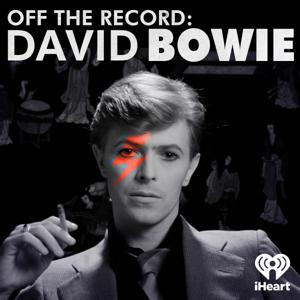


We’re taking a quick a quick midseason break from our story this week; we’ll have the next chapter of Bowie’s life for you on Monday, March 8th! But today we have something extra special in store — a conversation with Mr. Ken Scott, the man who co-produced a string of Bowie’s most beloved albums, including Hunky Dory, Ziggy Stardust, and Aladdin Sane. For most people, that’s enough bragging rights to last a lifetime, yet it’s just a small part of Ken’s legendary career. On his first day as an engineer at EMI’s Abbey Road Studios, he was enlisted to assist a little band called the Beatles. (No pressure, right?). The list of names he’s worked with reads like a roll call for the Rock ‘n’ Roll Hall of Fame: Elton John, Lou Reed, Jeff Beck, Harry Nilsson, Supertramp, Devo, Duran Duran, Procol Harum — and, of course, Bowie. His 2012 memoir, Abbey Road to Ziggy Stardust, provides illuminating insights on how these classics came together in the studio. Tune in as Ken goes deep with Jordan on making some of Bowie’s best.
Learn more about your ad-choices at https://www.iheartpodcastnetwork.com
See omnystudio.com/listener for privacy information.
Tony Zanetta is a crucial figure in New York’s experimental downtown drama scene of late '60s and early ‘70s. He first entered David Bowie’s orbit as a cast member of Andy Warhol's play ‘Pork’ in 1971 (co-starring with last week's guest, Cherry Vanilla.) Soon he would be swept up in the whirlwind of David's management company, MainMan, headed up by Bowie's larger than life manager, Tony DeFries. In practice, the organization was more like an elaborate performance piece than a strict bottom-line business. This may explain way DeFries hired Zanetta to be MainMan's president despite his total lack of business experience. Zanetta would later be drafted into a much more demanding role as David's tour manager, overseeing the treks for Ziggy Stardust and Diamond Dogs. Keeping the show on the road and the egos in check, all with a daily operating budget of close to zero dollars? It wasn’t a job for the faint of heart! Zanetta spoke to Jordan about those thrilling days on tour with David, as his star soared to new heights — and how everything changed in an instant.
Learn more about your ad-choices at https://www.iheartpodcastnetwork.com
See omnystudio.com/listener for privacy information.
The American sibling of Ziggy Stardust, Aladdin Sane was born on the road as David Bowie embarked on his triumphant first tour of the United States. With his face bisected by his trademark lightning bolt, the character reflects an artist coming apart at the seams. It seemed like everything David had worked towards was coming through, yet he felt more confused than ever. His finances were a mess. His marriage was beginning to disintegrate. He was exhausted — mentally, physically and spiritually. The multiple identities he had crafted originally brought him personal and creative freedom. Now they threatened to tear him in two. As the name suggests, Aladdin Sane is a troubling self-portrait of a man on the edge. To pull himself back from the abyss, he’d had to take his biggest risk to date, and kill off his most beloved creation.
Learn more about your ad-choices at https://www.iheartpodcastnetwork.com
See omnystudio.com/listener for privacy information.
Ziggy Stardust wouldn’t have been the same without the help of David Bowie’s new friends from the cast of Andy Warhol’s play, ‘Pork.’ The groundbreaking avant garde theatrical production shocked audiences by taking aim at pretty much every social taboo you could imagine — and maybe a few you can't. David loved it, but he loved the cast even more. He was entranced by their bold style, an unmissable blend of gritty New York street and gaudy old Hollywood glamor. They, in turn, appreciated David's own brand of artistic fearlessness. In short, they were kindred spirts.
The ‘Pork’ crowd would have a marked effect on David's life and career, changing his relationship to performance and inspiring him to new creative heights. They also had a hand in launching him into the pop stratosphere. David's manager, Tony Defries, tapped the Warholites to head up the New York office of his management company, MainMan. Though few had any actual business experience, they made it work.
In the latest bonus episode of 'Off the Record,' Jordan spoke to genuine Warhol superstar and alternative arts scene legend, Ms. Cherry Vanilla. After starring in the London production of ‘Pork,’ she was hired to work at MainMan as Bowie's public relations manager. Unlike most of her Warhol compatriots, she actually had a substantial professional background, having worked in the real-life ‘Mad Men’ world of advertising in the mid-'60s. The experience would come in handy when hyping David to the world. It was she who crafted some of the enduring myths and tall tales that surround his legend to this day. For a glorious stretch in the early '70s, she and David were friends, lovers and artistic comrades.
Learn more about your ad-choices at https://www.iheartpodcastnetwork.com
See omnystudio.com/listener for privacy information.
At last, a starman is born. The arrival of Ziggy Stardust brought David Bowie the fame he'd been working towards for nearly a decade. Fusing innovative fashion, avant-garde theatrical flair, far out sci-fi and killer song craft, he transformed rock 'n' roll into concept art. But he didn't do it alone. The latest installment explores the genesis of Bowie's most iconic creation, with influences ranging from Warholian speed freaks to teen idol burnouts to '50s pulp TV shows and a cult American country act. Once Ziggy arrived, Bowie's life was changed forever. So were millions of others. Find out how the album 'The Rise and Fall of Ziggy Stardust and the Spiders from Mars' touched every aspect of popular culture, including music, film, fashion, social and sexual mores, and the very nature of fame itself. Note: This episode should be played at maximum volume.
Learn more about your ad-choices at https://www.iheartpodcastnetwork.com
See omnystudio.com/listener for privacy information.
The latest chapter of ‘Off the Record’ opens with David Bowie’s first trip to the United States in January of 1971. The arrival was a triumph for David — until he was detained by customs officials for his feminine clothes. He received a warmer welcome Ron Oberman, his press agent set to greet him by his label, Mercury Records. Ron was joined by his entire family — his mom, his dad, and his younger brother, music journalist Michael Oberman. The Oberman’s welcomed the young, unknown singer into their family, sharing their suburban home and taking him out for a meal at a local steakhouse.
David’s first night in the States has gone down in Bowie legend as an important early step in his journey to global superstardom. The trip is the plot of a new film, Stardust, a movie that has been deemed controversial for its liberal reinterpretation of historical events. Ron Oberman, an instrumental force in Bowie’s early career, died in 2019. But his brother Michael recounted the famous visit in his new book, Fast Forward, Play and Rewind. A memoir of sorts, the book also collects Michael’s interviews with over a hundred rock legends ranging from Janis Joplin and James Brown to the Doors, Jefferson Airplane, Leon Russell, Emitt Rhodes, Little Feat — and of course David.
Jordan spoke with Michael about his remarkable career as a music journalist, and that special night with David Bowie in his parents living room back in 1971.
Learn more about your ad-choices at https://www.iheartpodcastnetwork.com
See omnystudio.com/listener for privacy information.
At the dawn of the decade he’d grow to dominate, David Bowie found himself in low spirits. His first taste of fame with “Space Oddity” was not so sweet, and he seemed in danger of becoming that most sorry of acts: a one hit wonder. As his music career floundered, he grew closer to Angie Barnett, his girlfriend and creative co-conspirator. Their marriage in 1970 was one of the wilder rock unions, characterized by mutual ambition and sexual exploration. At Angie’s encouragement, David began to experiment with gender roles, shocking the public with his feminine appearance, makeup and “man dresses.” It was a time of constant transition for Bowie as the ‘60s became the ‘70s. In just two years he’d bury his father and become one himself. Musically, he’d morph from a sci-fi loving space hippie and into the androgynous Godfather of Glam. He established his singular songwriting style with 1971’s irrepressibly tuneful Hunky Dory, which contained his personal anthem of the era: “Changes” — changes in looks, sounds, homes, management, and partnerships. But the most transformative experience would be his first visit to the United States. The trip opened up a whole new realm of ideas, leading to David’s greatest artistic breakthrough.
Learn more about your ad-choices at https://www.iheartpodcastnetwork.com
See omnystudio.com/listener for privacy information.
Our latest chapter followed David Bowie in the late ‘60s — a thrilling, colorful time when his creativity soared to new heights. After half a decade of near constant rejection from the mainstream music industry, David had started to rebel. Instead of chasing pop hits, he embraced the avant garde arts scene that was beginning to blossom in London. A key figure in David’s life was Mary Finnigan, his friend, lover and (somewhat unusually) his landlady. A journalist by day, Mary was deeply involved with the London underground scene, a vibrant community of artists and activists looking to shake the populace out of their spiritual complacency. Together, she and David formed a folk club at a local pub called the Three Tuns. Later known as the Beckenham Arts Lab, the venue became a crucial incubator for Bowie, giving him a supportive and enriching environment to find his musical voice. The songs that he wrote in this period would find their way onto breakthrough albums like Space Oddity, The Man Who Sold the World, and Hunky Dory. Mary recorded her electrifying period with Bowie in a 2016 memoir, Psychedelic Suburbia. She speaks to Jordan about Bowie the lodger, Bowie the Buddhist, Bowie the boyfriend — and much more.
Learn more about your ad-choices at https://www.iheartpodcastnetwork.com
See omnystudio.com/listener for privacy information.
Frustrated by his stalled pop career and emboldened by the creative daring of the psychedelic era, David Bowie begins to embrace more experimental art forms. Mime, movement, avant garde theater and film acting all serve as fascinating artistic detours, and he expands his mind with Tibetan Buddhism. But his first heartbreak makes him feel more alone and adrift than ever, inspiring a song about an astronaut drifting into the black abyss of space. Fusing science fiction with his innermost feelings, “Space Oddity” became his breakthrough hit. But one of David’s biggest supporters — his father — wouldn’t be there to share in the triumph.
Learn more about your ad-choices at https://www.iheartpodcastnetwork.com
See omnystudio.com/listener for privacy information.
Our latest chapter focused on teenage David Bowie as he struggled for fame in the mid '60s. It was a frustrating period for the wannabe rockstar — a time of high hopes and repeated failures as he fronted a string of short-lived bands that followed in the wake of the Beatles and the Stones. David leapfrogged from group to group, hoping he'd find the right one to catapult him to success, but none ever made an impact on the charts. The strongest of Bowie's early bands was a group called the Lower Third. Though they were together for less than a year, they released the best of David's early songs. During his time in the group, David experimented with their setlist, stage presentation, and even makeup. There was also a more important metamorphosis — it was while fronting the Lower Third that David changed his surname from Jones to Bowie. Jordan speaks to Phil Lancaster, David's bandmate and author of the book 'From the Birth of Bowie.' From his vantage point on the Lower Third's drum kit, he watched a legend taking shape.
Learn more about your ad-choices at https://www.iheartpodcastnetwork.com
See omnystudio.com/listener for privacy information.
From the publisher's feed

26,799 Listeners
1,153 Listeners

87,959 Listeners

112,302 Listeners
4,657 Listeners
12,817 Listeners

37 Listeners

245 Listeners

59,373 Listeners

8 Listeners
3,610 Listeners
8 Listeners
350 Listeners

63 Listeners

50,501 Listeners

250 Listeners

3,335 Listeners

57,744 Listeners

142 Listeners

238 Listeners
1,550 Listeners

16,260 Listeners

839 Listeners

1,888 Listeners

63 Listeners
278 Listeners

159 Listeners
1,040 Listeners

18 Listeners
194 Listeners
216 Listeners

953 Listeners

463 Listeners

60 Listeners

34 Listeners