
Sign up to save your podcasts
Or

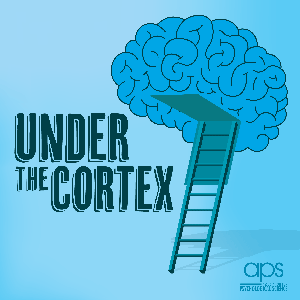

Human brains can do more than simply imagine the presence of nonexistent objects. Our minds can automatically create well-defined representations of objects that are merely implied rather than seen, like the obstacles in a mime’s performance. These findings could aid in the development of artificial intelligence related to vision and navigation by helping understand how humans perceive and navigate their environments. Chaz Firestone (Johns Hopkins University) and Pat Little (New York University) talk with Charles Blue about their Psychological Science paper on mimes and implied surface.
Read the full news release here.
 View all episodes
 By psychologicalscience

4.6
1212 ratings
Human brains can do more than simply imagine the presence of nonexistent objects. Our minds can automatically create well-defined representations of objects that are merely implied rather than seen, like the obstacles in a mime’s performance. These findings could aid in the development of artificial intelligence related to vision and navigation by helping understand how humans perceive and navigate their environments. Chaz Firestone (Johns Hopkins University) and Pat Little (New York University) talk with Charles Blue about their Psychological Science paper on mimes and implied surface.
Read the full news release here.

21,960 Listeners

32,250 Listeners

43,691 Listeners
1,813 Listeners
55 Listeners
26,384 Listeners

11,896 Listeners
764 Listeners

113,307 Listeners

56,974 Listeners

14,975 Listeners
4,163 Listeners

29,277 Listeners

16,508 Listeners

103 Listeners