
Sign up to save your podcasts
Or



Based on Podcast App listening data
john a. powell, the Director of the Othering & Belonging Institute, explains why the concept of belonging is so important for a healthy community and why inclusion is the key to a thriving economy.
john a. powell is the Director of the Othering & Belonging Institute at the University of California, Berkeley.
Twitter: @profjohnapowell
Targeted universalism: a solution for inequality? https://www.cbs8.com/article/news/local/california/targeted-universalism/509-2127090b-7f50-4a91-91e7-04c47acf3309
Othering & Belonging Institute https://belonging.berkeley.edu/john-powell
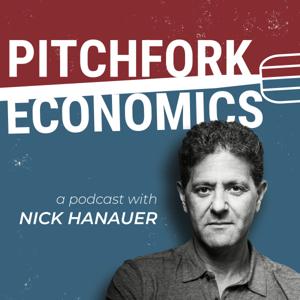
Website: http://pitchforkeconomics.com/
Twitter: @PitchforkEcon
Instagram: @pitchforkeconomics
Nick’s twitter: @NickHanauer
Gas prices have reached record highs in the United States. Is inflation actually to blame, or is it the greed of Big Oil, which is enjoying record profits? Congressman Ro Khanna walks us through his proposal for a Big Oil Windfall Profits Tax, which he says will help curb profiteering while reducing gas prices.
Congressman Ro Khanna represents California’s 17th Congressional District. He’s the author of Dignity in a Digital Age: Making Tech Work for All of Us.
Twitter: @RoKhanna
Big Oil Windfall Profits Tax would protect consumers from giant oil companies taking advantage of world events to jack up prices https://khanna.house.gov/media/press-releases/release-gasoline-prices-sky-high-khanna-whitehouse-announce-curb-big-oil
Dignity in a Digital Age https://www.simonandschuster.com/books/Dignity-in-a-Digital-Age/Ro-Khanna/9781982163341
Website: http://pitchforkeconomics.com/
Twitter: @PitchforkEcon
Instagram: @pitchforkeconomics
Nick’s twitter: @NickHanauer
The Biden Administration’s 2023 budget proposal includes a Billionaire Minimum Income Tax and a rewrite of stock buyback practices. Will these changes actually take effect? If so, will they do enough to curb runaway corporate power? Niko Lusiani from the Roosevelt Institute breaks down what’s inside Biden’s budget.
Niko Lusiani is the Director of Corporate Power at the Roosevelt Institute.
Twitter: @NikoLusiani
Budget of the U.S. Government https://www.whitehouse.gov/wp-content/uploads/2022/03/budget_fy2023.pdf
Roosevelt Institute Responds to Billionaire Minimum Income Tax Proposal in Biden Administration FY 2023 Budget https://rooseveltinstitute.org/2022/03/28/statement-roosevelt-institute-responds-to-billionaire-minimum-income-tax-proposal/
Starbucks Halts Stock Buybacks as Schultz Returns https://www.usnews.com/news/business/articles/2022-04-04/starbucks-halts-stock-buybacks-as-schultz-pivots-to-workers#:~:text=Starbucks%20announced%20late%20last%20year,the%20company%20announced%20in%202018
Website: http://pitchforkeconomics.com/
Twitter: @PitchforkEcon
Instagram: @pitchforkeconomics
Nick’s twitter: @NickHanauer
The idea behind private equity firms—to buy failing companies and turn them around for a profit—is not inherently bad. So why is private equity such a major driver of economic inequality? Jim Baker, the Executive Director for the Private Equity Stakeholder Project, explains these Wall Street pirates’ risky business practices and shows how workers are paying the price.
Jim Baker is the Executive Director for the Private Equity Stakeholder Project
Twitter: @PEstakeholder
Pirate Equity: How Wall Street Firms are Pillaging American Retail https://pestakeholder.org/wp-content/uploads/2019/08/Pirate-Equity-How-Wall-Street-Firms-are-Pillaging-American-Retail-July-2019.pdf
Website: http://pitchforkeconomics.com/
Twitter: @PitchforkEcon
Instagram: @pitchforkeconomics
Nick’s twitter: @NickHanauer
In 2019, a group of business leaders signed a high-profile pledge promising that they would voluntarily move toward a more inclusive stakeholder-focused version of capitalism. But throughout the pandemic, those same companies reported record profits while workers were left behind. Brookings Institute Senior Fellow Katie Bach walks us through her new report examining the pandemic labor practices of 22 companies, spanning nearly every sector, and employing more than 7 million frontline workers.
Katie Bach is a Nonresident Senior Fellow at the Brookings Institute and the CBO of &pizza.
Twitter: @kathrynsbach
As shareholder wealth soared, workers were left behind https://www.brookings.edu/research/profits-and-the-pandemic-as-shareholder-wealth-soared-workers-were-left-behind
Website: http://pitchforkeconomics.com/
Twitter: @PitchforkEcon
Instagram: @pitchforkeconomics
Nick’s twitter: @NickHanauer
Non-compete clauses, and the lesser-known no-poach agreements between franchises, are shockingly common for low-wage workers. Although these contracts were originally intended to protect trade secrets among high-level executives, they have spiraled into an unfair labor practice that keeps wages low, limits employee mobility, and decreases competition. Washington state Attorney General Bob Ferguson explains how non-competes and no-poach agreements violate the law in many states, what his team did to get hundreds of huge employers across the country to cease and desist, and why you should tell your state’s Attorney General if you know of any low- or middle-income workers who are being forced into signing these agreements.
This episode was originally recorded and released in May 2021.
Bob Ferguson is Washington State’s 18th Attorney General. As the state’s chief legal officer, Bob is committed to protecting the people of Washington against powerful interests that don’t play by the rules.
Twitter: @BobFergusonAG
Noncompete agreements have pushed U.S. wages even lower, says
a new Biden administration report: https://www.fastcompany.com/90729820/noncompete-agreements-have-pushed-u-s-wages-even-lower-says-a-new-biden-administration-report
Why aren’t paychecks growing? A burger-joint clause offers a clue: https://www.nytimes.com/2017/09/27/business/pay-growth-fast-food-hiring.html
Workers in Washington state win big under new non-compete law: https://www.emeryreddy.com/2019/09/workers-in-washington-state-win-big-under-new-non-compete-law/
Attorney General Bob Ferguson stops King County coffee shop’s practice requiring baristas to sign unfair non-compete agreements: https://www.atg.wa.gov/news/news-releases/attorney-general-bob-ferguson-stops-king-county-coffee-shop-s-practice-requiring
AG Report: Ferguson’s initiative ends no-poach practices nationally at 237 corporate franchise chains: https://www.atg.wa.gov/news/news-releases/ag-report-ferguson-s-initiative-ends-no-poach-practices-nationally-237-corporate
Website: http://pitchforkeconomics.com/
Twitter: @PitchforkEcon
Instagram: @pitchforkeconomics
Nick’s twitter: @NickHanauer
It’s trendy to mock the malicious pervasiveness of neoliberalism now, but have you ever wondered what its origins are? This week, George Monbiot and Binyamin Appelbaum join the show to uncover just where the dominant economic theory of our time came from and how it took hold. This episode was originally recorded and released in October 2019.
George Monbiot writes a weekly column for The Guardian and is the author of a number of books, most recently ‘Out of the Wreckage: A New Politics for an Age of Crisis’. As an investigative journalist and self-described “professional troublemaker,” George uncovers the complicated truths behind the world’s most persistent problems.
Twitter: @GeorgeMonbiot
Binyamin Appelbaum writes about economics and business for the editorial page of The New York Times. From 2010 to 2019, he was a Washington correspondent for the Times, covering economic policy in the aftermath of the 2008 crisis. His new book, ‘The Economists’ Hour: False Prophets, Free Markets, and the Fracture of Society’ is a Wall Street Journal Business Bestseller.
Twitter: @BCAppelbaum
Further reading:
Out of the Wreckage: https://www.indiebound.org/book/9781786632890
The Economists’ Hour: https://www.indiebound.org/book/9780316512329
Neoliberalism - the ideology at the root of all our problems: https://www.theguardian.com/books/2016/apr/15/neoliberalism-ideology-problem-george-monbiot
Games Economists Play: http://bostonreview.net/class-inequality/marshall-steinbaum-games-economists-play
Website: http://pitchforkeconomics.com/
Twitter: @PitchforkEcon
Instagram: @pitchforkeconomics
Nick’s twitter: @NickHanauer
What role does the criminal justice system play in economic inequality? How does economic inequality cause mass incarceration? And how do we tease those two questions apart? Robynn Cox, an expert in the economics of mass incarceration, talks about her research uncovering the links between economic inequality and the criminal justice system.
Robynn Cox is an assistant professor at the University of Southern California School of Social Work. She is an economist and inequality researcher, and her work focuses on understanding the social and economic consequences of mass incarceration.
Twitter: @RobynnCox
Overcoming social exclusion: Addressing race and criminal justice policy in the United States https://equitablegrowth.org/wp-content/uploads/2020/02/Cox.pdf
The Impact of Mass Incarceration on the Lives of African American Women
https://journals.sagepub.com/doi/10.1007/s12114-011-9114-2
Identifying the Link Between Food Security and Incarceration
https://onlinelibrary.wiley.com/doi/10.1002/soej.12080
www.robynncox.com
https://onlinelibrary.wiley.com/doi/abs/10.1002/pam.22277
https://www.tandfonline.com/doi/abs/10.1080/07418825.2019.1709883
http://www.jameinpcunningham.com/uploads/1/1/2/0/112070441/black_lives_ccow.pdf
Website: http://pitchforkeconomics.com/
Twitter: @PitchforkEcon
Instagram: @pitchforkeconomics
Nick’s twitter: @NickHanauer
Ever wondered what the minimum wage would be if it had kept pace with inflation and productivity like it used to? Here’s a hint: $7.25, and even $15.00, don’t come close. Economist Dean Baker has been crunching the numbers on the minimum wage for years. He joins the podcast this week to share what he’s found and why it matters. Since the publication of this episode, the Center for Economic and Policy Research issued a correction to Dean Baker’s August 2021 report that a minimum wage that kept up with productivity would be $26 per hour. In fact, it would be $23 per hour.
Dean Baker is a Senior Economist at the Center for Economic and Policy Research.
Twitter: @DeanBaker13
Further reading:
This is What Minimum Wage Would Be If It Kept Pace with Productivity https://cepr.net/this-is-what-minimum-wage-would-be-if-it-kept-pace-with-productivity/
Work Should Pay: A $15 an Hour Minimum Wage Is a Start
https://cepr.net/work-should-pay-a-15-an-hour-minimum-wage-is-a-start/
Website: http://pitchforkeconomics.com/
Twitter: @PitchforkEcon
Instagram: @pitchforkeconomics
Nick’s twitter: @NickHanauer
While many Americans struggle to make ends meet, corporate America’s 2021 profits were higher than ever. So why are corporations making more money while supply chain issues are still driving up inflation for the rest of us? The Groundwork Collaborative’s Chief Economist, Rakeen Mabud, wants you to know that the supply chain is working exactly as it was designed: for maximum profit, rather than reliably getting goods to people. And that’s the problem.
Rakeen Mabud is the Chief Economist and Managing Director of Policy and Research at the Groundwork Collaborative.
Twitter: @rakeen_mabud
How We Broke the Supply Chain https://prospect.org/economy/how-we-broke-the-supply-chain-intro/
Corporations Raise Prices as Consumers Spend ‘With a Vengeance’
https://www.nytimes.com/2022/02/27/business/economy/price-increases-inflation.html
Opinion: Larry Summers Shares the Blame for Inflation https://www.nytimes.com/2022/02/28/opinion/larry-summers-inflation.html
Inflation causing financial strain for nearly half of U.S. households, poll finds
https://www.washingtonpost.com/business/2021/12/02/inflation-gallup-financial-hardship/
Stock Buybacks Beat Capital Spending for Many Big Companies
https://www.wsj.com/articles/stock-buybacks-beat-capital-spending-for-many-big-companies-11631611802
The stock market is punishing Walmart and Target for keeping costs low while the rest of the corporate sector prioritizes profits and makes inflation worse
https://www.businessinsider.com/walmart-target-keep-prices-low-corporations-prioritize-profits-inflation-worse-2021-11
Website: http://pitchforkeconomics.com/
Twitter: @PitchforkEcon
Instagram: @pitchforkeconomics
Nick’s twitter: @NickHanauer
From the publisher's feed
Ranked by our users in the last 21 days

9,188 Listeners

10,714 Listeners

3,472 Listeners

1,982 Listeners

431 Listeners
1,198 Listeners

6,273 Listeners

6,103 Listeners

32,248 Listeners
545 Listeners
9,300 Listeners
627 Listeners

2,074 Listeners

15,886 Listeners
562 Listeners