
Sign up to save your podcasts
Or

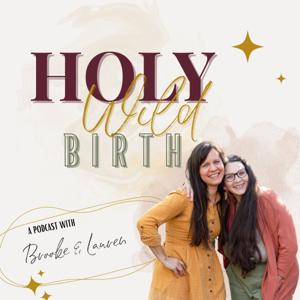

This is one of those topics that can feel a little uncomfortable, but also really important to think through.
consuming the placenta after birth has become pretty normalized in natural birth spaces. It’s often framed as instinctual, nourishing, even necessary for recovery.
We’ve both had our own journeys with this. Asking, “Is this actually how the body was designed to function?”
A lot of the arguments for it sound really convincing. Mammals do it, blood loss during birth, iron replenishment.
Then there’s hormone balancing. The idea is that consuming the placenta helps smooth out the hormonal drop after birth. But that drop is part of the design. It signals the body to shift into postpartum mode. Reintroducing those hormones may actually interfere with that process instead of supporting it.
There’s also the claim that it helps prevent postpartum mood disorders. That’s a powerful pull, but the research is mixed and largely anecdotal. Postpartum mental health is influenced by so many factors that it’s not something one practice can reliably control.
Something we both experienced, before we could fully explain it, was just a sense of hesitation. That feeling of, “I’m not sure about this.” And sometimes your body is picking up on something before your mind has words for it.
For us, this ultimately came down to alignment—physiologically, nutritionally, and spiritually.
We aren’t just like other mammals or animals. We uniquely bear God’s image. The postpartum hormone shift is intentional, not something to override. Animals consume the placenta largely for survival reasons, which doesn’t apply to us. And scripturally, the only reference to anything like this is in a context of desperation, not wisdom.
There’s also the reality that the placenta acts as a filter during pregnancy, holding onto substances from the environment. That’s something to consider in today’s world.
The needs behind this are real—women need support after birth. But there are ways to meet those needs that work with the body: nutrient-dense foods for iron, rest and adequate nourishment for hormones, and strong support systems for mental health.
At the end of the day, this isn’t about fear or judgment. It’s about slowing down, asking better questions, and making decisions from a place of clarity—not pressure.
Eating the placenta after birth carries no health benefits, new study finds
SHOW NOTES:
The Sanctifed Womb article: Why You Might Want to Think Twice About Consuming the Placenta Postpartum as an Orthodox Christian — The Sanctified Womb
Placenta is a dumping ground for genetic defects
https://www.nature.com/articles/s41586-021-03345-1
Deuteronomy 28 Christian Standard Bible
In Search of Human Placentophagy: A Cross-Cultural Survey of Human Placenta Consumption, Disposal Practices, and Cultural Beliefs
Eating the placenta after birth carries no health benefits, new study finds
Connect with the Holy Wild Birth team:
Email us to say hi: [email protected]
Put in a request for future topics and/or submit a question for future Q&A episodes: Fill out the form
Apply to tell your birth story on the podcast: Holy Wild Birth Podcast : Guest Application
Hang out with us and other Holy Wild Women in our FREE, private community (off Facebook): Hearthmother Ministries Community
Become a holy, wild birthkeeper with us this fall inside Hearthmother Journey
From Lauren:
Instagram
Midwifery consults: Email [email protected]
From Brooke:
Instagram
Trust God, Trust Birth Workshop - a 5-part high-level roadmap to a confident home birth (pay what you can)
Faith-Filled Home Birth Workshop - a free, 3-part video series delivered to your inbox
Embrace Birth Journey - comprehensive and holistic faith-based home birth preparation (courses + private community)
 View all episodes
 By Brooke Collier and Lauren Hall

4.9
6565 ratings
This is one of those topics that can feel a little uncomfortable, but also really important to think through.
consuming the placenta after birth has become pretty normalized in natural birth spaces. It’s often framed as instinctual, nourishing, even necessary for recovery.
We’ve both had our own journeys with this. Asking, “Is this actually how the body was designed to function?”
A lot of the arguments for it sound really convincing. Mammals do it, blood loss during birth, iron replenishment.
Then there’s hormone balancing. The idea is that consuming the placenta helps smooth out the hormonal drop after birth. But that drop is part of the design. It signals the body to shift into postpartum mode. Reintroducing those hormones may actually interfere with that process instead of supporting it.
There’s also the claim that it helps prevent postpartum mood disorders. That’s a powerful pull, but the research is mixed and largely anecdotal. Postpartum mental health is influenced by so many factors that it’s not something one practice can reliably control.
Something we both experienced, before we could fully explain it, was just a sense of hesitation. That feeling of, “I’m not sure about this.” And sometimes your body is picking up on something before your mind has words for it.
For us, this ultimately came down to alignment—physiologically, nutritionally, and spiritually.
We aren’t just like other mammals or animals. We uniquely bear God’s image. The postpartum hormone shift is intentional, not something to override. Animals consume the placenta largely for survival reasons, which doesn’t apply to us. And scripturally, the only reference to anything like this is in a context of desperation, not wisdom.
There’s also the reality that the placenta acts as a filter during pregnancy, holding onto substances from the environment. That’s something to consider in today’s world.
The needs behind this are real—women need support after birth. But there are ways to meet those needs that work with the body: nutrient-dense foods for iron, rest and adequate nourishment for hormones, and strong support systems for mental health.
At the end of the day, this isn’t about fear or judgment. It’s about slowing down, asking better questions, and making decisions from a place of clarity—not pressure.
Eating the placenta after birth carries no health benefits, new study finds
SHOW NOTES:
The Sanctifed Womb article: Why You Might Want to Think Twice About Consuming the Placenta Postpartum as an Orthodox Christian — The Sanctified Womb
Placenta is a dumping ground for genetic defects
https://www.nature.com/articles/s41586-021-03345-1
Deuteronomy 28 Christian Standard Bible
In Search of Human Placentophagy: A Cross-Cultural Survey of Human Placenta Consumption, Disposal Practices, and Cultural Beliefs
Eating the placenta after birth carries no health benefits, new study finds
Connect with the Holy Wild Birth team:
Email us to say hi: [email protected]
Put in a request for future topics and/or submit a question for future Q&A episodes: Fill out the form
Apply to tell your birth story on the podcast: Holy Wild Birth Podcast : Guest Application
Hang out with us and other Holy Wild Women in our FREE, private community (off Facebook): Hearthmother Ministries Community
Become a holy, wild birthkeeper with us this fall inside Hearthmother Journey
From Lauren:
Instagram
Midwifery consults: Email [email protected]
From Brooke:
Instagram
Trust God, Trust Birth Workshop - a 5-part high-level roadmap to a confident home birth (pay what you can)
Faith-Filled Home Birth Workshop - a free, 3-part video series delivered to your inbox
Embrace Birth Journey - comprehensive and holistic faith-based home birth preparation (courses + private community)

2,323 Listeners
1,032 Listeners

2,899 Listeners

21,189 Listeners

1,800 Listeners
2,651 Listeners
553 Listeners
2,027 Listeners

14,707 Listeners
667 Listeners
1,264 Listeners

874 Listeners
85 Listeners

1,239 Listeners
2 Listeners