
Sign up to save your podcasts
Or

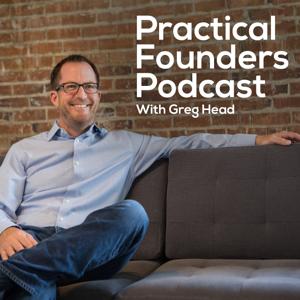


Brian Dosal was the founder and CEO of BrightGauge, a software company he bootstrapped and grew to almost $10M ARR with his brother before successfully selling the company in 2019. BrightGauge was a business analytics and dashboard for key metrics for the Managed Service Provider (MSP) industry.
After his intense 9-year journey at BrightGauge, Brian "retired" to spend more time with his growing family. He enjoyed his free time but eventually returned to the software startup game with his second company, Strety.
Strety is a fast-growing SaaS business with a popular app for small businesses using the EOS® approach to manage their businesses. It has 10 employees, hundreds of customers and partners, and no outside funding. Brian brought back some of his previous team to build another sustainable and valuable software company.
LinksBrian Dosal on LinkedIn
BrightGauge website
Strety on LinkedIn
Entrepreneurial Operating System (EOS) website
Traction book by Gino Wickman
Anything You Want book by Derek Sivers
The Practical Founders Podcast
Tune into the Practical Founders Podcast for weekly in-depth interviews with founders who have built valuable software companies without big funding. Subscribe to the Practical Founders Podcast using your favorite podcast app or view on our YouTube channel.
Get the weekly Practical Founders newsletter and podcast updates at practicalfounders.com.
Dave Yuan is the founder of Tidemark, an active growth equity investor focusing on vertical SaaS companies with outsized advantages that can become "control points" in their markets and grow very big. Dave and Tidemark have invested in successful companies like Toast, ServiceTitan, Karbon and Dutchie.
In this episode, Dave shares some of the most useful strategic growth frameworks for vertical SaaS companies to grow through winning market share, expanding with additional products, and even extending through an industry ecosystem serving new markets. We also talk about the impact of AI on established vertical SaaS players and how it's both an opportunity and a thre
Tidemark supports the global community of practical vertical SaaS founders by publishing their strategic growth frameworks, their annual Vertical SaaS Benchmarketing Report, and they host the annual Vertical SaaS Collective Live conference for founders.
Quote from Dave Yuan, founder at Tidemark
"Vertical SaaS founders should not be asleep with AI. You can wave it off, view it as a toy, and say that no one's going to trust that outcome or use it. That may have been the case, but things are changing really quickly.
"Lots of smart people are making it better every month, and you have a massive opportunity to improve it with your data and workflow.
"Jump into it to control your destiny. Don't get caught sleeping without AI in your product in a useful way."
LinksThe Practical Founders Podcast
Tune into the Practical Founders Podcast for weekly in-depth interviews with founders who have built valuable software companies without big funding. Subscribe to the Practical Founders Podcast using your favorite podcast app or view on our YouTube channel.
Get the weekly Practical Founders newsletter and podcast updates at practicalfounders.com/newsletter.
Dori Yona is co-founder and CEO of SimpleClosure, a technology- and people-powered company that helps founders wind down and dissolve a startup or business that is no longer viable. Shutting down a business can be complicated, costly, and risky for founders. SimpleClosure manages the unique processes with automation and expert support.
SimpleClosure has helped tech startup founders wind down over 500 startups, businesses that closed or have gone through a sale of assets. It manages the important steps of a winddown, including legal, regulatory, employees, investors, intellectual property, customers, data, and more.
In this episode, Dori shares the key considerations for SaaS founders who have run out of VC funding or need to shut down their companies for other reasons.
Quote from Dori Yona, CEO of SimpleClosure
"The biggest thing for software startup founders and CEOs is to move fast. Your time is your biggest resource in life as an entrepreneur, whether you're venture-backed or bootstrapping. You're spending your time, you're spending your energy, you're spending the best years of your career.
"So move fast, learn fast, test fast, iterate quickly, grow fast, fail fast. Ultimately, when you're building your own business, you're sacrificing an easy, convenient, cushy job anywhere else to take this risk.
"The faster you can grow, learn, build, and fail, the better. It's ultimately to your advantage to make the most of your time. Our time is our most expensive resource."
LinksThe Practical Founders Podcast
Tune into the Practical Founders Podcast for weekly in-depth interviews with founders who have built valuable software companies without big funding. Subscribe to the Practical Founders Podcast using your favorite podcast app or view on our YouTube channel.
Get the weekly Practical Founders newsletter and podcast updates at practicalfounders.com/newsletter.
Howard Gottlieb started Read-A-Thon in 2012 as a reading-based fundraising platform that helped students raise money while boosting education. Their easy platform and simple fundraising approach created amazing results. The Read-a-Thon business grew steadily and profitably without any outside funding.
Read-A-Thon helped over 4000 schools and students raise over $30 million in donations. Their platform has tracked over 30 billion reading minutes by students who have used it to earn donations.
Read-A-Thon was successfully acquired by private equity investors in early 2023 for an undisclosed amount. The business has continued to grow and expand with a new CEO and key executives, with Howard on the board as an advisor and now a minority investor in the company.
Quote from Howard Gottlieb, founder of Read-A-Thon
"I have been very blessed and very lucky in my journey with the success of Read-A-Thon. Everyone should realize that and have some humility.
"If you succeed at the game, you can be the smartest guy or the smartest woman with the most brilliant idea, but it still will take 50% or more luck for everything to align correctly to succeed. Just realize that. It takes a lot of good fortune.
"At Read-A-Thon, our lucky moment was COVID because online fundraising was only in its infancy. When COVID hit and schools were out, Read-A-Thon was almost the only viable option. Our growth went from 40% a year to 100%, then 150% a year. So that was luck after all these years."
LinksThe Practical Founders Podcast
Tune into the Practical Founders Podcast for weekly in-depth interviews with founders who have built valuable software companies without big funding. Subscribe to the Practical Founders Podcast using your favorite podcast app or view on our YouTube channel.
Get the weekly Practical Founders newsletter and podcast updates at practicalfounders.com/newsletter.
Richard Change is co-founder and CEO of PFA Solutions, the provider of FirmView software. FirmView® is the leading carry and compensation management platform for private equity investors to manage their internal compensation from fees and carried interest.
Richard was a senior architect for a large private equity firm when he discovered this complex problem that was being managed on spreadsheets. He left to start PFA Solutions and bootstrapped the development of FirmView with consulting revenue. From inception, through growth and ultimately acquisition, Richard never took any outside funding.
FirmView adoption grew steadily, serving large private equity firms. PFA Solutions eventually grew to 34 employees before being acquired by Allvue Systems in 2024. Allvue is a private-equity-backed software company that serves the alternative investment industry.
Quote from Richard Change, co-founder and CEO of PFA Solutions
"Once you're in it, once you've decided to start a company, own it. No regrets. No one's going to save you. There's not a fairy godmother that will come and wave all your problems away. You have to own it.
"There's no magic wand that will come and wave a wand and say, OK, all your problems are solved. And that magic wand in my mind wasn't outside capital; it wasn't VC funding. That wasn't magic because what do when the money runs out?
"Is your product generating revenue? That's the real problem. If there's a problem to be solved and you have a great idea or solution, you can generate revenue from it. Prove to yourself and the world that this is viable and has product-market fit."
LinksThis week's podcast is sponsored by my friends at Cypress Growth Capital. For 15 years, Cypress has provided non-dilutive growth funding to bootstrapped SaaS founders, including many successful founders I've interviewed here on this podcast. Message Cliff Sentell at Cypress to have an open discussion about your options.
The Practical Founders Podcast
Tune into the Practical Founders Podcast for weekly in-depth interviews with founders who have built valuable software companies without big funding. Subscribe to the Practical Founders Podcast using your favorite podcast app or view on our YouTube channel.
Get the weekly Practical Founders newsletter and podcast updates at practicalfounders.com/newsletter.
Rachit Khator is the founder and CEO of Stackby, a no-code spreadsheet and database app builder that allows business users to create powerful spreadsheet-like applications with data links, automations, and workflows. Rachit and his team of 34 employees live in Surat, India, north of Mumbai.
Stackby started when Rachit was working for a corporate venture firm in Michigan, doing repetitive manual data imports and analysis in Excel. He hired a developer to build a better tool and started to sell Stackby to early customers. They followed customer feedback to build an inexpensive and easy-to-use app that competes well with VC-funded competitors like AirTable for specific use cases.
This bootstrapped company has grown in 4 years to serve 75,000 free and paid business customers. Now they are profitable and growing at 15% per month, upselling free business users to paid plans. Rachit has big ambitions for Stackby to serve millions of customers–and be an example success story in the Surat software community.
LinksThis podcast is sponsored by Full Scale, one of the fastest-growing software development companies in any region. Full Scale vets, employs, and supports over 300 professional developers, designers, and testers in the Philippines who can augment and extend your core dev team. Learn more at fullscale.io.
The Practical Founders Podcast
Tune into the Practical Founders Podcast for weekly in-depth interviews with founders who have built valuable software companies without big funding. Subscribe to the Practical Founders Podcast using your favorite podcast app or view on our YouTube channel.
Get the weekly Practical Founders newsletter and podcast updates at practicalfounders.com/newsletter.
Joe Hyrkin is the former CEO of Issuu, a content publishing platform for interactive marketing content. Issuu allows you to easily publish printable and PDF materials in various formats to websites and social media. It's a global product-led success story with millions of customers and a successful and sustainable business.
Issuu was started by four Danish founders before the company was moved to Silicon Valley in 2013 when Joe was hired as the CEO. Joe ran the company for almost 12 years, growing it profitably most years to almost $30 million in revenue before it was sold in mid-2024 to Bending Spoons, an Italian holding company that is an active acquirer of software companies.
Joe talks about working with their early venture capital investors with a practical and patient approach. In 2021, Issuu raised $20 million in debt to invest in marketing and address technology issues, which helped them grow faster before being acquired.
Quote from Joe Hyrkin, former CEO of Issuu
"From 2016 to 2020, we ran Issuu profitably, with what I like to call a 'pro-grow' approach—profitable and growing. Then, we raised debt to grow faster to about $30 million in revenue. The final year before we sold, we got back to profitability. So we got to profitability twice.
"By being profitable, you're committing to your customers that you're going to be around and that they will not have to go find some other solution. You're communicating to your team that this company can be counted on. In 2024 and 2025, everybody wants profitability, unless you're an AI company.
"Not having a profitability plan actually creates a lot of risk. I'm not saying you always have to be profitable, but you always have to have a foundation to know how we get to profitability. It's a different way of thinking."
LinksThis week's podcast is sponsored by my friends at Cypress Growth Capital. For 15 years, Cypress has provided non-dilutive growth funding to bootstrapped SaaS founders, including many successful founders I've interviewed here on this podcast. Message Cliff Sentell at Cypress to have an open discussion about your options.
The Practical Founders Podcast
Tune into the Practical Founders Podcast for weekly in-depth interviews with founders who have built valuable software companies without big funding. Subscribe to the Practical Founders Podcast using your favorite podcast app or view on our YouTube channel.
Get the weekly Practical Founders newsletter and podcast updates at practicalfounders.com/newsletter.
Brian Hamilton is one of America's most successful entrepreneurs and a leading expert on entrepreneurship. Today, Hamilton serves as chairman of software company LiveSwitch. He is known for his pioneering work in fintech, his advocacy for small businesses, and his commitment to criminal justice reform.
As the founder of Sageworks (now Abrigo), America's first fintech company, Hamilton developed technology that translates complex financial data, empowering millions of small business owners.
Sageworks struggled and grew slowly for 10 years before pivoting to serve local banks and credit unions with financial tools to assess the creditworthiness of their small business loans. The practical SaaS company grew steadily and very profitably to more than 400 employees when it was sold in 2018.
Through Inmates to Entrepreneurs and the Brian Hamilton Foundation, he encourages entrepreneurship as a means to economic opportunity. Hamilton's work has been showcased by major media outlets like CNBC and Good Morning America, and he starred in ABC's Free Enterprise TV series, an award-winning show based on Inmates to Entrepreneurs.
Quote from Brian Hamilton, founder and former CEO of Sageworks
"Being the founder of a tech company is like this: You're in a tunnel, it's dark, you're on your hands and knees, you're going through that tunnel, you're groping your way through, keep moving forward.
"I know it sounds like such a BS, but we've all been there. I'm telling you, that is the picture: you're in this huge sewer tunnel, it's dark. You just gotta keep moving. Just keep chipping away. You do that, and you will get momentum somehow.
"It's like compound interest. You start with a dollar and how does it turn into $10? You build momentum a little at a time. I've got to listen every day. I'm knocking off making the product better. You develop the physical property of compound interest and things will get better."
LinksThis week's podcast is sponsored by my friends at Cypress Growth Capital. For 15 years, Cypress has provided non-dilutive growth funding to bootstrapped SaaS founders, including many successful founders I've interviewed here on this podcast. Message Cliff Sentell at Cypress to have an open discussion about your options.
The Practical Founders Podcast
Tune into the Practical Founders Podcast for weekly in-depth interviews with founders who have built valuable software companies without big funding. Subscribe to the Practical Founders Podcast using your favorite podcast app or view on our YouTube channel.
Get the weekly Practical Founders newsletter and podcast updates at practicalfounders.com/newsletter.
Scott Desgrosseilliers is the founder and CEO of Wicked Reports, a leading multi-touch marketing attribution software for SMBs who use paid online advertising. Scott is a data and analytics expert who saw the costly limitations of simple performance reports from popular ad platforms.
Wicked Reports was started as a bootstrapped software company in 2016 to serve smaller companies that spend millions on digital ads and other marketing, including email, SEO, and digital events. Determining which marketing activities drive incremental revenue is a tricky puzzle to unravel, but the payback of those insights is huge.
Scott raised a little angel funding and a little SaaS debt and is still going strong with 28 employees and is figuring out their growth and retention puzzle to accelerate growth.
Quote from Scott Desgrosseilliers, founder and CEO of Wicked Reports
"We had offers, and we could have raised VC funding early on, but then the growth rate we would have had to hit was too high, which didn't make sense for our business.
"A competitor of ours took $20 million from a similar VC, and then they had to cut a third of their team. I'm not saying anything against them. They have a nice product and they seem like good guys. They hired a ton of people and didn't hit the growth number, so they had to whack a bunch of them.
"Money isn't always the answer. I'm sure there are cases where it solved all sorts of problems, but most VCs want to invest when you already have growth and net revenue retention at 120% when the efficient growth problem's already solved!"
LinksThis week's podcast is sponsored by Full Scale, one of the fastest-growing software development companies in any region. Full Scale vets, employs, and supports over 300 professional developers, designers, and testers in the Philippines who can augment and extend your core dev team. Learn more at fullscale.io.
The Practical Founders Podcast
Tune into the Practical Founders Podcast for weekly in-depth interviews with founders who have built valuable software companies without big funding. Subscribe to the Practical Founders Podcast using your favorite podcast app or view on our YouTube channel.
Get the weekly Practical Founders newsletter and podcast updates at practicalfounders.com/newsletter.
Bryan Forrester is CEO of Boostlingo, a leading on-demand platform for language live interpretation services that is growing quickly and can become a very large company.
Boostlingo now has 160 employees and over 17,000 language interpreters who use their software to manage jobs, coordinate schedules, deliver interpreting services, and get paid.
Bryan raised some practical funds from angels to start the company in 2016. The company grew 50% or more every year since then. In 2021, Boostlingo raised a growth equity round of funding from Mainsail Partners to provide capital for efficient growth and buy out some early investors. Boostlingo has since made several small acquisitions.
Quote from Bryan Forrester, CEO and co-founder of Boostlingo
"Our customers love our software, and our NPS is very high. So when we have customers who love our software, we have high retention and low churn, and our customer costs are really good. When all of that is combined, why would you slow down the growth?
"Why would you take your foot off the gas pedal and be very profitable? And we raised a growth equity investment from Mainsail and started spending more on efficient marketing. And it worked. It worked.
"What would have happened if we didn't take that small investment with our growth equity partner? We could still have had a positive outcome. We may have already sold the business. But we wouldn't have grown as big as we have become in this very big market."
LinksThis week's podcast is sponsored by my friends at Cypress Growth Capital. For 15 years, Cypress has provided non-dilutive growth funding to bootstrapped SaaS founders, including many successful founders I've interviewed here on this podcast. Message Cliff Sentell at Cypress to have an open discussion about your options.
The Practical Founders Podcast
Tune into the Practical Founders Podcast for weekly in-depth interviews with founders who have built valuable software companies without big funding. Subscribe to the Practical Founders Podcast using your favorite podcast app or view on our YouTube channel.
Get the weekly Practical Founders newsletter and podcast updates at practicalfounders.com/newsletter.
From the publisher's feed
16,055 Listeners

541 Listeners
2,698 Listeners

698 Listeners

1,087 Listeners
2,343 Listeners
2,208 Listeners

225 Listeners

2,647 Listeners

10,186 Listeners

510 Listeners

278 Listeners
290 Listeners

658 Listeners

93 Listeners