
Sign up to save your podcasts
Or

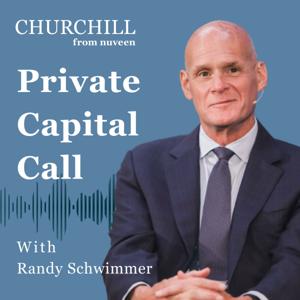


Today, we are pleased to welcome Ellen Zentner, Chief Economic Strategist and Global Head of Thematic and Macro Investing at Morgan Stanley Wealth Management. In her role, Ellen combines her passion for economics with a talent for guiding investors through turbulent times. She is also a member of the Treasury Borrowing Advisory Committee, where she advises the U.S. Treasury Department on the economy and debt management, and was recently recognized as one of Barron's 100 Most Influential Women in Finance.
In this episode, Ellen walks us through the biggest lessons from 2025, the Year of the Tariff, and what has shifted as we head into 2026. We dig into the economic indicators she watches most closely, from the labor market to whether people are dining out. We explore what the AI boom really means for asset allocators, which adjacent sectors may offer smarter entry points than chasing AI directly, and how to think about where we are in the cycle when markets move on a dime. We close with Ellen's outlook on rates, housing, and what she sees as the biggest potential upside surprise of the year.
Note: This podcast was recorded on January 20, 2026. Views expressed reflect opinions at the time of recording and may not represent current perspectives.
This month, we're pleased to welcome Jake Miller, Co-Founder and Chief Solutions Officer of Opto Investments, a private markets investment platform that helps wealth managers build, fundraise for, and manage private markets programs. A former Bridgewater investor, Jake co-founded Opto with the mission of making private investing more accessible. He's passionate about sensible long-term investing, creating systematic investment processes, and transforming complex market dynamics into clear insights that help investors better understand their portfolios.
In this episode, Jake shares his perspective on the evolution of fintech in asset management, exploring how AI and generative technologies are breaking through operational bottlenecks that have long plagued the industry. He discusses why the traditional 60/40 portfolio strategy may no longer serve investors in today's evolving interest-rate environment and why financial advisors and wealth clients are increasingly turning to private markets for alpha and portfolio diversification. Jake also reflects on the biggest surprises of 2025, what he's watching for in 2026 amid inflationary pressures and potential recession risks, and offers guidance for young professionals navigating today's rapidly changing technology landscape - emphasizing the growing importance of critical thinking and historical context over pure technical skills as AI continues to advance.
This month, we’re excited to welcome Michael Ashley Schulman, Partner and Chief Investment Officer at Running Point, a multifamily office offering personalized financial services including investment management, estates and trusts, tax, and insurance. Michael leads Running Point’s global investment strategies and impact assessments across public and private markets and brings 20+ years of experience managing institutional and high-net-worth portfolios across fixed income, equities, hedge funds, real estate, and private investments.
In this episode, Michael shares his perspective on today’s market environment and where he sees AI-driven investment opportunities emerging. He also discusses how he helps high-net-worth and private wealth clients navigate market uncertainty, his approach to selecting investment managers, his biggest surprise so far in 2025, and where he sees the most compelling opportunities across the wealth channel next.
This month, we’re delighted to welcome Don Calcagni, Chief Investment Officer of Mercer Advisors, a full-service wealth management firm overseeing $90 billion in assets. Don leads the strategic direction of Mercer Advisors' investment platform, chairs the firm’s investment committee, and manages all investment-related communications. His expertise encompasses fiduciary oversight, economics, financial mathematics, portfolio management, and corporate finance.
In this episode, Don shares his five key strategies for building a fortress balance sheet for investors. He discusses what private wealth investors should look for when selecting a private capital manager, explores the three dimensions of diversification, and offers his perspective on headlines surrounding potential overvaluation in private credit. Don also provides insight into investor psychology amid changing interest rates—and reveals his biggest surprise for 2025.
This month, we're delighted to welcome Aaron Sack, Head of Morgan Stanley Capital Partners (MSCP), a leading middle market private equity platform specializing in privately negotiated equity investments throughout North America. With 29 years of industry experience, Aaron leads investment strategy, portfolio management, board service, fundraising, and chairs the MSCP investment committee.
In this episode, Aaron provides insight into the dynamic middle market private equity landscape, highlighting the importance of operational value creation and collaborative partnerships with founders and business owners. He shares how MSCP focuses on essential service sectors, fosters business growth, and navigates today’s market challenges, while emphasizing private equity’s essential role in empowering small and midsize companies. Aaron also offers guidance for young professionals considering a career in private equity.
This month, we’re pleased to welcome Richard Miller, Group Managing Director and Chief Investment Officer of TCW Private Credit Group, which specializes in providing senior secured loans to U.S. middle market borrowers. With more than 30 years of capital markets experience, Rick leads TCW’s private credit investment strategy and portfolio construction, and has been recognized on the Institutional Investor “All American High Yield Research Team” for six consecutive years.
In this episode, Rick addresses some of the most pressing questions facing U.S. middle market direct lending amid ongoing macro uncertainty: Is the opportunity still as attractive as in years past? Is too much money chasing too few deals? Are spreads compressing as interest rates fall, and how real are risks like defaults and losses in private credit? Rick also shares the year's biggest surprises, his outlook for the future, and practical advice for those considering a career in this dynamic sector.
This month, we're pleased to welcome Francis Griffin, Senior Vice President in Callan's Alternatives Consulting Group. Callan is one of the largest independently owned investment consulting firms in the U.S., advising institutional investors with over $3 trillion in total assets. Francis leads Callan's private credit research efforts and brings more than 25 years of experience in private markets, spanning investment research, business development, and portfolio management.
In this episode, Francis shares his insights on how the current macroeconomic environment is impacting both private credit and private equity markets. We explore why he believes there's a compelling private credit opportunity emerging in Europe, discuss the key risks investors should be aware of in private credit investing, and dive into his framework for selecting quality private credit managers. Francis also offers practical guidance on what wealth investors should prioritize when evaluating private credit opportunities, and shares his outlook for this asset class over the next 12 months.
This month, we’re pleased to welcome Cameron Dawson, Chief Investment Officer at NewEdge Wealth, a division of NewEdge Capital Group. NewEdge Wealth provides tailored solutions for ultra-high-net-worth individuals, family offices, and institutional clients. As CIO, Cameron leads the development of the firm’s investment themes, strategies, and market outlooks.
In this episode, Cameron discusses the differences between retail and institutional clients, the key educational priorities for private wealth investors, and how the risk/reward dynamics of public credit (bonds and loans) compare with private credit. She also explores the challenges and opportunities private credit managers face in accessing the retail market, and shares valuable lessons and advice for those aspiring to build a career in this industry.
This month, we’re pleased to welcome Mark Zandi, Chief Economist at Moody's Analytics, a leading provider of economic research and analytical tools. Dr. Zandi oversees Moody’s Analytics' economic research and is a trusted advisor to policymakers, businesses, and the media. He is the author of Paying the Price and Financial Shock, - described by The New York Times as the “clearest guide” to the financial crisis - and also hosts the Inside Economics podcast.
In this episode, Mark shares his latest outlook on the U.S. economy, covering key themes such as tariffs, consumer spending trends, Fed rate cut expectations, and inflation pressures. He also discusses the rising recession risk and how evolving trade policies may impact the broader landscape. We then turn to private credit’s growing role in the financial system, Moody’s recent research on private credit systemic risk and the shift from a hub-and-spoke banking model to a more interconnected network post-GFC. To wrap up, Mark reflects on the biggest economic surprise of the year so far—and what unexpected developments might lie ahead.
This month, we’re pleased to welcome Mark Zandi, Chief Economist at Moody's Analytics, a leading provider of economic research and analytical tools. Dr. Zandi oversees Moody’s Analytics' economic research and is a trusted advisor to policymakers, businesses, and the media. He is the author of Paying the Price and Financial Shock, - described by The New York Times as the “clearest guide” to the financial crisis - and also hosts the Inside Economics podcast.
In this episode, Mark shares his latest outlook on the U.S. economy, covering key themes such as tariffs, consumer spending trends, Fed rate cut expectations, and inflation pressures. He also discusses the rising recession risk and how evolving trade policies may impact the broader landscape. We then turn to private credit’s growing role in the financial system, Moody’s recent research on private credit systemic risk and the shift from a hub-and-spoke banking model to a more interconnected network post-GFC. To wrap up, Mark reflects on the biggest economic surprise of the year so far—and what unexpected developments might lie ahead.
From the publisher's feed

30,213 Listeners

967 Listeners
2,179 Listeners

1,982 Listeners

9,620 Listeners
2,345 Listeners
949 Listeners

8,502 Listeners
282 Listeners

148 Listeners

5,384 Listeners

10,186 Listeners
438 Listeners
404 Listeners
1,448 Listeners