
Sign up to save your podcasts
Or

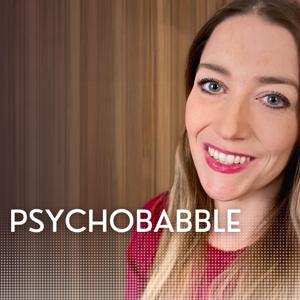


What does it actually take to "cure" feminism?
In this episode, I look at why grievance-based feminism is psychologically attractive, why facts alone rarely change minds, and what can actually replace it. From mate choice and accountability to marriage, interdependence, motherhood and cultural incentives, this is a practical look at how women can move from grievance and victimhood toward responsibility, purpose and relationships that other people can rely on.
Female rage is increasingly being reframed as something righteous, therapeutic, even healthy. This is how we have taught women that their anger is not something to regulate but evidence that they've been wronged. Then we look at the dangerous consequences of the therapies built on these assumptions.
In this episode, I look at the Lindsay Clancy juror interviews and the psychology behind how the jury processed the case. Why did evidence of psychosis seem less important than the belief that Lindsay was a loving mother? Why did the holdout juror become the problem? And what do the interviews reveal about conformity, cognitive dissonance, the motherhood halo effect, and female group dynamics? I also explain what I think the prosecution was really fighting against, why simply presenting more evidence was unlikely to solve that problem, and how the holdout juror might have persuaded the female jurors differently by understanding the social and emotional dynamics in the room.
Evolutionary psychologist Edward Dutton joins me to discuss his new book Borderline Genius, Borderline Insane and we ask the question: have women with borderline traits had an outsized influence on powerful men, culture and history? We get into the unstable self, mirroring and attachment, whether borderline manipulation is conscious, the overlap between BPD and vulnerable narcissism, and the increasingly complicated relationship between borderline traits, autism and ADHD. We also debate trauma versus temperament, why certain men are drawn to borderline women, the relationship between attractiveness and instability, and whether modern culture is removing the guardrails that once helped people regulate difficult temperaments. Edward Dutton / The Jolly Heretic: https://www.jollyheretic.com/ Borderline Genius, Borderline Insane: https://us.amazon.com/Borderline-Genius-Insane-Understanding-Personality-ebook/dp/B0HGGGWYGP
McKenna West agreed to carry a baby for a California couple for around $60,000. When the baby was diagnosed with a serious heart condition, the genetic parents requested an abortion. West refused, moved to Texas, gave birth and is now being sued for breach of contract. In this episode, I look at what this case reveals about commercial surrogacy. I also bring in The Handmaid's Tale because the show is a pure dramatization of the feminist id and spends six seasons asking us to recoil at a world where women's reproductive bodies are used to produce children for other people. More powerful people. At the expense of women. The comparison becomes uncomfortable when we ask what really changes once the woman is paid, signs a contract and then changes her mind. What happens when two women both claim what we have told them are their reproductive rights but only one of them can get what she wants? What does this reveal about the nature of feminism?
For more Psychobabble and ad-free episode, subscribe on Substack: https://substack.com/@UCZlHNlu2CVjcPy...
LIVE STREAM WITH JANICE FIAMENGO: 14th of September at noon ET.
Hannah is joined by returning guests: Janice Fiamengo, author of "The Goddess That Failed" Tom Golden, host of the "Men Are Good" podcast, and Jim Nuzzo author of "The Nuzzo Letter," whose research and writing on men, gender and public policy has featured regularly on Psychobabble. Their work and links are included below. In this episode, the four investigate a new crop of feminist buzzwords — and the much more serious ideas hiding behind them. From himpathy and medical misogyny to vicarious violence and leg harrassment and gender washing, many of these terms are presented as ways of describing injustice. But what happens when subjective feelings of grievance are turned into categories of harm. Some of the examples are easy to laugh at but others are already moving from academia into journalism, government policy and legislation. Announcement: Hannah will be speaking at the
**Parental Alienation Study Group conference in Australia this October**. Details here: https://eecw.eventsair.com/pasg2026/ Guests: Janice Fiamengo: https://fiamengofile.substack.com/ Jim Nuzzo: https://jameslnuzzo.substack.com/ Tom Golden: https://menaregood.substack.com/
Please like, subscribe and share the episode if you find Psychobabble valuable!
In this episode, I examine the growing Quiet BPD narrative and the behaviors being described as internalized—from withdrawing and ghosting to relationship tests, reckless behavior and emotional escalation. I ask what happens when psychiatry describes a disorder entirely from the perspective of the person experiencing the emotions, while overlooking the effect those behaviors have on partners, parents, friends and colleagues.
The Lindsay Clancy case has become a story about postpartum psychosis, psychiatric medication and a healthcare system that supposedly failed a struggling mother. But does the evidence actually support that story? In this episode, psychiatrist Hannah Spier examines the psychiatric arguments at the center of the ongoing Lindsay Clancy trial: what an acute psychotic break actually looks like, the unusual timing of the alleged postpartum psychosis, the claim of an undiagnosed bipolar disorder, the long list of psychiatric medications Clancy was prescribed, and the argument that she could appear completely normal while experiencing severe psychosis. But the case raises a larger question. Why are we so quick to search for an external explanation when a mother commits an horrific act? At what point does psychiatric explanation begin to erase moral agency?
This episode discusses disturbing material involving the deaths of children. Subscribe for more Psychobabble with Spier! Read Psychobabble and become a Psychobabble Insider on Substack for articles, sources, exclusive lives and access to the full Psychobabble library. https://substack.com/@psychobabblewithspier
Check out our sponsor: Get 15% off OneSkin with the code HANNAH at https://www.oneskin.co/HANNAH
A viral voice memo has everyone arguing about timing, pressure and consent. But the real issue is something else entirely. It exposes how ridiculous the conversation around sex and dating has become.
Sponsor: Looki L1 is an AI Life Memory Camera that helps you stay present now and return to the day later. Learn more: https://www.c2go.cc/r/HannahSpierMD | code: Hannah. What ordinary moment would you want to relive?
Girls were taught to speak up, resist influence, reject criticism and never change for anyone. But what happens when every part of culture—film, advertising, social media, schools and psychology—pushes in the same direction? This episode examines how efforts to make girls tougher may also have discouraged compromise, accommodation and agreeableness, leaving many women trained to approach relationships as power struggles rather than cooperation. Want to watch the episodes ad-free? Upgrade on Substack and get every epsiode and other benefits like Google Meets and Exclusive Live Videos: https://substack.com/@psychobabblewit...
From the publisher's feed
Ranked by our users in the last 21 days
298 Listeners

2,177 Listeners
370 Listeners

5,302 Listeners
614 Listeners

2,374 Listeners

168 Listeners

1,188 Listeners

671 Listeners
803 Listeners
241 Listeners

285 Listeners
115 Listeners

456 Listeners

60 Listeners