
Sign up to save your podcasts
Or

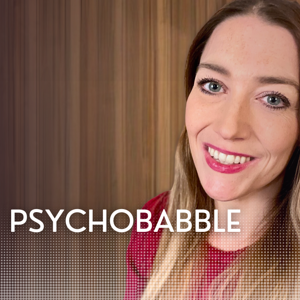


To question a diagnosis today is to trigger a moral reaction.In contemporary psychiatry, diagnostic categories no longer function merely as clinical tools. They increasingly operate as moral identities, conferring legitimacy, status, and exemption from blame. When criteria are questioned, the response is often not clinical disagreement but moral accusation.
Upgrade and join us this Saturday the 14th of March at 3 pm Eastern for the next Live Clinical Case Session on psychiatric medications
In this video, I trace how bipolar disorder transformed from a rare and unmistakable illness into a broad diagnostic spectrum, and how that transformation reshaped psychiatric practice itself. From Kraepelin's manic-depressive insanity, through DSM standardization, to the rise of the bipolar spectrum and the invention of the "bipolar child," this is an account of how diagnostic boundaries eroded under cultural, institutional, and professional pressure.
00:00 Diagnosis as Moral Status03:00 How Bipolar Became a Checklist04:50 The Spectrum Explosion09:50 The Bipolar Child14:50 The Cost of Inclusion
This is a public episode. If you'd like to discuss this with other subscribers or get access to bonus episodes, visit hannahspier.substack.com/subscribeI explain how traits once understood as borderline pathology were gradually laundered into bipolar disorder — through expanding criteria, rapid cycling, and the replacement of personality with biology.This isn't about denying suffering.It's about why diagnosis matters, how boundaries collapsed, and what it costs.
Upgrade and join us this Saturday the 28th of Febuary at 3 pm Eastern for the next Live Clinical Case Session on psychiatric medications: When, How and How to Taper Safely.
00:00 – How mania is portrayed01:00 – What real mania actually looks like03:40 – Performative emotion vs psychosis05:45 – Why mania isn't happiness07:30 – What real bipolar patients experience09:10 – Diagnosis as moral status10:00 – Rapid cycling and diagnostic collapse12:30 – Borderline traits relabeled as bipolar15:10 – Why psychiatry prefers bipolar
This is a public episode. If you'd like to discuss this with other subscribers or get access to bonus episodes, visit hannahspier.substack.com/subscribeMost so-called "high conflict" divorces are not what people think they are.
The term suggests two volatile adults locked in mutual chaos. But in a significant subset of cases, what looks like dysregulation is strategic. It is controlled, reputationally aware, and often concealed behind the language of concern, therapy, and child wellbeing.
In this episode, I examine how some separations become arenas for status repair and control after narcissistic injury. Drawing on trait-based personality psychology — particularly the Dark Tetrad — I outline why diagnostic psychiatry and family courts frequently misread these dynamics, and why well-intentioned interventions can unintentionally strengthen them.
If you have lived through this, you will recognise the pattern.If you are trying to understand why standard advice keeps failing, this will clarify why.
Free material is about recognizing patterns. The paid tier exists for a different purpose: applying that understanding to real situations. Psychobabble Insiders are invited to take part in live clinical case sessions twice a month, so join us this Saturday for a "How-To" on anxiety.
This is a public episode. If you'd like to discuss this with other subscribers or get access to bonus episodes, visit hannahspier.substack.com/subscribeIn this video, I walk through three everyday patterns in which narcissistic traits are reframed as vulnerability, self-awareness, or moral superiority and therefore escape recognition altogether. From self-diagnosis culture to parenting ideology, these behaviours are often praised rather than named appropriately.I also make an important distinction between Munchausen by proxy and the narcissistic mother, two dynamics that are frequently conflated, but psychologically and motivationally very different.This is not about demonising women or dismissing genuine mental health struggles. It's about understanding how certain traits gain social immunity by wearing the language of care, suffering, and insight, and why that makes them so difficult to name.
Psychobabble's free material focuses on helping people recognize psychological patterns. The paid tier is a different kind of work: twice a month you are invited to join our clinical case sessions live video, where we work though a concrete situation together. Focusing on applying psychological insight.
Episode Chapters: 00:00 Why This Is Never Called Narcissism02:18 Narcissism That Looks Like Vulnerability06:12 Self-Diagnosis as Status and Shield12:04 Munchausen by Proxy vs. the Narcissistic Mother18:47 Gentle Parenting and Moral Superiority25:36 Why This Pattern Is So Hard to Name
Psychobabble Insider Interview: The Four Horsewomen of Modern FeminismA conversation with David Maywald on misandry, gamma bias, gynocentrism, and gaslighting, and how these cultural forces shape therapy culture, family dynamics, and emotional double standards.
Upcoming Live SessionThis Saturday, 31st January at 2 PM Eastern, I'll be hosting a live clinical case session with Luella Jonk, PhD, on couples therapy:
"When She Says She's Done."A real-time analysis of emotional withdrawal, shutdown, resentment, and what actually happens in relationships when one partner disengages. Please join in the conversation!
This is a public episode. If you'd like to discuss this with other subscribers or get access to bonus episodes, visit hannahspier.substack.com/subscribeTherapists can't say no to women, psychiatry won't protect its categories, and TikTok has turned serious disorders into identity accessories.In this video, I walk you through a proper differential diagnosis and show why the behaviours commonly labeled "AuDHD" are not autism, not ADHD, and not neurodevelopmental at all.
0:00 — The rise of AuDHD: diagnostic Frankenstein1:03 — The AuDHD Differential Diagnosis1:29 — Why this isn't autism3:51 — Masking becomes an unfalsifiable excuse5:40 — Meltdowns, "stimming," anxiety: misdiagnosis exposed8:04 — This isn't AuDHD, it's borderline behaviour10:03 — The gender inversion comorbidity split 14:53 — The death of differential diagnosis
👉Missed the live clinical case session? You can watch the full recording here:
This is a public episode. If you'd like to discuss this with other subscribers or get access to bonus episodes, visit hannahspier.substack.com/subscribeThis episode sits very deliberately at the "how do I deal with this?" level. It's for people who find themselves repeatedly destabilised in relationships marked by manipulation, emotional volatility, and confusion — and who are tired of being told to simply communicate better, be more empathetic, or search for faults that aren't actually there.
As the year comes to a close, I wanted to write a brief note about Psychobabble. What many of you have responded to most strongly, and how I'm shaping the project going forward.
What I've enjoyed most over the past weeks, especially through the live sessions, is how concrete and personal these conversations have become. When people bring real situations, real patterns, real moments of confusion, the psychological mechanisms stop being abstract. They become recognisable. And once they're recognisable, they become manageable.
That experience has pushed me to think carefully about how Psychobabble should evolve.
All essays and podcast episodes will remain free on Psychobabble — orientation pieces, cultural psychology, and broader analyses that help make sense of what's happening around us. I want the ideas themselves to circulate widely, and that won't change.
Paid Psychobabble, however, is becoming the place where we go deeper together.
This is where we'll work carefully through psychological mechanisms as they actually present in real life. Going forward, you'll have access to twice‑monthly live clinical case sessions — a single, ongoing space where we work through real (composite and anonymised) cases tied to recent essays and episodes, take questions, and focus on precision. You'll have access to the full recording after, in case you missed the session.
In addition, the paid tier will include in‑depth, members‑only interviews with academics and authors that expand on the clinical and cultural themes, but differ from the regular public episodes.
If you're a paid subscriber, nothing is being taken away. What's changing is focus and intentionality. I want to create a clearly defined space for shared investigation and practical understanding. Where clinically specific material — the kind that helps people orient themselves in difficult, personal situations — can be handled properly, with context and care.
I'm genuinely excited about this direction! The live sessions have shown me what becomes possible when this work is done in a more contained, collaborative way and I'm looking forward to building that out further in the coming year.
To those of you who read, comment, restack, share, challenge, and support this work — whether as free readers or paid subscribers — thank you!
I wish you a thoughtful and steady start to the New Year.
Warmly,Hannah
This is a public episode. If you'd like to discuss this with other subscribers or get access to bonus episodes, visit hannahspier.substack.com/subscribeWelcome to the Psychobabble Christmas Special — and to the most dangerous game on the internet: Can You Think Like a Feminist?
I brought three of my favorite anti-feminist friends — Janice Fiamengo James L. Nuzzo Tom Golden — and challenged them to guess which Reddit comments from r/TwoXChromosomes were real…and which ones I wrote.
Chaos, confusion, despair and an alarming amount of accuracy ensued.
👉 Join the bonus round on Substack by becoming a Psychobabble Insider. That also gets you into this Saturday's live discussion with Carrie Gress about her new book Something Wicked — trust me, you don't want to miss this one.
This is a public episode. If you'd like to discuss this with other subscribers or get access to bonus episodes, visit hannahspier.substack.com/subscribeIn this episode I speak with Rob Henderson author of Troubled and originator of the concept luxury beliefs: ideas that raise the status of the elites while harming the people with the least margin for error.But today we look at something he's rarely asked to unpack: the female side of luxury beliefs.
00:00 – Introduction & Who Is Rob Henderson?01:13 – What Luxury Beliefs Really Are02:17 – Are There Female Luxury Beliefs?04:08 – COVID Softness & Lowering Standards06:55 – Feminine Teaching Norms and Real-World Harm09:03 – Learning Loss: Who Paid the Price?12:06 – Daycare, Working-Class Mothers & Elite Hypocrisy13:09 – "Walk the 50s, Talk the 60s"18:13 – Compassion in Public, Authoritarian at Home22:08 – "All Families Are Equal" as a Luxury Belief30:44 – Marriage Collapse & Class Inequality31:08 – Rob's Upbringing and the Need for Structure32:36 – Would Conscription Fix Fatherlessness?37:21 – How Female Norms Shape Male Mental Health39:01 – Dani Slikowski & Elite Female Competition40:18 – The Impossible Standards Set by Elite Women42:49 – "Men Should Be More Emotional" as a Luxury Belief44:04 – Does Feminism Hurt Women the Most?47:29 – Boys Are More Hurt by Instability Than Girls
Upgrade, become a Psychobabble Insider and follow us over to the extended conversation! You will also have access to the full Psychobabble gallery, the chat, live streams, more essays and more exclusive insights!
This is a public episode. If you'd like to discuss this with other subscribers or get access to bonus episodes, visit hannahspier.substack.com/subscribeA cultural and clinical blind spot: the rise of female-coded Cluster B traits. Why do so many go undiagnosed? Why has misbehavior been rebranded as "trauma"?
In this episode I break down how ideology, therapy culture, and social media have distorted our understanding of female pathology and why it matters more than ever.
Join me for the Live Q&A this Saturday 1 PM ET—I'll take your questions. Upgrade to joing the Live and to watch the bonus video below!
This is a public episode. If you'd like to discuss this with other subscribers or get access to bonus episodes, visit hannahspier.substack.com/subscribeIn this episode, we trace the evolution of Women's Studies — the ideological factory floor where feminist theory manufactures its ever-expanding vocabulary. From the early days of academic grievance studies to today's buzzwords like microfeminism, hermeneutic labor, and kin-keeping, we examine how each new term tries to keep the ideology alive in a world that has stopped taking it seriously. What supposedly began as a movement for equality has become a language of perpetual victimhood and we're unpacking how that happened, one feminist neologism at a time.
👉 Click below to continue the conversation — upgrade and become a Psychobabble Insider for access to exclusive bonus episodes, live video sessions, in-depth essays, and our private community chat.
This is a public episode. If you'd like to discuss this with other subscribers or get access to bonus episodes, visit hannahspier.substack.com/subscribeFrom the publisher's feed
Ranked by our users in the last 21 days
302 Listeners

2,155 Listeners
376 Listeners
5,299 Listeners

612 Listeners

2,374 Listeners

163 Listeners

1,188 Listeners
650 Listeners
801 Listeners
239 Listeners

282 Listeners

113 Listeners

461 Listeners

60 Listeners