
Sign up to save your podcasts
Or

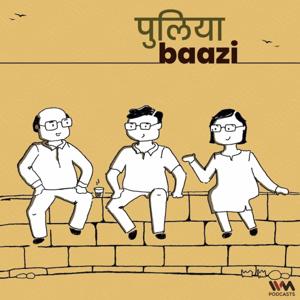


The story of the Indian National Movement is often told from the accounts of great leaders like Gandhi, Nehru or Patel. However, India’s freedom struggle was a great cause that had attracted many young and bright minds of India at the time—Sarojini Naidu, Asaf Ali, Syed Hossain, and friends. The shared cause built many friendships—some survived the test of time, some did not; but their personal exchanges draw a vivid picture of the freedom struggle.
इतिहास अक्सर राजा या बड़े नेताओं के नज़रिये से लिखा जाता है। लेकिन आज का एपिसोड नायकों की कहानी नहीं, बल्कि सह-नायकों की कहानी पर आधारित है। ये ऐसे लोग हैं जो भारत की आजादी की लड़ाई में मुख्य नेता नहीं थें, पर वे अपने आप में महत्वपूर्ण किरदार ज़रूर थें। हमारे मेहमान एम्बेसडर टी.सी.ए. राघवन जी अपनी किताब Circles of Freedom में इन सहनायकों की बातचीत और दोस्ती के ज़रिये 1913 से 1947 के समय पर कुछ प्रकाश डालते हैं। एम्बेसडर टी.सी.ए. राघवन सिंगापुर और पाकिस्तान में भारत के हाई कमिश्नर रह चुके हैं ।
पुलियाबाज़ी पर आजादी की राह सीरीज़ पर हम उन्नीसवीं सदी की शुरुआत से लेकर भारत की आजादी तक के भारत को समझने की कोशिश करते हैं। आज की पुलियाबाज़ी इस सीरीज में एक और कड़ी है।
We discuss:
* Introducing the circle of friends
* Sarojini, the Boss-woman
* Asaf Ali and friends’ thoughts on Nationalism
* The importance of Khilafat movement for elite muslims
* Mass movements and communal tensions
* Moderates to Radicals
* Was separate electorate the original sin?
* What did the friends think about a separate nation?
* Opposing ideas of the national movement
* Ideas about Pakistan
* The impact of partition
* Aruna and Asaf Ali’s marriage
Puliyabaazi is now available on Youtube with video.
Read:
Circles Of Freedom :Friendship, Love And Loyalty in the Indian National Struggle by T.C.A. Raghavan
The People Next Door: The Curious History of India-Pakistan Relations by T.C.A. Raghavan
We welcome articles/blogs/experiences from our readers and listeners. If you are interested in getting your writing featured on Puliyabaazi, please send us your submissions at [email protected]. Check out this article for submission guidelines.
More in Azaadi ki Raah series:
1857 की लड़ाई का आँखों देखा हाल. An Eyewitness Account of the 1857 War.
आज़ादी की राह: मैसूरु 1799 से 1947 तक। Mysore State during the British Rule ft. Siddharth Raja
भारतीय संविधान कैसे बना? Unpacking the Workings of Constituent Assembly ft. Achyut Chetan
If you have any questions for the guest or feedback for us, please comment here or write to us at [email protected]. If you like our work, please subscribe and share this Puliyabaazi with your friends, family and colleagues.
Website: https://puliyabaazi.in
Guest: @tca_raghavan
Hosts: @saurabhchandra @pranaykotas @thescribblebee
Twitter: @puliyabaazi
Instagram: https://www.instagram.com/puliyabaazi/
Subscribe & listen to the podcast on iTunes, Google Podcasts, Castbox, AudioBoom, YouTube, Spotify or any other podcast app.
25 नवंबर 1949 के दिन डॉ. बाबासाहेब आंबेडकर ने संविधान सभा में अपना आखिरी भाषण दिया था। ये भाषण ‘Grammar of Anarchy’ या ‘अराजकता का व्याकरण’ के नाम से जाना जाता है। संविधान का निर्माण हो चूका था, लेकिन राष्ट्र निर्माण का काम अभी बाकी था। क्या इस भगीरथ कार्य के लिए भारत का संविधान सही ढांचा प्रदान कर पायेगा? ड्राफ्टिंग कमिटी के चेयरमैन होने के नाते बाबासाहेब के मन में कई चिंताएं थीं जिन्हें वो इस भाषण में व्यक्त करते हैं, लेकिन साथ ही वे आनेवाली पीढ़ी को संवैधानिक रास्ता भी दिखाते हैं।
आइये इस महीने आंबेडकर जयंती के अवसर पर, बाबासाहेब के इस भाषण के ज़रिये उनके विचारों को सुनते और समझते हैं।
Read more:
Read the Original Speech Transcripts here: https://www.constitutionofindia.net/debates/25-nov-1949/
Read the Hindi Translation:
https://www.puliyabaazi.in/p/724
Please note that Puliyabaazi is now available on Youtube with video.
Related Puliyabaazi:
अंबेडकर की विचार यात्रा। The Life and Ideas of Dr. BR Ambedkar ft. Ashok Gopal
अंबेडकर का घोषणा पत्र। Ambedkar’s Manifesto for India.
If you have any questions for the guest or feedback for us, please comment here or write to us at [email protected]. If you like our work, please subscribe and share this Puliyabaazi with your friends, family and colleagues.
Website: https://puliyabaazi.in
Hosts: @saurabhchandra @pranaykotas @thescribblebee
Twitter: @puliyabaazi
Instagram: https://www.instagram.com/puliyabaazi/
Subscribe & listen to the podcast on iTunes, Google Podcasts, Castbox, AudioBoom, YouTube, Spotify or any other podcast app.
We live in a complex world. However, as humans, we are accustomed to finding answers by simplifying this complexity. But what do we do when simple models fail to answer the questions of complex systems? What are the methods to understand complex systems? What happens when we start looking at the world with the lens of complexity? We had a lot of fun discussing this topic with our guest Suri Venkatachalam, who is a Scientist and an Entrepreneur. Join us on this masterclass on complex systems.
We discuss:
* How to define Complex Systems?
* We are surrounded by complexity
* How do we study Complex Systems?
* Complicated vs Complex Systems
* Attributes of Complex Systems
* Complexity in Nature
* How to look at the de-extinction of the Dire Wolf?
* Optimism towards handling complexity
* How to look at AI from the complexity lens
* Recommendations
Also, please note that Puliyabaazi is now available on Youtube with video.
Read more:
Book | Commanding Hope: The Power We Have to Renew a World in Peril by Thomas Homer-Dixon
Book | Making Sense of Chaos: A Better Economics for a Better World by J. Doyne Farmer
Book | A Crude Look at the Whole: The Science of Complex Systems in Business, Life, and Society by John H. Miller
Book | At Home in the Universe: The Search for the Laws of Self-Organization and Complexity by Stuart A. Kauffman
Book | Complexity: A Guided Tour by Melanie Mitchell
Related Puliyabaazi:
लोकनीति में जटिलता को कैसे समझें? Complexity theory for Public Policy
If you have any questions for the guest or feedback for us, please comment here or write to us at [email protected]. If you like our work, please subscribe and share this Puliyabaazi with your friends, family and colleagues.
Website: https://puliyabaazi.in
Hosts: @saurabhchandra @pranaykotas @thescribblebee
Twitter: @puliyabaazi
Instagram: https://www.instagram.com/puliyabaazi/
Subscribe & listen to the podcast on iTunes, Google Podcasts, Castbox, AudioBoom, YouTube, Spotify or any other podcast app.
This week on Puliyabaazi, we delve into the unique challenges faced by young men and boys—from the pressures of traditional masculinity and cultural expectations to mental health and the impact of issues like addiction and migration. Our guest Natasha Joshi, Associate Director at Rohini Nilekani Philanthropies, talks about the various initiatives that are working on these issues, and the many learnings from them. We realized that this is a topic that is not well explored; our conversation is an attempt to start more discussion in this direction.
We discuss:
* What are the issues unique to young men and boys?
* Is addiction prevalent in India?
* The pressure to ‘Be a Man’.
* The impact of migration
* Was there any opposition to working on issues of men?
* Reconciling Agency vs Victimization
* Mental health challenges
* Intersectionality
* The cultural aspects of manhood
* Designing initiatives for men and boys
* Will paternity leave help?
Also, please note that Puliyabaazi is now available on Youtube with video.
Read more:
[Article] RNP’s Journey of Working with Young Men & Boys in India by Natasha Joshi
[Article Series] Young Men and Boys by India Development Review
Related Puliyabaazi:
मानसिक आरोग्य और हम. Importance of Mental Health.
भारत के विकास की चाबी। Accelerating India’s Development with Karthik Muralidharan
If you have any questions for the guest or feedback for us, please comment here or write to us at [email protected]. If you like our work, please subscribe and share this Puliyabaazi with your friends, family and colleagues.
Website: https://puliyabaazi.in
Hosts: @saurabhchandra @pranaykotas @thescribblebee
Twitter: @puliyabaazi
Instagram: https://www.instagram.com/puliyabaazi/
Subscribe & listen to the podcast on iTunes, Google Podcasts, Castbox, AudioBoom, YouTube, Spotify or any other podcast app.
नमस्ते। इस हफ़्ते पुलियाबाज़ी पर प्रणय ने एक मज़ेदार अवलोकन किया। प्रणय को लगता है कि आज की दुनिया ऐसी लगती है मानो कोई प्रियदर्शन फिल्म का क्लाइमेक्स चल रहा हो। कहीं भी, कभी भी, कुछ भी हो सकता है। ऐसे उलट पुलट के दौर में पुलियाबाज़ी पर इसका विश्लेषण तो बनता है। क्या होती है विश्व व्यवस्था? बदलती व्यवस्था के साथ क्या देशों के भाग्य भी बदलेंगे? और बदलेंगे तो कैसे? इन सब बातों पर आज की पुलियाबाज़ी। सुनिए और सुनाइए।
We discuss:
* The changing World Order
* What defines the World Order?
* Is the US losing legitimacy?
* Spillover of domestic politics
* China is also losing its edge
* Russia and Europe
* The Opportunity for India
* Kya Apna Time Aayega?
Also, please note that Puliyabaazi is now available on Youtube with video.
Read more:
[Article] India Policy Watch: Six India-China Comparisons by Pranay Kotasthane
[Article] Global Policy Watch #1: Churning of the Land and the Oceans by Pranay Kotasthane
[Article] Ingredients of a New World Order by Pranay Kotasthane
Thanks for listening to this पुलियाबाज़ी Puliyabaazi! If you like our work, please share it with your friends, family and colleagues.
Related Puliyabaazi:
एक नयी विश्व व्यवस्था के लिए भारत कैसे तैयारी करे? The New World Order and India.
भारत का विश्वशास्त्र। India’s Foreign Policy in a New World Order ft. Dhruva Jaishankar
If you have any questions for the guest or feedback for us, please comment here or write to us at [email protected]. If you like our work, please subscribe and share this Puliyabaazi with your friends, family and colleagues.
Website: https://puliyabaazi.in
Hosts: @saurabhchandra @pranaykotas @thescribblebee
Twitter: @puliyabaazi
Instagram: https://www.instagram.com/puliyabaazi/
Subscribe & listen to the podcast on iTunes, Google Podcasts, Castbox, AudioBoom, YouTube, Spotify or any other podcast app.
क्या हमारे देश की महिलाओं की आज़ादी पर एक लक्षमण रेखा खींची हुई है? क्या भारत में public sphere में औरतों की नागरिकता पर कुछ सीमाएं है और क्या खेल के ज़रिये इन बंदिशों से कुछ महिलाओं को मुक्ति मिल पाती है? आज की पुलियाबाज़ी पर बातचीत महिला एथलीट्स पर। चर्चा के लिए हमारे साथ जुड़ रही हैं लेखिका और पत्रकार सोहिनी चट्टोपाध्याय जिन्होंने अपनी किताब The Day I Became a Runner में महिला खिलाडियों के ज़रिये भारतीय महिलाओं की कहानी बताई है। चर्चा बेहद चिलचस्प है। सुनिए और हमसे अपने विचार भी साझा कीजिये।
We discuss:
* Compromised Citizenship of Women
* Running in public gaze
* Lack of Public Spaces in India
* The role of regulation in safe cities
* Women in Athletics
* Accidental Feminists
* Usha’s comeback after motherhood
* Santhi’s story
* Dividing sports into strict categories
Also, please note that Puliyabaazi is now available on Youtube with video. The Youtube version will have additional visual references.
Additional notes:
Sarojini Naidu Quote referred by Sohini:
“Never, never, for we realize that men and women have their separate goals, separate destinies and that just as man can never fulfill the responsibility or the destiny of a woman, a woman cannot fulfill the responsibility of man…We ask for the vote, not that we might interfere with you in your official functions, your civic duties, your public place and power, but rather that we might lay the foundation of national character in the souls of the children that we hold upon our laps, and instill into them the ideals of national life.”
—Sarojini Naidu at the Special Session of Congress in Bombay, August 1918.
Source: Women in Modern India by Geraldine Forbes, Cambridge University Press, Pg 94
Quote referred by Khyati:
When the 33rd Session of Indian National Congress met in Delhi in Dec 1918, Saraladevi Chaudhurani presented the resolution supporting the vote for women. Going beyond the assertions of Sarojini Naidu, Saraladevi contended that the “sphere of women” included “comradeship with men in the rough and tumble of life and to be fellow workers of men in politics and other spheres.”
Source: Women in Modern India by Geraldine Forbes, Cambridge University Press, Pg 94
Chess has Open and Women’s category.
Read more:
Book | The Day I Became a Runner : A Women's History of India through the Lens of Sport by Sohini Chattopadhyay
Indian Express | Boxing with binaries: The Imane Khelif story by Sohini Chattopadhyay
The Lancet | Personal Account: A woman tried and tested by Prof María José Martínez-Patiño
Related Puliyabaazi:
आज़ादी की राह: चलो याद करें संविधान की महिला रचयिताओं को। Founding Mothers of the Indian Republic ft. Achyut Chetan
https://www.puliyabaazi.in/p/founding-mothers-of-the-indian-republic-b92
जिंदगी के सबक खेल खेल में। The Philosophy of Sports ft. Nandan Kamath
https://www.puliyabaazi.in/p/the-philosophy-of-sports-ft-nandan
If you have any questions for the guest or feedback for us, please comment here or write to us at [email protected]. If you like our work, please subscribe and share this Puliyabaazi with your friends, family and colleagues.
Website: https://puliyabaazi.in
Guest: @sohinichat
Hosts: @saurabhchandra @pranaykotas @thescribblebee
Twitter: @puliyabaazi
Instagram: https://www.instagram.com/puliyabaazi/
Subscribe & listen to the podcast on iTunes, Google Podcasts, Castbox, AudioBoom, YouTube, Spotify or any other podcast app.
नमस्ते दोस्तों। इस हफ़्ते पुलियाबाज़ी पर चर्चा Critical Minerals याने कि महत्वपूर्ण खनिजों के बारे में। प्रेसिडेंट ट्रम्प और यूक्रेन के प्रेसिडेंट ज़ेलेन्स्की की मीटिंग के बाद ये मुद्दा चर्चा में है। कई लोग इन खनिजों की तुलना तेल से कर रहे हैं, पर क्या ये तुलना सही है? ये सवाल महत्वपूर्ण इसलिए है क्योंकि इसी धारणा के ऊपर अगले कुछ दिनों में अंतरराष्ट्रीय राजनीति होती नज़र आएगी। तो आइये, इस पुलियाबाज़ी पर जुड़िए हमारे साथ और जानिए कि ये खनिज कैसे आज की जियोपॉलिटिक्स को बदल रहे हैं।
We discuss:
* What are the critical minerals?
* The risk of supply disruption
* China is the processing giant
* Geopolitics of critical minerals
* Critical minerals are not the same as Oil
* Substitution strategies for critical minerals
* What did Japan do after China blocked its supply?
* Minerals security partnership
* How can states avoid the Resource Curse?
* China’s export controls
Also, please note that Puliyabaazi is now available on Youtube with video.
Read more:
[Article] How Critical are Critical Minerals? By Pranay Kotasthane
[Paper] Critical Minerals and Great Power Competition: An Overview
Related Puliyabaazi:
चीन ने कैसे खेला इनोवेशन का खेल? How did China innovate?
हीरो नं ३: लिथियम । All About Li-Ion Batteries Ft. Apoorv Shaligram, Co-founder & CEO, e-TRNL Energy
If you have any questions for the guest or feedback for us, please comment here or write to us at [email protected]. If you like our work, please subscribe and share this Puliyabaazi with your friends, family and colleagues.
Website: https://puliyabaazi.in
Hosts: @saurabhchandra @pranaykotas @thescribblebee
Twitter: @puliyabaazi
Instagram: https://www.instagram.com/puliyabaazi/
Subscribe & listen to the podcast on iTunes, Google Podcasts, Castbox, AudioBoom, YouTube, Spotify or any other podcast app.
With increasing political uncertainties, the risk of nuclear war has also risen. To highlight this heightened danger and urge greater caution, the Bulletin of the Atomic Scientists has moved the Doomsday Clock forward by one second, bringing us just 89 seconds away from catastrophe! But what does this really mean? We spoke with Dr. Manpreet Sethi, Distinguished Fellow at the Centre for Air Power Studies and an expert on nuclear deterrence, to gain a deeper understanding of this. Tune in to Puliyabaazi for an in-depth discussion on this critical issue.
We discuss:
* Will the world move towards more nuclear weapons?
* Can NPT remain effective in today’s world order?
* Types of Nuclear Deterrence Strategies. MAD and NUTS.
* Nuclear Arms Race
* Doom’s Day Clock
* Is it time for Global No First Use?
* India and China’s Vishwaguru stance
* Nuclear restraint mechanisms
* Is a Nuclear Weapons Free World possible?
* Towards Nuclear Energy
* What about research on Thorium?
Read more:
Nuclearly Put | Articles by Dr. Manpreet Sethi
Nuclear Strategy: India's March Towards Credible Deterrence | Book by Dr. Sethi
Doomsday Clock
Please note that Puliyabaazi is now available on Youtube with video.
Related Puliyabaazi:
भारत की ऊर्जा - कोयले से परमाणु तक. India's Energy Future
परमाणु हथियार: इस ब्रह्मास्त्र से कैसे बचें ? Nuclear Weapons and India.
If you have any questions for the guest or feedback for us, please comment here or write to us at [email protected]. If you like our work, please subscribe and share this Puliyabaazi with your friends, family and colleagues.
Website: https://puliyabaazi.in
Guest: @manpreetsethi01
Hosts: @saurabhchandra @pranaykotas @thescribblebee
Twitter: @puliyabaazi
Instagram: https://www.instagram.com/puliyabaazi/
Subscribe & listen to the podcast on iTunes, Google Podcasts, Castbox, AudioBoom, YouTube, Spotify or any other podcast app.
आज कल जिस तेज़ी से AI मॉडल्स आ रहे हैं, ये सवाल तो उठना जायज़ है कि क्या इंसानों की नौकरियाँ खतरे में हैं? इस सवाल का जवाब तो कोई नहीं जानता लेकिन इस पर पुलियाबाज़ी तो बनती है। आप भी सुनिए और हमें बताइये कि आप के विचार क्या हैं? क्या AI में आपको आपदा नज़र आती है या अवसर?
We discuss:
* How is Generative AI different from traditional computing?
* How AI systems learn?
* The speed of AI adoption
* Is AI better than a bad lawyer?
* Impact on Indian IT Industry
* Will India lose its advantage?
* The AI Divide
* Augmentation vs Automation
* Can AI make human connections?
Also, please note that Puliyabaazi is now available on Youtube with video.
Thanks to AudioPen for sponsoring this episode of Puliyabaazi.
Learn more about AudioPen here
Related Links:
Deep Mind | Accelerating the race against antibiotic resistance
WSJ | Want to Be a Better Listener? Take Lessons From a Chatbot.
Saurabh’s LinkedIn post
More Puliyabaazi on AI:
यह AI AI क्या है ? What can AI really accomplish?
AI - औज़ार या कलाकार? Generative AI and Art ft. Khyati Pathak
AI के खतरे | The Real Perils of AI Ft. Nilesh Trivedi- Technologist and Open Source contributor
If you have any questions for the guest or feedback for us, please comment here or write to us at [email protected]. If you like our work, please subscribe and share this Puliyabaazi with your friends, family and colleagues.
Website: https://puliyabaazi.in
Hosts: @saurabhchandra @pranaykotas @thescribblebee
Twitter: @puliyabaazi
Instagram: https://www.instagram.com/puliyabaazi/
Subscribe & listen to the podcast on iTunes, Google Podcasts, Castbox, AudioBoom, YouTube, Spotify or any other podcast app.
भारत में ज़मीन के दाम इतने ज़्यादा क्यों हैं? ये सवाल तो हम सभी के मन में उठता है और अक्सर हमें ये जवाब भी सुनने को मिलता है कि हमारी भारी जनसँख्या की वजह से भारत में ज़मीन की कमी है और इस लिए दाम भी ज़्यादा है। लेकिन आज के हमारे मेहमान इस मुद्दे को एक अलग दृष्टिकोण से देखते हैं। आज हमारे साथ पुलियाबाज़ी पर जुड़ रहे हैं प्रोफ़ेसर गुरबचन सिंह जिन्होंने भारत में ज़मीन और रियल एस्टेट सेक्टर का विश्लेषण किया है और इस सेक्टर में भारी लाइसेंस राज को ऊँची कीमत की वजह बताया है। चर्चा में उनके इस विश्लेषण को गहराई से समझेंगे। आशा है कि चर्चा के बाद आप भी इस मुद्दे को एक नए नज़रिये से देखेंगे।
Dr. Gurbachan Singh is an independent economist. He has previously taught at Ashoka University, the Indian Statistical Institute (Delhi), and JNU.
We discuss:
* How can we say that land prices are high in India?
* What is the intrinsic worth of land?
* Why is land policy important?
* No scarcity of land for urban development
* Is black money the reason for high prices?
* Is black money intrinsic to land?
* What is License Permit Quota Raj in land?
* GDP is manifested in Real Estate
* GIFT City and Gurgaon
* Marginal use of land
* Land Acquisition Act
* We are ignoring housing sector
Also, please note that Puliyabaazi is now available on Youtube with video.
Read more:
The high price of land in India: The problem and the solution by Gurbachan Singh
Prof. Singh’s website: here
Related Puliyabaazi:
Why is India’s Real Estate Market Broken? शहरों में घरों की कमी क्यों ft. Vaidehi Tandel
फैक्ट्री बनाने के दुखड़े। How Poor Building Standards Hurt Indian Firms ft. Bhuvana Anand and Sargun Kaur
If you have any questions for the guest or feedback for us, please comment here or write to us at [email protected]. If you like our work, please subscribe and share this Puliyabaazi with your friends, family and colleagues.
Website: https://puliyabaazi.in
Guest: @gurbachan_econ
Hosts: @saurabhchandra @pranaykotas @thescribblebee
Twitter: @puliyabaazi
Instagram: https://www.instagram.com/puliyabaazi/
Subscribe & listen to the podcast on iTunes, Google Podcasts, Castbox, AudioBoom, YouTube, Spotify or any other podcast app.
From the publisher's feed

8,770 Listeners

157 Listeners

5 Listeners

27 Listeners

1 Listeners

4 Listeners
34 Listeners
14 Listeners

7 Listeners

7 Listeners

56 Listeners

88 Listeners

39 Listeners

10,115 Listeners

289 Listeners

555 Listeners

40 Listeners

13 Listeners

2 Listeners

15 Listeners

9 Listeners

93 Listeners

11 Listeners