
Sign up to save your podcasts
Or



Based on Podcast App listening data
A Nobel prize for understanding how genes are turned on and off
The early-morning call from Sweden came on Monday to American molecular biologist Gary Ruvkun for his work in discovering microRNAs, which are essential for regulating genetic activity in plants and animals. Ruvkun says that research based on this work helps us understand basic biology, but has also provided significant insight into disease and might even help us understand whether there is life on other planets.
Biologists discover a new microbial world in your bathroom
Researchers have found a new biodiversity hotspot. Environmental microbiologist Erica Hartmann and her team sampled showerheads and toothbrushes in ordinary bathrooms, and found a host of bacteria and hundreds of previously unknown viruses. But don’t panic: much of this new life are bacteriophages — viruses that infect bacteria — which are harmless to humans and could be potential weapons against the bacteria that can cause human disease. The study was published in the journal Frontiers in Microbiomes.
How we might zap an asteroid on a collision course with Earth
A new experiment using the world’s most powerful radiation source has shown the way to deflecting asteroids with X-rays. The X-rays were used to vaporize some of the surface of a model asteroid, creating a rocket-like effect. Dr Nathan Moore, a physicist at the Sandia National Laboratories in New Mexico, says it's a proof of principle for the concept of deflecting a real asteroid using X-rays generated by a powerful nuclear explosion. The study was published in the journal Nature Physics.
Exploring the origins of Australia's iconic, if controversial, wild dog
The Australian Dingo has a fierce reputation as a predator, leading to European settlers attempting to exterminate it in the 19th century. But the dingo’s origin story has not been well understood. For years, it was assumed the dingo originated from India, given its similarities to the Indian pariah dog, or from New Guinea. Dr. Loukas Koungolos, a research associate at the University of Sydney, led the study looking at dingo fossils and found out where it likely came from, and how the domestic dogs of ancient people became a wild predator down under. The study was published in the journal Scientific Reports.
Can we treat autoimmune disease by manipulating the immune system?
Autoimmune diseases like Lupus can be a result of critical immune cells attacking our own bodies. New advances are pointing to ways we might be able to reverse this.
Researchers have repurposed a relatively new cancer treatment, called CAR-T therapy that can reprogram immune cells to attack cancer cells, to reset the immune system in patients with lupus to neutralize its autoimmune attack. Dr. Georg Schett and his colleagues, from the Friedrich Alexander University of Erlangen in Germany, were the first to use this immunotherapy to successfully treat lupus patients. That research appeared in the journal Nature Medicine with a follow-up in The New England Journal of Medicine.
Other researchers are focussing on understanding — and possibly reversing — what triggers the immune cells to go awry in the first place. Dr. Jaehyuk Choi, from Northwestern University, said they found a molecule that lupus patients are deficient in. In cell culture they demonstrated that correcting this deficiency can reprogram certain immune T-cells to stop directing the attack on the body which they hope could potentially reverse the effects of lupus. His research was published in Nature.
Hurricane Helene’s killed hundreds, but the true death toll could end up in the thousands
Hurricanes and tropical storms in the US kill about 24 people directly, but a new study looking at “excess deaths” suggests that in the affected areas the mortality rate is elevated for about 15 years. Rachel Young, a postdoctoral researcher from UC Berkeley, analyzed the long tail of these storms from 1930-2015. She found the true death toll ranges from 7,000 to 11,000 per storm. Her team suspects many factors feed into the excess deaths, including how rebuilding costs could impact funds for future medical care, damage to local health systems and exposure to pollution during the storm. Their study is in the journal Nature.
A new NASA mission will search for signs of life on a Jovian ice moon
Next week NASA hopes to launch a major mission to one of Jupiter’s most fascinating moons. The Europa Clipper will visit the ice moon Europa, whose icy shell is thought to cover an ocean that could contain twice the water that's in all of Earth’s oceans. The fascination with Europa is based on the idea that water is an essential ingredient for life. As a result, Europa could be one of the most promising places in our solar system for life to exist. We talk about the upcoming mission with Cynthia Phillips, the Project Staff Scientist and Planetary Geologist at NASA's Jet Propulsion Laboratory.
Tarantulas’ creepy hair is likely a defence against predatory army ants
You would think that a venomous spider the size of your fist wouldn’t have too many natural enemies. But Dr. Alireza Zamani from the University of Turku, Finland says it's the arachnid's fuzz, rather than its bite, which discourages predatory army ants. A new study in the Journal of Natural History suggests the tarantula’s barbed hairs keep the ants from being able to attack the spiders, and also protects their eggs, which the arachnids coat in a generous helping of hair.
Whales use underwater bubble blowing in sophisticated ways to trap prey
Scientists have long known that humpback whales use bubbles to corral and concentrate krill and small fish to feed on. But new underwater cameras and airborne drones have provided an unprecedented view of how this is done, revealing how the whales use complex patterns of bubbles in different ways depending on the prey. Andy Szabo, a Canadian whale biologist and executive director of the Alaska Whale Foundation, said the humpbacks’ bubble-nets result in a sevenfold increase in the amount of krill they gulp up per lunge. The study was published in Royal Society Open Science.
The Bomb Doctor: after the explosion this investigator seeks out evidence in the rubble
Explosive attacks often leave behind tragedy, carnage and chaos. But in the rubble is evidence that could provide vital clues for bomb forensic investigators. Kirk Yeager, the FBI’s chief explosives scientist, describes his work at crime scenes as “walking into hell blindfolded.” In his new book, called The Bomb Doctor: A Scientist's Story of Bombers, Beakers, and Bloodhounds, he explains how he and his colleagues tease out evidence from the scorched and smouldering aftermath of an attack.
A Central American lizard creates a bubble of air underwater to breathe
Semi-aquatic lizards in the western rainforests of Central America have the ability to hide from predators underwater by breathing from a bubble of air they form over their heads. In a new study in the journal Biology Letters, ecologist Lindsey Swierk from New York State University at Binghamton, found that the lizards with this bubble-breathing trick could stay underwater for 30 per cent longer than the lizards without a bubble.
A really weird fish walks on its fingers and tastes with them too
The sea robin is a strange fish with wing-like fins and finger-like bony structures that it uses to prop itself up as it roams the ocean floor. New research from a team of scientists from Harvard and Stanford Universities, including Nick Bellono, looked at how these bizarre creatures use their legs to hone in on their prey. It turns out these funny finny fingers can also taste food in the sediment of the sea bottom. The research was published in the journal Current Biology.
We can make our food production systems more stable by reintroducing nature
A new study by a team of researchers at the University of Guelph suggests that removing large animals and destroying natural habitat is making our agricultural systems and fisheries more unstable and vulnerable to boom and bust cycles. But the study, published in the journal Nature Ecology and Evolution, also suggests that restoring nature can help stabilize our food production to better feed the world’s billions.
Giant clams live off sunlight and could inspire solar power systems
Working in the protected reefs of Palau, Dr. Alison Sweeney, associate professor of physics and of ecology and evolutionary biology at Yale University, was intrigued by the iridescence of the giant clams. Her team discovered that the giant clams tissues are optimized to channel sunlight to photosynthetic algae that live inside them. They work like solar panels, but far more efficiently than manufactured versions, providing inspiration for bio-inspired energy technology. The study was published in the journal PRX Energy.
Plastic: Understanding the problem, and the struggle for a solution
Plastic is a miracle material, and one of the most useful innovations of the modern age. But its ubiquity and the durability that makes it so useful mean it’s also becoming one of our biggest waste problems. Twenty years after he discovered microplastics on beaches around the UK, marine biologist Richard Thompson has just released a new study looking at what we’ve learned about these pervasive plastics, and urges scientists to turn their research focus towards solving the problem. We also speak with RJ Conk from the University of Berkeley about his work on vaporizing plastics down to their chemical building blocks, which could finally make real recycling a reality.
Earthquakes create a spark in quartz that can form massive gold nuggets
Scientists have figured out why up to 75 per cent of all the gold ever mined forms inside quartz in areas with a long history of earthquakes. Chris Voisey, a Canadian geologist at Monash University in Australia, said he was trying to solve how gold arose inside quartz. In his study in the journal Nature Geoscience, he found that earthquake stress on quartz crystals generates an electrical voltage that causes dissolved gold to precipitate into a solid that can grow into the largest nuggets ever found.
Ice Age Teens went through puberty just like today’s kids
A new analysis of the bones of teenagers from 25,000 years ago shows they experienced puberty in much the same way as teens today. An international team of researchers including Paleolithic archaeologist April Nowell analyzed the bones of 13 teens found across Europe, and by looking at particular markers in the bones, they were able to see which stage of puberty the teens were in when they died. The researchers could not only infer things like whether their voices were breaking, but by doing muscle analysis, they found that the teens were healthy and active, and likely involved in hunting and fishing. The research was published in the Journal of Human Evolution.
Grey sharks are abandoning warming coral reefs in the Indian Ocean
The grey shark in the Indian Ocean uses beautiful coral reefs as a home base, returning each day after a night of fishing. But lately the sharks have been staying away for longer periods of time, up to 16 months. Dr. Michael Willamson, a research scientist at the Zoological Society of London, found that climate change is stressing the reefs. The sharks seek out cooler but potentially more dangerous waters. Venturing away from the protected reef area leaves them more vulnerable to illegal shark fishing. The paper was published in the journal Communications Biology
A cosmic collision 9 billion years ago could be the origin of he supermassive black hole at the centre of our galaxy
Using data from The Event Horizon Telescope, Dr. Yihan Wang worked with Dr. Bing Zhang at the Nevada Institute of Astrophysics to study the origins of the supermassive black hole at the centre of our galaxy. From the EHT image of the Sagittarius A* Dr. Wang and his team made an accretion model and saw that it spins very fast and that the spinning is misaligned. They believe it may have been made by merging with another supermassive black hole. about 9 billion years ago. Their paper was published in Nature Astronomy.
Astronaut Roberta Bondar gives a bird’s eye view of migration
32 years after she flew on the space shuttle, Roberta Bondar is still showing us what the Earth looks like from space — and from closer to the ground. Dr. Bondar trained as a wildlife photographer after her astronaut career. For a new project collected photos from space, from airplanes and helicopters, and from the ground, to bring a new perspective on the migration of two important bird species, the threatened lesser Flamingo and the endangered Whooping Crane. The book is called Space for Birds: Patterns and Parallels of Beauty and Flight.
Wrestling 14-foot 'dinosaurs' to figure out why they're dying
Dr. Madison Earhart, a postdoctoral fellow from the University of British Columbia, spent her summer fishing for enormous white sturgeon in the Fraser and Nechako Rivers in British Columbia. Since 2022, there have been a large number of deaths of this fish along the west coast of North America and it’s concerning when a species that’s been around for hundreds of million years suddenly starts dying off. She and her colleagues are trying to figure out what’s happening and how to conserve this important and spectacular fish.
Installing Dark Matter detectors two kilometeres underground
Dr. Madeleine Zurowski of the University of Toronto has been underground most of this past summer at SNOLAB, located in Sudbury, Ontario. She’s been helping install specially designed dark matter detectors in a project called SuperCDMS, as part of an international collaboration that is researching the nature of dark matter.
Managing Canada’s worst invasive plant with moths
As Director of the Waterloo Wetland Laboratory, Dr. Rebecca Rooney has been investigating how to stop the spread of a plant called invasive Phragmites, which chokes wetlands, ditches and many other environments. Her group has introduced European moths which eat the plant. This summer PhD student Claire Schon and lab technician Ryan Graham went into the field to collect some more data on their project.
Helicoptering in 35 tonnes of material in an attempt to restore a Sudbury peatland
Scientists are working to restore a degraded peatland damaged by contamination from mining activity in Sudbury. Colin McCarter, the project lead from Nipissing University, described how they’re trying to figure out how to best restore these toxic metal-contaminated landscapes to restore their natural capacity as wildfire-buffering, carbon-storing powerhoues.
Transatlantic balloon flight from Sweden to Nunavut
Dr Kaley Walker is an atmospheric physicist from the University of Toronto. Working with the Canadian Space Agency, this summer she was in Sweden to send a massive balloon — 30 stories tall and 800,000 cubic meters in volume — on a high-altitude transatlantic flight to Nunavut, to measure stratospheric gases.
The accidental discovery of an ancient Roman monument’s missing limb
Dr. Sarah Murray is the co-director of an archeological project on the history of Porto Rafti, Greece. While surveying for Bronze Age relics, her team discovered an enormous missing limb from a famous Roman marble statue in the area, a monument popular with tourists for centuries. This summer, they returned with drones to make 3D models of the statue, to understand how the arm was attached to the statue’s now limbless torso.
Canadian astronaut Jeremy Hansen gets lunar geology training in Iceland
Astronauts assigned to NASA’s Artemis II mission, who’ll be heading to the moon as early as September 2025, embarked on their own field research this summer in Iceland to train as lunar geologists. CSA astronaut Jeremy Hansen documented his adventure and filled us in on why this training is crucial for their upcoming mission.
Building wildfire resistant housing
After wildfires devastated Lytton, BC in 2021, the government announced that they were going to support homeowners to rebuild homes that would be resistant to wildfire. Senior Engineer Lucas Coletta of Natural Resources Canada, was part of the team that tested various fire resilient materials and construction methods this past spring and summer.
A behind-the-scenes chat about the making of the CBC Radio collaboration called "Overheated." White Coat, Black Art, What on Earth, and Quirks and Quarks are exploring how heat is affecting our health, our communities and our ecosystems. This originally broadcast on The Current.
Quirks & Quarks launches our new season with a special on urban heat. It's part of a collaboration with White Coat, Black Art and What on Earth called "Overheated."
Host Bob McDonald and Producer Amanda Buckiewicz tell the story of how a city’s design can influence the way we experience and cope with heat. Bob will cycle through the streets of Montreal with a Concordia researcher on specially-equipped bikes - these are equipped with sensors that measure how temperatures change across neighbourhoods based on their density - the amount of infrastructure coupled with mitigating cooling effects like tree cover.
He’ll also spend time with a McGill epidemiologist who will deploy hundreds of sensors that measure air temperature every 30 minutes over a month. That data will be used to determine how changing temperatures impact physical and mental health. It's vital information as heat is thought to be the most lethal kind of extreme weather.
And we'll explore some of the solutions to urban heat: How we can design buildings and urban landscapes - with a little help from nature - can make our cities cooler and more comfortable as the temperature rises.
Check out our podcast feed for shows you might have missed, or visit us online at cbc.ca/quirks to see our on-demand audio archive.
Christ Kennedy from Moncton, New Brunswick asks: If someone had the means to, how close could we bring the Moon to the Earth while still keeping it in orbit around us? And fast would a month fly by?
Answer from Brett Gladman, a professor of astronomy at the University of British Columbia,
Matoli Degroot from Manitoba asks: Do animal species in the wild get bigger over time, since the bigger males would end up mating more than the smaller ones?
Answer from Danielle Fraser, head of paleobiology at the Canadian Museum of Nature in Ottawa.
Bill Sullivan from Hamilton, Ontario asks: Why does the hair on my head turn grey while hair on the rest of my body does not change colour?
Answer from Frida Lona-Durazo, a postdoctoral fellow in computational genetics at the University of Montreal, who’s studied the genetics of hair colour.
Dan from Quebec City asks: We know that the Earth’s crust is built of plates that float on the molten centre of the Earth. What is the force that moves those plates?
Answer from Alexander Peace, an assistant professor in the School of Earth, Environment and Society at McMaster University in Hamilton, Ont.
Frances Mawson from Heckmans Island in Nova Scotia asks: Prey animals like deer are intermittently forced to flee from various predators. When danger has passed, they pause for a moment and then resume browsing. How can they recover so quickly?
Answer from wildlife ecologist and Western University professor Liana Zanette.
Richard Lukes from Winnipeg asks: As a hydro generating station generates energy, what is the effect on the downstream water? Has the temperature of the water been lowered? If so, then could hydropower help to cool the oceans and combat global warming?
Answer from Jaime Wong, an Assistant Professor in the Faculty of Mechanical Engineering at the University of Alberta.
Luc in Edmonton asks: With more people planting native grasses and plants around their houses and businesses in cities, will the bird population in these cities change or increase?
Answer from Sheila Colla, an Associate Professor in the Faculty of Environmental & Urban Change at York University and York Research Chair in Interdisciplinary Conservation Science.
John Ugyan from Kelowna, British Columbia asks: If atoms are 99.99% empty, why do our eyes see matter as if it was 100% solid?
Answer from condensed matter physicist, Cissy Suen. who’s a joint PhD student from UBC’s Quantum Matter Institute and the Max Planck Institute for Solid State Research in Germany
Debbie Turner in Fenelon Falls, Ont. asks: How does climate change affect animals that hibernate?
Answer from Jeffrey Lane, an associate professor in the department of biology at the University of Saskatchewan.
Greg Hollinger from Owen Sound, Ontario asks: Since the planets orbit the sun in a plane, does their combined gravity pull on and distort the shape of the sun?
Answer from Roan Haggar, a postdoctoral fellow at the University of Waterloo’s Centre for Astrophysics.
What would you do with a third thumb? Research suggests our brain can quickly adapt
Birds can dream - and even have nightmares - and now scientists are tuning in
A comprehensive new collection of medical information shows the health risks of space travel
A study in mice sheds new light on how exercise can reverse aging in the brain
Rare fossils from the ‘age of monotremes’ found in Australia
How the brain can instantly tell the difference between speech and music
PODCAST EXTRAS
Organic farms next to conventionally farmed fields leads to increased pesticide use
Orca whales hunt, play and dive – one breath at a time
The secret of the beaver’s orange teeth can help us make our teeth strong
From the publisher's feed
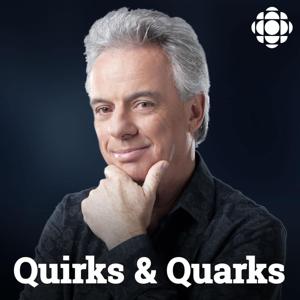
CBC Radio's Quirks and Quarks covers the quirks of the expanding universe to the quarks within a single atom... and everything in between.
Ranked by our users in the last 21 days

422 Listeners

112 Listeners

394 Listeners
154 Listeners

45 Listeners

177 Listeners

206 Listeners

59 Listeners

736 Listeners

72 Listeners
19 Listeners

27 Listeners

21 Listeners

166 Listeners

194 Listeners

244 Listeners

431 Listeners

16 Listeners

26 Listeners

10 Listeners

88 Listeners

346 Listeners

164 Listeners

4 Listeners

23 Listeners

66 Listeners

4 Listeners

268 Listeners

5 Listeners

4 Listeners

3 Listeners