
Sign up to save your podcasts
Or



Based on Podcast App listening data
Scientists are recruiting elephant seals to learn more about the oceans’ twilight zone
Below about 200 metres there’s still a lot going on in the ocean, but it’s tremendously hard to observe and understand even with modern technology. Scientists from the University of California, Santa Cruz have maintained a long-term monitoring study of elephant seals. The team, including PhD candidate Allison Payne, has discovered they can use the seals as scientific sentinels, to help humans better understand the conditions of the dark deep sea. The research was published in the journal Science.
A cave in Poland reveals a grisly history of stone-age cannibalism
A detailed study of the remains of ten individuals who lived — and died — 18,000 years ago in Poland has revealed that they were butchered and probably eaten as the final act in a prehistoric conflict. Characteristic cut marks on their skulls and bones show that they were systematically de-fleshed, before their fragmented remains were tossed aside. This research was led by Francesc Marginedas, a PhD candidate at the Catalan Institute of Human Palaeo-ecology and Social Evolution in Tarragona, Spain. Their research was published in Scientific Reports.
Our ears are weird. Is that just because they’re gills?
Evolution tends to repurpose things, even as it massively transforms organisms outwardly. A fascinating example is the new finding that the unique cartilage in our external ears seems to have once been gill tissue from our ancient fish ancestors. Gage Crump from the University of Southern California made the discovery using a series of gene-editing experiments on zebrafish. The research was published in the journal Nature.
Rabbits replenish their calcium by digesting their teeth
Rabbit teeth constantly grow during the life of the rodents, which means they need calcium to regrow them. A new study suggests that one of the ways rabbits supply calcium for their teeth is by ingesting and recycling the tooth material that grinds off as they chew. Dr. Johanna Mäkitaipale is a veterinary orthopedic surgeon and a postdoctoral researcher at the University of Helsinki, Finland. She led this research that was published in The Veterinary Journal.
Is dark energy dying? A new theory suggests that the universe has different time zones
For more than two decades, cosmologists have been invoking the idea of a mysterious dark energy to explain observations that appeared to show an acceleration in the expansion of the universe. But more recent observations are adding weight to a different theory that does away with the dark energy. Ryan Ridden, an astronomer from the University of Canterbury, said the “timescape theory” suggests time simply runs differently in the large empty regions of the universe. Their study is in the journal Monthly Notices of the Royal Astronomical Society.
As soon as the last ice age glaciers melted, Indigenous people occupied this site
A recently discovered archaeological site in Saskatchewan, dated to just less than 11,000 years ago is the oldest settlement in the region by about 1,500 years. It also is evidence that Indigenous people settled there as soon as the environment could support them after the glaciers disappeared. Glenn Stuart, from the University of Saskatchewan, is one of the archaeologists working along with local Indigenous community members to preserve and study the site.
Just the right magnetic field will make sea turtles do a ‘happy dance’
Researchers investigating how sea turtles navigate the vast and trackless ocean have discovered just how sensitive the reptiles’ magnetic sense is, as they can even use it to identify the location of food resources. While feeding the loggerhead turtles in the lab, Kayla Goforth, a postdoctoral researcher at Texas A&M University noticed that the turtles would perform a ‘happy dance’ when they recognized the right magnetic signature. She led this research that was published in the journal Nature.
Intense exercise causes our bodies to belch out DNA that may reduce inflammation
Scientists were surprised to discover that the more intensely you exercise, the more certain immune cells belch out fragments of DNA that can form webs to trap pathogens, and lead to fewer pro-inflammatory immune cells circulating in our blood. Canadian researcher Stephen Montgomery, a professor of pathology at Stanford University, said their findings suggest that circulating cell-free DNA may play a role in how exercise lowers inflammation in the body. The study was published in the journal PNAS.
An ancient Antarctic duck lived at the time of T-Rex
Birds are the last surviving lineage of dinosaurs, but modern birds are surprisingly ancient – dating to before the extinction of the rest of their family. An extremely rare, nearly intact bird skull found in Antarctica and dated to about 69 million years ago confirms this. This waterfowl had similarities to ducks and loons. Chris Torres is an assistant professor at the University of the Pacific in Stockton California and was part of the team that analyzed this fossil. Their research was published in the journal Nature.
Science is being transformed by the AI revolution
The stunning advances in artificial intelligence that we see with internet AI apps are just the tip of the iceberg when it comes to science. Researchers from almost every field are experimenting with this powerful new tool to diagnose disease, understand climate change, develop strategies for conservation and discover new kinds of materials. And AI is on the threshold of being able to make discoveries all by itself. Will it put scientists out of a job?
Producer Amanda Buckiewicz spoke with:
Jeff Clune, a professor of computer science at the University of British Columbia, a Canada CIFAR AI Chair at the Vector Institute, and a senior research advisor to DeepMind. He’s also a co-author of The AI Scientist.
Allison Noble, a Professor of Biomedical Engineering at the University of Oxford and a Foreign Secretary at the Royal Society, and chair of the Science in the Age of AI working group.
Elissa Strome, executive director of the Pan-Canadian Artificial Intelligence Strategy at CIFAR.
Cong Lu, postdoctoral research and teaching fellow at the University of British Columbia and the Vector Institute, and a co-author of The AI Scientist.
Fred Morstatter, a research assistant professor at the University of Southern California, and a principal scientist at USC's Information Sciences Institute.
A little bit of scratching can do some good, but too much can hurt
Scratching an itch can feel great, so scientists decided to dig into why that is the case since we know too much scratching isn’t good for us. Dr. Dan Kaplan, a professor of dermatology and immunology at the University of Pittsburgh, said they found that scratching drives inflammation to the skin, which, in light moderation, helps to fight bacterial skin infections. But he warns that continual or excessive scratching can prolong an itch and potentially damage the skin. Their study is in the journal Science.
Bear hazing goes high-tech with drones
A wildlife manager in the US has found that drones can be a safe and effective way to discourage problem bears from troubling human habitation and livestock. Wesley Sarmento started working in the prairies of Montana to prevent bear-human conflicts, but found the usual tricks of the trade were not as effective as he wanted them to be. Previously he tried to use noisemakers, dogs, trucks, and firearms, but buzzing bears with flying robots turned out to work much better. Now a PhD student at the University of Montana, he published an article about his hazing research in Frontiers in Conservation Science.
Ants can remember and hold grudges against those who trouble them
When ants fight with those from another nearby colony, it makes an impression. A new study has found the insects can remember the chemical signature of the aggressors, and will respond more vigorously and violently the next time they cross paths. Dr. Volker Nehring, a researcher at the University of Freiburg, Germany, describes the phenomenon as “the nasty neighbour" where ants are most aggressive to ant colonies closest to them, and says this is due to resource protection. Dr Nehring and his team’s research was published in the journal Current Biology.
Scientists on the front line of permafrost thaw describe changes in the Arctic
The acceleration of change in the Arctic due to global warming is transforming the landscape on a year-to-year basis, often in surprising ways. That’s according to scientists who’ve been studying the effects of climate change in the North.
One study found that lakes in Western Greenland shifted from pristine blue to dirty brown from one year to the next due to increased permafrost melting and runoff. Jasmine Saros, a lake ecologist from the University of Maine, said they were astonished by the magnitude of change they saw in all 10 lakes they studied and how quickly it happened. That study was published in the journal PNAS.
We also speak with William Quinton, a permafrost hydrologist from Wilfred Laurier University and the director of the Scotty Creek Research Station in southern Northwest Territories, an area he describes as “the frontline of permafrost thaw.” Quinton was part of a research team, led by Anna Virkkala from the Woodwell Climate Research Centre, that found that 34 per cent of the Arctic Boreal Zone — a region where carbon was safely locked up in the permafrost for thousands of years — has now become a carbon source. That study is in the journal Nature Climate Change.
Bits of Bennu have building blocks of life
NASA’s OSIRIS-REx mission took six years to travel to the asteroid Bennu and return samples to Earth. Now, the first results from the analysis of these rocks are being released. Researchers found evidence of salty water, as well as the elements necessary for life, such as amino acids and the building blocks for RNA and DNA. We spoke with Kim Tait, senior curator of mineralogy at the Royal Ontario Museum in Toronto, and co-author of one of the recent studies, published in the journal Nature.
Unlocking the secret of Polar bear de-icing
Polar bears spend so much time going in and out of the water that they are considered marine mammals. So when they do this in the frozen Arctic, why are they not covered in ice? A new study reveals the secret turns out to lie in the unique oils they produce that covers their white fur. Julian Carolan, a PhD candidate at Trinity College Dublin, worked with scientists in Norway, Denmark and the U.K. on this paper published in the journal Science Advances.
Truffle-hunting dog finds fabulous new fungus
A chance discovery has turned out to reveal a new species of North American truffle. These fungi can be desirable and valuable delicacies. An American truffle hunter, Lois Martin, and her trained dog Monza found a distinctive truffle in a city park that turned out to be a fungus new to science. Although native to North America, it was more similar to European truffles than any found in the Americas. Dr. Greg Bonito at Michigan State University named this new truffle Tuber canirevelatum, meaning the ‘dog-found’ truffle in honour of Monza and other dogs who look for truffles. The work was published in the journal Mycologia.
Voiding your bowels can improve cognitive performance
To maximize your cognitive function, it might be a good idea to make sure you have a poo first. That’s according to a recent study in the journal Sports Medicine and Health Science. In it, scientists found that 9 out of 13 individuals improved how well they did in a mentally taxing cognitive test if they defecated first, whereas all 13 of them improved in their performance when they took a mild laxative the night before. Chia-Hua Kuo, a professor of sports medicine and nutrition at the University of Taipei, said they also saw an increase in oxygen consumption in the test subjects’ subnavel regions as they were doing the test, suggesting a previously unsuspected link between the rectum and the brain.
Saving species on Earth, preserving them on the moon
The world is in a biodiversity crisis. We’re losing species at an unprecedented rate, thanks to climate change, habitat loss, overexploitation and more. We look at some of the more out-of-the-box solutions that are currently in the works – from creating an internet of animals to monitor biodiversity, to saving samples of Earth’s biological resources on the moon.
We spoke with:
Martin Wikelski, the director of the Max Planck Institute of Animal Behavior, honorary professor of ornithology at the University of Konstanz, and the scientific head of the ICARUS project.
Mary Hagedorn, a senior research scientist at the Smithsonian Conservation Biology Institute and senior author of a recent paper published in the journal Bioscience proposing a passive biorepository on the moon.
Reintroducing Hawaii’s sacred crow to the wild
The world’s most endangered crow, the Hawaiian crow or or ʻalalā, is making tentative steps towards a comeback. After going extinct in the wild, only 120 birds remain in captivity, in two facilities operated by the San Diego Zoo. Over the years, researchers have attempted reintroductions in the bird's native habitat on the Big Island of Hawaii, but those efforts have all been unsuccessful. Recently, the team tried something different - reintroducing the birds to a different island than their native home. The initial release happened in October and so far, the team, including Bryce Masuda, has high hopes and positive signs from their latest attempt.
Lasers tell us about the pterosaur’s unique tail
The great flying reptiles of the dawn of the age of dinosaurs, the pterosaurs, took flight with delicate but flexible internal tail structure that allowed it to work like a kite. Scientists used recently developed technology to enable them to see a lattice-like structure in the soft tissue in the early pterosaur soft tissue that was otherwise invisible to the naked eye. Natalia Jagielska, a paleontologist at the Lyme Regis Museum in Dorset, England, said their kite-like tail vane would have stood upright and could have functioned as a display and to help them in flight. The study was published in the eLife journal, Evolutionary Biology.
How gophers help re-seed volcanic landscape with life
After Mt. St. Helens exploded in 1980 it left a shattered, ash-covered, barren landscape behind. But the one-time reintroduction of gophers to one area led to a remarkably fast recovery of plants and other fauna. Forty-years later, changes to the environment are still being documented by Dr. Mia Maltz, assistant professor of Microbial Ecology and Soil Earth at the University of Connecticut, and her team. They published their research in the journal Frontiers in Microbiomes.
Desert ants’ magnetic navigation
Desert ants that navigate the endless sands of the Sahara use the Earth’s magnetic field to find their way, which is not unusual. But unlike other animals like birds and turtles they don’t appear to have an internal compass that aligns north and south. Instead they are unique in that they use a more subtle cue – the polarity of the magnetic field. A study looking at this led by Dr. Pauline Fleischmann, a post-doctoral researcher at the University of Oldenburg in Germany was published in the journal Current Biology.
Celestial body mysteries: dark comets and meteorites from young asteroid families
The thousands of small celestial bodies in our solar system are now a bit less mysterious, thanks to several recent discoveries.
One group of astronomers have traced back the origins of 84 per cent of all known meteorites that have pummeled Earth to just a few young asteroid families in the asteroid belt. Michaël Marsset, from the European Southern Observatory in Chile, said collisions in the asteroid belt create a collisional cascade that produces fragments, some of which end up raining down on Earth as meteorites. Two of their papers were published in the journal Nature and a third in Astronomy & Astrophysics.
Another group of astronomers have identified two populations of stealthy dark comets that are something in between a comet and an asteroid. They’ve found fourteen of these objects whose orbital motion is comet-like, but which lack a visible tail like regular comets. Davide Farnocchia, a navigation engineer at NASA’s Jet Propulsion Lab, said they’ve found two types of these unusual solar system bodies: larger ones in an elliptical orbit out to Jupiter and smaller ones in orbit around Earth. Their study was published in the journal PNAS.
Ancient human ancestors didn’t eat meat, and so couldn’t build big brains
One of the main reasons scientists think we became so smart is because at some point in our evolutionary past, our ancestors started eating energy-dense meat to fuel the growth of large brains. However it hasn’t been clear when this started. Using a new technology, scientists were able to analyze the tooth enamel of seven 3.5 million year old Australopithecines to directly measure their meat consumption. Tina Lüdecke, from the Max Planck Institute for Chemistry, said it revealed they were primarily herbivores so meat eating would have had to come later in our evolutionary history. Their study was published in the journal Science.
Building a robot bee that could one day pollinate crops
Bees do an incredibly important job pollinating crops and wild plants. Now scientists in the US are trying to emulate their skills with a tiny robot bee that has all the agility and ability of the real insect. They hope eventually they can be used in indoor factory farms where real bees can’t survive. Kevin Chen, associate professor of Electrical Engineering and Computer Science at M.I.T and PhD candidate Suhan Kim were a part of this project. Their research was published in the journal Science Robotics.
We are made of star stuff – but how did it get here?
Elements like carbon, nitrogen and oxygen that are essential to life were forged in supernovae billions of years ago. Now new research is helping to explain how these elements – especially essential carbon – were concentrated in such a way as to be plentifully available for the chemistry of life. The study, led in part by astronomer Trystyn Berg, discovered a cosmic conveyer belt funneling carbon in and out of our galaxy over billions of years. The research was published in the Astrophysical Journal Letters.
Australia’s vanishingly rare marsupial mole gets a genetic checkup
In the southern desert of Australia, there lives an elusive and unique animal - the marsupial mole. It lives under the sand and is so rare that very few people have ever seen it. Scientists have now published the very first genetic research on this animal in the journal Science Advances, thanks to tissue samples donated by a local museum. Sarah Lucas is a postdoctoral research associate at the University of Münster, Germany, and was part of the team.
A climate researcher makes the case for scientist-activists
The stereotype of a scientist is a dispassionate, objective and neutral seeker of nature’s truths, and many think that this makes a career in science incompatible with political activism. Canadian climate scientist Katherine Hayhoe thinks that this is a mistake. She sees her role more like that of a physician for the planet – diagnosing its ills and advocating for the health of her patient, and her patient’s inhabitants. She recently co-authored a paper in the journal Nature Climate Action arguing her case.
Was Rome’s fall due to heavy metal poisoning making Romans dumber?
Ice cores that preserve traces of atmospheric pollutants through history have revealed that industrial activity by Romans – particularly the use and production of lead – meant the air the Romans breathed was heavily contaminated. The levels were high enough to cause neurological problems, including a drop in cognitive function across the population. Joe McConnell and his team at the Desert Research Institute published their findings in the journal PNAS.
Bats are surfing storms to make migration easier
Migrating bats in Europe have to fly up to 2000km while pregnant, but they’ve figured out how to get a lift from the weather. The bats have been observed waiting for storm fronts, and then surfing the strong winds in front of the storm to save energy during their migration. Dina Dechmann from the Max Planck Institute of Animal Behaviour, and colleagues, were able to tag bats with tiny specialized sensors to track their nocturnal movements during migration. Their paper was published in the journal Science.
Squirrels have developed a taste for vole flesh
Squirrels in California have been taking advantage of a boom in the population of tiny rodents called voles – by hunting and eating them. This widespread carnivorous behaviour was captured for the first time on videos and photos by a team led by behavioural ecologist Jennifer Smith, as a part of a long-term study of the squirrels. The researchers found dozens of instances of the squirrels killing the voles, which they say changes our fundamental understanding of ground squirrels. Their paper was published in the Journal of Ethology.
EEG tattoos could outperform standard electrodes
EEG is a valuable technology that allows researchers to monitor the electrical activity of the brain, but standard EEG electrodes are cumbersome and are hampered by the difficulty of attaching them. A new temporary EEG tattoo, made by printing conductive ink on the scalp, could be a step ahead. Luize Vasconcelos, a postdoctoral fellow at the University of Texas at Austin helped create this ink. The research is published in the Cell Press journal Cell Biomaterials.
To monitor cat brain waves, researchers made them cute hats
Aude Castel, a veterinary neurologist from the Université de Montréal, and her team were studying chronic pain in cats — and ways to alleviate it — when she realized that she could crochet hats for the cats and add EEG electrodes to them in order to study their brains. Their research was published in the Journal of Neuroscience Methods.
When North America went to the dogs (or vice-versa)
Researchers examining canid bones from Alaska dating to the last ice age have been intrigued by the complex picture it shows of dog domestication at the time. Their findings were published in the journal Science Advances. Signs of the animals’ diet are preserved in the bones, and shows that humans were clearly feeding their dogs, a clear sign of domestication. François Lanoë from the University of Arizona led the work.
Genevieve Willis from London, Ontario asks: Is there any evidence to suggest that “getting cold” by, say, dressing inadequately in cold weather, or sitting in a cold draft, actually increases our susceptibility to illness?
For the frigid answer, we spoke with Michael Kennedy who is an associate professor of exercise physiology at the University of Alberta.
Jim Raso from St. Albert Alberta wrote us: My question has to do with our sense of time passing. As I have gotten older – I am 73 now – I noticed that time seemed to pass more quickly. Why does this happen?
For the answer, we asked Dr. Holly K. Andersen, a professor of philosophy at Simon Fraser University in Burnaby, British Columbia.
Dan from Chateau-Richer in Quebec writes: Where does moon dust come from?
We reached out to planetary geologist Gordon Osinski, a professor of Earth Sciences at Western University, who has studied samples sent back from the Apollo missions.
Scott Beach from East York Ontario asks: Why do dogs sniff and lick each other's butts?
To get the answer, we reached out to Simon Gadbois, the principal investigator at the Canine olfaction lab at Dalhousie University.
Robert Smith from Victoria asks: Is there evidence to suggest red-heads are particularly sensitive to pain?
To find out, we spoke with someone who has studied this in the past: Jeffrey Mogil, the E.P. Taylor Professor of Pain Studies at the Alan Edwards Centre for Research on Pain at McGill University.
Stephen Quinn from St. John’s, Newfoundland asks: How can the universe be expanding at the same time as galaxies are colliding?
For the smashing answer, we spoke with Sara Ellison, a professor of physics and astronomy at the University of Victoria.
Susan Boyd from Ottawa asks: Since some of the elements in the periodic table do not occur naturally, is there a limit to the new elements that could be created? If so, what is the limiting factor?
We went to the National Research Council Canada’s element expert, Juris Meija, for this answer.
Robert LaRoche in Halifax asks: Why is the color of wet clothes always more vivid than when they are dry?
For the answer, we turned to Sarah Purdy, a Physicist at the University of Saskatchewan who uses light to investigate materials.
Paul Vander Griendt of Newmarket, Ontario asks: If animals wake up at sunrise and go to sleep at sunset, how do they cope with the varying hours of sunlight? How do they do compared to humans who are supposed to get 8 to 9 hours of sleep regardless of the length of sunlight?
For the answer we turned to Ming Fei Li a Phd candidate at the University of Toronto in Anthropology who is studying the sleep patterns of animals.
Marie Beaudoin from Salt Spring Island, BC asks: How do birds where the males and females look the same tell each other apart when it comes to mating?”
We went to Matt Reudinik, a professor of biology at Thompson Rivers University in Kamloops, BC, for the answer.
Warren Saylor of London, Ontario asks: Could Neanderthals speak? If they could not, would that contribute to the dominance of Homo Sapiens?
We spoke to paleoanthropologist Dr. Bence Viola, an associate professor in the department of Anthropology at the University of Toronto.
Some optimistic and positive science news to end the year.
For rats, anticipation of a pleasurable event is a pleasure in itself
One day early in the pandemic, behavioural neuroscientist Kelly Lambert from the University of Richmond went to check on her rats. The rats responded with excitement when they saw her, anticipating the treats they were about to receive. That inspired her to pivot her research to study the effects that anticipating pleasurable experiences could have on the brain. She’s found in research that has yet to be published, that building in anticipation periods before they get to do something they enjoy, increases, which, if her findings extend to humans, could help boost mental resiliency. Their previous work was published in Behavioural Brain Research.
How Marine Protected Areas are improving tuna fisheries
A comprehensive study of province-sized marine protected areas in the tropical pacific has shown that they not only provide a refuge for fish, but improve tuna fisheries harvests in the areas outside their borders, making a win-win for conservation and industry. John Lynham, a professor of Economics at the University of Hawaii at Manoa, led the study which was published in the journal Science.
For chimpanzees, play and the world plays with you
A study of chimpanzees in Zambia has revealed that play and grooming are infectious behaviours. Animals who observe others performing these activities are more likely to groom and play themselves, which the researchers think promotes social cohesion in the troop. Zanna Clay, a professor of Psychology at Durham University, was part of the team, which published their research in the journal PLOS One.
The oceans smallest plants and animals could help suck up excess atmospheric carbon
Researchers may have discovered a new, fairly simple way to stimulate life in the ocean to capture and lock up atmospheric carbon. Phytoplankton absorbs and then releases 150 billion tons of atmospheric carbon every year. The researchers found that by adding just a little bit of clay to a phytoplankton bloom, this glues carbon particles together, creating “carbon snow” that falls down and is eaten by zooplankton, who then deposit it in the deep ocean. Mukul Sharma, a professor of Earth Sciences at Dartmouth College, says that in the lab this method locked up 90 per cent of the carbon that phytoplankton released. His study was published in the journal Nature Scientific Reports.
A seal of approval: Unique elephant seal behaviour observed by a failed experiment
A team of researchers developed a sophisticated deep-water experiment to observe and listen for sounds made by sablefish. They were startled when their study site was repeatedly visited by elephant seals, who would chase and chow down on the sablefish — all at 645 meters below the ocean's surface. This accidental observation was made in the Barkley Canyon Node, part of the Ocean Networks Canada (ONC) cabled video-observatory. It was the first time that elephant seals were studied in the deep ocean, giving unexpected and valuable new insights into seal resting and foraging behaviour. The findings were published in the journal PLOS One.
Producer Amanda Buckiewicz spoke with Rodney Rountree, an independent biologist, ichthyologist, and adjunct marine biologist in the Department of Biology at Victoria University.
And Héloïse Frouin-Mouy, an assistant scientist at the University of Miami's Cooperative Institute for Marine and Atmospheric Studies, and affiliate at the University of Victoria.
How ancient artifacts emerge from melting ice
As Earth’s glaciers and ice sheets melt due to global warming, they are revealing rare archaeological treasures released from a frozen time capsule. These objects are often made of organic material – human and animal remains and wooden tools that only survive in ice. In her book, The Age of Melt: What glaciers, ice mummies, and ancient artifacts teach us about climate, culture, and a future without ice, Lisa Baril tells the story of the archaeologists searching for these valuable artifacts, and what they’re finding. Baril is an ecologist and science communicator based out of Yellowstone National Park.
Easily influenced: Why and how the human mind is built to be suggestible
As a teenager, Amir Raz began to perform as an amateur magician and mentalist, and learned the power of stage hypnosis. It ultimately led him to a career as a neuroscientist studying the science of psychological suggestibility, and how powerful the power of suggestion can be. He explores this science in his new book The Suggestible Brain: The Science and Magic of How We Make Up Our Minds. Dr Raz taught and practiced for many years at McGill University and is the Founding Director of the Brain Institute at Chapman University in Orange, California.
What alien life will really look like
We’re just beginning to have the ability to look for signs of life elsewhere in our solar system or around other stars. But even so, Arizona State University physicist Sara Walker thinks we might be doing it wrong — imagining that life elsewhere will look like life on Earth. She’s advocating a broader perspective to imagine how we’d recognize life as a reflection of different versions of chemical complexity. Her new book about this is Life As No One Knows It: The Physics of Life’s Emergence.
Dan Falk, science writer and co-host of the Booklab podcast reviews:
The Language Puzzle: How We Talked Our Way Out of the Stone Age by Steven Mithen
Playing Possum: How Animals Understand Death by Susana Monsó
The Blind Spot: Why Science Cannot Ignore Human Experience by Adam Frank, Marcelo Gleiser and Evan Thompson
From the publisher's feed
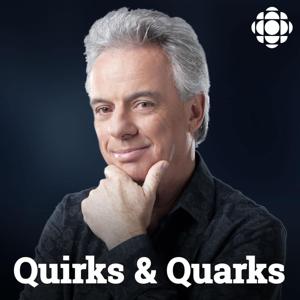
CBC Radio's Quirks and Quarks covers the quirks of the expanding universe to the quarks within a single atom... and everything in between.
Ranked by our users in the last 21 days
422 Listeners

112 Listeners

394 Listeners

154 Listeners

45 Listeners

177 Listeners

206 Listeners

59 Listeners

736 Listeners

72 Listeners
19 Listeners

27 Listeners

21 Listeners

166 Listeners

194 Listeners

244 Listeners

431 Listeners
16 Listeners

26 Listeners

10 Listeners

88 Listeners

346 Listeners
164 Listeners

4 Listeners

23 Listeners

66 Listeners

4 Listeners

268 Listeners

5 Listeners

4 Listeners

3 Listeners