
Sign up to save your podcasts
Or

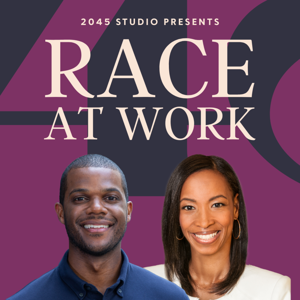


This is the second part of a two-part series exploring critical race theory (CRT) and its influence on diversity and inclusion efforts in workplaces and classrooms. Laura E. Gómez, a law professor at UCLA, teaches in the school’s Critical Race Studies Program, which uses CRT to explore how legal and other systems intersect with race in the U.S. In the final episode of Season 2, she tells host Porter Braswell that racism isn’t about individual prejudice, but rather about the messages our larger society gives us about our identities.
This is part one of a two-part series exploring critical race theory (CRT) and its influence on diversity and inclusion efforts in workplaces and classrooms.
Julia Carrie Wong is a senior reporter for The Guardian, and she’s been covering the ongoing debate around CRT in schools and federal employee trainings. CRT is an academic discipline that teaches that racism is deeply embedded into U.S. legal and political systems.
Wong talks with host Porter Braswell about what CRT is, efforts to ban CRT from classrooms, and why some institutions are resistant to making CRT a standard educational tool.
Don and Liz Thompson are leaders in their respective industries. Don had a long career rising through the ranks of McDonald’s, eventually becoming the company’s first Black CEO. Meanwhile his wife Liz Thompson was a rising executive in education and nonprofits – like City Year Chicago, where she was the founding executive director.
Throughout their careers, the Thompsons kept their community in mind. In 2014, they started the Cleveland Avenue Foundation for Education (The CAFE), an organization focused on college access and career attainment for the Black community.
They talk to host Porter Braswell about being intentional with their work, in order to build economic equity in the Black community whenever they had the opportunity. They also discuss breaking racial barriers while climbing to the top of corporate America.
Imagine a world in which Black business owners achieved economic parity, receiving the same funding as other founders. That, alone, would create 615,000 new Black-led workplaces, according to a new report from the McKinsey Institute for Black Economic Mobility.
That report examines the racial gaps that exist across the U.S. economy. Shelley Stewart III leads McKinsey’s research on Black economic mobility in the United States and is also a partner with McKinsey’s Private Equity & Principal Investors Practice. Stewart speaks with host Porter Braswell about some of the barriers Black Americans face in the U.S. economy, as workers, business owners, and consumers. They also explore how addressing representational imbalances could create greater economic equity.
Anne Chow is the first woman of color to be the CEO in AT&T’s history. She’s been with the company for over 30 years and throughout her career, she’s made it a point to have difficult conversations about race, equity, and inclusion at work.
She tells host Porter Braswell that unconscious bias is at the root of a lot of these race-related issues. They also discuss how she’s working to create a safe workplace for employees of color through leading internal dialogues and holding leaders accountable.
From the publisher's feed

389 Listeners

1,455 Listeners

141 Listeners

14,651 Listeners

193 Listeners

606 Listeners

8,752 Listeners

1,371 Listeners

743 Listeners

9,066 Listeners

1,249 Listeners

1,013 Listeners

561 Listeners
3,353 Listeners

671 Listeners

156 Listeners

3,465 Listeners