Real Estate Investing for Cash Flow with Kevin Bupp

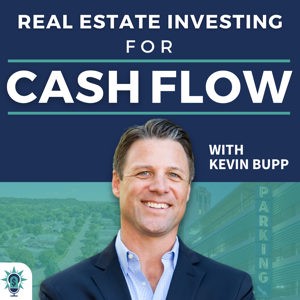
Real Estate Investing for Cash Flow with Kevin Bupp

Download on the App Store
  • Favorites

    341

    Followers

  • Typical duration

    45 min

    per episode

Based on Podcast App listening data

Real Estate Investing for Cash Flow with Kevin Bupp episodes

  • Cash Flow Friday Tip #5: The Top 3 critical market indicators to help you identify high demand areas to invest in

    This week's Cash Flow Friday tip is the top 3 critical market indicators to help you identify high demand or "soon to be high demand" areas to invest

    The question is, how do you find out whether the property you’re considering is located in a high demand area and whether the area will continue to be in high demand in the future because the last thing you want to do is buy a property in a declining market where incomes are deteriorating, unemployment is rising, and people are moving out.

    #1 - Demographics: Commercial property investing is really all about space investing. What that means is that you are buying, selling, or leasing space that you think the general population not only want, but need. Take a look at the number of households, people, and businesses residing within 3-5 miles of your property. The more the better. A simple free tool I use to do a quick and dirty analysis for this is www.BestPlaces.net and www.City-Data.com

    #2 - Income: To market, sell, and lease your space, you need paying customers. That means the more paying customers you have within 3-5 miles of your property that earn enough money to pay for your property, the better. For example, when I’m evaluating a market for Mobile Home Parks, I will look for median household incomes of $28,000 or better. That’s because residential tenants will spend about 1/3 of their income on housing. I’m looking for tenants that can afford at least $7,000-9,000/year. (583-750 mo)

    #3 - Infrastructure: Airports, highways, railways, ports, area amenities are all critical indicators for high demand areas. People want to live, work, and sleep where access is easy and amenities are available. If you’re looking at an apartment community 1 hour from any Walmart location, you might want to reconsider how “in demand” that are might really be. In fact, when I'm looking at a mobile home park within a new market I always look to see if there's a walmart and how close by it is. If there is no walmart in town then I usually pass immediately.

    6 min
  • Cash Flow Friday Tip #5: The Top 3 critical market indicators to help you identify high demand areas to invest in
    This week's Cash Flow Friday tip is the top 3 critical market indicators to help you identify high demand or "soon to be high demand" areas to invest. The question is, how do you find out whether the property you’re considering is located in a high demand area and whether the area will continue to be in high demand in the future because the last thing you want to do is buy a property in a declining market where incomes are deteriorating, unemployment is rising, and people are moving out.

    #1 - Demographics: Commercial property investing is really all about space investing.  What that means is that you are buying, selling, or leasing space that you think the general population not only want, but need.  Take a look at the number of households, people, and businesses residing within 3-5 miles of healthlibr.com your property.  The more the better. A simple free tool I use to do a quick and dirty analysis for this is www.BestPlaces.net and www.City-Data.com

    #2 - Income: To market, sell, and lease your space, you need paying customers.  That means the more paying customers you have within 3-5 miles of your property that earn enough money to pay for your property, the better.  For example, when I’m evaluating a market for Mobile Home Parks, I will look for median household incomes of $28,000 or better.  That’s because residential tenants will spend about 1/3 of their income on housing.  I’m looking for tenants that can afford at least $7,000-9,000/year. (583-750 mo)

    #3 - Infrastructure: Airports, highways, railways, ports, area amenities are all critical indicators for high demand areas.  People want to live, work, and sleep where access is easy and amenities are available.  If you’re looking at an apartment community 1 hour from any Walmart location, you might want to reconsider how “in demand” that are might really be. In fact, when I'm looking at a mobile home park within a new market I always look to see if there's a walmart and how close by it is. If there is no walmart in town then I usually pass immediately.
    Our Guest

    Yours Truly

    Review and Subscribe
    6 min
  • Ep #57: Increasing your NOI and creating better tenants by enforcing late fees
    In this weeks show we’re going to cover a topic that has seem to become a popular over the past few weeks throughout the numerous conversations I've personally had with real estate investors who own multi-unit and single family rental properties

    This week’s show is a quick one in comparison to our normal Monday session and I’m going to get straight to the point as this is a topic that we don’t need to tip toe around. It’s really a no brainer and if you’re not implementing this strategy then you’re doing yourself and your business a disservice and you should really second guess your choice as being a professional landlord or real estate investor who owns rental properties since you'd be leaving a ton of money on the table without this technique in place

    And the topic or technique is about enforcing monthly late fees and why as a landlord I love when my tenants pay late and you should too if you want to increase you NOI.
    Here's What You'll Learn

    Why it is soooo important to enforce late fees
    How you increase your NOI by as much as 10% by implementing this simple practice
    How this simple strategy will make your job as a landlord much less stressful
    How enforcing such a policy will make for better residents
    And much more…

    Our Guest

    Yours Truly

    Review and Subscribe
    19 min
  • Ep #57: Increasing your NOI and creating better tenants by enforcing late fees

    In this weeks show we’re going to cover a topic that has seem to become a popular over the past few weeks throughout the numerous conversations I've personally had with real estate investors who own multi-unit and single family rental properties

    This week’s show is a quick one in comparison to our normal Monday session and I’m going to get straight to the point as this is a topic that we don’t need to tip toe around. It’s really a no brainer and if you’re not implementing this strategy then you’re doing yourself and your business a disservice and you should really second guess your choice as being a professional landlord or real estate investor who owns rental properties since you'd be leaving a ton of money on the table without this technique in place

    And the topic or technique is about enforcing monthly late fees and why as a landlord I love when my tenants pay late and you should too if you want to increase you NOI.

    In this show you’re going to learn:

    § Why it is soooo important to enforce late fees

    § How you increase your NOI by as much as 10% by implementing this simple practice

    § How this simple strategy will make your job as a landlord much less stressful

    § How enforcing such a policy will make for better residents

    § And much more…

    19 min
  • Cash Flow Friday Tip #4: Real estate is easy to get into, but hard to get out of…
    This week's Cash Flow Friday tip is based on a profound statement I like to use when speaking to both new and ultram 100 mg order experienced RE investors about their investment strategy and the saying is “Real Estate is easy to get into, but hard to get out of.

    Let them tell you what this statement means to me by breaking it down into two separate parts with the first part being– the getting into real estate and the second part getting out of real estate a.k.a. your exit strategy.

    Getting into real estate is easy

    Many different strategies to make money in RE, some of which you can do with almost a zero budget (wholesaling)
    Multiple different educational options to learn the business (books, bootcamps, coaches, podcasts, etc)
    Great financing options even for people with bad credit (hard or private money and even creative financing)

    Bottom line, if you put your mind to it you can buy an investment property, BUT just because you buy something doesn’t mean it’s a worthwhile property that will meet your goals – both short and long term. In addition, it’s imperative that you fully understand your exit strategy and have both a plan A, B, and C before ever getting into it because as the saying goes, getting into RE is easy but getting out can be a much greater challenge, one that if you don’t do your homework and have a plan in place can leave you in financial ruins.

    Possible exit plans

    Adding value and selling for short term capital gains
    Holding for long term cash flow
    Adding value and refinancing to pull your capital back out
    Fire sale – worst case scenario
     Selling on creative terms

    Thanks for listening in to the Cash Flow Friday Tip and until we meet again next week, Get out there and make some cash flow happen.
    Our Guest

    Yours Truly

    Review and Subscribe
    7 min
  • Cash Flow Friday Tip #4: Real estate is easy to get into, but hard to get out of...

    This week's Cash Flow Friday tip is based on a profound statement I like to use when speaking to both new and experienced RE investors about their investment strategy and the saying is “Real Estate is easy to get into, but hard to get out of.

    Let them tell you what this statement means to me by breaking it down into two separate parts with the first part being– the getting into real estate and the second part getting out of real estate a.k.a. your exit strategy.

    Getting into real estate is easy

    • Many different strategies to make money in RE, some of which you can do with almost a zero budget (wholesaling)

    • Multiple different educational options to learn the business (books, bootcamps, coaches, podcasts, etc)

    • Great financing options even for people with bad credit (hard or private money and even creative financing)

    Bottom line, if you put your mind to it you can buy an investment property, BUT just because you buy something doesn’t mean it’s a worthwhile property that will meet your goals – both short and long term. In addition, it’s imperative that you fully understand your exit strategy and have both a plan A, B, and C before ever getting into it because as the saying goes, getting into RE is easy but getting out can be a much greater challenge, one that if you don’t do your homework and have a plan in place can leave you in financial ruins.

    Possible exit plans

    • Adding value and selling for short term capital gains

    • Holding for long term cash flow

    • Adding value and refinancing to pull your capital back out

    • Fire sale – worst case scenario

    • Selling on creative terms

    Thanks for listening in to the Cash Flow Friday Tip and until we meet again next week, Get out there and make some cash flow happen.

    7 min
  • Ep #56: Expert Advice from a professional Passive CRE Investor – with Jeremy Roll
    In today's show, we're going to flip the tables and take a completely different angle as we interview Passive Real Estate Investor, Jeremy Roll. You see, we usually have owners on the show who are active operators and which a good portion of them get their funding from silent or passive investors to fund their acquisitions. Well, Jeremy is one of those passive investors and has built quite the empire in strictly a passive role and he's here to tell you all about it

    A little bit about Jeremy: Jeremy has been an active real estate and business investor for over 13 years who left the corporate world in 2007 to become a full-time passive cash flow investor. He is currently an investor in more than 50 opportunities across almost $400 Million worth of real estate and business assets. As President of Roll Investment Group, Jeremy manages a group of over 850 investors in the US and Canada who seek passive/managed investments in real estate and businesses.

    Jeremy co-Founded public investor meetings under the name FIBI (For Investors By Investors) in 2007 with the goal of networking with, learning from, and helping other investors. FIBI is now the largest group of public investor meetings in Southern California, with over 15 monthly chapters and over 13,000 members. Jeremy is originally from Montreal, is a licensed California Real Estate Broker (for investing purposes only), has an MBA from The Wharton School, and is an Advisor for Realty Mogul, the largest online crowdfunding marketplace for real estate investors to invest in managed real estate opportunities. Jeremy has a diverse investor and fundraising network for real estate and business opportunities and has a large network of real estate and business contacts.
    Here's What You'll Learn

    What it means to be a passive investor
    The types of returns Jeremy expects through his passive investments
    The process of performing due diligence on a passive opportunity
    The steps he takes to qualify the sponsor of investment opportunity
    Why he likes to diversify into multiple different asset classes
    The typical timeframe you can expect to have your capital tied up
    The responsibilities of a passive investor
    Jeremy's outlook for the next 5 years and why he's seeking out longer term investments
    And much more…

    Our Guest

    Jeremy Roll - [email protected]

    Review and Subscribe
    56 min
  • Ep #56: Expert Advice from a professional Passive CRE Investor - with Jeremy Roll

    In today's show, we're going to flip the tables and take a completely different angle as we interview Passive Real Estate Investor, Jeremy Roll. You see, we usually have owners on the show who are active operators and which a good portion of them get their funding from silent or passive investors to fund their acquisitions. Well, Jeremy is one of those passive investors and has built quite the empire in strictly a passive role and he's here to tell you all about it

    A little bit about Jeremy: Jeremy has been an active real estate and business investor for over 13 years who left the corporate world in 2007 to become a full-time passive cash flow investor. He is currently an investor in more than 50 opportunities across almost $400 Million worth of real estate and business assets. As President of Roll Investment Group, Jeremy manages a group of over 850 investors in the US and Canada who seek passive/managed investments in real estate and businesses.

    Jeremy co-Founded public investor meetings under the name FIBI (For Investors By Investors) in 2007 with the goal of networking with, learning from, and helping other investors. FIBI is now the largest group of public investor meetings in Southern California, with over 15 monthly chapters and over 13,000 members. Jeremy is originally from Montreal, is a licensed California Real Estate Broker (for investing purposes only), has an MBA from The Wharton School, and is an Advisor for Realty Mogul, the largest online crowdfunding marketplace for real estate investors to invest in managed real estate opportunities. Jeremy has a diverse investor and fundraising network for real estate and business opportunities and has a large network of real estate and business contacts.

    In this interview with Jeremy you’re going to learn:

    § What it means to be a passive investor

    § The types of returns Jeremy expects through his passive investments

    § The process of performing due diligence on a passive opportunity

    § The steps he takes to qualify the sponsor of investment opportunity

    § Why he likes to diversify into multiple different asset classes

    § The typical timeframe you can expect to have your capital tied up

    § The responsibilities of a passive investor

    § Jeremy's outlook for the next 5 years and why he's seeking out longer term investments

    § And much more…

    56 min
  • Cash Flow Friday Tip #3: The Secret Monthly Program that will save you Thousands

    In today's Cash Flow Friday tip we're going to talk about keeping an eye on the conditional of your rental properties on a regular basis and how to do it without looking like you're micro managing your tenants by creating a monthly or bi-monthly HVAC filter replacement program.

    Our company implements a Bi-monthly plan which kills two birds with one stone and you can do the same.

    1. It ensures that our equipment is maintained as our past experience has shown that most tenants never replace filters, even if they are given a year's supply at the beginning of the lease agreement.

    2. You can identify any other potential maintenance issues while in the home and also get a good look at the overall condition of the residence and see if the tenants are breaking any of the polices of the rental agreement (undocumented pets, more residents than stated, drugs or other illegal activity, etc.) If they are, you can take action to remedy the situation by creating a formal warning to them to fix the situation by a certain date or run the risk of being evicted due to breach of contract.

    Deferred maintenance and unruly tenants can wreak havoc on you and your property and by implementing a maintenance program like the one discussed you can hopefully get in front of any bad situations before they start.

    Thanks for listening in to the Cash Flow Friday Tip and until we meet again next week, Get out there and make some cash flow happen.

    5 min
  • Cash Flow Friday Tip #3: The Secret Monthly Program that will save you Thousands
    In today's Cash Flow Friday tip we're going to talk about keeping an eye on the conditional of your rental properties on a regular basis and how to do it without looking like you're micro managing your tenants by creating a monthly or bi-monthly HVAC filter replacement program.

    Our company implements a Bi-monthly plan which kills two birds with one stone and you can do the same.

    1. It ensures that our equipment is maintained as our past experience has shown that most tenants never replace filters, even if they are given a year's supply at the beginning of the lease agreement.

    2. You can identify any other potential maintenance issues while in the home and also get a good look at the overall condition of the residence and see if the tenants are breaking any of the polices of the rental agreement (undocumented pets, more residents than stated, drugs or other illegal activity, etc.) If they are, you can take action to remedy the situation by creating a formal warning to them to fix the situation by a certain date or run the risk of being evicted due to breach of contract.

    Deferred maintenance and unruly tenants can wreak havoc on you and your property and by implementing a maintenance program like the one discussed you can hopefully get in front of any bad situations before they start.

    Thanks for listening in to the Cash Flow Friday Tip and until we meet again next week, Get out there and make some cash flow happen.
    Our Guest

    Yours Truly

    Review and Subscribe
    5 min

About Real Estate Investing for Cash Flow with Kevin Bupp

From the publisher's feed

There are a lot of real estate podcasts out there, most of which focusing on the residential fix and flips or wholesaling, but Kevin Bupp believes there's a smarter way to build long term cash flow and generational wealth. On the Real Estate Investing For Cash Flow podcast, you'll learn firsthand how the most successful commercial real estate investors in the world have learned to leverage their multifamily and commercial properties to create a steady stream of passive income. We'll spend time with industry experts who will teach you how to take your Real Estate Investing business to the next level.

Best of Real Estate Investing for Cash Flow with Kevin Bupp

Ranked by our users in the last 21 days

More shows like Real Estate Investing for Cash Flow with Kevin Bupp

BiggerPockets Real Estate Podcast by BiggerPockets

BiggerPockets Real Estate Podcast

16,699 Listeners

The Real Estate Guys Radio Show - Real Estate Investing Education for Effective Action by The Real Estate Guys

The Real Estate Guys Radio Show - Real Estate Investing Education for Effective Action

703 Listeners

Rich Dad Radio Show: In-Your-Face Advice on Investing, Personal Finance, & Starting a Business by The Rich Dad Media Network

Rich Dad Radio Show: In-Your-Face Advice on Investing, Personal Finance, & Starting a Business

3,833 Listeners

Rental Income Podcast With Dan Lane by Rental Income Podcast

Rental Income Podcast With Dan Lane

829 Listeners

Tax Smart Real Estate Investors Podcast by Hall CPA

Tax Smart Real Estate Investors Podcast

423 Listeners

BiggerPockets Money by BiggerPockets Money

BiggerPockets Money

3,066 Listeners

Real Estate News: Real Estate Investing Podcast by Kathy Fettke / RealWealth

Real Estate News: Real Estate Investing Podcast

556 Listeners

Real Estate Investing with Coach Carson by Chad Coach Carson

Real Estate Investing with Coach Carson

616 Listeners

Ken McElroy Show by Ken McElroy

Ken McElroy Show

697 Listeners

Real Estate Rookie by BiggerPockets

Real Estate Rookie

1,814 Listeners

The Weekly Take from CBRE by CBRE

The Weekly Take from CBRE

156 Listeners

BiggerPockets Daily by BiggerPockets

BiggerPockets Daily

318 Listeners

On The Market by BiggerPockets

On The Market

891 Listeners

The BetterLife Podcast by Brandon Turner and Cam Cathcart

The BetterLife Podcast

840 Listeners

The David Greene Show by David Greene

The David Greene Show

698 Listeners