
Sign up to save your podcasts
Or

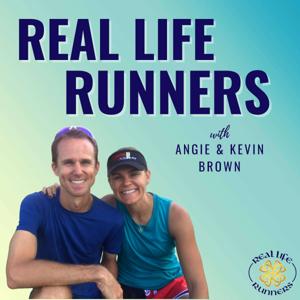
By Dr. Angie Brown
Dr. Angie and Kevin Brown are here to help runners reconnect to themselves to become physically and mentally stronger runners through conversations about training, mindset, nutrition, health and we
... more
5
163163 ratings


The podcast currently has 513 episodes available.
The most played episodes among Podcast App listeners.
If you’ve been told that women in perimenopause or post-menopause should stop doing easy, steady-state cardio and replace it with HIIT, sprinting, and heavy lifting, this episode is for you. Angie and Kevin continue their Running Myth series by unpacking where this idea came from, what HIIT actually does well, and why replacing your easy running with high-intensity training misses a much bigger picture. The problem isn’t that HIIT is bad. In fact, Angie and Kevin talk about plenty of reasons to include higher-intensity work in a well-rounded training program. HIIT can be a time-efficient way to improve VO2 max, provide a strong metabolic stimulus, develop neuromuscular power and coordination, and provide the impact needed to stimulate bone remodeling. The problem comes when one tool gets treated like the entire toolbox. What helps one specific outcome does not automatically replace everything your body gets from other types of training. For endurance runners, easy running provides the foundation that allows everything else to work. It helps build aerobic capacity, mitochondrial and capillary density, metabolic flexibility, running economy, and connective-tissue resilience while creating a much smaller recovery demand than repeated hard sessions. And especially as recovery needs change with age, being able to accumulate consistent training matters. Angie and Kevin also discuss how recommendations from researchers like Stacy Sims can lose important context when they are reduced to short social media clips. The takeaway is not “never do HIIT.” It’s to build the foundation first, then layer intensity onto a body that is prepared to handle it. 00:00 – HIIT Myth Setup 02:36 – Why Nuance Matters 03:11 – TLDR: Keep Both 05:44 – Where the Myth Came From 09:32 – Training Is Individual 12:42 – What HIIT Actually Is 13:20 – HIIT Benefits Breakdown 18:52 – Why Easy Runs Matter 21:37 – Recovery and Volume 26:03 – Volume Builds Economy 27:11 – Connective Tissue Resilience 29:46 – Easy Runs Feel Better 31:36 – Cortisol and Cooldowns 33:22 – The Gray Zone Trap 34:19 – Miles Beat HIIT Alone 35:35 – Injury Risk and Base 39:21 – Safe Speed Progression 40:14 – Effort Levels Simplified 43:03 – Strength and Mobility Foundation 45:48 – Stacy Sims Advice Misread Gain access to my new secret podcast, Unbreakable: The Runner's Guide To Injury-Proofing Your Body After 40. Click here: https://www.realliferunners.com/secret Join the Team! --> https://www.realliferunners.com/team Thanks for Listening!! Be sure to hit FOLLOW on Apple Podcasts, Spotify, or your favorite podcast player Leave a review on Apple Podcasts. Your ratings and reviews really help and we read each one! Come find us on Instagram and say hi! Don't forget: The information on this website is not intended to treat or diagnose any medical condition or to provide medical advice. It is intended for general education in the areas of health and wellness. All information contained in this site is intended to be educational in nature. Nothing should be considered medical advice for your specific situation.

If you're a woman in perimenopause or postmenopause, you've probably seen the claim that running is bad for your hormones because it raises cortisol. Maybe you've even wondered if you should be doing less cardio, switching entirely to walking, or giving up running altogether. In this episode, Kevin and I unpack that idea and talk about what cortisol actually does in the body. Yes, exercise temporarily raises cortisol, but that's a normal and useful response. The bigger issue is chronic stress, poor sleep, under-fueling, and inadequate recovery. And while menopause can change how our bodies respond to stress, that doesn't mean we need to stop doing something that's incredibly valuable for our cardiovascular health, fitness, and brain health. I want you to walk away from this conversation feeling less afraid of running and more confident about how to balance running, strength training, fueling, recovery, and the rest of your life. 00:00 – The Menopause Running Myth 02:50 – Where the Claim Comes From 07:08 – Cortisol Isn't the Villain 11:08 – Menopause and Cortisol Regulation 13:41 – What Actually Drives High Cortisol 15:20 – Research Says Aerobic Exercise Helps 18:11 – The Real Risk Is Heart Health 21:35 – Why Walking Isn't Enough 25:09 – VO2 Max and Longevity 29:03 – Measuring VO2 Max 33:01 – Training to Boost VO2 34:16 – Brain Benefits of Cardio 38:44 – Cortisol Fearmongering 40:24 – Strength Plus Running 43:11 – Walking Versus Aerobic Exercise Gain access to my new secret podcast, Unbreakable: The Runner's Guide To Injury-Proofing Your Body After 40. Click here: https://www.realliferunners.com/secret Join the Team! --> https://www.realliferunners.com/team Thanks for Listening!! Be sure to hit FOLLOW on Apple Podcasts, Spotify, or your favorite podcast player Leave a review on Apple Podcasts. Your ratings and reviews really help and we read each one! Come find us on Instagram and say hi! Don't forget: The information on this website is not intended to treat or diagnose any medical condition or to provide medical advice. It is intended for general education in the areas of health and wellness. All information contained in this site is intended to be educational in nature. Nothing should be considered medical advice for your specific situation.
Training Single-Leg Control for Better Running In this week’s episode, we’re diving into something I talk about with runners every single day: your hips. If you’ve ever wondered why certain niggles keep showing up, why your gait feels “off,” or why your stride doesn’t feel as smooth as it should, this episode is for you. Although many people think of running as a two-legged sport, it is actually a one-legged activity repeated thousands of times. Every step is a single-leg balance, stability, and power moment. So if your hips aren’t pulling their weight, you’ll feel it. For many runners, especially as you move into your 40s and beyond, hip weakness becomes one of the biggest contributors to gait inefficiencies and overuse injuries. In this episode, we break down:Why hip strength and control are foundational for efficient, pain-free runningHow single-leg stability impacts everything from cadence to stride mechanicsThe surprising ways hip weakness shows up in your gait (sometimes in places you wouldn’t expect!)Personal stories from our own “aha” moments—when we finally connected the dots between hip strength and better runningSimple assessments you can do at home to understand your hip controlKey exercises that build strength, stability, coordination, and power—all levels welcomeWhy runners over 40 should prioritize this even more (hint: it’s not just about strength—it’s about longevity)We wrap up the conversation with actionable steps you can start using today to feel more stable, more powerful, and more confident on the run. Because when your hips show up, everything in your running feels better, and your everyday movement does, too. If you’ve been skipping your strength work or unsure where to start, this episode will give you the clarity and motivation to take the next right step. Tune in and let’s get those hips working for you, not against you! 00:51 The Importance of Hip Strength in Running 01:12 Personal Stories and Experiences 01:49 Understanding the Role of Hips in Running Mechanics 07:15 Kevin's Journey and Hip Strengthening Exercises 09:20 Common Running Issues and Hip Weakness 22:59 Understanding Pelvic Drop and Lateral Trunk Lean 23:43 Compensations and Overstriding in Running 24:07 The Importance of Strength Training for Runners 25:20 Common Injuries Linked to Weak Hips 26:16 Achilles Issues and Calf Overcompensation 27:09 The Role of Strength Training in Preventing Injuries 29:43 Single Leg Control and Strengthening Exercises 37:23 Testing and Improving Hip and Single Leg Stability 41:33 Exercises to Enhance Hip Strength and Mobility 45:50 The Importance of Single Leg Strength in Running Gain access to my new secret podcast, Unbreakable: The Runner's Guide To Injury-Proofing Your Body After 40. Click here: https://www.realliferunners.com/secret Join the Team! --> https://www.realliferunners.com/team Thanks for Listening!! Be sure to hit FOLLOW on Apple Podcasts, Spotify, or your favorite podcast player Leave a review on Apple Podcasts. Your ratings and reviews really help and we read each one! Come find us on Instagram and say hi! Don't forget: The information on this website is not intended to treat or diagnose any medical condition or to provide medical advice. It is intended for general education in the areas of health and wellness. All information contained in this site is intended to be educational in nature. Nothing should be considered medical advice for your specific situation.
Gain access to my new secret podcast, Unbreakable: The Runner's Guide To Injury-Proofing Your Body After 40. Click here: https://www.realliferunners.com/secret How to Enjoy Running More: Overcoming Pain, Letting Go of Judgment, and Finding the Fun in Every Run In this week’s episode, Kevin and I dive into something every runner wants more of—joy in running. Because let’s be real, not every run feels amazing. Some days are light and fun, and others feel like a grind. But with the right approach, running can be something you actually look forward to. We share some of our own stories (the good, the tough, and the funny!) and talk through practical ways you can bring more enjoyment into your miles. Here’s a little sneak peek of what we cover: Eliminating pain – Strength training and mobility aren’t just “extras”—they’re the keys to feeling good in your runs.Letting go of judgment – You are not “too slow.” You’re a runner, exactly as you are.Creating a plan that fits you – Adjusting speed work, long runs, and strength sessions so that training feels sustainable and fun.At the end of the day, running doesn’t have to feel like punishment—it should build you up, body and mind. We also share some exciting resources to help you along the way, including our new secret podcast (yep, you heard that right!) and our 30-Day Strong Runner Challenge—a simple way to start combining running and strength so you can enjoy running more, with less pain and more confidence. 👉 Tune in now and let’s make running something you truly love again. 02:25 The Reality of Enjoying Running 05:26 The Inconsistency and Injury Cycle 12:20 The Hamster Wheel of Chasing PRs 20:18 Consistency is Key: Health and Running 27:43 Making Running More Enjoyable 29:45 Understanding Discomfort vs. Pain in Running 30:42 The Importance of Strength Training 32:22 Letting Go of Judgment 37:39 Finding Enjoyment in Running 42:18 Creating a Personalized Running Plan 46:08 The Non-Negotiable Need for Strength Training 50:15 Listening to Your Body's Signals 51:45 Making Running Fun and Enjoyable Gain access to my new secret podcast, Unbreakable: The Runner's Guide To Injury-Proofing Your Body After 40. Click here: https://www.realliferunners.com/secret Join the Team! --> https://www.realliferunners.com/team Thanks for Listening!! Be sure to hit FOLLOW on Apple Podcasts, Spotify, or your favorite podcast player Leave a review on Apple Podcasts. Your ratings and reviews really help and we read each one! Come find us on Instagram and say hi! Don't forget: The information on this website is not intended to treat or diagnose any medical condition or to provide medical advice. It is intended for general education in the areas of health and wellness. All information contained in this site is intended to be educational in nature. Nothing should be considered medical advice for your specific situation.
You want to run fast. You want to run far. You also want to look amazing as you run along the trail or down the street. Maybe you have heard that you are born with your running form. Maybe you have heard that running more will naturally fix your running form. This is only somewhat true and somewhat misguided. The truth is you can improve your form. Running is a skill that you can train. Today we are going to discuss the concept of cadence and how it is important, but that one size does not fit all. Highlights of the Episode Running is a skill that comes naturally at first Living on hard surfaces and in shoes has adjusted our natural form Just because you can run, does not mean you are maximizing your ability The importance of cadence The pitfalls of overstriding and shuffling The “magic” cadence number of 180 Why it is difficult to think your way to better form A simple method for increasing your cadence Challenge of the Week: Cadence challenge 🔢 Count how many steps you take per minute. You can either count left, right, left, right as 1, 2, 3, 4 or you can count only one foot and multiply by 2. 📌 For example: If you count the number of times the right foot hits the ground and you get 80, multiply by 2 to get 160. That is your cadence, or steps per minute. What's your number❓ Thanks for Listening!! SIGN UP FOR OUR FREE 5 DAY RUNNING CHALLENGE, STARTING SEPT 21! To download our FREE strength guide for runners, click here. To join the RLR Tribe, click here. If you have a topic you would like us to talk about, please send us an email at [email protected] Come find us on Facebook and Instagram and say hi! Leave an honest review on iTunes. Your ratings and reviews really help and we read each one! Subscribe on iTunes, Stitcher, Spotify, iHeartRadio, or Google Play Interested in Training plans and Coaching? Check that out here! Don't forget: The information in this website is not intended to treat or diagnose any medical condition or to provide medical advice. It is intended for general education in the areas of health and wellness. All information contained in this site is intended to be educational in nature. Nothing should be considered medical advice for your specific situation. Gain access to my new secret podcast, Unbreakable: The Runner's Guide To Injury-Proofing Your Body After 40. Click here: https://www.realliferunners.com/secret Join the Team! --> https://www.realliferunners.com/team Thanks for Listening!! Be sure to hit FOLLOW on Apple Podcasts, Spotify, or your favorite podcast player Leave a review on Apple Podcasts. Your ratings and reviews really help and we read each one! Come find us on Instagram and say hi! Don't forget: The information on this website is not intended to treat or diagnose any medical condition or to provide medical advice. It is intended for general education in the areas of health and wellness. All information contained in this site is intended to be educational in nature. Nothing should be considered medical advice for your specific situation.
The podcast currently has 513 episodes available.

11,827 Listeners

1,509 Listeners
12,117 Listeners
1,345 Listeners

3,403 Listeners
9,155 Listeners
1,874 Listeners

29,147 Listeners

15 Listeners
1,420 Listeners

2,053 Listeners

19,289 Listeners

1,779 Listeners
364 Listeners

189 Listeners