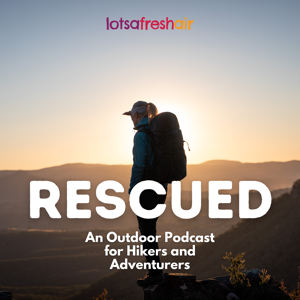
Rescued: An Outdoor Podcast for Hikers and Adventurers

Rescued: An Outdoor Podcast for Hikers and Adventurers

Download on the App Store

Rescued: An Outdoor Podcast for Hikers and Adventurers episodes

  • 023 // Brendan's underwater on the Mitchell River

    One of the things about white water adventures, like kayaking, rafting or canoeing, is that element of the unknown; the power of nature - being carried along - while using all your skills and expertise to read what’s happening under the water or maybe changed since the last time you ran a particular rapid.

    But all that’s only part of the story in this episode… (which is a bit longer than usual(, as my generous guest, Brendan, takes us deep into gorge country along the Mitchell River and dives into what it took for him to get back out on the water and the importance of surrounding yourself with good people, not only when we’re out doing things we love and something goes wrong, but when we need help to get back on the bike again and might not know how to ask.

    Learnings from this episode... and more!

    • The value of a satellite communication device (eg. PLB) or a SEND (2-way) communication device.
    • The importance of good first aid skills and experience.
    • Carrying a well-stocked first aid kit and knowing how to use it.
    • Having a way to light a fire and manage environmental cold
    • They had extra food which could have sustained them longer if needed
    • Having spare, dry clothes in a waterproof bag
    • The whistle that Brendan mentions is a Fox 40 Whistle (links to Paddy Pallin)
    • The importance that they had laminated copies of the map, so could plan and scope exit points to raise the alarm.
    • Importance of wearing bright clothes/having bright items to draw attention. He’s since bought a Sol emergency bivvy (warmth and bright orange) links to Wild Earth
    • The awareness of how time extends or shrinks when dealing with an incident
    • How being able to drive a manual car can be an unexpected skill we need
    • Travel with your wallet and phone on a helicopter if evacuated
    • Understanding that helicopters may not be able to take anyone else or your backpack/gear
    • Check ambulance cover for your state and that you are visiting. Medicare does not cover helicopter evacuation/rescue.
    • Understanding the psychological healing that needs to happen outside of the physical -  it’s not just physio and doctors, but counsellors can be important too
    • The immense value in debriefing afterwards with those involved in an incident (lessons learnt, what you’d change, what you did well)
    • Importance of leaving detailed trip intention forms with dependable people
    • Value of adventuring with good people and knowing their skills/how they react in crisis - why clubs or other organisations can be important, rather than random meetups with strangers
    • Importance of good preparation in all aspects of outdoor activities

    Leave a review for the chance to win from Paddy Pallin // Each episode of Rescued now has the opportunity for listeners to win a $50 Paddy Pallin gift card (to be used online or in-store), along with an iconic Nalgene 1L bottle. Simply leave a rating with a review on either Spotify or Apple Podcasts, grab a screenshot to verify it and then complete this form.

    1 hr 17 min
  • 022 // Billy is in Mountain Rescue (QLD F&R) in the Glasshouse Mtns

    **Special note - this episode touches on traumatic incidents where people lost their lives. Out of respect for these people, their families and loved ones, the rescuers and all involved, I ask that in the spirit of the Rescued Podcast, you choose empathy and kindness as your guide when listening, sharing or discussing. Please do not choose blame, shame or minimise the complexity of such situations to simplistic factors, thank you.**

    When we think about the people who turn up when things go wrong in the wild, we probably picture helicopters, ropes and flashing lights. What we might not picture is a surfer-climber from Coolum Beach who spent his younger years messing around sea cliffs and canyoning in the Blue Mountains — and who now leads and trains others in some of the most technically demanding rescues on Queensland’s Sunshine Coast.

    There’s been a lot of chatter about the increase of accidents on QLDs Glass House Mountains and places like Mount Barney in recent years, and so too the need for a coordinated response — and today’s guest is clear that it’s never just a QFD operation. There’s a big role played by others like volunteers from SES, locals, Ambulance and Police, and he's generous in his respect for everyone of them.

    This is an episode about preparation, consequence, and knowing where we sit — our competence as adventurers, as well as the load on our rescuers. So if you've ever scrolled past a stunning image of a mountain and thought, "I want to go there" — this one's especially for you.

    Episode Takeaways

    • Honest and accurate self-assessment of experience, fitness and skills needed for a particular route/hike
    • The ability to make wise decisions, and reassess when necessary (Listen to ep 17
    • The difference between a hiking trail vs a climbing/scrambling route. Hiking trails are graded by the Australian Walking Track Grading System vs climbing uses the Ewbank System
    • The importance of getting your info from a reputable source, eg. national parks or other land managers, vs relying on social media or a group without the expertise to deliver it
    • Always pack the essentials - see day packing list and overnight packing list.
    • Check weather, park and track closures, sunset times, fire danger
    • Downloading a map (not just an app) that works when there's no coverage and testing it before you go
    • Downloading the Emergency+ App

    Leave a review for the chance to win from Paddy Pallin // Each episode of Rescued now has the opportunity for listeners to win a $50 Paddy Pallin gift card (to be used online or in-store), along with an iconic Nalgene 1L bottle. Simply leave a rating with a review on either Spotify or Apple Podcasts, grab a screenshot to verify it and then complete this form.

    1 hr 16 min
  • 021 // Ross can't move his legs

    How many times have you heard of someone with a solid adventure resume being injured by something that seems pretty simple — like, stepping off a kerb, or slipping over in the shower?

    Today's guest Ross is an experienced multiday bushwalker, free-diver and deer hunter who grew up with the Snowy Mountains on his doorstep, and has spent a lifetime living and working in nature.

    In this episode, he takes us along on the Light to Light walk (near the ominously named, Disaster Bay, the NSW South Coast) — which, compared to many of his past exploits, should’ve been a relatively straightforward three-day walk with his family.

    The dreamy beachside campsites and wild, rocky coastal platforms faded fast — the moment a wrong step left him unable to move his legs. The weather was closing in, there was no mobile coverage, and the nearest road was many kilometres away.

    Content Warning: This episode includes descriptions of injuries and medical terminology.

    Key learnings from this episode:

    • Importance of carrying a Personal Locator Beacon (PLB)
    • Travelling in a group means that there's someone to give first aid, call for help and carry out a patient's bags when needed
    • Always preparing and packing for all weather conditions (download my packing list here)
    • How lucky we are in Australia to have such great emergency services, all working together when needed, including volunteers. This rescue involved Police, NSW Ambulance, NPWS, Westpac Rescue Helicopter, NSW State Emergency Services (NSW SES)
    • Gear tip: a light fly/tarp as a secondary shelter for cooking in the rain and an emergency shelter for an injured person. ie setting up a tent and getting an injured person inside may not always be easy/possible due to the location or injury
    • Always waterproof your dry clothes, thermals and sleeping bag inside your pack
    • Importance of training and knowledge in first aid (especially remote area first aid) including how to protect ourselves from environmental factors (cold, rain, etc)
    • Value of having Ambulance Insurance and how it could save you money. Medicare does not cover ambulance in Australia.
    • More than 1 emergency blanket is needed to properly insulate a person
    • Being able to focus on rehabilitation with the right mindset and adjust our lives (and home environment) for the best outcomes

    Other resources:

    Read Ross' article on the Ocean Signal website (manufacturers of his PLB)

    1 hr
  • 020 // Olga is Lost and Found

    One of the biggest barriers that stops people from getting out and connecting with nature — through hiking or bushwalking — is the fear of getting lost.

    Today's guest is no stranger to the bush. She'd done some research, packed for the conditions, let someone know her plans and downloaded the AllTrails app. But despite all of that, her 10 km day walk (which should’ve taken about 4-5 hours) turned into an unplanned night out, alone, in difficult terrain, with the looming anxiety of being completely lost.

    She's sharing her story today with real courage and gratitude, having received a bit of unhelpful judgment after the event. So in the spirit of the Rescued Podcast, I ask that we receive her story with kindness and see what we can all learn from her experience.

    Key learnings from this episode:

    • If you’re lost, stay where you are unless it’s not safe to do so
    • The importance of slowing down to think through decisions if something goes wrong, not rushing about or panicking
    • The value of rest on your body and mind when something goes wrong
    • Why packing (or wearing) thermals is a good idea
    • Being sensitive to anyone you know (or work with) who may experience something like this
    • Why it’s always a good idea to carry a raincoat, even if it’s not forecast to rain while you’re out
    • Understanding that apps like AllTrails are best when used as one (of many) research tools (ie. when looking to walk in a new area), not relied on for navigation
    • Gathering reviews and comments from people online can be a helpful tool in research, but they’re subjective: what’s easy for one person can be hard for another. The Australian Walking Track Grading System is an objective national guideline.
    • The value of carrying a Personal Locator Beacon (PLB)
    • Carrying a first aid kit with an emergency blanket
    • The strength of not walking/adventuring solo - groups like bushwalking clubs or other groups/MeetUps/organisations are great resources if you don’t have any outdoorsy friends
    • The limitations of smartphones to pinpoint location via apps when under/near the base of clifflines or in narrow, deep areas
    • Why it’s good to test out gear/equipment/apps before relying on them in the bush
    • Importance of carrying a battery power bank to keep phones and other devices charged
    • Planning for contingencies - even for a short day walk such as extra food, water, clothing layers and an emergency bivvy (eg. SOL bivvy bag) for unplanned overnight or in an accident
    • When leaving your trip intentions with people, write down the details or send them the link/details via SMS/email

    NB: Olga refers to a ladder that she used to ascend a short section. This ladder is not part of the old and decommissioned waterboard structures attached to the cliff face in the area-these are inaccessible.

    Other Resources:

    • Day hike packing list
    • Overnight hike packing list
    57 min
  • 019 // Bram's pelvis opens like a book (part 2)

    LISTEN to part 1 first

    ENTER to win a $50 Paddy Pallin voucher + Nalgene bottle 

    The things we love to do in nature can lead us to explore and discover places not just close to home, but to some very remote and uncharted places around the world.

    In this special double episode of Rescued, we hear from 3 friends, all highly skilled and experienced canyoners, as they find themselves in the embrace of Taiwan’s small and dedicated canyoning and rescue community, after a life-threatening fall during a multiday expedition.

    If you ever needed a reminder of the value of regular, high-quality wilderness first aid training and the importance of being able to rely on the people you adventure with - this is it.

    This isn't a straightforward pack n’ send case of helicopter, paramedics and hospital. Their reliance on each other, their skills and a solid sense of humour is put to the test throughout this 2 day ordeal.

    Key learnings from this episode:

    • The importance of having the right skills, training and experience for the environments
    • The ability to make fair self-assessments of the above
    • Planning is key to better outcomes
    • Research multiple contingency plans, if your exit from a canyon doesn’t work, are there alternatives you can see on satellite imagery? Plan refuge and camp spots
    • Being able to rely completely on your adventure buddies if something goes wrong. Q: Can you say this about strangers you connect with on MeetUps or similar?)
    • Value of research, local knowledge and connections
    • Huge thanks to the incredible and supportive local canyoning community of Taiwan
    • Being smart about choosing your emergency contacts and setting up a What’sApp group - briefing them all properly with plans, contingencies and giving them permission to act as your advocates if something happens
    • The essential recert and muscle memory of quality wilderness first aid training
    • Benefits of choosing to study Wilderness or RAFA over simple Senior First Aid
    • Brainstorm and practice of roping and rescue problems at home and in easier environments before being confident to execute them in challenging ones
    • Good open, inclusive and frank communication in and around a patient
    • How humour can help with stressful situations
    • Everyone knowing their job and getting it done
    • How party size can change outcomes in an incident
    • Importance of essential survival skills eg: fire making, knowing priorities for survival
    • Stove, lighters and Nalgenes as essential canyon equipment
    • Making sure your first aid kit is up-to-date (when was the last time you made sure you had enough panadol and ibuprofen?)
    • Bright clothes, bothy bag, emergency blankets to draw attention
    • Knowing how to prepare for helicopters and downwash
    • Aussie registered PLBs activated overseas are received by AMSA in Canberra

    There's a bunch of different ways you could help support the work of this pod:

    1. Leave a review on your platform of choice
    2. Leave a donation towards the costs
    3. Visit my sponsors at Paddypallin.com.au
    4. Buy my book - "How to Navigate - the art of traditional map and compass navigation in an Australian context."
    5. Check out my Navigation Courses
    45 min
  • 018 // Bram's pelvis opens like a book in a remote Taiwan canyon

    The things we love to do in nature can lead us to explore and discover places not just close to home, but to some very remote and uncharted places around the world.

    These activities, like bushwalking/hiking, climbing or canyoning, give us opportunities to step outside the typical tourist or visitor experience, not only opening our eyes to cultures different to our own, but on a deeper level, the chance to connect with the local outdoor community through our shared love of wild places.

    In this special double episode of Rescued, we hear from 3 friends, all highly skilled and experienced canyoners, as they find themselves in the embrace of Taiwan’s small and dedicated canyoning and rescue community, after a life-threatening fall during a multiday expedition.

    If you ever needed a reminder of the value of regular, high-quality wilderness first aid training and the importance of being able to rely on the people you adventure with - this is it.

    This isn't a straightforward pack n’ send case of helicopter, paramedics and hospital. Their reliance on each other, their skills and a solid sense of humour is put to the test throughout this 2 day ordeal.

    Key learnings from this episode:

    • The importance of having the right skills, training and experience for the environments
    • The ability to make fair self-assessments of the above
    • Planning is key to better outcomes
    • Research multiple contingency plans, if your exit from a canyon doesn’t work, are there alternatives you can see on satellite imagery? Plan refuge and camp spots
    • Being able to rely completely on your adventure buddies if something goes wrong. Q: Can you say this about strangers you connect with on MeetUps or similar?)
    • Value of research, local knowledge and connections
    • Huge thanks to the incredible and supportive local canyoning community of Taiwan
    • Being smart about choosing your emergency contacts and setting up a What’sApp group - briefing them all properly with plans, contingencies and giving them permission to act as your advocates if something happens
    • The essential recert and muscle memory of quality wilderness first aid training
    • Benefits of choosing to study Wilderness or RAFA over simple Senior First Aid
    • Brainstorm and practice of roping and rescue problems at home and in easier environments before being confident to execute them in challenging ones
    • Good open, inclusive and frank communication in and around a patient
    • How humour can help with stressful situations
    • Everyone knowing their job and getting it done
    • How party size can change outcomes in an incident
    • Importance of essential survival skills eg: fire making, knowing priorities for survival
    • Stove, lighters and Nalgenes as essential canyon equipment
    • Making sure your first aid kit is up-to-date (when was the last time you made sure you had enough panadol and ibuprofen?)
    • Bright clothes, bothy bag, emergency blankets to draw attention
    • Knowing how to prepare for helicopters and downwash
    • Aussie registered PLBs activated overseas are received by AMSA in Canberra

    There's a bunch of different ways you could help support the work of this pod:

    1. Leave a review on your platform of choice
    2. Leave a donation towards the costs
    3. Visit my sponsors at Paddypallin.com.au
    4. Buy my book - "How to Navigate - the art of traditional map and compass navigation in an Australian context."
    5. Check out my Navigation Courses
    53 min
  • 017 // Make good decisions with Hugh Ward - Heuristics

    How many decisions do you reckon you’ve made today?

    It's probably the conscious ones that come to mind. Do I wear the red shirt or blue top? 1 coffee or 6.

    Believe it or not, The Harvard Business Review states that adults can make around 35,000 decisions each day and many of those happen automatically and simultaneously.

    When we head out into the wild places we love, or find ourselves in environments with a higher level of risk, some of these decisions (conscious or otherwise) can have some pretty intense consequences.

    Today, I’m joined by Hugh Ward, co-owner of the Blue Mountains Climbing School, to learn about an easy tool that we can use every day, to help us make better decisions, smarter choices and have better adventures.

    He talks us through the established acronym F.A.C.E.T.S, developed by Ian Mcammon, based upon the work of Daniel Kahneman and Amos Tsversky. It was designed to highlight common deficiencies in our decision making (Heuristic Traps) and to offer a tool to temper the choices we make in high consequence environments.

    Excitingly, he then steps us through a NEW acronym,  A.C.C.E.S.S. that he has developed with Climbing School co-owner and wife, Bridie Campbell, that works better with Australian outdoor environments. You can read more and DOWNLOAD their handy pocket guide here.

    Resources

    Article on the Climbing School blog


    59 min
  • 016 // Macca is broken in a big wall fall

    It was the ABC News that first alerted the outdoors community to Macca's big wall fall near Blackheath in the Blue Mountains of New South Wales. With over 30 years climbing under his belt, including many first ascents and stories, some of which are the stuff of legend, he is one of the Blue Mountains climbing community's most well-known characters. 

    Five years on from the accident, he joins me today with Sergeant Dal Atkinson, the team leader of Blue Mountains Police Rescue Squad, to speak about what happened and what the challenges of location, access, and weather made this one of the longest and most difficult cliff rescues in New South Wales.

    https://youtu.be/IVtaK-v99jM


    1 hr 9 min
  • 015 // Dr Paul Luckin is an expert on human survivablity - Part 2

    Dr Paul Luckin is an authority on human survivability. He’s a medical advisor to the Police Search and Rescue teams and the Australian Maritime Safety Authority (that’s AMSA), providing time-frames for human survival during Search and Rescue operations.

    In part 2 of my conversation with Paul, we look deeper into demographics and practicalities of surviving in the wild. What should people do if in that situation and ask what can be done to help get these messages across.


    38 min
  • 014 // Dr Paul Luckin is an expert on human survivability

    Dr Paul Luckin is an anaesthetist, with a very unique background.

    As an authority on human survivability he’s a medical advisor to the Police Search and Rescue teams and the Australian Maritime Safety Authority (that’s AMSA), providing time-frames for human survival during Search and Rescue operations.

    He teaches the medical aspects of Search and Rescue, and is on the directing staff of the National Police Search and Rescue Managers Course.

    A humble and highly trained specialist clinician and expert in search and rescue, he has served as a Captain in the Royal Australian Naval Reserve in Bougainville, East Timor, in the Resuscitation and Retrieval Team for the victims of the first Bali bombing, and in the first foreign medical team into Banda Aceh following the 2004 tsunami, and much, much more.

    In 2015, he was made a Member of the Order of Australia, AM, for significant service to the

    community through emergency medicine, and he joins me today…

    42 min

About Rescued: An Outdoor Podcast for Hikers and Adventurers

From the publisher's feed

'Rescued' is a podcast of conversations with the rescued and rescuers. It's about the lessons we learn about ourselves, the places we go to and why. It exists to help us have better adventures and…

More shows like Rescued: An Outdoor Podcast for Hikers and Adventurers

Conversations by ABC Australia

Conversations

771 Listeners

All In The Mind by ABC Australia

All In The Mind

760 Listeners

Health Report by ABC Australia

Health Report

130 Listeners

Chat 10 Looks 3 by Chat 10 Looks 3

Chat 10 Looks 3

231 Listeners

Ladies, We Need To Talk by ABC Australia

Ladies, We Need To Talk

313 Listeners

If You're Listening by ABC Australia

If You're Listening

315 Listeners

ABC Rewind by ABC Australia

ABC Rewind

38 Listeners

A Podcast of One's Own with Julia Gillard by A Podcast of One's Own with Julia Gillard

A Podcast of One's Own with Julia Gillard

81 Listeners

What's That Rash? by ABC Australia

What's That Rash?

235 Listeners

Not Stupid by ABC Australia

Not Stupid

18 Listeners

What The Duck?! by ABC Australia

What The Duck?!

44 Listeners

Real Survival Stories by NOISER

Real Survival Stories

1,345 Listeners

Global Roaming with Geraldine Doogue and Hamish Macdonald by ABC Australia

Global Roaming with Geraldine Doogue and Hamish Macdonald

65 Listeners

Expanse by ABC Australia

Expanse

41 Listeners

No One Saw It Coming by ABC Australia

No One Saw It Coming

118 Listeners