
Sign up to save your podcasts
Or



You KNOW you have the skills. You KNOW you've ridden harder trails before. Still: your body suddenly freezes at the top of a technical section? And why does telling yourself to "just relax" or "this is ridiculous, there's nothing to worry about" often make everything worse?
Drawing on neuroscience, sports psychology, and my daily experiences from MTB coaching, we'll explore why fear can turn into frustration, how self-criticism increases pressure, and why the moments after a mistake are so important for learning. We explore why we can't simply think our way out of fear and how understanding our nervous system can help us respond differently. Because there's a big difference between knowing you're safe and feeling safe.
In this episode, you'll discover:🧠 Why logic alone often fails to calm fear and anxiety
🚵 Why you sometimes freeze on MTB trails, even when you have the necessary skills
❤️ How perfectionism, comparison, and negative self-talk can make fear worse
🔬 What stress does to your ability to think clearly and learn from mistakes
🌬️ How breathing, movement, and physical relaxation can help regulate your nervous system
💡 Why making mistakes is essential for learning — and how to turn them into useful information
🎯 A simple three-step strategy: Body first. Data second. Decision third.
You'll also learn why overcoming fear doesn't mean forcing yourself to ride everything, and why sometimes choosing an easier challenge is the smartest way to progress.
Because confidence isn't built by bullying yourself into being brave. It's built by learning to understand your reactions, develop your skills, and make better decisions.
The goal shouldn't be to become fearless. The goal is to prevent fear, shame and social pressure from making the decision FOR you. Whether you're struggling with MTB anxiety, fear after a crash, perfectionism, or frustration with your progress, this episode will help you approach your next challenge differently.
🔗 Free MTB tips & mental training insights: https://roxybike.podia.com/sign-me-up
🔗 Mental Training Course: https://roxybike.podia.com/courage-and-confidence-booster
🔗 Want to work with me in person? Start building your foundation here and then get in touch to get personal video feedback, and THEN we can refine your skills in person: https://roxybike.podia.com/mountain-bike-online-courses
#MountainBiking #MTBSkills #SportsPsychology #FearOfMountainBiking #MentalTraining
Why do MTB skills seem to disappear the moment you feel scared, frustrated, overwhelmed or under pressure? You KNOW how to brake. You KNOW where to look. You KNOW what your body should be doing — and yet, on a difficult section of trail, suddenly none of it seems accessible. In previous episodes I've talked about how a lack of automaticity may be the cause, in THIS episode we talk about how you may be sabotaging yourself mentally!
Because maybe it's the way you talk to yourself. In this episode of the Ride & Inspire RAWcast, we explore a sport psychology tool called Ileism. It's actually ridiculously simple — but psychological and neuroscience research into self-distancing and emotion regulation helps explain why changing the way we talk to ourselves can influence how we respond under pressure.
In this episode, you'll learn:Because becoming a better mountain biker isn't "just" about learning what your body needs to do. It's also about learning how to "coach" your brain when it matters.
Try the practical self-talk exercise from this episode on your next ride and notice what changes. And DO share it with me 😍
Work with me on our doorstep with my remote courses, where we turn these generic tips into individual guidance:https://roxybike.podia.com/mountain-bike-online-courses
FREE Balance course: https://roxybike.podia.com/trackstand-challenge-drill-to-skill-with-roxy
Want to keep this podcast ad-free?🥰 Support meon Patreon: https://www.patreon.com/c/rideandinspire
📚 Research mentioned in this podcast:Kross et al. (2014): Self-talk as a regulatory mechanism: how you do it matters.
Journal of Personality and Social Psychology, PMID: 24467424
Across seven studies (N=585), participants used either first-person language or non-first-person language (their own name/other pronouns) when thinking about themselves. Third-person/non-first-person self-talk increased self-distancing. Under social stress, these participants showed less distress and better performance, including during public speaking. They also tended to appraise future stressful situations more as challenges and less as threats.
Lieberman et al. (2007): Putting feelings into words and the brain, PMID: 17576282
In an fMRI experiment, labeling emotional stimuli was associated with reduced amygdala/limbic responses: Useful evidence that language and emotional labeling can alter measurable neural responses.
Moser et al. (2017): Third-person self-talk facilitates emotion regulation without engaging cognitive control: Converging evidence from ERP and fMRI, PMID: 28674404
Using EEG/ERP and fMRI, the researchers found evidence that third-person self-talk facilitated emotion regulation without requiring greater cognitive-control engagement. A strong basis that this can be useful when cognitive resources are already under pressure.
Do MTB group rides make you nervous? Maybe you're worried you'll be too slow, hold everyone back, or won't be able to ride all the technical sections. Or you have anxiety about another topic and are looking for a simple, yet effective method to help with it? In this episode of the Ride & Inspire RAWcast, we explore the psychology and neuroscience of reframing — and why it is much more than motivational positive thinking.
I’ll introduce you to research by Alison Wood Brooks showing how changing what you label your emotions as can influence performance without ignoring the emotion. And, most importantly, we’ll translate the science directly to mountain biking and use "ride anxiety" as a practical example.
You'll learn how to reframe common pre-ride thoughts such as:
“What if I’m too slow?”
“What if I’m the slowest rider?”
“What if I can’t ride all the sections?”
“What if I hold everyone back?”
I’ll also introduce the simple Roxybike MAP Method:Meaning – Adjust – Proceed, which you can use on your next group ride, during MTB practice, or in stressful situations in everyday life. Because stress itself isn't necessarily the enemy. What matters is the meaning your brain gives it.
🎙️ Ride & Inspire RAWcast is completely ad-free. If you'd like to help me keep it that way and support my work, you can join me on Patreon: https://www.patreon.com/c/rideandinspire
Sources:
Brooks, A. W. (2014). “Get excited: Reappraising pre-performance anxiety as excitement.”
Journal of Experimental Psychology: General, 143(3), 1144–1158. PMID: 24364682, DOI: 10.1037/a0035325
Sammy et al. (2017): Arousal reappraisal under pressure, PMID: 28535726
This is particularly relevant to MTB performance, because it specifically examines reappraising physiological arousal under pressure and its relationship with stress responses, attention, confidence and performance.
Can you happily ride your mountain bike for hours… but lose focus after ten minutes of deliberate skills practice? Or you feel like you're just SO inconsistent with your performance? If you have ADHD — or simply struggle with concentration, inconsistency or getting overwhelmed by too many instructions — the problem may not be your ability to learn. It may be the way you’re practising.
In this episode, I look at what science tells us about ADHD, attention and motor learning — and translate it into practical MTB training for every adult brain, not just neurodivergent brains 🧠
We talk about:
And I give you a very simple practice structure to try:
ONE — FIVE — CHECK
This is the step-by-step DROP TUTORIAL I talk about: https://youtu.be/cf6vSUtNKYY?is=y4ym92qogtoyBOcp&list=PLwfXYMc609PWCk0Gs4BWHsVBNQJYG7Boz&si=rQ16psvciW_ZyQbR
Note: “Neurodivergent” is not a medical diagnosis itself; it’s a broad umbrella term for brains that function in ways that differ from what is considered neurotypical. ADHD is commonly included under that umbrella, along with autism, dyslexia, dyspraxia and some other neurological/developmental differences.
🧠 Want to try this learning approach yourself?Start with my FREE Balance / Trackstand Course. It breaks balance training into small, safe and manageable steps so you can build control gradually instead of trying to perform the final skill immediately.
👉 Find the free course here.
And if this way of learning works for you, you'll find the same brain-friendly approach throughout my other MTB skills courses — from fundamentals and braking to drops, cornering and advanced skills.
💜 This podcast is completely ad-freeRide & Inspire is made possible by the lovely riders who support my work on Patreon (BONUS: You also get access to exclusive content). If you enjoy the science-based episodes, videos and educational content I create and would like to help me keep them independent and ad-free, you can support the podcast by becoming a Patron. Thank you to everyone who already does. 💜
Find my Patreon Channel here: https://www.patreon.com/cw/rideandinspire
🔬 Research & Studies Mentioned in This EpisodeWant to dive deeper into the science behind this episode? Here are some of the studies I used:
🧠 ADHD, Attention & Reward
Sustained and focused attention deficits in adult ADHD
https://pubmed.ncbi.nlm.nih.gov/17712171/
The impact of financial reward contingencies on cognitive function profiles in adult ADHD
https://pubmed.ncbi.nlm.nih.gov/23840573/
Frustration Modulates Attentional Control and Affective Processing in Adults With ADHD
https://pubmed.ncbi.nlm.nih.gov/42477904/
🧩 Working Memory
Working Memory Training for Adults With ADHD
https://pubmed.ncbi.nlm.nih.gov/28856932/
🚲 ADHD & Motor Learning
The consolidation of a motor skill in young adults with ADHD: Shorter practice can be better
https://pubmed.ncbi.nlm.nih.gov/26826465/
Determining the optimal challenge point for learning motor skills in children with ADHD
https://pubmed.ncbi.nlm.nih.gov/39369556/
🎯 Task Difficulty & Motor Learning
Task difficulty promotes tactical learning but suppresses the positive learning effects of autonomy and cognitive effort
https://pubmed.ncbi.nlm.nih.gov/40203519/
🏃 Exercise, Cognition & ADHD
Acute Effects of Aerobic Exercise on Executive Function and Attention in Adult Patients With ADHD
https://pubmed.ncbi.nlm.nih.gov/30971959/
Acute aerobic exercise at different intensities modulates inhibitory control and cortical excitability in adults with ADHD
https://pubmed.ncbi.nlm.nih.gov/38485649/
Physical exercise as add-on treatment in adults with ADHD – the START study: a randomized controlled trial
https://pubmed.ncbi.nlm.nih.gov/41244864/
Effects of Low, Moderate, and High Intensity Exercise on Functional Impairment and ADHD Symptoms: A Randomized Pilot Study
https://pubmed.ncbi.nlm.nih.gov/42437494/
🧍 Movement & Body Awareness
Physical exercise and body awareness/movement quality in adults with ADHD: Results from the START randomized controlled trial
https://pubmed.ncbi.nlm.nih.gov/41903823/
You'd like to be more optimistic or positive? Then this episode is for you! Today we explore a fascinating insight from neuroscience: your brain is not a passive observer of reality. It's a prediction machine that constantly looks for evidence to support what it already believes. And you can LEVERAGE this to become more positive, courageous or in fact, almost anything you think you're NOT!
If you've ever caught yourself saying:
👉 "I'm just not confident."
👉 "I'm not athletic."
👉 "I'm too old."
👉 "I'm a negative person."
...this episode is for you.
You'll learn how to influence these labels, why two riders can have completely different experiences on the exact same trail and most importantly, you'll discover how mountain biking can become a powerful tool for changing ingrained patterns. Using examples from the free Trackstand Challenge, I explain how bike skills practice can help train attention, build resilience, strengthen healthier thought patterns, and create evidence that challenges limiting beliefs.
In this episode:
• Why does negative thinking feel so automatic?
• How do self-fulfilling prophecies work?
• How does ad adult brain learn?
• Why is attention one of the most powerful training tools you have?
• What's the difference between a thought and a label?
• How can trackstand practice help rewire your brain?
🎥 This is the video I mention at the beginning of this episode: https://www.youtube.com/watch?v=vHtezlTRuYo&list=PLwfXYMc609PXz3fHAWMt5HLdLUS5_KiQ-&index=2
🎯 Free Trackstand Challenge:
https://roxybike.podia.com/trackstand-challenge-drill-to-skill-with-roxy
☕ Support this ad-free podcast:
https://www.patreon.com/rideandinspire
If you enjoy the podcast, please consider following, rating, and sharing it with a riding friend. It helps us reach more riders and continue creating science-based content that empowers people both on and off the bike.
Most mountain bikers think getting better means riding more, training harder, or improving fitness. But what if the biggest limiter after 40 isn't your fitness at all? What if it's your nervous system?
In this episode, we explore three surprisingly simple exercises that neuroscience suggests can help maintain and improve the systems that matter most for mountain biking: balance, vision, and brain function.
You'll learn why many age-related changes are not simply the result of getting older, and why training the systems that support coordination, confidence, and control on the bike matters!
We discuss:
• Why balance is one of the first abilities to decline with age
• How vision affects line choice, timing, and confidence on trails
• The surprising connection between smell, brain health, and decision-making
• Why mountain biking is fundamentally a coordination sport
• How your nervous system influences confidence and fear on the trail
• Simple daily exercises you can start today—without even touching your bike
Whether you're 40 or 70, or simply want to keep riding strong for decades to come, this episode will help you understand why training your brain may be just as important as training your body.
🎯 Free On-Bike Balance Course: https://roxybike.podia.com/trackstand-challenge-drill-to-skill-with-roxy
💪 Build Your Ride Ready Body (6 weeks of follow-along coordination & strength training specifically for mountain bikers over 35): https://roxybike.podia.com/building-basics-introduction-to-strength-coordination
📩 Join the Ride & Inspire Newsletter: https://roxybike.podia.com/sign-me-up
☕ Support the podcast and help keep it independent, value-focused, and ad-free through Patreon or Buy Me a Coffee. 😍
Do you ever finish a day feeling mentally exhausted... even though it doesn't feel like you've actually done that much? A few weeks ago, I disappeared for two weeks. No Instagram. No YouTube. No comments, emails, or analytics. Ironically, it wasn't the holiday we'd planned. Berni came down with COVID the day before we left, so instead of traveling, we spent most of our time at home. Looking back, that unexpected change became a gift. In this episode, I read an article that perfectly describes what so many of us are experiencing without realizing it: a brain overloaded by constant notifications, endless information, and the pressure to always stay connected. This isn't an anti-phone or anti-social media episode. Technology allows me to coach mountain bikers all over the world, build an amazing community, and do work I genuinely love. But like any powerful tool, it works best when we're in control of it—not the other way around.
In this episode we talk about:
If you've ever struggled to concentrate, found yourself reaching for your phone without thinking, or simply felt mentally "fried," I think you'll find something valuable in this episode.
This is the article I read in this episode: Steve Magness: A Digital Survival Guide
I'd love to hear your thoughts after listening. Have you ever taken a digital break? And if not... would you?Starting with a simple mountain biking example ("I'm bad at left corners") the conversation expands into a much deeper discussion about ADHD, fear, confidence, labels, self-concept, and why what comes after the words "I am" may shape your future more than you realize. Sometimes the biggest breakthroughs begin when we stop saying "This is who I am" and start saying "This is what I'm learning."
Because the thing is, many of us carry labels we've repeated for years:
"I have ADHD."
"I'm not confident."
"I'm bad at this."
"I'm just an anxious person."
"I'm not athletic."
"I've always been this way."
But what if some of those labels have quietly become limitations? In this final part of my conversation with bestselling author Nir Eyal (Hooked, Indistractable, Beyond Belief), we explore the powerful connection between identity, self-belief, and human potential. Nir shares his own experience with ADHD and explains why diagnoses, labels, and personality traits can sometimes become self-fulfilling prophecies that keep us stuck, because they can narrow what we believe is possible.
🎥 Watch the entire interview as a video here: https://www.youtube.com/watch?v=vHtezlTRuYo&list=PLwfXYMc609PXz3fHAWMt5HLdLUS5_KiQ-&index=2
🎙️ Listen to episode 1 here and episode 2 here 🙂
We also discuss:
✅ Why labels can become limits (and how MTB Skills training can help with ADHD)
✅ The surprising downside of identifying too strongly with a diagnosis
✅ ADHD, attention, focus, and learning new skills
✅ Why "I'm bad at this" is rarely a useful belief
✅ The importance of the word "yet" in skill development
✅ How mountain biking can challenge limiting identities
✅ Why confidence requires evidence, not blind faith
✅ The difference between faith and belief
✅ Why persistence matters more than talent in long-term success
✅ How to stop letting fear and self-doubt define you
Whether you're struggling with confidence, anxiety, ADHD, skill progression, or simply feeling stuck in an old version of yourself, this conversation offers a powerful reminder:
You are not your labels.
About Nir Eyal:Nir Eyal is the bestselling author of Hooked, Indistractable, and Beyond Belief. His work combines psychology, neuroscience, and behavioral design to help people understand why they do what they do—and how to create lasting change.
Find Nir:
https://www.nirandfar.com
The Book Beyond Belief:
geni.us/beyondbelief
Free belief change guide:
www.nirandfar.com/beyond-belief-live
Instagram:
http://instagram.com/nireyal
Previous books:
Hooked: geni.us/hooked
Indistractable: geni.us/Indistractable
https://www.patreon.com/rideandinspire
Work with me on your MTB Skills and Mindset:
www.roxybike-coaching.com
Thank you for listening and for being part of our Ride & Inspire community. We hope this conversation encourages you to question the labels you've accepted, gather new evidence about what's possible, and discover that growth doesn't stop when you reach a certain age, receive a diagnosis, or face a setback.
How manifestation can harm: https://www.bps.org.uk/research-digest/manifestation-believe-and-achieve
What if the biggest thing holding you back is a belief you've never questioned? In this special interview (part 2 of 3) with bestselling author Nir Eyal (Hooked, Indistractable, Beyond Belief), we move from understanding beliefs to learning how to change them.
Many of us can recognize limiting beliefs:
"I'm too old."
"I'm not good at this."
"I don't have time."
"I'll never get better."
But once you've identified a limiting belief, what do you do next?
In this episode, Nir shares the most powerful mindset exercise I've ever learned—a simple but profound framework for questioning the stories that create suffering and keep us stuck.
Using real-life examples, including a story about his own mother, Nir explains how to uncover hidden assumptions, challenge long-held beliefs, and replace them with beliefs that create more freedom, motivation, and possibility.
🎥 Watch the entire interview as a video here: https://www.youtube.com/watch?v=vHtezlTRuYo&list=PLwfXYMc609PXz3fHAWMt5HLdLUS5_KiQ-&index=2
🎙️ Listen to episode 1 here 🙂
We also discuss:
✅ Why people stay stuck even when they know what to do
✅ The difference between facts and interpretations
✅ Byron Katie's powerful belief-questioning process
✅ The four questions that can reveal hidden assumptions
✅ The "turnaround" technique for creating new perspectives
✅ Why venting often reinforces suffering rather than reducing it
✅ Why we don't see people as they are—we see them as we believe them to be
✅ How liberating beliefs increase motivation and reduce suffering
✅ Why looking for evidence matters when creating lasting change
Whether your challenge is mountain biking, relationships, health, work, or confidence, this episode offers a practical framework you can start using immediately.
About Nir Eyal:Nir Eyal is the bestselling author of Hooked, Indistractable, and Beyond Belief. His work combines psychology, neuroscience, and behavioral design to help people understand why they do what they do—and how to create lasting change.
Find Nir:
https://www.nirandfar.com
The Book Beyond Belief:
geni.us/beyondbelief
Free belief change guide:
www.nirandfar.com/beyond-belief-live
Instagram:
http://instagram.com/nireyal
Previous books:
Hooked: geni.us/hooked
Indistractable: geni.us/Indistractable
https://www.patreon.com/rideandinspire
Work with me on your MTB Skills and Mindset:
https://roxybike.podia.com
Thank you for listening and for being part of our Ride & Inspire community. We hope this conversation helps you question a limiting belief, see a situation from a new perspective, and discover that many of the barriers we face are not facts—but stories that can be rewritten.
What if one of the strongest predictors of how long you live isn't your diet, fitness routine, or supplements... but your beliefs about aging? In this special interview (part 1 of 3) with bestselling author Nir Eyal (Hooked, Indistractable, Beyond Belief), we explore the surprising science behind beliefs and how they shape what we see, feel, and ultimately do.
Many riders over 35 tell themselves:
"I'm too old."
"I'm not athletic enough."
"Mountain biking is too dangerous."
But what if these aren't facts at all?
In this first part of our conversation, Nir explains the difference between facts, faith, and beliefs, why beliefs are powerful predictions about the future, and how they can become self-fulfilling prophecies that influence everything from confidence and performance to health and longevity.
🎥 Watch the entire interview as a video here: https://www.youtube.com/watch?v=vHtezlTRuYo&list=PLwfXYMc609PXz3fHAWMt5HLdLUS5_KiQ-&index=2
We also discuss:
✅ Why beliefs are tools, not truths
✅ The surprising research linking positive views of aging to longer life expectancy
✅ How beliefs influence behavior and biology
✅ Why we often see evidence that confirms what we already believe
✅ The connection between mountain biking, confidence, and personal growth
✅ Why it's never too late to learn new skills
Whether you're a mountain biker, athlete, or simply someone who wants to challenge limiting beliefs, this episode will help you see yourself—and your future—through a different lens.
About Nir Eyal:Nir Eyal is the bestselling author of Hooked, Indistractable, and Beyond Belief. His work combines psychology, neuroscience, and behavioral design to help people understand why they do what they do—and how to create lasting change.
Find Nir:
https://www.nirandfar.com
The Book Beyond Belief: geni.us/beyondbelief
Free belief change guide: www.nirandfar.com/beyond-belief-live
Instagram: http://instagram.com/nireyal
Previous books: Hooked: geni.us/hooked and Indistractable: geni.us/Indistractable
If you enjoy this podcast and want to support ad-free, independent content, you can support me on Patreon:https://www.patreon.com/rideandinspire
Work with me on your MTB Skills and Mindset: https://roxybike.podia.com
Thank you for listening and for being part of our Ride & Inspire community. We hope this conversation helps you challenge a limiting belief, discover what's possible, and enjoy many more years of riding, learning, and growing.
Study about how beliefs about aging can add 7,5 years to your life mentioned in this episode: https://psycnet.apa.org/record/2002-17391-001
From the publisher's feed
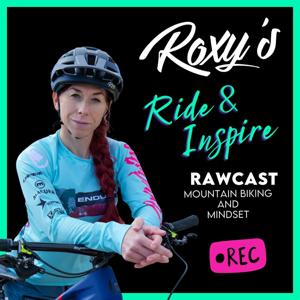
No-bla-bla Podcast about Mountain Biking, MTB Coaching, Mental Training and Mindset Improvement, hosted by Rafaella "Roxy" Wieschollek, Mountain Bike Skills Coach, Graduate Sports Mental…
Short, but inspiration-dense episodes, raw and real (thus RAWCAST), focusing on debunking mountain bike myths, sharing inspirational ideas, explaining neurological and psychological concepts in simple terms - all with the goal of making mountain biking safer and advancing the global standard of mountain bike instruction.
I focus on quality over quantity. New episodes as often as I feel inspired to share.

90,783 Listeners
1,368 Listeners
295 Listeners

111,821 Listeners
250 Listeners

56,403 Listeners
3,607 Listeners
7,907 Listeners

27,914 Listeners
634 Listeners
738 Listeners

18,923 Listeners
130 Listeners

35 Listeners
0 Listeners