
Sign up to save your podcasts
Or


Send us Fan Mail
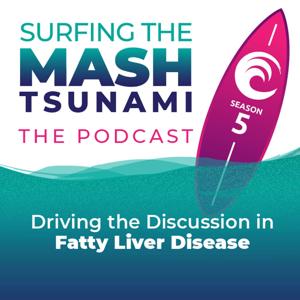
NAIL-NIT is both a response to the challenges of histopathology and an effort to create a different vision of testing liver patients.
This episode starts with Stephen Harrison describing the events that came to demonstrate how challenging current histopathology approaches: a series of drug development failures that reflect shortcomings in methodology rather than in the developmental drugs themselves. Sen Sundaram notes that the difference between the NAIL-NIT approach and that of other consortia is that NAIL-NIT seeks to link NITs directly to outcomes rather than correlating them to histopathology-based measures. Mazen Noureddin discussed the frequency at which patients with obvious NASH and fibrosis fail to screen into studies due to inability to find balloon hepatocytes in the biopsy-derived slides and raises the human ethical implications of excluding these patients. Amy Articolo encourages us to envision a future in which drugs are available to treat patients and make sure we have the best possible testing to diagnose and prescribe the proper therapeutic regimens to patients. From there, the discuss shifts as Stephen Harrison and Sen Sundaram discuss the quality of data existing today that links NITs directly to outcomes. Sen notes that "if we think about the amount of data that we have" for NITs and outcomes, "we probably have more data now than is cited to support histopathology in a current guidance."
 View all episodes
 By SurfingNASH.com


3.9
2424 ratings
Send us Fan Mail
NAIL-NIT is both a response to the challenges of histopathology and an effort to create a different vision of testing liver patients.
This episode starts with Stephen Harrison describing the events that came to demonstrate how challenging current histopathology approaches: a series of drug development failures that reflect shortcomings in methodology rather than in the developmental drugs themselves. Sen Sundaram notes that the difference between the NAIL-NIT approach and that of other consortia is that NAIL-NIT seeks to link NITs directly to outcomes rather than correlating them to histopathology-based measures. Mazen Noureddin discussed the frequency at which patients with obvious NASH and fibrosis fail to screen into studies due to inability to find balloon hepatocytes in the biopsy-derived slides and raises the human ethical implications of excluding these patients. Amy Articolo encourages us to envision a future in which drugs are available to treat patients and make sure we have the best possible testing to diagnose and prescribe the proper therapeutic regimens to patients. From there, the discuss shifts as Stephen Harrison and Sen Sundaram discuss the quality of data existing today that links NITs directly to outcomes. Sen notes that "if we think about the amount of data that we have" for NITs and outcomes, "we probably have more data now than is cited to support histopathology in a current guidance."

32,100 Listeners

30,666 Listeners
9,622 Listeners
102 Listeners

21,141 Listeners
3,360 Listeners

111,948 Listeners

56,508 Listeners

9,532 Listeners

7,995 Listeners

10,182 Listeners

6,381 Listeners

0 Listeners
425 Listeners

736 Listeners