
Sign up to save your podcasts
Or

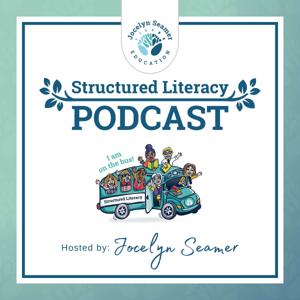

In this episode of the Structured Literacy podcast, Jocelyn examines the common classroom practice of bringing one student to the front to answer questions, arguing that while it benefits the chosen student, it creates passive learning experiences for the rest of the class whose attention spans are already limited. Drawing on research showing that Grade 1 students can maintain on-task behaviour for only about 7 minutes in natural classroom settings and citing Stanislas Dehaene's work on attention development, she demonstrates how this practice creates self-regulation challenges, split teacher attention, and extraneous cognitive load particularly when used late in lessons when students' "executive functioning fuel" is depleted.
Jocelyn advocates for evidence-informed alternatives including having all students participate simultaneously, building movement into lessons every 10 minutes to maintain engagement, and questioning whether common program practices are truly research-aligned, emphasising that effective instruction requires full participation rather than passive observation.
Has something in this episode resonated with you? Get in touch!
We have released Spelling Success in Action 1, a catch-up program for phonics, early morphology, and orthographic conventions for years 3 to 8. This program can be used one-on-one, in small groups, or as a whole class and is built on what the evidence tells us is the critical knowledge students need for strong spelling and the type of instruction that makes learning stick.
Learn more about this resource and order your copy at www.jocelynseamereducation.com
Quick Links
Jocelyn Seamer Education Homepage
The Resource Room
Youtube channel
Facebook Page
#jocelynseamereducation #literacy #bestpractice #earlyprimaryyears #primaryschool #primaryschools #primaryschoolteacher #earlyyearseducation #earlyyearseducator #structuredliteracy #scienceofreading #classroom #learning #learningisfun #studentsuccess #studentsupport #teacherlife #theresourceroom #theevergreenteacher #upperprimary #upperprimaryteacher #thestructuredliteracypodcast #phoneme #grapheme #phonics #syntheticphonics
 View all episodes
 By Jocelyn Seamer

4.2
55 ratings
In this episode of the Structured Literacy podcast, Jocelyn examines the common classroom practice of bringing one student to the front to answer questions, arguing that while it benefits the chosen student, it creates passive learning experiences for the rest of the class whose attention spans are already limited. Drawing on research showing that Grade 1 students can maintain on-task behaviour for only about 7 minutes in natural classroom settings and citing Stanislas Dehaene's work on attention development, she demonstrates how this practice creates self-regulation challenges, split teacher attention, and extraneous cognitive load particularly when used late in lessons when students' "executive functioning fuel" is depleted.
Jocelyn advocates for evidence-informed alternatives including having all students participate simultaneously, building movement into lessons every 10 minutes to maintain engagement, and questioning whether common program practices are truly research-aligned, emphasising that effective instruction requires full participation rather than passive observation.
Has something in this episode resonated with you? Get in touch!
We have released Spelling Success in Action 1, a catch-up program for phonics, early morphology, and orthographic conventions for years 3 to 8. This program can be used one-on-one, in small groups, or as a whole class and is built on what the evidence tells us is the critical knowledge students need for strong spelling and the type of instruction that makes learning stick.
Learn more about this resource and order your copy at www.jocelynseamereducation.com
Quick Links
Jocelyn Seamer Education Homepage
The Resource Room
Youtube channel
Facebook Page
#jocelynseamereducation #literacy #bestpractice #earlyprimaryyears #primaryschool #primaryschools #primaryschoolteacher #earlyyearseducation #earlyyearseducator #structuredliteracy #scienceofreading #classroom #learning #learningisfun #studentsuccess #studentsupport #teacherlife #theresourceroom #theevergreenteacher #upperprimary #upperprimaryteacher #thestructuredliteracypodcast #phoneme #grapheme #phonics #syntheticphonics

628 Listeners
897 Listeners

661 Listeners

95 Listeners
107 Listeners

434 Listeners

145 Listeners
534 Listeners
390 Listeners
646 Listeners

42 Listeners
4 Listeners
100 Listeners
109 Listeners
10 Listeners