
Sign up to save your podcasts
Or


Scientists have long suspected that vitamin D is crucial for the immune system to function properly. Presumably, that is why cod liver oil was utilized as a tonic to ward off colds and flu in northern climes. After all, as you get farther from the equator, you get less sunshine during the winter. Consequently, you make less vitamin D. How does this simple fact connect vitamin D and COVID-19?
Several studies have suggested that people whose stores of vitamin D are low may be more vulnerable to COVID-19. Dr. David Meltzer of the University of Chicago compared pre-existing vitamin D measurements with the risk of COVID-19 infection. The results of his study show a clear link between low vitamin D and COVID-19 infection risk.
Susceptibility to infection is not the only possible link between vitamin D and COVID-19. Through its impact on the immune system, vitamin D may also affect the likelihood of cytokine storm. This is a potentially deadly immune system over-reaction. Cytokine storm may occur as a consequence of many different conditions, but it appears to be one of the dangerous consequences of severe COVID-19. People with adequate levels of vitamin D seem less vulnerable to this complication.
Scientists have long associated vitamin D with strong bones. In fact, when the Institute of Medicine revised the RDA in 2010, it focused almost completely on bone health. That’s how they concluded that 600 IU daily is plenty for adults through age 70. Older people are encouraged to get 800 IU through food or supplements each day. However, vitamin D is actually a hormone and affects many tissues in addition to bone. Find out what else it does, and why pregnant women should pay attention to getting an adequate amount.
We consider why so many physicians are skeptical about the potential benefits of vitamin D supplements. Should you be taking vitamin D? If so, what form is best? How much do you need? Dr. Bruce Hollis answers these questions. In addition, he describes why African-Americans may be at higher risk for vitamin D insufficiency.
Many doctors worry that people taking supplements will get too much vitamin D and experience toxicity. While toxicity is possible, Dr. Hollis explains, it is uncommon. Not long ago, Dr. Anthony Fauci admitted that he takes a supplement providing 6,000 IU a day. That is the same dose Dr. Hollis takes himself. This dose is above the upper limit of 4,000 IU daily set by the Institute of Medicine, so be sure to check with your personal health care provider before starting to supplement. As Dr. Hollis describes, regular blood tests can reveal if you are getting an appropriate amount of vitamin D.
An expert panel in England reported this week that they don’t recommend vitamin D supplements to prevent infection. The scientists on the panel would like to see more randomized placebo-controlled trials to demonstrate the effectiveness of supplements. A study in Brazil that tested a single enormous dose of vitamin D (200,000 IU) as a treatment for COVID-19 concluded that it was not effective (MedRxiv, Nov. 17, 2020). We don’t know if well-designed studies will demonstrate a protective connection between vitamin D and COVID-19.
David O. Meltzer, MD, PhD, is Chief of the Section of Hospital Medicine, Director of the Center for Health and the Social Sciences (CHeSS) and the UChicago Urban Labs Health Lab, and the Fanny L. Pritzker Professor in the Department of Medicine, Department of Economics and the Harris School of Public Policy Studies at the University of Chicago. His article, “Association of Vitamin D Status and Other Clinical Characteristics With COVID-19 Test Results,” was published in JAMA Network Open on Sept. 3, 2020.
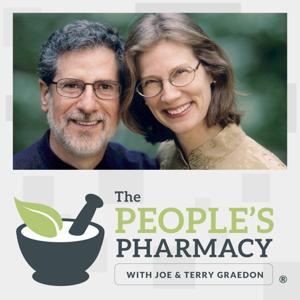
Bruce W. Hollis, PhD, is Professor of Pediatrics, Biochemistry and Molecular Biology and Director of Pediatric Nutritional Sciences at the Medical University of South Carolina in Charleston, SC. The photo is of Dr. Hollis.
The podcast of this program will be available Monday, December 21, 2020, after broadcast on December 19. The show can be streamed online from this site and podcasts can be downloaded for free. CDs may be purchased at any time after broadcast for $9.99.
Buy the CD
Download the free mp3
 View all episodes
 By Joe and Terry Graedon

4.6
12041,204 ratings
Scientists have long suspected that vitamin D is crucial for the immune system to function properly. Presumably, that is why cod liver oil was utilized as a tonic to ward off colds and flu in northern climes. After all, as you get farther from the equator, you get less sunshine during the winter. Consequently, you make less vitamin D. How does this simple fact connect vitamin D and COVID-19?
Several studies have suggested that people whose stores of vitamin D are low may be more vulnerable to COVID-19. Dr. David Meltzer of the University of Chicago compared pre-existing vitamin D measurements with the risk of COVID-19 infection. The results of his study show a clear link between low vitamin D and COVID-19 infection risk.
Susceptibility to infection is not the only possible link between vitamin D and COVID-19. Through its impact on the immune system, vitamin D may also affect the likelihood of cytokine storm. This is a potentially deadly immune system over-reaction. Cytokine storm may occur as a consequence of many different conditions, but it appears to be one of the dangerous consequences of severe COVID-19. People with adequate levels of vitamin D seem less vulnerable to this complication.
Scientists have long associated vitamin D with strong bones. In fact, when the Institute of Medicine revised the RDA in 2010, it focused almost completely on bone health. That’s how they concluded that 600 IU daily is plenty for adults through age 70. Older people are encouraged to get 800 IU through food or supplements each day. However, vitamin D is actually a hormone and affects many tissues in addition to bone. Find out what else it does, and why pregnant women should pay attention to getting an adequate amount.
We consider why so many physicians are skeptical about the potential benefits of vitamin D supplements. Should you be taking vitamin D? If so, what form is best? How much do you need? Dr. Bruce Hollis answers these questions. In addition, he describes why African-Americans may be at higher risk for vitamin D insufficiency.
Many doctors worry that people taking supplements will get too much vitamin D and experience toxicity. While toxicity is possible, Dr. Hollis explains, it is uncommon. Not long ago, Dr. Anthony Fauci admitted that he takes a supplement providing 6,000 IU a day. That is the same dose Dr. Hollis takes himself. This dose is above the upper limit of 4,000 IU daily set by the Institute of Medicine, so be sure to check with your personal health care provider before starting to supplement. As Dr. Hollis describes, regular blood tests can reveal if you are getting an appropriate amount of vitamin D.
An expert panel in England reported this week that they don’t recommend vitamin D supplements to prevent infection. The scientists on the panel would like to see more randomized placebo-controlled trials to demonstrate the effectiveness of supplements. A study in Brazil that tested a single enormous dose of vitamin D (200,000 IU) as a treatment for COVID-19 concluded that it was not effective (MedRxiv, Nov. 17, 2020). We don’t know if well-designed studies will demonstrate a protective connection between vitamin D and COVID-19.
David O. Meltzer, MD, PhD, is Chief of the Section of Hospital Medicine, Director of the Center for Health and the Social Sciences (CHeSS) and the UChicago Urban Labs Health Lab, and the Fanny L. Pritzker Professor in the Department of Medicine, Department of Economics and the Harris School of Public Policy Studies at the University of Chicago. His article, “Association of Vitamin D Status and Other Clinical Characteristics With COVID-19 Test Results,” was published in JAMA Network Open on Sept. 3, 2020.
Bruce W. Hollis, PhD, is Professor of Pediatrics, Biochemistry and Molecular Biology and Director of Pediatric Nutritional Sciences at the Medical University of South Carolina in Charleston, SC. The photo is of Dr. Hollis.
The podcast of this program will be available Monday, December 21, 2020, after broadcast on December 19. The show can be streamed online from this site and podcasts can be downloaded for free. CDs may be purchased at any time after broadcast for $9.99.
Buy the CD
Download the free mp3
21,790 Listeners

38,062 Listeners

43,528 Listeners
26,984 Listeners

3,998 Listeners
2,505 Listeners

3,071 Listeners
932 Listeners

6,435 Listeners
700 Listeners
3,014 Listeners
3,481 Listeners

1,861 Listeners
3,406 Listeners

1,178 Listeners