
Sign up to save your podcasts
Or



Following our chat with Clint in episode 52, we had a little snippet left over in which he talked briefly about his score for Loving Vincent. And given that it's out this week, we thought we'd publish it now.
The conversation is accompanied by two of his cues from the movie, Marguerite Gachet At The Piano and Wheatfield With Crows.
It's been a while since we can recall such a keenly anticipated cinematic event, or one that has then gone on to exceed all our wildest expectations. But that is what our guest this week Denis Villeneuve has achieved with Bladerunner 2049.
We discuss taking on the legacy of Vangelis - plus his trio of films with composer Jóhann Jóhannsson: Prisoners, Sicario and Arrival
Given how tragically hard we've found it to speak to women on this show, it's a genuine delight to welcome writer, director and producer Nancy Meyers to Soundtracking.
Nancy is one of the grand dames of Hollywood. Having earned an Oscar nomination for her original screenplay for Private Benjamin in 1980, she's since been responsible for a string of commercial smashes, including The Parent Trap, Something's Gotta Give and The Holiday.
Indeed, her second film as director, What Women Want, was at one stage the most successful film ever directed by a woman, taking in $183 million in the United States alone.
Her latest project is Home Again, for which she assumed the role of producer for her daughter Hallie. The film is scored by John Debney, who features prominently in the Jon Favreau episode too.
What with being one of the undoubted queens of the Rom-Com, Nancy has worked with several legendary composers over the years - from Bill Conti and Alan Silvestri to the inimitable Hans Zimmer.
You'll hear plenty of their work throughout the conversation, but where else could we begin than with Carole King?
As drummer for one of the world's most successful, respected and critically-acclaimed bands, he's thrilled music-lovers across the planet for a quarter of a century.
Now Philip Selway of Radiohead has turned his hand to film scores - taking charge of the music for Polly Steele's debut feature, Let Me Go.
Based on the memoir of Helga Schneider, Let Me Go tells the story of a woman who discovers her mother had strong ties with the Nazis many years after she was abandoned by her as a child. It features four incredibly strong and well-drawn female characters - which inspired Philip's compositions in all sorts of fascinating ways.
Philip is the first of our guests who spends most of his time being a rock-star - albeit a particularly humble and unassuming one. As such, he and Edith not only explore the specifics of his score for Let Me Go, but also the different creative challenges it posed to those he encounters in his day job.
We've had several polymaths on this show, from Jon Favreau to Matt Ross and Warren Beatty - who are as at home in front of the camera as behind it. And Stanley Tucci certaininly falls into that category - an actor, writer and director who's been involved with countless critically acclaimed works of film and television.
Stanley's latest project is Final Portrait. Starring the sensational Geoffrey Rush and Armie Hammer, it's based on the true story of the time American journalist James Lord sat for world-renowned artist, Alberto Giacometti. Critics agree it's a charming delight - as do we!
Given the 1960s Parisian setting, there were plenty of opportunities to play around with the idiomatic French music of the era. But Stanley was keen to avoid cliche, complimenting the familiar sounds of accordions and chanteuses with Evan Lurie's whimsical score. You'll hear plenty of examples of music from the film, as well as bits and bobs from Stanley's other films.
Following a string of seasoned moviemakers such as Luc Besson, Doug Liman and Steven Soderbergh, we bring you a relative novice this week in the shape of Benedict Andrews. At least - a novice in cinematic terms.
For Benedict is one of the world's foremost theatre and opera directors, who makes the transition to the screen with psychological thriller Una.
Given this is Benedict's first film, much of the conversation focuses on the differences between the mediums in which he's worked. It also gives us an opportunity to play you examples of music from his stage productions, including extracts from Alex Baranowski's smoky, cinematic score for Streetcar Named Desire, which starred Gillian Anderson.
But there's plenty to discuss when it come to Una too. Starring the ever excellent Rooney Mara and Ben Mendelsohn, the narrative centres on a woman confronting an older man about a illicit sexual relationship which took place in their past. The film is scored by Benedict's friend Jed Kurzel, whose work we discussed at length during a previous show with Jed's brother, Justin.
Jed has developed a reputation as a composer of serious weight, as evidence by the fact he and the London Contemporary Orchestra recently provided the music for Ridley Scott's Alien Covenant. Hardly surprising, then, that Benedict turned to his old mate on taking the plunge from stage to screen ...
When Edith sat down with Steven Soderbergh, he immediately told her he'd been listening to our podcast by way of research. That unsettled her a little bit, but we hope you'll agree his homework served him well - such was the magnificence of his company!
As a director, he's renowned for his expert use of both needle-drop and score - with Thomas Newman and Cliff Martinez two of his go-to composers.
His latest project Logan Lucky sees him reunited with David Holmes, with whom he struck up a most fruitful relationship on Out Of Sight and the Ocean films. And it's with Logan Lucky we began - and David's Original Score Medley that features on the soundtrack to the film ...
From indie classics Swingers and Go to big budget blockbusters The Bourne Identity and Edge Of Tomorrow, Doug Liman is a director who makes a point of thrusting the viewer into the very heart of the action.
His musical selections are central to the experience - as evidenced by the Oakenfold track which so memorably accompanied the exhilarating car chase in Bourne, and accompanies Edith's intro.
Doug's latest film is American Made. It's based on the life of Barry Seal, a commercial pilot who became a drug smuggler in the 1980s and was recruited later on by the DEA to provide intelligence.
The film is scored by Christophe Beck, who has very kindly sent us a couple of his cues from the film to exclusively feature in this episode. They're not available anywhere yet, so MASSIVE thanks to him. But as well as Christophe's original compositions, American Made also features a rip-roaring array of needle-drops from the 70s and 80s, including tracks by George Harrison, Talking Heads and the one which opens up the conversation - A Fifth Of Beethoven by Walter Murphy
It's fair to say Soundtracking might not exist without Clint. That's because the genesis of the idea formed when Edith saw him performing his film scores at the Largo in Los Angeles back in 2012.
And 5 years later, here we all are!
After his band Pop Will Eat Itself disbanded in 1996, Clint was introduced to the business when Darren Aronofsky asked him to score Pi. The pair have collaborated several times since - as part of total body of work comprising around 50 films.
During the course of the conversation, you'll hear extended extracts of Clint's work on High Rise, Moon, Pi, Black Swan and Requiem For A Dream. But we begin in the iconic venue in which this interview took place - Air Studios in London - with the main theme from the very first score he recorded there ...
From short film Pioneer to romantic crime drama Ain't Them Bodies Saints and Disney epic Pete's Dragon, David Lowery has made a habit of examining the nature of identity, family and relationships from altogether sideways perspectives.
It's an approach that's served him well - and one he uses to great effect again in his latest offering, A Ghost Story.
A Ghost Story stars Casey Affleck as the spirit of a recently deceased man who remains in the house he shared with his wife, played by Rooney Mara. It's scored by Daniel Hart, who David has worked with on many occasions. Daniel's compositions for the film stemmed from a song he wrote for his band, Dark Rooms, and you'll hear plenty of it during the course of the conversation.
Edith and David also discuss the music which inspired him as an aspiring director, and also what it's like to work with the great Robert Redford.
From the publisher's feed
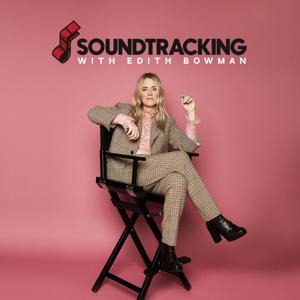
In a unique weekly podcast, Edith Bowman sits down with a variety of film directors, actors, producers and composers to talk about the music that inspired them and how they use music in their films, from their current release to key moments in their career. The music chosen by our guests is woven into the interview and used alongside clips from their films.
Useful Links
Edith's website
Ranked by our users in the last 21 days

2,033 Listeners
540 Listeners

1,163 Listeners
322 Listeners

134 Listeners
737 Listeners

109 Listeners
6,193 Listeners

4,792 Listeners
3,778 Listeners
2,760 Listeners
2,449 Listeners

108 Listeners
2,650 Listeners
769 Listeners
8,811 Listeners
10,099 Listeners
10,516 Listeners
2,978 Listeners

120 Listeners
31 Listeners
327 Listeners

815 Listeners
323 Listeners