
Sign up to save your podcasts
Or

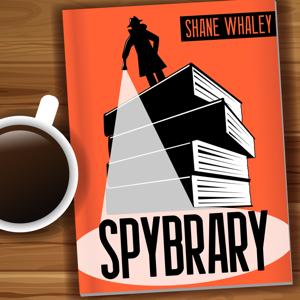


Sara Paretsky, legendary creator of V.I. Warshawski, joins me on the Spybrary Spy Podcast to talk about Bad Company — her new spy thriller featuring retired CIA officer Lily, a woman who discovers that you never really leave the Company.
We talk about Sara's leap from detective fiction into espionage, creating the fictional Central Asian country of Hayalistan, women inside the CIA, and why an older female intelligence officer offers such a different take on the traditional spy hero. Sara also reveals why she needed eight drafts to find Bad Company, the dog-sled exfiltration scene that survived every rewrite, and how questions of power, anger and voicelessness drive her fiction.
And, naturally, we talk spy books: John le Carré, Tinker Tailor Soldier Spy, Mrs Pollifax, Manning Coles and the wonderful Walter Matthau and Glenda Jackson espionage caper Hopscotch.
A fascinating conversation with one of crime fiction's most influential writers about what happens when she enters the world of spies. Join the Spybrary Community Support Spybrary - a monthly dination helps us keep the lights on at the safehouse. Full Shownotes with links to buy Sara Paretsky's Bad Company herehttps://www.spybrary.com/311
Paul Burke joins Spybrary hosts Shane Whaley and Michael Huie to discuss his new book, Spies on Screen, an ambitious guide to more than 900 spy films and television series.
From James Bond and John le Carré to Slow Horses, The Bureau, The Americans and forgotten spy thrillers, Paul explores how espionage on screen has evolved from glamorous secret agents to damaged, morally complex intelligence officers.
Along the way, the trio debate which Bond actor is closest to Ian Fleming's original creation, why The Spy Who Came in from the Cold remains one of the great adaptations, what makes The Day of the Jackal such an enduring classic, and which overlooked spy films and TV series deserve to be rediscovered.
Paul also explains why many of the best spy stories are really anti-spy stories, how streaming has transformed the genre, and why international espionage dramas are becoming more important than ever.
Plus, stay to the end for the Spybrary quick-fire round, where Paul reveals his picks for best Bond, best spy film, best spy TV series, most underrated espionage movie and more.
If you love spy films, spy TV shows and discovering hidden gems, this episode is for you.
In this episode:
Spies on Screen by Paul Burke is out now.
Visit Spybrary for more spy books, films, TV, interviews and intelligence history.
What makes a great spy novel?
For William Boyd, it is complexity, uncertainty and that irresistible feeling that, as a reader, you are constantly trying to work out who can be trusted.
In this SPOILER FREE special Spybrary conversation, Boyd joins Ollie Webb Carter (History Book Club Podcast) to discuss his Gabriel Dax novels and the latest instalment, Cold Sunset.
They explore Boyd's lifelong fascination with espionage fiction, the influence of John le Carré, the real history that feeds into his novels, and why the analogue world of Cold War spying remains such fertile ground for a novelist.
Along the way, William reveals the remarkable real-life MI6 figure who helped inspire Faith Green, shares his thoughts on the JFK assassination, reflects on the old-boy network that once dominated British intelligence, and explains how a television project that never came to fruition ultimately helped give birth to Gabriel Dax.
They also discuss:
• Why the best spy novels force the reader to think • Betrayal, false identities and the double and triple bluff • John le Carré and the literary tradition of spy fiction • How Gabriel Dax is gradually becoming a more accomplished spy • The real intelligence officer behind Faith Green • MI6, the CIA and Cold War regime change • Why modern surveillance makes contemporary espionage harder to write • The unexpected origins of the Gabriel Dax series • What could come next for Gabriel
A fascinating conversation with one of Britain's most celebrated novelists about spies, history, writing — and the enduring appeal of espionage fiction.
Featuring William Boyd in conversation with Ollie Webb Carter for Spybrary.
What if the CIA and MI6 stopped behaving like allies—and started spying on each other?
David McCloskey joins Tim Shipman to discuss London Station, his fifth spy novel, and the real intelligence relationship behind its central premise.
McCloskey explains why the CIA–SIS "Special Relationship" can sometimes resemble a dysfunctional marriage, what the CIA Chief of Station in London actually does, and how conversations with former American and British intelligence officers shaped the book. He also introduces the wonderfully British intelligence concept of "deep chat"—those unofficial conversations where trusted allies may share rather more than appears in the official cables.
There's plenty for Artemis Procter fans too. David discusses her move to London, why she is spectacularly ill-suited to the diplomatic side of the job, and the changes the character is going through.
And then comes one of the episode's best stories: McCloskey reveals what happened when he unexpectedly came face-to-face at CIA headquarters with the former colleague he had in mind when he first created Artemis.
Plus: Bobby Jerome, CIA vs MI6 tensions, how McCloskey researched Vauxhall Cross, his direct sequel to Damascus Station, the Artemis TV series, Moscow X on film, and what's coming next.
A must-listen for David McCloskey readers, Artemis Procter devotees, and anyone fascinated by the real world behind modern spy fiction.
A propulsive, high-stakes thriller—Robert McCaw delivers a gripping tale of espionage, betrayal, and deception amid the race to expose Russian moles at the highest levels of the US government. Tense, timely, and full of international intrigue, Traitors will keep you on the edge of your seat. Highly recommended.
David McCloskey, former CIA analyst and author of The Persian Author Robert B McCaw joins us to discuss Traitors, a geopolitical thriller shaped by his background in law, Washington and international affairs. He reveals how real-world stories involving Russia, Ukraine, Finland, nuclear weapons and ballistic submarines helped inspire the novel—and how his legal experience taught him to think about lies, interrogation and the search for truth. Support Spybrary every month with a small donation and help us keep the lights on at the Spybrary Safehouse McCaw also explains why he believes a thriller writer has to "play fair" with the reader: the clues should be there, the twists should feel earned, and even the most dramatic developments need to feel possible. Along the way, we explore his unusual path to publication—from spending nearly 20 years on his first novel and self-publishing it, to a chance encounter on a Mediterranean cruise that led to a literary agent and, eventually, Traitors being published by W. W. Norton.
In this episode of Spybrary, host Matthew Hurst talks with author Jinwoo Park about his debut novel, The Oxford Soju Club.
The book centres on North Korean spies and their Korean American adversaries, who are regulars at an Oxford restaurant run by an oblivious South Korean. It's as much about the psychology of their ethnic identities as shoot outs and chases.
Jinwoo discusses how the book developed from a simple action thriller to drawing out parallels of how deep cover spies and immigrants share a need to to mould themselves to their surroundings.
The conversation explores Jinwoo's influences, from the Bourne films and Robert Ludlum to John le Carré and The Sympathizer, to conversations with his uncle — a former deputy director in South Korea's National Intelligence Service. It also explains why spies should never be rude to taxi drivers.
Support Spybrary on Patreon, every little helps us produce content for you.
Cold War Spies Series with Shane Whaley
For decades, Sweden presented itself as neutral and determined to remain outside the Cold War struggle between East and West. But behind that public image, the Swedish Stay Behind network was preparing for an altogether darker possibility: Soviet occupation.
Shane Whaley is joined by Swedish historian and author Johan Wennström to uncover the extraordinary story of Sweden's secret Stay Behind resistance network — a clandestine organisation created in 1949 to operate behind enemy lines in the event of a Soviet invasion.
Drawing on previously classified documents, archival research and first-hand testimony from surviving members, Johan reveals how ordinary Swedes — farmers, insurance brokers, businessmen and travelling salesmen — were secretly recruited into cells designed to survive occupation.
They trained in intelligence gathering, clandestine communications, psychological warfare and resistance operations, all while keeping their involvement hidden from colleagues, friends and even their own families.
We also explore Sweden's real relationship with NATO during the Cold War, Soviet submarine incursions, Cold War traitors, the human cost of living a secret life — and why one of Sweden's most important intelligence chiefs bears an uncanny resemblance to George Smiley.
And, naturally, the conversation eventually turns to spy fiction, John le Carré, Len Deighton, Carl Hamilton, Jan Guillou and the surprisingly underdeveloped world of Swedish spy novels.
Simon Conway returns to Spybrary to discuss his latest espionage thriller, The British Agent — a contemporary, globe-spanning story involving missing British-made surface-to-air missiles, Ukraine, American extremist militias, political conspiracy, and an audacious plot targeting.... Support Spybrary here and help us produce more spy author interviews.
Spybrary's David Craggs talks with Simon Conway about the creation of his new protagonist, Chuff, why he decided to leave behind the recurring characters of his earlier novels, and how his real-world experience informs the weapons trafficking and intelligence elements of the story.
The conversation also explores the complicated people drawn into extremist movements, the influence of algorithms and conspiracy theories, a fascinating connection between The British Agent and the Gunpowder Plot, and whether Chuff might return in a future novel.
Simon also discusses the long, uncertain road from novel to screen adaptation.
The novelist Graham Greene ranks at number 6 on Tim Shipman's infamous Best Spy Writers list — and yet we haven't given him enough airtime on the podcast. Time to put that right.
Graham Greene didn't just write about spies — spying was the family business. His uncle founded Naval Intelligence. His sister recruited him into SIS. And Greene himself walked out of the Service the day before D-Day. Why? The answer may involve his boss and drinking companion: Kim Philby.
Guest host Matt Hurst debriefs Professor Kevin Ruane — Greene scholar and Director of the Graham Greene International Festival — on the novelist's secret double life.
In this episode:
This is the first of what we hope will be many episodes exploring the great spy novelists — subscribe to Spybrary so you don't miss what's coming.
The Graham Greene International Festival runs 24-27 September in Berkhamsted, UK — 30 minutes from London Euston. Spy highlights include Ben Brown's play A Splinter of Ice, Robert Verkaik on The Writer and the Traitor, and le Carré biographer Adam Sisman on Greene and le Carré. Tickets at grahamgreenebt.org
All links at spybrary.com/306
In this episode of the Spybrary Spy Podcast, Shane Whaley is joined by fellow Spybrarian and Head of Boston Station, Joe Modzelewski, to welcome bestselling espionage author Charles Cumming back to the show. Support us on Patreon for even more content. Charles joins Spybrary to discuss his new Lachlan Kite thriller, ICARUS 17, released on 2 July in the UK and 7 July in the United States. Billed as a nail-biting new entry in the BOX 88 series, ICARUS 17 sees Kite pulled back into fieldwork when Martha Rain, a woman from his past, asks for his help in finding her missing son, Max.
Max and his girlfriend Yasmine have disappeared in Athens, but they are not simply missing. They are on the run, hunted by two rival agencies with orders to kill. The secret they are carrying could destabilise the Middle East for a generation, and if Kite fails to save them, the consequences will be catastrophic.
Alongside the new novel, Shane and Joe talk with Charles about his writing process, his approach to writing modern espionage fiction, and his experiences working in the writers' rooms of some of the spy television shows and films enjoyed by Spybrary listeners.
From the publisher's feed
Ranked by our users in the last 21 days
1,526 Listeners

583 Listeners
85 Listeners
276 Listeners
466 Listeners
1,946 Listeners
147 Listeners
15,577 Listeners
216 Listeners
347 Listeners
335 Listeners

2,431 Listeners
100 Listeners
56 Listeners
1,089 Listeners