
Sign up to save your podcasts
Or



In this episode, our hosts are joined by Tom Harris, a spray foam insulation expert, who discusses the topic of hot roofs and the proper installation of spray foam insulation. He explains the concept of hot roofs, where the thermal boundary is moved to the roof deck, and the different applications and challenges associated with hot roofs. Tom emphasizes the importance of proper installation and the choice of spray foam type based on climate and region. He also discusses the need for thermal barriers and ignition barriers to protect the foam and comply with building codes. Additionally, Tom addresses concerns about shingle warranties and provides insights into foam recommendations for different climate zones. In this conversation, Tom Harris discusses the limitations and capabilities of different insulation materials, including fiberglass and spray foam. He explains how fiberglass insulation can transport air and degrade thermal efficiency, while spray foam acts as an air barrier and doesn't get wet. Tom also discusses the requirements for ignition barriers and fire barriers. He highlights the importance of properly insulating crawl spaces and attics and the benefits of using spray foam in these areas. Finally, he addresses the potential issues of using closed-cell foam directly on the interior of foundation walls without exterior waterproofing or damp-proofing.
Takeaways
Fiberglass insulation can transport air and degrade thermal efficiency, while spray foam acts as an air barrier and doesn't get wet.
Spray foam outperforms its stated R-value by adding concepts of air barrier and moisture control.
Ignition barriers and fire barriers are important for safety and code compliance.
Proper insulation of crawl spaces and attics is crucial for energy efficiency and comfort.
Closed-cell foam is a good option for insulating foundation walls, but exterior waterproofing or damp-proofing is recommended.
Chapters
00:00 Introduction and Background
03:01 Understanding Hot Roofs
06:04 Proper Installation of Hot Roofs
09:01 Choosing the Right Spray Foam
11:58 Protecting Foam with Thermal Barriers
20:59 Identifying Thermal Barriers and Ignition Barriers
24:57 Foam Recommendations for Different Climate Zones
28:04 Importance of Air Leakage Control
29:01 Limitations and Capabilities of Insulation Materials
32:07 Ignition Barriers and Fire Barriers
40:41 Insulating Crawl Spaces and Attics
45:37 Insulating Foundation Walls
In this episode, Reuben Saltzman and Tessa are joined by Tom Harris, who discusses the importance of a clean surface before spraying spray foam and compares it to preparing a surface for house paint. He also explains the need for adhesion testing and the different surface preparation requirements for various materials. Tom emphasizes the significance of surface temperature and how it affects the application of spray foam. He delves into the concept of high-lift foam and its benefits, as well as the considerations and challenges associated with spraying multiple layers. Tom also highlights the changing mindset of contractors, who are now more focused on doing the job right and seeking knowledge. Lastly, he shares his thoughts on DIY froth packs and their limitations. The conversation covers different types of spray foam technology, the importance of isolation and ventilation during installation, off-gassing and odor control, and the proper application and mixing of spray foam.
Takeaways
A clean surface is crucial before spraying spray foam, similar to preparing a surface for house paint.
Adhesion testing is important to ensure proper bonding between the foam and the substrate.
Surface temperature plays a significant role in the application of spray foam, and different formulations are available for different temperature ranges.
The high-lift foam allows for thicker passes of spray foam, reducing the need for multiple layers and increasing productivity.
Contractors are increasingly focused on doing the job right and seeking knowledge to improve their skills and understanding of spray foam insulation. There are different types of spray foam technology, including plural component and single component foam.
Isolation and ventilation are crucial during spray foam installation to control odors and airborne contaminants.
Proper application and mixing of spray foam are essential to prevent issues such as thermal degradation and off-gassing.
Consulting with experts and following manufacturer guidelines is important for ensuring the successful installation of spray foam.
Chapters
00:00 Introduction and Recap
00:58 Importance of a Clean Surface
04:08 Adhesion Testing
07:30 Surface Temperature and Application
10:02 Adjusting Chemistry for Different Temperatures
15:11 Spraying Multiple Layers and High Lift Foam
23:05 Density Distribution and Shrinkage
28:11 Contractors' Quest for Knowledge
29:35 DIY Froth Packs
30:32 Different Types of Spray Foam Technology
33:36 Importance of Isolation and Ventilation
38:13 Off-Gassing and Odor Control
42:56 Proper Application and Mixing of Spray Foam
In this episode, Reuben Saltzman and Tessa Murry are joined by Tom Harris, an expert in spray foam insulation. They discuss the challenges and complexities of spray foam application, the common applications of spray foam, and the training and certification required for spray foam installers. They also explore the qualifications and training of spray foam contractors and the potential mistakes and challenges that can arise during installation. Tom Harris discusses the differences between open-cell and closed-cell foam insulation in this conversation. He explains that closed-cell foam is solid and rigid, while open-cell foam is fluffy and can be easily compressed. Tom emphasizes the importance of surface preparation and proper installation to ensure the foam adheres correctly. He also highlights the significance of measuring foam thickness to meet code requirements. Additionally, Tom addresses the confusion between open-cell and closed-cell foam in terms of vapor permeability and the need for additional vapor protection. The conversation concludes with plans for a future discussion on spray foam insulation.
Takeaways
Spray foam insulation is a versatile and effective insulation material used in various applications, including walls, attics, and foundations.
Spray foam installers should undergo training and certification from organizations like the Spray Polyurethane Foam Alliance (SPFA) and manufacturers of the equipment and chemicals used.
While there is no formal licensing requirement for spray foam installation, contractors need to have the necessary knowledge and experience to ensure proper installation.
Mistakes in spray foam installation can lead to insulation deficiencies, reduced energy efficiency, and potential health and safety hazards. Closed-cell foam is solid and rigid, while open-cell foam is fluffy and can be easily compressed.
Proper surface preparation and installation are crucial for foam adhesion.
Measuring foam thickness is important to meet code requirements.
There is a difference between open-cell and closed-cell foam in terms of vapor permeability and the need for additional vapor protection.
Chapters
00:00 Introduction and Scheduling Challenges
00:46 Introducing Tom Harris
06:00 Introduction to Spray Foam Insulation
11:30 Challenges and Complexity of Spray Foam Application
14:08 Common Applications of Spray Foam
24:00 Qualifications and Training of Spray Foam Contractors
25:10 Training and Experience of Spray Foam Assistants
26:28 Mistakes and Challenges in Spray Foam Installation
27:15 Differentiating Open-Cell and Closed-Cell Foam
30:12 Surface Preparation and Installation
33:07 Moisture Content and Vapor Protection
36:15 Differences Between Open Cell and Closed Cell Foam
40:08 Chemical Makeup of Open-Cell and Closed-Cell Foam
42:09 Proper Application and Mixing
44:27 Indications of Improper Foam Installation
46:16 Importance of Measuring Foam Thickness
48:37 Conclusion and Future Discussion
In this conversation, Reuben Saltzman and Doug Nething from Dean's Tank discuss the history and concerns related to fuel oil tanks. They cover topics such as the transition from coal to fuel oil after World War II, the introduction of natural gas, the shelf life of fuel oil tanks, the dangers of abandoned tanks, and the process of filling or removing buried tanks. They also provide insights into the sizes of tanks and how to identify if a property has a buried tank. In this conversation, Doug from Dean's Tank shares his expertise in identifying and removing buried fuel oil tanks. He explains the visual cues and signs to look for when determining the presence of a buried tank, such as vent pipes and copper tubes. Doug also discusses the costs associated with removing fuel oil tanks, including permits and soil sampling. He shares some interesting stories of unusual tank installations and highlights the importance of the Petro Fund in Minnesota. The conversation concludes with plans for future collaboration between Doug and the hosts.
Chapters
00:00 Introduction and Background
02:39 History of Fuel Oil Tanks
07:18 Transition to Natural Gas
10:42 Concerns with Abandoned Fuel Oil Tanks
15:23 Shelf Life of Fuel Oil Tanks
20:24 Buried Fuel Oil Tanks Underneath Houses
25:30 Sizes of Buried Fuel Oil Tanks
26:30 Filling or Removing Buried Tanks
29:06 Identifying Buried Fuel Oil Tanks
29:52 Identifying Buried Fuel Oil Tanks
31:07 Identifying Buried Fuel Oil Tanks (contd.)
35:43 Costs of Removing Fuel Oil Tanks
39:11 Soil Sampling and Abandonment in Place
41:22 Unusual Tank Installations
45:12 Fuel Oil Tanks in Other States
48:46 Minnesota's Petro Fund
51:47 Interesting Findings
52:23 Future Collaboration
In this episode, Reuben and Tessa discuss the importance of mold testing and the transition to offering mold inspections. They introduce the guests from All Dry Services, a company that specializes in mold remediation. The conversation highlights the need for mold inspections as a precautionary measure and to address health concerns. The guests explain the services they provide, including water restoration and sewage cleanups. The chapter also covers the evolution of mold inspections and the certifications required for mold testing. In this conversation, Eric Houseman, Tessa Murry, Reuben Saltzman, Sean Grenfell, and Jason Schlafer discuss various aspects of mold testing and remediation. They cover certifications required for mold testing and remediation, the process of mold remediation, cleaning mold on different surfaces, determining when DIY mold remediation is appropriate, cleaning mold in attics, and the need for mold testing standards. They also highlight the importance of proper mold remediation to ensure a healthy living environment.
Takeaways
Mold inspections are important as a precautionary measure and to address health concerns.
Offering mold inspections can reduce complaints and provide clients with peace of mind.
AllDry offers a range of services including mold remediation, water restoration, and sewage cleanups.
The evolution of mold inspections has led to a more comprehensive approach that focuses on identifying the root cause of moisture intrusion.
Certifications such as CMSI (Certified Mold Inspection) are available for professionals in the mold testing industry. Certifications such as CMSI (Certified Structural Mold Investigator) and IICRC (Institute of Inspection, Cleaning, and Restoration Certifications) are important for professionals in the mold testing and remediation industry.
Mold remediation involves containment, neutralization, and removal of mold, as well as cleaning and scrubbing the air to ensure a healthy living environment.
Different surfaces require different cleaning methods for mold removal, and it is important to assess the extent of mold damage before deciding on the appropriate approach.
Determining whether DIY mold remediation is suitable depends on the severity of the mold problem and the homeowner's capabilities.
Cleaning mold in attics involves investigating the cause of moisture, treating the affected areas with antimicrobial solutions, and encapsulating surfaces to prevent further mold growth.
The absence of mold testing standards in the United States creates confusion and anxiety, and there is a need for standardized guidelines specific to the country.
All Dry Twin Cities is a professional mold remediation company with a small but dedicated team that provides high-quality services to ensure a safe and healthy living environment.
Chapters
00:00 Introduction and Guest Introductions
03:14 The Importance of Mold Testing
08:09 Transition to Offering Mold Testing
13:01 Frequency of Mold Inspections
14:25 Introduction to AllDry
16:14 The Evolution of Mold Inspections
19:47 Certifications for Mold Testing
21:04 Certifications for Mold Remediation
22:18 Process of Mold Remediation
26:10 Cleaning Mold on Different Surfaces
28:12 Cleaning Mold on Concrete Block Walls
29:24 Determining DIY vs Professional Mold Remediation
31:08 Cleaning Mold in Attics
33:50 Mold Testing Standards
36:24 Size of All Dry Twin Cities Team
In this conversation, Reuben, Tessa, and Ben discuss Ben's recent plumbing project and the challenges he faced. They then delve into the topic of security cameras, covering different types, wired vs wireless options, and considerations for nighttime performance. They also discuss the importance of wiring needs in new homes and the benefits of future-proofing with cabling. The conversation concludes with a discussion on surge protection for electrical panels and the emergence of smart electrical panels. Also the future of electrical panels, advancements in media systems, the availability of smart home consulting, and the implications for home inspections.
Takeaways
Consider replacing old galvanized pipes with PEX for improved water pressure.
When choosing security cameras, consider the nighttime performance and whether wired or wireless options are more suitable for your needs.
Plan for future wiring needs in new homes, including network cables and dedicated connections for media playback devices.
Install surge protection devices for both the whole house and incoming telecommunications lines to safeguard against power surges. Check out Reuben's video showing how it's done.
Smart electrical panels offer power monitoring, load sharing, and load shedding capabilities, providing greater control and efficiency. Electrical panels are becoming more advanced and may be controlled remotely in the future.
The new ATSC 3.0 standard for over-the-air TV broadcasts supports higher resolution and 4K content.
Some specialized contractors and companies can provide smart home consulting services.
Home inspectors should consider what smart home technologies are inspectable and provide recommendations for homeowners. Structure Tech has started adding this disclaimer to their home inspection reports:
Chapters
00:00 Ben's Plumbing Woes
03:00 Introduction to Security Cameras
06:02 Types of Security Cameras
09:23 Wired vs Wireless Cameras
12:03 Nighttime Performance of Cameras
13:27 Customizing Camera Settings
18:54 Wiring Needs for New Homes
23:19 Future-Proofing Your House with Cabling
25:11 Surge Protection for Electrical Panels
31:48 Smart Electrical Panels
37:42 Future of Electrical Panels
39:19 Advancements in Media Systems
46:47 Availability of Smart Home Consulting
50:59 Implications for Home Inspections
57:11 Conclusion
In this podcast episode, Reuben and Tessa are joined by Dr. Ben Franske to discuss various aspects of smart home technology. They cover topics such as the marketing of smart home products, the integration of AI in smart home devices, and the considerations for permanent installations. They also delve into the security concerns surrounding smart locks and the battery life of these devices. The episode concludes with a discussion on gateways and hubs in the smart home ecosystem. The conversation covers various aspects of smart home technology, including entertainment systems, smart TVs, physical media, streaming in cars, and the obsolescence of built-in technology.
Takeaways
Smart home technology is evolving rapidly, with marketers using the term 'smart home' to encompass a wide range of products.
When considering permanent smart home installations, it is important to evaluate the lifespan of the technology and ensure serviceability.
Security concerns surrounding smart locks should be taken into account, but the risk of hacking is often outweighed by the vulnerabilities of physical locks.
Battery life can be a challenge for smart locks, and it is important to choose devices that are compatible with the existing infrastructure.
Gateways and hubs play a crucial role in connecting different smart home devices and protocols, providing a centralized control system. Smart home technology has greatly simplified entertainment systems, eliminating the need for complex setups and wired zones.
Smart TVs and external devices both have their advantages, but it's important to consider the longevity and user experience of built-in technology.
There is a resurgence of interest in physical media, such as Blu-rays and vinyl records, due to concerns about streaming service availability and ownership.
Streaming media in cars can be challenging, and the most common solution is to pre-download content onto tablets or use dedicated streaming devices.
Built-in technology can become obsolete quickly, so it's important to consider the long-term value and flexibility of devices and systems.
Chapters
00:00 Introduction and Weather
01:23 Introduction of Guest
03:01 Interest in Smart Home Technology
04:19 Marketing of Smart Home Products
05:13 Smart Electrical Panels
06:25 Evolution of Smart Lighting
08:16 Integration of AI in Smart Home Products
09:44 Considerations for Permanent Smart Home Installations
11:39 Permanent Outdoor Lighting
13:47 Types of Smart Lights
16:22 Serviceability of Permanent Installations
21:44 Smart Locks and Security Concerns|
23:33 Hacking and Security Risks
26:46 Smart Lock Battery Life
30:42 Smart Lock Battery Issues
32:47 Gateways and Hubs
38:11 Entertainment and TV Systems
42:07 Smart TVs vs. External Devices
44:04 Resurgence of Physical Media
46:47 Streaming in Cars
50:36 The Obsolescence of Built-in Technology
In this episode, Reuben Saltzman and Tessa welcome Anna Saltzman, who is part of the leadership team at StructureTech. They discuss the topic of deal killers and the reputation that home inspectors have for potentially killing real estate deals. Anna shares her experience in her role overseeing the growth department and how her perception of the job has evolved. They delve into the data on deals not going through and the factors that contribute to this. The conversation highlights the importance of communication, context, and providing the next step for clients. In this conversation, Anna expresses her disappointment in not having any exciting revelations to share. The hosts joke about breaking up with the podcast and discuss their anticipation for future episodes. They acknowledge the controversial nature of the topics discussed and the multitude of opinions that exist within the home inspection community. The conversation ends with closing remarks and a promise of a follow-up episode.
Takeaways
Home inspectors have a reputation as deal-killers, but data shows that StructureTech's percentage of deals not going through is lower than the national average.
The size of the company and the volume of inspections can contribute to the perception of being deal killers.
Effective communication, providing context, and giving clients the next step is crucial in managing expectations and preventing deal breakers.
Continuous improvement and feedback are essential for home inspection companies to maintain a positive reputation and provide the best service to clients and real estate agents. Sometimes conversations may not yield the desired outcomes or revelations.
Controversial topics can generate diverse opinions and perspectives.
The home inspection community has a wide range of viewpoints on addressing various issues.
Future episodes may explore more exciting and engaging topics.
Chapters
00:00 Introduction and Welcoming Anna Saltzman
02:13 Anna's Role in the Growth Department
03:04 Anna's Experience and Perception of the Job
04:08 The Topic of Deal Killers
05:02 Researching the Data
06:09 Longstanding Reputation of Being Deal Killers
08:29 Balancing Integrity and Keeping Real Estate Agents Happy
09:20 The Importance of How Information is Presented
10:09 Educating Clients and Preparing Them for Inspection Results
11:16 The Role of Knowledgeable Agents in Preventing Deal Breakers
12:53 National Average of Homes Not Going to Closing
13:41 StructureTech's Data on Deals Not Going Through
14:57 Addressing a Specific Client's Multiple Inspection
18:30 Negative Feedback and Damage Control
19:00 The Size of the Company and Volume of Inspections
22:38 Dealing with Clients Who Won't Be Satisfied
23:31 The Importance of Giving Clients the Next Step
25:08 The Takeaway: StructureTech's Reputation and Continuous Improvement
26:41 Comparing StructureTech to Other Home Inspection Companies
28:23 The Challenges of the Home Buying Process
30:31 The Role of Communication and Context in Inspections
32:10 Providing the Next Step for Clients
34:35 Conclusion and Thank You
34:58 Disappointment and Anticipation
In this episode, Reuben and Tessa discuss the trending topic of cold plunges or cold water exposure. They share their personal experiences with cold plunges and provide insights on creating a cold plunge at home. The benefits and considerations of cold plunges are explored, along with alternative methods for cold water exposure. Reuben shares his affordable and accessible setup for cold plunges. The episode concludes with a discussion on the health benefits of cold plunges and Reuben's personal results in improving his cholesterol levels through dietary changes.
Here’s a link to The China Study: https://amzn.to/48KniBm.
Check out the link below to the blog post on cold plunges:
https://structuretech.com/cold-plunge/.
Takeaways
Cold plunges or cold water exposure is a trending topic with numerous health benefits.
Creating a cold plunge at home can be affordable and accessible with the right setup.
Cold plunges can improve immune system function, reduce stress, and provide a sense of rejuvenation.
Dietary changes, such as a whole food plant-based diet, can have a positive impact on cholesterol levels.
Chapters
00:00 Introduction and Topic Introduction
01:32 Cold Plunges as a Trending Topic
03:13 Wim Hof and Cold Water Exposure
04:42 Personal Experiences with Cold Plunges
06:18 Creating a Cold Plunge at Home
07:44 Duration and Frequency of Cold Plunges
08:33 Benefits and Considerations of Cold Plunges
10:24 Alternative Methods for Cold Water Exposure
13:54 Affordability and Accessibility of Cold Plunges
15:16 Personal Experiences and Motivation
18:56 Cold Plunges in Extreme Cold Climates
20:28 Logistics and Automation of Cold Plunges
22:07 Draining and Water Usage
23:10 Health Benefits and Personal Results
26:38 Dietary Changes and Cholesterol Levels
28:56 Conclusion and Appreciation
In this episode, Reuben and Tessa are joined by Sue Gardner, a retired firefighter, to discuss fire safety. They cover topics such as the causes of house fires, the difference in fire behavior in old and new houses, the importance of smoke alarms and fire escape plans, and the use of fire blankets and fire extinguishers. Sue also shares a story about pre-planning a fire and the importance of following established procedures. Overall, the conversation emphasizes the importance of fire prevention and preparedness in keeping homes and occupants safe. Please see link for the video of the comparison between legacy room and modern room during fire: https://youtu.be/IEOmSN2LRq0?si=6zfkzVpdRQdFAr0h
Takeaways
Install smoke alarms on every floor of your home and ensure they are in working order.
Create and practice a fire escape plan with your family, including identifying a meeting place outside the home.
Consider having fire extinguishers and fire blankets in your home for added safety.
Be cautious with space heaters, ensuring they are not placed near flammable materials and are in good working condition.
Understand the fire behavior in different types of structures and take appropriate precautions.
Follow building codes and regulations to enhance firefighter safety and prevent fire incidents. Firefighters need to take their time and be cautious during firefighting operations.
Fire safety includes having an evacuation plan, checking smoke detectors, and having the right fire extinguishers.
Space heaters should be updated to avoid drawing too much power.
Listeners are encouraged to email the podcast with thoughts, questions, concerns, or show ideas.
Chapters
00:00 Introduction and Listener Request
01:10 Introduction of Sue Gardner
02:12 Sue's Career as a Firefighter
03:43 Difference in Fire Behavior in Old and New Houses
06:03 Causes of House Fires
07:07 Faster Fire Spread in Newer Construction
08:32 Impact of Building Codes on Firefighter Safety
10:55 Importance of Smoke Alarms
13:19 Types of Smoke Alarms
16:11 Importance of Fire Escape Plans
17:36 Fire Escape Ladders
19:03 Fire Extinguishers
20:06 Increased Fire Risk in Winter
22:27 Fire Behavior in Different Structures
24:00 Preventing Fires from Space Heaters
25:21 Fire Blankets
28:07 Chimney Fires
30:40 Sue's Story: Pre-Planning a Fire
34:55 Firefighting experiences
35:28 Fire safety tips
36:10 Conclusion and closing remarks
From the publisher's feed
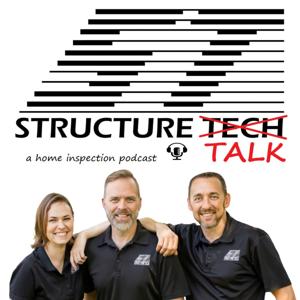
Structure Talk is a podcast about houses, home maintenance, home ownership, buying and selling houses, and of course, home inspections.
The show is hosted by Reuben Saltzman at
Our podcast is sponsored by Inspector Empire Builder.
Email us at [email protected]

16,689 Listeners

4,380 Listeners

32,776 Listeners
33,477 Listeners

46 Listeners

52 Listeners

2,647 Listeners
230 Listeners
380 Listeners

888 Listeners

9 Listeners

12 Listeners

33 Listeners

12 Listeners

3 Listeners