
Sign up to save your podcasts
Or



In this podcast, Reuben and Tessa discuss the problems with chimneys and the venting of exhaust gases from appliances. It highlights the issues with older masonry chimneys and the need for proper venting with more efficient appliances. They also discuss the importance of chimney liners for gas appliances in older homes. They highlight the potential dangers of not properly venting gas appliances and the risk of condensation and chimney deterioration. They emphasize the need for HVAC contractors to go beyond simply connecting appliances to the chimney and to ensure proper venting. The conversation concludes with a reminder for homeowners to consider the potential unintended consequences of upgrading their heating systems in older homes.
Takeaways
Older masonry chimneys are not suitable for venting more efficient appliances
Clay tile liners protect the chimney from corrosion
Condensation and back drafting can occur when the chimney is not properly heated
Modifying the chimney is necessary to accommodate the lower heat output of newer appliances HVAC contractors often need to pay more attention to properly vent gas appliances, leading to potential problems with condensation and chimney deterioration.
Installing a chimney liner is necessary for gas appliances in older homes to reduce condensation and ensure proper venting.
The cost of installing a chimney liner can vary depending on the height and accessibility of the chimney.
In some cases, it may be more cost-effective to install a power vent water heater instead of lining the chimney.
Homeowners should know the potential unintended consequences of upgrading their heating systems in older homes.
Chapters
00:00 Introduction and Background
04:59 The Dangers of Improper Venting
08:40 The Importance of Awareness and Education
09:58 Efficiency of older and newer appliances
10:33 Preventing Chimney Venting Issues
11:54 Chimney temperature and exposure to elements
14:40 Dangers of condensation and back-drafting
15:44 The need for chimney liners
20:29 Installing metal liners
24:55 Power vent as an alternative to liners
27:12 Unintended consequences of energy efficiency upgrades
29:19 Importance of hiring a chimney contractor
In this podcast, Reuben Saltzman and Tessa Murry discuss their allergy experiences and the necessity of maintaining healthy indoor air quality. They move on to the major topic of deck safety, emphasizing the importance of correct attachment to the house as the leading cause of deck collapse. They refer to the standards and guidelines in the building code and the Prescriptive Residential Wood Deck Construction Guide. They emphasize the need to adhere to these recommendations to maintain deck safety. Reuben mentions that brick veneer is an exception, since a special fastener known as the Simpson Strong-Tie can install a deck through the brick veneer.
Please check the links below for the following topics:
How to inspect your own deck:
https://structuretech.com/minnesota-deck-inspections/
Prescriptive Residential Wood Deck Construction Guide (DCA-6):
https://structuretech.com/wp-content/uploads/2021/05/DCA-6-Deck-Book-2015-IRC.pdf
Decks attached through brick veneer:
https://structuretech.com/decks-attached-through-brick-veneer/
Takeaways
Maintaining good air quality in the home is important for allergy sufferers.
Proper attachment to the house is crucial for deck safety.
The building code and the Prescriptive Residential Wood Deck Construction Guide provide guidelines for deck construction.
Different methods of attaching a deck ledger board to the house include lag screws, through bolts, and specialized fasteners.
Following these guidelines is essential to ensure deck safety. Proper attachment of a deck ledger board to a house is crucial for deck stability and safety.
Different attachment methods include using lumber or engineered floor trusses to attach the ledger board to the rim joist or band joist of the house.
Siding and wall coverings need to be removed before attaching the ledger board, except in the case of brick veneer where a special fastener called the Simpson Strong Tie can be used.
Flashing over the ledger board is essential to prevent water intrusion and potential damage to the house.
Lateral load connectors are required to ensure a secure connection between the deck and the house.
Frost heave can be a problem in colder climates, and alternative footing options such as helical piers or diamond piers can be used to mitigate this issue. Proper construction techniques and adherence to building codes are crucial for deck safety.
Deck footings should be properly designed and installed to prevent settling and movement.
Ledger board attachment is a critical area that should be carefully inspected to ensure stability.
Deck posts should be securely attached to footings and properly supported to prevent movement.
Joist hangers should be the correct size and properly installed with the appropriate nails.
Rot is a common issue on decks, especially on the end grain of wood and where cuts have been made.
Guardrails should be strong and able to resist 200 pounds of pressure along the top rail.
Deck lifespan can vary depending on the materials used, with the bones of the deck lasting 30-40 years and deck boards lasting around 15-20 years.
Deck replacement can be a significant expense, and homeowners should budget accordingly.
Composite materials are becoming more popular for decks due to their longer lifespan and lower maintenance requirements.
Chapters
07:48 Requirements for Building a Deck
26:06 Exception for Brick Veneer
35:24 Considerations for Different Situations
48:08 Deck Footings and Ledger Board Attachment
58:27 Guardrails: Strength and Pressure Resistance
In this episode, Reuben Saltzman and Tessa Murry cover various topics related to home inspections, attic access, and home inspectors' challenges. It also delves into the importance of accessing attics and crawl spaces during home inspections and the impact of contractual obligations on the inspection process. The conversation covers the challenges of accessing and inspecting attics in home inspections, including the resistance from sellers and listing agents, the lack of inspection by building officials, and the proposal for a checkbox on the purchase agreement to address attic access. The discussion also highlights the importance of attic inspections in new construction homes and the potential defects found in attics. The episode concludes by mentioning continuing education classes for real estate agents.
Takeaways
Attic and crawl space access is crucial for home inspections
Contractual obligations regarding attic access can impact the inspection process
Challenges faced by home inspectors in gaining access to attics and crawl spaces
Challenges of accessing and inspecting attics in home inspections
Resistance from sellers and listing agents regarding attic access
Lack of inspection by building officials for attic access
Proposal for a checkbox on the purchase agreement to address attic access
Importance of attic inspections in new construction homes
Potential defects found in attics
Continuing education classes for real estate agents
Chapters
00:00 Contractual Impact on Home Inspections
17:11 Navigating Attic Access in Home Inspections
26:03 Challenges in New Construction Attic Inspections
30:37 Proposal for Attic Access Checkbox on Purchase Agreements
In this conversation, Reuben Saltzman and Tessa Murry interview Neil Carlson, a public health specialist with expertise in indoor air quality and mold. They discuss various mold-related topics, including its causes, identification, and remediation. Neil shares insights into his work in commercial and residential buildings, highlighting common problem areas such as air handling units, basements, bathrooms, and attics. He also emphasizes the importance of understanding the building as a system and considering factors like humidity control, filtration, and ventilation. The conversation concludes with a discussion on the impact of cooking on indoor air quality. The conversation covers various topics related to indoor air quality, including the effects of particulate matter on health, monitoring for particulates in buildings, the importance of range hoods in kitchens, unique cases of mold growth, dealing with mold in homes, cleaning ductwork, and the challenges of sub-slab ductwork. Neil Carlson provides insights and recommendations based on his building science and HVAC systems expertise.
Takeaways
Mold growth is a common issue in commercial and residential buildings, with problem areas including air handling units, basements, bathrooms, and attics.
Understanding the building as a system is crucial for addressing mold and indoor air quality issues, considering factors like humidity control, filtration, and ventilation.
Proper maintenance and cleaning of HVAC systems, including air handling units and coils, can help prevent mold growth.
Designing buildings with appropriate materials and insulation can reduce the risk of mold growth.
Cooking can contribute to poor indoor air quality, with high particles generated during cooking. Particulate matter, tiny particulates, has a strong negative impact on people's health, and it is often created indoors from cooking and other sources.
Monitoring particulates in buildings, especially kitchen areas, is important for maintaining good indoor air quality.
Range hoods are crucial in kitchens to remove pollutants and particulates generated during cooking.
Unique cases of mold growth, such as mold growing inside countertops and bagpipes, highlight the importance of proper maintenance and cleaning.
Dealing with mold in homes requires caution, especially for individuals with compromised immune systems, and professional help may be necessary for larger mold problems.
Cleaning ductwork can be beneficial if done correctly and thoroughly, but it can also create problems if not done properly.
Sub-slab ductwork that continuously gets wet is difficult to address, and the best solution may be to fill it in with concrete and go with an elevated system.
Using portable HEPA filtration systems can help improve indoor air quality, but it's important to oversize the filter and adjust the airflow to minimize noise.
Understanding geology and drainage is crucial when dealing with sub-slab ductwork to prevent moisture and mold issues.
Chapters
00:00 Introduction and Guest Introduction
01:36 Neil Carlson's Background and Expertise
06:15 Common Problem Areas in Buildings
11:21 Identifying Mold in Homes
15:28 Mold Issues in Commercial Buildings
21:23 The Impact of Cooking on Indoor Air Quality
29:02 The Impact of Particulate Matter on Health
30:20 Monitoring for Particulates in Buildings
32:38 The Importance of Range Hoods in Kitchens
33:07 Dealing with Mold in Homes
37:54 Cleaning Ductwork: Benefits and Challenges
41:46 Challenges of Sub-slab Ductwork
45:17 Understanding Geology and Drainage in Sub-slab Ductwork
50:50 Using Portable HEPA Filtration Systems
In this conversation, Reuben and Tessa discuss their professional mentors and influencers. Reuben talks about his dad, who taught him construction and home inspections, and Dwayne Erickson, a colleague who taught him to be curious and observant. Tessa mentions Pat Hellman, a building science expert who taught her about risk assessment and influenced her approach to thinking through problems. They also mention Jack Pixley, a chimney professional who taught them the importance of improving the industry as a whole. They express gratitude for their mentors' knowledge and support. In this conversation, Tessa and Reuben discuss the mentors and influencers who have had a significant impact on their professional lives. They share stories of individuals who have taught them valuable skills, provided guidance, and inspired them to excel in their respective fields. From experienced home inspectors to building science experts, these mentors have shaped their knowledge and expertise. The conversation highlights the importance of mentorship and the role it plays in personal and professional growth.
Takeaways
Having mentors and influencers in your professional life can greatly impact your growth and success.
Mentors can teach you technical skills as well as important qualities like curiosity and communication.
Improving the industry as a whole benefits everyone and fosters a sense of collaboration and support.
Expressing gratitude and acknowledging the influence of mentors is important for personal and professional development. Mentors and influencers play a crucial role in shaping our professional lives and helping us grow.
Having mentors who are experienced and knowledgeable in our field can provide valuable guidance and teach us important skills.
Mentorship can come from various sources, including colleagues, industry experts, and even online communities.
Mentors can inspire us to excel and push us to reach our full potential.
Expressing gratitude and acknowledging the impact of our mentors is important.
Mentorship is a two-way street, and it's important to give back and mentor others as well.
In this today’s episode, Reuben and Tessa are joined by Eric Larsen to discuss mold testing and inspection. They cover topics such as national standards and credentials for mold inspection, the importance of certifications, the different types of mold tests, and the limitations of mold testing. They also touch on the value of air sampling, surface sampling, viable spore sampling, and ATP testing. Overall, the conversation provides insights into the various methods and considerations involved in mold testing and inspection. In this conversation, Eric and Tessa discuss the interpretation of mold test results. They highlight that not all mold inspectors interpret the results, it is recommended to look at reference samples and consider the conditions in the room to determine if it is related to indoor mold. They also discuss the lack of federal or state guidelines for elevated mold levels and the variation in what is considered elevated based on individual circumstances. The most concerning types of mold mentioned are Stachybotrys, Ketotium, and the Aspergillus Penicillium grouping. Eric shares some interesting mold investigation stories, and they emphasize the importance of finding a qualified professional to diagnose and resolve mold issues.
Takeaways
Mold testing and inspection do not have national standards or required credentials, but certifications can provide credibility and expertise.
Air sampling is a common and reliable method to determine mold exposure and can be used to compare indoor and outdoor air quality.
Surface sampling can provide additional information about the types of mold present and can be useful for targeted remediation.
Viable spore sampling and ATP testing are less common methods that offer a more detailed analysis of mold species and instant results, respectively.
Mold testing has limitations, and it is important to consider other signs and indicators of mold issues when interpreting test results. Not all mold inspectors interpret the results of mold tests, but it is recommended to consider reference samples and the conditions in the room to determine if it is related to indoor mold.
There are no federal or state guidelines for elevated mold levels, and what is considered elevated can vary based on individual circumstances.
The most concerning types of mold are Stachybotrys, Ketotium, and the Aspergillus
Penicillium grouping.
It is important to find a qualified professional to diagnose and resolve mold issues, and to be aware of potential conflicts of interest in the industry.
Chapters
00:00 Introduction and Background
01:15 National Standards and Certifications
08:13 The Importance of Certifications
11:01 Quality and Variability in Mold Testing
14:26 The Role of Lab Technicians
22:30 Costs and Profit Margins in Mold Testing
26:34 Surface Sampling and Interpretation
30:37 Viable Spore Sampling and ATP Testing
31:05 Interpreting Mold Test Results
39:01 Understanding Elevated Mold Levels
44:49 The Most Concerning Types of Mold
48:20 Interesting Mold Investigation Stories
53:38 Finding a Qualified Professional for Mold Issues
In this episode of the Structure Talk podcast, Reuben Saltzman and Tessa Murry are joined by Eric Larson and Jaden Jaloon to discuss the impact of mold on homeowners. Jaden shares his personal experience of discovering mold in his newly built home and the health issues it caused for him and his wife. They discuss the importance of mold testing and remediation, as well as the genetic factors that can make some individuals more susceptible to mold toxicity. The conversation highlights the need for awareness and education about mold and its potential health effects. The conversation explores the topic of mold testing and inspections in homes. Jaden shares his personal experience with mold-related health issues and the challenges he faced in identifying the problem. The discussion covers different types of mold tests, including urine mycotoxin tests and blood tests for mycotoxin antibodies. The importance of comprehensive mold inspections, including evaluating moisture intrusion and humidity levels, is highlighted. The conversation also emphasizes the need for increased awareness and testing for mold in homes.
Takeaways
Mold can have serious health effects and should be taken seriously
Mold testing and remediation are crucial for maintaining a healthy home
Some individuals may be more genetically susceptible to mold toxicity
Awareness and education about mold are important for homeowners Mold-related
health issues can be difficult to diagnose and often go unnoticed.
Common mold tests include urine mycotoxin tests and blood tests for mycotoxin antibodies.
Comprehensive mold inspections are essential, including evaluating moisture intrusion and humidity levels.
The ERMI test is recommended for screening houses for mold.
Increased awareness and testing for mold in homes is crucial.
Chapters
00:00 Introductions and Background
07:55 Mold Testing and Results
15:22 Treatment and Recovery
32:19 The benefits of offering mold testing
38:44 The comprehensive nature of mold inspections
In this episode of the Structure Talk podcast, Reuben and Tessa discuss gas leaks and how to detect and document them during home inspections. They talk about the different tools and methods used to find gas leaks, including electronic gas detectors and liquid soap. They emphasize the importance of only reporting gas leaks when there is definitive proof, such as the presence of bubbles. The conversation also touches on the challenges and frustrations home inspectors face when dealing with gas leaks. The conversation discusses the issue of gas leaks and the differing perspectives between home inspectors and gas companies. The hosts share their experiences with finding gas leaks during inspections and the challenges of getting them addressed. They highlight the importance of distinguishing between minor leaks and emergencies. The hosts also discuss the frustration of inconsistent responses from gas company technicians and the need for better communication and understanding between home inspectors and gas companies. They express hope for improved procedures and increased safety for homeowners.
Here is the link to the product that we talk about:
https://structuretech.com/toptes-pt205/
Takeaways
Gas leaks can be detected using electronic gas detectors or by using liquid soap and looking for bubbles.
Only report gas leaks when there is definitive proof, such as the presence of bubbles.
Gas leaks are relatively rare during home inspections, but it is important to be thorough in checking for them.
Home inspectors may face challenges and frustrations when dealing with gas leaks, including skepticism from gas companies and irate sellers. Gas leaks found during home inspections are often minor and do not pose an immediate threat.
Calling the gas company is necessary for emergency situations, but for minor leaks, hiring a plumber is sufficient.
There is a lack of consistency in how gas leaks are assessed and addressed by gas company technicians.
Better communication and understanding between home inspectors and gas companies is needed to ensure the safety of homeowners.
The issue of gas leaks requires ongoing attention and efforts to improve procedures and increase awareness.
Chapters
00:00 Introduction and Catching Up
04:55 Discussion on Fluoride and Cavities
05:02 Detecting and Documenting Gas Leaks in Home Inspections
09:14 Tools and Methods for Finding Gas Leaks
13:56 The Importance of Definitive Proof in Reporting Gas Leaks
15:48 Challenges and Frustrations of Dealing with Gas Leaks
16:15 Understanding the Severity of Gas Leaks
21:23 Inconsistent Responses from Gas Company Technicians
23:37 The Need for Better Communication and Understanding
29:37 Working Towards Improved Procedures and Safety
In this conversation, Reuben and Tessa discuss various home improvement projects that Reuben has undertaken, highlighting both successful and unsuccessful experiences. Reuben shares stories about remodeling his story and a half house, including a catastrophic water leak, as well as his bathroom remodel hacks. He also talks about installing a point-of-use water heater and a urinal in his basement office. The conversation emphasizes the importance of learning from mistakes and being persistent in home improvement projects. In this conversation, Reuben Saltzman and Tessa Marie discuss various home improvement projects and experiments, including installing a urinal in the basement, dealing with Christmas lights, testing air admittance valves, and using solar tubes for natural lighting. They share their experiences, successes, and failures, providing valuable insights and tips for homeowners and inspectors.
Please check the link below for the video about Air Admittance Valves:
https://www.youtube.com/watch?v=Q9zhu_9ZdxI&ab_channel=StructureTechHomeInspections
Takeaways
Home improvement projects can have both successful and unsuccessful outcomes.
Learning from mistakes and being persistent is key in home improvement.
Remodeling bathrooms can include installing speakers, mirrors with built-in lighting, and in-floor heating.
Installing a point-of-use water heater can provide instant hot water and save energy.
Adding a urinal to a basement office can be a convenient upgrade, but caution is needed when drilling holes in floor joists. Installing a urinal in the basement can be a fun and unique addition to a home, but it's important to consider functionality and aesthetics.
When installing a urinal, it's essential to ensure proper plumbing and water pressure to avoid leaks and ensure a good flush.
Christmas light installations can be challenging and time-consuming, but with proper planning and equipment, they can create a beautiful and festive display.
Testing air admittance valves can help understand their functionality and potential issues, such as leaks and sewer gas escape.
Solar tubes can be a cost-effective alternative to skylights, providing natural light in rooms without windows, but proper insulation and installation are crucial to prevent condensation and heat loss.
Chapters
00:00 Introduction and Setting the Topic
06:29 Lessons Learned from a Catastrophic Water Leak
13:38 Installing a Point-of-Use Water Heater
32:19 Testing Air Admittance Valves
41:27 Solar Tubes: Cost-Effective Natural Lighting Solutions
In this episode, Reuben and Tessa discuss spring maintenance for homeowners. They cover topics such as gutter maintenance, gutter guards, downspout extensions, and sump pump discharge. They emphasize the importance of keeping gutters clean and ensuring that water is directed away from the house to prevent water damage and basement flooding. They also provide tips for installing underground tubing for sump pump discharge. In this conversation, Reuben and Tessa discuss various spring maintenance tasks for homeowners. They cover topics such as testing sump pumps, challenges with sump pump discharge, air sealing sump pump baskets, plugging sump pumps into GFCI outlets, replacing sump pumps, cleaning dryer ducts, removing screens on dryer duct terminals, taking off air conditioner covers, checking and changing furnace filters, and turning off pilot lights on gas fireplaces. They also include additional listener suggestions for spring maintenance.
Here is the link to check Tessa’s website: https://www.yourhousecoach.com/
Takeaways
Regular gutter maintenance is essential to prevent water damage and ice dams.
Gutter guards may not be completely maintenance-free and should be checked regularly.
Downspout extensions should be installed to direct water away from the house.
Consider installing underground tubing for sump pump discharge to avoid the hassle of attaching and reattaching extensions. Test your sump pump regularly to ensure it is functioning properly.
Consider air sealing your sump pump basket to prevent radon and moisture from entering your home.
Be cautious when testing sump pumps and avoid sticking your hand in the sump basket.
Check and change your furnace filter year-round to maintain good air quality in your home.
Remove screens on dryer duct terminals to prevent lint buildup and potential safety hazards.
Chapters
00:00 Introduction and Spring Maintenance
02:02 Tessa's Consulting Work
03:43 Types of Homeowner Issues
06:04 Gutter Maintenance
08:12 Gutter Guards
13:27 Downspout Extensions
14:43 Sump Pump Discharge
16:23 Alternative Sump Pump Discharge
22:05 Challenges of Sump Pump Discharge
23:16 Testing Your Sump Pump
23:55 Air Sealing Sump Pump Baskets
25:08 Alternative Ways to Test Sump Pumps
26:13 Safety Concerns with Sump Pumps
27:24 Plugging Sump Pumps into GFCI Outlets
29:00 Replacing a Sump Pump
29:35 Other Spring Maintenance Tasks
30:06 Cleaning Dryer Ducts
31:17 Removing Screens on Dryer Duct Terminals
32:08 Taking Off Air Conditioner Covers
33:01 Checking and Changing Furnace Filters
35:49 Additional Listener Suggestions
37:31 Turning Off Pilot Lights on Gas Fireplaces
37:57 Preparing to Run Dehumidifiers
From the publisher's feed
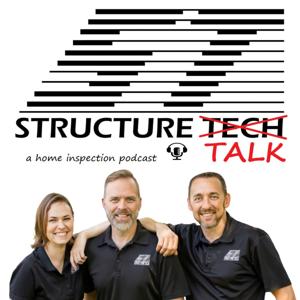
Structure Talk is a podcast about houses, home maintenance, home ownership, buying and selling houses, and of course, home inspections.
The show is hosted by Reuben Saltzman at
Our podcast is sponsored by Inspector Empire Builder.
Email us at [email protected]

16,689 Listeners

4,380 Listeners

32,776 Listeners

33,477 Listeners
46 Listeners

52 Listeners

2,647 Listeners

230 Listeners
380 Listeners

888 Listeners
9 Listeners
12 Listeners
33 Listeners

12 Listeners

3 Listeners