
Sign up to save your podcasts
Or

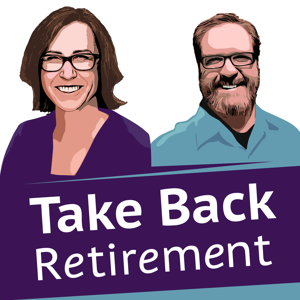


"December is probably too late to scramble around and logistically get stuff done."
Our host Stephanie McCullough counts just nine work weeks left in the year, so she and co-host Kevin Gaines walk through a ten-item year-end checklist. Needless to say, these are best tackled months in advance rather than during the December scramble!
They cover the year-end deadlines. Contributions to 401(k)s must land by December 31, even though IRA contributions can wait until April 15, and a bonus paid in January counts toward next year.
For 2026, the limit is $24,500, with an $8,000 catch-up from age 50 and a larger $11,250 "super catch-up" for ages 60 through 63. Required minimum distributions can't slide past year-end either. A missed one carries a 25% penalty on the shortfall, which is especially painful on inherited Roth IRAs.
Gifts up to $19,000 per person avoid gift-tax filing, and charitable giving now carries a half-percent-of-income floor for itemizers. Donor-advised funds and qualified charitable distributions help with giving, too.
Next, review your tax picture. A low-income year may open the door to Roth conversions, while capital gains and other surprises can trigger higher Medicare IRMAA surcharges two years later.
Stephanie and Kevin also talk about precautionary measures, what they appropriately call your "smoke detector batteries": check your cash cushion, beneficiary forms, powers of attorney, and scam defenses, then start casual conversations with family about money.
Kevin adds a surprise eleventh item for anyone planning a net unrealized appreciation move on company stock: empty the 401(k) by December 31, or the tax bill balloons.
Key Topics:
Resources:
If you like what you've been hearing, we invite you to subscribe on your favorite platform and leave us a review. Tell us what you love about this episode! Or better yet, tell us what you want to hear more of in the future. [email protected]
You can find the transcript and more information about this episode at www.takebackretirement.com.
Follow Stephanie of Sofia Financial on Twitter, Facebook, YouTube and LinkedIn.
Follow Kevin of American Financial Management Group on Twitter, Facebook, YouTube and LinkedIn.
"The biggest mistake parents can make is passing down money without communicating the family values that drive your thinking."
Our hosts, Stephanie McCullough and Kevin Gaines, dig into Kiplinger's October cover story on "the great wealth transfer," the slow handoff of an estimated $124 trillion from Baby Boomers to their children and grandchildren.
That number is a bit misleading considering more than half of that wealth sits with the richest 2% of households, and a quarter of parents expect to leave less than $100,000.
Citing the magazine's survey, roughly two in five families have never discussed how the older generation plans to pass down assets, and more parents claim to have had "the talk" than their kids remember hearing it.
This unwillingness to talk it out goes both ways. Parents worry that talking could breed entitlement. Adult children, meanwhile, sometimes make major life decisions (having kids, choosing careers, buying homes) without knowing whether money is coming, only to be upended when it does.
Their fix, echoing financial psychologist Brad Klontz, is to skip the one big, dreaded conversation in favor of many small ones, paired with practical basics like where documents live. They also make the case for gifting during your lifetime rather than only at death. After all, inheritances typically land when recipients are already in their 60s, which is well past when the money would have mattered most.
Underneath the tax talk and gifting strategy sits something more personal: as one advisor quoted in the piece puts it, the number attached to a life of saving is really the story of that life, and sharing it is what brings families closer.
Key Topics:
Resources:
If you like what you've been hearing, we invite you to subscribe on your favorite platform and leave us a review. Tell us what you love about this episode! Or better yet, tell us what you want to hear more of in the future. [email protected]
You can find the transcript and more information about this episode at www.takebackretirement.com.
Follow Stephanie on Twitter, Facebook, YouTube and LinkedIn.
Follow Kevin on Twitter, Facebook, YouTube and LinkedIn.
"The one thing you're guaranteed to run out of is time."
Our hosts, Stephanie McCullough and Kevin Gaines, welcome back financial planner Dan Haylett, founder of Humans vs. Retirement and author of The Retirement You Didn't See Coming, to unpack his viral essay "The Permission Paradox."
Digging through his own client conversations for patterns, Dan found the two words that came up most were "permission" and "allowed." The people who have saved diligently for decades are often the ones least able to enjoy it, because permission was always external. For them, a paycheck justified spending, and a job title justified rest.
Retirement erases that scaffolding overnight, and now they find themselves with a little voice in their head always asking, "Am I allowed?"
Dan reckons that this is a case of ancient wiring. We evolved to store the grain rather than eat it. We have what he calls a "sensible person's trap," where decades of diligent saving become a habit too strong to break.
The real risk, he argues, isn't running out of money; it's dying with too much of it, having never spent down the roughly twelve good years of health and energy retirement actually grants.
His antidote is five permissions you need to give yourself: to enjoy what you've built, to rest without producing, to spend on experiences before you can't, to give "with a warm heart, not a cold hand," and to become someone new.
Retirement finally hands people money, time, and freedom together, but only permission unlocks any of it!
Key Topics:
Resources:
Dan Haylett, and TFP Financial are not affiliated with or endorsed by Private Advisor Group, American Financial Management Group, or Sofia Financial.
If you like what you've been hearing, we invite you to subscribe on your favorite platform and leave us a review. Tell us what you love about this episode! Or better yet, tell us what you want to hear more of in the future. [email protected]
You can find the transcript and more information about this episode at www.takebackretirement.com.
Follow Stephanie on Twitter, Facebook, YouTube and LinkedIn.
Follow Kevin on Twitter, Facebook, YouTube and LinkedIn.
"Everything government touches is complicated." - Danielle Kunkle Roberts
Our hosts, Stephanie McCullough and Kevin Gaines, bring on Danielle Kunkle Roberts of Boomer Benefits, and author of 10 Costly Medicare Mistakes You Can't Afford to Make.
As the title of her book suggests, Medicare isn't free. Believing otherwise is mistake number one! Premiums, deductibles, and coverage gaps are real costs that blindside retirees, especially anyone who leaves the workforce before 65 and needs an ACA bridge plan to survive the gap.
The trickiest wrinkle is the size-of-employer rule. If you work for a company with 20-plus employees past 65, your group plan stays primary while Medicare waits in the wings. Work for a smaller one, and Medicare becomes primary whether you enrolled or not, leaving a surprise medical bill for anyone who assumed their coverage worked the way a friend's did.
Never assume your neighbor's, cousin's, or friend's Medicare situation applies to yours, because age, employer size, and state all rewrite the rules.
Danielle also talks about "Ugly IRMAA". As the income-based surcharge calculated off your tax return from two years back, the Medicare IRMAA can ambush anyone who thought retirement meant no more "earnings." Then there's the annual Advantage plan and Part D notices of change, proof that even after enrollment, nothing about Medicare is truly "set it and forget it."
Danielle's fix isn't memorizing every rule, but finding a broker paid by commission rather than out-of-pocket, who revisits your plan every single year.
Key Topics:
Resources:
"Danielle Kunkle Roberts, and Boomer Benefits are not affiliated with or endorsed by Private Advisor Group, American Financial Management Group, or Sofia Financial."
This episode or article may contain affiliate links.
If you like what you've been hearing, we invite you to subscribe on your favorite platform and leave us a review. Tell us what you love about this episode! Or better yet, tell us what you want to hear more of in the future. [email protected]
You can find the transcript and more information about this episode at www.takebackretirement.com.
Follow Stephanie on Twitter, Facebook, YouTube and LinkedIn.
Follow Kevin on Twitter, Facebook, YouTube and LinkedIn.
"Spreadsheets are great at math; they suck at flexibility."
Our hosts, Stephanie McCullough and Kevin Gaines, take aim at the assumption that every retiree spends the same inflation-adjusted dollar amount, every year, until death. It's the number your 401(k) statement spits out, the number the 4% rule promises, and it's wrong in two directions at once!
First, it ignores life's lumpiness such as the new roof, the wedding, the pandemic-delayed trip to Greece. These are one-off costs that planners can average into projections but never quite eliminate.
Second, and more provocatively, it ignores the "retirement smile". That's spending that's higher in the active go-go years, dips in the slow-go years, then ticks back up in the no-go years as long-term care costs bite.
Their fix isn't a better formula but the intentionality to separate true essentials (food, shelter, utilities) from discretionary spending (travel, hobbies), because only the latter can flex when markets fall or inflation bites.
Front-load the trips and experiences you're physically able to enjoy now. Retirees should borrow from "future spending" you were always going to do eventually anyway. Take it from Stephanie, who encourages us to "plan that trip, people!"
Key Topics:
Resources:
If you like what you've been hearing, we invite you to subscribe on your favorite platform and leave us a review. Tell us what you love about this episode! Or better yet, tell us what you want to hear more of in the future. [email protected]
You can find the transcript and more information about this episode at www.takebackretirement.com.
Follow Stephanie on Twitter, Facebook, YouTube and LinkedIn.
Follow Kevin on Twitter, Facebook, YouTube and LinkedIn.
"You need to uncouple your self-worth from your income."
Amy Bernstein does not like the word "retired". Our hosts, Stephanie McCullough and Kevin Gaines, aren't too fond of the word either.
A former journalist and federal government communications veteran, she didn't quit anything cold. She shortened her commute first, then went part-time, then, when the pandemic made her last part-time job untenable, took the final step.
What followed was less a plan than experiments guided by whatever sparked joy. These "experiments" included playwriting classes, a first novel written on the train, and a book-coach certification that flipped a switch.
Six novels and a nonfiction guide for doubting creatives later, Amy has built a life that pays in confidence and craft more than dollars, and insists that trade is no downgrade. She believes that culture rewards money, title, and productivity so completely that anything creative reads as indulgence, something to feel guilty about squeezing in around "real" obligations.
Reading a book, listening to music, mastering a soufflé. These are creative acts whether or not monetized, and treating unmonetized creativity as worthless has it backwards. Her book, Wrangling the Doubt Monster, does not promise to cure self-doubt; it normalizes it, insisting doubt can ride along without driving the car.
Stephanie and Kevin are all about the idea that retirement rarely trips people up financially. It is the identity vacuum of "who am I once the job title disappears" that catches people off guard, and creativity is where many will find their answer!
Key Topics:
Resources:
If you like what you've been hearing, we invite you to subscribe on your favorite platform and leave us a review. Tell us what you love about this episode! Or better yet, tell us what you want to hear more of in the future. [email protected]
You can find the transcript and more information about this episode at www.takebackretirement.com.
Follow Stephanie on Twitter, Facebook, YouTube and LinkedIn.
Follow Kevin on Twitter, Facebook, YouTube and LinkedIn.
"As with all things with the IRS, document, document, document."
Our hosts, Stephanie McCullough and Kevin Gaines, explain what actually happens when you move an investment or retirement account from one custodian to another.
The mechanics may seem as simple as filling out a form and waiting a few days. But Kevin walks through the fine print that trips up even seasoned advisors. Taxable accounts can usually move without triggering a sale, so cost basis and unrealized gains transfer intact.
Retirement accounts are where the real danger lives.
There are two ways to move retirement money: a trustee-to-trustee transfer, where the funds never touch your hands, and a 60-day rollover, where they briefly become yours.
The second path can be a minefield because, if you miss the 60-day window by even a day, the money is reclassified as a taxable distribution. The only way back is IRS self-certification for a handful of approved hardships, or a costly private letter ruling. And if you mix up traditional and Roth buckets during a move, you risk an illegal conversion or double taxation.
Beyond the rollover clock, Kevin brings up the mandatory 20% withholding on 401(k) distributions, and after-tax "basis" dollars that shouldn't be taxed twice. Then there's Form 5498, an easily discarded document that turns out to be essential for tracking IRA contributions and conversions for years to come.
Needless to say, all of this can be overwhelming. That's why it's so important to ask questions, document everything, and use direct transfers whenever possible.
Key Topics:
If you like what you've been hearing, we invite you to subscribe on your favorite platform and leave us a review. Tell us what you love about this episode! Or better yet, tell us what you want to hear more of in the future. [email protected]
You can find the transcript and more information about this episode at www.takebackretirement.com.
Follow Stephanie on Twitter, Facebook, YouTube and LinkedIn.
Follow Kevin on Twitter, Facebook, YouTube and LinkedIn.
Today, Stephanie and Kevin cover a topic that can often get confusing for many people: the estate and gift tax system. This is different from the income tax system, and both are federal tax systems that everyone needs to be aware of when planning for retirement.
At the end of the day, the IRS is getting paid. The only two questions, then, are: Who pays? and When? Our hosts tackle these questions and more.
While today's discussion is a big picture overview of the estate and gift tax system, it will give you a general grasp of the concepts and vocabulary that will make your next meeting with your accountant or estate planning attorney a more insightful and productive one.
Key Topics:
Resources Mentioned:
If you like what you've been hearing, we invite you to subscribe on your favorite platform and leave us a review. Tell us what you love about this episode! Or better yet, tell us what you want to hear more of in the future. [email protected]
You can find the transcript and more information about this episode at www.takebackretirement.com.
Follow Stephanie on Twitter, Facebook, YouTube and LinkedIn.
Follow Kevin on Twitter, Facebook, YouTube and LinkedIn.
"Take charge. Your retirement is your time."
Our hosts, Stephanie McCullough and Kevin Gaines, sit down with Dr. Andi Simon, corporate anthropologist and author of Rethink Retirement, whose research offers a bracing corrective to how most people think about life after work.
Andi spent years embedding herself in senior living communities on the west coast, interviewing residents who had done everything "right" financially and still found themselves empty, bored, and stripped of identity.
Through it all, she's concluded that retiring from something is not the same as retiring to something.
The central tension Andi identifies is one of agency. Retirement is a transition most people face without any rehearsal. Unlike a career, which assigns identity, purpose, and daily rhythm almost automatically, retirement demands that individuals build those things from scratch. Most people don't realize this until the calendar is suddenly, completely clear.
Her research also surfaces a loneliness epidemic quietly accelerating among retirees. Work colleagues disappear, and friendships built around shared roles don't transfer easily. Also, relationships don't deepen automatically just because time is now available. Instead, they must be deliberately cultivated.
Andi suggests trying new activities, building community intentionally, and recognizing which old roles to carry forward and which to release.
Above all, she invites near-retirees to take charge, not just of their portfolio, but of the life waiting on the other side!
Key Topics:
Resources:
If you like what you've been hearing, we invite you to subscribe on your favorite platform and leave us a review. Tell us what you love about this episode! Or better yet, tell us what you want to hear more of in the future. [email protected]
You can find the transcript and more information about this episode at www.takebackretirement.com.
Follow Stephanie on Twitter, Facebook, YouTube and LinkedIn.
Follow Kevin on Twitter, Facebook, YouTube and LinkedIn.
"Don't sit around waiting to feel motivated. You take some little actions, and that often gives you the motivation and the momentum to move forward."
Our hosts, Stephanie McCullough and Kevin Gaines, sit down to work through a HerMoney.com list of ten things to do when retirement is a decade away. The meta-lesson turns out to be bigger than any single item on it!
The list, from Jean Chatzky's financial information service for women, gives them a useful scaffold, but what they keep returning to is the paralysis that keeps so many people from starting at all. Planning for retirement can feel like pushing a stone uphill; getting moving makes it roll the other way.
The list items themselves span the practical and the personal. Test-drive potential retirement destinations before committing. Tackle home repairs now, while you still have a paycheck. Start volunteering, not just to give back but to road-test how you'll spend your time when work no longer fills it.
On the financial side: understand what Medicare actually covers (spoiler: not dental, vision, or long-term care). Build your HSA if you're eligible. Track down old 401(k)s and check the beneficiaries on every account. Create your Social Security account online and verify your earnings record for errors. And on claiming age, Kevin pushes back on the blanket advice to "always wait" because Social Security strategy depends on how it fits the rest of your specific plan.
The bonus tip says it all: say it out loud. Telling people you're planning to retire creates accountability. It makes the stone easier to push!
Key Topics:
Resources:
Take Back Retirement Episodes Referenced:
If you like what you've been hearing, we invite you to subscribe on your favorite platform and leave us a review. Tell us what you love about this episode! Or better yet, tell us what you want to hear more of in the future. [email protected]
You can find the transcript and more information about this episode at www.takebackretirement.com.
Follow Stephanie on Twitter, Facebook, YouTube and LinkedIn.
Follow Kevin on Twitter, Facebook, YouTube and LinkedIn.
From the publisher's feed

31,903 Listeners

30,673 Listeners

8,761 Listeners

3,567 Listeners

1,981 Listeners
1,305 Listeners

453 Listeners
542 Listeners
5,135 Listeners
754 Listeners

198 Listeners
148 Listeners

1,072 Listeners

19,009 Listeners
144 Listeners