
Sign up to save your podcasts
Or



Based on Podcast App listening data
Bond prices are falling as yields rise—and that does not mean diversification has failed. Don and Tom explain why high-quality bonds can decline when stocks and the economy are strong, why that behavior is normal, and why chasing high-yield or “alternative” bond funds can quietly turn the conservative side of a portfolio into more stock-market risk.
They also answer questions about Roth conversions after required minimum distributions have begun, whether conversion taxes should ever come from retirement assets, and whether buying an annuity for a child makes sense compared with a Roth IRA or 529 plan.
00:00 Nashville-style intro
02:16 Why bond prices are falling
04:02 Comparing BND, municipal, Treasury, and high-yield funds
05:40 What a balanced portfolio is supposed to do
07:17 The hidden risk in “better-performing” bond funds
11:47 Stocks for growth, bonds for cushion
14:19 Roth conversions after RMDs begin
22:28 Listener questions
24:16 Paying Roth-conversion taxes
26:46 An annuity for a child?
31:46 Wrap-up
32:37 Disclosures
Questions? Comments? Click the microphone at TalkingRealMoney.com.
Questions? Comments? Click!
Some IRA mistakes cannot simply be reversed. Don and Tom explain the traps around non-spouse beneficiary transfers, the one-rollover-per-year rule, 72(t) plans, the same-property rollover rule, outdated beneficiaries, qualified charitable distributions, missed RMDs, and portfolio drift.
Then Mike from Salt Lake City asks how aggressively he should convert a traditional IRA to Roth before Social Security and future inherited assets change the tax picture. Don and Tom discuss bracket management, paying conversion taxes from taxable savings, QCDs, inherited pretax accounts, and rerunning the plan every year.
They also answer whether costs matter in 529 and UTMA accounts and review a globally diversified retirement portfolio approaching withdrawals.
00:00 Dixieland intro
01:28 IRA mistakes you can’t undo
03:00 Non-spouse beneficiary transfers
04:50 The one-rollover-per-year rule
05:45 Altering a 72(t) plan
07:43 The same-property rollover rule
10:56 Beneficiaries, QCDs, RMDs, and portfolio drift
16:20 Roth-conversion strategy
22:42 Listener questions
23:44 529 and UTMA expenses
24:40 Reviewing a retirement portfolio
27:43 Wrap-up
28:47 Disclosures
Questions? Comments? Click the microphone at TalkingRealMoney.com.
Questions? Comments? Click!
Don and Tom compare the S&P 500 with total-market and globally diversified investing, explain the danger of home bias, and show why owning more of the world can reduce concentration risk. Then they answer questions about Roth conversions, bond-fund losses, CD ladders, and matching a risk score to a stock-bond allocation.
00:00 Oktoberfest musical intro
01:23 S&P 500 versus the whole market
04:18 Why global diversification matters
09:07 Home bias around the world
13:11 A lost decade for the S&P 500
15:46 Three questions about diversification
16:59 Roth-conversion strategy
23:31 Bond funds versus individual bonds
27:37 CD ladders and reinvestment risk
29:55 Risk scores and stock-bond allocation
32:53 Wrap-up and disclosures
Questions? Comments? Click the microphone at TalkingRealMoney.com.
Questions? Comments? Click!
Don and Tom use Disney’s infamous lemming myth to explain investor herd behavior, recency bias, and the danger of chasing whatever has recently been hot. Then they answer questions about simplifying a diversified portfolio, evaluating a long-held annuity, and why “Bank on Yourself” whole-life strategies create more problems than they solve.
00:00 The lemming film clip
00:56 The lemmings didn’t jump
02:21 The lemming corollary
04:38 Herd behavior in tech, crypto, and markets
07:58 When the crowd is wise—and when it isn’t
12:48 Listener questions begin
13:16 Simplifying a diversified portfolio
16:32 Should she keep the annuity?
20:40 The problems with “Bank on Yourself”
25:58 Wrap-up
27:11 Disclosures
Questions? Comments? Click the microphone at TalkingRealMoney.com.
Questions? Comments? Click!
Don tackles listener questions about growth versus value stocks, choosing the right time to retire, Medicaid and estate-planning concerns, the problems with infinite-banking whole-life policies, when annuities may make sense, and how mutual-fund distributions affect share prices.
00:00 Zeuhll musical intro
01:08 Friday Q&A begins
03:51 Growth stocks versus value stocks
07:43 Choosing the right month to retire
11:29 A parent’s home, Medicaid, and estate planning
14:52 Infinite banking and whole-life insurance
17:59 When annuities may make sense
22:56 Mutual-fund capital-gains distributions
26:34 Wrap-up
Questions? Comments? Click the microphone at TalkingRealMoney.com.
Questions? Comments? Click!
Is a home always a great investment? Don and Tom compare buying with renting, explain why leverage can make home returns look better than they are, and lay out when owning makes sense. Then they answer listener questions about one-fund versus multi-fund portfolios, disciplined rebalancing, and whether delaying Social Security still pays when a spouse is waiting for a benefit increase.
0:34 The American dream of homeownership
3:42 Home returns versus stocks
8:01 When buying beats renting
11:35 Buying and selling in a high-rate market
15:06 Listener questions
16:19 One global fund or several ETFs?
23:32 Building and rebalancing a multi-fund portfolio
26:42 Social Security timing for couples
Questions? Comments? Click!
Don and Tom unpack what financial advice should cost after a retired couple discovers they’re paying $31,000 a year. They compare fee-only, fee-based, and commission models, explain how hidden fund expenses compound the damage, and show why every advisor should disclose the full all-in cost.
Listener questions cover the Avantis balanced fund, building retirement income from a total-return portfolio, and where bonds belong across taxable and retirement accounts.
They also compare qualified charitable distributions, donor-advised funds, and charitable gift annuities—and explain why complexity and guarantees can hide expensive tradeoffs.
0:41 Cajun opening
2:50 What financial advice should cost
8:03 Do you actually need an advisor?
11:11 Hidden fund fees and commissions
16:31 Listener questions
18:04 The Avantis balanced-fund correction
19:30 Building retirement income
22:23 QCDs, donor-advised funds, and charitable gift annuities
29:17 A musical warning about bad advice
Questions? Comments? Click!
Covered-call ETFs trade away upside for income and still carry market risk. They also discuss TSP Roth conversions, an Avantis balanced fund, a possible X Money cash offer, and other media projects.
Questions? Comments? Click!
The biggest drag on an investment portfolio may be the investor. Don and Tom examine the behavior gap—the difference between what investments earn and what people actually keep after fear, greed, overconfidence, and badly timed decisions take their toll. They explain why market timing so often means selling after prices fall and returning only after the recovery is obvious. Missing even a handful of the market's best days can dramatically reduce long-term wealth, while a disciplined plan helps keep emotion from becoming strategy. Listener questions cover whether a well-funded retiree should increase stock exposure, the cost of hiring a professional trustee, and what to do with a small whole-life policy purchased in childhood. 1:30 Financial Physics Rule 12 3:06 The investor behavior gap 5:33 The emotional cycle of investing 7:57 Overconfidence and money 9:58 The cost of missing the best days 16:00 Should retirement risk increase with age? 19:25 What professional trustees cost 22:28 Cashing out childhood life insurance
Questions? Comments? Click!
Seven listeners bring seven practical money decisions, and Don moves through them without the usual detours. He compares ETFs with mutual funds, untangles realistic stock returns and retirement withdrawal rates, and explains where a short-term bond fund may fit.
Then he tackles the tax tail on an expensive legacy fund, why reverse-mortgage proceeds should stay safe, the real job of emergency savings, and what to have ready for a free advisor conversation.
2:13 ETFs vs. mutual funds
4:56 Real returns and retirement withdrawals
9:37 Short-term bonds as dry powder
10:56 Taxes versus an expensive legacy fund
14:15 Reverse-mortgage cash
16:54 Emergency savings
18:44 Preparing for an advisor meeting
Questions? Comments? Click!
From the publisher's feed
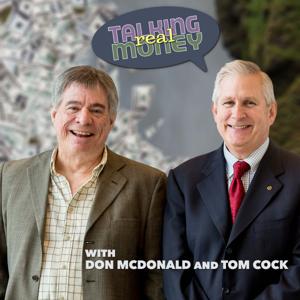
Financial talk radio veteran, Don McDonald and former host of Serious Money on PBS, Tom Cock, join forces to talk about real money issues. In each episode, they solve real money problems, dole out…
Ranked by our users in the last 21 days
1,980 Listeners

1,961 Listeners

450 Listeners

800 Listeners

1,304 Listeners

457 Listeners

542 Listeners
5,438 Listeners

756 Listeners

550 Listeners

699 Listeners
618 Listeners
346 Listeners

827 Listeners

14 Listeners

1,071 Listeners