
Sign up to save your podcasts
Or

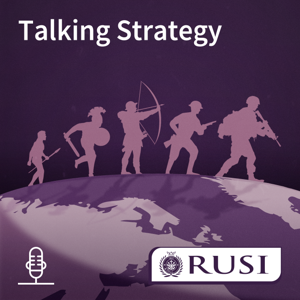


Professor Steve Tsang joins Beatrice and Paul to discuss the founding father of the Chinese People's Republic, Mao Zedong. Mao was both a Leninist strategic theorist and the leader of the Chinese Communists in their fight to overthrow the Chinese nationalists – while not exerting themselves too much in the battle against Japanese occupation.
There is a considerable gulf between Mao's theoretical writings on strategies for insurgency and civil war, and the practices he followed, Professor Tsang explains. Nevertheless, his three-stage concept for a successful guerrilla movement has inspired other Communist revolutionary movements the world over.
Another disciple of Clausewitz, Mao used the tenet that war is a continuation of politics by other means to argue, famously, that peace is also a time of fighting – even if the tools are not those of war. He made this his main argument for breaking with the Stalinist tradition that sought to rely only on Communist strategic thinkers, and with Soviet tutelage. For Mao, 'Fighting in times of peace is politics, war is also politics, even if it uses special means'. This doctrine perfectly captured the spirit of the Cold War.
Professor Steve Tsang is the Director of the SOAS China Institute. Previously, he was the Head of the School of Contemporary Chinese Studies at the University of Nottingham, and before that a Professorial Fellow at St Antony's College, Oxford. He is also an Associate Fellow of Chatham House and an Emeritus Fellow of St Antony's College.
With a serious commitment to the 'Just War' tradition, Sir Michael Quinlan (1930–2009), chief British nuclear strategist of the late 1970s and 1980s, helped to construct the complex edifice of the British and NATO nuclear deterrence posture.
Sir Michael was both a strategic analyst and, as a key British civil servant, a practitioner in so far as his analysis formed the British nuclear strategy. That he was a Jesuit-educated Catholic and an Oxford-educated Classicist explains much about his approach to nuclear strategy: throughout his adult life, he grappled with the nuclear paradox that peace could be the result of the mutual threat of unbearable nuclear conflagration. He sought serious debate with all and sundry, replacing secrecy with transparency and persuasion where at all possible.
Dr Tanya Ogilvie-White and Dr Kristan Stoddart join Beatrice and Paul for this week's episode. Both Tanya and Kristan knew Sir Michael and his writings at first hand: Tanya posthumously published his correspondence under the title On Nuclear Deterrence. She is Senior Research Adviser at the Asia-Pacific Leadership Network and a member of the International Group of Eminent Persons – an initiative working to achieve a world without nuclear weapons. Previously, she was research director of the Centre for Nuclear Non-Proliferation and Disarmament at the Crawford School of Public Policy (Australian National University) and a Senior Lecturer at the University of Canterbury, New Zealand, and she has held positions at several think tanks.
Dr Kristan Stoddart is an Associate Professor in the School of Social Sciences at Swansea University. He was previously a Reader in the Department of International Politics at Aberystwyth, and he is the author of Losing an Empire and Finding a Role: Britain, the USA, NATO and Nuclear Weapons, 1964-70 (Palgrave Macmillan, 2012).
Dietrich Heinrich von Bülow (1757–1807) was called 'everything from a conceited crank to the founder of modern military science' (R R Palmer). Probably the last Prussian strategist to sympathise with the French Revolution, he had a keen interest in the relationship between political aims and war as their instrument, and in geopolitics: he correctly prophesied that the 19th century would produce in Europe the smallest number of states since states came into being, after the territorial expansion of the strong by conquering or annexing smaller powers.
Von Bülow's Spirit of the Modern System of War combined geopolitics with geographic considerations, ideas about the balance of power in Europe and geometric treatises on how to calculate and establish the best chances of success in battle by focusing on magazines and lines of supply and movement. He was unfairly ridiculed for his geometric approach by Clausewitz, who, at the same time, borrowed Bülow's main tenet: 'If something can be effected by force and cannot be achieved by negotiations, diplomacy turns into war, or conflict with reasons becomes conflict with physical forces'. And he concluded: 'war is a means for the achievement of diplomatic aims'. Sound familiar?
This week's guest on Talking Strategy, Dr Arthur Kuhle, studied History and Arts History at the Universities of Berlin and Belfast from 2006 to 2012. He completed his PhD at the Humboldt University Berlin on the intellectual predecessors of Carl von Clausewitz, a work subsequently published in German. After working at the University of Göttingen for some time, he is now engaged in research on the history of the climate of the Himalayas and its relevance for the emergence of early civilisations there.
Lawrence of Arabia is legendary status, Britain's most romantic strategic theorist-cum-practitioner; as 'al-Lorans', he won the hearts of many Arabs in their fight for independence from the Ottoman Empire during the First World War. Dr Rob Johnson, the author of T.E. Lawrence's most recent biography, joins Beatrice and Paul for this week's episode.
T.E. Lawrence's great classic article on 'guerrilla warfare' published after the First World War is that of a practitioner who could, from his own experience, note that much about this form of war is counter-intuitive. It is better that guerilla fighters own their flawed strategy and application, rather than execute 'perfect' strategy seen as a foreign achievement. This crucial tenet developed by Lawrence still holds true and must be kept in mind, whichever side one is on.
He 'went native' – and wrote about insurgency strategy from the point of view of the insurgent, not, as Major-General Sir Charles Edward Callwell did, from the point of view of the counter-insurgent.
Dr Rob Johnson has written T.E. Lawrence's most recent biography: Lawrence of Arabia on War: The Campaign in the Desert 1916–18 (Bloomsbury Publishing, 2020). A scholar at the University of Oxford, Dr Johnson has for many years now run the prestigious "Changing Character of War" programme originally created by Professor Sir Hew Strachan. But he is now applying his great energy to directing the British Ministry of Defence's office of Net Assessment. The opinions expressed here are entirely his own as an Oxford scholar, and must not be seen to represent the British defence establishment.
Foreign policy strategist Andrew Marshall had a career that spanned seven decades from the late 1940s. He was hailed by a former KGB officer as 'the grey cardinal, the éminence grise' of the US revolution of military affairs, and as 'the great hero' of Chinese officers tracking developments in US military technology, claiming they had translated every word he wrote. Dr Thomas G Mahnken joins Talking Strategy to discuss his work and life.
Andrew Marshall spent 25 years at the RAND Corporation, which developed methods of analysing the nature of the long-term competition between the US and the Soviet Union. He was recruited by Henry Kissinger to apply these approaches in the National Security Council, and later became the first Director of Net Assessment, a post he held for the next 43 years. His special approach to strategic thinking was interdisciplinary, questioning everything – including past successes – and encouraging out-of-the box thinking.
This week's guest, Dr Thomas G Mahnken, is President and Chief Executive Officer of the Center for Strategic and Budgetary Assessments. He is a Senior Research Professor at the Philip Merrill Center for Strategic Studies at Johns Hopkins University's Paul H Nitze School of Advanced International Studies (SAIS), and currently serves as a member of the congressionally mandated 2022 National Defense Strategy Commission and as a member of the Army Science Board.
Kautilya lived in India from 375 to 283 BC. He ranks alongside Sun Tzu as one of the great early sages who wrote about the relations between polities, and thus also about wars between them. Kaushik Roy, Guru Nanak Chair Professor at Jadavpur University, India, joins Beatrice and Paul to discuss his work.
Kautilya's approach to strategy included an understanding of inter-polity relations that assumed that one's 'enemy's rear-enemy' would be a good ally against the shared enemy: in other words, 'make friends with your enemy's enemy'. Meanwhile, insurgents would get support from other polities, and aggressors could be just, or just greedy. He thus paired 'realist' views with moral elements.
Also referred to as Chanakya or Vishnugupta, Kautilya was adviser to two successive emperors of the Mauryan Empire in India. He was thus not only a theoretician but also had considerable political influence. His main body of work is the Arthashastra, an ancient Sanskrit treatise on statecraft, political science, economic policy and military strategy. While one is hard-pushed to argue that he had a lasting influence on the following millennia of political or strategic thinking in India, his views are worth pondering, as they cast fresh light on strategy and on relations between states.
Kaushik Roy is Guru Nanak Chair Professor in the Department of History, Jadavpur University, Kolkata, India and a Global Fellow at the Peace Research Institute Oslo (PRIO), Norway. He obtained his PhD from the Centre for Historical Studies, School of Social Sciences, Jawaharlal Nehru University, New Delhi.
Admiral Arne Røksund joins Beatrice and Paul to discuss a set of French strategists collectively referred to as the Jeune Ecole, 'the young school'.
The Jeune Ecole is considered the counterpoint to many battle-obsessed land strategists and followers of 19th century US naval officer Alfred Thayer Mahan. Leading among the strategists of the Jeune Ecole were Admiral Théophile Aube (1826–1890), who held the posts of governor of Martinique and navy minister, and Gabriel Charmes, an influential journalist whom he had met in the French colonies. For them, as for many other strategists of the decades before and after the First World War, treaties were scraps of paper to be torn up upon the outbreak of war; all was fair, they argued, for a weaker power in defence of its interests.
Our guest, Admiral Arne Røksund, has had a distinguished career, holding posts including the Commandant and Commander in charge of all Norwegian military education, and Secretary General of the Norwegian Ministry of Defence. Currently the Secretary General of the Surveillance Authority of the European Free Trade Area, he holds a PhD in History from the University of Oslo.
John Warden III was an exceptionally influential air power strategist whose name is inextricably connected with Operation Desert Storm, the 1991 coalition campaign to free Kuwait after the Iraqi invasion. We discuss his influence with Colonel Dr John Andreas Olsen of the Royal Norwegian Air Force.
Warden was a pupil of theorist Carl von Clausewitz, taking from him his concept of the 'centre of gravity', which Warden multiplied concentrically to identify five targets for air bombardment that would bring an enemy power to its knees – his 'five rings'. But he also rejected Clausewitz's emphasis on a decisive battle between land forces to achieve the same outcome.
In an almost 'Douhetian' fashion, Warden made the case that air power on its own could bring about a decision in war – but very much unlike the Italian general, Warden wanted to spare the enemy civilian population, targeting above all the enemy's centre of power.
Our guest, Col Dr John Andreas Olsen, is currently assigned to NATO Headquarters in Brussels. He is a professor at the Norwegian Institute for Defence Studies, and a fellow of the Royal Swedish Academy of War Sciences. He completed a doctorate in history and international relations at De Montfort University, and he holds further degrees from the Universities of Warwick and Trondheim.
Historian Dr Daniel Whittingham joins Beatrice and Paul for a conversation about Major-General Sir Charles Edward Callwell (1859–1928). An unabashed British imperialist, Callwell's views are strongly reflected in his writings on Small Wars, by which he meant counterinsurgency operations.
Callwell started his career as an artillery officer, and then went on to serve as a staff officer and commander during the Boer War. He also served in one of the Anglo-Afghan Wars, and later, in the First World War. But it was RUSI that launched him on his literary career: he won the Trench Gascoigne Prize Essay Competition in 1886 for his essay 'Lessons to be learned from the campaigns in which British Forces have been employed since the year 1865', published in the RUSI Journal Vol. 139. This success gave him the confidence that he could write and be read, and he later expanded his prize-winning essay into the famous book Small Wars: Their Principles and Practices, published in 1896. The work went through several re-editions and was adopted by the British Army as a textbook on how to conduct counterinsurgency operations.
While his prescriptions in this domain were brutal, his equally important writings on naval strategy are sensible and restrained, foreshadowing Sir Julian Corbett's views on the need for jointness and the pointlessness of naval operations that did not have the land dimension as their focus.
Dr Daniel Whittingham is an Oxford-trained historian by background, who completed his PhD at King's College London before joining the University of Birmingham in September 2013.
Antoine-Henri Jomini was the strategist who anticipated Napoleon's movements – and the general who betrayed the emperor by defecting to the Russians for a better position. He was among the most widely read strategists of land warfare in the late 19th and early 20th centuries. To kick off Season 3 of Talking Strategy, Beatrice Heuser and Paul O'Neill are joined by Professor Antulio Echevarria to reflect on his work.
Jomini's analysis of Napoleon's way of war – his strategies, his 'système de guerre' – is outstanding, and the true reason for the great popularity of his work. Napoleon's concentration on the centre of gravity, seeking the decisive battle, and bringing his forces together on one point – these were all key features of Jomini's analysis. It was perfect for those not looking for philosophies, but for something allowing them to penetrate through the complexities of warfare in a revolutionary age.
Jomini's works on strategy were being read in military academies from the US to Russia at the turn of the 20th century. Then came a period when he was eclipsed by other authors and unjustly neglected. What remained greatly inspirational for militaries on all sides, however, was his list of principles of war, and his focused and insightful analysis of Napoleonic warfare. Our guest in this episode is Professor Antulio Echevarria, who, after serving in the US Army, turned to academia. He teaches at the US Army War College and has published widely on strategy.
From the publisher's feed

1,053 Listeners
142 Listeners

772 Listeners

420 Listeners
107 Listeners
21 Listeners
363 Listeners

403 Listeners

22 Listeners
488 Listeners

495 Listeners

1,884 Listeners
338 Listeners

478 Listeners

265 Listeners