
Sign up to save your podcasts
Or

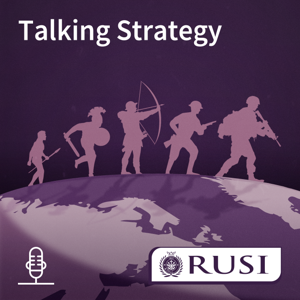


Recently retired Major General Mick Ryan sits down with Beatrice and Paul for the Series 2 finale of Talking Strategy.
Mick is an experienced strategist, having worked at high levels in this capacity in the Australian and US militaries. During his career, he commanded at platoon, squadron, regiment, task force and brigade levels in the Australian Army. His last position was that of Commander of the Australian Defence College in Canberra.
A graduate of the Australian Defence Force School of Languages (language speciality: Bahasa Indonesia), Johns Hopkins University School of Advanced International Studies, the USMC Command and Staff College and School of Advanced Warfighting, he is also a passionate advocate of professional education and lifelong learning.
Brigadier General Dr Hervé Pierre joins Beatrice and Paul to discuss the 20th century French strategist General André Beaufre, who defined strategy as 'the art of applying force so that it makes the most effective contribution towards achieving the ends set by political policy'.
General Beaufre (1902–1975) said strategy is the 'art of the dialectic of two opposing wills using force to resolve their dispute'. But for him, battle was not the only possible means of achieving one's objective; 'other methods may be more effective'.
He underscored changing the enemy's mind as a key aim of strategy, and pointed to the indirect approach taken by insurgents the world over in their pursuit of this aim.
Beaufre's originality lay in his fusion of selected insights of several other strategists, ranging from Clausewitz and Foch to Basil Liddell Hart, his friend and mentor.
Our guest, Brigadier General Dr Hervé Pierre, completed his doctorate on André Beaufre at the Sorbonne, with parts of it undertaken while he was deployment in Niger and Mali under Operation Barkhane.
Basil Liddell Hart (1895-1970) was described by President John F. Kennedy as the "captain who taught generals". Dr Bradley Potter joins Beatrice and Paul to discuss Liddell Hart, captain of the First World War who took to writing about war with the aim of preventing a repetition of its great slaughter.
The tools of strategy explored by Liddell Hart ranged from city bombing, manoeuvre warfare to diplomatic means to deflect war or a transition to lasting peace. The 'lasting peace' concept cost him dearly in terms of reputation as he was an appeaser of Hitler in the 1930s, but after the Second World War his reputation recovered. Liddell Hart was the father and grandfather of a particular family of strategic analysts, steeped in the study of history rather than ahistorical theories. His pupils include Brian Bond, Sir Michael Howard, the Australian Robert O'Neill and, arguably, General André Beaufre in France, who each in turn had their disciples to the legacy of the Liddell Hartian approach to strategic studies was passed. Second generation heirs included strategic analysts such as Sir Lawrence Freedman and Azar Gat.
This podcast introduces Dr Bradley Potter, Adjunct Lecturer at Johns Hopkins University School of Advanced International Studies.
In this festive special, Beatrice and Paul reflect on the lessons from their meanderings across the strategic landscape over the past 20 episodes of Talking Strategy.
What is very clear is that, ultimately, commanders must still be able to make sense of the complex environment they are facing – and not just a military one.
Military command remains a complex task, with huge responsibilities on individuals whose decisions are, quite literally, matters of life and death. Hence, it is important to consider what the theory means for practitioners (the stratège). In this episode, we consider how commanders are being taught to meet their responsibilities. Joining the conversation is Emilie Cleret, Director of the English Studies Department at École de Guerre, part of the École Militaire, where the French armed forces train future commanders. We learn about the transformative approach to officer education she has adopted, based on the theories of Jack Mezirow and his ideas of challenging meaning structures and creating disorienting dilemmas. It's an approach which resonates with the complex demands that war places on those it engages.
Professor Matthew Strickland joins Beatrice and Paul to discuss Gerald of Wales, royal clerk and chaplain to King Henry II of England in 1184. In a time when the Norman rulers of the British Isles relied on clerics as civil servants, Gerald (c. 1146–1223), of mixed Welsh-Norman descent, furnished exceptional analytical surveys of Wales and Ireland.
From Gerald's surveys, we get invaluable insights into how war was fought in these remote parts of Europe – 'irregular' compared with what was happening on the continent, making best use of terrain and of regular armies' logistic problems.
Gerald of Wales, or Geraldus Cambrensis (Latin), had studied in Paris and travelled widely in Western Europe, which enabled him to observe and articulate what was particular about Wales and Ireland, including in warfare. His writings on the topography and peculiarities of both countries were presented to the Angevin kings. Professor Matthew Strickland runs the prestigious War Studies programme at the University of Glasgow. He specialises in European medieval warfare in the Age of Chivalry, and his publications include the seminal War and Chivalry: The Conduct and Perception of War in England and Normandy, 1066–1217 (Cambridge University Press, 1986).
Dr Sharon Ghamari-Tabrizi joins Beatrice and Paul to discuss prominent futurist and founder of the Hudson Institute Herman Kahn.
Herman Kahn (1922–1983) came across to some as a 'roly poly, second-strike Father Christmas', but to most of his contemporaries in the US, his style and way of talking about nuclear strategy seemed deeply immoral.
Arguably, however, his intention was to think through what nuclear war would look like and to plan for the days and months after a strategic nuclear bombing. It was by thinking through these scenarios, he reasoned, that there may be the potential to save tens of millions of lives, even if tens of millions would die. By developing such resilience, therefore, Kahn's intention was to make deterrence more credible.
Shocking journalists and the public with his loose language, Kahn was a product of the RAND Corporation's emphasis on number-crunching to envisage different scenarios for future wars. Kahn famously developed scenarios involving an escalation ladder for nuclear war on which the nuclear powers might move up or down, potentially but not necessarily to a final nuclear 'wargasm' – an example of language that alienated the larger public. Yet he took a great interest in converting existing facilities – mines in particular – into bunkers to protect as many members of that public as possible.
Dr Sharon Ghamari-Tabrizi holds a PhD from the University of California, Santa Cruz. Her biography The Worlds of Herman Kahn was published by Harvard University Press in 2005.
Dr Élie Tenenbaum joins Beatrice and Paul to discuss two French strategists who focused strongly on the political and psychological warfare element of both insurgencies and counterinsurgency operations (COIN).
Roger Trinquier (1908–1986) and David Galula (1919–1967) had ample personal experience of insurgencies and COIN operations: both had served in French missions in China (Trinquier in the 1930s and Galula during the last phase of the Chinese Civil War).
They emphasised a comprehensive approach that would bring all tools to bear – 'an interlocking system of actions' (Trinquier) from kinetic to propaganda, coupled with economic and social incentives targeted at the population. This 'total' and largely population-centric approach reflected the strong reverberations of the Algerian War in France, fought close to home with French conscripts over the future of the French settlers.
But as French attempts to reassert their colonial rule in Indochina and to keep Algeria were defeated bloodily and humiliatingly, COIN became a non-topic in France; Trinquier and Galula were all but forgotten in their country. Trinquier, in particular, became associated with the practice of ticking-bomb torture during the Algerian War, contrary to the laws of war. By contrast, the Pentagon took a great interest in their ideas as US involvement in the conflicts of Southeast Asia gathered speed. Today, their writing is thus linked with the Vietnam War, where in particular some of their psychological warfare prescriptions were applied.
Dr Élie Tenenbaum is the Director of the French Institute for International Relations' (IFRI) Security Studies Centre. He is a graduate of Sciences Po and was a Visiting Fellow at Columbia University. His latest book, co-authored with Marc Hecker, is on jihadism and counterterrorism in the 21st century.
Niccolò Machiavelli (1469 – 1527) had a rocky career, with great ups when he had influential administrative positions in his city and great downs when he was arrested, imprisoned and tortured. He published his Art of War to great acclaim, yet he had to publish his The Prince under a pseudonym. In this episode, we concentrate on his Art of War and on the republican values which this work elaborates, with its emphasis on citizens' responsibility for their republic's defence.
Known as 'Old Nick', Machiavelli has long been seen as a thoroughly amoral if not immoral political writer for whom any ruse or action was acceptable in the quest for power and for its maintenance. Our guest Professor Maurizio Viroli takes a different line altogether: he stresses the moral virtue and the goodness of Machiavelli's approach which, in the context of war, underscores the need to fight in the interest of the polity, the republic and the political community. Machiavelli used arguments of utility to make moral actions more palatable. But, Viroli argues, Machiavelli's strategic advice followed the tenet that if you love peace, you must know how to wage war.
Maurizio Viroli is Professor Emeritus of Politics at Princeton University, Professor of Government at the University of Texas (Austin) and Professor of Political Communication at the University of Italian Switzerland (Lugano). He has been a political advisor to successive Italian governments and has published leading books on Jean Jacques Rousseau and, of course, Machiavelli.
Aleksandr Andreevich Svechin was an ethnic Russian born in Odessa in 1878. He became an officer of the imperial Russian army and then of the Red Army, where he rose to the rank of general and wrote a definitive manual on strategy.
A 'Clausewitzian' in approach, stressing the uniqueness of each war and rejecting one-size-fits-all principles, Svechin advocated the defence in depth of the young USSR. This idea was abhorrent to Stalin who, in the 1930s, dismantled the homeland defence structures in favour of an offensive posture for the Red Army, which in turn directly contributed to the catastrophic effects of the German surprise attack of 1941. But by then Svechin was long dead, executed on Stalin's personal orders in 1938 during the Great Purge.
Like Prussian general Carl von Clausewitz, Svechin was sceptical about theories and very much agreed with Clausewitz that what strategic studies can do is reflexive: 'Theory is capable of benefitting only those who have raised themselves above the fray and have become completely dispassionate... A narrow doctrine would probably confuse us more than guide us.' His reading of 'bourgeois' authors was held against him as the USSR entered into a phase of great intolerance under Stalin, culminating in the Great Purge. Svechin's good name was restored under Gorbachev, and he was even praised in 2013 by Russian General Staff Chief Army General Valery Gerasimov.
Professor Gudrun Persson joins Paul and Beatrice for this week's episode. She is deputy research director at the Swedish Defence Research Agency (FOI) and associate professor at the Department of Slavic Studies, Stockholm University. She holds a PhD from LSE and has published widely on Russian affairs, including Learning from Foreign Wars: Russian Military Thinking 1859–73 (Helion, 2013), and is working on a further book on Russian strategic thought.
Professor Malik Mufti, a specialist on the politics and international relations of the Middle East, discusses two medieval Muslim works of exemplary scholarship and erudition.
Like many other Muslim works of the Middle Ages, the two works were greatly influenced by Greek and Roman literature that had become available in translation or, to very educated scholars, in the original texts.
Both the anonymous mid-9th century manual on war and the works of Ibn Khaldun (1332–1406) show an aversion to simplistic principles devised for the conduct of war and emphasise the need to tailor responses to each conflict with its own configuration. Ibn Khaldun especially emphasises the need to factor in contingency and unpredictable events, and that, by using their own discernment and reason, the commander must seek to make the best of each situation.
Thus, it is not surprising that both authors have no time for any notion of fate or kismet, but focus instead on the commander's skills and talents, and on the ability of humans to influence events in the interest of protecting and extending a virtuous Islamic Empire – a tolerant republic modelled on ancient Persia in which multiple civilisations could thrive.
Professor Malik Mufti completed a PhD at Harvard and teaches at Tufts University in the US. He is the author of Sovereign Creations: Pan-Arabism and Political Order in Syria and Iraq (1996), Daring and Caution in Turkish Strategic Culture (2009), and The Art of Jihad: Realism in Islamic Political Thought (2019).
From the publisher's feed

1,053 Listeners

142 Listeners

772 Listeners

420 Listeners

107 Listeners
21 Listeners

363 Listeners

403 Listeners

22 Listeners
488 Listeners

495 Listeners
1,884 Listeners

338 Listeners

478 Listeners

265 Listeners