
Sign up to save your podcasts
Or

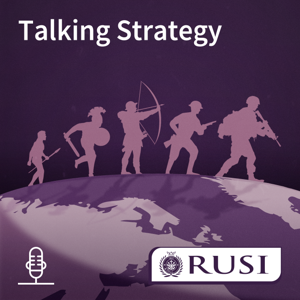


For 3000 years, China's overall strategy was to defend against invaders from the West and the North, but to turn its back on the Pacific. In the early 1990s, Admiral Liu Huaqing changed this almost overnight. In this episode of Talking Strategy, Professor Christopher Yung will tell us how this has revolutionized China's grand strategy, and what this new naval orientation means for the rest of the world.
America's performance in the Iraq War of 1991, unchecked by the imploding Soviet Union, led to a profound reassessment in Beijing of China's strategic interests and position in the world. The Chief of China's Naval Staff, Admiral Liu Huaqing, advocated a complete turnaround in China's military posture to take on the world's only superpower, with a long-term naval armament programme. The progressive realization of a new grand strategy is planned in three steps, involving the assertion of China's predominance over the three island chains in the Pacific, progressively rolling back the position the US has established here since the mid-19th century.
Paul O'Neill and Beatrice Heuser are joined in this episode of Talking Strategy by Christopher Yung who holds the Donald Bren Chair of Non-Western Strategic Thought and is the Director of East Asian Studies at Marine Corps University and author of several books and articles on the expansion of China's navy and its expansionist naval strategy.
In this episode, we discuss the reign of Leo VI (the Wise), Byzantine emperor and strategist (r. 866–912), with Dr Georgios Chatzelis from the Centre for Advanced Study Sofia (CAS).Leo VI predates the 18th century flourishing of Western thinking about strategy by almost 900 years – although it is the translation of the Greek word strategía in his treatise (confusingly called The Tactic) that became the word 'strategy' in modern Western languages. Occupying a unique position between East and West, Leo VI's empire was shaped by its Roman heritage and the Arab threats it faced. Leo differentiated between tactics, which were about conduct on the battlefield, and strategy, which was about how other skills required of a commander could be combined for defence.
Emperor Leo's book was regarded by Byzantine generals as a sort of law of war. It places war within a political context, describes how wars should be fought – including matters of ethics – and comments on the way the Byzantine Empire's enemies fought, seeking to ensure that his commanders kept the moral high ground. Therefore, and despite the passing of more than a millennium, Leo's contribution and understanding of strategy remain recognisable to a modern audience.
The French Revolutionary and Napoleonic Wars profoundly affected all of Europe and became watersheds in the history of strategy. Until then, French thinking on war had dominated European discourse for a good two centuries, even though the word 'strategy' had not yet been imported into European languages from the Greek. Crucial among the French thinkers of this period was Comte de Guibert (1743–1790), who has been called the prophet of the wars of the French Revolution, foreseeing the transformation of war into the people's cause, rather than merely that of their monarchs.
In a republican spirit, Guibert dedicated his first work, the General Essay on Tactics, 'to my fatherland' – reason enough to publish it anonymously, even though he noted that the king was part of his fatherland! Guibert – like Prussian military theorist Carl von Clausewitz – changed some of his fundamental views during his lifetime. In his youth, Guibert wrote what would become a bestseller throughout the Western world, in which he made the case for an army of citizen-soldiers who would be unbeatable. However, after fighting in the French conquest of Corsica and then serving in the French War Ministry, he decided that overseas campaigns required a professional army. The arguments he put forward still stand up to scrutiny today.
To discuss Guibert and his works, we are joined by Dr Jonathan Abel, Assistant Professor of Military History, US Army Command and General Staff College, the author of Guibert: Father of Napoleon's Grande Armée (2016) and translator of Guibert's General Essay on Tactics (2021).
At the turn of the 20th century, Imperial Germany was a dominant force in thinking about military strategy with a focus on land warfare commensurate with its geography. Prussian strategists agreed with most of their French colleagues that war would involve mass armies, and that their strategy had to be offensive.
Three Prussian strategists of land warfare were particularly influential in shaping the thinking that guided the Imperial German Army's conduct in the First World War: Colmar von der Goltz, Alfred von Schlieffen and Friedrich von Bernhardi. Controversial in different ways and rivals with one another, they nevertheless exerted a strong influence on the conduct of land warfare, and on thinking about harnessing society in total war in which anything was permitted (the primordial violence and hatred in Clausewitz's terms).
In this episode of Talking Strategy, Professor Stig Förster from the University of Bern joins hosts Professor Beatrice Heuser and Paul O'Neill. Professor Förster discusses the controversies surrounding the German strategists, the horrors spawned by the ideas of von der Goltz and Bernhardi, and how war does not work to the timetable envisaged by von Schlieffen in his 'Schlieffen Plan', which set out how Imperial Germany would fight in the First World War.
Sir Julian Corbett was at the heart of strategy debates before, during and immediately after the First World War. Educator of the British Royal Navy, he was strongly influenced by Prussian General Carl von Clausewitz, but adapted Clausewitz's theories to include the naval dimension that was missing in most Prussian writings. In his theories of 'maritime strategy', which were inherently 'joint', he combined the traditional Prussian emphasis on land warfare with his own naval concepts and thinking about economic warfare.
In the first episode of this new series of podcasts, Professor Andrew Lambert joins hosts Professor Beatrice Heuser and Paul O'Neill. Andrew sees in Corbett the defender of a distinct British role in the world, advocating a 'British Way of War' detached from the European continent, privileging war at sea over war on land. Can this be reconciled with Corbett's famous dictum that 'since men live upon the land and not upon the sea, great issues between nations at war have always been decided – except in the rarest cases – either by what your army can do against your enemy's territory and national life or else by the fear of what the fleet makes it possible for your army to do'?
From the publisher's feed

1,053 Listeners
142 Listeners

772 Listeners

420 Listeners
106 Listeners
21 Listeners
363 Listeners

403 Listeners

21 Listeners
489 Listeners

494 Listeners

1,884 Listeners
338 Listeners

476 Listeners

265 Listeners