
Sign up to save your podcasts
Or



Based on Podcast App listening data
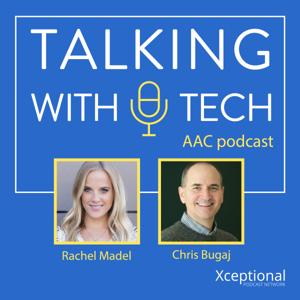
This week, we present Part 2 of Rachel’s interview with Alma Partida (@aacforyouandme on Insta), Sarah Lee (@aac_together), Melissa Tapia (@hablame_de_language), and Maria De Leon (@code.switch.slp) about Bilingüe AAC, a platform that supports evidence-based, culturally affirming Spanish AAC. In this segment of the interview, the Bilingüe AAC team provides lots of useful information, including research that supporst bilingualism for AAC users, some of the myths of bilingual AAC, and information you can share with families who are hesitant to teach an AAC user two languages. To listen to Part 1 of this interview, click here.
Before the interview, Rachel and Chris answer a question posed by Patreon member Anna, who has a 15-year-old autistic son who is a complex communicator and AAC user. He has a verbal vocabulary of around 200 words, and a more limited AAC vocabulary. Her son went to a well-regarded ABA school, where they they used AAC to only teach only fringe words and as a backup to verbal speech when they couldn’t understand him. His mother learned more about AAC implementation and moved him to a new school. Now, the new SLP wants her son to use a different vocabulary template (in his case, Crescendo for Proloquo2go) that better supports core language, and Anna wanted to know how best to transition her son from his old vocabulary template to his new one.
Key ideas this week:
🔑 When teaching AAC to a student in two different languages, we can take a “Cross Linguistic” or a Bilingual approach. The Cross-Linguistic approach has the SLP or teacher doing one day of AAC implementation/language therapy in Spanish and another in English. The Bilingual approach, which is recommended for monolingual therapists, teaches both languages at the same time (e.g. teaching “water” and "agua" at the same time).
🔑 Monolingual (e.g. English-speaking only) therapists and teachers should try to teach vocabulary to bilingual students in both their languages. This sends the message “Your culture is OK,” even if we can only teach one word at a time. If you aren’t as strong in their first language, tell the student “Let’s learn this together,” or “You can teach me”. It goes a long way to build trust and rapport with the student and their family.
🔑 If you are hearing that a student is “not motivated by anything,” it is better to say “they aren’t motivated by anything yet.” One idea is to consider their sensory needs and interests. If we are able to do a deep dive into those interests, we may find something to help a student regulate their sensory needs, or find something that they simply enjoy (e.g. touching shaving cream) that will motivate them to communicate.
Links this week:
King, M., Lim, R., Romski, M. (2021). Language experience, cognitive skills, and English and Spanish semantic abilities in bilingual children with typical development and language impairments.
McNamara, E. (2018). Bilingualism, Augmentative and Alternative Communication, and Equity: Making a Case for People With Complex Communication Needs
Bilingüe AAC has pages with freebies in both English and Spanish, including a “Common Bilingualism Myths” visual.
Visit talkingwithtech.org to access previous episodes, resources, and CEU credits that you can earn for listening to TWT episodes!
Help us develop new content and keep the podcast going strong! Support our podcast at patreon.com/talkingwithtech!
This week, Rachel interviews Alma Partida (@aacforyouandme on Insta), Sarah Lee (@aac_together), Melissa Tapia (@hablame_de_language), and Maria De Leon (@code.switch.slp) about Bilingüe AAC (www.bilingueaac.com), a platform that supports evidence-based, culturally affirming Spanish AAC. They discuss many aspects of bilingualism and AAC, including core word considerations and strategies for family-based AAC assessment.
Before the interview, Chris and Rachel talk about the difference between “progress” and “success” when we are talking about an AAC user’s communication journey. For some, making progress with using AAC demonstrates success. However, if we are not making progress fast enough or are using a tool that doesn’t promote language development (e.g. a 4 icon core board) then we aren’t really working towards true success, which includes independent, spontaneous communication.
🔑 When assessing a bilingual student for AAC, take a family centered approach to assessment. Try and get an interpreter involved (if necessary) and talk to the family about how they communicate in the home. If we get a bilingual word inventory of the student and discuss vocabulary with the family, we can get a better picture of what words will be most useful for that student.
🔑 Generally, we don’t want to directly translate core word lists between two languages. Depending on the languages in question, the core words may be somewhat different (e.g. English and Spanish) or completely different (e.g. English and Chinese). In either case, shouldn’t assume that the core words are exactly the same.
🔑 When assessing a bilingual student, do a home language survey that includes the amount the family uses each language. In some cases, they may speak 90% english with only little bit of Spanish, or vice versa.
Links this week:
Diverse AAC YouTube channel
AAC App Crosswalk- table with different AAC app features, including languages offered
Soto and Cooper (2021): An early Spanish vocabulary for children who use AAC: Developmental and linguistic considerations.
AAC in the Cloud Presentation on diverse AAC implementation
Visit talkingwithtech.org to access previous episodes, resources, and CEU credits that you can earn for listening to TWT episodes!
Help us develop new content and keep the podcast going strong! Support our podcast at patreon.com/talkingwithtech!
This week, Chris interviews Ceci Fetterolf, a high school senior who created core word videos and linked them using QR codes for her school capstone project. Ceci shares about how she came up with her project and decided on the core words to make videos about, and also how she created books for students that simplified math concepts, like shapes.
Before the interview, Chris gathers with Karen Janowski, Mike Marotta, and Beth Poss to discuss their upcoming “Inclusive Road Trip to ISTE”! This road trip starts at TextHelp headquarters in Massachusetts and ends at the ISTE conference in New Orleans, LA. During the road trip, Chris, Karen, Beth, and Mike will pull out their favorite inclusive tools and use them to enhance their roadtrip experience! Follow them on social media with #inclusiveroadtoISTE.
Key Ideas this Week:
🔑Learn more about the Inclusive Road Trip at inclusive365.com/inclusiveroadtoISTE, including the Wonderfully Inclusive Scavenger Hunt (WISH), an event which you can join at home!
🔑You can add to the playlist Chris, Karen, Mike, and Beth’s will listen to on their trip by going to their Spotify #InclusiveRoadToISTE Playlist
🔑 If you want to learn more about the Road Trip and WISH live, you can Register for the June 22nd #ATchat #InclusiveRoadToISTE Kick off Event
Visit talkingwithtech.org to access previous episodes, resources, and CEU credits that you can earn for listening to TWT episodes!
Help us develop new content and keep the podcast going strong! Support our podcast at patreon.com/talkingwithtech!
This week, Chris has an amazing interview with Benjamin Bennett, an AAC Specialist for the Escondido Union School District near San Diego, CA. Benjamin has a wealth of information to share, including his school’s move from doing traditional AAC evaluations to a model that is more focused on the considerations of the whole team. Benjamin has lots of questions about the strengths and drawbacks of the Specific Language System First Approach (SLSFA) - his district is strongly considering moving more towards the SLSFA and he wanted to think through possible issues before rolling it out. To learn more about about the SLSFA from Chris, click here.
Before the interview, Chris and Rachel have a great discussion about writing effective goals for AAC users, including tracking spontaneous language and independent initiation. According to Rachel, independent initiation has to be a foundational skill if we want everything else, because “we see a lot of kids who can do a lot with support, and not a lot without it.” She thinks that we need to be open to all the ways students are communicating with us - if they aren’t using the word we are working on but they are communicating, that is still growth and should be recognized.
Key ideas this week:
🔑 Students in school should not be required to respond - they aren’t getting paid to be there and it isn’t their choice. We shouldn’t put all of the communication responsibility on the student - instead, let’s ask, what can we do to make communication more tempting?
🔑 Benjamin shares about a school site that has a variety of students who are nonspeaking, minimally verbal, and verbal all using the same systems in the moderate/severe classrooms. This helps get everyone involved with AAC and no longer isolates the nonspeaking students. It just becomes “how we teach” instead of a tier 3 support that only a few students have access to.
🔑 One thing to consider if someone comes in with an AAC system that is different than what is typically used at a new school site - are they independently using the device to communicate? If the device is being used effectively, there is a very strong argument for keeping them on that system and not disrupting their motor plan by moving them to a different one.
🔑 People often think about putting everyone on the same tool, but what about strategies? Is there consistency of communication partners between sites? Do people focus on the same things and model the same way across the district? That is often a bigger concern than the particular system.
Visit talkingwithtech.org to access previous episodes, resources, and CEU credits that you can earn for listening to TWT episodes!
Help us develop new content and keep the podcast going strong! Support our podcast at patreon.com/talkingwithtech!
This week, we present Rachel’s interview with Laura Taylor, a Special Education Teacher and AAC Specialist with a years of experience teaching language and literacy to people with complex communication needs. Laura has done amazing work utilizing the Pragmatic Organization of Dynamic Displays (PODD), a form of AAC that, at least in the early stages, focuses on teaching communication functions along with vocabulary.
Before the interview, Rachel shares about a client of hers with Childhood Apraxia of Speech. This client was strongly averse to AAC - he would even protest against looking at an iPad with AAC on it. Rachel describes how she got him to start using AAC by giving him a “Please don’t take off my sweater” button! Rachel and Chris then discuss the value in teaching students to protest and to direct the actions of others.
Key ideas this week:
🔑 PODD is a low-tech or high-tech AAC solution that allows for direct access or partner-assisted scanning. PODD starts out organized by communication function and moves on to organization by category later. It also focuses more on suffixes/morphology as time goes on.
🔑 One advantage of PODD is its organization by pragmatic function. Having vocabulary organized this way may help demonstrate to the student what they can communicate about more frequently than other organization methods. Many students are used to the pragmatic functions of answering questions or requesting but not much else. Using PODD may give these students a head start with extra exposure to these other communication functions.
🔑 If you are trying to figure out how to get started with teaching literacy and communication, Laura recommends to “just start.” Do what you can manage. Start small and it can build to big things - modeling, communication opportunities, etc. Get strategic with yourself on one thing that will make an impact - then you can get good at that and build off that!
You can find out more about Laura and PODD at Tayloreducationalconsultants.com and can reach Laura via email at [email protected]
Visit talkingwithtech.org to access previous episodes, resources, and CEU credits that you can earn for listening to TWT episodes!
Help us develop new content and keep the podcast going strong! Support our podcast at patreon.com/talkingwithtech!
This week, we hear Part 2 of Dr. Meredith Gohsman's interview with Chris and Rachel! Meredith, Chris, and Rachel reflect on the meeting they attended at the last ASHA convention about ASHA AAC Certification. While previous meetings they attended were more concerned regarding ASHA AAC certification, at ASHA the crowd was more in favor of the certification. Meredith, Chris, and Rachel remain concerned about ASHA AAC certification and discuss some possible negative consequences, including possible impacts on device funding and reducing personal ownership of AAC for some communication partners.
Key ideas this week:
🔑 Parents should always be the most important “expert” on their child. The leader of the AAC team should be the caregiver or the AAC user themselves. AAC Certification may lead people to think that the AAC Specialist needs to be leading the AAC team in decision making.
🔑 An ASHA AAC Certification could potentially make communication partners feel more intimidated by AAC. It could be a reason that caregivers and communication partners to say “I don’t do AAC, I’m not an expert” We don’t need anything to take away from the idea that AAC is for all, and it’s everyone’s responsibility.
🔑 It is possible that insurance companies may make it harder for non-AAC Specialists to get funding for a device. Insurance companies might even require someone to be a certified AAC Specialist before they will fund a device.
🔑 One of the most important aspects of supporting AAC users is coaching their communication partners. It isn’t clear if the AAC Certification process will focus on coaching as much as it should; they may focus more on individual expertise in areas like AAC devices or 1:1 treatment.
Links:
stopaaccertification.org - website with resources and information about the effort to stop ASHA AAC certification. If you are interested in advocating for a stop or pause in the AAC Certification process, there are links on this site to templates and contacts where you can send your letter.
aacspecialist.org - home of the American Board of Augmentative and Alternative Communication; the website includes information in support of the potential ASHA AAC certification.
Committee on Specialty Certification: [email protected]
Feedback for ASHA Executive Board: https://www.asha.org/Form/Board-of-Directors-Feedback/
Visit talkingwithtech.org to access previous episodes, resources, and CEU credits that you can earn for listening to TWT episodes!
Help us develop new content and keep the podcast going strong! Support our podcast at patreon.com/talkingwithtech!
This week, Chris and Rachel interview Dr. Meredith Gohsman about her research into how much progress using their device AAC users made during a 4 week AAC camp. Each AAC user received aided language stimulation and was prompted using the least-to-most prompting hierarchy. Meredith’s results indicate that, after 9 sessions of AAC Camp, there was no change in the students receiving language instruction or the parents participating in sessions. The only change they saw was growth in therapy skills of the student clinicians who engaged in the interventions. Meredith says this may indicate that we need to be looking at a longer period than 4 weeks for making progress with AAC users. It may also suggest that we can make greater progress with graduate clinicians by giving them more hands-on experiences.
Before the interview, Chris and Rachel discuss Chris’s recent experience as a substitute teacher (due to staffing shortages in his district) in a co-taught general & special education class. Chris talks about some of the things he learned in that role, including the need for more flexible seating options and the general slow speed that public education can move - even when we know something is a better choice for the students. Chris also shares about how the students were all required to write in a composition book, and he wonders if there would be a way to honor other modalities for writing in a journal (e.g. Chromebook, speech to text, etc).
Key ideas this week:
🔑 When we are thinking about family-centered therapy, we should think about giving the families more hands-on training. In this study, the families didn’t get hands on opportunities, and they made little progress.
🔑 We have a responsibility to provide models and scaffolding for AAC users for a really long time. Some AAC stakeholders may approach modeling saying “A few weeks of modeling s is enough to see if they can use the device,” but in this case, nothing changed in 4 weeks.
🔑 Caregiver perceptions relate to both the child and the caregiver themselves - after training, the communication partner reports they feel more confident with using the device. When caregivers feel more confident, that will pave the way for better downstream outcomes for AAC users.
Visit talkingwithtech.org to access previous episodes, resources, and CEU credits that you can earn for listening to TWT episodes!
Help us develop new content and keep the podcast going strong! Support our podcast at patreon.com/talkingwithtech!
This week, we present Small Talks VI! “Small Talks” are short clips recorded with a previous guest that highlights one strategy or one idea in seven minutes or less. In this episode of Small Talks, we hear from Andy Smidt, India Ochs, Lory Chrane, Mark Nichols, and Tali Kellerstein!
Before the interviews, Chris and Rachel discuss Chris’s “design challenge” he helped create for some 5th graders to help figure out how to attach 3D printed AAC keyguards (i.e. overlays) to AAC devices without needing to remove the case (for warranty reasons). Chris talks about how this authentic problem got the students really excited, and he shares lots of great online resources for getting started with 3D printing keyguards (see links section below).
On this episode:
🗣️ Andy Smidt shares about universal design for learning, and how she is helping people see how UDL is something they already do in the classroom and there are benefits for educators as well as students in making the learning environment more universal.
🗣️ India Ochs talks about “tone policing”, a practice of criticizing the emotional manner in which a person has expressed a point of view, rather than addressing the substance of the point itself. Tone policing can occur when people are having a discussion about disability and ableism - by criticizing the person’s “tone”, they can avoid discussing any important changes.
🗣️Lory Chrane discusses Symbol-It, (https://symbolspeak.co/symbol-it/) a paid app that will translate verbal speech directly into symbols that correspond to the person’s AAC.
🗣️ Mark Nichols shares three of his favorite AT solutions right now, including enabling live captions for all videos, using “accessibility checkers” like Grackle (or ones embedded in Office) to make sure our files are as accessible, and converting the text files we assign to students into audio files for them.
🗣️Talk Kellerstein describes how she uses set up and clean up of games to introduce more opportunities to practice using speech or language. She also describes why she avoids games with batteries.
Links from this week’s episode:
Volksswitch.org - 3D printing resource for AT, including keyguards
Jennifer Schubring (@jjschubring on Twitter) has lots of great info about 3D printing keyguards here: https://www.buildingaac.com/post/3d-printing-keyguards-an-epic-journey
Tinkercad.com - create digital 3D printing designs
“No, We Won’t Calm Down: Tone Policing is Just Another Way to Protect Privilege”, an informative comic on Tone Policing shared by India Ochs
Visit talkingwithtech.org to access previous episodes, resources, and CEU credits that you can earn for listening to TWT episodes!
Help us develop new content and keep the podcast going strong! Support our podcast at patreon.com/talkingwithtech!
This week, Rachel interviews Dr. Jeffrey Ebin, an inventor and ER doctor at the University of Houston who created a FREE eye-tracking communication board (communicatonboard.io) that requires no more equipment than a camera (e.g. on a phone/tablet) and a web browser! Jeffrey shares all about his interest in creating Assistive Technology solutions, and how helping a man who was paralyzed from the neck down started him thinking about a free eye gaze website. One great thing about his communication board, particularly in the hospital setting, is the user can pick it up and learn it quickly without needing a lot of training for themselves or communication partners.
Before the interview, Chris and Rachel discuss a scenario that may be familiar to people who support AAC users - when we see someone with their AAC device in public, is it appropriate to go and talk to them (and/or their family) about it? Chris saw an AAC user at his daughter’s play and wanted to go and talk to them, but he hesitated and decided not to say anything. Rachel shares similar situations she has experienced, and the uncertainty that many SLPs feel when they are deciding whether to talk about communication outside of the clinical or school setting.
Key ideas this week:
🔑 Some of the vocabulary on the communication board is more specific to a hospital setting (e.g. suction), but there are plans for making the vocabulary customizable in the future.
🔑 The communication board (communicationboard.io) can be combined with an inexpensive receiver to operate things like light switches.
🔑 According to Dr. Ebin, a lot of the tech we are using in the field of assistive technology is outdated by 10-15 years, and in many cases much more expensive than similar technology in other fields. He believes we need to better incorporate the advances we are making in other areas of technology into assistive technlogy.
Visit talkingwithtech.org to access previous episodes, resources, and CEU credits that you can earn for listening to TWT episodes!
Help us develop new content and keep the podcast going strong! Support our podcast at patreon.com/talkingwithtech!
This week, we hear from Dr. Andy Smidt, a professor at the University of Sydney who teaches a number of courses related to communication and supporting people with severe intellectual disabilities. Andy shares about teaching pre-service professionals in unique ways, her “TEAM” taxonomy that can help write goals for emergent (presymbolic) communicators, and more!
Before the interview, Rachel and Chris talk about playing “The Mind”, a card game where you only use observation and nonverbal communication to sequence a set of cards together. They reflect on what they learned playing this game, including how essential nonverbal communication is to our everyday lives and how we can learn to observe very subtle signals. They also share about how we can observe nonverbal communication and then attach language to it in a therapeutic setting.
Key ideas this week:
🔑How do we support someone with severe intellectual disabilities who is presymbolic and may never become symbolic? We can presume their potential, but becoming a symbolic communicator may take a long time. How do we write goals to be worked on right now? Andy came up with the TEAM taxonomy for goal writing that is useful when working with pre-symbolic communicators:
🔑In some cases, we need to regroup when we have hit a roadblock and look back at the TEAM framework. You might want to give it a few months and not add anything new - the AAC user may need a break to get comfortable with what they have already learned.
🔑Most clinicians feel they are doing family centered practice, but research indicates most families would say their therapy is not family centered. Family centered practice means going at the speed of the family, which may be slow if that is what they need.
Links from this Episode:
Full Text of Andy's article on the TEAM process
The Mind Card Game
Visit talkingwithtech.org to access previous episodes, resources, and CEU credits that you can earn for listening to TWT episodes!
Help us develop new content and keep the podcast going strong! Support our podcast at patreon.com/talkingwithtech!
From the publisher's feed
Ranked by our users in the last 21 days

21,786 Listeners

43,338 Listeners

12,187 Listeners

14,908 Listeners

69,495 Listeners

4,754 Listeners
427 Listeners

4,533 Listeners

3,462 Listeners

5,817 Listeners

12,701 Listeners

17,655 Listeners

10,626 Listeners

13,625 Listeners
3,432 Listeners